Adhyaya 18
भीष्मपर्व — अध्याय 18: सेनानिनादः, ध्वज-दीप्तिः, भीष्मरक्षण-व्यवस्था च (Battle Muster: Soundscape, Banners, and the Protection of Bhīṣma)
Upa-parva: Senā-nirdeśa (Army Deployment and Muster) — Bhīṣma-parva
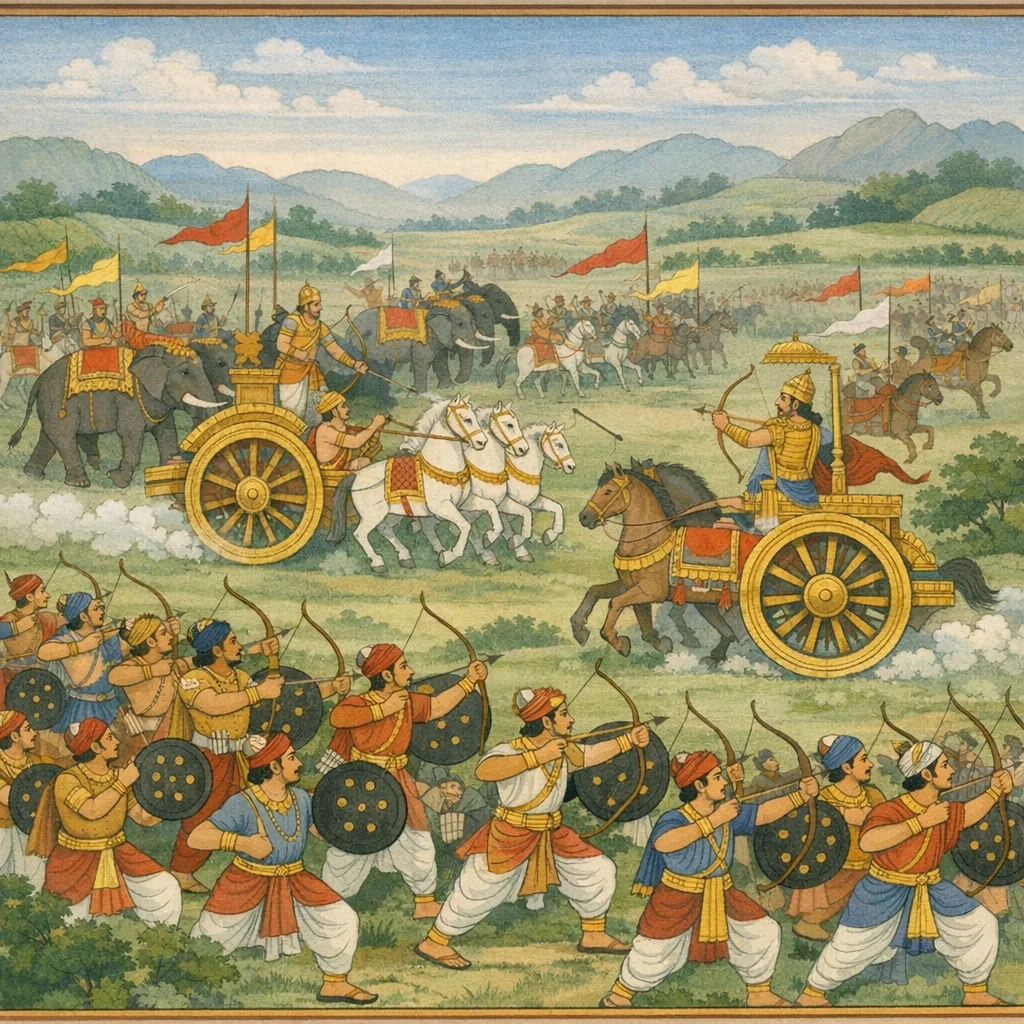
Sañjaya reports to Dhṛtarāṣṭra the immediate sensory and logistical signs of the two armies converging. A thunderous, heart-shaking roar arises from conches, drums, elephant-trumpeting, chariot-wheel resonance, horses neighing, and warriors’ shouts, filling sky and directions and making the earth seem to split. Both forces tremble at mutual contact, while the battlefield becomes visually saturated with gold-ornamented elephants and chariots likened to lightning-bearing clouds. Diverse banners of the Kaurava host blaze like fire; bright standards appear across both sides, compared to celestial emblems. Warriors in golden armor shine like burning planets; archers and standard-bearers advance to the front with uplifted weapons. The chapter then specifies Bhīṣma’s rear-guard protectors—named Kaurava princes—and enumerates supporting allied contingents and regions. Large unit counts are provided: tens of thousands of chariots, a substantial elephant corps, extensive protective troops (wheel-guards and foot-guards), and massed infantry with bows, shields, swords, spears, and prāsas. The report culminates in the quantified presence of the Kaurava host (ten plus one akṣauhiṇīs), visually compared to the Gaṅgā between the Gaṅgā-Yamunā confluence imagery, emphasizing scale and density rather than individual combat outcomes.
Chapter Arc: सत्रहवें अध्याय की समाप्ति के तुरंत बाद कुरुक्षेत्र का क्षितिज शंख-नाद और दुन्दुभियों के घोष से फट पड़ता है—मानो धरती स्वयं युद्ध के भार से कराह उठी हो। → हाथियों की गर्जना, रथ-चक्रों की घरघराहट, घोड़ों की हिनहिनाहट और योद्धाओं की गर्जना एक क्षण में आकाश और भूमि को शब्द से भर देती है। स्वर्णिम कवचधारी वीर अग्नि-सूर्य की प्रभा जैसे चमकते हैं; विविध जनपदों और राजाओं की टुकड़ियाँ क्रमशः मोर्चे पर जमती जाती हैं। → दृश्य का शिखर तब आता है जब धृतराष्ट्र के पुत्र की ‘ग्यारह अक्षौहिणी’ सेना एक साथ दृष्टिगोचर होती है—गंगा-यमुना के संगम-सा घना, एकीकृत और भयावह महासागर-रूप। → अध्याय युद्ध-प्रवेश की अंतिम तैयारी पर ठहरता है: पैदल, रथ, गज, अश्व—सब अपने-अपने स्थान पर; भीष्म के पीछे-रक्षक रूप में धृतराष्ट्र-पुत्रों की उपस्थिति और विशाल रथ-समूह का विन्यास स्पष्ट हो जाता है। → यह विराट सैन्य-समुद्र अब किस प्रथम आघात से टूटेगा—और किसके शंख-नाद पर रक्त की पहली धारा बहेगी?
Shlokas
Verse 1
इस प्रकार श्रीमहाभारत भीष्मपर्वके अन्तर्गत श्रीमद्भगवद््गीतापर्वमें सैन्यवर्णणनविषयक सत्रहवाँ अध्याय पूरा हुआ ॥/ १७ ॥। ऑपनआक्रात बछ। अ-काज जा अष्टादशो< ध्याय: कौरवसेनाका कोलाहल तथा भीष्मके रक्षकोंका वर्णन संजय उवाच ततो मुहूर्तात् तुमुलः शब्दो हृदयकम्पन: । अश्रूयत महाराज योधानां प्रयुयुत्मताम्,संजय कहते हैं--महाराज! तदनन्तर दो ही घड़ीमें युद्धकी इच्छा रखनेवाले योद्धाओंका भयंकर कोलाहल सुनायी देने लगा, जो हृदयको कँपा देनेवाला था
Sanjaya said: Then, after a short while, O King, there arose a tumultuous roar—so intense that it made the heart tremble—heard from the warriors who were eager to engage in battle. The verse frames the moral gravity of the coming conflict: the outward clamor of martial zeal contrasts with the inner shaking it provokes, hinting at the ethical weight of war even before weapons strike.
Verse 2
शड्खदुन्दुभिघोषैश्न वारणानां च बूंहितै: । नेमिघोषै रथानां च दीर्यतीव वसुंधरा,शंख और दुन्दुभियोंके घोष; गजराजोंकी गर्जना तथा रथोंके पहियोंकी घरघराहटसे सारी पृथ्वी विदीर्ण-सी हो रही थी
Sañjaya said: With the blare of conches and kettledrums, with the trumpeting roars of mighty elephants, and with the grinding rumble of chariot-wheels, the very earth seemed as though it were being torn apart. The verse heightens the moral gravity of the coming battle: the instruments of royal duty and martial order become a thunderous sign of collective resolve, yet also of the immense human cost that dharma-war entails.
Verse 3
हयानां ह्रेषमाणानां योधानां चैव गर्जताम् | क्षणेनैव नभो भूमि: शब्देनापूरितं तदा,घोड़ोंके हींसने और योद्धाओंके गर्जनेके शब्दोंसे एक ही क्षणमें वहाँकी पृथ्वी और आकाशका सारा प्रदेश गूँज उठा
Sanjaya said: “With the neighing of the horses and the roaring cries of the warriors, in a single instant the whole expanse of earth and sky there was filled with sound.” The verse underscores the overwhelming momentum of war—how collective human will and martial fervor can drown the world in noise, foreshadowing the ethical gravity of the conflict about to unfold.
Verse 4
पुत्राणां तव दुर्धर्ष पाण्डवानां तथैव च । समकम्पन्त सैन्यानि परस्परसमागमे,दुर्धष नरेश! आपके पुत्रों और पाण्डवोंकी सेनाएँ एक-दूसरीके निकट आनेपर काँप उठीं
Sañjaya said: O unassailable king, when your sons’ forces and the Pāṇḍavas’ forces drew close to one another, the armies trembled at their mutual encounter—an ominous shudder at the brink of fratricidal war.
Verse 5
तत्र नागा रथाश्वैव जाम्बूनदविभूषिता: । भ्राजमाना व्यदृश्यन्त मेघा इव सविद्युत:,उस रणक्षेत्रमें स्वर्णभूषित रथ और हाथी बिजलियोंसे युक्त मेघोंके समान सुशोभित दिखायी देते थे
There, elephants and chariots, adorned with Jāmbūnada gold, were seen gleaming on the battlefield—like clouds lit up with flashes of lightning. The image heightens the grandeur and dread of war: splendid wealth and craftsmanship are pressed into service for destruction, showing how worldly brilliance can accompany impending violence.
Verse 6
ध्वजा बहुविधाकारास्तावकानां नराधिप । काज्चनाड्दिनो रेजुज्वलिता इव पावका:,नरेश्वरर! आपकी सेनाके नाना प्रकारके ध्वज और सोनेके अंगद (बाजूबन्द) पहने हुए सैनिक प्रज्वलित अग्निके समान प्रकाशित हो रहे थे
Sañjaya said: “O king, the many-shaped banners of your forces shone forth; and your warriors, adorned with golden armlets, blazed like kindled fires.” The image underscores the outward splendor and martial confidence of the Kaurava host, while hinting at the moral tension of a war where brilliance and power do not by themselves guarantee righteousness.
Verse 7
स्वेषां चैव परेषां च समदृश्यन्त भारत । महेन्द्रकेतव: शुभ्रा महेन्द्रसदनेष्विव,भारत! अपनी और शत्रुकी सेनाके चमकीले ध्वज इन्द्रभवनमें फहरानेवाले देवेन्द्रके ध्वजोंके समान दिखायी देते थे
Sañjaya said: O Bhārata, the bright, gleaming banners of both our army and the enemy’s appeared alike—like the radiant standards of Indra fluttering in Indra’s own celestial hall. In that charged moment before battle, the outward splendor of war—equally displayed on both sides—stood in stark contrast to the grave moral consequences that would soon follow.
Verse 8
काज्चनै: कवचैर्वीरा ज्वलनार्कसमप्रभै: । संनद्धा: समदृश्यन्त ज्वलनार्कसमप्रभा:,अग्नि और सूर्यके समान कान्तिमान् कांचनमय कवच धारण किये वीर सैनिक अग्नि और सूर्यके ही तुल्य प्रकाशित दीख रहे थे
Sañjaya said: The heroic warriors, clad in golden cuirasses radiant like fire and the sun, appeared fully armed—shining forth with the very brilliance of flame and sunlight. The scene underscores the outward splendor and confidence of martial readiness, even as it foreshadows the grave moral weight of war that such dazzling preparation serves.
Verse 9
कुरुयोधवरा राजन् विचित्रायुधकार्मुका: । उद्यतैरायुधैश्ित्रैस्तलबद्धा: पताकिन:,राजन! कौरवपक्षके श्रेष्ठ योद्धा विचित्र आयुध और धनुष धारण किये बड़ी शोभा पा रहे थे। उनके विचित्र आयुध ऊपरकी ओर उठे हुए थे। उन्होंने हाथोंमें दस्ताने पहन रखे थे और उनकी पताकाएँ आकाशमें फहरा रही थीं
Sañjaya said: O King, the foremost warriors of the Kurus, bearing wondrous weapons and bows, stood resplendent. Their varied arms were lifted aloft, their hands secured with protective straps, and their banners streamed high—an image of martial pride and the ominous resolve of the Kaurava host as the battle is about to begin.
Verse 10
ऋषभाक्षा महेष्वासाश्वमूमुखगता बभु: | पृष्ठगोपास्तु भीष्मस्य पुत्रास्तव नराधिप । दुःशासनो दुर्विषहो दुर्मुखो दुःसहस्तथा,रथा विंशतिसाहस्रास्तथैषामनुयायिन: । सेनाके मुहानेपर खड़े हुए, वृषभके समान विशाल नेत्रोंवाले वे महाधनुर्धर वीर बड़ी शोभा पा रहे थे। नरेश्वर! भीष्मजीके पृष्ठभागकी रक्षा आपके पुत्र दुःशासन, दुर्विषह, दुर्मुख, दुःसह, विविंशति, चित्रसेन, महारथी विकर्ण, सत्यव्रत, पुरुमित्र, जय, भूरिश्रवा, शल तथा इनके अनुयायी बीस हजार रथी कर रहे थे
Sañjaya said: Those great bowmen, with bull-like large eyes, stood facing the enemy’s front and appeared splendid. O king, guarding Bhīṣma’s rear were your sons—Duḥśāsana, Durviṣaha, Durmukha, Duḥsaha—along with Vivimśati, Citrasena, the great chariot-warrior Vikarṇa, Satyavrata, Purumitra, Jaya, Bhūriśravā, Śala, and their followers: twenty thousand chariot-fighters. The passage highlights the deliberate organization of force—splendor at the front and protection at the rear—underscoring how martial prowess is being marshaled in service of a contested cause, with loyalty to a commander (Bhīṣma) functioning as the immediate ethic within the larger moral crisis of the war.
Verse 11
विविंशतिक्षित्रसेनो विकर्णश्र महारथ: । सत्यव्रत: पुरुमित्रो जयो भूरिश्रवा: शल:
Sañjaya said: “There were also Viviṁśati, Kṣitraseṇa, and Vikarṇa—the great chariot-warrior; likewise Satyavrata, Purumitra, Jaya, Bhūriśravā, and Śala.” In this roll-call of combatants, the poem underscores the vast human array committed to war—named individuals bound by loyalty and duty, moving toward a conflict whose moral weight will be borne by each person, not merely by the armies as a whole.
Verse 12
अभीषाहा: शूरसेना: शिबयो5थ वसातय:,अभीषाह, शूरसेन, शिबि, वसाति, शाल्व, मत्स्य, अम्बष्ठ, त्रिगर्त, केकय, सौवीर, कैतव तथा पूर्व, पश्चिम एवं उत्तर प्रदेशके निवासी--इन बारह जनपदोंके समस्त शूरवीर अपना शरीर निछावर करनेको उद्यत होकर विशाल रथसमुदायके द्वारा पितामह भीष्मकी रक्षा कर रहे थे
Sañjaya said: The warriors of the Abhīṣāhas, the Śūrasenas, the Śibis, and the Vasātis—along with the Śālvas, Matsyas, Ambaṣṭhas, Trigartas, Kekayas, Sauvīras, and Kaitavas, and also fighters from the eastern, western, and northern regions—these heroes from twelve realms, resolved to lay down their bodies, were guarding Grandfather Bhīṣma with a vast mass of chariots. The scene underscores the war-ethic of pledged protection: loyalty to a commander and readiness for self-sacrifice, even amid a conflict whose moral weight is being carefully observed.
Verse 13
शाल्वा मत्स्यास्तथाम्बष्ठास्त्रैगर्ता: केकयास्तथा । सौवीरा: कैतवाः प्राच्या: प्रतीच्योदीच्यवासिन:,अभीषाह, शूरसेन, शिबि, वसाति, शाल्व, मत्स्य, अम्बष्ठ, त्रिगर्त, केकय, सौवीर, कैतव तथा पूर्व, पश्चिम एवं उत्तर प्रदेशके निवासी--इन बारह जनपदोंके समस्त शूरवीर अपना शरीर निछावर करनेको उद्यत होकर विशाल रथसमुदायके द्वारा पितामह भीष्मकी रक्षा कर रहे थे
Sañjaya said: The Śālvas, the Matsyas, the Ambaṣṭhas, the Trigartas, and the Kekayas; likewise the Sauvīras and the Kaitavas; and the warriors dwelling in the eastern, western, and northern regions—all these were standing ready to lay down their bodies (their very lives), and with a vast ocean of chariots they were guarding Grandfather Bhīṣma. The verse underscores the ethic of martial loyalty: many peoples, bound by allegiance, place themselves between their commander and danger, accepting death as the price of duty in war.
Verse 14
द्वादशैते जनपदा: सर्वे शूरास्तनुत्यज: । महता रथवंशेन ते ररक्षु: पितामहम्,अभीषाह, शूरसेन, शिबि, वसाति, शाल्व, मत्स्य, अम्बष्ठ, त्रिगर्त, केकय, सौवीर, कैतव तथा पूर्व, पश्चिम एवं उत्तर प्रदेशके निवासी--इन बारह जनपदोंके समस्त शूरवीर अपना शरीर निछावर करनेको उद्यत होकर विशाल रथसमुदायके द्वारा पितामह भीष्मकी रक्षा कर रहे थे
Sañjaya said: ‘These twelve realms—all filled with heroes ready to lay down their bodies—formed a vast mass of chariots and stood guarding the grandsire Bhīṣma.’ In the ethical frame of the war, the verse highlights the ideal of steadfast loyalty to one’s commander and the willingness to accept death for a chosen cause, even amid a conflict where dharma itself is contested.
Verse 15
अनीकं दशसाहस्र॑ कुझ्जराणां तरस्विनाम् | मागधो यत्र नृपतिस्तद् रथानीकमन्वयात्
Sañjaya said: “There was a battle-array of ten thousand powerful elephants; and the chariot-division where the king of Magadha was stationed advanced in support of it.”
Verse 16
दस हजार वेगवान् हाथियोंकी सेना साथ लेकर मगधराज उपर्युक्त रथसेनाके पीछे- पीछे चल रहे थे ।। रथानां चक्ररक्षाश्न पादरक्षाश्न दन्तिनाम् | अभवन् वाहिनीमध्ये शतानामयुतानि षट्,उस विशाल वाहिनीमें रथोंके पहियों और हाथियोंके पैरोंकी रक्षा करनेवाले सैनिक साठ लाख थे
Verse 17
पादाताश्षाग्रतो5गच्छन् धनुश्चर्मासिपाणय: । अनेकशतसाहस्रा नखरप्रासयोधिन:,कुछ पैदल सैनिक, जिनकी संख्या कई लाख थी, हाथमें धनुष, ढाल और तलवार लिये आगे-आगे चल रहे थे। वे नखर (बघनखे) और प्रासद्वारा भी युद्ध करनेमें कुशल थे
Sañjaya said: In the van there advanced foot-soldiers—numbering many hundreds of thousands—bearing bow, shield, and sword in their hands. They were also trained to fight with nakhara weapons (claw-like blades) and with spears, showing the vast and varied preparedness of the armies as the battle order formed.
Verse 18
अक्षौहिण्यो दशैका च तव पुत्रस्य भारत । अदृश्यन्त महाराज गड़ेव यमुनान्तरा,भारत! महाराज! आपके पुत्रकी ये ग्यारह अक्षौहिणी सेनाएँ यमुनामें मिली हुई गंगाके समान दिखायी देती थीं इति श्रीमहाभारते भीष्मपर्वणि श्रीमद्भगवद्गीतापर्वणि सैन्यवर्णने अष्टादशो 5 ध्याय: इस प्रकार श्रीमहाभारत भीष्मपर्वके अन्तर्गत श्रीमद्भगवद्गीतापर्वमें सैन्यवर्णणविषयक अठारहवाँ अध्याय पूरा हुआ
Sanjaya said: O Bharata (Dhritarashtra), your son’s forces—eleven akṣauhiṇīs—appeared, O great king, like the Ganga when joined with the Yamuna: a vast, continuous, and seemingly irresistible flood of armed might. The image underscores the moral tension of the war—power gathered in abundance, yet still subject to the higher law of dharma and the consequences of adharma.
Verse 116
रथा विंशतिसाहस्रास्तथैषामनुयायिन: । सेनाके मुहानेपर खड़े हुए, वृषभके समान विशाल नेत्रोंवाले वे महाधनुर्धर वीर बड़ी शोभा पा रहे थे। नरेश्वर! भीष्मजीके पृष्ठभागकी रक्षा आपके पुत्र दुःशासन, दुर्विषह, दुर्मुख, दुःसह, विविंशति, चित्रसेन, महारथी विकर्ण, सत्यव्रत, पुरुमित्र, जय, भूरिश्रवा, शल तथा इनके अनुयायी बीस हजार रथी कर रहे थे
Sañjaya said: “There were twenty thousand chariots, along with their followers. These warriors—mighty archers with large, bull-like eyes—stood at the very front of the army, lending it splendor. O king, guarding Bhīṣma’s rear were your sons and their allies—Duḥśāsana, Durviṣaha, Durmukha, Duḥsaha, Viviṃśati, Citrasena, the great chariot-warrior Vikarṇa, Satyavrata, Purumitra, Jaya, Bhūriśravas, Śala—and the twenty thousand chariot-fighters who followed them.”
Frequently Asked Questions
The chapter addresses how a listener can comprehend a mass engagement: it converts the chaos of mobilization into intelligible categories—sound, sight, unit structure, named protectors, and quantified strength.
The passage underscores that large-scale action is shaped by organization and perception: the ethical and historical meaning of conflict is mediated through disciplined formations, leadership protection, and narrated evidence rather than isolated feats.
No explicit phalaśruti is stated here; the chapter functions as archival reportage and enumerative framing that prepares the reader to interpret subsequent events within a structured account of forces and command arrangements.