Adhyaya 31
अम्बरीषगाथा—गुणत्रयविभागः तथा लोभनिग्रहः (Ambarīṣa’s Gāthā: The Guṇas and the Restraint of Greed)
Upa-parva: Āśvamedhika-upākhyāna: Ambarīṣa-gāthā on the Nine Inner Rivals (Guṇa-based Doṣas)
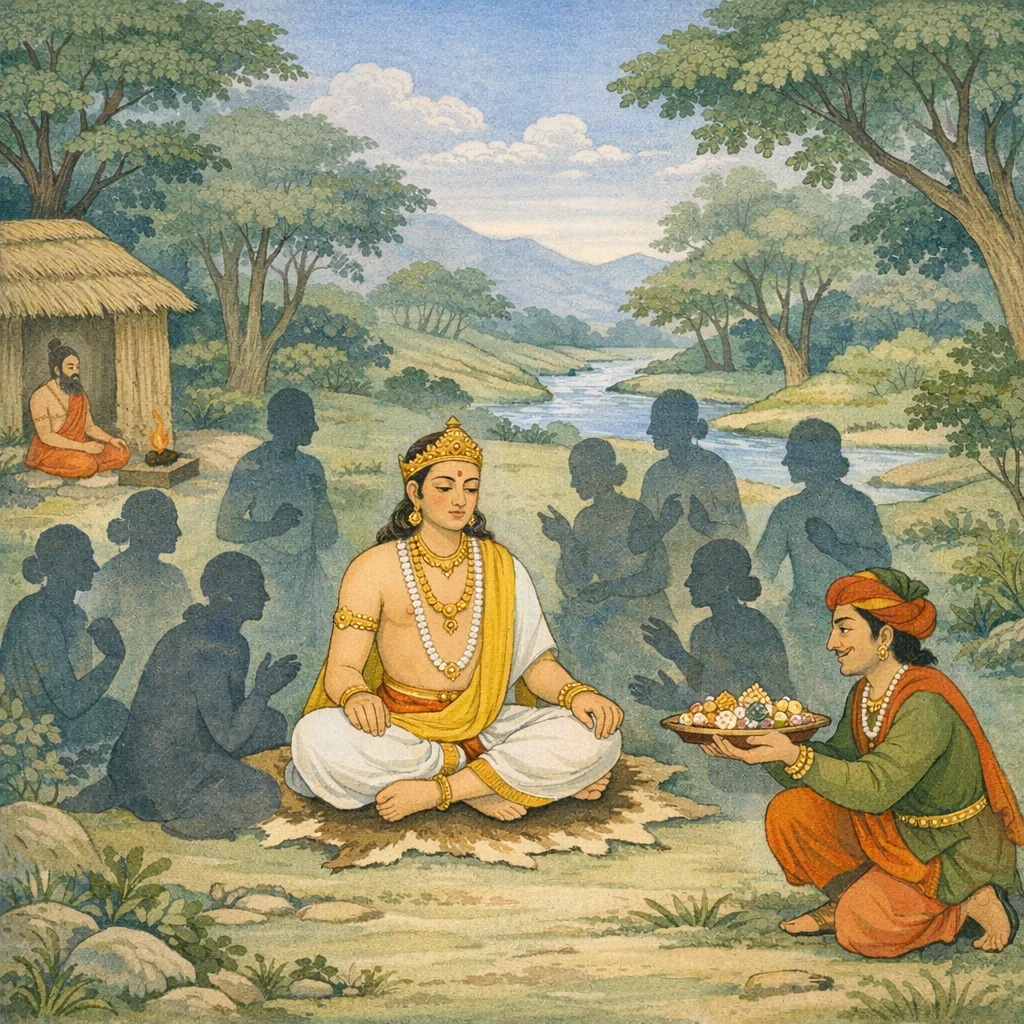
A brāhmaṇa speaker defines ‘three rivals’ in the world as nine when analyzed by guṇa taxonomy. The sāttvika triad is named as harṣa (elation), stambha (rigidity/obstinacy), and abhimāna (self-regard); the rājasa triad as śoka (grief), krodha (anger), and atisaṃrambha (impetuous agitation); and the tāmasa triad as svapna (sleep/dreaming), tandrī (sloth/drowsiness), and moha (delusion). The discourse then asserts that a steady, vigilant, self-controlled person can ‘cut down’ these inner adversaries. To anchor the teaching, traditionalists cite an older gāthā spoken by King Ambarīṣa while governing: amid social disorder and harm to the virtuous, he seized authority, restrained major faults, honored the good, and attained success. Yet he confesses one remaining enemy—lobha—by which beings fail to reach dispassion (vaitṛṣṇya) and rush uncomprehendingly toward ‘low grounds’ like a thirst-driven being. Greed is prescribed to be cut down decisively; it is shown to generate thirst, then worry, increasing rājasic qualities, binding the embodied self to repeated birth, action, and death. The chapter concludes that true ‘kingdom’ is mastery over greed: with dhṛti (steadfastness) one should restrain lobha and recognize inner conquest as the highest sovereignty.
Chapter Arc: ब्राह्मण वाचक देवी/श्रोता के सम्मुख ‘आध्यात्मिक स्वराज्य’ की गाथा खोलता है—राजा अम्बरीष द्वारा गाया गया वह गीत, जिसमें मनुष्य के भीतर के शत्रुओं को युद्धभूमि की तरह पहचाना जाता है। → तीन गुणों (सत्त्व-रज-तम) के नौ-रूप शत्रुओं का वर्गीकरण होता है—रजस के रूप में तृष्णा, क्रोध, अभिसंरम्भ; तमस के रूप में श्रम, तन्द्रा, मोह; और इनके बरक्स शान्तचित्त, जितेन्द्रिय, धैर्यवान पुरुष का आदर्श रखा जाता है जो ‘बाणसंघ’ समान साधनों से दोषों को काटता चलता है। → अम्बरीष का आत्मस्वीकार: ‘बहुत-से दोष जीत लिये, पर एक श्रेष्ठ दोष अब भी अवध्य-सा बचा है’—और वह दोष ‘लोभ’ के रूप में प्रकट होता है, जो मनुष्य से अकार्य भी करवा देता है। → लोभ के स्वरूप को सम्यक् देखकर धृति (स्थिर बुद्धि) से उसका निग्रह करने का उपदेश—यही ‘राज्य’ है; बाह्य राज्य नहीं, आत्मा ही राजा है, और आत्मराज्य की स्थापना ही परम विजय है।
Shlokas
Verse 1
अफ-्-णक+ एकत्रिशो<5 ध्याय: राजा अम्बरीषकी गायी हुई आध्यात्मिक स्वराज्यविषयक गाथा ब्राह्मण उवाच त्रयो वै रिपवो लोके नवधा गुणत: स्मृता: । प्रहर्ष: प्रीतिरानन्दस्त्रयस्ते सात््चिका गुणा:,ब्राह्मणने कहा--देवि! इस संसारमें सत्त्व, रज और तम--ये तीन मेरे शत्रु हैं। ये वृत्तियोंके भेदसे नौ प्रकारके माने गये हैं। हर्ष, प्रीति और आनन्द--ये तीन सात््विक गुण हैं; तृष्णा, क्रोध और द्वेषभाव--से तीन राजस गुण हैं और थकावट, तन्द्रा तथा मोह--ये तीन तामस गुण हैं
The Brahmin said: “O goddess, in this world there are indeed three enemies—sattva, rajas, and tamas. By their differing modes of operation they are remembered as ninefold. Exhilaration, affection, and bliss—these three are the qualities born of sattva.”
Verse 2
तृष्णा क्रोधो5भिसंरम्भो राजसास्ते गुणा: स्मृता: । श्रमस्तन्द्रा च मोहश्न त्रयस्ते तामसा गुणा:,ब्राह्मणने कहा--देवि! इस संसारमें सत्त्व, रज और तम--ये तीन मेरे शत्रु हैं। ये वृत्तियोंके भेदसे नौ प्रकारके माने गये हैं। हर्ष, प्रीति और आनन्द--ये तीन सात््विक गुण हैं; तृष्णा, क्रोध और द्वेषभाव--से तीन राजस गुण हैं और थकावट, तन्द्रा तथा मोह--ये तीन तामस गुण हैं
The Brāhmaṇa said: “Desire, anger, and impetuous aggression are remembered as the three qualities of rajas. Weariness, drowsiness, and delusion—these three are the qualities of tamas. Thus the inner dispositions that bind a person are to be recognized by their distinct movements, and one should discern them as enemies of clarity and right conduct.”
Verse 3
एतान् निकृत्य धृतिमान् बाणसंघैरतन्द्रित: । जेतुं परानुत्सहते प्रशान्तात्मा जितेन्द्रिय:,शान्तचित्त, जितेन्द्रिय, आलस्यहीन और धैर्यवान् पुरुष शम-दम आदि बाण-समूहोंके द्वारा इन पूर्वोक्त गुणोंका उच्छेद करके दूसरोंको जीतनेका उत्साह करते हैं
Having cut down these (aforementioned inner faults) with volleys of arrows—namely the disciplines of self-restraint—an energetic and steadfast man, free from sloth, calm in spirit and master of his senses, then bestirs himself to conquer others. The verse frames “victory” as ethically grounded: true conquest is made possible only after one has first subdued and removed one’s own inner impediments through śama and dama and related virtues.
Verse 4
अत्र गाथा: कीर्तयन्ति पुराकल्पविदो जना: । अम्बरीषेण या गीता राज्ञा पूर्व प्रशाम्यता,इस विषयमें पूर्वकालकी बातोंके जानकार लोग एक गाथा सुनाया करते हैं। पहले कभी शान्तिपरायण महाराज अम्बरीषने इस गाथाका गान किया था
Here, people who know the accounts of ancient times recite a traditional verse. It is said that long ago King Ambarīṣa—one devoted to peace and self-restraint—sang this very gāthā. The passage frames the teaching as time-tested wisdom, preserved by learned tradition and offered as an ethical exemplar from a righteous king.
Verse 5
समुदीर्णेषु दोषेषु बाध्यमानेषु साधुषु । जग्राह तरसा राज्यमम्बरीषो महायशा:,कहते हैं--जब दोषोंका बल बढ़ा और अच्छे गुण दबने लगे, उस समय महायशस्वी महाराज अम्बरीषने बलपूर्वक राज्यकी बागडोर अपने हाथमें ली
When the forces of vice had risen high and the righteous were being oppressed, the greatly renowned King Ambarīṣa swiftly seized the reins of sovereignty, taking up rule with decisive strength to restore order and uphold dharma.
Verse 6
स निगृह्यात्मनो दोषान् साधून् समभिपूज्य च । जगाम महतीं सिद्धि गाथाश्षेमा जगाद ह,उन्होंने अपने दोषोंको दबाया और उत्तम गुणोंका आदर किया। इससे उन्हें बहुत बड़ी सिद्धि प्राप्त हुई और उन्होंने यह गाथा गायी--
Having restrained the faults within himself and having duly honored the virtuous, he attained a very great spiritual accomplishment; and then he recited this verse of well-being as a concluding utterance.
Verse 7
भूयिष्ठं विजिता दोषा निहता: सर्वशत्रव: । एको दोषो वरिष्ठक्ष वध्य: स न हतो मया,“मैंने बहुत-से दोषोंपर विजय पायी और समस्त शत्रुओंका नाश कर डाला; किंतु एक सबसे बड़ा दोष रह गया है। यद्यपि वह नष्ट कर देने योग्य है तो भी अबतक मैं नाश न कर सका
The brāhmaṇa said: “I have overcome many faults and have destroyed all my enemies. Yet one fault—the greatest of all—still remains. Though it deserves to be slain, I have not been able to kill it even now.”
Verse 8
यत्प्रयुक्तो जन्तुरयं वैतृष्ण्यं नाधिगच्छति । तृष्णार्त इह निम्नानि धावमानो न बुध्यते,“उसीकी प्रेरणासे इस प्राणीको वैराग्य नहीं होता। तृष्णाके वशमें पड़ा हुआ मनुष्य संसारमें नीच कर्मोंकी ओर दौड़ता है, सचेत नहीं होता
Driven by that very impulse, this living being does not attain freedom from craving. Afflicted by thirst for objects, he rushes here toward low and degrading actions, and in that headlong pursuit he does not become aware—he fails to wake up to what is truly beneficial.
Verse 9
अकार्यमपि येनेह प्रयुक्त: सेवते नर: । त॑ लोभमसिभिस्ती&णैर्निकृत्य सुखमेधते,“उससे प्रेरित होकर वह यहाँ नहीं करने-योग्य काम भी कर डालता है। उस दोषका नाम है लोभ। उसे ज्ञानरूपी तलवारसे काटकर मनुष्य सुखी होता है
Urged on by it, a man in this world even takes up deeds that ought not to be done. That fault is called greed (lobha). When one cuts it down with the sharp sword of knowledge, one attains well-being and happiness.
Verse 10
लोभाद्धि जायते तृष्णा ततत्रिन्ता प्रवर्तते । स लिप्यमानो लभते भूयिष्ठं राजसान् गुणान् । तदवाप्तौ तु लभते भूयिष्ठं तमसान् गुणान्,“लोभसे तृष्णा और तृष्णासे चिन्ता पैदा होती है। लोभी मनुष्य पहले बहुत-से राजस गुणोंको पाता है और उनकी प्राप्ति हो जानेपर उसमें तामसिक गुण भी अधिक मात्रामें आ जाते हैं
Verse 11
स तैर्गुणैः संहतदेहबन्धन: पुन: पुनर्जायति कर्म चेहते । जन्मक्षये भिन्नविकीर्णदेहो मृत्युं पुनर्गच्छति जन्मनैव,“उन गुणोंके द्वारा देह-बन्धनमें जकड़कर वह बारंबार जन्म लेता और तरह-तरहके कर्म करता रहता है। फिर जीवनका अन्त समय आनेपर उसके देहके तत्त्व विलग-विलग होकर बिखर जाते हैं और वह मृत्युको प्राप्त हो जाता है। इसके बाद फिर जन्म-मृत्युके बन्धनमें पड़ता है
Bound fast in the bodily fetters woven by those guṇas, the embodied being is born again and again and continues to strive in action here. When the span of that birth is exhausted, the body’s constituents break apart and scatter, and he meets death; and by that very process he falls once more into the round of birth and death.
Verse 12
तस्मादेत॑ सम्यगवेक्ष्य लोभ॑ निगृहा धृत्या55त्मनि राज्यमिच्छेत् । एतदू राज्यं नान्यदस्तीह राज्य- मात्मैव राजा विदितो यथावत्,“इसलिये इस लोभके स्वरूपको अच्छी तरह समझकर इसे धैर्यपूर्वक दबाने और आत्मराज्यपर अधिकार पानेकी इच्छा करनी चाहिये। यही वास्तविक स्वराज्य है। यहाँ दूसरा कोई राज्य नहीं है। आत्माका यथार्थ ज्ञान हो जानेपर वही राजा है”
Therefore, having rightly examined the nature of greed, one should restrain it with steadfastness and seek sovereignty within oneself. This alone is true kingship; here there is no other kingdom. When the Self is known as it truly is, the Self itself is recognized as the king.
Verse 13
इति राज्ञाम्बरीषेण गाथा गीता यशस्विना । अधिराज्यं पुरस्कृत्य लोभमेकं॑ निकृन्तता,इस प्रकार यशस्वी अम्बरीषने आत्मराज्यको आगे रखकर एकमात्र प्रबल शत्रु लोभका उच्छेद करते हुए उपर्युक्त गाथाका गान किया था
Thus the illustrious king Ambarīṣa sang this verse, placing sovereignty over the self in the forefront and cutting down the single, powerful enemy—greed. The passage frames ethical kingship as beginning with inner rule: conquering one’s own craving is presented as the decisive victory that safeguards righteous conduct.
Verse 30
इस प्रकार श्रीमह्याभारत आश्वमेधिकपर्वके अन्तर्गत अनुगीतापर्वमें ब्राह्मणगीताविषयक तीसवाँ अध्याय प्रा हुआ
Thus, in the revered Mahābhārata, within the Āśvamedhika Parva, in the Anugītā section, the thirtieth chapter concerning the Brāhmaṇa’s Song has been concluded/arrived at. (This is a colophon-style closing line marking the chapter’s completion.)
Verse 31
इति श्रीमहाभारते आश्वमेधिके पर्वणि अनुगीतापर्वणि ब्राह्मणगीतासु एकत्रिंशो5ध्याय:
Thus ends the thirty-first chapter of the Brahmin’s Song within the Anugītā section of the Aśvamedhika Parva of the Śrī Mahābhārata. This is a colophon marking the close of the chapter and situating the teaching within its larger narrative frame.
Frequently Asked Questions
How a ruler—or any agent—can exercise authority without being governed by inner rivals, especially greed, which distorts judgment and converts governance into acquisitive compulsion.
Identify the guṇa-conditioned faults, restrain them with steadiness and vigilance, and treat the conquest of lobha as the decisive condition for stable conduct, public protection, and inner freedom.
Yes. It frames ‘this kingdom and no other’ as mastery over lobha: inner victory is presented as the highest sovereignty, because it prevents the causal chain leading to agitation, bondage, and repetitive suffering.