Adhyaya 114
आह्वानमन्त्रप्रयोगः — Kuntī’s Invocations and the Birth-Portents of the Pāṇḍavas
Upa-parva: Pāṇḍava-janma (Births of the Pāṇḍavas) — Kuntī’s Mantra and the Divine Begetting
Vaiśaṃpāyana reports to Janamejaya that, after a prolonged pregnancy for Gāndhārī, Kuntī invokes Dharma for conception using a mantra earlier given by Durvāsas, performing offerings and recitation according to rule. She bears Yudhiṣṭhira under an auspicious astronomical configuration, and an incorporeal voice proclaims his future eminence in dharma and kingship. At Pāṇḍu’s urging for a strength-preeminent heir, Kuntī invokes Vāyu, giving birth to Bhīma; an incorporeal proclamation identifies him as foremost among the strong, and a prodigy is narrated where the infant’s fall crushes a rock, astonishing Pāṇḍu. The text notes Bhīma’s birth coincides with Duryodhana’s. Pāṇḍu then undertakes severe austerities to please Indra, receives assurance of a renowned son, and instructs Kuntī to invoke Śakra; she does so and bears Arjuna. A further incorporeal proclamation predicts Arjuna’s unmatched martial capacities, future conquests, acquisition of divine weapons, and major role in the Khāṇḍava episode, while celestial beings (devas, ṛṣis, gandharvas, apsarases, nāgas, etc.) celebrate. Finally, Pāṇḍu seeks additional progeny, but Kuntī articulates a normative limit: beyond certain births, further conception attempts risk social degradation; she cautions Pāṇḍu against transgressing dharma under the pretext of offspring.
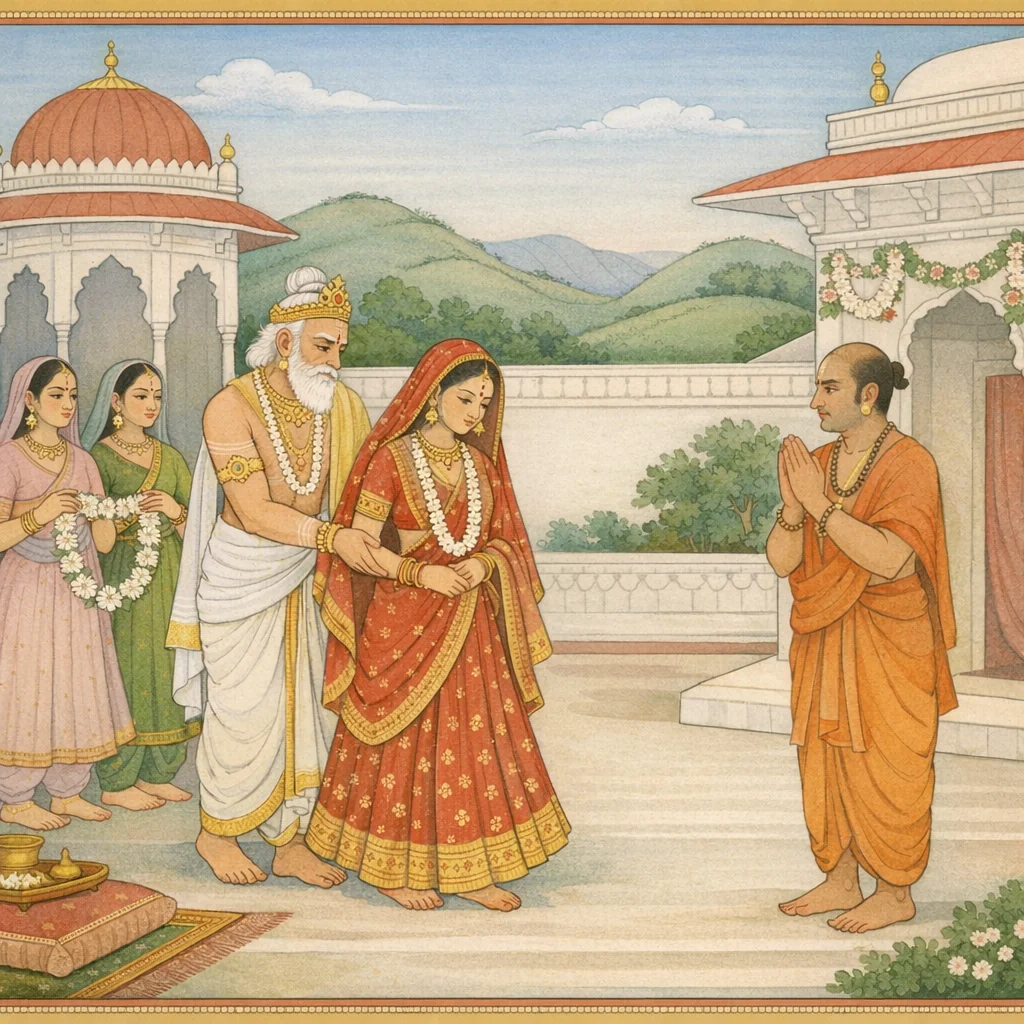
Chapter Arc: पाण्डु के दिग्विजय और यश के बाद राजकुल के भीतर एक शांत, घरेलू प्रश्न उठता है—धर्म के प्रतीक विदुर के लिए गृहस्थ-धर्म का विधान कैसे हो? → भीष्म को देवक-राज के यहाँ एक पारशवी कन्या के रूप-यौवन और गुणों का समाचार मिलता है। कुल-नीति, वर्ण-व्यवस्था और विदुर के योग्य वर-वधू के प्रश्न के बीच निर्णय का भार भीष्म पर आता है। → भीष्म स्वयं उस कन्या का वरण कर उसे हस्तिनापुर लाते हैं और विदुर के साथ विधिपूर्वक विवाह सम्पन्न कराते हैं—यह क्षण राजधर्म और करुणा का संगम बनता है। → विदुर गृहस्थ बनते हैं; उनके यहाँ अपने ही समान गुणवान, विनयशील पुत्र उत्पन्न होते हैं। पाण्डु द्वारा अर्जित धन से सत्यवती, भीष्म, कौसल्या तथा सुहृदों का सत्कार/तोषण भी संकेतित होता है, जिससे कुल में संतुलन और सौहार्द स्थिर होता है।
Shlokas
Verse 1
>> श््जु अीस-ॉ#>स - किन्ध्यपर्वतके पूर्व-दक्षिणकी ओर स्थित उस प्रदेशका प्राचीन नाम दशार्ण है, जिससे होकर धसान नदी बहती है। विदिशा (आधुनिक भिलसा) इसी प्रदेशकी राजधानी थी। - काशिराज कोसलकी कन्या होनेसे अम्बिका और अम्बालिका दोनों ही कौसल्या कहलाती थीं। त्रयोदशाधिकशततमो< ध्याय: राजा पाण्डुका पत्नियोंसहित वनमें निवास तथा विदुरका विवाह वैशम्पायन उवाच धृतराष्ट्राभ्यनुज्ञात: स्वबाहुविजितं धनम् । भीष्माय सत्यवत्यै च मात्रे चोपजहार स:,वैशम्पायनजी कहते हैं--जनमेजय! बड़े भाई धृतराष्ट्रकी आज्ञा लेकर राजा पाण्डुने अपने बाहुबलसे जीते हुए धनको भीष्म, सत्यवती तथा माता अम्बिका और अम्बालिकाको भेंट किया
Vaiśampāyana said: With Dhṛtarāṣṭra’s permission, King Pāṇḍu presented the wealth he had won by his own strength to Bhīṣma, to Satyavatī, and also to his mothers. The act signals dutiful deference to elders and guardians of the Kuru house, framing royal success as something to be offered back into the family’s moral and social order rather than hoarded as personal gain.
Verse 2
विदुराय च वै पाण्डुः प्रेषयामास तद् धनम् । सुहृदश्चापि धर्मात्मा धनेन समतर्पयत्,उन्होंने विदुरजीके लिये भी वह धन भेजा। धर्मात्मा पाण्डुने अन्य सुहृदोंको भी उस धनसे तृप्त किया
Vaiśampāyana said: Pāṇḍu also sent that wealth to Vidura; and the righteous-souled king, with that same wealth, satisfied his other well-wishers too—acting with fairness and gratitude toward those bound to him by friendship and duty.
Verse 3
ततः सत्यवती भीष्मं कौसल्यां च यशस्विनीम् | शुभै: पाण्डुजितैररथ्थैस्तोषयामास भारत,भारत! तत्पश्चात् सत्यवतीने पाण्डुद्वारा जीतकर लाये हुए शुभ धनके द्वारा भीष्म और यशस्विनी कौसल्याको भी संतुष्ट किया। माता कौसल्याने अनुपम तेजस्वी नरश्रेष्ठ पाण्डुकी उसी प्रकार हृदयसे लगाकर उनका अभिनन्दन किया, जैसे शची अपने पुत्र जयन्तका अभिनन्दन करती हैं
Vaiśampāyana said: Then Satyavatī gratified Bhīṣma and the illustrious Kausalyā with auspicious wealth that Pāṇḍu had won. The episode highlights a courtly ethic of honoring elders and sustaining harmony in the royal household through rightful gains and respectful generosity.
Verse 4
ननन्द माता कौसल्या तमप्रतिमतेजसम् । जयन्तमिव पौलोमी परिष्वज्य नरर्षभम्,भारत! तत्पश्चात् सत्यवतीने पाण्डुद्वारा जीतकर लाये हुए शुभ धनके द्वारा भीष्म और यशस्विनी कौसल्याको भी संतुष्ट किया। माता कौसल्याने अनुपम तेजस्वी नरश्रेष्ठ पाण्डुकी उसी प्रकार हृदयसे लगाकर उनका अभिनन्दन किया, जैसे शची अपने पुत्र जयन्तका अभिनन्दन करती हैं
Vaiśampāyana said: Mother Kauśalyā rejoiced. Embracing that bull among men, Pāṇḍu—whose splendor was beyond compare—she welcomed him just as Paulomī (Śacī) welcomes her son Jayanta. The scene underscores familial affection and the honoring of a worthy son returning with auspicious gains, bringing satisfaction to elders and strengthening household harmony.
Verse 5
तस्य वीरस्य विक्रान्तै: सहस्रशतदक्षिणै: । अश्वमेधशतैरीजे धृतराष्ट्री महामखै:,वीरवर पाण्डुके पराक्रमसे धृतराष्ट्रने बड़े-बड़े सौ अश्वमेध यज्ञ किये तथा प्रत्येक यज्ञमें एक-एक लाख स्वर्णमुद्राओंकी दक्षिणा दी
Vaiśampāyana said: That heroic king, renowned for his prowess, performed a hundred Aśvamedha sacrifices—grand rites accompanied by lavish gifts—granting dakṣiṇā in the measure of hundreds and thousands. Thus he displayed royal dharma through public generosity and the solemn undertaking of great sacrificial vows.
Verse 6
सम्प्रयुक्तस्तु कुन्त्या च माद्र्या च भरतर्षभ । जितलन्द्रीस्तदा पाण्डुर्बभूव वनगोचर:,भरतश्रेष्ठ! राजा पाण्डुने आलस्यको जीत लिया था। वे कुन्ती और माद्रीकी प्रेरणासे राजमहलोंका निवास और सुन्दर शय्याएँ छोड़कर वनमें रहने लगे। पाण्डु सदा वनमें रहकर शिकार खेला करते थे
Vaiśampāyana said: Urged on by Kuntī and Mādrī, O bull among the Bharatas, King Pāṇḍu then overcame his indolence and became one who moved about in the forest. Leaving behind the comforts of the royal residence and fine beds, he took to forest-life and, dwelling there, occupied himself in hunting—an act that foreshadows the moral tension between royal duty and the dangers of unrestrained desire.
Verse 7
हित्वा प्रासादनिलयं शुभानि शयनानि च । अरण्यनित्य: सततं बभूव मृगयापर:,भरतश्रेष्ठ! राजा पाण्डुने आलस्यको जीत लिया था। वे कुन्ती और माद्रीकी प्रेरणासे राजमहलोंका निवास और सुन्दर शय्याएँ छोड़कर वनमें रहने लगे। पाण्डु सदा वनमें रहकर शिकार खेला करते थे
Vaiśampāyana said: Having abandoned his residence in the palace and his splendid beds, King Pāṇḍu—O best of the Bharatas—became one who dwelt continually in the forest, ever devoted to the hunt. The verse frames a deliberate renunciation of royal comfort, yet it also hints at the ethical tension of seeking refuge in austerity while remaining attached to violence through hunting.
Verse 8
स चरन् दक्षिण पार्श्व॑ रम्यं हिमवतो गिरे: । उवास गिरिपृष्ठेषु महाशालवनेषु च,वे हिमालयके दक्षिण भागकी रमणीय भूमिमें विचरते हुए पर्वतके शिखरोंपर तथा ऊँचे शालवृक्षोंसे सुशोभित वनोंमें निवास करते थे
Vaiśampāyana said: Roaming along the lovely southern flank of the Himālaya mountain, he dwelt upon the mountain ridges and in forests adorned with lofty śāla trees. The passage underscores a life of restraint and simplicity—seeking solitude in nature rather than worldly display—suggestive of disciplined conduct and inward steadiness.
Verse 9
रराज कुन्त्या माद्रया च पाण्डु: सह वने चरन् । करेण्वोरिव मध्यस्थ: श्रीमान् पौरंदरो गज:,कुन्ती और माद्रीके साथ वनमें विचरते हुए महाराज पाण्डु दो हथिनियोंके बीचमें स्थित ऐरावत हाथीकी भाँति शोभा पाते थे
Vaiśampāyana said: As King Pāṇḍu wandered in the forest together with Kuntī and Mādrī, he shone splendidly—like the glorious elephant Airāvata of Indra, standing between two she-elephants. The verse underscores the ideal of royal dignity maintained even in exile, and the harmony of companionship amid hardship.
Verse 10
भारतं सह भार्याभ्यां खड़्गबाणधनुर्धरम् । विचित्रकवचं वीरं परमास्त्रविदं नृपम् देवो5यमित्यमन्यन्त चरन्तं वनवासिन:,तलवार, बाण, धनुष और विचित्र कवच धारण करके अपनी दोनों पत्नियोंके साथ भ्रमण करनेवाले महान् अस्त्रवेत्ता भरतवंशी राजा पाण्डुको देखकर वनवासी मनुष्य यह समझते थे कि ये कोई देवता हैं
Seeing the Bharata king Pāṇḍu—moving about with his two wives, bearing sword, arrows, and bow, clad in wondrous armor, a heroic master of supreme weapons—the forest-dwellers thought, “Surely this is a god.” The passage highlights how royal prowess and disciplined conduct, when displayed without aggression, can inspire reverence and awe even among simple communities.
Verse 11
तस्य कामांश्व भोगांश्व नरा नित्यमतन्द्रिता: । उपाजहुर्वनान्तेषु धृतराष्ट्रेण चोदिता:,धृतराष्ट्रकी आज्ञासे प्रेरित हो बहुत-से मनुष्य आलस्य छोड़कर वनमें महाराज पाण्डुके लिये इच्छानुसार भोगसामग्री पहुँचाया करते थे
Vaiśampāyana said: At Dhṛtarāṣṭra’s command, many men—ever vigilant and free from indolence—continually brought to him, in the forest retreats, whatever objects of enjoyment and comforts he desired. The passage underscores a king’s duty of provision and the disciplined service of attendants even when royal life has shifted to the austerity of the woods.
Verse 12
अथ पारशवीं कन्यां देवकस्य महीपते: । रूपयौवनसम्पन्नां स शुश्रावापगासुत:,एक समय गंगानन्दन भीष्मजीने सुना कि राजा देवकके यहाँ एक कन्या है, जो शूद्रजातीय स्त्रीके गर्भसे ब्राह्मणद्वारा उत्पन्न की गयी है। वह सुन्दर रूप और युवावस्थासे सम्पन्न है
Vaiśampāyana said: Then the son of the river (Bhīṣma) heard that King Devaka had a maiden of pāraśavī origin—endowed with beauty and youthful charm. The report highlights her mixed social origin while emphasizing her personal qualities, setting the ethical tension between birth-based status and individual merit that will shape subsequent decisions.
Verse 13
ततस्तु वरयित्वा तामानीय भरतर्षभः । विवाहं कारयामास विदुरस्य महामते:,तब इन भरतश्रेष्ठने उसका वरण किया और उसे अपने यहाँ ले आकर उसके साथ परम बुद्धिमान् विदुरजीका विवाह कर दिया
Then the bull among the Bharatas, having chosen her, brought her to his own place and duly had the marriage performed for the great-minded Vidura. The narrative underscores a socially responsible act: arranging a proper, sanctioned union for a worthy person, emphasizing order, propriety, and care for dharmic household life.
Verse 14
तस्यां चोत्पादयामास विदुर: कुरुनन्दन: । पुत्रान् विनयसम्पन्नानात्मन: सदृशान् गुणै:,कुरुनन्दन विदुरने उसके गर्भसे अपने ही समान गुणवान् और विनयशील अनेक पुत्र उत्पन्न किये
Vaiśampāyana said: In her womb, Vidura, the delight of the Kurus, begot sons—well-trained in conduct and discipline—who resembled him in character and virtues. The narrative underscores that true lineage is measured not merely by birth, but by the cultivation of vinaya (humility and good conduct) and guṇa (inner excellence).
Verse 112
इस प्रकार श्रीमह्याभारत आदिपर्वके अन्तर्गत सम्भवपर्वमें पाण्ड्रविग्विजयविषयक एक सौ बारहवाँ अध्याय पूरा हुआ
Thus concludes the one hundred and twelfth chapter of the Sambhava section within the Ādi Parva of the sacred Mahābhārata, dealing with the theme of the Pāṇḍavas’ conquest of the quarters. The narrator marks the formal completion of this unit, signaling a transition in the unfolding account of the Pāṇḍavas’ rise and the moral-political consolidation that precedes later conflicts.
Verse 113
इति श्रीमहाभारते आदिपर्वणि सम्भवपर्वणि विदुरपरिणये त्रयोदशाधिकशततमो< ध्याय:,इस प्रकार श्रीमह्याभारत आदिपर्वके अन्तर्गत सम्भवपर्वमें विदुरविवाहविषयक एक सौ तेरहवाँ अध्याय पूरा हुआ
Vaiśampāyana said: “Thus, in the Śrī Mahābhārata, within the Ādi Parva and specifically the Sambhava Parva, the one-hundred-and-thirteenth chapter—concerning the marriage of Vidura—comes to an end.” This closing colophon frames the narrative as part of a larger moral history, highlighting Vidura’s life-event as significant within the genealogy-and-origins section that grounds later ethical and political conflicts.
Frequently Asked Questions
The tension between dynastic necessity (securing heirs with desired qualities) and normative restraint: Kuntī warns that repeated invocations for progeny can violate social-ethical limits and expose her to reputational harm.
Even when outcomes are desirable (strong heirs, stable succession), means and limits matter: dharma is maintained through regulated practice, proportionality, and refusal to rationalize excess as necessity.
No explicit phalaśruti is stated; instead, meta-commentary appears through prophetic proclamations that function as narrative authorization, positioning the births as morally and cosmologically consequential within the epic’s larger causal design.