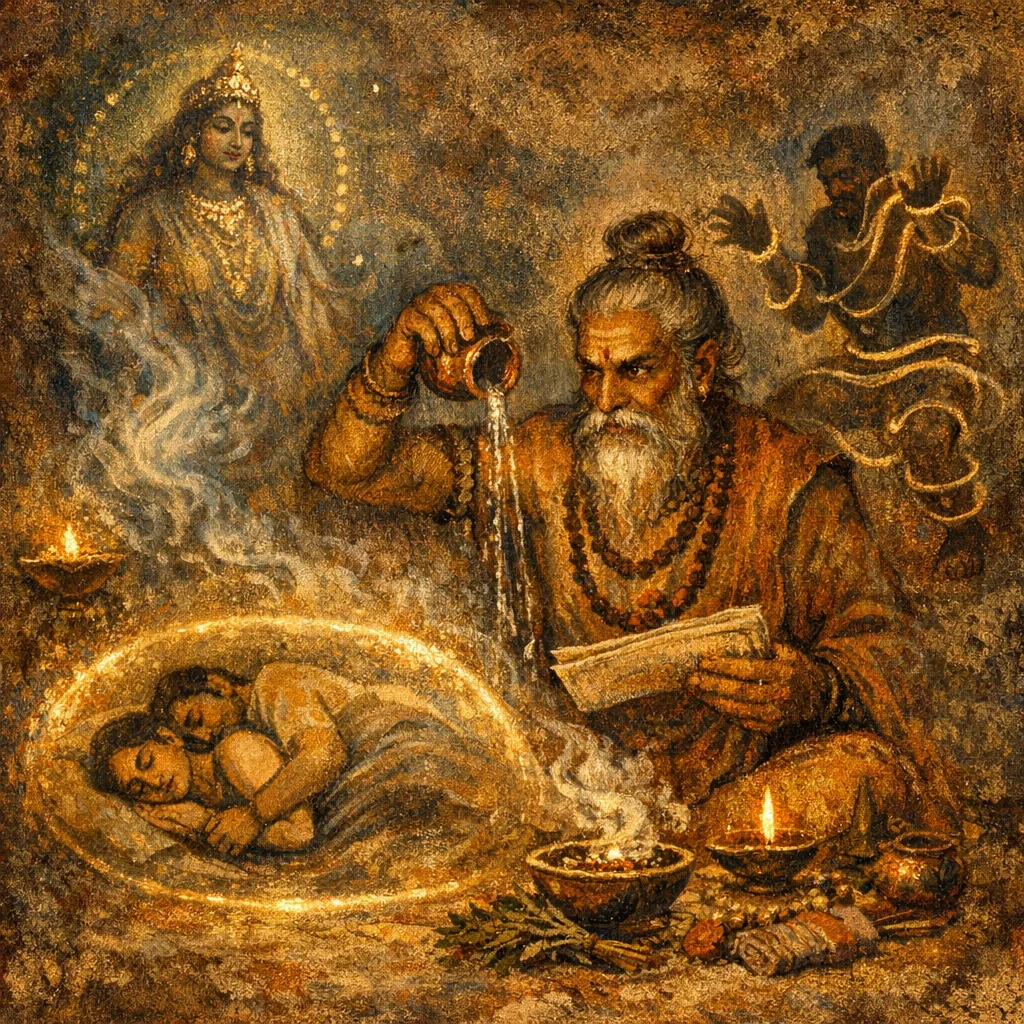
Sukta 49
Rishi: Traditionally Atharvanic/Angirasa attribution for late Book 19 hymns (Rātri-stotra complex)
Devata: Rātri (Night), with Mitra as comparative paradigm of order
Chandas: Triṣṭubh-like cadence (late Atharvan style; mixed/irregular in Book 19)
Mantras
Mantra 1
रात्रिः। इषिरा योषा युवतिर्दमूना रात्री देवस्य सवितुर्भगस्य । अश्वक्षभा सुहवा संभृतश्रीरा पप्रौ द्यावापृथिवी महित्वा
Night—impetuous maid, young house-dweller—O Night of god Savitar, of Bhaga. Horse-eyed, easy to be invoked, with gathered splendour, she hath filled heaven and earth with her majesty.
Mantra 2
अति विश्वान्यरुहद् गम्भीरो वर्षिष्ठमरुहन्त श्रविष्ठाः । उशती रात्र्यनु सा भद्राभि तिष्ठते मित्र इव स्वधाभिः
Beyond all things the Deep One hath ascended; the loftiest height the most renowned have mounted. Kindly Night, thereafter, she with auspicious powers takes her firm station, like Mitra, with her own inherent might.
Mantra 3
वर्ये वन्दे सुभगे सुजात आजगन् रात्रि सुमना इह स्याम्। अस्मांस्त्रायस्व नर्याणि जाता अथो यानि गव्यानि पुष्ठ्या
O choice and worshipful, O fortunate, well-born—Night hath arrived: may we be here of gracious mind. Protect us from the human harms that have arisen, and also from whatever touches cattle-wealth and nourishing increase.
Mantra 4
सिंहस्य रात्र्युशती पींषस्य व्याघ्रस्य द्वीपिनो वर्च आ ददे । अश्वस्य ब्रध्नं पुरुषस्य मायुं पुरु रूपाणि कृणुषे विभाती
Night, kindly, takes unto herself the splendor of the lion, of the panther, of the tiger, of the spotted beast. The horse’s tawny brightness, the man’s loud might she takes: manifold forms thou fashionest, shining forth.
Mantra 5
शिवां रात्रिमनुसूर्यं च हिमस्य माता सुहवा नो अस्तु । अस्य स्तोमस्य सुभगे नि बोध येन त्वा वन्दे विश्वासु दिक्षु
Benign Night, following upon the Sun, and mother of the cold—may she be easy to invoke for us. Of this our praise, O fortunate, take full heed, whereby I worship thee in all the quarters.
Mantra 6
स्तोमस्य नो विभावरि रात्रि राजेव जोषसे । आसाम सर्ववीरा भवाम सर्ववेदसो व्युच्छन्तीरनूषसः
Of our praise, O light-abounding Night, thou takest pleasure, as a king in homage. In these (recurring) nights that break forth after the dawns, may we be possessed of all brave strength, possessed of all knowledge.
Mantra 7
शम्या ह नाम दधिषे मम दिप्सन्ति ये धना । रात्रीहि तानसुतपा यस्तेनो न विद्यते यत् पुनर्न विद्यते
O Night—Peaceful One by name thou wearest thy name: they who would seize my goods. Come hither, O self-heating One; those—let that thief be not found, yea, let him not be found again.
Mantra 8
भद्रासि रात्रि चमसो न विष्टो विष्वं गोरूपं युवतिर्बिभर्षि । चक्षुष्मती मे उशती वपूंषि प्रति त्वं दिव्या न क्षाममुक्थाः
Auspicious art thou, O Night, set down as is a bowl: as a young maid thou bearest every cow-formed thing. Eye-possessed, kindly unto me, thou settest thy fair forms in answer, like heavenly hymns upon the earth.
Mantra 9
यो अद्य स्तेन आयत्यघायुर्मर्त्यो रिपुः । रात्री तस्य प्रतीत्य प्र ग्रीवाः प्र शिरो हनत्
Whoso to-night, a thief, draws near—evil-living mortal, enemy—O Night, encountering him, smite forth his neck, smite forth his head.
Mantra 10
प्र पादौ न यथायति प्र हस्तौ न यथाशिषत्। यो मलिम्लुरुपायति स संपिष्टो अपायति । अपायति स्वपायति शुष्के स्थाणावपायति
His feet go not as he would go; his hands reach not as he would seize. Whoso the prowling robber draws near—crushed down, he goes away; away he goes, clean away he goes; to a dry stump he goes away.
Frequently Asked Questions
To make the night safe and auspicious for a household or community—calming fear, establishing protective order, and actively turning away nocturnal threats like thieves.
Mitra represents orderly, law-like stability. By saying Night stands ‘like Mitra,’ the hymn frames darkness as governed protection, not chaos, so the home remains secure and regulated.
No items are required by the hymn. The closing verse mentions a ‘dry stump’ as a symbolic place to send the threat away, but the primary instrument is recitation and the repeated banishing formula.