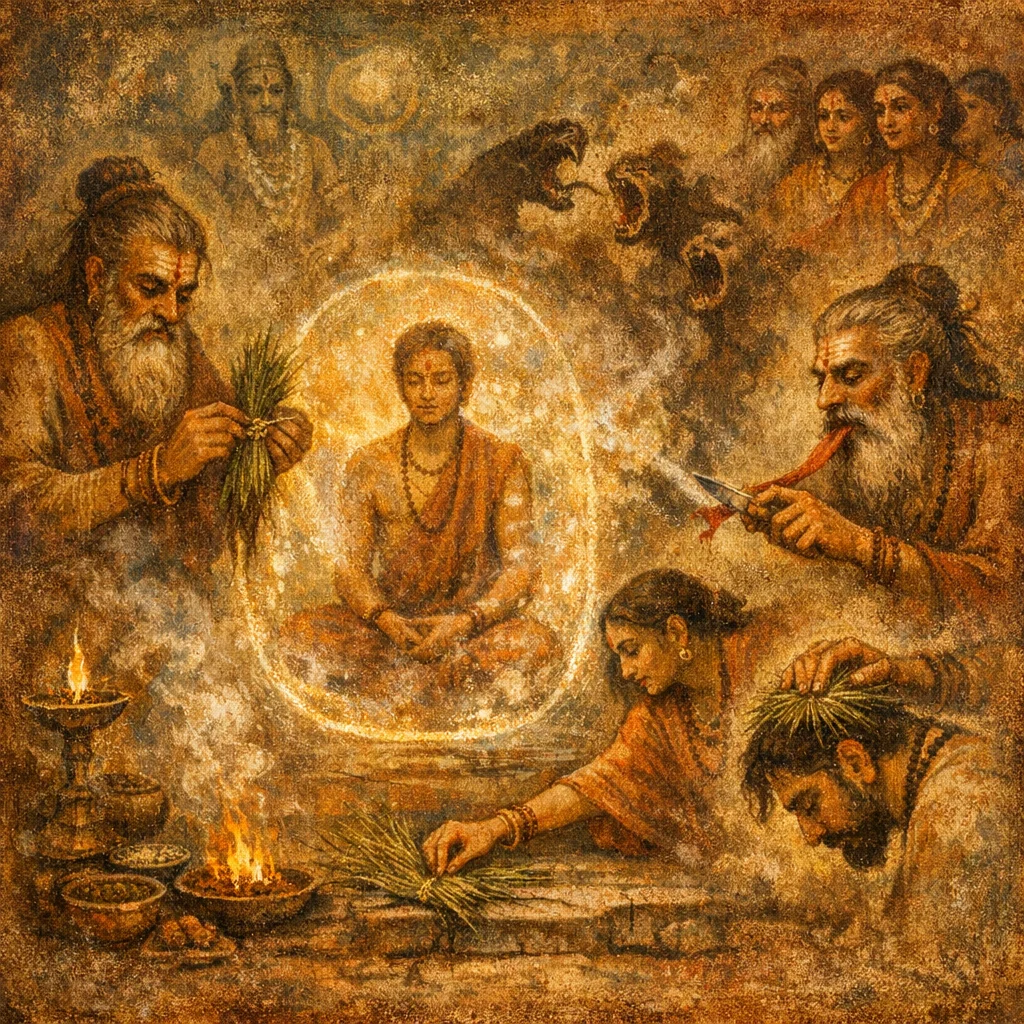
Sukta 32
Rishi: Atharvanic tradition (often treated as Atharvan/Angiras-type for such charms; specific r̥ṣi not supplied in the input)
Devata: Darbha (personified as a power/implement); indirectly the cosmic order it spans (heavens/earths)
Chandas: Anuṣṭubh (probable; many AV 19.x charms are in anuṣṭubh-like cadence)
Mantras
Mantra 1
दर्भः। शतकाण्डो दुश्च्यवनः सहस्रपर्ण उत्तिरः । दर्भो य उग्र ओषधिस्तं ते बध्नाम्यायुषे
Darbha—hundred-stemmed, hard to dislodge, thousand-leaved, surpassing. That Darbha which is a fierce herb, that do I bind upon thee for life.
Mantra 2
नास्य केशान् प्र वपन्ति नोरसि ताडमा घ्नते । यस्मा अछिन्नपर्णेन दर्भेण शर्म यच्छति
They shear not away his hair; upon his breast they deal no blow—he for whom, with uncut darbha-blade, (the charm) bestows shelter.
Mantra 3
दिवि ते तूलमोषधे पृथिव्यामसि निष्ठितः । त्वया सहस्रकाण्डेनायुः प्र वर्धयामहे
In heaven is thy tuft, O herb; on earth thou art set firm. With thee, O thousand-stemmed one, we increase life mightily.
Mantra 4
तिस्रो दिवो अत्यतृणत् तिस्र इमाः पृथिवीरुत। त्वयाहं दुर्हार्दो जिह्वां नि तृणद्मि वचांसि
Three heavens hath it overmastered, and these three earths likewise. With thee I press down the tongue of the ill-hearted; I trample down his words.
Mantra 5
त्वमसि सहमानोऽहमस्मि सहस्वान्। उभौ सहस्वन्तौ भूत्वा सपत्नान्सहिषीवहि
Thou art the overmastering one; I am the mighty. Let us two, being both possessed of might, together overpower our rivals.
Mantra 6
सहस्व नो अभिमातिं सहस्व पृतनायतः । सहस्व सर्वान् दुर्हार्दः सुहार्दो मे बहून् कृधि
Overpower for us the hostile onslaught; overpower the battling foe. Overpower all the ill-hearted; make for me many that are well-hearted.
Mantra 7
दर्भेण देवजातेन दिवि ष्टम्भेन शश्वदित्। तेनाहं शश्वतो जनाँ असनं सनवानि च
With darbha, god-begotten, the everlasting prop in heaven—with that may I win perpetual folk, and win a seat besides.
Mantra 8
प्रियं मा दर्भ कृणु ब्रह्मराजन्याऽभ्यां शूद्राय चार्याय च । यस्मै च कामयामहे सर्वस्मै च विपश्यते
Make me dear, O darbha, to Brahman and to Rajanya, to Śūdra and to Ārya; and to whomsoever we would fain win, and to every onlooker that beholds.
Mantra 9
यो जायमानः पृथिवीमदृंहद् यो अस्तभ्नादन्तरिक्षं दिवं च । यं बिभ्रतं ननु पाप्मा विवेद स नोऽयं दर्भो वरुणो दिवा कः
He who, when born, made firm the Earth; who propped the Mid-air and the Heaven: whom, though he be the bearer, verily no Evil hath found—may this our Darbha be for us Varuṇa, (and) Ka in the day.
Mantra 10
सपत्नहा शतकाण्डः सहस्वानोषधीनां प्रथमः सं बभूव । स नोऽयं दर्भः परि पातु विश्वतस्तेन साक्षीय पृतनाः पृतन्यतः
Rival-slayer, hundred-stemmed, mighty, he hath become the first of herbs. May this our Darbha guard us round about from every side: by it may I win the battles against the battling foe.
Frequently Asked Questions
It empowers darbha (kuśa grass) as a bound-on protective force: it guards the user, supports longevity, and subjugates rivals—especially by restraining hostile speech such as curses, slander, or accusation.
In Atharvanic practice certain plants are personified as oṣadhis with agency. Darbha is praised as cosmically expansive and ‘first among herbs,’ so it can function as both protection and an instrument to bind or silence harm.
A clean tuft of darbha is braided or held while the verses are recited, then tied on as an amulet or placed around the person/space for encircling protection; for speech-binding intent, the recitation emphasizes pressing down the opponent’s tongue and words (not physical harm).