Adhyaya 39
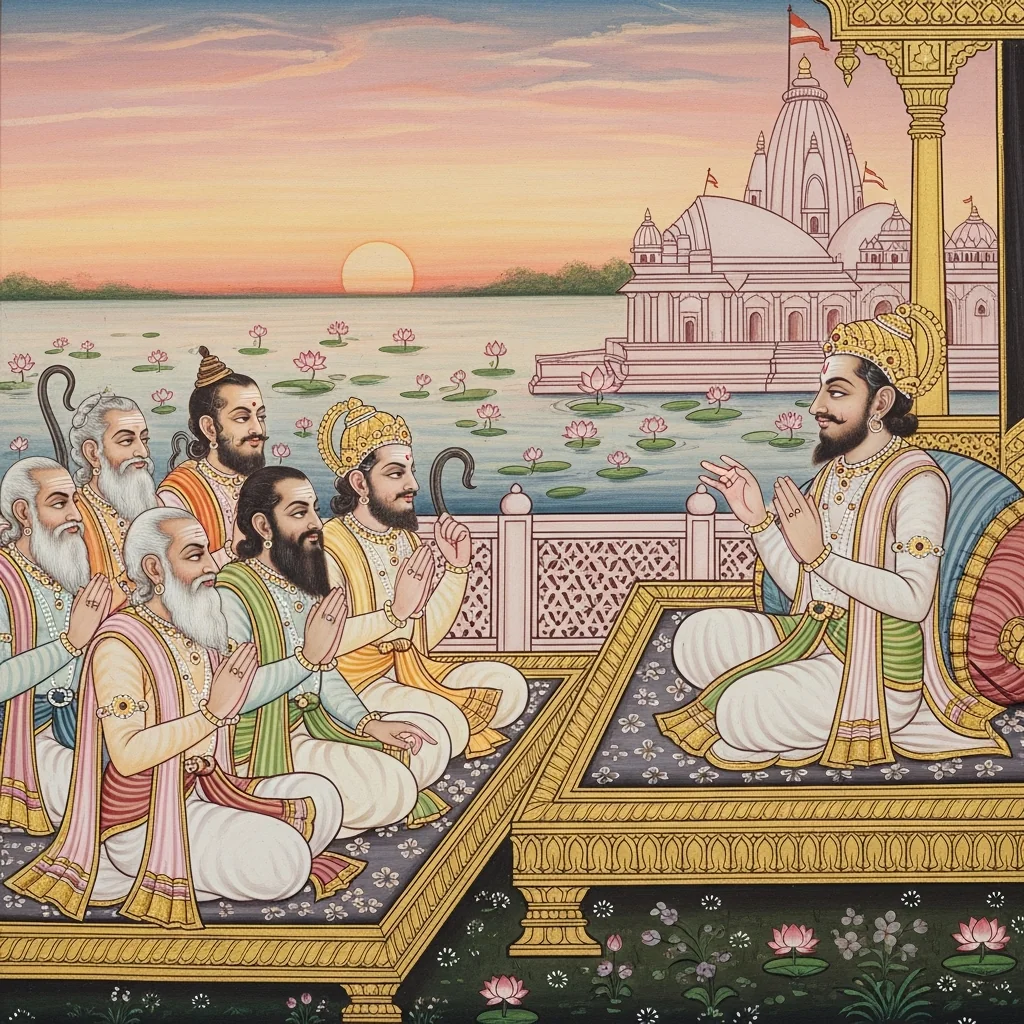
Chapter 39 presents a devotional and ritual itinerary within Īśvara’s teaching to Mahādevī. It identifies the Kedāra liṅga in Prabhāsa as self-manifest (svayaṃbhū), dear to Śiva, and situated near Bhīmeśvara. In an earlier yuga it was known as Rudreśvara; fearing defilement through contact with mlecchas, it was concealed or merged, and later became renowned on earth as Kedāra. The chapter then prescribes observance: bathing in the salt ocean and at the Padmaka tīrtha/kuṇḍa, followed by worship of Rudreśa and Kedāra, with special emphasis on caturdaśī and an all-night vigil (ekaprajāgara) on Śivarātri as a supremely meritorious vow. A long legend follows: King Śaśabindu arrives at Prabhāsa on the bright-fortnight caturdaśī, sees sages engaged in japa and homa, worships Somnātha, and proceeds to Kedāra to perform jāgaraṇa. Questioned by sages such as Cyavana, Yājñavalkya, Nārada, Jaimini, and others, he recounts a former birth as a Śūdra during famine: after gathering lotuses at Rāma-saras and failing to sell them, he encountered a Śivarātri vigil at the Vṛddha/Rudreśvara liṅga led by the courtesan Anaṅgavatī. Through unintended fasting (from lack of food), bathing, lotus-offering, and night-vigil, he gained future sovereignty and retained memory of its cause. The chapter closes with phala: worship of this liṅga is said to destroy grave sins and grant the full range of human aims; Anaṅgavatī too is uplifted by the same observance, becoming an apsaras.
Shlokas
Verse 1
ईश्वर उवाच । अथ संपूज्य विधिना देवदेवं कपर्द्दिनम् । ततो गच्छेन्महादेवि लिगं केदारसंस्थितम्
Īśvara said: “Having duly worshipped Devadeva Kaparddin (Śiva) according to the prescribed rite, then, O Mahādevī, one should proceed to the Liṅga established as Kedāra.”
Verse 2
तस्यैवाग्नेयभागस्थं भीमेश्वरसमीपगम् । स्वयंभूतं महादेवि कल्पलिंगं मम प्रियम्
“In that very place, in the south-eastern quarter, near Bhīmeśvara, there is a self-manifested Liṅga, O Mahādevī—my beloved Kalpa-liṅga.”
Verse 3
मया संपूजितं देवि वृद्धिलिंग महाप्रभम् । निराहारस्तु यस्तत्र करोत्येकं प्रजागरम्
“That mighty, splendid Vṛddhi-liṅga has been worshipped by me, O Devī. Whoever, fasting, keeps a single night-vigil there…”
Verse 4
चतुर्दश्यां विशेषेण तस्य लोकाः सनातनाः । रुद्रेश्वरेति देवस्य त्वासीन्नाम पुरा युगे
Especially on the fourteenth lunar day (Caturdaśī), his worlds are eternal. In former ages, this deity’s name was “Rudreśvara.”
Verse 5
तिष्येस्मिंस्तु पुनः प्राप्ते म्लेच्छस्पर्शभयातुरः । अस्मिंल्लिंगे लयं यातः केदारश्चाब्धिसंनिधौ
But when the Tiṣya period returned, Kedāra—distressed by fear of contact with the Mlecchas—entered into dissolution within this Liṅga, near the sea.
Verse 6
तेन केदारनामेति तस्य ख्यातं धरातले । माघे मासि यताहारः स्नात्वा तु लवणोदधौ
Therefore, it became renowned on earth by the name “Kedāra.” In the month of Māgha, living on a regulated diet, and bathing in the salt ocean…
Verse 7
पद्मके तु महाकुंडे मध्येस्य लवणांभसः । रुद्रेशाद्दक्षिणे भागे धनुषां दशके स्थिते
In the great Padmaka pool, amid these salt waters, in the southern part from Rudreśa, situated at a distance of ten dhanu (bow-lengths)…
Verse 8
स्नात्वा विधानतो देवि रुद्रेशं चार्चयिष्यति । सम्यक्केदारया त्रायाः फलं तस्य भविष्यति
Having bathed according to rule, O Devī, one should worship Rudreśa; then the full fruit of Kedāra’s saving grace (trā) will be his.
Verse 9
ब्रह्महत्यादिपापानां पूजनान्नाशनं महत् । अथ तस्यैव देवस्य इतिहासं पुरातनम्
Worship brings mighty destruction of sins such as brahmahatyā. Now the ancient history of that very deity shall be told.
Verse 10
सर्वकामप्रदं नृणां कथ्यते ते सुरप्रिये । आसीद्राजा पुरा देवि शशबिंदुरिति श्रुतः
To you, O beloved of the gods, is declared that which grants men all desires. In former times, O Devī, there was a king famed as Śaśabindu.
Verse 11
सार्वभौमो महीपालो विपक्षगणसूदनः । कलिद्वापरयोः संधौ सभूतः पृथिवीपतिः
There was a universal sovereign, protector of the earth and slayer of hostile hosts—a king who arose at the juncture of the Dvāpara and Kali ages.
Verse 12
तस्य भार्याऽभवत्साध्वी प्राणेभ्योऽपि गरीयसी । न देवी न च गन्धर्वी नासुरी न च पन्नगी
His wife was a virtuous woman, dearer to him than life itself—neither a goddess, nor a Gandharvī, nor an Asurī, nor a Nāga-maiden.
Verse 13
तादृग्रूपा वरारोहे यथाऽस्य शुभलोचना । तस्य हेममयं पद्मं शतपत्रं मनोरमम्
O fair-hipped lady, such was her form—she of auspicious eyes. And he possessed a delightful lotus made of gold, a hundred-petalled marvel.
Verse 14
खेचरं वेगि नित्यं च तस्य राज्ञो महात्मनः । स तेन पर्यटंल्लोकान्सर्वान्देवि स्वकामतः
That great king possessed a sky-moving conveyance, swift and ever-ready. With it, O Devī, he wandered through all the worlds at his own will.
Verse 15
एकदा फाल्गुने मासि शुक्लपक्षे वरानने । चतुर्द्दश्यां तु संप्राप्तः प्रभासक्षेत्रमुत्तमम्
Once, in the month of Phālguna, in the bright fortnight—O fair-faced one—on the fourteenth lunar day, he arrived at the excellent holy field of Prabhāsa.
Verse 16
अथापश्यदृषीन्सर्वाञ्छ्रीसोमेशपुरःस्थितान् । रात्रौ जागरणार्थाय जपहोमपरायणान्
Then he saw all the sages stationed before the sacred city of Someśvara, intent on keeping night-vigil, devoted to japa and homa.
Verse 17
स दृष्ट्वा सोमनाथं तु प्रणिपत्य विधानतः । पूजयामास सर्वां स्तान्यथार्हं भक्तिसंयुतः
Having beheld Somanātha, he bowed down in due manner; filled with devotion, he then worshipped all of them appropriately, as was fitting.
Verse 18
ततः केदारमासाद्य संस्नाप्य विधिवत्प्रिये । पूजयित्वा विचित्राभिः पुष्पमालाभिरीश्वरम्
Thereafter, reaching Kedāra, O beloved, he bathed (the Lord) in the prescribed manner, and worshipped Īśvara with wondrous garlands of flowers.
Verse 19
नैवेद्यैर्विविधैर्वस्त्रैर्भूषणैश्च मनोहरैः । ततोऽत्र कारयामास जागरं सुसमाहितः
With many kinds of naivedya, food-offerings, with garments and delightful ornaments, he honored the worship; then, fully composed, he caused a night-vigil (jāgara) to be observed there.
Verse 20
ततस्ते मुनयः सर्वे कुतूहलसमन्विताः । च्यवनो याज्ञवल्क्यश्च शांडिल्यः शाकटायनः
Then all those sages, filled with curiosity—Cyavana, Yājñavalkya, Śāṇḍilya, and Śākaṭāyana—gathered there.
Verse 21
रैभ्योऽथ जैमिनिः क्रौंचो नारदः पर्वतः शिलः । मार्कंडं पुरतः कृत्वा जग्मुस्तस्य समीपतः
Then Raibhya, Jaimini, Krauñca, Nārada, Parvata, and Śila—placing Mārkaṇḍa in the forefront—went and approached him.
Verse 22
चक्रुः कथाः सुविचित्रा इतिहासानि भूरिशः । कीर्त्तयंतः स्थितास्तत्र पप्रच्छू राजसत्तमम्
They related many wondrous stories and abundant ancient accounts; and while staying there, recounting and praising them, they questioned that best of kings.
Verse 23
ऋषय ऊचुः । कस्मात्सोमेश्वरं देवं परित्यज्य नराधिप । केदारस्य पुरोऽकार्षीर्जागरं तद्ब्रवीहि नः । नूनं वेत्सि फलं चास्य लिंगस्य त्वं महोदयम्
The sages said: “O ruler of men, why did you leave the god Someśvara and keep vigil before Kedāra? Tell us that. Surely you know, O noble one, the fruit of worship of this liṅga.”
Verse 24
राजोवाच । शृण्वंतु ब्राह्मणाः सर्वे अन्यदेहोद्भवं मम । पुराऽहं शूद्रजातीय आसं ब्राह्मणपूजकः
The king said: “Let all the brāhmaṇas listen to my tale from a former body. Long ago I was born a śūdra, yet I was devoted to honoring and venerating the brāhmaṇas.”
Verse 25
सौराष्ट्रविषये शुभ्रे धनधान्यसमाकुले । अथ कालांतरे तत्र अनावृष्टिरभूद्द्विजाः
In the fair land of Saurāṣṭra, abundant in wealth and grain, after some time, O twice-born ones, a drought arose there, for the rains failed.
Verse 26
ततोऽहं क्षुधयाविष्टः प्रभासं क्षेत्रमास्थितः । अथापश्यं सरः शुभ्रं हरिणीमूलसंस्थितम्
Then, afflicted by hunger, I came to dwell in the sacred kṣetra of Prabhāsa. There I beheld a shining lake, set near the root where a doe had rested.
Verse 27
तच्च रामसरोनाम पद्मिनीषण्डमंडितम् । क्षीरोदांबुधिसंकाशं दृष्ट्वा स्नातः क्लमान्वितः
That lake was called Rāmasaras, adorned with clusters of lotus-plants. Seeing it gleam like the Ocean of Milk, I bathed there, though weary.
Verse 28
संतर्प्य च पितॄन्देवान्पीत्वा स्वच्छमथोदकम् । ततोऽहं भार्यया प्रोक्तो गृहाणेमान्सरोरुहान्
Having satisfied the Pitṛs and the gods with offerings and then drunk the clear water, my wife said to me, “Take these lotuses.”
Verse 29
एतत्समीपतो रम्यं दृश्यते स्थानमुत्तमम् । विक्रीणीमोऽत्र गत्वा तु येन स्याद्भोजनं विभो
Near this, a delightful and most excellent place is seen. Let us go there and sell these lotuses, so that there may be food, O lord.
Verse 30
अथावतीर्य सलिलं गृहीतानि मया द्विजाः । कमलानि सुभू रीणि प्रस्थितश्च पुरं प्रति
Then, descending into the water, O twice-born ones, I gathered many fine lotuses and set out toward the town.
Verse 31
तत्र गत्वा च रथ्यासु चत्वरेषु त्रिकेषु च । प्रफुल्लकमलान्येव क्रेतुं वै मुनिसत्तमाः
Having gone there, O best of sages, I wandered through the streets, the squares, and the three-way junctions, seeking buyers only for fully bloomed lotuses.
Verse 32
न कश्चित्प्रति गृह्णाति अस्तं प्राप्तो दिवाकरः । प्रासादं कंचिदासाद्य सुप्तोहं सह भार्यया
No one would accept, for the sun had already set. So, reaching a certain mansion, I lay down to sleep together with my wife.
Verse 33
तत्र सुप्तस्य मे बुद्धिः श्रुत्वा गीतध्वनिं तदा । समुत्पन्ना सभा र्यस्य क्षुधार्तस्य विशेषतः । नूनं जागरणं ह्येतत्कस्मिंश्चिद्विबुधालये
While I slept there, my mind was stirred on hearing the sound of singing. With my wife—especially as hunger afflicted us—I thought: “Surely this is a night-vigil in some divine shrine.”
Verse 34
सरोरुहाणि चादाय व्रजाम्यत्र सुरालये । यदि कश्चित्प्रगृह्णाति प्राणयात्रा ततो भवेत्
“Taking these lotuses with me, I shall go from here to the temple of the gods. If someone there accepts them or lends help, then our livelihood—the means by which life is sustained—will be secured.”
Verse 35
अथोत्थाय समायातो ह्यत्राहं मुनिपुंगवाः । अपश्यं लिंगमेतत्तु पूजितं कुसुमैः शुभैः
Then I rose and came here, O foremost of sages, and I beheld this very liṅga, worshipped with auspicious flowers.
Verse 36
रुद्रेश्वराभिधमिदं वृद्धलिंगं स्वयंभुवम् । वेश्यानंगवतीनाम्नी शिवरात्रिपरायणा
This ancient, self-manifest liṅga is called Rudreśvara. A courtesan named Anaṅgavatī, devoted to the observance of Śivarātri, worshipped here.
Verse 37
जागर्त्ति पुरतस्तस्य गीतनृत्योत्सवादिना । ततः कश्चिन्मया दृष्टः किमेतद्रात्रिजागरम्
Before that liṅga, she kept awake with festivities of song, dance, and celebration. Then I saw someone and asked, “What is this night-vigil?”
Verse 38
केयं स्त्री दृश्यतेऽत्यर्थं गीतनृत्योत्सवे रता । सोऽब्रवीच्छिवधर्मोक्ता शिवरात्रिः सुधर्मदा
“Who is this woman, so intensely devoted to the festival of song and dance?” He replied, “This is Śivarātri, taught in the dharma of Śiva, the giver of true righteousness.”
Verse 39
तां चानंगवतीनाम्नी वेश्येयं धर्मसंयुता । जागर्त्ति परमं श्रेयः शिवरात्रिव्रतं शुभम्
And she is a courtesan named Anaṅgavatī, steadfast in dharma. Keeping sacred vigil, she seeks the highest good through the auspicious vow of Śivarātri.
Verse 40
शिवरात्रिव्रतं ह्येतद्यः सम्यक्कुरुते नरः । न स दुःखमवाप्नोति न दारि द्र्यं न बंधनम्
Indeed, the man who rightly performs this vow of Śivarātri does not fall into sorrow—nor into poverty, nor into bondage.
Verse 41
दुष्टं चारिष्टयोगं वा न रोगं न भयं क्वचित् । सुखसौभाग्यसंपन्नो जायते सत्कुले नरः
No evil influence or inauspicious conjunction, no disease, and no fear ever troubles him. Endowed with happiness and good fortune, a man is born into a noble family—such is the fruit proclaimed in the glory of Prabhāsa.
Verse 42
तेजस्वी च यशस्वी च सर्वकल्याणभाजनम् । भवेदस्य प्रसादेन एवमाहुर्मनीषिणः
By his gracious favor, one becomes radiant and renowned, a vessel of every blessing—so declare the wise in praising this sacred greatness.
Verse 43
राजोवाच । अथ मे बुद्धिरुत्पन्ना तद्व्रतं प्रति निश्चला । चिंतितं मनसा ह्येतन्मयाब्राह्मणसत्तमाः
The King said: “Then my resolve arose—steady and unwavering—toward that vow. Indeed, I pondered this within my mind, O best of Brāhmaṇas.”
Verse 44
अन्नाभावान्ममोत्पन्न उपवासो बलाद्यतः । तदहं पद्मके तीर्थेस्नात्वा च लवणांभसि
Because food was lacking, an unavoidable fast came upon me. Then I bathed at Padmaka Tīrtha, and also in the salty waters of the sea.
Verse 45
एतैः सरोरुहैर्देवं पूजयामि महेश्वरम् । ततो मया सभार्येण रुद्रेशः संप्रपूजितः
With these lotuses I worship the divine Maheśvara. Thereafter Rudreśa was duly worshipped by me together with my wife.
Verse 46
पद्मैश्च भक्तियुक्तेन सभार्येण विशेषतः । जाग्रत्स्थितस्तु देवाग्रे तां रात्रिं सह भार्यया
And with lotuses—filled with devotion, especially together with my wife—I remained awake before the deity throughout that night, along with her.
Verse 47
ततः प्रभातसमय उदिते सूर्यमण्डले । सा वेश्या मामुवाचेदं कलधौतपलत्रयम्
Then, at dawn, when the orb of the sun had risen, that courtesan said to me: “Here are three palas of refined gold…”
Verse 48
गृहाणमूल्यं पद्मानां न गृहीतं मया हि तत् । सात्त्विकं भावमास्थाय सभार्येण द्विजोत्तमाः
“Take the price for the lotuses”—but I did not accept it. Abiding in a sāttvika spirit, I, together with my wife, O best of the twice-born, maintained that purity of intention.
Verse 49
ततो भिक्षां समाहृत्य प्राणयात्रा मया कृता । कालेन महता प्राप्तः कालधर्मं मुनीश्वराः
Then, gathering alms, I sustained my life. After a long time, I reached the law of Time—death, O lords among sages.
Verse 50
इयं मे दयिता साध्वी प्राणेभ्योऽपि गरीयसी । मम देहं समादाय प्रविष्टा हव्यवाहनम्
This beloved wife of mine—virtuous and dearer even than life—took up my body and entered the sacred fire (the funeral flame).
Verse 51
तत्प्रभावादहं जातः सर्वभौमो महीपतिः । जातिस्मरः सभार्यस्तु सत्यमेतद्द्विजोत्तमाः
By the power of that sacred observance, I was born as a universal sovereign, a lord of the earth; and I retained memory of my former birth, together with my wife. This is the truth, O best of the twice-born.
Verse 52
एतस्मात्कारणादस्य भक्तिर्लिंगस्य चोपरि । मम नित्यं सभार्यस्य सत्यमेतद्ब्रवीमि वः
For this very reason, my devotion is ever fixed upon this Liṅga; and together with my wife, I tend and worship it daily. I tell you this as truth.
Verse 53
मया क्रियाविहीनेन भक्तिबाह्येन सत्तमाः । व्रतमेतत्समाचीर्णं तस्येदं सुमहत्फ लम्
O noble ones, even by me—bereft of proper rites and lacking true devotion—this vow was performed; and this is its exceedingly great fruit.
Verse 54
अधुना भक्तियुक्तस्य यथोपकरणान्मम । भविष्ये यत्फलं किंचिन्नो वेद्मि च मुनीश्वराः । येन सोमेशमुत्सृज्य अत्राहं भक्ति तत्परः
Now, endowed with devotion and with the proper means at hand, I do not know what further fruit may arise in the future, O lords among sages—since, leaving even Someśvara, I have become wholly devoted here.
Verse 55
ईश्वर उवाच । एवं श्रुत्वा तु ते विप्रा विस्मयोत्फुल्ललोचनाः । साधुसाध्विति जल्पंतो राजानं संप्रशंसिरे
Īśvara said: Hearing this, those brāhmaṇas—eyes widened in amazement—kept exclaiming, “Well done, well done!” and praised the king greatly.
Verse 56
पूजयामासुरनिशं लिंगं तत्र स्वयंभुवम् । ततोऽसौ पार्थिवश्रेष्ठो लिंगस्यास्यप्रसादतः । संसिद्धिं परमां प्राप्तो दुर्ल्लभां त्रिदशैरपि
They worshipped, without ceasing, the self-manifest Liṅga there. Then that best of kings, by the grace of this Liṅga, attained the supreme perfection—one that is difficult to obtain even for the gods.
Verse 57
सा च वेश्या भगवती शिवरात्रिप्रभावतः । तस्य लिंगस्य माहात्म्याद्रंभानामाप्सराऽभवत्
And that courtesan, by the power of Śivarātri, became radiant and divine; and through the greatness of that Liṅga, she became an apsarā like Rambhā.
Verse 58
तस्मात्सर्वप्रयत्नेन तल्लिंगं पूजयेद्बुधः । धर्मकामार्थमोक्षं च यो वांछत्यखिलप्रदम्
Therefore, with every effort, the wise should worship that Liṅga—bestower of all—if one desires dharma, kāma, artha, and also mokṣa.