Adhyaya 29
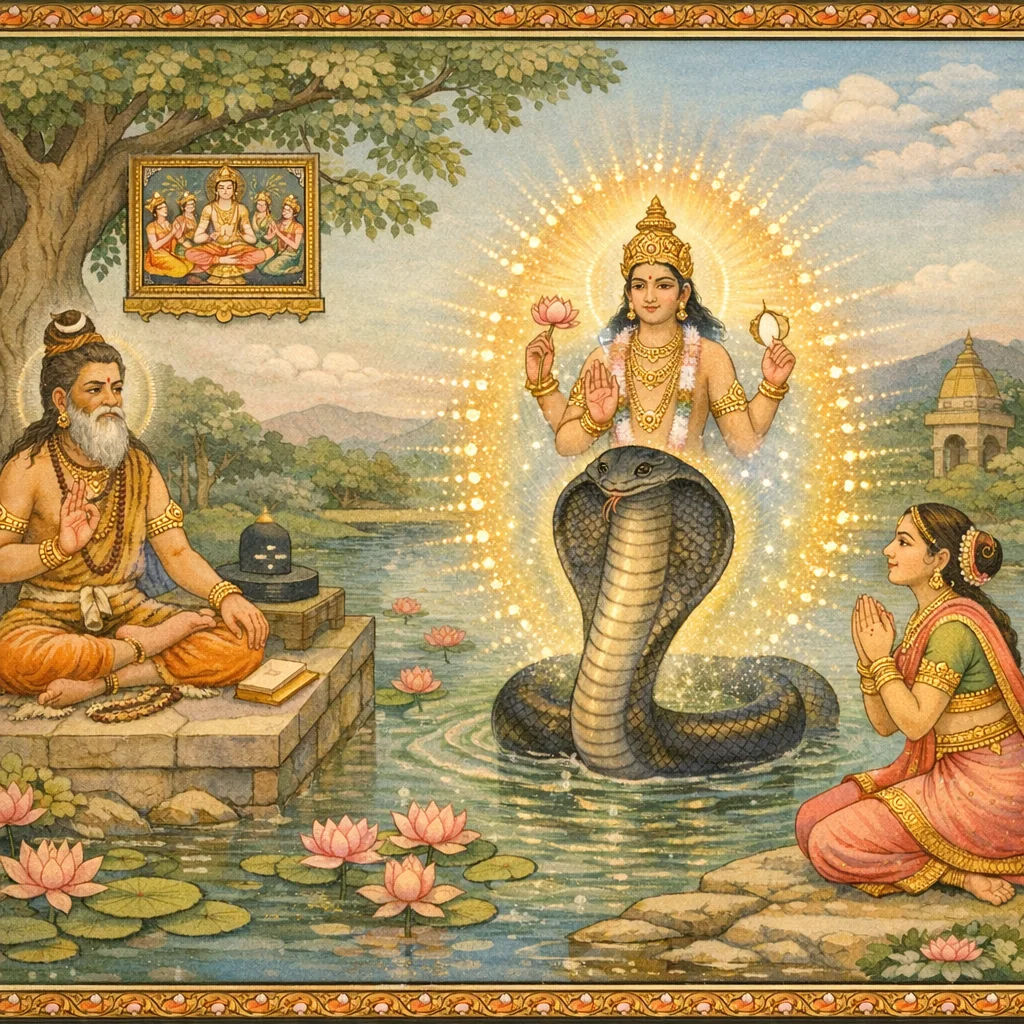
Chapter 29 opens with Sūta praising a renowned kṣetra where ṛṣis, ascetics, and kings assemble for tapas and the attainment of siddhi. In the Hāṭakeśvara-kṣetra, the Siddheśvara-liṅga is exalted as the sacred center, said to bestow accomplishments through mere remembrance, darśana, and sparśa. The teaching then introduces the Śaiva ṣaḍakṣara mantra in a Dakṣiṇāmūrti-linked setting, declaring that the count of japa extends one’s lifespan, to the astonishment of the sages. Sūta recounts what he witnessed: the brahmin Vatsa appears youthful despite vast years, attributing steady youth, expanded knowledge, and well-being to sustained ṣaḍakṣara-japa near Siddheśvara. A nested legend follows—an affluent youth disrupts a Śiva festival and is cursed into serpent-form by a disciple’s utterance; later he is taught that the ṣaḍakṣara purifies even grave faults. Liberation occurs when Vatsa strikes the water-serpent, releasing a divine form. The chapter then turns to dharmic conduct: renouncing the killing of snakes, affirming ahiṃsā as the highest dharma, critiquing rationalizations for meat-eating, and distinguishing degrees of complicity in harm. It concludes with phala assurances that regular hearing/recitation and mantra-practice protect, generate merit, and cleanse sin.
Shlokas
Verse 1
। सूत उवाच । एवं सर्वेषु तीर्थेषु संस्थितेषु द्विजोत्तमाः । तत्क्षेत्रं ख्यातिमापन्नं समस्ते धरणीतले
Sūta said: Thus, when all the tīrthas had become established, O best of twice-born ones, that sacred region attained renown across the whole surface of the earth.
Verse 2
समस्तेभ्यस्ततोऽदूरान्मुनयः शंसितव्रताः । संश्रयंति ततो भूपास्तपोऽर्थं जरयाऽन्विताः
Not far from those tīrthas, sages of acclaimed vows take up residence; and there kings too—worn with age—resort for the sake of austerity (tapas).
Verse 3
तथा ते लिंगिनो दान्ताः सिद्धिकामाः समंततः । समाश्रयंति तत्क्षेत्रं सवर्तीर्थसमा श्रयम्
So too, disciplined ascetics bearing the marks of renunciation, desiring spiritual attainments, gather from every side and take refuge in that kṣetra—an abode equal to all tīrthas.
Verse 4
तत्र सिद्धेश्वरंनाम लिंगमस्ति द्विजोत्तमाः । सर्वसिद्धिप्रदं नृणां स्वयं सिद्धिप्रदायकम्
There, O best of the twice-born, stands a liṅga named Siddheśvara—granting all attainments to people, and itself the self-manifest giver of siddhi.
Verse 5
निर्विद्य भूतले शर्वः सर्वव्यापी सदा शिवः । हाटकेश्वरसंज्ञेऽस्मिन्क्षेत्रे देवः स्वयं स्थितः
Though all-pervading, Śarva—ever-auspicious Śiva—became, as it were, weary of the earthly realm and personally abides in this holy field known as Hāṭakeśvara.
Verse 6
लिंगरूपेण भगवान्प्रादुर्भूतः स्वयं हरः । स्मरणाद्दर्शनाच्चैव सर्वसिद्धिप्रदः सदा
The Blessed Lord, Hara himself, manifested in the form of a liṅga; by mere remembrance and by beholding, he ever grants all attainments.
Verse 7
सिद्धेनाराधितो यस्मात्तस्मात्सिद्धेश्वरः स्मृतः । तस्यैव वरदानाद्धि अत्रैवावस्थितो हरः
Because he was worshipped by a Siddha, he is therefore remembered as Siddheśvara; and by that very devotee’s boon, Hara abides right here.
Verse 8
यस्तं पश्यति सद्भक्त्या शुचिः स्पृशति वा नरः । वांछितं लभते सद्यो यद्यपि स्यात्सुदुर्लभम्
Whoever, with true devotion, beholds him—or, being pure, touches him—obtains the desired fruit at once, even if it is exceedingly hard to attain.
Verse 9
तत्र सिद्धिं गताः पूर्वं शतशः पुरुषा भुवि । दर्शनात्स्पर्शनाच्चान्ये प्रणामादपरे नराः
There, in times past, hundreds of men on earth attained siddhi—some through mere darśana and touch, and others through simple prostration.
Verse 10
दक्षिणामूर्तिमासाद्य मन्त्रं तस्य षडक्षरम् । यो जपेच्छ्रद्धयोपेतस्तस्यायुः संप्रवर्धते
Approaching Dakṣiṇāmūrti and chanting his six-syllabled mantra with faith, a person’s lifespan greatly increases.
Verse 11
यावत्संख्यं जपेन्मत्रं तावत्संख्यान्यहानि सः । आयुषः परतो मर्त्यो जीवते नात्र संशयः
For as many counts as he repeats the mantra, for that many additional days he lives; the mortal lives beyond his allotted span—of this there is no doubt.
Verse 12
ऋषय ऊचुः अत्याश्चर्यमिदं सूत यत्त्वया परिकीर्तितम् । आयुषोऽप्यधिकं मर्त्यो जीवते यदि मानवः
The sages said: “Most wondrous indeed, O Sūta, is what you have proclaimed—if a mortal man may live even beyond his allotted span.”
Verse 13
सूत उवाच अत्र वः कीर्तयिष्यामि स्वयमेव मया श्रुतम् । वदतस्तत्समुद्दिश्य यद्वत्सस्य महात्मनः
Sūta said: “Here I shall recount to you what I myself have heard—words spoken with reference to that great-souled one, the son of Yadvatsa.”
Verse 14
पुरा मे वसमानस्य पुरतोऽत्र पितुर्गृहे । आयातः स मुनिस्तत्र वत्सो नाम महाद्युतिः
Once, when I was dwelling here in my father’s house, there came before me to that place a sage of great radiance, named Vatsa.
Verse 15
वहमानो युवावस्थां द्वादशार्कस मद्युतिः । अंगैः सर्वैस्तु रूपाढ्यः कामदेव इवापरः
He bore the bloom of youth, radiant like twelve suns; in every limb he was endowed with beauty—like another Kāma-deva.
Verse 16
मत्पित्रा स तदा दृष्टस्ततो भक्त्याऽभिवादितः । अर्घ्यं दत्त्वा ततः प्रोक्तो विश्रांतो विनयेन च
My father then beheld him and bowed in devotion. Having offered arghya, he respectfully entreated him to rest, with due humility.
Verse 17
स्वागतं तव विप्रेंद्र कुतस्त्वमिह चागतः । आदेशो दीयतां मह्यं किं करोमि यथोचितम्
Welcome to you, O best among brāhmaṇas. From where have you come to this place? Please grant me your instruction—what should I do, as is proper according to dharma?
Verse 18
वत्स उवाच । तवाश्रमपदे सूत चातुर्मास्यसमुद्भवम् । कर्तुमिच्छाम्यनुष्ठानं शुश्रूषां चेत्करोषि मे
Vatsa said: “O Sūta, in your āśrama dwelling I wish to perform the observance connected with Cāturmāsya. If you will render service to me, let it be undertaken here.”
Verse 19
लोमहर्षण उवाच । एवं विप्र करिष्यामि तवादेशमसंशयम् । धन्योऽस्म्यनुगृहीतोऽस्मि यस्त्वं मे गृहमागतः
Lomaharṣaṇa said: “So be it, O brāhmaṇa; I shall carry out your instruction without doubt. Blessed am I—graced am I—that you have come to my home.”
Verse 20
एवमुक्ताथ मामाह स पिता द्विजसत्तमाः । त्वया वत्सस्य कर्तव्या शुश्रूषा नित्यमेव हि
After this was said, my father, a foremost brāhmaṇa, spoke to me: “You must indeed render constant service to Vatsa.”
Verse 21
ततोऽहं विनयोपेतस्तस्य कृत्यानि कृत्स्नशः । करोमि स च मे रात्रौ चित्राः कीर्तयते कथाः
Then, endowed with humility, I carried out all his duties in full. And at night he would recount to me wondrous tales.
Verse 22
राजर्षीणां पुराणानां देवदानवरक्षसाम् । द्वीपानां पर्वतानां च स्वयं दृष्ट्वा सहस्रशः
(He spoke) of royal sages and ancient Purāṇas; of gods, dānavas, and rākṣasas; and of the dvīpas and mountains—things he had himself beheld, by the thousands.
Verse 23
एकदा तु मया पृष्टः कथांते प्राप्य कौतुकम् । विस्मयाविष्टचित्तेन स द्विजो द्विजसत्तमाः
Once, when the tale had reached its end and curiosity arose in me, I questioned that brāhmaṇa; my mind was seized by wonder—he being the best among the twice-born.
Verse 24
भगवन्सुकुमारं ते शरीरं प्रथमं वयः । द्वीपानां च करोषि त्वं कथा श्चित्राः पृथक्पृथक्
O Blessed One, your body is youthful and tender, as though in the first bloom of age; and yet you recount, one by one, many wondrous accounts of the dvīpas.
Verse 25
कथं सर्वं धरापृष्ठं ससमुद्रं निरीक्षितम् । स्वल्पेन वयसा तात विस्तरतो वद
How have you beheld the entire surface of the earth—together with the oceans—while still so young, dear one? Please tell it in detail.
Verse 26
त्वया ये कीर्तिता द्वीपाः समुद्राः पर्वतास्तथा । मनसापि न शक्यास्ते गन्तुं मर्त्यैः कथंचन
The dvīpas, oceans, and mountains that you have described cannot be reached by mortals in any way—even in thought.
Verse 27
अत्र कौतूहलं जातमश्रद्धेयं वचस्तथा । श्रुत्वा श्रद्धेयवाक्यस्य तस्मात्सत्यं प्रकीर्तय
Here a great curiosity has arisen, and your words too seem hard to believe. Therefore, having heard the speech of one whose words are trustworthy, proclaim the truth clearly.
Verse 28
तपसः किं प्रभावोऽयं किं वा मंत्रपराक्रमः । येन पृथ्वीतलं कृत्स्नं त्वया दृष्टं मुनीश्वर
Is this the power of austerity, or the might of mantra—by which you have seen the whole expanse of the earth, O lord among sages?
Verse 29
किं वा देवप्रसादस्तु तवौषधिकृतोऽथवा । तच्च पुण्यतमं तात त्वं मे ब्रूहि सविस्तरम्
Or is it the favor of the gods—or perhaps the effect of some sacred herb—that has come to you? Tell me, dear one, in full detail that most meritorious cause.
Verse 30
अथ मां स मुनिः प्राह विहस्य मुनिसत्तमाः । सत्यमेतत्त्वया ज्ञातं मम मंत्रपराक्रमम्
Then that sage spoke to me with a smile, O best of sages: “You have understood rightly—this is indeed the potency of my mantra.”
Verse 31
सदाहमष्टसंयुक्तं सहस्रं शिवसन्निधौ । जपामि शिवमंत्रस्य षडक्षरमितस्य च
Always, in the very presence of Śiva, I repeat a thousand times joined with eight more, and I also chant the six-syllabled measure of Śiva’s mantra.
Verse 32
त्रिकालं तेन मे जातं सुस्थिरं यौवनं मुने । अतीतानागतं ज्ञानं जीवितं च सुखोदयम्
By that practice, O sage, my youth has become firmly established through the three times; and knowledge of past and future has arisen, along with a life that brings forth happiness.
Verse 33
मम वर्षसहस्राणि बहूनि प्रयुतानि च । संजातानि महाभाग दृश्यते प्रथमं वयः
For me, many thousands of years—and many tens of thousands besides—have passed, O greatly fortunate one; yet my age appears as the very first youth.
Verse 34
अत्र ते कीर्तयिष्यामि विस्तरेण महामते । यथा सिद्धिर्मया प्राप्ता प्रसादाच्छंकरस्य च
Here, O great-minded one, I shall recount to you in detail how spiritual success was attained by me—through the gracious favor of Śaṅkara.
Verse 35
अहं हि ब्राह्मणो नाम्ना वत्सः ख्यातो महीतले । नानाशास्त्रकृताभ्यासः पुराऽसं वेदपारगः
I was indeed a brāhmaṇa, known by the name Vatsa and famed upon the earth. Formerly I had practiced many śāstras and was a master of the Vedas.
Verse 36
एतस्मिन्नेव काले तु मेनका च वराप्सराः । वसंतसमये प्राप्ता मर्त्यलोके यदृच्छया
At that very time, Menakā—the excellent apsaras—arrived in the mortal world, by chance, in the season of spring.
Verse 37
सा गता भ्रममाणाथ काम्यकंनाम तद्वनम् । मत्तकोकिलनादाढ्यं मनोज्ञद्रुमसं कुलम्
Wandering on, she came to the forest called Kāmyaka, rich with the cries of cuckoos as if intoxicated and crowded with delightful, lovely trees.
Verse 38
यत्रास्ते मुनिशार्दूलो देवरात इति स्मृतः । व्रतस्वाध्यायसंपन्नस्तपसा ध्वस्तकिल्विषः
There dwelt a great muni, a tiger among sages, remembered as Devarāta—accomplished in vows and sacred recitation, whose sins had been burned away by austerity.
Verse 39
उपविष्टो नदीतीरे देवतार्च्चापरा यणः । श्रद्धया परया युक्त एकाकी निर्जने वने
Seated on the riverbank, wholly intent on worship of the deities, he was endowed with supreme faith—alone in a lonely, secluded forest.
Verse 40
अथ सा पश्यतस्तस्य विवस्त्रा प्राविशज्जलम् । दिव्यरूपसमोपेता घर्मार्ता वरवर्णिनी
Then, as he watched, she—unclothed—entered the water, possessed of a divine form, distressed by the heat, and exquisitely beautiful.
Verse 41
अथ तस्य मुनींद्रस्य रेतश्चस्कन्द तत्क्षणात् । दृष्ट्वा तां चारुसर्वांगीं जलमध्यं समाश्रिताम्
At that very moment, the seed of that lord among sages fell forth, upon seeing her—lovely in every limb—resting in the midst of the water.
Verse 42
एतस्मिन्नंतरे प्राप्ता सारंगी सुपिपा सिता । जलमिश्रं तया रेतः पीतं सर्वमशेषतः
Just then a doe arrived, parched with thirst; and the seed, mingled with water, she drank entirely, leaving nothing behind.
Verse 43
अथ साऽपि दधे गर्भं मानुषं वै प्रभावतः । अमोघरेतसो मासे सुषुवे दशमे ततः
Then she too, by that very potency, conceived a human embryo; and thereafter, in the tenth month, she gave birth—for the seed’s power was unfailing.
Verse 44
जनयामास दीप्तांगी कन्यां पद्मदलेक्षणाम् । तस्मिन्नेव जले पुण्ये देवराताश्रमं प्रति
She brought forth a maiden radiant in limb, with eyes like lotus petals; in that very sacred water she appeared, in connection with Devarāta’s hermitage.
Verse 45
अथ तां स मुनिर्ज्ञात्वा स्वज्ञानेन स्ववीर्यजाम् । कृपया परयाविष्टो जग्राह च पुपोष च
Then the sage, knowing through his own insight that she was born of his own potency, was filled with deep compassion; he took her in and nurtured her.
Verse 46
स्नेहेन महता युक्तः कृतकौतुकमंगलः । रक्षमाणो वने चैनां श्वापदेभ्यः प्रयत्नतः
Bound by great affection and having performed auspicious rites for her, he diligently protected her in the forest from wild beasts.
Verse 47
आजहार सुमृष्टानि तत्कृते सुफलानि सः । स्वयं गत्वा सुदूरं च कानने श्वापदाकुले
For her sake he brought well-chosen, excellent fruits—going himself far away into a forest crowded with wild beasts.
Verse 48
तत्रस्था ववृधे सा च नाम्ना ख्याता मृगावती । शुक्लपक्षे यथा व्योम्नि कलेव शशलक्ष्मणः
Living there, she grew and became known by the name Mṛgāvatī—like the moon’s digit waxing in the bright fortnight across the sky.
Verse 49
अथ सा भ्रममाणेन मया दृष्टा मृगेक्षणा । ततोऽहं कामबाणेन तत्क्षणात्ताडितो हृदि
Then, as I was wandering, I saw her—deer-eyed; and at that very moment I was struck in the heart by Kāma’s arrow.
Verse 50
विज्ञाय च कुमारीं तां सवर्णां चारुहासिनीम् । आदरेण गृहं गत्वा स मुनिर्याचितस्ततः
Having learned that she was a maiden—of matching station and fair-smiling—he went respectfully to the sage’s dwelling; then he petitioned the sage.
Verse 51
प्रयच्छैनां मम ब्रह्मन्पत्न्यर्थं निज कन्यकाम् । यथात्मा पोषयिष्यामि भोजनाच्छादनादिभिः
“Grant her to me, O Brahman-sage, as my wife—your own daughter. I shall maintain her as I would my own self, with food, clothing, and all necessities.”
Verse 52
ततस्तेन प्रदत्ता मे तत्क्षणादेव सुन्दरी । विधिना शास्त्रदृष्टेन नक्षत्रे भग दैवते
Then, at once, that beautiful girl was given to me by him, according to the scripturally approved rite, on the nakṣatra presided over by Bhaga.
Verse 53
ततः कतिपयाहस्य मयोढा सा सुविस्मिता । सखीजनसमायुक्ता फलार्थं निर्गता वने
After a few days of being married to me, she—still quite astonished—went out into the forest with her companions to gather fruits.
Verse 54
अथ वीरुधसंछन्ने वने तस्मि न्सुसंस्थिते । तया न्यस्तं पदं मूर्ध्नि तृणाच्छन्नस्य भोगिनः
Then, in that forest thickly overgrown with creepers and well-settled in its cover, she placed her foot upon the head of a serpent that lay concealed beneath the grass.
Verse 55
सा दष्टा सहसा तेन पतिता वसुधातले । विषार्दिता गतप्राणा तत्क्षणादेव भामिनी
Bitten suddenly by it, she fell upon the ground; tormented by the poison, the radiant woman lost her life that very instant.
Verse 56
अथ सख्यः समागत्य तस्या दुःखेन दुःखिताः । शशंसुस्ता यथावृत्तं रुदन्त्यो मम सूतज
Then her companions gathered, grieved by her grief, and—while weeping—told me exactly what had happened, O son of a charioteer.
Verse 57
ततोऽहं सत्वरं गत्वा दृष्ट्वा तां पतितां भुवि । विलापान्कृतवान्दीनो रुदितं करुणस्वरम्
Thereupon I hurried there; seeing her fallen upon the earth, wretched, I lamented and wept in a voice heavy with compassion.
Verse 58
इयं मे सुविशालाक्षी मनःप्राणसमा प्रिया । मृता भूमौ यया हीनो नाहं जीवितुमुत्सहे
This beloved of mine, wide-eyed and as dear as my very mind and breath, lies dead upon the earth; bereft of her, I have no will to live.
Verse 59
सोऽहमद्य गमिष्यामि परलोकं सहानया । प्रियारहितहर्म्यस्य जीवितस्य च किं फलम्
So today I too shall go to the other world along with her; for what purpose is life, and what joy is a home, when the beloved is absent?
Verse 60
पुत्रपौत्रवधूभिश्च भृत्यवर्गयुतस्य च । पत्नीहीनानि नो रेजुर्गृहाणि गृहमेधिनाम्
Even if a householder’s home is filled with sons, grandsons, daughters-in-law, and a retinue of servants, a wife-less household does not shine.
Verse 61
यदीयं कर्णनेत्रांता तन्वंगी मधुरस्वरा । न जीवति पृथुश्रोणी मरिष्येऽ हमसंशयम्
If this slender-limbed, sweet-voiced woman—whose earrings reach the ends of her eyes, and whose hips are broad—does not live, then I shall die without doubt.
Verse 62
एवं विलपमानस्य मम सूत कुलोद्वह । आगताः सुहृदः सर्वे रुरुदुस्तेऽपि दुःखिताः
As I thus lamented, O Sūta, best of your line, all my friends arrived; they too, distressed, began to weep.
Verse 63
रुदित्वा सुचिरं तत्र तैः समं महतीं चिताम् । कृत्वा तां संनिधायाथ प्रदत्तो हव्यवाहनः
After weeping there for a long time, together with them I prepared a great funeral pyre; having arranged her upon it, the fire—the carrier of offerings—was then kindled.
Verse 64
तत आदाय मां कृच्छ्रान्निन्युश्च स्वगृहं प्रति । रुदन्तं प्रस्खलन्तं च मुह्यमानं पदेपदे
Then, with great difficulty, they took me and led me back toward their own home—while I was weeping, stumbling, and losing my senses at every step.
Verse 65
ततो निशावशेषेऽहमुत्थाय त्वरयाऽन्वितः । कांतादुःखपरीतात्मा गतोऽरण्यं तदेव हि
Then, when only a little of the night remained, I rose in haste; my heart overwhelmed by sorrow for my beloved, I went back to that very forest.
Verse 66
कामेनोन्मत्ततां प्राप्तो भ्रममाण इतस्ततः । विलपन्नेव दुःखार्तो वने जनविवर्जिते
Driven to madness by desire, I wandered here and there, lamenting in anguish within a forest deserted of people.
Verse 67
क्व गतासि विशालाक्षि विजनेऽस्मिन्विहाय माम् । नाहं गृहं गमिष्यामि मम दुःखाय निर्दयः
Where have you gone, O wide-eyed one, leaving me in this lonely wilderness? I shall not return home—cruel destiny has made it only a cause of my sorrow.
Verse 68
एषोऽरुणकरस्पर्शात्स्वाभां त्यजति चंद्रमाः । निशाक्षये निरुत्साहो यथाहं विधिना कृतः
At the touch of dawn’s rays, the moon relinquishes its own radiance; so too, as the night ends, I am left without spirit—thus has destiny fashioned me.
Verse 69
अयं तनुः समायाति सविता रक्तमंडलः । निगदिष्यति मे वार्तां नूनं कच्चित्त्वदुद्भवाम्
Now the sun draws near, gentle in appearance, bearing a crimson disk. Surely he will tell me some tidings—perhaps something that has arisen concerning you.
Verse 70
गगनं व्यापयन्सूर्यः संतापयति मां भृशम् । बाह्ये चाभ्यंतरे कामः कथं वक्ष्यामि जीवितम्
The sun, spreading across the sky, scorches me fiercely. Desire torments me outwardly and inwardly—how can I even speak of living on?
Verse 71
करींदः स्वयमभ्येति तत्कुचाभौ समुद्वहन् । कुम्भौ गत्वा तु पृच्छामि यदि शंसति तां प्रियाम्
An elephant comes forward of its own accord, bearing a pair of frontal globes like her breasts. Drawing near those ‘kumbhas,’ I ask whether it can point out my beloved.
Verse 72
एवं प्रलपमानस्य मम मोहो महानभूत् । भास्करांशुप्रतप्तस्य मदनाकुलितस्य च
As I raved on in this manner, my delusion grew immense—scorched by the sun’s rays and thrown into turmoil by the god of love.
Verse 73
यंयं पश्यामि तत्राहं भ्रममाणो महावने । वृक्षं वा प्राणिनो वापि तंतं पृच्छामि मोहतः
Wandering through that great forest, whomever—or whatever—I saw, whether a tree or a living being, I asked each one in my delusion.
Verse 74
त्वद्दंतमुसलप्रख्यं यस्या ऊरुयुगं गज । तां बालां वद चेद्दृष्टा दयां कृत्वा ममोपरि
O elephant! If you have seen that young woman—whose pair of thighs is like the pestle-like strength of your tusks—then tell me of her, taking pity on me.
Verse 75
त्वया जंबूक चेद्दृष्टा बिंबाफलनिभाधरा । दयिता मम तद्ब्रूहि श्रेयस्ते भविता महत्
O jackal! If you have seen my beloved—she whose lips are like the bimba fruit—then tell me; great good fortune will be yours.
Verse 76
अथवा बिल्व शंस त्वं यदि बिल्वोपमस्तनी । भ्रममाणा वने दृष्टा मम प्राणसमा प्रिया
Or else, O bilva tree, tell me—if you have seen my beloved, whose breasts are like bilva fruits, wandering in the forest; she is as dear to me as my very life-breath.
Verse 77
त्वत्पुष्पसदृशांगी सा मम भार्या मनस्विनी । स त्वं चंपक जानीषे यदि त्वं शंस मे द्रुतम्
Her limbs are like your blossoms; she is my strong-minded wife. O campaka tree, if you know of her, then tell me quickly.
Verse 78
मधूक तव पुष्पेण दयितायाः समौ शुभौ । कपोलौ पांडुरच्छायौ दृष्ट्वा त्वां स्मृतिमागतौ
O madhūka tree, your blossom brings to mind my beloved’s two auspicious cheeks—pale-hued and lovely; seeing you, that memory has returned to me.
Verse 79
कदलीस्तंभ सुव्यक्तं प्रियायाश्च सुकोमलौ । ऊरू त्वत्तोऽपि तन्वंग्याः सत्येनात्मानमालभे
O banana-stem, clearly my beloved’s thighs—so delicate, of that slender-limbed one—are softer even than you; by this truth I touch myself in oath.
Verse 80
भोभो मृग न मे भार्या त्वया दृष्टाऽत्र कानने । त्वत्समे लोचने स्पष्टे कज्जलेन समावृते
Ho there, deer! Have you not seen my wife here in this forest—she whose eyes are like yours, clear and bright, yet shaded with collyrium?
Verse 82
कांतायाः पुरतो नित्यं विधत्तेंऽगं कलापकृत् । विहंगयोनि जातोऽपि वृद्ध्यर्थं पुष्पधन्वनः
Always, before his beloved, the peacock displays his body; though born among birds, he does so for the increase of the Flower-bowed One (Kāma).
Verse 83
योऽयं संदृश्यते हंसो हंसीमनुस्मरत्यसौ । गतिस्तादृङ्न चाप्यस्य मत्प्रियायाश्च यादृशी
This swan seen here remembers his she-swan; yet his gait is not like the gait of my beloved, so dear to me.
Verse 84
एक एव सुधन्योऽयं चक्रवाको विहंगमः । मुहूर्तमपि योऽभीष्टां न त्यजेच्चक्रवाकिकाम्
Truly blessed is this lone cakravāka bird: not even for a moment does he forsake his desired mate, the cakravākī.
Verse 85
य एष श्रूयते रावो विभ्रमं जनयन्मम । किंवा पिकसमुत्थो ऽयं किं वा मे दयितोद्भवः
This cry now heard, stirring bewilderment within me—has it arisen from the pīka cuckoo, or is it somehow born of my beloved herself?
Verse 86
मां दृष्ट्वाऽयं मृगो याति तं मृगी याति पृष्ठतः । धावमाना ममाप्येवमनुयाति पुरा प्रिया
Seeing me, this stag runs off and the doe follows behind; in the same way, my beloved once used to run after me.
Verse 87
वारणोऽयं प्रियां कांतामनुरागानुयायिनीम् । स्पर्शयत्यग्रहस्तेन मम संस्मारयन्प्रियाम
This elephant touches his beloved—his dear companion who follows him out of affection—with the tip of his trunk, making me remember my own beloved.
Verse 88
हा प्रिये मृगशावाक्षि तप्तकांचनसंनिभे । कथं मां न विजानासि भ्रमंतमिह कानने
Alas, my beloved—doe-eyed one, radiant like heated gold—how do you not recognize me, as I wander here in this forest?
Verse 89
क्व सा भक्तिः क्व सा प्रीतिः क्व सा तुष्टिः क्व सा दया । निगदन्तं सुदीनं मां संभाषयसि नो यतः
Where is that devotion, where that love, where that gladness, where that compassion—since you do not speak to me, though I lament in utter misery?
Verse 90
एवं प्रलपमानस्य मम प्राप्ताः सुहृज्जनाः । अन्वेषंतः पदं तत्र वनेषु विषमेषु च
While I was thus lamenting, my well-wishing friends arrived there, searching for the track—through forests and even difficult terrain.
Verse 91
ततस्तैः कोपरक्ताक्षैः प्रोक्तोऽहं सूतनंदन । भर्त्सद्भिः परुषैर्वाक्यैर्धिक्त्वां काममयाधुना
Then those men, their eyes reddened with anger, addressed me—O son of a charioteer—rebuking me with harsh words: “Shame on you! You are now consumed by desire.”
Verse 92
त्वं किं शोचसि मूढात्मन्नशोच्यं जीवितं नृणाम् । यतस्त्वामपि शोचंतं शोचयिष्यंति चापरे
Why do you grieve, deluded one? Human life is not something to be bewailed; for even while you grieve, others too will one day grieve for you.
Verse 93
यूयं वयं तथा चान्ये संजाताः प्राणिनो भुवि । सर्व एव मरिष्यामस्तत्र का परिदेवना
You and we, and all other beings born upon the earth—every one of us will surely die; what room is there, then, for wailing?
Verse 94
अदर्शनात्प्रिया प्राप्ता पुनश्चादर्शनं गता । न सा तव न तस्यास्त्वं वृथा किमनुशोचसि
From not seeing her, you ‘found’ your beloved, and again she has gone into not being seen. She is not yours, nor are you hers—why do you grieve in vain?
Verse 95
नायमत्यंतसंवासः कस्यचित्केनचित्सह । अपि स्वेन शरीरेण किमुतान्यैर्वृथा जनैः
No one truly abides forever with anyone else. Even with one’s own body there is no permanent companionship—how much less with other people, who are, in the end, only passing associates.
Verse 96
मृतं वा यदि वा नष्टं योतीतमनुशोचति । स दुःखेन लभेद्दुःखं द्वावनर्थो प्रपद्यते
Whoever keeps grieving for what is dead, or lost, or already past—he gains sorrow through sorrow itself, and falls into a double misfortune.
Verse 97
एवं संबोधयित्वा मां गृहीत्वा ते मुहुर्जनैः । निन्यु र्गृहं ततः सर्वे वनात्तस्मात्सुदारुणात्
After thus consoling and instructing me, those people repeatedly took hold of me and then all led me home, away from that exceedingly dreadful forest.
Verse 98
ततो मम गृहस्थस्य स्मरमाणस्य तां प्रियाम् । उत्पन्नः सुमहान्कोपः सर्पान्प्रति महामते
Then I—the householder—remembering my beloved, was seized by a very great anger toward the serpents, O wise one.
Verse 99
ततः कोपपरीतेन प्रतिज्ञातं मया स्फुटम् । सर्पानुद्दिश्य यत्सर्वं तन्निबोधय दारुणम्
Then, overwhelmed by anger, I made a clear vow. Hear now the whole dreadful resolve I proclaimed, with the serpents as my target.
Verse 100
अद्यप्रभृति चेन्नाहं सर्पं दृष्टिवशं गतम् । निहन्मि दण्डघातेन तत्पापं स्याद्ध्रुवं मम
From today onward, if I do not strike down with a blow of my staff any serpent that comes within my sight, then surely that sin will be mine.
Verse 101
यच्च निक्षेपहर्तॄणां यच्च विश्वासघातिनाम् । तन्मे स्याद्यदि नो हन्मि सर्पं दृष्टिवशं गतम्
May the sin of those who steal deposits and of those who betray trust fall upon me, if I do not kill a serpent that comes within my sight.
Verse 102
यत्पापं साधुनिंदायां मातापितृवधे च यत् । तन्मे स्याद्यदि नो हन्मि सर्पं दृष्टिवशं गतम्
May the sin incurred in reviling the virtuous, and the sin incurred in killing one’s mother and father, come to me, if I do not kill a serpent that comes within my sight.
Verse 103
परदाररतानां च यत्पापं जीवघातिनाम् । तन्मे स्याद्यदि नो हन्मि सर्पं दृष्टिवशं गतम्
May the sin of those who delight in another’s spouse, and the sin of slayers of living beings, come upon me—if I do not kill the serpent that has come within my sight.
Verse 104
उक्तौ चाभिरतानां च यत्पापं गरदायिनाम् । तन्मे स्याद्यदि नो हन्मि सर्पं दृष्टिवशं गतम्
May the sin of those who delight in false speech, and the sin of poison-givers, come upon me—if I do not kill the serpent that has come within my sight.
Verse 105
कृतघ्नानां च यत्पापं परवित्तापहारिणाम् । तन्मे स्याद्यदि नो हन्मि सर्पं दृष्टिवशं गतम्
May the sin of the ungrateful, and of those who steal another’s wealth, fall upon me—if I do not strike down the serpent that has come under the power of my gaze.
Verse 106
यत्पापं शस्त्रकर्तृणां तथा वह्निप्रदायिनाम् । तन्मे स्याद्यदि नो हन्मि सर्पं दृष्टिवशं गतम्
May the sin of those who fashion weapons, and likewise of those who set fire to harm, be mine—if I do not strike down the serpent that has come under the power of my gaze.
Verse 107
व्रतभंगेन यत्पापं व्रतिनां निंदयापि यत् । तन्मे स्याद्यदि नो हन्मि सर्पं दृष्टिवशं गतम्
May the sin that arises from breaking a vow, and that which comes from reviling the vow-keepers, fall upon me—if I do not strike down the serpent that has come under the power of my gaze.
Verse 108
यत्पापं भ्रूणहत्यायां मृष्टमांसाशिनां च यत् । तन्मे स्याद्यदि नो हन्मि सर्पं दृष्टिवशं गतम्
If I do not strike down the serpent that has come under the power of my gaze, may the sin of foeticide and the sin of those who eat forbidden, impure meat be mine.
Verse 109
वृक्षच्छेद प्रसक्तानां यत्पापं शल्यकारिणाम् । तन्मे स्याद्यदि नो हन्मि सर्पं दृष्टिवशं गतम्
If I do not strike down the serpent that has come under the power of my gaze, may the sin of those addicted to felling trees and the sin of those who wound by thorns or spears—by harmful deeds—be mine.
Verse 110
पाखंडिनां च यत्पापं नास्तिकानां च यद्भवेत् । तन्मे स्याद्यदि नो हन्मि सर्पं दृष्टिवशं गतम्
If I do not strike down the serpent that has come under the power of my gaze, may the sin of hypocritical impostors and whatever sin belongs to unbelievers fall upon me.
Verse 111
मांसमद्यप्रसक्तानां यत्पापं विटभोजिनाम् । तन्मे स्याद्यदि नो हन्मि सर्पं दृष्टिवशं गतम्
If I do not strike down the serpent that has come under the power of my gaze, may the sin of those addicted to meat and intoxicants, and the sin of those who live by base, impure eating, be mine.
Verse 112
मृषावादप्रसक्तानां पररंध्रावलोकिनाम् । तन्मे स्याद्यदि नो हन्मि सर्पं दृष्टिवशं गतम्
If I do not strike down the serpent that has come under the power of my gaze, may the sin of those addicted to falsehood and the sin of those who pry into others’ faults and secrets be mine.
Verse 113
यत्पापं साक्ष्यकर्तृणां धान्यसंग्रहकारिणाम् । तन्मे स्याद्यदि नो हन्मि सर्पं दृष्टिवशं गतम्
If I do not strike down the serpent that has come under the power of my gaze, may the sin of false witnesses and of those who hoard grain become mine.
Verse 114
आखेटकरतानां च यत्पापं पाशदायिनाम् । तन्मे स्याद्यदि नो हन्मि सर्पं दृष्टिवशं गतम्
If I do not strike down the serpent that has come under the power of my gaze, may the sin of hunters and of those who set snares and bonds fall upon me.
Verse 115
नित्यं प्रेषणकर्तॄणां यत्पापं मधुजीविनाम् । तन्मे स्याद्यदि नो हन्मि सर्पं दृष्टिवशं गतम्
If I do not kill the serpent that has come under the power of my gaze, may the sin of those who constantly send others on errands, and of those who live by honey, fall upon me.
Verse 116
अदृष्टदेववक्त्राणां यत्पापं मत्स्यजीविनाम् । तन्मे स्याद्यदि नो हन्मि सर्पं दृष्टिवशं गतम्
If I do not kill the serpent that has come under the power of my gaze, may the sin of those who have not beheld the faces of the gods, and of those who live by fishing, fall upon me.
Verse 117
विवादे पृच्छमानानां पक्षपातेन जल्पताम् । भयाद्वा यदि वा लोभाद्द्वेषाद्वा कामतोऽपि वा
In disputes—those who are asked to judge yet speak with partisanship, whether out of fear, or greed, or hatred, or even desire—
Verse 118
यत्पापं तु भवेत्तेषां निर्दयानां दुरात्मनाम् । तन्मे स्याद्यदि नो हन्मि सर्पं दृष्टिवशं गतम्
Whatever sin arises for those merciless, evil-minded people—may that fall upon me if I do not kill the serpent that has come under my sight’s control.
Verse 119
कन्याविक्रयकर्तृणां यत्पापं पापसंगिनाम् । तन्मे स्याद्यदि नो हन्मि सर्पं दृष्टिवशं गतम्
May the sin that belongs to those who sell a maiden, and to those who keep company with sin, fall upon me—if I do not kill the serpent that has come under my sight’s control.
Verse 120
विद्याविक्रयकर्तॄणां यत्पापं समुदाहृतम् । तन्मे स्याद्यदि नो हन्मि सर्पं दृष्टिवशं गतम्
May the sin declared for those who sell knowledge fall upon me—if I do not kill the serpent that has come under my sight’s control.
Verse 121
एवं मया प्रतिज्ञाय कोपाविष्टेन सूतज । गृहीतो लगुडः स्थूलो वधार्थं पवनाशिनाम्
“Thus did I make my vow, O son of a charioteer; and, seized by anger, I took up a heavy club, intending to slay those air-devouring (serpents).”
Verse 122
ततःप्रभृत्यहं भूमौ भ्रमामि लगुडायुधः । ब्राह्मीं वृत्तिं परित्यज्य मार्गमाणो भुजंग मान्
From that time onward I roamed upon the earth, armed with a club—abandoning the Brahmin’s way of life—searching for serpents.
Verse 123
मया कोपपरीतेन बहवः पन्नगा हताः । विषोल्बणा महाकायास्तथान्ये मध्यमाधमाः
Overcome by anger, I killed many snakes—some huge-bodied and fiercely venomous, and others as well, middling and lowly.
Verse 124
एकदाहं वनं प्राप्तो गहनं लगु डायुधः । शयानं तत्र चापश्यं जलसर्पं वयोऽधिकम्
Once, armed with my club, I entered a dense forest; and there I saw an aged water-serpent lying at rest.
Verse 125
ततोऽहं दंडमुद्यम्य कालदंडोपमं रुषा । हन्मि तं यावदेवाहं स मां प्रोवाच पन्नगः
Then, in anger, I lifted my staff—like Yama’s rod of punishment—and as I was about to strike him, that serpent addressed me.
Verse 126
नापराध्यामि ते किंचिदहं ब्राह्मणसत्तम । संरंभात्तत्किमर्थं मां जिघांससि वयोऽधिकम्
“O best of brāhmaṇas, I have committed no offense against you. Why, out of sudden fury, do you wish to kill me—an elder?”
Verse 127
ततो मया स संप्रोक्तः कोपात्सलि लपन्नगः । महामन्युपरीतेन स्मृत्वा भार्यां मृगावतीम् । मम भार्या प्रिया पूर्वं सर्पेणासीद्विनाशिता
Then, overwhelmed by anger, I replied to that water-born serpent, remembering my wife Mṛgāvatī in great wrath: “My beloved wife was once destroyed by a snake.”
Verse 128
ततोऽहं तेन वैरेण सूदयामि महो रगान् । अद्य त्वामपि नेष्यामि वैवस्वतगृहं प्रति । हत्वा दंडप्रहारेण तस्मादिष्टतमं स्मर
Therefore, driven by that enmity, I slay great serpents. Today I shall send even you to the house of Vaivasvata (Yama); when I strike you dead with a blow of my staff, remember what you hold most dear.
Verse 129
ततः स मां पुनः प्राह भयेन महतावृतः । शृणु तावद्वचोऽस्माकं ततः कुरु यथोचितम्
Then he spoke to me again, overcome by great fear: “First hear our words; then do what is fitting.”
Verse 130
अन्ये ते पन्नगा विप्र ये दशंतीह मानवान् । वयं सलिलसंभूता निर्विषाः सर्परूपिणः
“O brāhmaṇa, there are other serpents here who bite people; but we are born of water—venomless, though in the form of snakes.”
Verse 131
एवं प्रजल्पमानोऽपि स दंडेन मया हतः । सूत तत्सूदनार्थाय निर्विकल्पेन चेतसा
Even while he spoke thus, I struck him with my staff—O Sūta—intent on killing him, my mind fixed without hesitation.
Verse 132
अथासौ लगुडस्पर्शात्तत्क्षणादेव पन्नगः । द्वादशार्क प्रतीकाशो बभूव पुरुषो महान्
Then, the moment the club touched him, that serpent instantly became a great man, radiant like twelve suns.
Verse 133
तदाश्चर्यं समालोक्य ततोऽहं विस्मयान्वितः । उक्तवांस्तं प्रणम्योच्चैः क्षम्यतामिति सादरम्
Seeing that marvel, I was filled with astonishment; bowing to him, I respectfully said aloud, “May I be forgiven.”
Verse 134
को भवान्किमिदं रूपं कृतं सर्पमयं विभो । किं वा ते ब्रह्मशापोऽयं किं वा क्रीडा सदेदृशी
“Who are you, O mighty one? Why have you assumed this serpent-like form? Is this a curse from a brāhmaṇa, or is it some such wondrous sport?”
Verse 135
ततः प्रोवाच मां हृष्टः स नरः प्रश्रयान्वितः । शृणुष्वावहितो भूत्वा वृत्तांतं स्वं वदामि ते
Then that man—delighted and full of humility—spoke to me: “Listen attentively; I shall tell you my own account in full.”
Verse 136
अहमासं पुरा विप्र चमत्कारपुरोत्तमे । युवा परमतेजस्वी धनवान्सुसमृद्धिभाक्
“Formerly, O brāhmaṇa, in the excellent city called Camatkārapura, I was a young man—radiant with great vigor, wealthy, and endowed with abundant prosperity.”
Verse 138
कस्यचित्त्वथ कालस्य तत्र यात्रा व्यजायत । तत्र वादित्रघोषेण नादितं भुवनत्रयम्
“After some time, a pilgrimage-festival arose there; and with the blare of musical instruments, it resounded as though the three worlds were filled with its sound.”
Verse 139
अथ तत्र समायाता मुनयः संशितव्रताः । देवस्य दर्शनार्थाय शतशोऽथ सहस्रशः
Then sages of steadfast vows assembled there—by the hundreds and by the thousands—seeking the Lord’s divine darśana.
Verse 140
शैवाः पाशुपताश्चैव तथा कापालिकाश्च ये । महाव्रतधराश्चान्ये शिवभक्तिपरायणाः
Śaivas, Pāśupatas, and those Kāpālikas too—along with other bearers of the great vow (mahāvrata)—came, wholly devoted in bhakti to Śiva.
Verse 141
एकाहारा निराहारा वायुभक्षास्तथापरे । अब्भक्षाः फल भक्षाश्च शीर्णपर्णाशिनस्तथा
Some lived on a single meal, others on no food at all; some subsisted on air, some on water, some on fruits, and some ate only withered leaves.
Verse 142
तेऽभिवन्द्य यथान्यायं देवदेवं महेश्वरम् । उपाविष्टाः पुरस्तस्य कथाश्चक्रुः पृथग्विधाः
Having duly bowed to Maheśvara, the God of gods, they sat before Him and engaged in many kinds of sacred discourse.
Verse 143
राजर्षीणां पुराणानां देवेन्द्राणां च हर्षिताः । दयाधर्मसमोपेतास्तथान्येऽपि च भूरिशः
Rejoicing, they spoke of royal sages, ancient Purāṇic accounts, and the lords of the gods; and many others too were present, endowed with compassion and dharma.
Verse 146
एवं महोत्सवे तत्र वर्तमाने महोदये । आगतो बहुभिः सार्धमहं यौवनगर्वितः
While that great festival was underway—an occasion of supreme auspiciousness—I arrived there with many others, swollen with the pride of youth.
Verse 147
शिवदर्शनविद्वेषी तमसा संवृताशयः । यात्रोत्सव विनाशाय प्रेरितोऽन्यैः सुदुर्जनैः
Hating even the darśana of Śiva, my heart shrouded in darkness, I was incited by other wicked men to bring about the ruin of the pilgrimage-festival.
Verse 148
जलसर्पं समादाय सुदीर्घं भीषणाकृतिम् । लेलिहानं मुहुर्जिह्वां जरया परया वृतम्
Taking up a water-serpent—very long and of terrifying form—its tongue repeatedly flickering, and its body wrapped in extreme old age, he held it forth.
Verse 149
ततश्च क्षिप्तवांस्तत्र महाजनसमागमे । तं दृष्ट्वा विद्रुताः सर्वे जना मृत्युभयार्दिताः
Then, in that great gathering of people, he hurled it there. Seeing it, all the people fled away, afflicted with the fear of death.
Verse 150
तत्रासीत्तापसो नाम्ना सुप्रभः शंसितव्रतः । समाधिस्थः सुशिष्याढ्यस्तपसा दग्धकिल्बिषः
There lived an ascetic named Suprabha, renowned for his vows—established in samādhi, rich in worthy disciples, and with sins burned away by austerity.
Verse 151
निष्कंपां सुदृढामृज्वीं नातिस्तब्धां न कुंचिताम् । ग्रीवां दधत्स्थिरां यत्नाद्गात्रयष्टिं च सर्वतः
With steady effort he held his neck unmoving—unshaking, very firm, straight, neither overly rigid nor bent—keeping the posture of the whole body stable in every way.
Verse 152
संपश्यन्नासिकाग्रं स्वं दिशश्चानवलोकयन् । तालुमध्यगतेनैव जिह्वाग्रेणाचलेन च
Gazing at the tip of his own nose and not looking toward the directions, he kept the tongue-tip motionless, placed at the middle of the palate.
Verse 155
पश्यन्पद्मासनस्थं च वैदनाथं महेश्वरम् । यमक्षरं वदंत्येव सर्वगं सर्ववेदिनम्
He beheld Maheśvara Vaidyanātha, seated in lotus posture—Him whom they indeed call the Imperishable Syllable, all-pervading and all-knowing.
Verse 156
अनिंद्यं चाप्यभेद्यं च जरामरणवर्जितम् । पुलकांचितसर्वांगो योगनिद्रावशंगतः
Blameless and inviolable, free from old age and death—his whole body thrilled with rapture—he had entered the power of yogic sleep (yoganidrā).
Verse 158
अंगुष्ठतर्जनीयोगं कृत्वा हृदयसंगतम् । एवं तत्रोपविष्टस्य स सर्पस्तस्य विग्रहम्
Joining thumb and forefinger and setting them at the heart, as he sat there thus, that serpent drew near to his bodily form.
Verse 159
वेष्टयामास भोगेन निश्चलस्य महात्मनः । एतस्मिन्नंतरे शिष्यस्तस्यासीत्सुतपोऽन्वितः
The serpent coiled around the great soul, who remained unmoving, winding him with its body. Meanwhile, his disciple, endowed with noble austerity, was there.
Verse 160
श्रीवर्धनैतिख्यातो नानाशास्त्रकृतश्रमः । स दृष्ट्वा सर्पभोगेन समंताद्वेष्टितं गुरुम्
Known as Śrīvardhana, who had labored in many branches of sacred learning, he saw his guru completely encircled by the serpent’s coil.
Verse 161
नातिदूरस्थितं मां च ज्ञात्वा तत्कर्मकारिणम् । उवाच परुषं वाक्यं कोपसंरक्तलोचनः
Knowing that I was standing not far away and that I was the very doer of that deed, he spoke harsh words, his eyes reddened with anger.
Verse 162
स्फुरताधरयुग्मेन बाष्पगद्गदया गिरा । मया चेत्सुतपस्तप्तं गुरुशुश्रूषया सदा
With trembling lips and a voice choked with tears, he said: “If I have truly performed noble austerity, always through devoted service to my guru…”
Verse 163
निर्विकल्पेन चित्तेन यदि ध्यातो महेश्वरः । तेन सत्येन दुष्टोऽयं पापात्मा ब्राह्मणाधमः । ईदृक्कायो भवत्वाशु गुरुर्मे येन धर्षितः
“If, with an undistracted mind, I have meditated upon Maheśvara—then by that truth, may this wicked sinner, the lowest of brāhmaṇas, at once become such-bodied as I am, for he has insulted my guru.”
Verse 164
अथाहं सर्पतां प्राप्तस्तत्क्षणादेव दारुणाम् । पश्यतां सर्वलोकानां वदतां साधुसाध्विति
Then, in that very instant, I attained a dreadful serpent-state, while all the people looked on, exclaiming, “Well done! Well done!”
Verse 165
अथ गत्वा समाधेः स पर्यंतं संयतो मुनिः । ददर्श निज गात्रस्थं द्विजिह्वं दारुणाकृतिम्
Then the restrained sage, coming to the end of his samādhi, saw upon his own body a dreadful, fork-tongued form.
Verse 166
अथ सर्पाकृतिं मां च दुःखेन महतान्वितम् । तटस्थं भयसंत्रस्तं तथा सर्वजनं तदा
Then (he saw) me in a serpent-form, overwhelmed by great sorrow—standing aside in fear—along with all the people, terrified at that time.
Verse 168
न मे प्रियं कृतं शिष्य त्वयैतत्कर्म कुर्वता । शपता ब्राह्मणं दीनंनैष धर्मस्तपस्विनाम्
“Disciple, you have not done what is pleasing to me by doing this deed—by cursing a helpless brāhmaṇa. This is not the dharma of ascetics.”
Verse 169
समो मानेऽपमाने च समलोष्टाश्मकांचनः । तपस्वी सिद्धिमायाति सुहृच्छत्रुसमाकृतिः
Equal in honor and dishonor, equal regarding clod, stone, and gold, and viewing friend and foe alike—such an ascetic attains perfection.
Verse 170
तस्मादजानता वत्स शप्तोऽयं ब्राह्मणस्त्वया । बाल्यभावात्प्रसादोऽस्य भूयोयुक्तो ममाज्ञया
Therefore, dear child, you cursed this brāhmaṇa without knowing it. Because of your youthful immaturity, by my command you must now grant him an even greater favor, to set this right.
Verse 171
अथ श्रीवर्धनः प्राह प्रणिपत्य निजं गुरुम् । अमर्षवशमापन्नः कृतांजलिपुटः स्थितः
Then Śrīvardhana spoke—having bowed to his own guru—standing with joined palms, though still overcome by indignation.
Verse 172
अज्ञानाद्यदिवा ज्ञानान्मया यद्व्याहृतं वचः । तत्तथैव न संदेहस्तस्मान्मौनं गुरो कुरु
Whether I spoke those words out of ignorance or out of true knowledge, they are indeed exactly so—there is no doubt. Therefore, O Guru, observe silence (mouna) and do not dispute this.
Verse 173
न मृषा वचनं प्रोक्तं स्वैरेणापि गुरो मया । किं पुनर्यत्तवार्थाय तस्मान्मौनं समाचर
O Guru, I have not spoken false words even in carelessness—how much less would I speak falsely when it concerns your purpose. Therefore, practice silence.
Verse 174
पश्चादुदयते सूर्यः शोषं याति महार्णवः । अपि मेरुश्च शीर्येत न मे स्यादन्यथा वचः
The sun may rise in the west; the great ocean may dry up; even Mount Meru may crumble—yet my words will not turn out otherwise.
Verse 175
तमुवाच गुरुः शिष्यं स पुनः श्लक्ष्णया गिरा । जानाम्यहं न ते वाणी कथंचिज्जायतेऽन्यथा
Then the guru addressed the disciple again in gentle speech: “I know your words never, in any way, become otherwise than true.”
Verse 176
सदा शिष्यो वयःस्थोपि शासनीयः प्रयत्नतः । किं पुनर्बाल एव त्वं तेन त्वां वच्मि भूरिशः
Even an aged disciple must always be carefully disciplined; how much more so when you are still a youth—therefore I instruct you repeatedly.
Verse 177
धर्मं न व्ययते कोऽपि मुनीनां पूर्वसंचितम् । तपोधर्मविहीनानां गतिस्तेषां न विद्यते
No one can diminish the Dharma amassed by sages from earlier times; but for those devoid of austerity and Dharma, there is no true course, no auspicious destiny.
Verse 178
तस्मात्क्षमां पुरस्कृत्य वर्तितव्यं तपस्विभिः
Therefore, ascetics should conduct themselves by placing forgiveness in the forefront.
Verse 179
न पापं प्रति पापः स्याद्बुद्धिरेषा सनातनी । आत्मनैव हतः पापो यः पापं तु समाचरेत्
One should not answer sin with sin—this understanding is eternal. The sinner is ruined by himself alone when he commits wrongdoing.
Verse 180
दग्धः स दहते भूयो हतमेवनिहंति च । सम्यग्ज्ञानपरित्यक्तो यः पापे पापमाचरेत्
What has been burnt burns again; what has been slain kills again. Abandoning right discernment, one who answers sin with sin only multiplies ruin.
Verse 181
उपकारिषु यः साधुः साधुत्वे तस्य को गुणः । अपकारिषु यः साधुः कीर्त्यते जनैः
If one is virtuous only toward benefactors, what special merit is there in that virtue? But the one who remains virtuous even toward those who harm him is praised by people.
Verse 182
एवमुक्त्वा स तं शिष्यं ततो मामिदमब्रवीत् । दयया परया युक्तः सुव्रतः शंसितव्रतः
Having spoken thus to his disciple, he then addressed me with these words. Suvrata—endowed with supreme compassion and renowned for his vowed observances—spoke.
Verse 183
नान्यथा वचनं भावि मम शिष्यस्य पन्नग । कञ्चित्कालं प्रतीक्षस्व तस्मात्सर्पवपुःस्थितः
“O serpent, my disciple’s word will not turn out otherwise; it will surely come to pass. Wait for some time, therefore—remaining in your serpent-form.”
Verse 184
सर्प उवाच । कस्मिन्काले मुनिश्रेष्ठ शापो मेऽस्तमुपैष्यति । प्रसादं कुरु दीनस्य शापस्याज्ञानिनस्तथा
The serpent said: “O best of sages, at what time will my curse come to an end? Show grace to me, wretched as I am—one who did not understand the nature of the curse.”
Verse 185
सुव्रत उवाच । मुहूर्तमपि गीतादि यः करोति शिवालये । न तस्य शक्यते कर्तुं संख्या धर्मस्य भद्रक
Suvrata said: “Beloved one, for whoever performs, even for a single muhūrta, singing of hymns and the like in a temple of Śiva, the merit (dharma) gained cannot be counted.”
Verse 186
मुहूर्तमपि यो विघ्नं करोति च महोत्सवे । तस्य पापस्य नो संख्या कर्तुं शक्या हि केनचित्
“But whoever causes obstruction, even for a single muhūrta, during a great festival—no one can compute the measure of that person’s sin.”
Verse 188
शैवं षडक्षरं मंत्रं योजपेच्छ्रद्धयान्वितः । अपि ब्रह्मवधा त्पापं जातं तस्य प्रणश्यति
“Whoever, filled with faith, repeats the Śaiva six-syllabled mantra—even the sin that arises from brahmin-slaying is destroyed for that person.”
Verse 189
दशभिर्दिनजं पापं विंशत्या वत्सरोद्भवम् । षडक्षरस्य जाप्येन पापं क्षालयते नरः
“By ten recitations one washes away sin born of a day; by twenty, sin accumulated over a year. Through repetition of the six-syllabled mantra, a person cleanses sin.”
Verse 190
तस्मात्त्वं जलमध्यस्थस्तं मंत्रं जप सादरम् । येन पापं क्षयं याति कृतमप्यन्यजन्मनि
“Therefore, while remaining in the midst of the waters, recite that mantra with reverence—by which sin, even when committed in another birth, goes to destruction.”
Verse 191
यदा त्वां जलमध्यस्थं वत्सोनाम द्विजो रुषा । ताडयिष्यति दण्डेन तदा मोक्षमवाप्स्यसि
When you are in the midst of the water, a brāhmaṇa named Vatsona, in anger, will strike you with a staff—then you shall attain liberation (mokṣa).
Verse 192
तस्माद्गच्छ द्रुतं सर्प स्थानादस्माज्जलाशये । किञ्चिदिष्टं मया प्रोक्तो विरराम स सन्मुनिः
Therefore, O serpent, go quickly from this place to the water-reservoir. Having spoken what was beneficial and desired, that true sage then fell silent.
Verse 193
ततोऽहं दुःखसंयुक्तः संप्राप्तोऽत्र जलाशये । षडक्षरं जपन्मन्त्रं नित्यमेव व्यवस्थितः
Then, afflicted with sorrow, I came to this sacred water-reservoir, and—steadfast every day—continually chanted the six-syllabled mantra.
Verse 194
त्वत्प्रसादादहं मुक्तः सर्पत्वाद्ब्राह्मणोत्तम । किं करोमि प्रियं तेऽद्य तस्माच्छीघ्रतरं वद
By your grace, O best of brāhmaṇas, I have been freed from serpenthood. What pleasing service may I do for you today? Therefore, tell me quickly.
Verse 195
वत्सोनाम न सन्देहः स त्वं यः कीर्तितो मम । सुव्रतेन विमानं मे पश्यैतदुपसर्पति
Your name is Vatsa—there is no doubt; you are the very one spoken of by me. By the power of your noble vow, behold: my celestial chariot is approaching here.
Verse 196
ततः प्रोक्तो मया सम्यक्स सर्पो दिव्यरूपधृक् । भगवन्नुपदेशं मे किञ्चिद्देहि शुभाव हम्
Then I addressed that serpent—now bearing a divine form—properly: “O venerable one, grant me some instruction that brings auspiciousness.”
Verse 197
येन नो जायते दुःखं प्रियलोपसमुद्भवम् । न दारिद्यं न च व्याधिर्न च शत्रुपराभवः
By this there arises no sorrow born of the loss of what is dear—nor poverty, nor disease, nor defeat at the hands of enemies.
Verse 198
अथोवाच स मां भूयः सोत्सुकः पुरुषोत्तमः । प्रश्नभारः समाख्यातस्त्वया मम द्विजोत्तम
Then that noble person, eager once again, spoke to me: “O best of twice-born, you have set forth to me the full weight of your questions.”
Verse 199
न चैतच्छक्यते वक्तुं विमाने समुपस्थिते । विस्तरात्तु ततो वच्मि संक्षेपेण तव द्विज
This cannot be explained in detail now, since the celestial chariot is already present. Therefore, O twice-born, I shall tell it to you briefly.
Verse 200
शैवः षडक्षरो मन्त्रो नृणामशुभहारकः । स त्वया शक्तितो विप्र जपनीयो दिवानिशम्
The Śaiva six-syllabled mantra removes inauspiciousness for human beings. O brāhmaṇa, you should chant it day and night, according to your capacity.
Verse 201
ततः प्राप्स्यत्यसंदिग्धं यद्यद्वांछसि चेतसा । स्वर्गं वा यदि वा मोक्षं विमुक्तः सर्वपातकैः
From that practice you will, without doubt, obtain whatever your heart desires—whether heaven or liberation—freed from all sins.
Verse 202
मया हि सुमहत्पापं सर्वदा समनुष्ठितम् । तत्रापि मंत्रमाहात्म्यात्प्राप्ता लोका महोदयाः
Indeed, I had always committed very great sin; yet even so, by the greatness of the mantra, I attained exalted worlds of great prosperity.
Verse 203
एको दानानि सर्वाणि यच्छति श्रद्धयान्वितः । षडक्षरं जपेन्मंत्रमन्यस्ताभ्यां समं फलम्
One person, endowed with faith, gives every kind of charitable gift; another repeats the six-syllabled mantra—its fruit is declared equal to that (vast charity).
Verse 204
सर्वतीर्थाभिषेकं च कुरुतेऽन्यो नरो द्विज । षडक्षरं जपेन्मंत्रमन्यस्ताभ्यां समं फलम्
O brāhmaṇa, one man performs ritual bathing at all sacred fords; another repeats the six-syllabled mantra—its fruit is said to be equal to that.
Verse 205
चांद्रायणसहस्रं तु कुरुतेऽन्यो यथोचितम् । षडक्षरं जपेदन्यो मंत्रं ताभ्यां समं फलम्
Another performs a thousand Cāndrāyaṇa observances, duly and according to rule; another repeats the six-syllabled mantra—its fruit is remembered to be equal to that.
Verse 206
वर्षास्वाकाशशायी च हेमंते सलिलाशयः । पञ्चाग्निसाधको ग्रीष्मे यावद्वर्षशतं नरः
A man lies exposed beneath the sky in the rains, dwells in water in winter, and practices the five-fire austerity in summer—thus for a full hundred years.
Verse 207
अन्यः षडक्षरं मन्त्रं शुचिः श्रद्धासमन्वितः । जपेदहर्निशं मर्त्यः फलं ताभ्यां समं स्मृतम्
But another—pure and filled with faith—repeats the six-syllabled mantra day and night; its fruit is remembered to be equal to that.
Verse 208
पितृपक्षे सदा चैको गयायां श्राद्धमाचरेत् । अन्यः षडक्षरं मन्त्रं जपेत्ताभ्यां समं फलम्
One person, during the Pitṛpakṣa, regularly performs śrāddha at Gayā; another repeats the six-syllabled mantra—its fruit is equal to that.
Verse 209
गोसहस्रं ददात्येकः कार्तिक्यां ज्येष्ठपुष्करे । षडक्षरं जपेन्मंत्रमन्यस्ताभ्यां समं फलम्
One person donates a thousand cows at Jyeṣṭha-Puṣkara in the month of Kārttika; another repeats the six-syllabled mantra—its fruit is equal to that.