Adhyaya 59
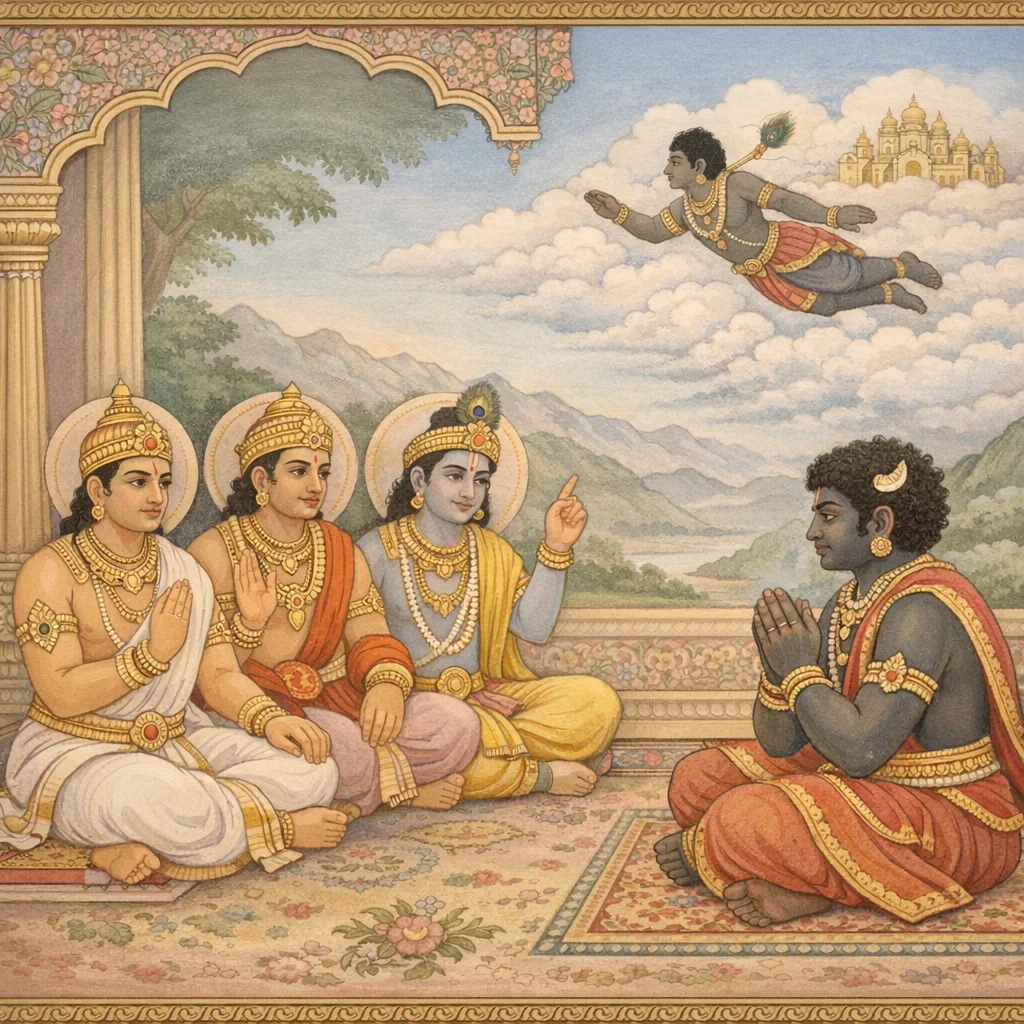
The chapter begins with the sage Śaunaka questioning Sūta about a previously mentioned miraculous sanctity and about the persons and attainments connected with the “Siddhaliṅga,” seeking to know how success is gained through grace. Sūta (Ugraśravas) replies that he will recount a tradition heard from Dvaipāyana (Vyāsa). The narrative then turns epic: after the Pāṇḍavas settle in Indraprastha, they are conversing in assembly when Ghaṭotkaca arrives. The brothers and Vāsudeva welcome him; Yudhiṣṭhira asks after his welfare, his rule, and his mother’s condition. Ghaṭotkaca reports that he maintains order and follows his mother’s command to practice devotion to the Pitṛs (ancestors), upholding the honor of the family. Yudhiṣṭhira consults Kṛṣṇa about a fitting marriage for Ghaṭotkaca. Kṛṣṇa speaks of a formidable bride in Prāgjyotiṣapura—the daughter of the daitya Mura (linked with Naraka)—and recalls an earlier conflict in which the goddess Kāmakhyā intervened, forbade her killing, granted her martial boons, and revealed a destined alliance: she is to become Ghaṭotkaca’s wife. The bride’s condition is that she will marry whoever defeats her in challenge, and many suitors have died attempting it. Yudhiṣṭhira worries over the danger, Bhīma upholds kṣatriya valor and the need for hard deeds, Arjuna supports the divine prophecy, and Kṛṣṇa urges swift action. Ghaṭotkaca humbly accepts the mission, resolved to preserve ancestral and familial honor; blessed with Kṛṣṇa’s strategic support, he departs by the sky-path toward Prāgjyotiṣa.
Shlokas
Verse 1
शौनक उवाच । अत्यद्भुतमिदं सूत गुप्तक्षेत्रस्य पावनम् । महन्माहात्म्यमतुलं कीर्तितं हर्षवर्धनम्
Śaunaka said: This is exceedingly wondrous, O Sūta—the purifying greatness of Guptakṣetra. A vast, incomparable māhātmya has been proclaimed, increasing joy.
Verse 2
पुनर्यत्सिद्धलिंगस्य पूर्वं माहात्म्यकीर्तने । इत्युक्तं यत्प्रसादेन सिद्धमातुस्तु सेत्स्यति
And again—what was earlier stated in proclaiming the māhātmya of Siddhaliṅga: that by whose grace Siddhamātā, the revered Mother, will indeed attain fulfillment.
Verse 3
विजयोनाम पुण्यात्मा साहाय्याच्चंडिलस्य च । को न्वसौ चंडिलोनाम विजयोनाम कस्तथा
Vijaya, a righteous-souled man, became Caṇḍila’s helper. Who indeed is this one named Caṇḍila, and who is that virtuous Vijaya who aided him?
Verse 4
कथं च प्राप्तवान्सिद्धिं सिद्धमातुः प्रसादतः । एतदाचक्ष्व तत्त्वेन श्रोतुं कौतूहलं हि नः
And how did he attain spiritual accomplishment through the grace of Siddhamātā? Tell us this truthfully, for we are eager to hear.
Verse 5
सतां चरित्रश्रवणे कौतुकं कस्य नो भवेत् । उग्रश्रवा उवाच । साधु पृष्टमिदं विप्रा दूरांतरितमप्युत
Who would not feel eagerness on hearing the lives of the virtuous? Ugraśravā said: Well asked, O brāhmaṇas—though the matter lies far back in time.
Verse 6
श्रुता द्वैपायनमुखात्कथां वक्ष्यामि चात्र वः । पुरा द्रुपदराजस्य पुत्रीमासाद्य पांडवाः
I shall relate to you here a tale I heard from Dvaipāyana himself. Long ago, the Pāṇḍavas won the daughter of King Drupada.
Verse 7
धृतराष्ट्रमते पश्चादिंद्रप्रस्थं न्यवेशयन् । रक्षिता वासुदेवेन कदाचित्तत्र पांडवाः
Later, in accordance with Dhṛtarāṣṭra’s decision, they established themselves at Indraprastha. There, at a certain time, the Pāṇḍavas were protected by Vāsudeva.
Verse 8
उपविष्टाः सभामध्ये कथाश्चक्रुः पृथग्विधाः । देवर्षिपितृभूतानां राज्ञां चापि प्रकीर्तने
Seated in the assembly hall, they engaged in many kinds of discussions—recounting the deeds of divine sages, ancestors, spirits, and also kings.
Verse 9
क्रियमाणेऽथ तत्रागाद्भीमपुत्रो घटोत्कचः । तं दृष्ट्वा भ्रातरः पंच वासुदेवश्च वीर्यवान्
As these events were unfolding, Ghaṭotkaca, Bhīma’s son, arrived there. Seeing him, the five brothers—and the mighty Vāsudeva as well—rose in reverence.
Verse 10
उत्थाय सहसा पीठादालिलिंगुर्मुदा युताः । स च तान्प्रणतः प्रह्वो ववंदे भीमनंदनः
At once they rose from their seats and embraced him in joy. And Bhīma’s son, bowing humbly, offered reverent salutations to them.
Verse 11
साशिषं च ततो राज्ञा स्वोत्संग उपवेशितः । आघ्राय स्नेहतो मूर्ध्नि प्रोक्तश्च जनसंसदि
Then the king blessed him and seated him upon his own lap. Affectionately kissing (inhaling the fragrance of) his head, he addressed him in the public assembly.
Verse 12
युधिष्ठिर उवाच । कुत आगम्यते पुत्र क्व चायं विहृतस्त्वया । कालः क्वचित्सुखं राज्यं कुरुषे मातुलं तव
Yudhiṣṭhira said: “My son, from where have you come, and where have you been roaming? Have you spent some time in comfort, and do you serve well the kingdom of your maternal uncle?”
Verse 13
कश्चिद्देवेषु विप्रेषु गोषु साधुषु सर्वदा । हैडंबे नापकुरुषे प्रियमेतद्धरेश्च नः
May no one ever do harm to the gods, to the brāhmaṇas, to cows, or to the sādhus. This is dear to Haidamba, and it is dear to our Lord, Dharmarāja, as well.
Verse 14
हेडंबस्य वनं सर्वं तस्य ये सैन्यराक्षसाः । पाल्यमानास्त्वया साधो वर्धंते जनक्षेमकाः
All the forest of Heḍamba, and those rākṣasas who serve as his troops—when protected by you, O good one—prosper as bringers of welfare to the people.
Verse 15
कच्चिन्नंदति ते माता भृशं नः प्रियकारिणी । कन्यैव या पुरा भीमं त्यक्त्वा मानं पतिं श्रिता
Is your mother truly rejoicing—she who has greatly acted for our good—she who, while still a maiden long ago, rejected Bhīma and chose a husband worthy of honor?
Verse 16
इति पृष्टो धर्मराज्ञा स्मयन्हैडंबिरब्रवीत् । हते तस्मिन्दुराचारे मातुलेऽस्मि नियोजितः
Thus questioned by Dharmarāja, Haidambī spoke with a smile: “After that wicked maternal uncle was slain, I was appointed to take charge.”
Verse 17
तद्राज्यं शासने स्थाप्य दुष्टान्निघ्नंश्चराम्यहम् । माता कुशलिनी देवी तपो दिव्यमुपाश्रिता
Having set that kingdom in proper governance, I move about subduing the wicked. My mother—the noble lady—is well and has taken refuge in divine austerity.
Verse 18
मामुवाच सदा पुत्र पितॄणां भक्तिकृद्भव । सोऽहं मातुर्वचः श्रुत्वा मेरुपादात्समागतः
She always said to me: “Son, be one who shows devotion to the Pitṛs (the Ancestors).” Therefore, having heard my mother’s words, I have come here from the foot of Meru.
Verse 19
प्रणामायैव भवतां भक्तिप्रह्वेण चेतसा । आत्मानं च महत्यर्थे कस्मिंश्चित्तु नियोजितम् । भवद्भिरहमिच्छामि फलं यस्मादिदं महत्
I bow to you with a mind humbled in devotion. I wish to know what mighty fruit arises from your having devoted yourselves to so great a purpose.
Verse 20
यदाज्ञापालनं पुत्रः पितॄणां सर्वदा चरेत् । अथोर्द्ध्वलोकान्स जयेदिह जायेत कीर्तिमान्
When a son ever follows and fulfills the commands of his ancestors, he conquers the higher worlds—and in this world too he lives renowned.
Verse 21
सूत उवाच । इत्युक्तवंतं तं राजा परिरभ्य पुनःपुनः । उवाच धर्मराट् पुत्रमानंदाश्रुः सगद्गदम्
Sūta said: Having spoken thus, the king embraced him again and again. Then Dharmarāja spoke to the son, his voice faltering, choked with joy and tears of bliss.
Verse 22
त्वमेव नो भक्तिकारी सहायश्चापि वर्तसे
You alone show devotion on our behalf, and you also stand as our helper.
Verse 23
एतदर्थं च हैडंबे पुत्रानिच्छंति साधवः । इहामुत्र तारयंते तादृशाश्चापि पुत्रकाः
For this very reason, O Haiḍamba, the virtuous long for sons: such sons become saviors, bringing deliverance both in this world and in the world beyond.
Verse 24
अवश्यं यादृशी माता तादृशस्तनयो भवेत् । माता च ते भक्तिमती दृढं नस्त्वं च तादृशः
Surely, as the mother is, so does the son become. Your mother is steadfast in devotion; therefore you too are certainly of that very nature.
Verse 25
अहो सुदुष्करं देवी कुरुते मे प्रिया वधूः । या भर्तृश्रियमुल्लंघ्य तप एव समाश्रिता
Alas—my beloved wife, that noble lady, is doing something exceedingly difficult: disregarding the splendor and comforts of her husband’s fortune, she has taken refuge in austerity alone.
Verse 26
नूनं कामेन भोगैर्वा कृत्यं वध्वा न मे मनाक् । या पुत्रसुखमन्वीक्ष्य परलोकार्थमाश्रिता
Surely my wife has not even the slightest concern for desire or pleasures. Though she beholds the happiness of having a son, she has taken up the path aimed at the welfare of the next world.
Verse 27
दुष्कुलीनापि या भक्ता सूतेऽपत्यं च भक्तिमत् । कुलीनमेव तन्मन्ये ममेदं मतमुत्तमम्
Even if a woman is of low lineage, if she is devoted and gives birth to devoted offspring, I regard that very family as truly noble—this is my highest conviction.
Verse 28
एवं बहूनि वाक्यानि तानि तानि वदन्नृपः । धर्मराजः समाभाष्य केशवं वाक्यमब्रवीत्
After speaking many such words, the king Dharmarāja addressed Keśava and spoke further.
Verse 29
पुंडरीकाक्ष जानासि यथा भीमादभूदयम् । जातमात्रस्तु यश्चासीद्यौवनस्थो महाबलः
O Lotus-eyed One, you know how this one was born from Bhīma—how, at the very moment of birth, he already stood in youth, possessed of great strength.
Verse 30
अष्टानां देवयोनीनां यतो जन्म च यौवनम् । सद्य एव भवेत्तस्मात्सद्योऽस्यासीच्च यौवनम्
Because among the eight divine wombs, birth and youth arise immediately, therefore in his case too youth was present at once.
Verse 31
तदस्योचितदारार्थे सदा चिंतास्ति कृष्ण मे । उचितं बत हैडंबेः क्व कलत्रं करोम्यहम्
Thus, O Kṛṣṇa, I am always anxious about finding a suitable wife for him. Indeed, for Haiḍamba, where shall I obtain a fitting bride?
Verse 32
तद्भवान्कृष्णसर्वज्ञ त्रिलोकीमपि वेत्सि च । हैडंबेरुचिता दारान्वक्तुमर्हसि यादव
Therefore, O Kṛṣṇa, all-knowing and knower even of the three worlds, O Yādava—please tell me who would be suitable wives for Haiḍamba.
Verse 33
सूत उवाच । एवमुक्तो धर्मराज्ञा क्षणं ध्यात्वा जनार्दनः । धर्मराजमिदं वाक्यं पदांतरितमब्रवीत्
Sūta said: Thus addressed by Dharmarāja, Janārdana reflected for a moment, and then replied to Dharmarāja with these well-considered words.
Verse 34
अस्ति राजन्प्रवक्ष्यामि दारानस्योचितां शुभाम् । सांप्रतं संस्थिता रम्ये प्राग्ज्योतिषपुरे वरे
O King, I shall tell you: there is for him an auspicious bride, fitting and worthy. At present she dwells in the beautiful and excellent city of Prāgjyotiṣa.
Verse 35
सा च पुत्री मुरोः पार्थ दैत्यस्याद्भुतकर्मणः । योऽसौ नरकदैत्यस्य प्राणतुल्यः सखाऽभवत्
And she is the daughter of Mura, O Pārtha—of that Dānava of wondrous deeds, who became the life-dear friend of the demon Naraka.
Verse 36
स च मे निहतो घोरः पाशदुर्गसमन्वितः । नरकश्च दुराचारस्त्वमेतद्वेत्सि सर्वशः
That dreadful one was slain by me, though fortified with nooses and strongholds; and Naraka too was a wicked-doer—you know all this well.
Verse 37
ततो हते मुरौ दैत्ये मया तस्य सुताव्रजत् । योद्धुं मामतिवीर्यत्वाद्घोरा कामकटंकटा
After I had slain the demon Mura, his daughter came forth to fight me—terrible Kāmakaṭaṅkaṭā, possessed of extraordinary might.
Verse 38
तां ततोऽहं महायुद्धे खड्गखेटकधारिणीम् । अयोधयं महाबाणैः सुशार्ङ्गधनुषश्च्युतैः
Then, in that great battle, I fought her—she who bore sword and shield—using mighty arrows shot from my excellent Śārṅga bow.
Verse 39
खड्गेन चिच्छेद बाणान्मम सा च मुरोः सुता । समागम्य च खड्गेन गरुडं मूर्ध्न्यताडयत्
Mura’s daughter cut down my arrows with her sword; and drawing near, she struck Garuḍa on the head with that sword.
Verse 40
स च मोहसमाविष्टो गरुडोऽभूदचेतनः । ततस्तस्या वधार्थाय मया चक्रं समुद्यतम्
Garuḍa, overcome by delusion, became senseless. Then, in order to slay her, I raised up my discus.
Verse 41
चक्रं समुद्यतं दृष्ट्वा मया तस्मिन्रणाजिरे । कामाख्या नाम मां देवी पुरः स्थित्वा वचोऽब्रवीत्
Seeing me raise the discus on that battlefield, the Goddess named Kāmākhyā stood before me and spoke these words.
Verse 42
नैनां हंतुं भवानर्हो रक्षैतां पुरुषोत्तम । अजेयत्वं मया ह्यस्या दत्तं खड्गं च खेटकम्
“You should not slay her, O Puruṣottama; protect her. For I have bestowed upon her invincibility, and (given her) a sword and a shield.”
Verse 43
बुद्धिरप्रतिमा चापि शक्तिश्च परमा रणे । ततस्त्वया त्रिरात्रेऽपि न जितासीन्मुरोः सुता
“Her intelligence is peerless, and her power in battle is supreme. Therefore, even in three nights, you have not conquered Mura’s daughter.”
Verse 44
एवमुक्ते तदा देवीं वचनं चाहमब्रवम् । अयमेष निवृत्तोऽस्मि वारयैनां च त्वं शुभे
When she had spoken thus, I then addressed the Goddess: “Here I withdraw from the fight. O auspicious one, you too restrain her.”
Verse 45
ततश्चालिंग्य तां भक्तां कामाख्या वाक्यमब्रवीत् । भद्रे रणान्निवर्तस्व नायं हंतुं कथंचन
Then Kāmakhyā embraced that devoted woman and said: “O noble lady, turn back from the battlefield. This one cannot be slain in any way.”
Verse 46
शक्यः केनापि समरे माधवो रणदुर्जयः । नाभूदस्ति भविष्यो वा य एनं संयुगे जयेत्
Mādhava, unconquerable in war, cannot be overcome by anyone in battle. There has not been, is not, nor will there be one who could defeat him in combat.
Verse 47
अपि वा त्र्यंबकः पुत्रि नैनं शक्तः कुतोऽन्यकः । तस्मादेनं नमस्कृत्य भाविनं श्वशुरं शुभे
Even Tryambaka (Śiva) himself, O daughter, is not able to subdue him—how then could anyone else? Therefore, O auspicious one, bow to him, for he is to be your future father-in-law.
Verse 48
रणादस्मान्निवर्तस्व तवोचितमिदं स्फुटम् । अस्य भ्रातुर्हि भीमस्य स्नुषा त्वं च भविष्यसि
Turn back from this battle—this is clearly what befits you. For you will become the daughter-in-law of his brother, Bhīma.
Verse 49
तस्मात्त्वं श्वशुरं भद्रे सम्मानय जनार्दनम् । न च शोकस्त्वया कार्यः पितरं प्रति पंडिते
Therefore, O noble lady, honor Janārdana as your father-in-law, as one would a father. And, O wise one, do not grieve on account of your father.
Verse 50
जातस्य हि ध्रुवो मृत्युर्ध्रुव जन्म मृतस्य च । बहवश्चाऽस्य वेत्तारो वद केनापि वार्यते
For one who is born, death is certain; and for one who has died, birth too is certain. Many know this truth—tell me, by whom can it be prevented?
Verse 51
ऋषींश्च देवांश्च महासुरांश्च त्रैविद्यविद्यान्पुरुषान्नृपांश्च । कान्मृत्युरेको न पतेत काले परावरज्ञोऽत्र न मुह्यते क्वचित्
Sages, gods, great asuras, masters of the threefold Vedic lore, men, and kings—upon whom does the one Death not fall when the time arrives? One who knows what is higher and lower, the true order of things, is never deluded here.
Verse 52
श्लाघ्य एव हि ते मृत्युः पितुरस्माज्जनार्दृनात् । सर्वपातकनिर्मुक्तो गतोऽसौ धाम वैष्णवम्
Indeed, your father’s death at the hands of this Janārdana is praiseworthy: freed from all sins, he has gone to the Vaiṣṇava abode.
Verse 53
एवं कामाख्यया प्रोक्ता सा च कामकटंकटा । त्यक्त्वा क्रोधं च संवृत्य गात्राणि प्रणता च माम्
Thus, addressed by me with the name “Kāmākhyā,” she—Kāmakaṭaṃkaṭā—abandoned her anger, composed herself, restrained her limbs, and bowed down to me in reverence.
Verse 54
तामहं साशिषं चापि प्रावोचं भरतर्षभ । अस्मिन्नेव पुरे तिष्ठ भगदत्तप्रपूजिता
O bull among the Bharatas, I then bestowed blessings upon her and said: “Remain in this very city, honored by the worship of Bhagadatta.”
Verse 55
मया देव्या पृथिव्या च भगदत्तः कृतो नृपः । स ते पूजां बहुविधां करिष्यति स्वसुर्यथा
By me, together with the Goddess Earth, Bhagadatta was made king. He will offer you manifold worship, as one honors one’s own father-in-law.
Verse 56
वसंती चात्र तं वीरं हैडिंबं पतिमाप्स्यसि । एवमाश्वास्य तां देवीं मौर्वीं चाहं व्यसर्जयम्
“Dwelling here, you shall obtain that hero Haiḍimba as your husband.” Thus consoling the goddess Maurvī, I dismissed her.
Verse 57
सा स्थिता च पुरे तत्र गतोऽहं शक्रसद्म च । ततो द्वारवतीं प्राप्य त्वया सह समागतः
She remained there in that city, and I went to Śakra’s abode. Then, upon reaching Dvāravatī, I met with you.
Verse 58
एवमेषोचिता दारा हैडंबेर्विद्यते शुभा । कामाख्ये च रणे घोरा या विद्युदिव भासते
Thus, this auspicious woman became the fitting wife of Haiḍimba—terrible in the dreadful battle at Kāmākhyā, shining like lightning.
Verse 59
न च रूपं वर्णितं मे श्वशुरस्योचितं यतः । साधोर्हि नैतदुचितं सर्वस्त्रीणां प्रवर्णनम्
I have not described her beauty, for such a gaze befits a father-in-law; indeed, for a virtuous man it is not proper to portray in detail the forms of all women.
Verse 60
पुनरेकश्च समयः कृतस्तं शृणु यस्तया । यो मां निरुत्तरां प्रश्ने कृत्वैव विजयेत्पुमान्
Hear also another condition she established: any man who could defeat me by rendering me speechless with a question would be victorious.
Verse 61
यो मे प्रतिबलश्चापि स मे भर्ता भविष्यति । एवं च समयं श्रुत्वा बहवो दैत्यराक्षसाः
“Whoever is my equal in strength—he shall become my husband.” Hearing this condition, many Dānavas and Rākṣasas came forth to attempt it.
Verse 62
तस्या जयार्थमगमंस्तेऽपि जित्वा हतास्तया । यो य एनां गतः पूर्वं न स भूयो न्यवर्तत
They went forth seeking victory over her, yet even after overcoming others, they were slain by her. Whoever had approached her earlier did not return again.
Verse 63
वह्नेरिव प्रभां दीप्तां पतंगानां समुच्चयः । एवमेतादृशीं मौर्वीं जेतुमुत्सहते यदि
As a swarm of moths might presume to conquer the blazing radiance of fire, so too is the daring of one who thinks to overcome such a formidable Maurvī.
Verse 64
घटोत्कचो महावीर्यो भार्यास्य नियतं भवेत्
Ghaṭotkaca, mighty in valor, would surely become her husband.
Verse 65
युधिष्ठिर उवाच । अलं सर्वगुणैस्तस्या यस्यास्त्वेको गुणो महान् । क्रियते किं हि क्षीरेण यदि तद्विषमिश्रितम्
Yudhiṣṭhira said: “What use are many virtues in her, if a single fault is great? What can milk accomplish when it has been mixed with poison?”
Verse 66
प्राणाधिकं भैमसेनिं कथं केवलसाहसात् । क्षिपेयं तव वाक्यानां शुद्धानां चाथ कोविदम्
How could I, by mere rash daring, cast aside Bhīmasena—dearer than life? And how could I dismiss your words, which are pure and wise?
Verse 67
अन्या अपि स्त्रियः संति देशे देशे जनार्दन । बह्व्यस्तासां वरां कांचिद्योषितं वक्तुमर्हसि
O Janārdana, in many lands there are other women as well. Among them, you ought to name some excellent maiden.
Verse 68
भीम उवाच । सम्यगुक्तं केशवेन वाक्यं बह्वर्थमुत्तमम् । राज्ञा पुनः स्नेहवशाद्यदुक्तं तन्न भाति मे
Bhīma said: “Keśava has spoken rightly—his words are excellent and rich in meaning. But what the king said out of affection does not appeal to me.”
Verse 69
कार्ये दुःसाध्य एव स्यात्क्षत्रियस्य पराक्रमः । करींद्रस्येव यूथेषु गजानां न मृगेषु च
A kṣatriya’s valor should be set upon deeds hard to accomplish—like a lordly elephant among herds of elephants, not among deer.
Verse 70
आत्मा प्रख्यातिमानेयः सर्वथा वीरपुंगवैः । सा च ख्यातिः कथं जायेद्दुःसाध्यकरणादृते
All noble heroes should honor their own self through true renown. And how can such renown arise without accomplishing what is difficult?
Verse 71
न ह्यात्मवशगं पार्थ हैडंबेरस्य रक्षणम् । येन दत्तस्त्वयं धात्रा स एनं पालयिष्यति
O Pārtha, the protection of Haiḍaṃbera is not under one’s personal control. He who granted him to you—the Ordainer (Dhātṛ)—will protect him.
Verse 72
सर्वथोच्चपदारोहे यत्नः कार्यो विजानता । तन्न सिध्यति चेद्दैवान्नासौ दोषो विजानतः
In striving for the highest station, a discerning person must exert every effort. If it does not succeed due to fate, the wise are not at fault.
Verse 73
यथा देवव्रतस्त्वेको जह्रे काशिसुताः पुरा । तथैक एव हैडंबिर्मौर्वीं प्राप्नोतु मा चिरम्
Just as Devavrata alone once carried off the daughters of the king of Kāśī, so may Haiḍambi also, all by himself, obtain Maurvī—without delay.
Verse 74
अर्जुन उवाच । केवलं पौरुषपरं भीमेनोक्तमिदं वचः । अबलं दैवहेतुत्वात्प्रबलं प्रतिभाति मे
Arjuna said: “This word spoken by Bhīma rests only on human effort; yet, since destiny is its cause, what seems weak appears powerful to me.”
Verse 75
न मृषा हि वचो ब्रूते कामाख्या या पुराऽब्रवीत् । भीमसेनसुतः पाणिं तव भद्रे ग्रहीष्यति
“Kāmākhyā does not speak falsehood—she who spoke earlier: ‘O noble lady, Bhīmasena’s son will take your hand in marriage.’”
Verse 76
अनेन हेतुना यातु शीघ्रं तत्र घटोत्कचः । इति मे रोचते कृष्ण तव किं ब्रूहि रोचते
“For this reason, let Ghaṭotkaca go there at once. This pleases me, O Kṛṣṇa—tell me, what pleases you?”
Verse 77
कृष्ण उवाच । रोचते मे वचस्तुभ्यं भीमस्य च महात्मनः । न हि तुल्यो भैमसेनेर्बुद्धौ वीर्ये च कश्चन
Kṛṣṇa said: “Your words and those of the great-souled Bhīma please me. For none is equal to Bhīmasena in counsel and in valor.”
Verse 78
अंतरात्मा च मे वेत्ति प्राप्तामेव मुरोः सुताम् । तच्छीघ्रं यातु हैडंबिस्त्वं च किं पुत्र मन्यसे
“And my inner self knows that Mura’s daughter is already as good as obtained. Therefore let Haiḍambī go quickly. And you too, my son—what do you think?”
Verse 79
घटोत्कच उवाच । न हि न्याय्याः स्वका वक्तुं पूज्यानामग्रतो गुणाः । प्रवृत्ता एव भासंते सद्गुणाश्च रवेः कराः
Ghaṭotkaca said: “It is not fitting to speak of one’s own merits before those worthy of reverence. True virtues shine of themselves—like the rays of the sun.”
Verse 80
सर्वथा तत्करिष्यामि पितरो येन मेऽमलाः । लज्जिष्यंति न संसत्सु मया पुत्रेण पांडवाः
“In every way I shall do that by which my spotless fathers—the Pāṇḍavas—will not feel ashamed in the assemblies because of me, their son.”
Verse 81
एवमुक्त्वा महाबाहुरुत्थाय प्रणनाम तान् । जयाशीर्भिश्च पितृभिर्वर्द्धितो गंतुमैच्छत
Having spoken thus, the mighty-armed one rose and bowed to them; and, strengthened by his fathers’ blessings of victory, he wished to depart.
Verse 82
तं गतुकाममाहेदमभिनंद्य जनार्दनः । कथाकथनकाले मां स्मरेथास्त्वं जयावहम्
Seeing him eager to depart, Janārdana praised him and said: “When the time comes to recount this tale, remember me—who brings victory.”
Verse 83
यथा बुद्धिं सुदुर्भेद्यां वर्धयामि बलं च ते । इत्युक्त्वालिंग्य तं कृष्णो व्यससर्जत साशिषम्
Saying, “May I strengthen in you an intellect that is hard to overcome, and may I increase your might as well,” Kṛṣṇa embraced him and then dismissed him with blessings.
Verse 84
ततो हिडंबातनयो महौजाः सूर्याक्षकालाक्षमहोदरानुगः । वियत्पथं प्राप्य जगाम तत्पुरं प्राग्ज्योतिषं नाम दिनव्यपाये
Then the mighty son of Hiḍimbā—accompanied by Sūryākṣa, Kālākṣa, and Mahodara—took to the path of the sky and, at day’s close, went to the city called Prāgjyotiṣa.