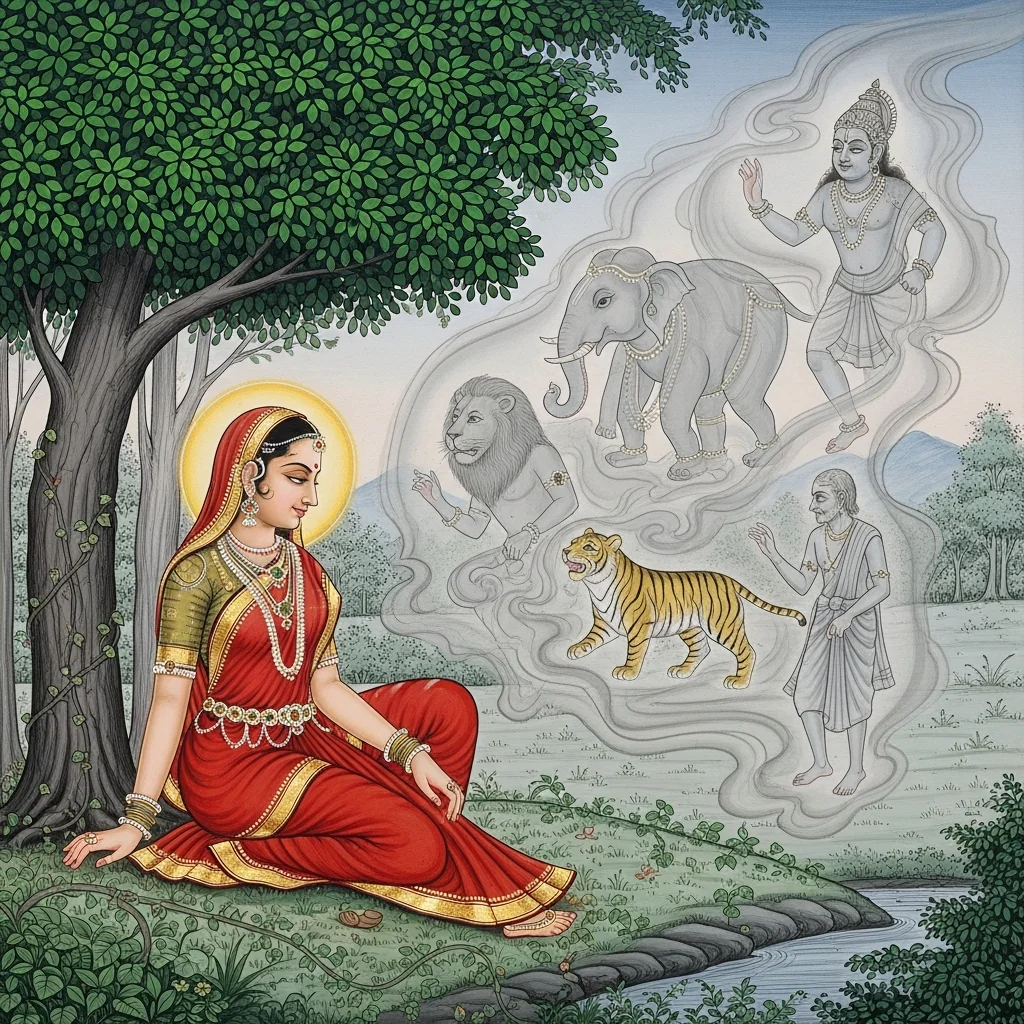
Adhyaya 14
Chapter 14 begins with Arjuna’s well-ordered inquiry, requesting a fuller and more accurate account of the māhātmya (sacred glory) of Kumāranātha/Kumāreśvara and the origins of the figures connected with Him. Nārada replies first by affirming the purifying power of approaching Kumāreśvara through darśana (holy sight), śravaṇa (hearing), dhyāna (meditation), pūjā (worship), and Vedic-style reverence, so the chapter serves as both theological teaching and ritual-ethical guidance. The narration then widens into genealogy and cosmology: Dakṣa’s daughters, their bestowal upon Dharma, Kaśyapa, Soma, and others, and the divine and semi-divine lineages that arise. This framework supports the asura line: Diti’s loss of sons, her tapas (austerity), Indra’s intervention that brings forth the Maruts, and Diti’s renewed plea for a formidable son. Kaśyapa grants the boon, and Vajrāṅga is born with a vajra-like, indestructible body. Vajrāṅga’s conflict with Indra culminates in an ethic of restraint: Brahmā counsels that true heroism lies in releasing an enemy who comes as a supplicant, turning Vajrāṅga from sovereignty toward tapas. Brahmā also provides him a spouse, Varāṅgī, and the chapter describes prolonged ascetic practice and her steadfast endurance amid Indra’s attempts to break her vow—highlighting kṣamā (forbearance), firmness, and tapas as the highest “wealth.” The chapter closes with Vajrāṅga consoling his distressed wife, affirming household ethics alongside ascetic ideals, while keeping the larger trajectory aimed toward Kumāreśvara-related outcomes promised by Arjuna’s opening questions.
Shlokas
Verse 1
अर्जुन उवाच । कुमारनाथमाहात्म्यं यत्त्वयोक्तं कथांतरे । तदहं श्रोतुमिच्छामि विस्तरेण महामुने
Arjuna said: “The greatness of Kumāranātha that you mentioned in the course of another narration—I wish to hear that in detail, O great sage.”
Verse 2
नारद उवाच । तारकं विनिहत्यैव वज्रांगतनयं प्रभुः । गुहः संस्थापयामास लिंगमेतच्च फाल्गुन
Nārada said: “After slaying Tāraka, the son of Vajrāṅga, the Lord Guha established this very liṅga, O Phālalguna.”
Verse 3
दर्शनाच्छ्रवणाद्ध्यानात्पूजया श्रुतिवंदनैः । सर्वपापापहः पार्थ कुमारेशो न संशयः
O Pārtha, by merely beholding Him, hearing His glory, meditating, worshipping, and offering Vedic praises, Kumāreśa surely removes all sins—of this there is no doubt.
Verse 4
अर्जुन उवाच । अत्याश्चर्यमयी रम्या कथेयं पापनाशिनी । विस्तरेण च मे ब्रूहि याथातथ्येन नारद
Arjuna said: This tale is exceedingly wondrous, delightful, and sin-destroying. Tell it to me in full detail, O Nārada, exactly as it happened.
Verse 5
वज्रांगः कोप्यसौ दैत्यः किंप्रभावश्च तारकः । कथं स निहतश्चैव जातश्चैव कथं गुहः
Who indeed was that demon Vajrāṅga? And what power did Tāraka possess? How was he slain—and how, too, was Guha (Kumāra) born?
Verse 6
कथं संस्थापितं लिंगं कुमारेश्वरसंज्ञितम् । किं फलं चास्य लिंगस्य ब्रूहि तद्विस्तरान्मम
How was the liṅga established that is known as Kumāreśvara? And what is the fruit of worshipping this liṅga? Tell me that in detail.
Verse 7
नारद उवाच । प्रणिपत्य कुमाराय सेनान्ये चेश्वराय च । श्रृणु चैकमनाः पार्थ कुमारचरितं महत्
Nārada said: Having bowed to Kumāra—the divine Commander—and to Īśvara as well, listen with one-pointed mind, O Pārtha, to the great deeds of Kumāra.
Verse 8
मानसो ब्रह्मणः पुत्रो दक्षो नाम प्रजापतिः । षष्टिं सोऽजनयत्कन्या वीरिण्यां नाम फाल्गुन
O Phālguna, Dakṣa—the mind-born son of Brahmā and a Prajāpati—begot sixty daughters upon Vīriṇī.
Verse 9
ददो स दश धर्माय कश्यपाय त्रयोदश । सप्तविंशतिं सोमाय चतस्रोरिष्टनेमिने
He bestowed ten (daughters) upon Dharma, thirteen upon Kaśyapa, twenty-seven upon Soma, and four upon Ariṣṭanemi.
Verse 10
भूतांगिरः कृशाश्वेभ्यो द्वेद्वे चैव ददौ प्रभुः । नामधेयान्यमूषां च सपत्नीनां च मे श्रृणु
That Lord also gave two each to Bhūta, Aṅgiras, and Kṛśāśva. Now hear from me the names of those women and of their co-wives.
Verse 11
यासां प्रसूतिप्रभवा लोका आपूरितास्त्रयः । भानुर्लम्बा ककुद्भूमिर्विश्वा साध्या मरुत्वती
From whose offspring the three worlds became filled—(they are) Bhānu, Lambā, Kakudbhūmi, Viśvā, Sādhyā, and Marutvatī.
Verse 12
वसुर्सुहूर्ता संकल्पा धर्मपत्न्यः सुताञ्छृणु । भानोस्तु देवऋषभ सुतोऽभवत्
Vasu, Suhūrtā, and Saṃkalpā are Dharma’s wives—hear of their sons. From Bhānu was born Devaṛṣabha, the bull among the gods.
Verse 13
विद्योत आसील्लंबायां ततश्च स्तनयित्नवः । ककुदः शकटः पुत्रः कीकटस्तनयो यतः
From Lambā was born Vidyota; thereafter came the Stanayitnavas. Kakuda and Śakaṭa were also born, and from him was born a son named Kīkaṭa.
Verse 14
भुवो दुर्गस्तथा स्वर्गो नंदश्चैव ततोऽभवत् । विश्वेदेवाश्च विश्वाया अप्रजांस्तान्प्रचक्षते
From Bhū arose Durgā and also Svarga, and from her Nanda as well. From Viśvā were born the Viśvedevas, who are declared to be without progeny.
Verse 15
साध्या द्वादश साध्याया अर्थसिद्धिस्तु तत्सुतः । मरुत्वान्सुजयंतश्च मरुत्वत्या बभूवतुः
Of Sādhyā were born the twelve Sādhyas, and her son was Arthasiddhi. Of Marutvatī were born Marutvān and Sujayanta.
Verse 16
नरनारायणौ प्राहुर्यौ तौ ज्ञानविदो जनाः । वसोश्च वसवश्चाष्टौ मुहूर्तायां मुहूर्तकाः
Those who know the truth speak of those two as Nara and Nārāyaṇa. From Vasu were born the eight Vasus; from Muhūrtā were born the Muhūrtakas.
Verse 17
ये वै फलं प्रयच्छंति भूतानां स्वं स्वकालजम् । संकल्पायाश्च संकल्पः कामः संकल्पजः सुतः
They are those who bestow upon beings the fruits that arise in their proper seasons. Of Saṅkalpā was born Saṅkalpa, and Kāma was the son born from Saṅkalpa.
Verse 18
सुरूपासूत तनयान्रुद्रानेकादशैव तु । कपाली पिंगलो भीमो विरुपाक्षो विलोहितः
Surūpā bore sons—indeed, the eleven Rudras: Kapālī, Piṅgala, Bhīma, Virūpākṣa, and Vilohita, among them.
Verse 19
अजकः शासनः शास्ता शंभुश्चांत्यो भवस्तथा । रुद्रस्य पार्षदाश्चान्ये विरूपायाः सुताः स्मृताः
Ajaka, Śāsana, Śāstā, Śambhu, Antya, and also Bhava—these, and other attendants of Rudra, are remembered as the sons of Virūpā.
Verse 20
प्रजापतेरंगिरसः स्वधा पत्नी पितॄनथ । जज्ञे सनी तथा पुत्रमथर्वागिरसं प्रभुम्
Svadhā, the wife of Prajāpati Aṅgiras, in connection with the Pitṛs, gave birth to Sanī, and also to a son—the lord Atharvāṅgiras.
Verse 21
कृशाश्वस्य च द्वे भार्ये अर्चिश्च दिषणा तथा । अस्त्रगामो ययोः पुत्रः ससंहारः प्रकीर्तितः
Kṛśāśva had two wives—Arcis and Diṣaṇā. Their son was Astragāma, renowned as Sasaṃhāra.
Verse 22
पतंगी यामिनी ताम्रा तिमिश्चारिष्टनेमिनः । पतंग्यसूत पतगान्यामिनी शलभानथ
Pataṃgī, Yāminī, Tāmrā, and Timi were the wives of Ariṣṭanemi. Pataṃgī gave birth to the birds, and then Yāminī gave birth to the locusts (Śalabhas).
Verse 23
ताम्रायाः श्येनगृध्राद्यास्तिमेर्यादोगणास्तथा । अथ कश्यपपत्नीनां यत्प्रसूदमिदं जगत्
From Tāmrā were born hawks, vultures, and other such birds; from Timi likewise arose hosts of aquatic beings, such as the Timiryas and related groups. Thus is this world declared to be the offspring born of Kaśyapa’s wives.
Verse 24
श्रृणु नामानि लोकानां मातॄणां शंकराणि च । अदितिर्दितिर्दनुः सिंही दनायुः सुरभिस्तथा
Hear now the names of the Mothers of the worlds, and the auspicious lineages connected with Śaṅkara: Aditi, Diti, Danu, Siṃhī, Danāyu, and likewise Surabhi.
Verse 25
अरिष्टा विनता ग्रावा दया क्रोधवशा इरा । कद्रुर्मुनिश्च ते चोभे मातरस्ताः प्रकीर्तिताः
Ariṣṭā, Vinatā, Grāvā, Dayā, Krodhavaśā, and Irā; and also Kadru and Muni—these two as well—are proclaimed as the mothers.
Verse 26
आदित्याश्चादितेः पुत्रा दितेर्दैत्याः प्रकीर्तिताः । दनोश्च दानवाः प्रोक्ता राहुः सिंहीसुतो ग्रहः
The Ādityas are said to be the sons of Aditi; the Daityas are proclaimed as the sons of Diti. From Danu are spoken of the Dānavas; and Rāhu, the planet, is the son of Siṃhī.
Verse 27
दनायुषस्तथा जातो दनायुश्च गणो बली । गावश्च सुरभेर्जातारिष्टापुत्रा युगंधराः
From Danāyu was likewise born Danāyuṣ, a mighty host (gaṇa). Cows were born of Surabhi; and the Yugaṃdharas are said to be the sons of Ariṣṭā.
Verse 28
विनतासूत अरुणं गरुडं च महाबलम् । ग्रावायाः श्वापदाः पुत्रा गणः क्रोधवशस्तथा
Vinatā gave birth to Aruṇa and to Garuḍa of great might. From Grāvā were born beasts of prey; and likewise from Krodhavaśā came a host (of beings).
Verse 29
जातः क्रोधवशायाश्च इराया भूरुहाः स्मृताः । कद्रूसुताः स्मृता नागा मुनेरप्सरसां गणाः
From Krodhavaśā were born certain beings; from Irā are remembered the plants and trees. The Nāgas are remembered as the sons of Kadru; and from Muni came hosts of Apsarases.
Verse 30
तत्र द्वौ तनयौ यौ च दितेस्तौ विष्णुना हतौ । हिरण्यकशिपुर्वीरो हिरण्याक्षस्तथाऽपरः
There, the two sons of Diti were slain by Viṣṇu: the hero Hiraṇyakaśipu, and the other, Hiraṇyākṣa.
Verse 31
ततो निहतपुत्रा सा दितिराराध्य कश्यपम् । अयाचत वरं देवी पुत्रमन्यं महाबलम्
Then Diti, whose sons had been slain, propitiated Kaśyapa. The goddess begged for a boon—another son of great strength.
Verse 32
समरे शक्रहंतारं स तस्या अददात्प्रभुः । नियमे चापि वर्तस्व वर्षाणां च सहस्रकम्
The lord granted her (the boon of) one who would slay Śakra in battle. And he said: “Abide also in strict observance for a thousand years.”
Verse 33
इत्युक्ता सा तथा चक्रे पुष्करस्था समाहिता । वर्तंत्या नियमे तस्याः सहस्राक्षः समाहितः
Thus instructed, she did exactly so—dwelling at Puṣkara with a steady, collected mind. As she continued in her vow and discipline, Sahasrākṣa (Indra) too remained watchful and intent.
Verse 34
उपासामाचरद्भक्त्या सा चैनमन्वमन्यत । दशवत्सरशेषस्य सहस्रस्य तदा दितिः
She practiced worship with bhakti, ever honoring him within her heart. Then, for Diti, of the thousand years of observance, only ten years remained.
Verse 35
उवाच शक्रं सुप्रीता भक्त्या शक्रस्य तोषिता । दितिरुवाच । अत्रोत्तीर्णव्रतप्रायां विद्धि देवसत्तम
Delighted, and having pleased Śakra (Indra) through devotion, she spoke to him. Diti said: “O best of the gods, know that here my vow is nearly fulfilled.”
Verse 36
भविष्यति तव भ्राता तेन सार्धमिमां श्रियम् । भोक्ष्यसे त्वं यथानयायं त्रैलोक्यं हतकंटकम्
“Your brother shall come to be; and with him you will enjoy this sovereignty and splendor, so that the three worlds may be ruled in righteousness, their thorns and troubles removed.”
Verse 37
इत्युक्त्वा निद्रयाविष्टा चरणाक्रांतमूर्धजा । दिवा सुप्ता दितिर्देवी भाव्यर्थबलनोदिता
Having spoken thus, the goddess Diti was overcome by sleep; her hair upon her head was pressed down by a foot. She slept in the daytime, impelled by the force of what was destined to occur.
Verse 38
तत्तु रंध्रमवेक्ष्यैव योगमूर्तिस्तदाविशत् । जठरस्थं दितेर्गर्भं चक्रे वज्रेण सप्तधा
Seeing that opening at once, Indra, assuming a yogic form, entered there and then. With his vajra he split the embryo abiding in Diti’s womb into seven parts.
Verse 39
एकैकं च पुनः खण्डं चकार मघवा ततः । सप्तधा सप्तधा कोपादुद्बुध्य च ततो दितिः
Then Maghavā (Indra) further divided each piece again—again into seven, and again into seven. Thereupon Diti awoke in anger.
Verse 40
न हंतव्यो न हंतव्य इति सा शक्रमब्रवीत् । वज्रेण कृत्त्यमानानां बुद्धा सा रोदनेन च
She said to Śakra, “Do not kill—do not kill!” Realizing (what was happening) as they were being cut by the vajra, she understood it also by their crying.
Verse 41
ततः शक्रश्च मा रोदीरिति तांस्तान्यथाऽवदत् । निर्गत्य जठरात्तस्मात्ततः प्रांजलिरग्रतः
Then Śakra addressed them accordingly: “Do not weep.” Having emerged from that womb, they stood before him with folded hands.
Verse 42
उवाच वाक्यं चात्रस्तो मातरं रिषपूरिताम् । दिवास्वापं कृथा मातः पादाक्रांतशिरोरुहा
Then, frightened, he spoke words to his mother, filled with distress: “Mother—do not sleep in the daytime, you whose hair is pressed down by a foot.”
Verse 43
सुप्ताथ सुचिरं वाते धिन्नो गर्भो मया तव । कृता एकोनपंचाशद्भागा वज्रेण ते सुताः
“While you slept for a long time, O Diti, your womb was cut by me in the wind; and by my thunderbolt your sons were divided into forty-nine parts.”
Verse 44
सत्यं भवतु ते वाक्यं सार्धं भोक्ष्यामि तैः श्रियम् । दास्यामि तेषां स्थानानि दिवि यावदहं दिते
May your words be fulfilled as truth. Together with them I shall enjoy prosperity; and I shall grant them abodes in heaven for as long as I endure, O Diti.
Verse 45
मा रोदीरिति मे प्रोक्ताः ख्याताश्च मरुतस्त्विति । इत्युक्ता सा च सव्रीडा दितिर्जाता निरुत्तरा
“Do not weep”—thus I addressed them; therefore they became renowned as the Maruts. When this was said, Diti, overcome with shame, became speechless.
Verse 46
सार्धं तैर्गतवानिंद्रो दिगंते वायवः स्मृताः । ततः पुनश्च भर्तारं दितिः प्रोवाच दुःखिता
Indra departed together with them; and they are remembered as the winds that move at the ends of the directions. Then again, sorrowful Diti spoke to her husband.
Verse 47
पुत्रं मे भगवन्देहि शक्रहंतारमूर्जितम् । यो नास्त्रशस्त्रैर्वध्यत्वं गच्छेत्त्रिदिववासिनाम्
O Blessed Lord, grant me a son—mighty, a slayer of Śakra—one whom the dwellers of heaven cannot kill by weapons or missiles.
Verse 48
न ददास्युत्तरं विद्धि मृतामेव प्रजापते । इत्युक्तः स तदोवाच तां पत्नीमतिदुःखिताम्
“Know that I shall not give an answer—(she is) as good as dead, O Prajāpati.” Thus addressed, he then spoke to that wife who was exceedingly distressed.
Verse 49
दशवर्षसहस्राणि तपोनिष्ठा तु तप्स्यसे । वज्रसारमयैरंगैरच्छेद्यैरायसैर्दृढैः
Established in austerity, you shall practice tapas for ten thousand years; then you shall obtain a son whose limbs are of the very essence of the vajra—uncuttable, iron-hard, and firm.
Verse 50
वज्रांगोनाम पुत्रस्ते भविता धर्मवत्सलः । सा तु लब्धवरा देवी जगाम तपसे वनम्
Your son shall be named Vajrāṅga, devoted to dharma. Having obtained this boon, the Goddess went to the forest to undertake austerities.
Verse 51
दशवर्षसहस्राणि तपो घोरं समाचरत् । तपसोंऽते भगवती जनयामास दुर्जयम्
For ten thousand years she practiced fierce austerity. At the end of that tapas, the revered Goddess gave birth to one who was hard to conquer.
Verse 52
पुत्रमप्रतिकर्माणमजेयं वज्रदुश्छिदम् । स जातामात्र एवाभूत्सर्वशा स्त्रार्थपारगः
(She bore) a son beyond counteraction, unconquerable, and hard to cut like a vajra. The very moment he was born, he was already fully accomplished in the meanings and mastery of all weapons.
Verse 53
उवाच मातरं भक्त्या मातः किं करवाण्यहम् । तमुवाच ततो हृष्टा दितिर्दैत्याधिपं सुतम्
With devotion he said to his mother, “Mother, what shall I do?” Then Diti, delighted, spoke to her son, the lord of the Daityas.
Verse 54
बहवो मे हताः पुत्राः सहस्राक्षेण पुत्रक । तेषआमपचितिं कर्तुमिच्छे शक्रवधादहम्
“My child, many of my sons have been slain by Sahasrākṣa (Indra). I desire to requite them by the slaying of Śakra.”
Verse 55
बाढमित्येव सं प्रोच्य जगाम त्रिदिवं बली । ससैन्यं समरे शक्रं स च बाह्वायुधोऽजयत्
Saying, “So be it,” the mighty Bali went to Tridiva (heaven). In battle he defeated Śakra together with his armies; that Bāhvāyudha was victorious.
Verse 56
पादेनाकृष्य देवेंद्रं सिंहः क्षुद्रमृगं यथा । मातुरंतिकमागच्छद्याचमानं भयातुरम्
Dragging the lord of the gods with his foot like a lion hauling a petty beast, he came near his mother; and Indra, terrified, begged for mercy.
Verse 57
एतस्मिन्नंतरे ब्रह्मा कश्यपश्च महातपाः । आगता तत्र संत्रस्तावथो ब्रह्मा जगाद तम्
Meanwhile, Brahmā and the great ascetic Kaśyapa arrived there, alarmed; then Brahmā addressed him.
Verse 58
मुंचामुं पुत्र याचंतं किमनेन प्रयोजनम् । अवमानो वधः प्रोक्तो वीरसंभावितस्य च
“Release him, my son—he is pleading. What purpose is served by this? For one esteemed as a hero, humiliation is said to be as death.”
Verse 59
अस्मद्वाक्येन यो मुक्तो जीवन्नपि मृतो हि सः । शत्रुं ये घ्नंति समरे न ते वीराः प्रकीर्तिताः
He who is released by our word, though living, is in honor truly as one dead. Those who slay in battle an enemy thus spared are not proclaimed as heroes.
Verse 60
कृत्वा मानपरिग्लनिं ये मुंचंति वरा हि ते । यतामान्यतमं मत्वा त्वया मातुर्वचः कृतम्
Truly the best are those who, even after their honor is wounded, still release (the foe). You acted upon your mother’s word, deeming it the most worthy of reverence.
Verse 61
तथा पितुर्वचः कार्यं मुंचामुं पुत्र वासवम् । एतच्छ्रुत्वा तु वज्रांगः प्रणतो वाक्यमब्रवीत्
So too, my son, your father’s word must be fulfilled—release Vāsava (Indra). Hearing this, Vajrāṅga bowed in reverence and spoke.
Verse 62
न मे कृत्यमनेनास्ति मातुराज्ञा कृता मया । त्वं सुरासुरनाथो वै मम च प्रपितामहः
Vajrāṅga said, “I have no further business with him; my mother’s command has been fulfilled by me. And You are indeed the lord of both gods and asuras—and also my great-grandfather.”
Verse 63
करिष्ये त्वद्वचो देव एष मुक्तः शतक्रतुः । न च कांक्षे शक्रभुक्तामिमां त्रैलोक्यराजताम्
O God, I shall do as You command; thus is Śatakratu (Indra) released. I do not desire the sovereignty over the three worlds that has already been enjoyed by Śakra.
Verse 64
परभुक्ता यथा नारी परभुक्तामिवस्रजम् । यच्च त्रिभुवनेष्वस्ति सारं तन्मम कथ्यताम्
As a woman enjoyed by another is to be shunned, and as a garland already worn by another—so too is this sovereignty. Tell me what the true essence is that abides within the three worlds.
Verse 65
ब्रह्मोवाच । तपसो न परं किंचित्तपो हि महतां धनम् । तपसा प्राप्यते सर्वं तपोयोग्योऽसि पुत्रक
Brahmā said: Nothing is higher than tapas (austerity); truly, tapas is the wealth of the great. By tapas all is attained. O dear son, you are fit for tapas.
Verse 66
वज्रांग उवाच । तपसे मे रतिर्देव न विघ्नं तत्र मे भवेत् । त्वत्प्रसादेन भगवन्नित्युक्त्वा विरराम सः
Vajrāṅga said: O God, my delight is in tapas—may there be no obstacle for me in that. O Blessed One, by Your grace—having spoken thus, he fell silent and set himself to the vow.
Verse 67
ब्रह्मोवाच । क्रूरभावं परित्यज्य यदीच्छसि तपः सुत । अनया चित्तबुद्ध्या तत्त्वयाप्तं जन्मनः फलम्
Brahmā said: If you desire tapas, O son, abandon the cruel disposition. With such true clarity of heart and intellect, the fruit of your birth is attained.
Verse 68
इत्युक्त्वा पद्मजः कन्यां ससर्ज्जयतलोचनाम् । तामस्मै प्रददौ देवः पत्न्यर्थं पद्मसंभवः
Having spoken thus, the Lotus-born (Brahmā) created a maiden with downcast eyes. That god, sprung from the lotus, gave her to him as a wife.
Verse 69
वरांगीति च नामास्याः कृतवांश्च पितामहः । जगाम च ततो ब्रह्मा कश्यपेन समं दिवम्
The Grandfather, Brahmā, bestowed on her the name “Varāṅgī” as well. Then Brahmā went to heaven together with Kaśyapa.
Verse 70
वज्रांगोऽपि तया सार्धं जगाम तपसे वनम् । ऊर्द्धूबाहुः स दैत्येंद्रोऽतिष्ठदब्दसहस्रकम्
Vajrāṅga too, together with her, went to the forest to perform austerities. That lord of the Dānavas stood with arms raised aloft for a thousand years.
Verse 71
कालं कमलपत्राक्षः शुद्धबुद्धिर्महातपाः । तावानधोमुखः कालं तावत्पंचाग्निसाधकः
For a time, the great ascetic—lotus-eyed and pure in understanding—remained with his face turned downward; and for that same duration he practiced the discipline of the five fires.
Verse 72
निराहारो घोरतपास्तपोराशिरजायत । ततः सोंऽतर्जले चक्रे कालं वर्षसहस्रकम्
Fasting and practicing dreadful austerities, he became like a mountain of tapas. Then he spent a thousand years within the waters.
Verse 73
जलांतरप्रविष्टस्य तस्य पत्नी महाव्रता । तस्यैव तीरे सरसस्तत्परा मौनमाश्रिता
When her husband had entered the waters, his wife—steadfast in the great vow—remained on the very bank of that lake, wholly intent on him, observing the vow of silence.
Verse 74
निराहारं पतिं मत्वा तपस्तेपे पतिव्रता । तस्यास्तपसि वर्तंत्या इंद्रश्चक्रे विभीषिकाम्
Thinking her husband to be fasting without food, the devoted wife (pativratā) undertook tapas, sacred austerity. As she persisted in that tapas, Indra conjured a terror to disturb her.
Verse 75
भूत्वा तु मर्कटाकारस्तस्याअभ्याशमागतः । अपविध्य दृशं तस्या मूत्रविष्ठे चकार सः
Then, assuming the form of a monkey, he came near her; turning her gaze aside, he urinated and defecated there, intent on defiling and disrupting her observance.
Verse 76
तथा विलोलवसनां विलोलवदनां तथा । विलोलकेशां तां चक्रे विधित्सुस्तपसः क्षतिम्
And he threw her garments into disarray, unsettled her countenance, and disheveled her hair—intent on injuring her tapas, her sacred austerity.
Verse 77
ततश्च मेषरूपेण क्लेशं तस्याश्चकार सः । ततो भुजंगरूपेण बद्धा चरणयोर्द्वयोः
Then, in the form of a ram, he afflicted her with distress; and next, in the form of a serpent, he coiled around and bound her two feet.
Verse 78
अपाकर्षत दूरं स तस्माद्देवभृतस्तथा । तपोबालाच्च सा तस्य न वध्यत्वं जगाम ह
Indra, bearer and lord among the gods, dragged her far from that place; yet by the strength of her tapas she did not become vulnerable—she could not be overpowered.
Verse 79
क्षमया च महाभागा क्रोधमण्वपि नाकरोत् । ततो गोमायुरूपेण तमदूषयदाश्रमम्
Yet that noble woman, through forbearance, did not give rise to even a trace of anger. Then, taking the form of a jackal, he defiled that hermitage.
Verse 80
अग्निरूपेण तस्याश्च स ददाह महाश्रमम् । चकर्ष वायुरूपेण महोग्रेण च तां शुभाम् । एवं सिहवृकाद्याभिर्भीषिकाभिः पुनःपुनः
In the form of fire he burned her great hermitage; and in the form of a fiercely violent wind he dragged that auspicious woman. Thus, again and again, through terrifying apparitions—lions, wolves, and the like—he sought to shake her resolve.
Verse 81
विरराम यदा नैव वज्रांगमहिषी तदा । शैलस्य दुष्टतां मत्वा शापं दातुं व्यवस्यत
When the consort of Vajrāṅga did not cease from her observance, then—judging Śaila’s conduct to be wicked—she resolved to pronounce a curse.
Verse 82
तां शापाभिमुखीं दृष्ट्वा शैलः पुरुषाविग्रहः । उवाच तां वरारोहां त्वरयाथ सुलोचनाम्
Seeing her poised to pronounce a curse, Śaila—assuming a human form—spoke to that fair-hipped, beautiful-eyed woman, urging her to act quickly (or to restrain herself swiftly).
Verse 83
शैल उवाच । नाहं महाव्रते दुष्टः सेव्योऽहं सर्वदेहिनाम् । अतिखेदं करोत्येष ततः क्रुद्धस्तु वृत्रहा
Śaila said: “I am not wicked in this great observance; I am worthy to be served by all embodied beings. Yet this one causes excessive distress; therefore Vṛtrahā (Indra), angered, acts.”
Verse 84
एतस्मिन्नंतरे जातः कालो वर्षसहस्रिकः । तस्मिन्याते स भगवान्काले कमलसंभवः
Meanwhile, a span of a thousand years passed. When that time was fulfilled, the Blessed One—Kamala-saṃbhava (Brahmā, the lotus-born)—appeared/acted.
Verse 85
तुष्टः प्रोवाच वज्रांगं तमागम्य जलाशये
Pleased, he approached Vajrāṅga there by the waterside and spoke to him.
Verse 86
ब्रह्मोवाच । ददामि सर्वकामांस्ते उत्तिष्ठ दितिनन्दन । एवमुक्तस्तदोत्थाय दैत्येंद्रस्तपसो निधिः । उवाच प्रांजलिर्वाक्यं सर्वलोकपितामहम्
Brahmā said: “I grant you all boons you desire; arise, O son of Diti.” Thus addressed, the lord of the Daityas—treasure-house of austerity—stood up and, with folded hands, spoke to Pitāmaha, the Grandfather of all the worlds.
Verse 87
वज्रांग उवाच । आसुरो मेऽस्तु मा भावः शक्रराज्ये च मा रतिः । तपोधर्मरतिश्चास्तु वृणोम्येतत्पितामह
Vajrāṅga said: “Let there be no asuric disposition in me, nor any delight in Indra’s sovereignty. Let my delight be in austerity and dharma—this I choose, O Pitāmaha.”
Verse 88
एवमस्त्विति तं ब्रह्मा प्राह विस्मितमानसः । उपेक्षते च शक्रं स भाव्यर्थं कोऽतिवर्तते
Brahmā, amazed at heart, said to him, “So be it.” And he disregarded Śakra (Indra), for who can overstep what is destined to come?
Verse 89
ऋषयो मनुजा देवाः शिवब्रह्ममुखा अपि । भाव्यर्थं नाति वर्तंते वेलामिव महोदधिः
Sages, humans, and gods—even Śiva and Brahmā—do not overstep what is destined, just as the great ocean does not cross its shoreline.
Verse 90
इति चिंत्य विरिंचोऽपि तत्रैवांतरधीयत । वज्रांगोऽपि समाप्ते तु तपसि स्थिरसंयमः
Thinking thus, Viriñca (Brahmā) disappeared right there. And when Vajrāṅga’s austerity was completed, he remained firm in self-restraint.
Verse 91
आहारमिच्छन्स्वां भार्यां न ददर्शाश्रमे स्वके । भार्याहीनोऽफलश्चेति स संचिंत्य इतस्ततः
Seeking food, he did not see his own wife in his hermitage. Thinking, “Without my wife I am without fruit (issue/success),” he pondered this again and again.
Verse 92
विलोकयन्स्वकां भार्यां विधित्सुः कर्म नैत्यकम् । विलोकयन्ददर्शाथ इहामुत्र सहयिनीम्
Looking for his own wife, wishing to perform the daily rites, he searched—and then he beheld (her), his companion here and hereafter.
Verse 93
रुदन्तीं स्वां प्रियां दीनां तरुप्रच्छादिताननाम् । तां विलोक्य ततो दैत्यः प्रोवाच परिसांत्वयन्
Seeing his own beloved—wretched and weeping, her face hidden by the cover of trees—the Daitya looked upon her and then spoke, seeking to console her.
Verse 94
वज्रांग उवाच । केन तेऽपकृतं भीरु वर्तंत्यास्तपसि स्वके । कथं रोदिषि वा बाले मयि जीवति भर्तरि । कं वा कामं प्रयच्छामि शीघ्रं प्रब्रूहि भामिनि
Vajrāṅga said: “Who has wronged you, timid one, as you dwell in your own austerity? Why do you weep, child, while I—your husband—still live? Tell me quickly, passionate one: what desire shall I grant you?”
Verse 95
गृहेश्वरीं सद्गुणभूषितां शुभां पंग्वंधयोगेन पतिं समेताम् । न लालयेत्पूरयेन्नैव कामं स किं पुमान्न पुमान्मे मतोस्ति
If a man does not cherish the lady of his house—auspicious, adorned with virtues—who has obtained a husband even by the mere chance of the lame and the blind coming together, and if he does not fulfill her desire, then what ‘man’ is he? In my view, he is no man at all.