Adhyaya 26
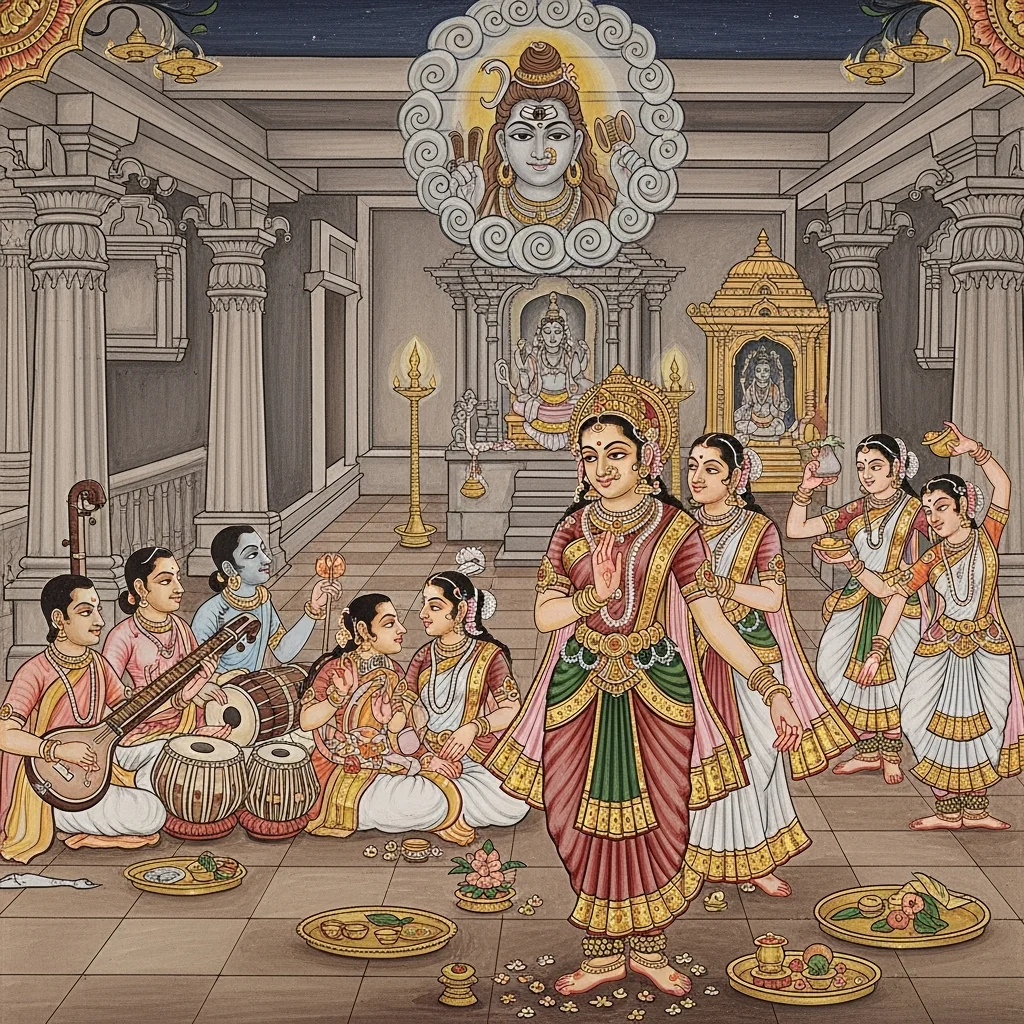
This adhyāya opens with Skanda recounting to Maitrāvaruṇa an earlier episode at the Virajā seat and the gem-built palace-temple of Trilocana. A pigeon-couple dwells there, regularly performing pradakṣiṇā and living amid unceasing devotional sounds—music, ārati-lights, and praise. A hawk watches them closely, learns their movements, and finally blocks their exit, bringing them into peril. The female pigeon repeatedly urges relocation and teaches a practical nīti: by preserving life one can regain all else—family, wealth, and home—whereas attachment to a place can ruin even the wise. Yet she also proclaims Kāśī, the Oṃkāra-liṅga, and Trilocana as supremely sacred, sharpening the tension between sanctity-of-place and survival. The male pigeon refuses at first; conflict follows, and the hawk seizes both. The wife then gives tactical counsel: bite the hawk’s foot while it is still airborne. The plan succeeds, freeing her and causing the husband’s fall as well—showing that sustained effort (udyama), when aligned with fortune (bhāgya), can bring unforeseen deliverance in adversity. The narrative turns to karmic aftermath and rebirth, with the pair attaining elevated states elsewhere, and introduces exemplary devotees: Parimālālaya the Vidyādhara, who keeps strict vows and resolves to worship Trilocana in Kāśī before eating, and Ratnāvalī the Nāga princess, who worships with companions through flowers, music, and dance until a divine epiphany. The chapter ends with a phalaśruti: hearing the Trilocana narrative purifies even the wrongdoing-burdened and leads toward a higher state.
Shlokas
Verse 1
स्कंद उवाच । शृणुष्व मैत्रावरुणे पुराकल्पे रथंतरे । इतिहास इहासीद्यः पीठे विरजसंज्ञिते
Skanda said: Listen, O Maitrāvaruṇa. In a former age, in the Rathaṃtara kalpa, there was an ancient account that took place here, at the seat called Viraja.
Verse 2
त्रिलोचनस्य प्रासादे मणिमाणिक्यनिर्मिते । नानाभंगि गवाक्षाढ्ये रत्नसानाविवायते
In the palace of Trilocana, fashioned of gems and rubies, adorned with windows of many elegant designs, it appeared like a mountain-slope made of jewels.
Verse 3
कदाचिदपि कल्पांते द्यो लोके भ्रंशति क्षये । प्रोत्तंभनं स्तंभ इव दत्तो विश्वकृता स्वयम्
At times, at the end of a kalpa, when the heavenly world collapses in dissolution, it is upheld—as though by a supporting pillar—granted by the World-Maker himself.
Verse 4
मरुत्तरंगिताग्राभिः पताकाभिरितस्ततः । सन्निवारयतीवेत्थमघौघान्विशतो मुने
With banners whose tips fluttered in the wind on every side, it seemed, O sage, as though it was thus holding back the entering torrents of sin.
Verse 5
देदीप्यमान सौवर्ण कलशेन विराजिते । पार्वणेन शशांकेन खेदादिव समाश्रिते
It shone, adorned with a blazing golden kalaśa, and seemed to have taken refuge in the full moon—like relief after weariness.
Verse 6
तत्र पारावतद्वंद्वं वसेत्स्वैरं कृतालयम् । प्रातःसायं च मध्याह्ने कुर्वन्नित्यं प्रदक्षिणम्
There a pair of pigeons lived freely, having made their dwelling; and morning, evening, and at midday they continually performed pradakṣiṇā, circumambulation.
Verse 7
उड्डीयमानं परितः पक्षवातेरितस्ततः । रजःप्रासादसंलग्नं दूरीकुर्वद्दिनेदिने
Flying about on all sides, driven here and there by the wind of their wings, they day by day brushed away the dust that had clung to the temple.
Verse 8
त्रिलोचनेति सततं नाम भक्तैरुदाहृतम् । त्रिविष्टपेति च तथा तयोः कर्णातिथी भवेत्
The devotees constantly uttered the name “Trilocana”, and likewise “Triviṣṭapa”; and those two birds became guests to those sounds in their ears, ever listening.
Verse 9
चतुर्विधानि वाद्यानि शंभुप्रीतिकराण्यलम् । तयोः कर्णगुहां प्राप्य प्रतिशब्दं प्रतन्वते
Four kinds of musical instruments—well able to delight Śambhu—reached the hollow of their ears and produced echoing reverberations.
Verse 10
मंगलारार्तिकज्योतिस्त्रिसंध्यं पक्षिणोस्तयोः । नेत्रांत निर्विशन्नित्यं भक्तचेष्टां प्रदर्शयेत्
At the three daily junctions, the auspicious light of the ārati would continually enter the corners of those two birds’ eyes, as though revealing to them the devotees’ acts of worship.
Verse 11
प्राणयात्रां विहायापि कदाचित्स्थिरमानसौ । नोड्डीयवांछितं यातः पश्यंतौ कौतुकं खगौ
At times, steady in mind, the two birds would even set aside their search for sustenance; not flying off to the places they desired, they remained watching the wondrous spectacle.
Verse 12
तत्र भक्तजनाकीर्णं प्रासादं परितो मुने । तंडुलादि चरंतौ तौ कुर्वाते च प्रदक्षिणम्
There, O sage, as the temple was filled all around with devotees, the two of them—pecking at rice and the like—would also perform pradakṣiṇā, the reverent circumambulation.
Verse 13
देवदक्षिणदिग्भागे चतुःस्रोतस्विनी जलम् । तृषार्तौ धयतो विप्र स्नातौ जातु चिदंडजौ
In the southern quarter of the deity’s shrine was the water of the ‘Four-Streamed’ (Catuḥsrotasvinī). Tormented by thirst, O brāhmaṇa, those two birds drank it, and at times bathed there as well.
Verse 14
तयोरित्थं विचरतोस्त्रिलोचनसमीपतः । अगाद्बहुतिथः कालो द्विजयोः साधुचेष्टयोः
Thus, as those two ‘twice-born’ birds moved about near Trilocana, a long time passed for them, as they engaged in such virtuous conduct.
Verse 15
अथ देवालयस्कंधे गवाक्षांतर्गतौ च तौ । श्येनेन केनचिद्दृष्टौ क्रूरदृष्ट्या सुखस्थितौ
Then, as the two sat at ease within a window-opening of the temple structure, a certain hawk noticed them and fixed them with a cruel gaze.
Verse 16
तच्च पारावतद्वंद्वं श्येनः परिजिघृक्षुकः । अवतीर्यांबरादाशु प्रविष्टोन्यशिवालये
Eager to seize that pair of doves, the hawk swiftly swooped down from the sky; yet they had already entered another temple of Śiva.
Verse 17
ततो विलोकयामास तदागमविनिर्गमौ । केन मार्गेण विशतो दुर्गमेतौ पतत्त्रिणौ
Then he watched for their coming and going, wondering, “By what path have these two birds entered this inaccessible stronghold?”
Verse 18
केनाध्वना च निर्यातः क्व काले कुरुतश्च किम् । कथं युगपदे तौ मे ग्राह्यौ स्वैरं भविष्यतः
“And by which route do they come out—at what time, and doing what? How can I seize them both at once, before they roam about freely?”
Verse 19
मध्ये दुर्गप्रविष्टौ च ममवश्याविमौ न यत् । एकदृष्टिः क्षणं तस्थौ श्येन इत्थं विचिंतयन्
“Now that they have entered the fortress, these two are not under my power.” Thinking thus, the hawk stood for a moment, fixed in a single stare.
Verse 20
अहो दुर्गबलं प्राज्ञाः शंसंत्येवेति हेतुतः । दुर्बलोप्याकलयितुं सहसारिर्न शक्यते
“Ah! This is why the wise praise the strength of a fortress: even a weak one cannot be overcome by a sudden enemy assault.”
Verse 21
करिणां तु सहस्रेण वराश्वानां न लक्षतः । तत्कर्मसिद्धिर्नृपतेर्दुर्गेणैकेन यद्भवेत्
“For a king, the success of an undertaking that may not be achieved even with a thousand elephants and a hundred thousand fine horses can be accomplished by a single fortress.”
Verse 22
दुर्गस्थो नाभिभूयेत विपक्षः केनचित्क्वचित् । स्वतंत्रं यदि दुर्गं स्यादमर्मज्ञप्रकाशितम्
“One who is stationed in a fortress is not overcome by an enemy anywhere at any time—provided the fortress is independent and its vulnerable points are not revealed by one who does not understand its secrets.”
Verse 23
इति दुर्गबलं शंसञ्श्येनो रोषारुणेक्षणः । असाध्वसौ कलरवौ वीक्ष्य यातो नभोंगणम्
Thus extolling the strength of the fortress, the hawk—his eyes reddened with anger—glared at those two Kalaravā birds and then flew off into the open sky.
Verse 24
अथ पारावतीदक्षा विपक्षं प्रेक्ष्य पक्षिणम् । महाबलं दुर्गबला प्राह पारावतं पतिम्
Then the capable dove-wife, strong through the fortress-like refuge, seeing the hostile bird, spoke to her dove-husband about that mighty foe.
Verse 25
कलरव्युवाच । प्रिय पारावत प्राज्ञ सर्वकामि सुखारव । तव दृग्विषयं प्राप्तः श्येनोय प्रबलो रिपुः
Kalaravā said: “Beloved dove—wise one, sweet-voiced, fulfiller of all wishes—this hawk, a powerful enemy, has come within your sight.”
Verse 26
सावज्ञं वाक्यमाकर्ण्य पारावत्याः स तत्पतिः । पारावतीमुवाचेदं का चिंतेति तव प्रिये
Hearing the dove’s words, spoken with a hint of reproach, her husband addressed Pārāvatī: “Beloved, what is this worry that troubles you?”
Verse 27
पारावत उवाच । कति नाम न संतीह सुभगे व्योमचारिणः । कति देवालयेष्वेषु खगा नोपविशंति हि
The male pigeon said: “O fortunate one, how many sky-roaming creatures are there here! And how many birds do not even settle within these temples?”
Verse 28
कति चैव न पश्यंति नौ सुखस्थाविह प्रिये । तेभ्यो यदीह भेतव्यं कुतो नौ तत्सुखं प्रिये
“Beloved, how many do not even notice us sitting here at ease! If we must fear even them here, then how can this comfort truly be ours, beloved?”
Verse 29
रमस्व त्वं मया सार्धं त्यज चिंतामिमां शुभे । अस्य श्येनवराकस्य गणनापि न मे हृदि
“Rejoice with me, O auspicious one—cast away this worry. As for that wretched hawk, I do not even count him as a concern in my heart.”
Verse 30
इत्थं पारावतवचः श्रुत्वा पारावती ततः । मौनमालंब्य संतस्थे पत्युः पादार्पितेक्षणा
Hearing the male pigeon speak thus, Pārāvatī fell silent and remained still, her gaze lowered to her husband’s feet.
Verse 31
हितवर्त्मोपदिश्यापि प्रिय प्रियचिकीर्षया । साध्व्या जोषं समास्थेयं कार्यं पत्युर्वचः सदा
Even after advising a wholesome course, a virtuous wife—seeking what is dear for her beloved—should remain composed; and her husband’s word should always be carried out.
Verse 32
अन्येद्युरप्यथायातः श्येनो पश्यत्स दंपती । अपरिच्छिन्नया दृष्ट्या यथा मृत्युर्गतायुषम्
On the next day as well, the hawk came and watched that couple, his unblinking gaze fixed on them like Death upon one whose lifespan has run out.
Verse 33
अथ मंडलगत्या स प्रासादं परितो भ्रमन् । निरीक्ष्य तद्गतायातौ यातो गगनमार्गतः
Then, circling in loops around the palace, he carefully observed their comings and goings, and departed again by the path of the sky.
Verse 34
गतेऽथ नभसि श्येने पुनः पारावतांगना । प्रोवाच प्रेयसी नाथ दृष्टो दुष्टस्त्वयाऽहितः
When the hawk had departed into the sky, the pigeon-wife spoke again: “O beloved lord, you have seen that wicked creature, harmful and ill-intentioned.”}]}
Verse 35
तस्या वाक्यं समाकर्ण्य पुनः कलरवोब्रवीत् । किं करिष्यत्यसौ मुग्धे मम व्योमविहारिणः
Hearing her words, the sweet-voiced one spoke again: “Innocent one, what can that fellow do to me, as I roam the sky?”
Verse 36
दुर्गं च स्वर्गतुल्यं मे यत्र नास्त्यरितो भयम् । अयं न ता गतीर्वेत्ति या वेदाहं नभोंगणे
“My stronghold is like heaven itself—there, there is no fear from any enemy. This one does not know those pathways of movement in the open sky that I know.”
Verse 37
प्रडीनोड्डीन संडीन कांडव्याडकपाटिकाः । स्रंसनी मंडलवती गतयोष्टावुदाहृताः
“Praḍīna, Uḍḍīna, Saṃḍīna, Kāṃḍa, Vyāḍaka, Pāṭikā, Sraṃsanī, and Maṇḍalavatī—these eight modes of movement are declared.”
Verse 38
यथैतास्विह कौशल्यं मयि पारावति प्रिये । गतिषु क्वापि कस्यापि पक्षिणो न तथांबरे
“O beloved Pārāvatī, such skill as is found in me in these modes of flight is not found in any bird anywhere in the sky.”
Verse 39
सुखेन तिष्ठ का चिंता मयि जीवति ते प्रिये । इति तद्वचनं श्रुत्वा सास्थिता मूकवत्सती
“Stay at ease—what worry is there while I am alive, my beloved?” Hearing these words, she remained still, like one rendered speechless.
Verse 40
अपरेद्युरपि श्येनस्तत्र भारशिलातले । कियदंतरमासाद्योपविष्टोऽतिप्रहृष्टवत्
On the next day as well, the hawk came there; reaching a spot not far away, he sat upon the surface of a heavy rock, as if exceedingly delighted.
Verse 41
आयामं तत्र संस्थित्वा तत्कुलायं विलोक्य च । पुनर्विनिर्गतः श्येनः सापि भीताब्रवीत्पुनः
Standing there for a while and looking toward that nest, the hawk departed again; and she too, frightened, spoke once more.
Verse 42
प्रियस्थानमिदं त्याज्यं दुष्टदृष्टिविदूषितम् । असौ क्रूरोति निकटमुपविष्टोऽतिहृष्टवत्
This beloved place should be abandoned—it has been tainted by an evil gaze. That cruel one has sat very near, as though in great delight.
Verse 43
सावज्ञं स पुनः प्राह किं करिष्यत्यसौ प्रिये । मृगाक्षीणां स्वभावोयं प्रायशो भीरुवृत्तयः
He replied again with disdain, “What can that one do, my dear? This is the usual nature of doe-eyed women—most often they are inclined to timidity.”
Verse 44
इतरेद्युरपि प्राप्तः स च श्येनो महाबलः । तयोरभिमुखं तत्र स्थितो याम द्वयावधि
On the following day too, that hawk of great strength arrived; facing them there, he remained for as long as two yāmas.
Verse 45
पुनर्विलोक्य तद्वर्त्म शीघ्रं यातो यथागतम् । गतेथ शकुनौ तस्मिन्सा बभाषे विहंगमी
Looking again upon that path, he swiftly departed as he had come. When that bird had gone, the female bird spoke.
Verse 46
नाथ स्थानांतरं यावो मृत्युर्नौ निकटोत्र यत् । पुनर्दुष्टे प्रणष्टेस्मिन्नावां स्यावः सुखं प्रिय
Beloved lord, let us go to another place, for death is near us here. When this wicked danger has passed and perished, then, dear one, we shall live happily again.
Verse 47
प्रिय यस्य सपक्षस्य गतिः सर्वत्र सिद्धिदा । स किं स्वदेशरागेण नाशं प्राप्नोति बुद्धिमान्
Dear one, for him who has wings, movement everywhere brings success. Would a wise being, out of attachment to his own place, truly meet destruction?
Verse 48
सोपसर्गं निजं देशं त्यक्त्वा योन्यत्र न व्रजेत् । स पंगुर्नाशमाप्नोति कूलस्थित इव द्रुमः
Whoever abandons his own land when it is beset by calamity, yet does not go elsewhere, becomes crippled and meets destruction—like a tree standing on an eroding riverbank.
Verse 49
प्रियोदितं निशम्येति स भवित्री दशार्दितः । सरीढं पुनरप्याह प्रिये मा भैः खगात्ततः
Hearing his beloved’s words, the male pigeon, shaken by the crisis, went forth. Yet again he spoke with affection: “Dear one, do not fear that bird.”
Verse 50
अथापरस्मिन्नहनि स श्येनः प्रातरेव हि । तद्द्वारदेशमासाद्य सायं यावत्स्थितो बलः
Then, on the next day, that hawk came early in the morning and, reaching the place at the nest’s entrance, remained there with force until evening.
Verse 51
अस्ताचलस्य शिखरं याते भानौ गते खगे । कुलायाद्बाह्यमागत्योवाच पारावती पतिम्
When the sun had reached the summit of the western mountain and the bird (hawk) had departed, the female pigeon came out of the nest and spoke to her husband.
Verse 52
नाथ निर्गमनस्यायं कालः कालोऽतिदूरतः । यावत्तावद्विनिर्याहि त्यक्त्वा मामपि सन्मते
O lord, now is the time to depart; the fateful hour is not far away. Go out at once, O noble-minded one—even if it means leaving me behind.
Verse 53
त्वयि जीवति दुष्प्राप्यं न किंचिज्जगतीतले । पुनर्दाराः पुनर्मित्रं पुनर्वसु पुनर्गृहम्
So long as you live, nothing on the face of the earth is truly unattainable: a spouse again, friends again, wealth again, and even a home again can be regained.
Verse 54
यद्यात्मा रक्षितः पुंसा दारैरपि धनैरपि । तदा सर्वं हरिश्चंद्रभूपेनेवेह लभ्यते
If a person preserves his own life—even at the cost of spouse and wealth—then everything can be obtained again here, as it was by King Hariścandra.
Verse 55
अयमात्मा प्रियो बंधुरयमात्मा महद्धनम् । धमार्थकाममोक्षाणामयमात्मार्जकः परः
This very Self is one’s beloved kinsman; this Self is one’s great treasure. The Self alone is the supreme means by which dharma, artha, kāma, and mokṣa are attained.
Verse 56
त्रिलोक्या अपि सर्वस्याः श्रेष्ठा वाराणसी पुरी । ततोपि लिंगमोंकारं ततोप्यत्र त्रिलोचनम्
Among all holy places in the three worlds, the city of Vārāṇasī is supreme. Higher even than that is the Oṃkāra-liṅga; and higher still, here in Kāśī, is Trilocana (Śiva).
Verse 57
यशोहीनं तु यत्क्षेमं तत्क्षेमान्निधनं वरम् । तद्यशः प्राप्यते पुंभिर्नीतिमार्गप्रवर्तने
Welfare that is devoid of honor is no true welfare; better than such ‘well-being’ is even death. For that very honor is attained by men through setting forth on the path of righteous conduct.
Verse 58
अतो नीतिपथं श्रुत्वा नाथ स्थानादितो व्रज । न गमिष्यसि चेत्प्रातस्ततो मे संस्मरिष्यसि
Therefore, my lord—having heard of the path of righteousness—go forth from this place. If you do not go at dawn, then later you will remember my words in regret.
Verse 59
इत्युक्तोपि स वै पत्न्या पारावत्या सुमेधया । न निर्ययौ प्रतिस्थानाद्भवित्र्या प्रतिवारितः
Though addressed thus by his wife Pārāvatī, the wise-minded one, he did not depart from his dwelling—restrained by fate itself.
Verse 60
अथोषसि समागत्य श्येनेन बलिना तदा । तन्निर्गमाध्वा संरुद्धः किंचिद्भक्ष्यवता मुने
Then, at dawn, a powerful hawk arrived. O sage, that hawk blocked the path of his escape, having a little food and thus the advantage.
Verse 61
दिनानि कतिचित्तत्र स्थित्वा श्येनो महामतिः । पारावतमुवाचेदं धिक्त्वां पौरुषवर्जितम्
After staying there for some days, the great-minded hawk said to the pigeon: “Shame on you—devoid of manly courage!”
Verse 62
किंवा युध्यस्व दुर्बुद्धे किंवा निर्याहि मे गिरा । क्षुधाक्षीणो मृतः पश्चान्निरयं यास्यसि ध्रुवम्
“Either fight, you fool, or come out at my command. If you later die, wasted away by hunger, you will surely go to hell.”
Verse 63
द्वौ भवंतावहं चैकश्चलौ जयपराजयौ । स्थानार्थं युध्यतः सत्त्वात्स्वर्गो वा दुर्गमेव वा
“You two and I alone—victory and defeat are uncertain and shifting. If we fight for this place with true courage, it will lead either to heaven, or else to a hard-to-cross, terrible end.”
Verse 64
पुरुपार्थं समालंब्य ये यतंते महाधियः । विधिरेव हि साहाय्यं कुर्यात्तत्सत्त्वचोदितः
Those great-minded ones who strive, taking human effort as their support—Providence itself becomes their aid, impelled by that very courage.
Verse 65
इत्थं स श्येनसंप्रोक्तः पत्न्याप्युत्साहितः खगः । अयुध्यत्तेन श्येनेन स्वदुर्गद्वारमाश्रितः
Thus addressed by the hawk, and encouraged also by his wife, the bird took refuge at the gate of his own stronghold and fought with that hawk.
Verse 66
क्षुधितस्तृषितः सोथ श्येनेन बलिना धृतः । चरणेन दृढेनाशु चंच्वा सापि धृता खगी
Then, being hungry and thirsty, that bird was seized by a powerful hawk; and she—the female bird—was also quickly held fast, pinned by a firm foot and gripped in the beak.
Verse 67
तावादायोड्डयांचक्रे श्येनो व्योमनि सत्वरम् । चिंतयद्भक्षणस्थानमन्यपक्षिविवर्जितम्
Having snatched them, the hawk swiftly took flight into the sky, thinking of a place to eat that was free from other birds.
Verse 68
अथ पत्न्या कलरवः प्रोक्तस्तत्र सुमेधया । वचोवमानितं नाथ त्वया मे स्त्रीति बुद्धितः
Then, there the wise wife cried out: “O lord, you have disregarded my words, thinking, ‘She is only a woman.’”
Verse 70
तदा हितं ते वक्ष्यामि कुरु चैवाविचारितम् । ममैकवाक्यकरणात्स्त्रीजितो न भविप्यसि
“Now I shall tell you what is good for you—do it without delay. By acting on this single word of mine, you will not be ‘defeated by a woman.’”
Verse 71
यावदास्यगतास्म्यस्य यावत्खस्थो न भूमिगः । तावदात्मविमुक्त्यैवमरेः पादं दृढं दश
“So long as I remain within his mouth, and so long as he stays aloft and has not reached the ground, for your own liberation bite the enemy’s foot firmly.”
Verse 72
इति पत्नीवचः श्रुत्वा तथा स कृतवान्खगः । सपीडितो दृढं पादे श्येनश्चीत्कृतवान्बहु
Hearing his wife’s words, the bird did exactly so. The hawk, tightly gripped by the foot and wracked with pain, cried out again and again.
Verse 73
तेन चीत्करणेनाथ मुक्ता सा मुखसंपुटात् । पादांगुलि श्लथत्वेन सोपि पारावतोऽपतत्
Because of that cry, she was freed from the enclosure of his beak; and as the toes of the foot loosened, that pigeon too fell down.
Verse 74
विपद्यपि च न प्राज्ञैः संत्या ज्यः क्वचिदुद्यमः । क्व चंचुपुटस्तस्य क्व च तत्पादपीडनम्
Even in calamity, the wise never abandon effort. For what is a mere beakful, and what is the crushing grip upon that (hawk’s) foot?
Verse 75
क्व च द्वयोस्तथाभूता दरेर्मोक्षणमद्भुतम् । दुर्बलेप्युद्यमवति फलं भाग्यं यतोऽर्पयेत्
And how wondrous was the deliverance of those two in such a plight! Even for the weak, when effort is present, destiny bestows its fruit.
Verse 76
तस्माद्भाग्यानुसारेण फलत्येव सदोद्यमः । प्रशंसंत्युद्यमं चातो विपद्यपि मनीषिणः
Therefore, in accord with one’s allotted fortune, unceasing effort surely bears fruit; hence the wise praise effort—even amid adversity.
Verse 77
अथ तौ कालयोगेन विपन्नौ सरयूतटे । मुक्तिपुर्यामयोध्यायामेको विद्याधरोऽभवत्
In the course of time, the two met with misfortune on the bank of the Sarayū; and one of them was reborn as a Vidyādhara in Ayodhyā, the famed city that bestows liberation.
Verse 78
मृतानां यत्र जंतूनां काशीप्राप्तिर्भवेद्ध्रुवम् । मंदारदामतनयो नाम्ना परिमलालयः
In that realm where, for departed beings, attainment of Kāśī is assured, there was Mandāradāma’s son, known by the name Parimalālaya.
Verse 79
अनेकविद्यानिलयः कलाकौशलभाजनम् । कौमारं वय आसाद्य शिवभक्तिपरोभवत्
A repository of many branches of learning and a vessel of artistic skill, upon reaching youth he became wholly devoted to Śiva-bhakti.
Verse 80
नियमं चातिजग्राह विजितेंद्रियमानसः । एकपत्नीव्रतं नित्यं चरिष्यामीति निश्चितम्
Having conquered his senses and mind, he undertook disciplines; and he firmly resolved: “I shall always observe the vow of fidelity to one wife.”
Verse 81
परयोषित्समासक्तिरायुः कीर्ति बलं सुखम् । हरेत्स्वर्ग गतिं चापि तस्मात्तां वर्जयेत्सुधीः
Attachment to another man’s wife steals one’s lifespan, fame, strength, and happiness, and even ruins one’s path to heaven; therefore the wise should shun it.
Verse 82
अपरं चापि नियमं स शुचिष्मान्समाददे । गतजन्मांतराभ्यासात्त्रिलोचनसमाश्रयात्
That pure-minded one adopted yet another discipline, owing to practices cultivated in former births and because he had taken refuge in Trilocana (Śiva).
Verse 83
समस्तपुण्यनिलयं समस्तार्थप्रकाशकम् । समस्तकामजनकं परानंदैककारणम्
He (Śiva/Trilocana) is the abode of all merit, the illuminator of every true purpose, the giver of all rightful desires, and the sole cause of supreme bliss.
Verse 84
यावच्छरीरमरुजं यावन्नेंद्रियविप्लवः । तावत्त्रिलोचनं काश्यामनर्च्याश्नामि नाण्वपि
So long as my body remains free from illness and my senses do not fail, I shall not eat even a morsel without first worshiping Trilocana in Kāśī.
Verse 85
इत्थं मांदारदामिः स नित्यं परिमलालयः । काश्यां त्रिविष्टपं द्रष्टुं समागच्छेत्प्रयत्नवान्
Thus Parimalālaya, the son of Mandāradāma, ever striving, would come to Kāśī, seeking to behold “Triviṣṭapa” (heaven) there through Kāśī’s sanctity.
Verse 86
पारावत्यपि सा जाता रत्नदीपस्य मंदिरे । नागराजस्य पाताले नाम्ना रत्नावलीति च
And she, too, was born as Pārāvatī in the palace of Ratnadīpa—within the Nāga-king’s netherworld of Pātāla—bearing the name Ratnāvalī.
Verse 87
समस्तनागकन्यानां रूपशीलकलागुणैः । एकैव रत्नभूतासीद्रत्नदीपोरगात्मजा
Among all the Nāga-maidens, in beauty, conduct, artistry, and virtues, there was one alone who shone like a jewel—Ratnāvalī, the daughter of the serpent Ratnadīpa.
Verse 88
तस्या सखीद्वयं चासीदेका नाम्ना प्रभावती । कलावती तथान्या च नित्यं तदनुगे उभे
She had two companions: one named Prabhāvatī, and another named Kalāvatī; both of them constantly followed and attended upon her.
Verse 89
स्वदेहादनपायिन्यौ छायाकांती यथा तया । ते द्वे सख्यावभूतांहि रत्नावल्या घटोद्भव
Never parting from her body—like one’s shadow and radiance—those two became the close companions of Ratnāvalī, O Pot-born (Agastya).
Verse 90
सा तु बाल्ये व्यतिक्रांते किंचिदुद्रिन्नयौवना । शिवभक्तं स्वपितरं दृष्ट्वा नियममग्रहीत्
When her childhood had passed and youth had begun to blossom, seeing her own father devoted to Śiva, she adopted a disciplined vow.
Verse 91
पितस्त्रिलोचनं काश्यामर्चयित्वा दिनेदिने । आभ्यां सखीभ्यां सहिता मौनं त्यक्ष्यामि नान्यथा
“Father, after worshipping Trilocana in Kāśī day after day, accompanied by these two friends, I shall observe the vow of silence (mauna)—not otherwise.”
Verse 92
एवं नागकुमारी सा सखीद्वयसमन्विता । त्रिलोचनं समभ्यर्च्य गृहानहरहोव्रजेत्
Thus the Nāga-princess, accompanied by her two friends, reverently worshipped Trilocana and then returned home day after day.
Verse 93
दिनेदिने सा प्रत्यग्रैः कुसुमैरिष्टगंधिभिः । सुविचित्राणि माल्यानि परिगुंफ्यार्चयेद्विभुम्
Day after day, with fresh blossoms of pleasing fragrance, she wove wonderfully varied garlands and worshipped the Lord.
Verse 94
तिस्रोपि गीतं गायंति लसद्गांधारसुंदरम् । रासमंडलभेदेन लास्यं तिस्रोपि कुर्वते
All three sang songs, beautiful and radiant with Gāndhāra notes; and, forming patterns of a rāsa-circle, all three performed a graceful dance.
Verse 95
वीणावेणुमृदंगांश्च लयतालविचक्षणाः । वादयंति मुदा युक्तास्तिस्रोपीश्वरसन्निधौ
Skilled in laya and tāla, the three—filled with joy—played the vīṇā, flute, and mṛdaṅga in the very presence of the Lord.
Verse 96
यावदात्मनि वै क्षेमं तावत्क्षेमं जगत्त्रये । सोपि क्षेमः सुमतिना यशसा सह वांछ्यते
As much well-being as abides within one’s own self, so much well-being is found in the three worlds; and that very welfare, joined with sound understanding, is sought together with honorable renown.
Verse 97
एकदा माधवे मासि तृतीयायामुपोषिताः । रात्रौ जागरणं कृत्वा नृत्यगीतकथादिभिः
Once, in the month of Mādhava (Vaiśākha), they observed a fast on the third lunar day; and through the night they kept vigil, filling the hours with dance, song, and sacred narration.
Verse 98
प्रातश्चतुर्थीं स्नात्वाथ तीर्थं पैलिपिले शुभे । त्रिलोचनं समर्च्याथ प्रसुप्ता रंगमंडपे
Then, at dawn on the fourth lunar day, they bathed at the auspicious Pailipila Tīrtha; and having duly worshipped Trilocana, the Three-eyed Lord, they fell asleep upon the pavilion of performance.
Verse 99
सुप्तासु तासु बालासु त्रिनेत्रः शशिभूषणः । शुद्धकर्पूरगौरांगो जटामुकुटमंडलः
While those young maidens slept, the Three-eyed Lord—adorned with the moon—appeared; his limbs shone radiant like pure camphor, encircled by the crown-like ring of his matted locks.
Verse 100
तमालनीलसुग्रीवः स्फुरत्फणिविभूषणः । वामार्धविलसच्छक्तिर्नागयज्ञोपवीतवान्
His throat was dark-blue like the tamāla tree; he glittered with ornaments of shining serpents; upon his left side Śakti played in splendor, and he wore a serpent as his sacred thread.
Verse 110
जय श्मशाननिलय जय वाराणसीप्रिय । जयानंदवनाध्यासि प्राणिनिर्वाणदायक
Victory to You, Dweller in the cremation-ground! Victory, Beloved of Vārāṇasī! Victory, Abider in Ānandavana—Bestower of liberation upon living beings!
Verse 120
जन्मांतरेपि मे सेवा भवतीभिश्च तेन च । विहिता तेन वो जन्म निर्मलं भक्तिभावितम्
Even in another birth, you rendered service to Me; and because of that, your present birth has been ordained as pure, suffused with devotion.
Verse 130
उपरिष्टादधस्ताच्च कृता बह्व्यः प्रदक्षिणाः । व्योम्ना संचरमाणाभ्यां संचरद्भ्यां ममाजिरे
From above and from below, many circumambulations (pradakṣiṇās) were performed; moving through the sky, they kept circling within my courtyard.
Verse 140
अप्राप्तयौवनः सोथ समिदाहरणाय वै । गतो विधिवशाद्दष्टो दंदशूकेन कानने
Then, still not having reached youth, he went to gather firewood; but by the power of fate he was bitten by a snake in the forest.
Verse 150
जातिस्वभावचापल्यात्क्रीडंत्यौ च प्रदक्षिणम् । चक्रतुर्बहुकृत्वश्च लिंगं ददृशतुर्बहु
Out of the playful restlessness natural to their kind, the two, sporting about, performed circumambulation again and again—and repeatedly beheld the sacred Liṅga.
Verse 160
एकदा माधवे मासि महायात्रा समागता । विद्याधरास्तथा नागा मिलिताः सपरिच्छदाः
Once, in the month of Mādhava (Vaiśākha), the great pilgrimage-festival arrived; and the Vidyādharas and the Nāgas assembled together, fully equipped with their retinues.
Verse 169
त्रिलोचनकथामेतां श्रुत्वा पापान्वितोप्यहो । विपाप्मा जायते मर्त्यो लभते च परां गतिम्
Even a mortal burdened with sin—on hearing this sacred account of Trilocana—becomes free from sin and attains the supreme state.