Sukta 42
Sukta 4.42
Vāmadeva Gautama (hymn RV 4.42 traditionally associated with Vāmadeva; dialogic/self-declaratory style)
Varuṇa (self-proclamation; royal aspect)
Triṣṭubh (probable)
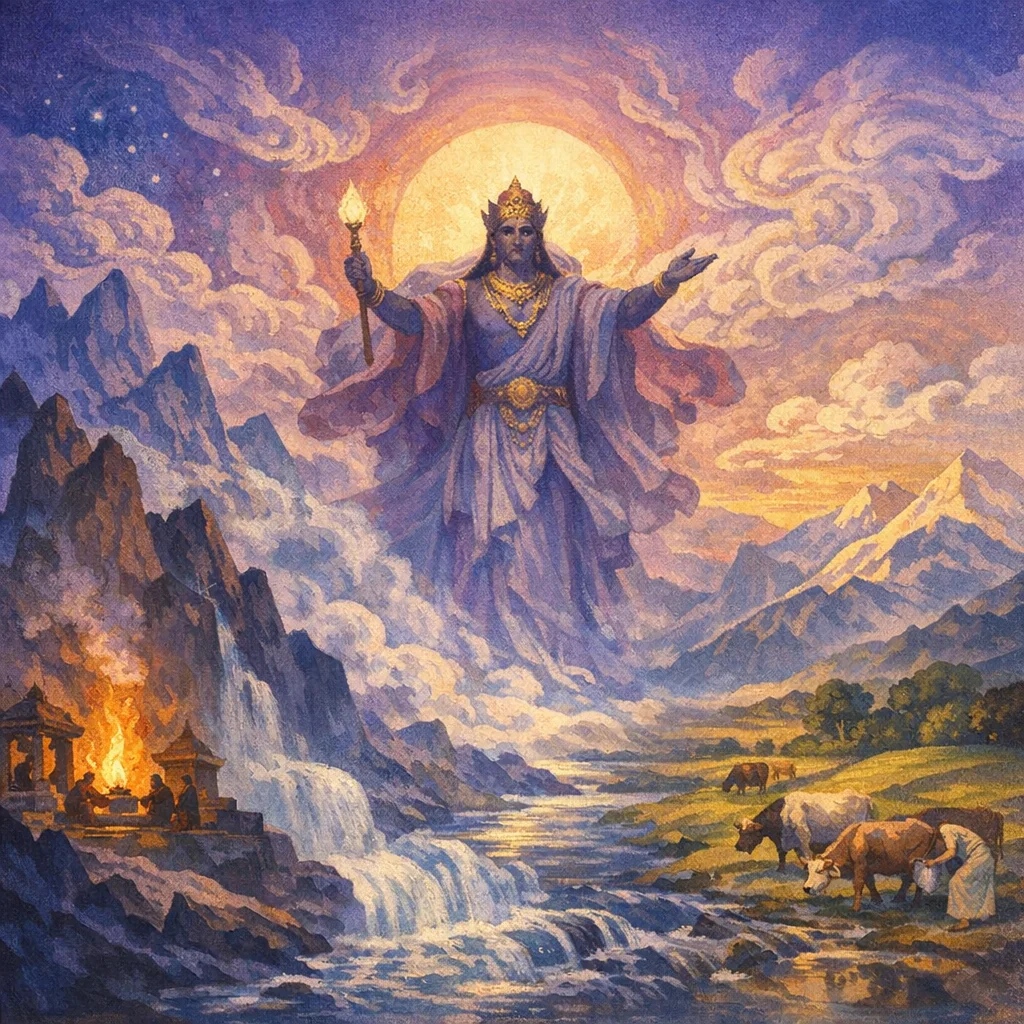
RV 4.42 is a striking self-declaratory hymn in which the poetic voice speaks with the authority of Varuṇa’s kingship—upholding ṛta (cosmic order), sovereignty, and all-encompassing guardianship. The hymn also draws Indra into the field of power, contrasting and complementing Varuṇa’s moral-royal rule with Indra’s victorious force that releases the rivers. Its purpose is to affirm divine legitimacy and secure enduring prosperity (rāyī), protection, and unfailing abundance for the worshippers.
Mantras
Mantra 2
अहं राजा वरुणो मह्यं तान्यसुर्याणि प्रथमा धारयन्त । क्रतुं सचन्ते वरुणस्य देवा राजामि कृष्टेरुपमस्य वव्रेः ॥
I am king Varuṇa; for me the primal Asuric powers upheld those mighty workings. The gods cleave to Varuṇa’s will; I rule the peoples, wrapped in the supreme encompassing.
Mantra 4
अहमपो अपिन्वमुक्षमाणा धारयं दिवं सदन ऋतस्य । ऋतेन पुत्रो अदितेॠतावोत त्रिधातु प्रथयद्वि भूम ॥
I made the waters swell, pouring their increase; I upheld heaven in the seat of ṛta. By ṛta, the son of Aditi, established in ṛta, he spread out the threefold foundation and widened the earth.
Mantra 6
अहं ता विश्वा चकरं नकिर्मा दैव्यं सहो वरते अप्रतीतम् । यन्मा सोमासो ममदन्यदुक्थोभे भयेते रजसी अपारे ॥
I have done all those works; no divine power can choose a might beyond me, unsurpassed. When the Soma-streams exhilarate me, when the hymns uplift me, then both the wide realms tremble in the farthest reaches.
Mantra 7
विदुष्टे विश्वा भुवनानि तस्य ता प्र ब्रवीषि वरुणाय वेधः । त्वं वृत्राणि शृण्विषे जघन्वान्त्वं वृताँ अरिणा इन्द्र सिन्धून् ॥
All beings know that of you; therefore, O wise one, you proclaim it forth to Varuṇa. You, Indra, the slayer, shatter the Vṛtras; you set free the pent-up rivers.
Mantra 8
अस्माकमत्र पितरस्त आसन्त्सप्त ऋषयो दौर्गहे बध्यमाने । त आयजन्त त्रसदस्युमस्या इन्द्रं न वृत्रतुरमर्धदेवम् ॥
Here, in our own field of being, thy Fathers were established—seven seers—when the hard-to-grasp (light/wealth) was being bound. Then they offered and formed Trasadasyu of this lineage, like Indra, the smiter of the Coverer, a power half-divine (still becoming fully luminous).
Mantra 10
राया वयं ससवांसो मदेम हव्येन देवा यवसेन गावः । तां धेनुमिन्द्रावरुणा युवं नो विश्वाहा धत्तमनपस्फुरन्तीम् ॥
May we rejoice, having won the Rayi—fullness of being—by the offering; and may the luminous powers, and the herds of light, thrive by the nourishing increase. That milking Cow (the streaming source of abundance), O Indra–Varuṇa, set in us for all time—unfailing, never slipping away.
Frequently Asked Questions
It is a poetic, revelatory style where the seer speaks with the deity’s authority to proclaim Varuṇa’s sovereignty and the supremacy of ṛta (cosmic and moral order).
Varuṇa is primary in the hymn’s royal self-proclamation, but Indra appears as a complementary power—especially as the one who breaks Vṛtra and releases the rivers—culminating in requests to Indra–Varuṇa together.
It is an image for an unfailing stream of nourishment and prosperity—abundance that keeps giving without slipping away—asked to be established permanently in the worshippers’ life.