Sukta 130
Sukta 10.130
Traditionally attributed in Anukramaṇī to a seer of the late 10th maṇḍala (often unspecified in brief citations); hymn concerns yajña as cosmic weaving
Yajña / Viśvakarman-like sacrificial principle (cosmic rite as power)
Triṣṭubh (predominant for this hymn section)
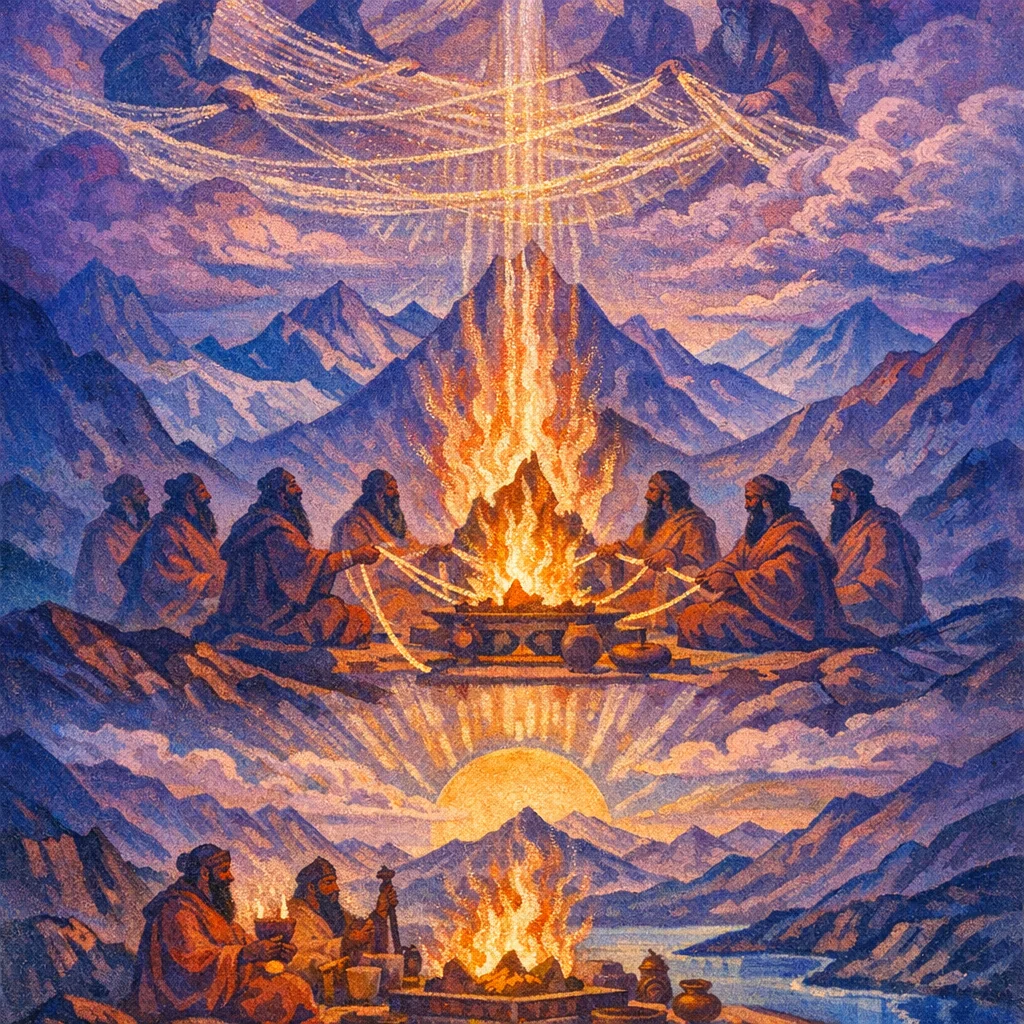
This hymn presents yajña (sacrifice) as a cosmic loom: a web stretched in all directions by divine “workings,” woven by the Fathers and upheld by inspired seers. It also offers a reflective mapping between deities and Vedic metres (chandas), implying that right ritual speech and right measure are themselves world-order (ṛta) in action.
Mantras
Mantra 1
यो यज्ञो विश्वतस्तन्तुभिस्तत एकशतं देवकर्मेभिरायतः । इमे वयन्ति पितरो य आययुः प्र वयाप वयेत्यासते तते ॥
That sacrifice which is stretched everywhere by threads, extended by a hundred divine workings—these Fathers weave it, who have come; they sit down to weave it forward and to weave it out, the web being spread.
Mantra 2
पुमाँ एनं तनुत उत्कृणत्ति पुमान्वि तत्ने अधि नाके अस्मिन् । इमे मयूखा उप सेदुरू सदः सामानि चक्रुस्तसराण्योतवे ॥
A masculine power extends it and cuts it out; a masculine power spreads it upon this heaven. These beams approached and sat; they fashioned the chants and the shuttles for the weaving.
Mantra 3
कासीत्प्रमा प्रतिमा किं निदानमाज्यं किमासीत्परिधिः क आसीत् । छन्दः किमासीत्प्रउगं किमुक्थं यद्देवा देवमयजन्त विश्वे ॥
What was the measure, what the counter-measure, what the foundation? What was the ghee, what was the enclosing fence? What was the meter, what the prauga, what the hymn—when all the gods sacrificed to the God (the divine within)?
Mantra 4
अग्नेर्गायत्र्यभवत्सयुग्वोष्णिहया सविता सं बभूव । अनुष्टुभा सोम उक्थैर्महस्वान्बृहस्पतेर्बृहती वाचमावत् ॥
From Agni arose the Gāyatrī—yoked to its right force; with the Uṣṇih Savitṛ came into full conjunction. With the Anuṣṭubh, Soma grows mighty by the hymns of affirmation; and from Bṛhaspati the Bṛhatī upheld the vast Word within us.
Mantra 5
विराण्मित्रावरुणयोरभिश्रीरिन्द्रस्य त्रिष्टुबिह भागो अह्नः । विश्वान्देवाञ्जगत्या विवेश तेन चाकॢप्र ऋषयो मनुष्याः ॥
The Virāj became the radiant plenitude of Mitra and Varuṇa; here the Triṣṭubh is Indra’s portion of the day. By the Jagatī all the gods entered into movement; by that shaping, the human seers were fashioned into their seeing.
Mantra 6
चाकॢप्रे तेन ऋषयो मनुष्या यज्ञे जाते पितरो नः पुराणे । पश्यन्मन्ये मनसा चक्षसा तान्य इमं यज्ञमयजन्त पूर्वे ॥
By that ordering the human beings became seers; when the sacrifice was born, our ancient Fathers were already there. I behold them, I think, with the mind’s eye—those who in the beginning offered this very sacrifice.
Mantra 7
सहस्तोमाः सहछन्दस आवृतः सहप्रमा ऋषयः सप्त दैव्याः । पूर्वेषां पन्थामनुदृश्य धीरा अन्वालेभिरे रथ्यो न रश्मीन् ॥
With their chants and with their metres, with their measures all together, the seven divine seers turned themselves inward. Beholding the path of the ancient ones, the steadfast held to it—like charioteers taking firm hold of the reins.
Frequently Asked Questions
It teaches that sacrifice (yajña) is like a woven fabric spread through the whole cosmos, and that correct chant, metre, and measure keep that order steady.
Because the hymn treats metre (chandas) as a power that shapes and stabilizes sacred speech; by linking metres with deities, it shows how ritual sound supports cosmic order.
The Fathers (pitaraḥ) are ancestral powers who transmit the rite, and the seven seers are archetypal inspired knowers who follow the ancient path and ‘hold the reins’ of disciplined recitation and insight.