Sukta 26
Sukta 1.26
वसिष्ठ (Vasiṣṭha) (traditional attribution for RV 1.26)
अग्नि (Agni) (implied by miyedhya, ūrjām pate, yaja)
गायत्री (Gāyatrī) (RV 1.26.1 is commonly Gāyatrī in the Agni hymns)
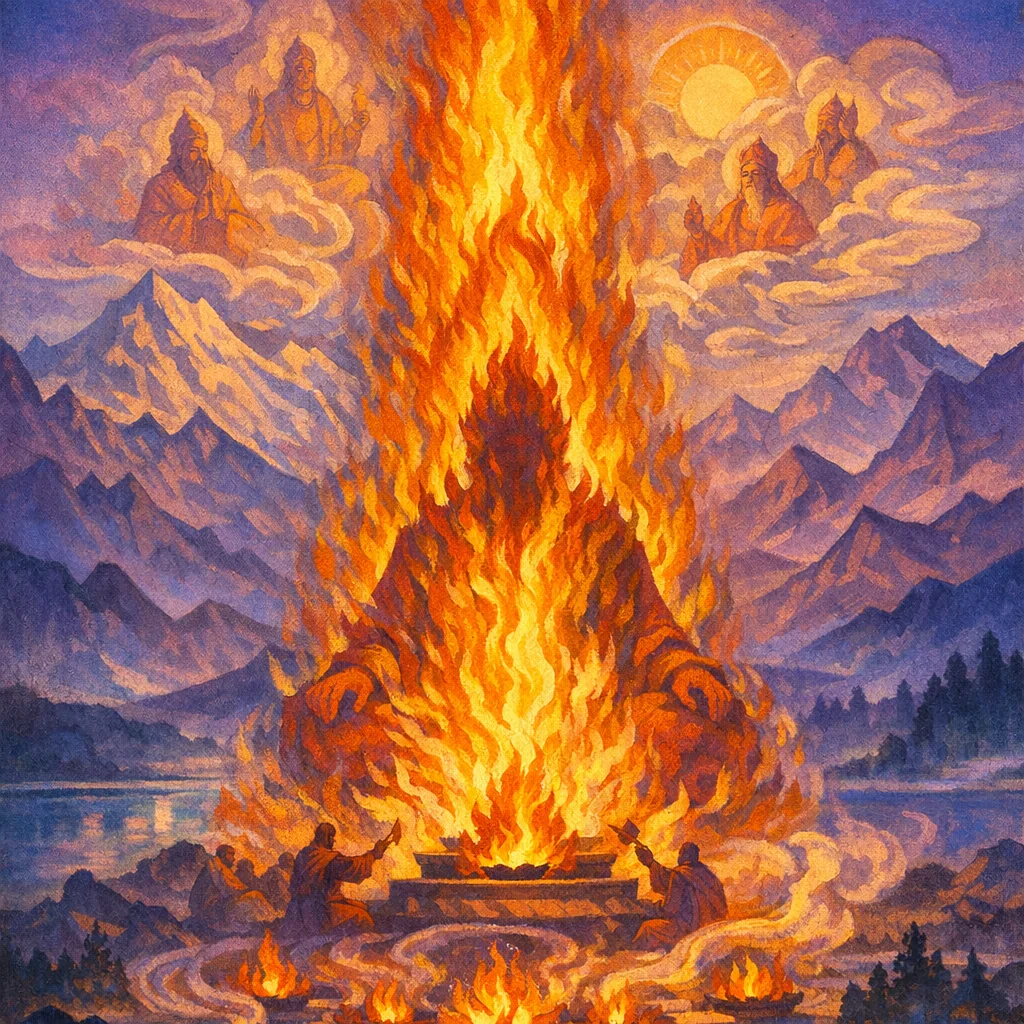
RV 1.26 is an Agni hymn that invites the sacrificial Fire to “clothe” himself in strengthening powers and to carry the rite forward as a straight, effective movement (adhvara). It emphasizes Agni’s unique role as the universal mouth and mediator: whatever deity is worshiped, the offering is truly kindled into Agni, who then conveys it to all the gods. The hymn culminates in a prayer that Agni, in all his forms, uphold both the sacrifice and the inspired word so that the offering becomes victorious and fruitful.
Mantras
Mantra 1
वसिष्वा हि मियेध्य वस्त्राण्यूर्जां पते । सेमं नो अध्वरं यज ॥
Clothe yourself indeed, O purifier fit for worship, in the vestures of strength, O lord of plenitude; and then sacrifice this our journeying offering—make our works a straight movement towards the divine.
Mantra 2
नि नो होता वरेण्यः सदा यविष्ठ मन्मभिः । अग्ने दिवित्मता वचः ॥
O Agni, our chosen guide of the offering, ever youthful in thy force—establish in us the word that is luminous with heaven: the inspired utterance that carries the mind upward into the Truth.
Mantra 3
आ हि ष्मा सूनवे पितापिर्यजत्यापये । सखा सख्ये वरेण्यः ॥
For indeed, as a father comes to his son, as a near and intimate helper comes to the one who offers—so may the chosen Friend come to us in the act of friendship, strengthening the bond between the human and the divine.
Mantra 4
आ नो बर्ही रिशादसो वरुणो मित्रो अर्यमा । सीदन्तु मनुषो यथा ॥
Let the sacred seat of our offering be spread for us; and let Varuṇa, Mitra, and Aryaman—powers that cut away the hostile—sit down upon it, as they sit with the human when he becomes fit for the right order.
Mantra 5
पूर्व्य होतरस्य नो मन्दस्व सख्यस्य च । इमा उ षु श्रुधी गिरः ॥
O Hotṛ from of old, take delight in this our offering and in our friendship; and hear well these utterances—these thought-songs by which we shape the ascent.
Mantra 6
यच्चिद्धि शश्वता तना देवंदेवं यजामहे । त्वे इद्धूयते हविः ॥
For whatever the godhead we worship, age after age, in the continuity of our being—yet it is into thee, O Agni, that the oblation is truly called; thou art the gateway of the offering to every divine power.
Mantra 7
प्रियो नो अस्तु विश्पतिर्होता मन्द्रो वरेण्यः । प्रियाः स्वग्नयो वयम् ॥
May the Lord of the dwelling be dear to us—Agni the Hotṛ, the gladdening and choice-worthy; and may we be dear too, as those who carry the good fire within, fit companions of his flame.
Mantra 8
स्वग्नयो हि वार्यं देवासो दधिरे च नः । स्वग्नयो मनामहे ॥
For the gods have indeed placed in us the desirable treasure: to become bearers of the good fire. Therefore we hold ourselves in that thought—aspiring to be svagni, steadfast in the right flame.
Mantra 9
अथा न उभयेषाममृत मर्त्यानाम् । मिथः सन्तु प्रशस्तयः ॥
And then, O Immortal, between both—between the immortals and the mortals—let there be mutual praises: a true exchange where divine power and human striving recognize each other in right harmony.
Mantra 10
विश्वेभिरग्ने अग्निभिरिमं यज्ञमिदं वचः । चनो धाः सहसो यहो ॥
O Agni, with all thy fires, uphold this sacrifice and this word; set them in us for our delight and growth—O power born of might—so that the movement of offering becomes victorious in the soul.
Frequently Asked Questions
It teaches that Agni is the essential priest and purifier of the sacrifice: he receives the offering and carries it to whichever deity is being worshiped, ensuring the rite succeeds.
Because in Vedic ritual the offering is placed in fire; Agni is the ‘mouth’ and messenger who transmits the oblation to all devas, so every worship passes through him.
It can be recited when lighting a sacred lamp or fire, at the start of a homa, or before any prayer—asking for purification, strength (ūrj), and a clear, unobstructed spiritual effort (adhvara).