Sarga 34
सरमायाḥ सीतासान्त्वनम् तथा रावणनिश्चयश्रवणम् (Saarana Consoles Sita and Reports Ravana’s Resolve)
युद्धकाण्ड
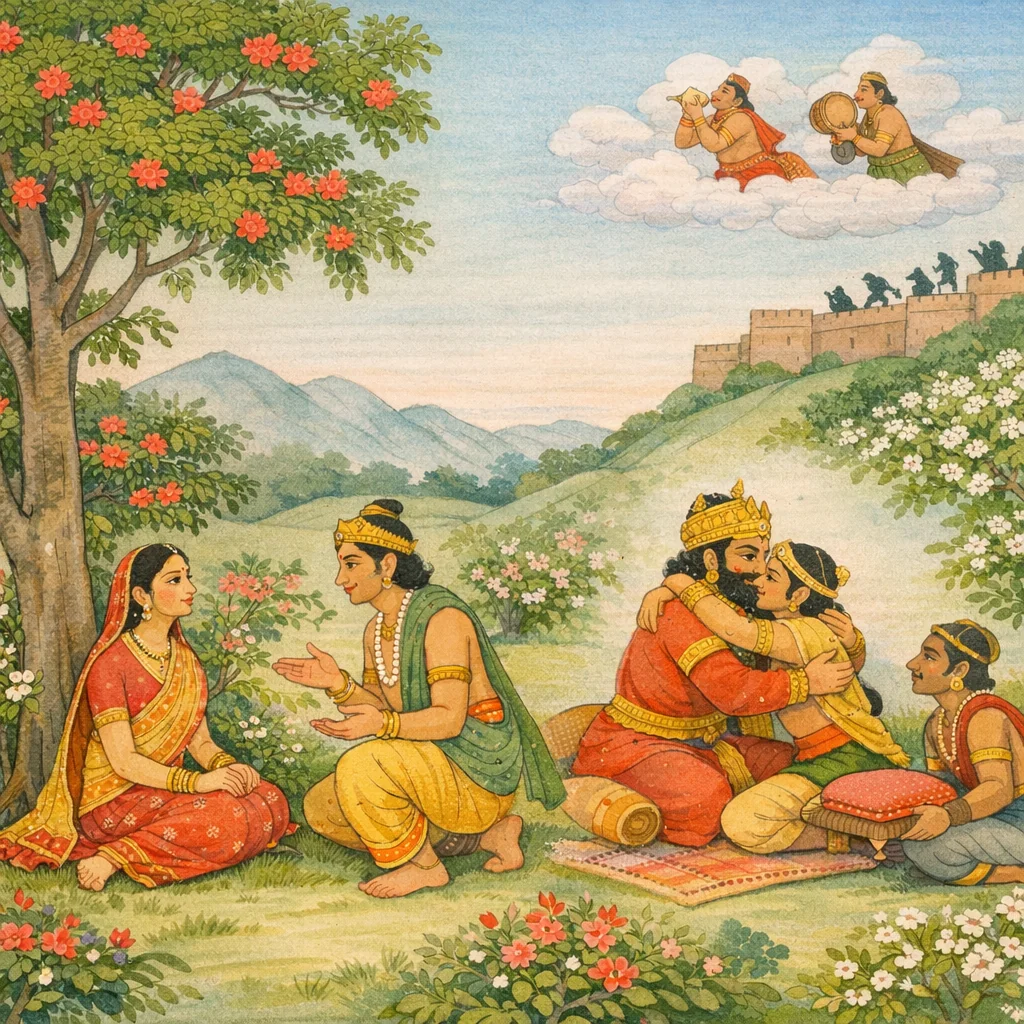
This sarga, set within the war book, becomes a pastoral-ethical interlude: through intimate dialogue it clarifies political intent and steadies Sita’s inner resolve. Saarana, speaking with timely tact and a gentle smile, consoles Sita until her grief recedes like parched earth revived by rain. Sita voices her anxiety and asks for verified intelligence. She fears Ravana’s māyā, his repeated threats, and the coercive watch of the rākṣasīs in Aśoka-vāṭikā, and she urges Saarana to learn Ravana’s settled decision. Saarana accepts, approaches Ravana, listens to his counsel with ministers, and returns swiftly. Embraced by Sita, offered a seat, and pressed to speak truthfully, Saarana reports that Ravana’s mother Kaikasi and the aged minister Aviddha advise releasing Maithili with honor, citing proofs of Rama’s power—Janasthāna’s destruction and Hanuman’s ocean-crossing and deeds. Yet Ravana, like a miser clinging to treasure, refuses to yield unless death in battle compels him. The chapter ends with the ominous roar of drums, conches, and Vanara clamour shaking the earth, casting down the rākṣasa retainers and signaling an approaching strategic collapse born of their king’s faults.
Shlokas
Verse 1
अथतांजातन्तापांतेनवाक्येनमोहिताम् ।सरमाह्लादयामासमहींघौरीमिवाम्भसा ।।।।
Then Saramā gladdened Sītā—whose anguish had arisen and whose mind had been swayed by those words—just as rainwater refreshes the parched earth.
Verse 2
ततस्तस्याहितंसख्याश्चिकीर्षन्तीसखीवचः ।उवाचकालेकालज्ञास्मितपूर्वाभिभाषिणी ।।।।
Then Saramā, her friend, wishing what was beneficial for Sītā and knowing the proper moment, spoke words of counsel—first offering a gentle smile before she began.
Verse 3
उत्सहेयमहंगत्वात्वद्वाक्यमसितेक्षणे: ।निवेद्यकुशलंरामेप्रतिच्छन्नानिवर्तितुम् ।।।।
O dark-eyed Sītā, I am ready to go to Rāma, convey your message and your well-being, and then return again while remaining concealed.
Verse 4
नहिमेक्रममाणायानिरालम्बेविहायसि ।समर्थोगतिमन्वेतुंपवनोगरुडोऽपिवा ।।।।
For as I move through the sky without any support, neither the Wind-god nor even Garuḍa would be able to keep pace with my course.
Verse 5
एवंब्रुवाणांतांसीतासरमांपुनरब्रवीत् ।मधुरंश्लक्क्षणयावाचापूर्वशोकाभिपन्नया ।।।।
As Saramā spoke thus, Sītā—who had earlier been overwhelmed by grief—addressed her again in gentle, sweet words.
Verse 6
समर्थागगनंगन्तुमपिवात्वंरसातलम् ।अवगच्छाम्यकर्तव्यंकर्तव्यंतेमदन्तरे ।।।।
You are able to traverse the sky, or even descend to Rasātala; I know that for my sake you would accomplish even what seems impossible, for you take it as your duty.
Verse 7
मत्प्रियंयदिकर्तव्यंयदिबुद्धि: स्थिरातव ।ज्ञातुमिच्छामितंगत्वाकिंकरोतीतिरावणः ।।।।
If you truly mean to do what pleases me, and if your resolve is firm, then go and find out what Rāvaṇa is doing now—I wish to know.
Verse 8
सहिमायाबलःक्रूरोरावणश्शत्रुरावणः ।मांमोहयतिदुष्टात्मापीतामात्रेववारुणी ।।।।
For that Rāvaṇa—cruel and mighty in the power of māyā, a bringer of lament to his foes—bewilders me with his wicked mind, like liquor that intoxicates the moment it is drunk.
Verse 9
तर्जापयतिमांनित्यंभर्त्सापयतिचासकृत् ।राक्षसीभिस्सुघूराभिर्यामांरक्षन्तिनित्यशः ।।।।
Those very fierce rākṣasī women who guard me constantly are made to threaten me daily and abuse me again and again.
Verse 10
उद्विग्नाशङ्किताचास्मिनस्वस्थंचमनोमम ।तद्भयाच्चाहमुद्विग्नाअशोकवनिकांगता ।।।।
I am distressed and filled with doubt; my mind finds no ease. Out of fear of him I came to the Aśoka grove, yet even here I remain troubled.
Verse 11
यदिनामकथातस्यनिश्चितंवापियद्भवेत् ।निवेदयेथास्सर्वंतत्परोमेस्यादमनुग्रहः ।।।।
Whatever he has resolved—whatever decision has truly been settled—please report all of it to me; that would be the greatest kindness to me.
Verse 12
सात्वेवंब्रुवतींसीतांसरमावल्गुभाषिणी ।उवाचवदनंतस्यास्स्पृशन्तीबाष्पविक्लबम् ।।।।
As Sītā spoke thus, sweet-speaking Saramā replied, gently touching her face, shaken and blurred with tears.
Verse 13
एषतेयद्यभिप्रायस्तदागच्छामिजानकी: ।गृह्यशत्रोरभिप्रायमुपावृत्तांचपश्यमाम् ।।।।
Jānakī, if this is your wish, then I shall go: I will ascertain the enemy’s intention, and you will see me return.
Verse 14
एवमुक्त्वाततोगत्वासमीपंतस्यरक्षसः ।शुश्रावकथितंतस्यरावणस्यसमन्त्रिणः ।।।।
Having spoken thus, she went near that rākṣasa and overheard what Rāvaṇa, together with his ministers, was saying.
Verse 15
साश्रुत्वानिश्चयंतस्यनिश्चयज्ञादुरात्मनः ।पुनरेवागमत्क्षिप्रमशोकवनिकांशुभाम् ।।।।
Having heard and understood the resolve of that evil-minded one, she swiftly returned again to the lovely Aśoka grove.
Verse 16
साप्रविष्टाततस्तत्रददर्शजनकात्मजाम् ।प्रतीक्षमाणांस्वामेवभ्रष्टपद्मामिवश्रियम् ।।।।
Entering there, she saw Janaka’s daughter waiting—like Śrī (Lakṣmī) herself, as though fallen away from her lotus-seat.
Verse 17
तांतुसीतापुनःप्राप्तांसरमांवल्गुभाषिणीम् ।परिष्वज्यचसुस्निग्धंददौचस्वयमासनम् ।।।।
When Sītā saw Saramā return—she who spoke with gentle kindness—she was deeply pleased. Embracing her, Sītā herself respectfully offered her a seat.
Verse 18
इहासीनासुखंसर्वमाख्याहिममतत्त्वतः ।क्रूरस्यनिश्चयंतस्यरावणस्यदुरात्मनः ।।।।
Seated here at ease, tell me everything truthfully—what resolve that cruel, evil-minded Rāvaṇa has formed.
Verse 19
एवमुक्तातुसरमासीतयावेपमानया ।कथितंसर्वमाचष्टेरावणस्यसमन्त्रिणः ।।6.33.19।।
Thus addressed by the trembling Sītā, Saramā recounted in full what had been discussed—Rāvaṇa’s deliberation together with his ministers.
Verse 20
जनन्याराक्षसेन्द्रोवैत्वन्मोक्षार्थंबृहद्वचः ।अविद्धेनचवैदेहिमन्त्रिवृद्धेनबोधितः ।।6.33.20।।
O Vaidehī, the lord of the Rākṣasas was earnestly urged—at length—by his mother and also by the aged minister Aviddha, to release you.
Verse 21
दीयतामभिसत्कृत्यमनुजेन्द्रायमैथिली ।निदर्शनंतेपर्याप्तंजनस्थानेयदद्भुतम् ।।।।
Let Maithilī be returned to the lord of men with due honor. The astonishing deed at Jana-sthāna is proof enough for you of what follows from provoking him.
Verse 22
लङ्घनंचसमुद्रस्यदर्शनंचहनूमतः ।वधंचरक्षसांयुद्धेकःकुर्यान्मानुषोभुवि ।।।।
Who among humans on earth could accomplish this: the crossing of the ocean by Hanūmān, the sighting of Sītā, and the slaying of Rākṣasas in battle?
Verse 23
एवंसमन्त्रिवृद्धैश्चाविद्धेनबहुभाषितः ।नत्वामुत्पनिहतेमोक्तुमर्थमर्थपरोयथा ।।।।
Though he was urged at length in this way by the aged ministers and by Aviddha, he is still unwilling to release you—like a miser fixated on his hoarded wealth.
Verse 24
नोत्सहत्यमृतोमोक्तुंयुद्धेत्वामितिमैथिली: ।सामात्यस्यनृशंसस्यनिश्चयोह्येषवर्तते ।।।।
“He will not consent to release you unless he goes to death in battle,” O Maithilī—such is the settled resolve of that ruthless one, together with his counsellors.
Verse 25
तदेषासुस्थिराबुद्धिर्मृत्युलोभादुपस्थिता ।भयान्नशक्तस्त्वांमोक्तुमनिरस्तस्संयुगे ।।।।रक्षसानांचसर्वेषामात्मनश्चवधेनहि ।
This unwavering resolve has arisen in him out of a death-bound craving and now stands fixed. Out of fear, he is not able to release you while he remains unbroken in battle—for by death, indeed, comes ruin both to all the Rākṣasas and to himself.
Verse 26
निहत्यरावणंसङ् ख्येसर्वथानिशितैश्शरैः ।।।।प्रतिनेष्यतिरामस्त्वामयोध्यामसितेक्षणे: ।
Having slain Rāvaṇa in battle by every means with keen arrows, Rāma will bring you back to Ayodhyā, O dark-eyed lady.
Verse 27
एतस्मिन्नन्तरेशब्दोभेरीशङ्खसमाकुलः ।।।।श्रुतोवानरसैन्यानांकम्पयन् धरणीतलम् ।
Just then, from the vānaras’ host there arose a tumultuous roar, thick with drums and conches, as though it shook the very face of the earth.
Verse 28
श्रुत्वातुतद्वानरसैन्यशब्दंलङ्कागताराक्षसराजभृत्याः ।नष्टौजसोदैन्यरीतचेष्टाःश्रेयोनपश्यन्तिनृपस्यदोषैः ।।।।
Hearing that sound of the vānaras’ army, the rākṣasa-king’s servants within Laṅkā lost their spirit; sinking into despondency, they saw no hopeful outcome, for their ruler’s faults blinded them.
Frequently Asked Questions
Sita faces a dharma-sankat of uncertainty: whether to accept consoling words without evidence or demand verified knowledge of Ravana’s intent. She chooses disciplined inquiry—asking Saarana to gather intelligence—balancing emotional vulnerability with responsibility to act prudently.
The sarga teaches that compassion must be paired with truthful reporting, and that counsel (even from elders and a mother) is ineffective when a ruler is governed by possessiveness and fear. Inner steadiness is strengthened by reliable knowledge and supportive companionship.
Aśoka-vāṭikā functions as the captivity-space where surveillance and intimidation operate; Laṅkā is the political center where ministerial deliberation occurs; Janasthāna is invoked as a precedent-proof of Rama’s power; the Ocean crossing underscores Hanuman’s extraordinary agency; the war instruments (bherī-śaṅkha) mark the cultural soundscape of imminent battle.
Read Valmiki Ramayana in the Vedapath app
Scan the QR code to open this directly in the app, with audio, word-by-word meanings, and more.