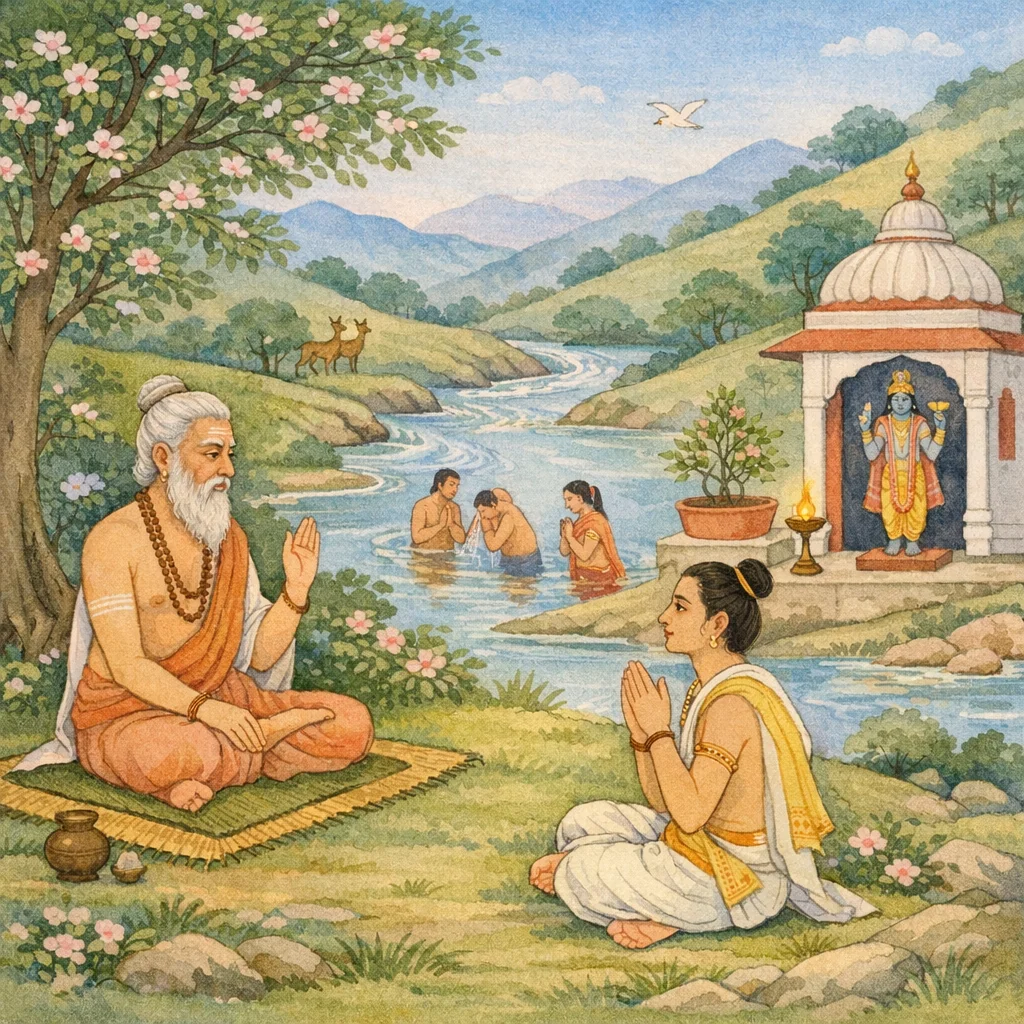
Adhyaya 65
The Slaying of the Kālakeyas and the Greatness of Vināyaka Worship
PP.1.65 opens with ritual instruction and praise of Vināyaka (Gaṇeśa/Heramba): worship in the Nāndīmukha rites, mantra-application to sacrificial pots, and installing or inscribing Heramba in visible places to secure success, protection, learning, prosperity, and freedom from afflictions. It also identifies Vināyaka as a liṅga at Vanitā on the southern bank of the Lauhitya, where darśana, sparśa, and pradakṣiṇā bestow purification, heaven, and lasting welfare. The narrative then turns to a divine crisis: the Devas are defeated because they neglected Gaṇeśa’s worship. Śiva (Tripurāri/Śambhu) directs them to adore Gaṇapati; Vināyaka grants victory and sends them to Viṣṇu. Hari/Nārāyaṇa rallies the Devas against Hiraṇyākṣa’s forces, leading to a vast battle and the fall of the Kālakeya commander, affirming that the removal of obstacles precedes triumph.
Shlokas
Verse 1
व्यास उवाच । नांदीमुखेषु सर्वेषु पूजयेद्यो गणाधिपम् । तस्य सर्वो भवेद्वश्यः पुण्यं भवति चाक्षयम्
Vyāsa said: Whoever worships Gaṇādhipa (Gaṇeśa) in all Nāndīmukha rites—everything becomes compliant to him, and his merit becomes imperishable.
Verse 2
गणानां त्वेति मंत्रेण सर्वयज्ञघटेषु च । सर्वसिद्धिमवाप्नोति स्वर्गं मोक्षं लभेन्नरः
By reciting the mantra that begins with “gaṇānāṃ tve” and applying it to all the ritual pots used in sacrifices, a man attains every accomplishment and gains heaven and liberation.
Verse 3
मृण्मये प्रतिमायां च चित्रे चाथ दृषण्मये । द्वारदारुणि पात्रे च हेरंबं लेखयेद्बुधः
A wise person should draw or inscribe Heramba—Gaṇeśa—upon a clay image, in a painting, upon stone, and also upon a wooden door and on a vessel.
Verse 4
अन्यस्मिन्नपि देशे तु सततं दृष्टिगोचरे । स्थापयित्वा तु हेरंबं शक्त्या यः पूजयेद्बुधः
Even in another land, if a wise person installs Heramba (Gaṇeśa) in a place always within sight and worships him with devotion according to one’s capacity,
Verse 5
तस्य कार्याणि सिद्ध्यंति दयितानि समंततः । न विघ्नं जायते किंचित्त्रैलोक्यं वशमानयेत्
All his cherished undertakings succeed on every side; no obstacle whatsoever arises for him—he brings the three worlds under his sway.
Verse 6
विद्यार्थी लभते विद्यां वेदशास्त्रसमुद्भवाम् । अन्यां च शिल्पिविद्यां च विजयां स्वर्गदायिनीम्
A student gains learning born of the Vedas and the Śāstras, and also other knowledge—skills and crafts—bringing victory and bestowing heaven.
Verse 7
धनार्थी विपुलं वित्तं कन्यां साध्वीं मनोरमाम् । ऐश्वर्यं धर्मसाध्यं च तनयं कुलमोक्षदम्
A seeker of wealth obtains abundant riches; (one may obtain) a virtuous and charming maiden (as a bride); prosperity that is attained through righteousness; and a son who becomes the liberator of the family line.
Verse 8
न रोगैः पीड्यते कश्चिन्न ग्रहैः प्रेतयोनिभिः । शृंगिभिर्नापि रक्षोभिर्विद्युद्भिर्वनतस्करैः
No one is afflicted by diseases—nor by malignant planets, nor by spirits of ghostly birth; nor by horned beings, nor by rākṣasas, nor by lightning, nor by forest-robbers.
Verse 9
न राजा कुप्यति गृहे न च मारी प्रवर्तते । न दौर्भिक्ष्यं न दौर्बल्यं पूजयित्वा विनायकम्
When Vināyaka is worshiped, the king does not become angry with one’s household; pestilence does not spread; neither famine nor weakness (affliction) arises.
Verse 10
अभिप्रेतार्थसिद्ध्यर्थं पूजितो यः सुरैरपि । सर्वविघ्नछिदे तस्मै गणाधिपतये नमः
Salutations to that Lord of the Gaṇas—who is worshipped even by the gods for the fulfillment of desired aims, and who cuts down all obstacles.
Verse 11
मंत्रश्चायं ॐ नमो गणपतये । नारायणप्रियैः पुष्पैरन्यैश्चापि सुगंधिभिः । मोदकैः फलमूलैश्च द्रव्यैः कालोद्भवैस्तथा
And this is the mantra: “Oṃ, salutations to Gaṇapati.” He is to be worshipped with flowers dear to Nārāyaṇa and with other fragrant blossoms as well; with modakas, with fruits and roots, and likewise with seasonal offerings that arise in their proper time.
Verse 12
दधिदुग्धैः प्रियैर्वाद्यैरपि धूपसुगंधिभिः । पूजयेद्गणपं यस्तु सर्वसिद्धिमवाप्नुयात्
Whoever worships Gaṇapa (Gaṇeśa) with curd and milk, with pleasing music, and with fragrant incense, attains complete success in all undertakings.
Verse 13
विशेषात्तस्य लिंगे तु यो ददाति वसुप्रियम् । पूजोपकरणं वस्त्रं सर्वं लक्षगुणं भवेत्
But especially, whoever offers to that liṅga something dear and valuable—such as wealth, ritual articles, or clothing—everything so offered becomes a hundred-thousandfold in merit.
Verse 14
देशे च भारते वर्षे वनिता पूर्वसन्निधौ । लौहित्यदक्षिणे तीरे लिंगरूपो विनायकः
And in the land of Bhārata (India), at Vanitā—near the ancient sacred presence—on the southern bank of the Lauhitya river, Vināyaka is present in the form of a liṅga.
Verse 15
हरगौरीसमादेशाद्देवानां संमतेन च । स्थितो लोकप्रशांत्यर्थं सर्वविघ्नविनाशनात्
By the command of Hara and Gaurī, and with the approval of the gods, he took his station for the sake of the world’s peace—being the destroyer of all obstacles.
Verse 16
पूजयित्वा तु तं देवं शक्तितो द्रव्यसंचयैः । विनायकत्वमाप्नोति वेदशास्त्रार्थपारगः
Having worshipped that Deity according to one’s capacity, with offerings gathered, one attains the status of Vināyaka and becomes fully versed in the meanings of the Vedas and the śāstras.
Verse 17
सकृत्प्रदक्षिणं कृत्वा दृष्ट्वा स्पृष्ट्वा तु मानवः । अक्षयं लभते स्वर्गं सदा देवैः प्रपूज्यते
Having performed a single pradakṣiṇā (circumambulation), and having seen and touched that sacred place or object, a person attains an imperishable heaven and is always revered by the gods.
Verse 18
संसर्गिणां च म्लेछानां गत्यर्थं सुतपस्विनाम् । पुत्रार्थं सर्वलोकानां तत्र शंभुर्विनायकः
There, Śambhu—known as Vināyaka—is present to grant a higher destiny to those who associate with the mlecchas, for the welfare of ascetics of great austerity, and to fulfill the desire for sons among beings of all worlds.
Verse 19
कृत्वाभिषेकं लौहित्ये स्पृशेद्यस्तु गणाधिपम् । सप्तजन्मकृतात्पापान्मुच्यते नात्र संशयः
After performing abhiṣeka (ritual bathing) at Lauhitya, whoever touches Gaṇādhipa is freed from the sins accumulated over seven births—of this there is no doubt.
Verse 20
न वैधव्यं न कार्पण्यं न शोकं न तु मत्सरम् । विनायकं समासाद्य जन्मजन्मनि संलभेत्
By approaching Vināyaka and taking refuge in him, one will meet with neither widowhood nor poverty, neither sorrow nor jealousy—life after life.
Verse 21
पुनः सिद्धिः पुनर्भोग्यं पुनः कीर्तिः पुनर्बलम् । पूजयित्वा तु गणपं नरस्य नात्र संशयः
Success again, enjoyments again, fame again, and strength again—by worshipping Gaṇapa (Gaṇeśa), a man attains these; of this there is no doubt.
Verse 22
अस्य पूजामकृत्वा च सर्वाभीष्टं विनश्यति । तत्र देवाश्च सुप्रीता ब्रह्मविष्णुहरादयः
Without performing this worship, all one’s desired aims are ruined. There, the gods—Brahmā, Viṣṇu, Hara (Śiva), and others—become greatly pleased.
Verse 23
मघोनो गणपस्याथ पूजाविरहितस्य च । अथासुरैर्महावीर्यैर्हिरण्याक्षमुखै रणे
Then, because the troop-lord of Maghavan (Indra) was left without worship, the mighty Asuras—led by Hiraṇyākṣa—advanced in battle.
Verse 24
मघवा तु जितो वीर्याद्धिरण्याक्षेण वै तदा । ततस्सुराश्च निर्वीर्या यावद्वर्षशतं पुरा
Then Maghavā (Indra) was indeed overcome by Hiraṇyākṣa’s prowess. Thereafter the gods became powerless—for as long as a hundred years in former times.
Verse 25
दैवासुरे महायुद्धे सुराणां च पराजयः । ततो देवाधिदेवे तु शिवे देवैर्निवेदितम्
In the great war between the gods and the demons, the gods suffered defeat. Then the gods reported the matter to Śiva, the Lord of lords.
Verse 26
भगवन्नसुरैर्नो हि जितं राज्यं गता मखाः । एतस्मिन्नंतरे शंभुर्देवान्वचनमब्रवीत्
“O Lord, the Asuras have indeed conquered our kingdom; our sacrifices have come to an end. Meanwhile, Śambhu spoke these words to the gods.”
Verse 27
हेरंबाय वरो दत्त उमया प्रीतया मया । पूजया ते परा सिद्धिर्देवादीनां भवत्विति
“A boon has been granted by me to Heraṁba, being pleased with Umā: ‘Through worship of you, may the highest attainment be granted to the gods and others.’”
Verse 28
अवजानाति यो मोहात्पुरुषस्तु महोत्सवे । न भवेत्तस्य सिद्धिश्च रणे चापि पराजयः
“A man who, out of delusion, shows contempt during the great sacred festival will gain no success; and even in battle he will meet defeat.”
Verse 29
महामखेन युष्माभिः पूजा गणपतेः कृता । हेलया न कृता मोहात्तस्मात्प्राप्तः पराजयः
“With a great sacrifice you performed the worship of Gaṇapati; it was not done with contempt. Yet, because of delusion, defeat has come upon you.”
Verse 30
शीघ्रं गच्छत वै पुण्यां गणपस्य महात्मनः । पूजां कुरुत धर्मज्ञा जयस्तूर्णं भविष्यति
“Go quickly, indeed, to the sacred place of the great-souled Gaṇapa. Perform worship, O knowers of dharma—victory will swiftly be yours.”
Verse 31
ततो हरमुखाच्छ्रुत्वा वचः क्षेमपरं हितम् । प्रहृष्टा विबुधास्सर्वे गणपस्य पुरः स्थिताः
Then, hearing from Śiva’s own mouth those auspicious words, beneficial and aimed at welfare, all the gods rejoiced, standing before Gaṇapa, their leader.
Verse 32
देवा ऊचुः । गणाधिप नमस्तुभ्यं सर्वदेवैकपालक । स्वर्गभोगप्रद प्रीत्या हेरंब त्वां नताः स्म ह
The gods said: “O Lord of the Gaṇas, obeisance to you, the sole protector of all the gods. O Heramba, bestower of the enjoyments of Svarga, with devotion we bow to you.”
Verse 33
जयदं सर्वयुद्धेषु सिद्धिदं सर्वकर्मसु । महामायं महाकायं हेरंब त्वां नताः स्म ह
O Heramba, bestower of victory in all battles and of siddhi in every undertaking—O Great Mahāmāyā, O mighty one of vast form—we have indeed bowed to You.
Verse 34
एकदंतं महाप्राज्ञं लंबतुंडं विनायकम् । देवं महर्षिदेवानांमिंद्रस्य च नताः स्म ह
They bowed down to the god Vināyaka—single-tusked, supremely wise, and long-trunked—revered by the great ṛṣis and even by Indra.
Verse 35
यत्ते पुरार्चनं यज्ञे न कृतं तत्क्षमस्व नः । सुराणां च गिरः श्रुत्वा गणपो वाक्यमब्रवीत्
“Forgive us, for in the yajña we did not first perform your worship.” Hearing the words of the gods, Gaṇapa spoke in reply.
Verse 36
युष्माभिर्व्रियतां देवा वरो मत्तो हि वांच्छितः । ततः शक्रादयः सर्वे बृहस्पतिपुरोगमाः
“O gods, choose the boon you desire from me. Then all the deities—beginning with Śakra (Indra) and led by Bṛhaspati—stepped forward.”
Verse 37
ऊचुर्गणपतिं देवा जयोस्माकं भवत्विति । देवानां वचनं श्रुत्वा गणेशो वाक्यमब्रवीत्
The gods said to Gaṇapati, “May victory be ours.” Hearing the words of the gods, Gaṇeśa spoke in reply.
Verse 38
बाढमेव सुरश्रेष्ठा जयो वो भवतु द्रुतम् । ततो देवगणास्सर्वे हर्षनिर्भरमानसाः
“So be it indeed, O best among the suras—may victory come to you swiftly.” Then all the hosts of devas, their hearts overflowing with joy, rejoiced.
Verse 39
गणेशं पूजयामासुर्गंधसारैस्तु मण्डनैः । दिव्यधूपैः सुवस्त्रैश्च कुसुमैर्नन्दनोद्भवैः
They worshipped Gaṇeśa with fragrant essences and ornaments, with celestial incense and fine garments, and with flowers sprung from the Nandana grove.
Verse 40
पारिजातादिभिः पुष्पैरन्यैर्देवमनोहरैः । पूजितो गणपो देवैरुवाच सुरसत्तमान्
Worshipped by the gods with pārijāta and other flowers that delight the devas, Gaṇapa then spoke to those foremost among the gods.
Verse 41
गच्छध्वं विबुधा देवं विष्णुमद्भुतसाहसम् । स विधास्यति वः कामं वांच्छितं च ततः सुराः
Go, O wise celestial ones, to Lord Viṣṇu of wondrous heroic might. He will fulfill your desire and grant what you seek; therefore, O gods, go to Him.
Verse 42
स्वंस्वं रथं समारुह्य गतास्ते हरिमव्ययम् । पीतांबरं नमस्कृत्य ऊचुर्देवगणा मुदा
Mounting their respective chariots, they went to Hari, the imperishable Lord. Bowing to Him clad in yellow garments, the hosts of gods spoke with joy.
Verse 43
हरात्मजं तु संप्राप्य पूजयित्वा गणाधिपम् । आगतास्त्वत्सकाशं वै महात्मन्नद्य केशव
Having reached Hara’s son and worshipped Gaṇādhipa, the Lord of the Gaṇas, we have indeed come today into your presence, O great-souled Keśava.
Verse 44
एतच्छ्रुत्वा तु देवानां वचनं हरिरव्ययः । यथातथ्यमुवाचेदं हनिष्ये दैत्यपुंगवान्
Hearing the words of the gods, Hari, the imperishable one, spoke truthfully: “I shall slay the foremost of the Daityas.”
Verse 45
श्रुत्वा वागमृतं देवा नारायणमुखाच्च्युतम् । हृष्टाश्च सुमुदाविष्टा द्रव्यैरिष्टैः समर्चयन्
Hearing the nectar-like words that issued from Nārāyaṇa’s mouth, the gods—delighted and filled with great joy—worshipped Him with their cherished offerings.
Verse 46
पुनर्विष्णुरुवाचेदं देवानिंद्रपुरोगमान् । स्वंस्वं बलं समाहृत्य सज्जी भवत विज्वराः
Then Viṣṇu again addressed the gods, led by Indra: “Gather each of your own powers and stand ready—free from the fever of fear.”
Verse 47
हरिष्ये तान्दुराचारान्बलं चैव समंततः । अस्त्रवृंदं तु संगृह्य यूयं तिष्ठत निर्भयाः
“I shall seize those evil-doers and their forces from every side. You, having gathered your array of weapons, stand firm without fear.”
Verse 48
माधवस्य वचः श्रुत्वा प्रगताः सुरपुंगवाः । विमानानि समारुह्य सर्वे दिव्यास्त्रधारिणः
Hearing Mādhava’s words, the foremost of the gods departed; mounting their celestial aerial cars, all of them—bearers of divine weapons—set forth.
Verse 49
देवानां हर्षवाक्यानि दैत्यचारैः श्रुतानि वै । राजानं कथयामासुर्हिरण्याक्षं महाबलम्
Indeed, the demons’ spies heard the gods’ words of joy, and they went and reported them to their king—mighty Hiraṇyākṣa.
Verse 50
श्रुत्वा दैत्यपतिस्तत्र चुकोपाति महाबलः । सचिवांस्तु समाहूय क्रुद्धो वचनमब्रवीत्
Hearing this, the mighty lord of the Daityas there became enraged. Summoning his ministers, he angrily spoke these words.
Verse 51
अधुनेंद्रादिदेवाश्च निखिलाः क्रूरबुद्धयः । माधवं च परीप्सन्तः शंभौ सर्वं न्यवेदयन्
Then all the gods—beginning with Indra—harboring cruel intent and seeking to seize Mādhava, reported everything to Śambhu (Śiva).
Verse 52
कथं जयं च लप्स्यामो दैत्यवृंदेतिदारुणे । त्रिपुरारिरुवाचेदं गणेशं यजतामराः
“How shall we attain victory over this exceedingly dreadful host of Daityas?” Thus spoke Tripurāri (Śiva) to the gods: “Worship Gaṇeśa.”
Verse 53
पूजयित्वा तु तं देवं जेष्यथासुरदानवान् । ततो देवगणैर्हृष्टैः पूजितो गणनायकः
Having worshipped that god, you shall conquer the Asuras and Dānavas. Then the delighted hosts of gods worshipped Gaṇanāyaka (Gaṇeśa), leader of the gaṇas.
Verse 54
गणाधिपेन तुष्टेन क्रूरो दत्तो वरो महान् । जेष्यथाद्यासुरान्सर्वांस्ततो देवा मुदान्विताः
When Gaṇādhipa (Gaṇeśa) was pleased, he granted the fierce one a great boon: “You shall conquer all the primordial Asuras.” Then the Devas were filled with joy.
Verse 55
हरिं निवेदयामासुरस्मद्वधपरीप्सवः । हरेर्बाढमुपश्रुत्य रथिनः शस्त्रपाणयः
Eager to bring about our slaying, they reported the matter to Hari; and, having clearly heard Hari’s command, the chariot-warriors—weapon in hand—set forth.
Verse 56
युद्धार्थमधितिष्ठंति निर्जरास्त्वभयामयि । यस्य या शक्तिरस्तीह देवाञ्जेतुं वदत्वलम्
O Abhayāmayī, the immortals have taken their positions for battle. Let whoever among you has the strength to conquer the gods here declare it—enough of hesitation!
Verse 57
ततो राज्ञोवचः श्रुत्वा मधुर्वचनमब्रवीत् । जेष्यामि च हरिं राजन्सहायं मे नियोजय
Then, having heard the king’s words, Madhu spoke sweetly: “O King, I will conquer Hari—appoint me an ally to assist me.”
Verse 58
जिते नारायणे देवाः सभयास्त्रिदशा ध्रुवम् । तस्मान्नारायणोऽस्माकं भागः सर्वपुरंजयः
When Nārāyaṇa is victorious, the gods—the thirty-three—are certainly free from fear. Therefore Nārāyaṇa is our rightful share, the conqueror of every city and stronghold.
Verse 59
ततो धुंधुश्च सुंदश्च कालकेयो महाबलः । सहायश्च मधोस्तस्य जेष्यामो माधवं नृप
Then Dhuṃdhu and Suṃda, and the mighty Kālakeya—along with Madhu’s ally—declared, “We shall conquer Mādhava (Viṣṇu), O king.”
Verse 60
सर्वदैत्यबले मुख्याश्चत्वारो दृढविक्रमाः । कालमृत्युसमा वीराः सर्वास्त्रविधिपारगाः
Foremost among all the forces of the Daityas were four heroes of unshakable valor—warriors comparable to Time and Death—fully accomplished in the rules and mastery of every weapon.
Verse 61
बलस्तत्राब्रवीद्वाक्यं यस्मिन्जय उपस्थितः । तं च जेष्यामि जिष्णुं च प्रतिज्ञा मे दृढा नृप
There Balarāma spoke these words in the presence of Jaya: “I shall conquer him, and I shall also conquer Jiṣṇu; my vow is firm, O king.”
Verse 62
नमुचिश्च मुचिश्चैव भ्रातरौ बलदर्पितौ । ऊचतुस्तौ नृपं ह्यावां जेष्यावो वै बलाद्बलौ
Namuci and Muci—two brothers intoxicated with the pride of strength—said to the king: “Indeed, we two, mighty by force, shall conquer by sheer power.”
Verse 63
जम्भश्चैवाब्रवीद्वाक्यमिंद्रमिंद्रपुरोगमान् । जेष्यामि नात्र संदेहो दैत्या भवत विज्वराः
Then Jambha spoke these words to Indra and those led by Indra: “I shall surely conquer—there is no doubt about it. O Daityas, be free from anxiety.”
Verse 64
त्रिपुरश्चाब्रवीद्वाक्यं जेष्यामि च विनायकम् । तावदूचेऽथ सेनानीर्मयो देवांतको बली
Tripura spoke these words: “I shall conquer Vināyaka.” Just then the commander, the mighty Mayāsura—slayer of the gods—spoke up.
Verse 65
इति श्रीपाद्मपुराणे प्रथमे सृष्टिखंडे कालकेयवधोनाम । पंचषष्टितमोऽध्यायः
Thus ends the sixty-fifth chapter, called “The Slaying of the Kālakeyas,” in the first section (Sṛṣṭikhaṇḍa) of the revered Padma Purāṇa.
Verse 66
गत्वोवाच हिरण्याक्षं जिष्णुदूतोहमागतः । राज्यं त्यज स्ववाचा नः प्राणेषु यदि ते हितम्
Having gone, he said to Hiraṇyākṣa: “I have come as the messenger of Jiṣṇu (Viṣṇu). Renounce the kingdom according to our word, if your welfare lies in preserving your life.”
Verse 67
न चेद्युध्यस्व मामद्य न वा गच्छ रसातलम् । ततः कोपादुवाचेदं नारदं मुनिसत्तमम्
“If you will not fight me today, then go down to Rasātala (the netherworld)!” Then, in anger, he spoke these words to Nārada, the best of sages.
Verse 68
अहिंस्यस्त्वं ब्राह्माणाद्य गच्छ तूर्णं ममाग्रतः । देवानां च विपत्तिं च कदनं निधनं पुरः
“You are one who should not be harmed, O brāhmaṇa. Go quickly before me—there lies ahead the calamity of the gods, their affliction, and their destruction.”
Verse 69
पश्य विप्र क्षणेनांतं प्राप्तं हरिहरादिकम् । एवमुक्त्वा स दैत्येंद्रो बलाध्यक्षमुवाच ह
“Look, O vipra—within a moment the end has come, brought about by Hari, Hara, and the others.” Having said this, that lord of the Daityas then spoke to the commander of his forces.
Verse 70
सज्जीकृत्य बलं सर्वान्रथांश्चानयत द्रुतम् । दैत्यराजवचः श्रुत्वा बलाध्यक्षः समंततः
Having made all the troops ready, he quickly brought the chariots as well; and, having heard the command of the king of the Daityas, the commander of the forces mobilized them on every side.
Verse 71
बलान्याहूय सहसा संत्रस्तास्तूर्णमागताः । कोटिकोटिसहस्राणि अक्षौहिण्यो बलानि च
Summoned at once, the armies—terrified—arrived without delay. They numbered tens of thousands of crores, and there were also whole akṣauhiṇī divisions of troops.
Verse 72
एकैकस्य च वीरस्य वाहनानि महांति च । स्यंदनानि विचित्राणि गजोष्ट्राश्वखरानपि
And for each warrior there were great conveyances—variegated chariots, and also mounts such as elephants, camels, horses, and even donkeys.
Verse 73
सिंहव्याघ्रलुलायांश्च समारुह्य ययुस्तदा । वाद्यैः सर्वैश्च भूयिष्ठैः सिंहनादैर्भयानकैः
Then they set out, mounting lions, tigers, and other fierce beasts, amid the loud blare of every kind of instrument and terrifying, lion-like roars.
Verse 74
दिशस्तु पूरयामासुस्सिन्धुवेलाचला धराः । सर्वलोकाश्च वित्रेसुः समुद्राश्च चकंपिरे
The quarters were filled, as the earth—together with the mountains along the ocean’s shores—heaved; all the worlds trembled, and even the seas shook.
Verse 75
देवदुंदुभयो नेदुः सर्वदेवैः समीरिताः । वाद्यैश्च विविधैरन्यैर्वायुपूर्णैर्घनस्वनैः
The divine kettledrums resounded, struck by all the gods; and other various instruments too—wind-filled and deep-sounding—rang out.
Verse 76
सर्वलोकाभयत्रस्ता ये च त्रैलोक्यवासिनः । भ्रष्टकामागताकाशं घोरं तीव्रं महाहवम्
All beings in every world, and all who dwell throughout the three worlds, were seized by fear. A dreadful, fierce, mighty battle arose, shaking the sky and overwhelming all desire.
Verse 77
परिघैः पाशशूलैश्च खड्गयष्टिपरश्वधैः । शरैश्च निशितैर्घोरैर्जघ्नुरन्योन्यमाहवे
With iron clubs, nooses and tridents, with swords, staves, and battle-axes—and with dreadful, keen-edged arrows—they struck one another down in the fight.
Verse 78
शस्त्रास्त्रैर्बहुधामुक्तैर्दिशः सर्वा निरंतरम् । विगृहेषु धरण्यां च पर्वतेषु जलेषु च
With many weapons and missiles released in countless ways, all directions were continually filled—amid the battles, on the earth, on the mountains, and in the waters as well.
Verse 79
देवस्थाने तथाकाशे पर्वताग्रेषु सानुषु । गह्वरेषु महारण्ये तयोर्युद्धमवर्तत
In divine sanctuaries and in the open sky, on mountain peaks and slopes, in caves and in the great forest—thus the battle between the two raged on.
Verse 80
पुष्कलादि घनानां च वर्षधारा जलं यथा । पतंत्यस्त्राणि सैन्येषु शतशोथ सहस्रशः
And just as torrents of rainwater pour down from massive clouds, so too weapons fell upon the armies—by the hundreds, and then by the thousands.
Verse 81
केचित्पेतुः पृथिव्यां तु शरैः संभिन्नविग्रहाः । शक्तिभिर्मुसलैश्चान्ये छत्रशूलपरश्वधैः
Some fell upon the earth, their bodies torn asunder by arrows; others fell, struck by spears and clubs, and by umbrellas wielded as weapons, by tridents, and by axes.
Verse 82
पतिताः संमुखे शूरा युद्धेषु न्यायवर्तिनः । गच्छंति सुरसद्मानि स्वाम्यर्थे ये त्वभीरवः
Brave warriors who fall facing the foe—who in battle abide by righteousness—such fearless men, fighting for their lord’s cause, go to the abodes of the gods.
Verse 83
ये चान्ये कातराः पापा हंतारो विमुखान्रणे । अन्यायैर्ये च योद्धारस्ते यान्ति यममंदिरं
But those other cowardly sinners—killers who strike down men turned away in battle—and those fighters who wage war by unjust means: they go to Yama’s abode.
Verse 84
त्रिदिवस्था गजारोहाः सैन्धवस्थास्तथापरान् । रथस्थांश्च रथारोहाः पदगांश्च पदातयः
Some were stationed in the celestial regions as elephant-riders; others were mounted on Sindhu horses. Some stood upon chariots as charioteers, and others went on foot as infantry.
Verse 85
परस्परं विनिघ्नंति शूरा युद्धाभिकांक्षिणः । मुदिताः सत्वसंपन्ना धर्मिष्ठा बलसंवृताः
The valiant warriors, eager for battle, strike one another down. They are exhilarated, endowed with courage, steadfast in dharma, and fortified with strength.
Verse 86
केषांचिद्वाहवश्छिन्ना मुसलैर्भिन्नमस्तकाः । केशाश्शिरांसि वस्त्राणि निपेतुर्धरणीतले
Some had their arms cut off; others had their heads smashed by clubs. Hair, severed heads, and garments fell upon the surface of the earth.
Verse 87
मध्यच्छिन्नास्तथा भिन्नाः पेतुरुर्व्यां महाबलाः । खड्गपातैस्तथा चोग्रैश्छ्रिन्नभिन्नाः परश्वधैः
Split in the middle and otherwise hacked apart, those mighty warriors fell upon the earth—severed and shattered by fierce sword-strokes, and cleaved by battle-axes.
Verse 88
गामेव पतिता धीरा दिव्यालंकारभूषिताः । प्रदीप्तोभूद्धरादेशो वीरैर्नागैर्हयै रथैः
They—steadfast and adorned with divine ornaments—fell down upon the earth itself; and the whole expanse of the land blazed forth, filled with heroes, elephants, horses, and chariots.
Verse 89
विविधाभरणैर्नष्टैः पताकाभिश्च केतुभिः । ततो वसुंधरा सर्वा सशैलवनकानना
Then the entire earth—together with its mountains, forests, and groves—was left bereft of its varied ornaments, its banners, and its standards.
Verse 90
रुधिरौघप्लुता तत्र विबुधासुरयोर्युधि । क्रव्यादैर्बहुभिस्तत्र खादितो द्रव्यसंचयः
There, in the battle between the gods and the asuras, the ground was flooded with streams of blood; and there, amid many flesh-eating creatures, the amassed wealth (spoils) was devoured.
Verse 91
लोहितं प्रचुरं पीतं रक्षोभिश्च वृकादिभिः । अन्यैर्महागणैरेव क्षतजं पवनान्वितम्
Abundant blood—red and yellow—was drunk by the Rākṣasas, by wolves and the like, and by other great hordes as well, borne along by the wind.
Verse 92
खादितं प्रीतिमद्भिश्च फेरुगृध्रगणैर्मुदा । एतस्मिन्नंतरे सूरिः सुरपूज्यो बृहस्पतिः
It was eaten with delight and joy by the packs of jackals and flocks of vultures. Meanwhile, the sage Bṛhaspati—revered and worshipped by the gods—appeared.
Verse 93
मृतसंजीवनीविद्यां सुराणां संजजाप ह । विशल्यकरणीं दिव्यां ब्रह्मविद्यां महाबलां
He then recited for the gods the life-restoring mantra, the mṛtasaṃjīvanī-vidyā; and also the divine viśalyakaraṇī, and the mighty brahma-vidyā—the knowledge of Brahman.
Verse 94
ततो धन्वंतरिर्विद्वान्सुरवैद्यो मनोजवः । औषधैस्तत्प्रयोगैश्च रणे पर्यटते मुदा
Then Dhanvantari—the wise, swift-moving physician of the gods—roamed about the battlefield with joy, carrying medicines and their applications.
Verse 95
तत्र देवाश्च जीवंति ये मृताश्च महाहवे । अव्रणा बलसंपन्नाः प्रयुध्यंति भृशं पुनः
There, even those gods who had been slain in the great battle live again; unwounded and endowed with strength, they once more fight fiercely.
Verse 96
एवं शतसहस्रं तु गणं दैत्यस्य चोद्धतम् । पतितं पुण्ययोगाच्च शरैर्निर्भिन्नकंधरम्
Thus that arrogant host of the Daitya—numbering a hundred thousand—fell, by the power of auspicious destiny, their necks split open by arrows.
Verse 97
ततस्तु जयशब्देन नंदंति सिद्धचारणाः । ऋषयः खेचराश्चान्ये ये चैवाप्सरसां गणाः
Then, with cries of “Victory!”, the Siddhas and Cāraṇas rejoiced—along with the sages, the aerial beings, and the hosts of Apsarases as well.
Verse 98
गीतिं गायंति गंधर्वाः शशंसुः परमर्षयः । अथ क्रुद्धो महातेजा दैत्यमुख्यो महाबलः
The Gandharvas sang melodious songs, and the supreme sages offered praises. Then the mighty leader of the Daityas—radiant with great energy—became enraged.
Verse 99
कालकेय इति ख्यातः सेनानीर्दैत्यपस्य च । स्यन्दनस्थो महावीर्यो धनुरादाय तत्र च
There was one renowned as Kālakeya, the commander of the Daitya lord; mounted upon his chariot, that great hero took up his bow there.
Verse 100
जघान सुरसंघांस्तान्नर्तयामास भूतले । निरंतरशरौघेण च्छादितं गगनं तदा
He struck down those hosts of gods and made them reel upon the earth; then the sky was covered by an unbroken torrent of arrows.
Verse 101
निपतंति शराः सैन्ये कोटिकोटि सहस्रशः । निपतंति ततो देवाः संयुगेष्वनिवर्तिनः
Arrows fell upon the army in hundreds of thousands—indeed in crores upon crores. Then the devas too plunged into the battle, unretreating in the combats.
Verse 102
रुधिरोद्गारिणस्सर्वे सिद्धगंधर्वकिन्नराः । विशिखैः पीडिता देवा निपेतुर्धरणीतले
All the Siddhas, Gandharvas, and Kinnaras, vomiting blood, and the devas, tormented by the arrows, fell down upon the surface of the earth.
Verse 103
केचिच्छरशतैर्भिन्नास्सहस्रैरयुतैस्तथा । पेतुरुर्व्यां महावीर्या ये रणे सुरपुंगवाः
Some—pierced by hundreds of arrows, and likewise by thousands and tens of thousands—those mighty heroes, the foremost among the devas, fell upon the earth in battle.
Verse 104
व्यथिताश्चाभवन्सर्वे स्यंदनस्था दिवौकसः । शरैः प्रव्यथितास्ते तु स्थातुं शक्ता न संमुखे
All the heavenly beings, seated in their chariots, became distressed. Pierced and greatly pained by the arrows, they were not able to stand facing the enemy in front.
Verse 105
तेनावगाहितं सैन्यं गजेनेव सरोवनम् । शरैस्तस्यार्दिता देवा वज्रानलसमप्रभैः
By him the army was plunged into confusion, like a lake churned up by an elephant. The devas, afflicted by his arrows—shining like thunderbolts and fire—were struck and tormented.
Verse 106
न शेकुः समरे स्थातुं मघवंतं ययुस्तदा । चित्ररथ इति ख्यातो देवश्शस्त्रभृतां वरः
Unable to stand in battle against Maghavan (Indra), they withdrew at that time. There was one named Citraratha, renowned as the foremost among the weapon-bearing gods.
Verse 107
ययौ स्यंदनमारुह्य युद्धं प्रति धनुर्धरः । अब्रवीद्वचनं सोपि सेनान्यं तु महासुरम्
Mounting his chariot, the bow-bearing warrior went forth toward the battle. He too then spoke certain words to the army-commander, the great asura.
Verse 108
यथा हंसि महाशूर सुरसेनां मुदान्वितः । स त्वं प्रशंसनीयश्च शूरोसि सुरसंमतः
O great hero, since you joyfully strike down the army of the devas, you are indeed worthy of praise; you are a brave one, approved by the gods.
Verse 109
हिरण्याक्षप्रियं कर्म कृतं युद्धे त्वयाधुना । इदानीं मम बाणैश्च गच्छस्व यममंदिरम्
Just now, in battle, you have done a deed pleasing to Hiraṇyākṣa. Now, struck by my arrows, go to Yama’s abode.
Verse 110
ततश्च कालकेयस्तु स्मितो वचनमब्रवीत् । पुरैव विजितो देव गणः सर्वः प्रलीलया
Then Kālakeya, smiling, spoke these words: “Formerly, the entire host of the devas was already conquered—merely as a sport.”
Verse 111
इदानीं तु स्थितं युद्धे बलं सर्वं तु हेलया । यदि ते निधने प्रीतिरस्तीह सुरपुंगव
Now all our forces stand ready for battle—almost as a sport. If you truly delight here in your own death, O best among the gods, then come forth.
Verse 112
एभिस्त्वां निशितैर्बाणैर्नयामि यममंदिरम् । इत्युक्त्वा परमक्रुद्धो बाणमंतकसन्निभम्
“With these keen arrows I shall send you to Yama’s abode.” Having spoken thus, blazing with supreme wrath, he took up an arrow resembling Antaka, Death itself.
Verse 113
जघान समरे वीरस्त्रिभिश्चिच्छेद सोंबरे । पुनर्बाणांश्च समरे योजयित्वा द्रुतं रुषा
In the battle the hero struck; with three arrows he cut down So’mbara. Then again in that same combat, swiftly and in wrath, he fitted more arrows to his bow.
Verse 114
जघान प्रचुरान्दैत्यांस्तांश्चकर्त्त स लाघवात् । ततोन्योन्यं शरैस्तीक्ष्णैः कालानलसमप्रभैः
He swiftly struck down many Dānavas, cutting them apart with ease. Then they assailed one another with keen arrows, blazing like the fire of Time’s final conflagration.
Verse 115
युद्धे धनुष्मतां श्रेष्ठश्चिच्छेद भुवि वेगतः । तद्युद्धमभवद्देवदैत्ययोर्धर्मतो भृशम्
In the battle, the foremost of archers swiftly cast his foe down to the earth. Thus a fierce combat arose between the gods and the daityas, fought steadfastly according to dharma.
Verse 116
द्रष्टुकामागताः पार्श्वमृषि देवाः सुरोरगाः । एवं शतसहस्राणि बाणानां विधृतानि च
Desiring to witness it, gods, sages, celestials, and serpents came to the seer’s side; and in this manner, hundreds of thousands of arrows were also held back.
Verse 117
अन्योन्यं समरे वीरौ विजयाय विरेजतुः । अथ क्रुद्धो महातेजा गंधर्वाणां पतिस्तदा
The two heroes shone against one another in battle, each striving for victory. Then, at that time, the mighty and greatly radiant lord of the Gandharvas became enraged.
Verse 118
त्रिभिर्बिभेद बाणैश्च ललाटे हृदि पंचभिः । सप्तभिर्जठरे नाभौ बस्तौ तस्य स पंचभिः
He pierced him with three arrows in the forehead, with five in the heart, with seven in the belly, at the navel, and with five in his bladder.
Verse 119
शरैः संपातितो दैत्यो मुग्धः कश्मलतां गतः । शिथिलीकृतचापश्च लेभे संज्ञां चिराद्बली
Struck down by arrows, the daitya fell—bewildered and plunged into confusion. His bow slackened; and that mighty one regained consciousness only after a long time.
Verse 120
मधुसंज्ञं त्रिभिर्बाणैस्स बिभेद सुरोत्तमम् । चकर्त्त धनुरस्त्रैश्च दैत्यराजस्य पश्यतः
He pierced the foremost of the gods—named Madhu—with three arrows, and with bow-weapons he cut him down, while the king of the Daityas looked on.
Verse 121
ततो बाणसहस्रैस्तु कालांतकसमप्रभैः । बिभेद दैत्यसिंहं तु सुराणामुत्तमो बली
Then, with thousands of arrows blazing like Kāla, the Ender of Time, Bali—the foremost among the devas—pierced the lion among the demons.
Verse 122
हतचेताः स दैत्येंद्रो बहुशोणितसंस्रवः । विह्वलो बहुबाणार्तः शूलं जग्राह दानवः
His mind shattered, that lord of the Daityas—bleeding profusely—dazed and tormented by many arrows, the Dānava seized a trident.
Verse 123
शूलहस्तस्य तस्यैव चतुर्भिस्तुरगान्शरैः । हत्वा च पातयामास त्रिभिर्यंतारमेव च
Then, with four arrows, he killed the horses of that very spear-wielder; and with three more he struck down the charioteer as well.
Verse 124
जघान शूलमुर्वीष्ठस्ततो गंधर्वसत्तमम् । विचकर्त्त त्रिभिर्बाणैः शूलं चित्ररथो बली
Then Urvīṣṭha struck down that excellent Gandharva with a spear; and the mighty Citraratha, with three arrows, shattered the spear.
Verse 125
शूलं च नष्टकं दृष्ट्वा हतभोगमिवोरगम् । गृहीत्वा मुद्गरं घोरं प्रदुद्राव सुरं बली
Seeing the trident shattered—like a serpent whose fangs had been broken—mighty Bali seized a fearsome mallet and rushed at the deva.
Verse 126
स मुद्गरं समायातं दैत्यसेनाधिपं तदा । विचकर्त्त शिरो देहादर्धचंद्रेण संभ्रमात्
Then he swiftly struck down the commander of the demon host who had advanced with a mace, and in the rush of battle he severed his head from his body with a crescent-shaped weapon.
Verse 127
स पपात महीपृष्ठे संचचाल वसुंधरा । ततो दैत्यगणाः सर्वे विमुखा विप्रदुद्रुवुः
He fell upon the surface of the earth, and the very ground shook. Then all the hosts of the Dānavas, turning away in dismay, fled in haste.