Adhyaya 8
द्रौपद्याः सैरन्ध्रीवेषधारणं सुदेष्णासंवादश्च | Draupadī assumes the Sairandhrī guise and dialogues with Sudeshnā
Upa-parva: Virāṭa-niveśana (Draupadī as Sairandhrī in the royal household)
Vaiśaṃpāyana narrates Draupadī’s tactical transformation: she gathers and conceals her hair, dons a single soiled dark garment, and moves about appearing distressed to match the sairandhrī role. Palace women and men question her identity and purpose; she claims she has come as a sairandhrī seeking service. Her refined speech and extraordinary beauty trigger disbelief, prompting Queen Sudeshnā to summon and interrogate her. Sudeshnā describes Draupadī’s features in hyperbolic courtly terms and suggests she resembles a celestial being rather than a servant, enumerating possible divine or apsarā identities. Draupadī denies divinity and reiterates her occupational skills—hair-care, cosmetics preparation, and garland-making—while stating she previously served Satyabhāmā and “Kṛṣṇā, the Pandavas’ wife,” using third-person self-reference as a concealment technique. Sudeshnā expresses willingness to house her but warns that the king’s attention could become dangerous. Draupadī establishes a deterrent boundary: five youthful Gandharva husbands protect her and will punish any man who approaches her with improper desire; she also stipulates that she will not handle leftovers or wash feet. Sudeshnā agrees to these terms, and the narrator closes by noting that no one else recognizes Draupadī’s true identity.
Chapter Arc: युधिष्ठिर के प्रवेश के बाद अज्ञातवास का दूसरा बड़ा कदम उठता है—भीमसेन ‘सूद’ (रसोइये) के वेश में विराट के दरबार में आता है, पर उसका तेज सूर्य-सा दमकता है। → भीम के सिंह-स्कंध, असाधारण रूप और प्रभा को देखकर विराट और सभाजन चकित हो उठते हैं; राजा के मन में शंका जागती है—यह कोई गन्धर्वराज है या इन्द्र (पुरंदर) स्वयं? पहचान खुल जाने का भय भीतर-भीतर बढ़ता है। → राजा के पूछने पर भीम निर्भीक होकर अपना वेश-धर्म निभाता है—‘मैं बलल्लव नाम का सूद-परिचारक हूँ; सूप-विद्या में निपुण हूँ; मुझे व्यंजनकार (महानसाध्यक्ष) बना दीजिए।’ → विराट उसकी योग्यता और व्यक्तित्व से प्रसन्न होकर उसे रसोई का प्रधान नियुक्त करता है; भीम राज-आश्रय में स्थापित हो जाता है और नगर में कोई उसे पाण्डव के रूप में नहीं पहचान पाता। → असाधारण बल और तेज वाला यह ‘रसोइया’ अब विराट के भीतर ही रहेगा—क्या उसकी शक्ति किसी आने वाले संकट में अनायास प्रकट हो जाएगी?
Shlokas
Verse 1
इस प्रकार श्रीमह्याभारत विराटपर्वके अन्तर्गत पाण्डवप्रवेशपर्वनें युधिष्टिपप्रवेशविषयक सातवाँ अध्याय पूरा हुआ ॥/ ७ ॥। (दाक्षिणात्य अधिक पाठके १२ श्लोक मिलाकर कुल ३० श्लोक हैं।) हि न (हुक है आम अष्टमो> ध्याय: भीमसेनका राजा विराटकी सभामें प्रवेश और राजाके द्वारा आश्वासन पाना वैशम्पायन उवाच अथापरो भीमबल: श्रियाज्वल- न्रुपाययौ सिंहविलासविक्रम: । खजां च दर्बी च करेण धारय- त्रसिं च कालाड्रमकोशमव्रणम्,वैशम्पायनजी कहते हैं--जनमेजय! तदनन्तर द्वितीय पाण्डव भयंकर बलशाली भीमसेन सिंहकी-सी मस्त चालसे चलते हुए राजाके दरबारमें आये। वे अपने सहज तेजसे प्रकाशित हो रहे थे। उन्होंने हाथमें मथानी, करछी और शाक काटनेके लिये एक काले रंगका तीखी धारवाला छूरा ले रखा था। उनका वह छूरा टूटा-फ़ूटा न था और न उसके ऊपर कोई आवरण था
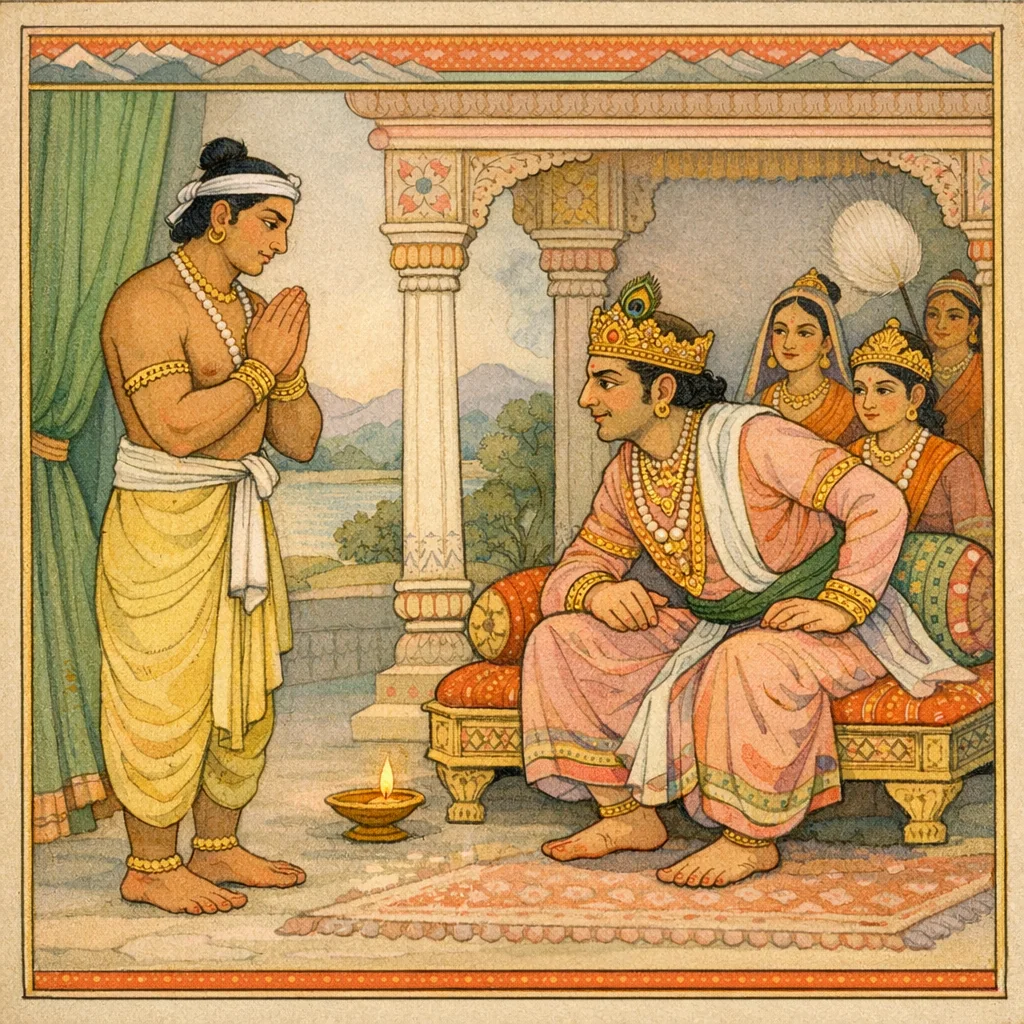
Vaiśampāyana said: Then the next of the Pāṇḍavas—Bhīma of dreadful strength—went to the king. Moving with the confident gait and prowess of a lion, he seemed to blaze with innate splendor. In his hand he carried a sword, a ladle, and a sharp black knife for cutting vegetables—unbroken and uncovered—signaling his readiness to assume humble service without surrendering his inner power or dignity.
Verse 2
स सूदरूप: परमेण वर्चसा रविर्यथा लोकमिमं प्रकाशयन् । स कृष्णवासा गिरिराजसारवां- स््तं मत्स्यराजं समुपेत्य तस्थिवान्,वे यद्यपि रसोइयेके वेशमें थे, तो भी अपने उत्कृष्ट तेजसे इस लोकको प्रकाशित करनेवाले सूर्यदेवकी भाँति सुशोभित हो रहे थे। उनके वस्त्र काले थे और उनका शरीर पर्वतराज मेरुके समान सुदृढ़ था। वे मत्स्ययाज विराटके समीप आकर खड़े हो गये
Vaiśampāyana said: Though he had assumed the guise of a charioteer, he shone with supreme radiance—like the sun illuminating this world. Clad in dark garments and firm-bodied like the king of mountains, he approached King Virāṭa of the Matsyas and stood before him.
Verse 3
त॑ प्रेक्ष्य राजा रमयन्नुपागतं ततोड<ब्रवीज्जानपदान् समागतान् | सिंहोन्नतांसो5यमतीव रूपवान् प्रदृश्यते को नु नरर्षभो युवा,अपने पास आये हुए भीमसेनको देखकर उन्हें प्रसन्न करते हुए राजा विराट मत्स्य जनपदके निवासी समागत सभासदोंसे बोले--'सिंहके समान ऊँचे कंधोंवाला और मनुष्योंमें श्रेष्ठ यह जो अत्यन्त रूपवान् युवक दिखायी दे रहा है; कौन है?
Seeing Bhīmasena approach, King Virāṭa—seeking to please and welcome him—addressed the assembled men of his realm: “This young man who appears before us is exceedingly handsome, with shoulders raised like a lion’s and bearing the stature of the best among men. Who is he?”
Verse 4
अदृष्टपूर्व: पुरुषो रविर्यथा वितर्कयन् नास्थ लभामि निश्चयम् । तथास्य चित्त हापि संवितर्कयन् नरर्षभस्यास्य न यामि तत्त्वत:,“आजसे पहले कभी इसका दर्शन नहीं हुआ है। यह वीर पुरुष सूर्यके समान तेजस्वी है। मैं बहुत सोच-विचारकर भी इसके विषयमें किसी निश्चयपर नहीं पहुँच पाता। यहाँ आनेमें इस श्रेष्ठ पुरुषका आन्तरिक अभिप्राय क्या है? इसपर भी मैंने बहुत तर्क-वितर्क किया है; परंतु किसी वास्तविक परिणामतक नहीं पहुँच पा रहा हूँ
Vaiśampāyana said: “This man has never been seen by me before; he blazes like the sun. Though I reflect again and again, I cannot arrive at any certainty about him. Even after pondering his intention in coming here—the inner purpose of this bull among men—I still cannot grasp the truth of it as it really is.”
Verse 5
दृष्टवैव चैनं तु विचारयाम्यहं गन्धर्वराजो यदि वा पुरंदर: । जानीत को<यं मम दर्शने स्थितो यदीप्सितं तल्लभतां च मा चिरम्,“इसे देखकर ही मैं सोचने लगा हूँ कि यह गन्धर्वराज हैं या देवराज इन्द्र? मेरी दृष्टिके सामने खड़ा हुआ यह युवक कौन है, इसका पता लगाओ और यह जो कुछ पाना चाहता हो, वह सब इसे मिल जाना चाहिये; इसमें विलम्ब नहीं होना चाहिये”
Seeing him, I began to reflect at once: “Is this the king of the Gandharvas, or is it Purandara (Indra) himself? Find out who this youth is, standing before my eyes. And whatever he seeks, let him obtain it—without delay.”
Verse 6
विराटवाक्येन च तेन चोदिता नरा विराटस्य सुशीघ्रगामिन: । उपेत्य कौन्तेयमथाब्रुवंस्तदा यथा स राजावदताच्युतानुजम्,राजा विराटके पूर्वोक्त आदेशसे प्रेरित हो दरबारीलोग शीघ्रतापूर्वक धर्मराज युधिष्ठिरके छोटे भाई कुन्तीपुत्र भीमसेनके समीप गये तथा राजाने जैसे कहा था, उसी प्रकार उनका परिचय पूछा
Urged on by King Virāṭa’s words, his men—swift in their movements—went at once to the son of Kuntī. Approaching him, they addressed him exactly as the king had instructed, seeking his identification and particulars within the bounds of courtly propriety.
Verse 7
ततो विराट समुपेत्य पाण्डव- स्त्वदीनरूपं वचन महामना: । उवाच सूदो<स्मि नरेन्द्र बलल्लवो भजस्व मां व्यज्जनकारमुत्तमम्,तब महामना पाण्डुनन्दन भीम विराटके अत्यन्त निकट जाकर दीनतारहित वाणीमें बोले--नरेन्द्र! मैं रसोइया हूँ। मेरा नाम बल्लव है। मैं बहुत उत्तम व्यंजन बनाता हूँ। आप मुझे अपने यहाँ इस कार्यके लिये रख लीजिये'
Then the great-souled Pāṇḍava approached King Virāṭa and, speaking without any trace of dejection, said: “O king, I am a cook. My name is Ballava. I prepare excellent dishes. Please employ me here as your finest maker of delicacies.”
Verse 8
विराट उवाच न सूदतां बलल्लव श्रद्धधामि ते सहस्रनेत्रप्रतिमो विराजसे । श्रिया च रूपेण च विक्रमेण च प्रभाससे त्वं नृवरो नरेष्विव,विराट बोले--बल्लव! तुम रसोइये हो, इस बातपर मुझे विश्वास नहीं होता। तुम तो इन्द्रके समान तेजस्वी दिखायी देते हो। अपने अद्भुत रूप, दिव्य शोभा और महान् पराक्रमसे तुम मनुष्योंमें कोई श्रेष्ठ पुरुष अथवा राजा प्रतीत होते हो इति श्रीमहाभारते विराटपर्वणि पाण्डवप्रवेशपर्वणि भीमप्रवेशे अष्टमो5ध्याय: ।। ८ |। इस प्रकार श्रीमह़्ा भारत विराटपर्वके अन्तर्गत पाण्डवप्रवेशपर्वमें भीमप्रवेशसम्बन्धी आठवाँ अध्याय पूरा हुआ
Virāṭa said: “Ballava, I do not believe that you are merely a cook. You shine like the thousand-eyed Indra. By your splendor, your form, and your prowess, you appear among men as a foremost hero—indeed, like a king.”
Verse 9
भीम उवाच नरेन्द्र सूद: परिचारको 5स्मि ते जानामि सूपान् प्रथमं च केवलान् । आस्वादिता ये नृपते पुराभवन् युधिष्ठटिरेणापि नृपेण सर्वश:,भीमसेनने कहा--महाराज! मैं रसोई बनानेवाला आपका सेवक हूँ। मैं भाँति-भाँतिके व्यंजन बनाना जानता हूँ जिनका बनाना केवल मुझे ही ज्ञात है। मेरे बनाये हुए व्यंजन उत्तम श्रेणीके होते हैं। राजन! पहले महाराज युधिष्छिरने भी उन सब प्रकारके व्यंजनोंका आस्वादन किया है
Bhima said: “O king, I am your cook, a servant in your household. I know how to prepare soups and choice dishes—special preparations known to me alone. O ruler, in former times even King Yudhiṣṭhira tasted all of these dishes in full.”
Verse 10
बलेन तुल्यश्न न विद्यते मया नियुद्धशीलश्च सदैव पार्थिव । गजैश्न सिंहैश्न॒ समेयिवानहं सदा करिष्यामि तवानघ प्रियम्,इसके सिवा शारीरिक बलमें भी मेरी समता करनेवाला दूसरा कोई नहीं है। भूपाल! मैं सदा कुश्ती लड़नेवाला पहलवान हूँ; हाथियों और सिंहोंसे भी भिड़ जाता हूँ। अनघ! मैं सदा आपको प्रिय लगनेवाला कार्य करूँगा
Bhima said: “In bodily strength there is none equal to me. O king, I am ever devoted to combat and wrestling; I have even faced elephants and lions. O blameless one, I will always do what is pleasing to you.”
Verse 11
विराट उवाच ददामि ते हन्त वरान् महानसे तथा च कुर्या: कुशलं प्रभाषसे । विराटके यहाँ पाण्डव न चैव मन्ये तव कर्म यत् सम॑ समुद्रनेमिं पृथिवीं त्वमहसि,विराट बोले--बल्लव! मैं प्रसन्नतापूर्वक तुम्हें अभीष्ट वर देता हूँ। तुम अपनेको भोजन बनानेके काममें कुशल बताते हो, तो मेरी पाकशालामें रहकर वही करो। किंतु मैं यह कार्य तुम्हारे योग्य नहीं समझता। तुम तो समुद्रसे घिरी हुई समूची पृथ्वीका शासन करनेके योग्य हो
Virāṭa said: “Come then—I grant you the boons you desire, O great cook. Since you speak of yourself as skilled, stay in my royal kitchen here and do that work. Yet, O Pāṇḍava, I do not think such a task is fitting for you. You are worthy to rule the entire earth, girdled by the ocean.”
Verse 12
तथा हि कामो भवतस्तथा कृतं महानसे त्वं भव मे पुरस्कृत: । नराश्ष ये तत्र समाहिता: पुरा भवांश्व तेषामधिपो मया कृत:,तथापि जैसी तुम्हारी रुचि है, मैंने वैसा किया है। तुम मेरी पाकशालामें अग्रणी होकर रहो। जो लोग वहाँ पहलेसे नियुक्त हैं, मैंने तुम्हें उन सबका स्वामी बनाया
“Just as you wish, so have I done. Remain in my kitchen as the foremost. Those who were appointed there before, I have made you the lord over them all.”
Verse 13
वैशम्पायन उवाच तथा स भीमो विहितो महानसे विराटराज्ञों दयितो5भवद्ू दृढम् | उवास राज्ये न च तं पृथग् जनो बुबोध तत्रानुचराश्ष केचन,वैशम्पायनजी कहते हैं--जनमेजय! इस प्रकार भीमसेन पाकशालामें नियुक्त हो राजा विराटके अत्यन्त प्रिय व्यक्ति होकर रहने लगे। उस राज्यके किसी भी मनुष्यने उनका रहस्य नहीं जाना और न उस पाकशालाके कोई सेवक ही उन्हें पहचान सके
Vaiśampāyana said: “O Janamejaya, thus Bhīma, appointed to the royal kitchen, became firmly established as a special favorite of King Virāṭa. Yet in that kingdom no one discovered his secret, and even some attendants there could not discern who he truly was.”
Frequently Asked Questions
Draupadī must conceal her identity (a controlled untruth) while preventing harm and maintaining personal boundaries; the chapter frames this as higher-duty preservation of vow and safety within a volatile court setting.
In constrained environments, ethical self-protection can be achieved through clear conditions, credible deterrence, and role-appropriate conduct—minimizing escalation while safeguarding dignity.
No formal phalaśruti appears here; the closing meta-note instead functions as narrative validation: Vaiśaṃpāyana emphasizes the success of concealment by stating that no one else knew Draupadī’s identity.