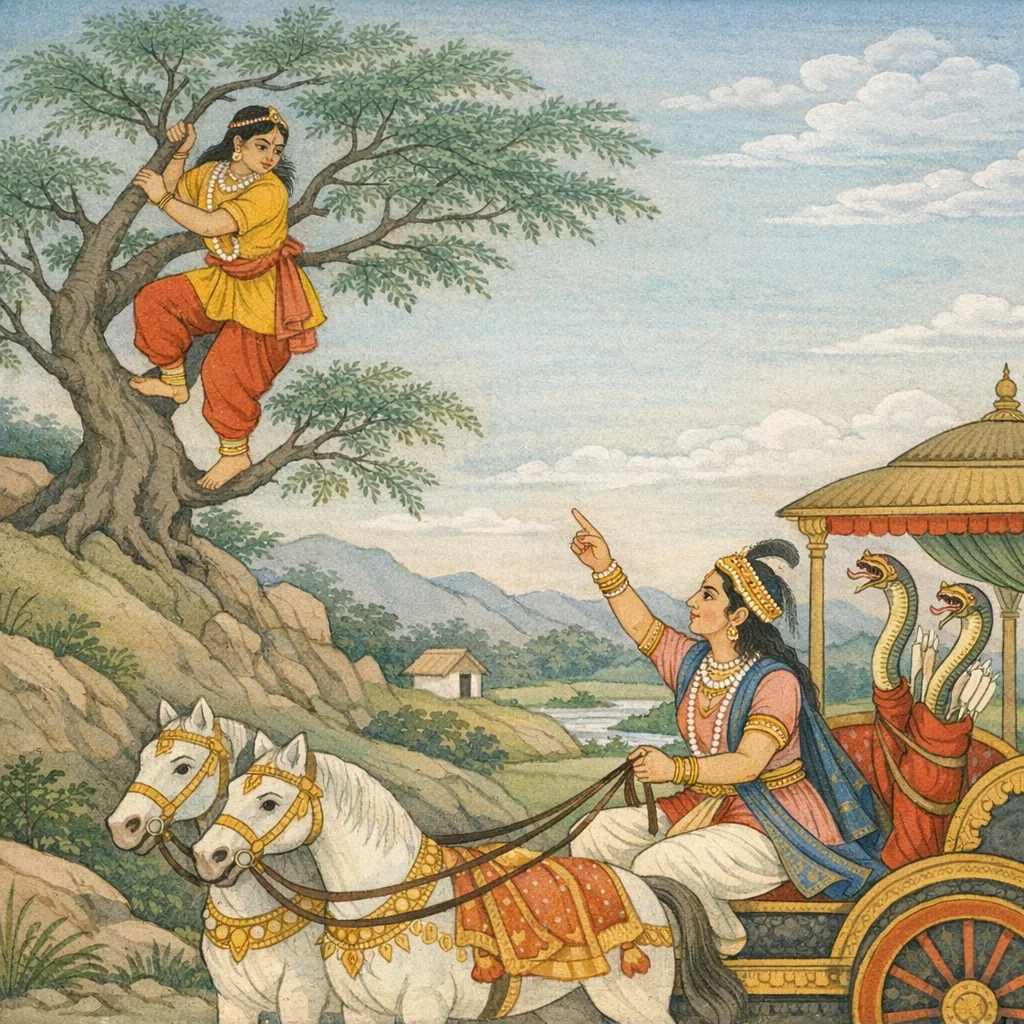
Adhyaya 41
उत्तरोपदेशः (Uttara’s Fear and Arjuna’s Martial Reassertion)
Upa-parva: Gograhaṇa (Kīcaka-vadha–uttarottara) Context: Uttara-Ratha Episode
Vaiśaṃpāyana describes Arjuna (Dhanaṃjaya) setting Uttara as charioteer and performing a pradakṣiṇā around the śamī tree, then taking up the stored weapons and removing a lion-emblem standard. Arjuna equips the chariot with a divinely fashioned configuration attributed to Viśvakarmā, including a distinctive banner, and mentally invokes the favor of Pāvaka (Agni), after which beings are said to animate the standard—an idiom for awe-producing, supra-normal battlefield presence. Fully armed with sword, armor, and Gāṇḍīva, Arjuna advances northward under the monkey-banner (kapidhvaja) and blows a powerful conch, producing fear and disorientation in Uttara, who collapses into the chariot in alarm. Arjuna steadies the horses, embraces and reassures Uttara, and admonishes him on kṣatriya composure amid martial sounds (conches, drums, elephants, formations). Uttara explains that he has never heard such a conch, seen such a banner, or heard such a bow’s roar; the sensory intensity overwhelms him. Arjuna instructs Uttara in charioteering discipline and again sounds the conch; the earth is described as trembling from the combined resonance of conch, chariot, and Gāṇḍīva. Droṇa, observing, infers this cannot be anyone but Savyasācin (Arjuna) and notes inauspicious battlefield signs among the opposing force—dimmed weapons, unsettled animals, adverse birds, and fear—concluding their morale is broken and urging formation readiness.
Chapter Arc: उत्तर, जो अभी-अभी रण-उत्साह में था, शमीवृक्ष पर छिपाए गए दिव्य धनुषों के निकट आते ही अपने क्षत्रिय-गौरव और ‘अशुचि’ स्पर्श के भय के बीच फँस जाता है—और बृहन्नला (अर्जुन) से प्रश्न करता है कि ऐसा निंदित कर्म उससे कैसे कराया जाए। → अर्जुन रथ पर स्थित रहकर उत्तर को आदेश देता है कि शीघ्र धनुष उतारो; पर उत्तर अपने कुल, राजधर्म और शुद्धता की दुहाई देता है—‘मैं क्षत्रिय, राजपुत्र, मन्त्र-यज्ञविद्; शव-स्पर्श जैसा अपवित्र स्पर्श कैसे करूँ?’ इसी बीच शमीवृक्ष पर लिपटे आवरण हटते हैं और धनुषों का भयानक, सर्प-सा जँभाई लेता रूप प्रकट होता है, जिससे उत्तर का भय और बढ़ता है। → धनुषों का विराट रूप देखकर उत्तर के शरीर में रोमांच उठता है, पर उसी क्षण भय उसे उद्विग्न कर देता है; वह विवश होकर रथ से कूदकर शमीवृक्ष पर चढ़ता है और आवरण हटाने/उतारने की प्रक्रिया में काँपता हुआ अर्जुन के निर्देशों का पालन करता है। → उत्तर आवरणों को शीघ्र हटाकर धनुषों को स्पर्श करता है—अपने ‘अशुचि’ भय के बावजूद—और अस्त्रों की वास्तविकता सामने आती है; अर्जुन का नियंत्रण, आदेश-शक्ति और उद्देश्य स्पष्ट हो जाता है कि अब युद्ध-कार्य के लिए शस्त्र प्राप्त हो चुके हैं। → धनुष हाथ में आते ही उत्तर की मनःस्थिति डगमगाती है—अब प्रश्न यह है कि क्या वह भय पर विजय पाकर अर्जुन के साथ कौरव-सेना का सामना कर पाएगा, या फिर अर्जुन को अपना रहस्य प्रकट कर स्वयं युद्ध का भार उठाना पड़ेगा?
Shlokas
Verse 1
इस प्रकार श्रीमह्याभारत विराटपर्वके अन्तर्गत योहरणपर्वमें उत्तरगोग्रहके प्रसंगर्ें अर्जुनके द्वार असत्रवर्णणविषयक चालीसवाँ अध्याय पूरा हुआ ॥/ ४० ॥। (दाक्षिणात्य अधिक पाठके १६ श्लोक मिलाकर कुल ९३ श्लोक हैं।) ््ड् #<(9) #2:..# #.5-१ एकचत्वारिशो< ध्याय: उत्तरका अर्जुनके आदेशके अनुसार शमीवृक्षसे पाण्डवोंके दिव्य धनुष आदि उतारना उत्तर उवाच अस्मिन् वक्षे किलोद्वद्धं नः श्रुतम् । तदहं राजपुत्र: सन् स्पृशेयं पाणिना कथम्,उत्तर बोला--मैंने तो सुन रखा था कि इस वृक्षमें कोई लाश बँधी है, ऐसी दशामें मैं राजकुमार होकर अपने हाथसे उसका स्पर्श कैसे कर सकता हूँ?
Uttara said: “I have heard that a corpse is fastened up in this tree. In such a situation, how could I—being a prince—touch it with my own hand?”
Verse 2
नैवंविधं मया मुक्तमालब्धुं क्षत्रयोनिना । महता राजपुत्रेण मन्त्रयज्ञविदा सता,एक तो मैं क्षत्रिय, दूसरे महान् राजकुमार तथा तीसरे मन्त्र और यज्ञोंका ज्ञाता एवं सत्पुरुष हूँ, अतः मुझे ऐसी अपवित्र वस्तुका स्पर्श करना उचित नहीं है
Uttara said: “It is not proper for me—born in the kṣatriya line—to touch such a thing that has been cast off. I am a great prince, and I also know the sacred mantras and the rites of sacrifice, a man of good conduct; therefore it does not befit me to come into contact with what is impure.”
Verse 3
स्पृष्टवन्तं शरीरं मां शववाहमिवाशुचिम् । कथं वा व्यवहार्य वै कुर्वीथास्त्वं बृहन्नले,बृहन्नले! यदि मैं शवका स्पर्श कर लूँ, तो मुर्दा ढोनेवालोंकी भाँति अपवित्र हो जाऊँगा; फिर तुम मुझे व्यवहारमें लाने योग्य युद्ध कैसे कर सकोगी?
Uttara said: “If I were to touch a corpse, I would become impure—like those who carry the dead. Then, O Bṛhannalā, how could you make me fit to be dealt with in society and fit for battle?”
Verse 4
बुह्न्नलोवाच व्यवहार्यश्न राजेन्द्र शुचिश्नैव भविष्यसि । धनूंष्येतानि मा भैस्त्वं शरीर नात्र विद्यते,बृहन्नलाने कहा--राजेन्द्र! तुम इन धनुषोंको छूकर भी व्यवहारमें लाने योग्य और पवित्र ही रहोगे। डरो मत, ये केवल धनुष हैं; इनमें कोई शव नहीं है
Bṛhannalā said: “O best of kings, even if you handle these bows and put them to use, you will remain fit for proper conduct and still be pure. Do not be afraid—these are only bows; there is no corpse here.”
Verse 5
दायादं मत्स्यराजस्य कुले जातं मनस्विनाम् । त्वां कथं निन्दितं कर्म कारयेयं नृपात्मज,राजकुमार! तुम मनस्वी पुरुषोंके उत्तम कुलमें उत्पन्न और मत्स्यनरेशके पुत्र हो। भला, मैं तुमसे कोई निन्दित कर्म कैसे करवा सकती हूँ
Uttarā said: “You are the heir of the king of Matsya, born in a noble lineage of high-minded men. O prince—how could I ever make you perform an act that is blameworthy?”
Verse 6
वैशम्पायन उवाच एवमुक्त: स पार्थेन रथात् प्रस्कन्द्य कुण्डली । आरुरोह शमीवृक्षं वैराटिरवशस्तदा,परिवेष्टनमेतेषां क्षिप्रं चैव व्यपानुद । वैशम्पायनजी कहते हैं--जनमेजय! अर्जुनके ऐसा कहनेपर कुण्डलधारी विराटपुत्र उत्तर विवश हो रथसे कूदकर शमीवृक्षपर चढ़ गया। तब रथपर बैठे हुए शत्रुनाशक पृथापूुत्र धनंजयने शासनके स्वरमें कहा--“इन धनुषोंको जल्दी वृक्षसे नीचे उतारो और इन सबका पत्रमय वेष्टन भी शीघ्र हटा दो”
Vaiśampāyana said: Thus addressed by Pārtha (Arjuna), the earring-wearing prince of Virāṭa, Uttara, helpless at that moment, leapt down from the chariot and climbed the śamī tree. Then Dhanañjaya, the son of Pṛthā, seated on the chariot and intent on the destruction of foes, spoke in a commanding tone: “Quickly bring down these bows from the tree, and swiftly remove their leaf-wrappings as well.”
Verse 7
तमन्वशासच्छत्रुघ्नो रथे तिष्तन् धनंजय: । अवरोपय वृक्षाग्राद धनूंष्येतानि मा चिरम्
Vaiśampāyana said: Standing upon the chariot, Dhanañjaya (Arjuna) instructed Chatru-ghna, “Quickly bring down these bows from the top of the tree—do not delay.”
Verse 8
सो<पह्त्य महाहाणि धनूंषि पृथुवक्षसाम् । परिवेष्टनपत्राणि विमुच्य समुपानयत्,तब उत्तरने विशाल वक्ष:स्थलवाले पाण्डवोंके बहुमूल्य धनुषोंको वृक्षके नीचे ले आकर उनपर जो पत्तोंके वेष्टन लगे थे, उन्हें खोलकर हटाया। फिर उन धनुषों तथा उनकी डोरियोंको सब ओरसे खोलकर अर्जुनके पास ले आया। उसमें अन्य चार धनुषोंके साथ रखे हुए गाण्डीव धनुषको उत्तरने देखा
Vaiśampāyana said: Having taken down the great bows belonging to the broad-chested heroes, Uttara removed the leaf-wrappings that covered them and brought them forth. Then, unfastening the bows and their strings on every side, he carried them to Arjuna. Among those, along with four other bows, Uttara recognized the famed Gāṇḍīva.
Verse 9
तथा संनहनान्येषां परिमुच्य समन्ततः । अपश्यद् गाण्डिवं तत्र चतुर्भिरपरै: सह,तब उत्तरने विशाल वक्ष:स्थलवाले पाण्डवोंके बहुमूल्य धनुषोंको वृक्षके नीचे ले आकर उनपर जो पत्तोंके वेष्टन लगे थे, उन्हें खोलकर हटाया। फिर उन धनुषों तथा उनकी डोरियोंको सब ओरसे खोलकर अर्जुनके पास ले आया। उसमें अन्य चार धनुषोंके साथ रखे हुए गाण्डीव धनुषको उत्तरने देखा
Vaiśampāyana said: Having loosened and removed, on every side, the wrappings and fastenings of those weapons, he then beheld there the Gāṇḍīva bow, lying together with four other bows.
Verse 10
तेषां विमुच्यमानानां धनुषामर्कवर्चसाम् | विनिश्वेरु: प्रभा दिव्या ग्रहाणामुदयेष्विव,वेष्टन खोलनेपर उन सूर्यके समान तेजस्वी धनुषोंकी प्रभा चारों ओर फैल गयी, जैसे उदय होनेपर ग्रहोंका दिव्य प्रकाश सब ओर छा जाता है
Vaiśampāyana said: As those sun-bright bows were being unfastened, a divine radiance spread all around—like the celestial glow of the planets when they rise.
Verse 11
स तेषां रूपमालोक्य भोगिनामिव जृम्भताम् | हृष्टरोमा भयोद्धिग्न: क्षणेन समपद्यत
Vaiśampāyana said: Seeing their appearance—like great serpents stretching and yawning—he was seized at once by fear; his hair stood on end, and in a moment he became overwhelmed.
Verse 12
संस्पृश्य तानि चापानि भानुमन्ति बृहन्ति च । वैराटिरर्जुनं राजन्निदं वचनमब्रवीत्
Vaiśampāyana said: Having touched those bows—Bhānumant and Bṛhant—Prince Uttara of Virāṭa then addressed Arjuna, O King, with these words.
Verse 41
जँभाई लेनेके लिये मुँह खोले हुए विशाल सर्पोंकी भाँति उन धनुषोंका रूप देखकर उत्तरके शरीरमें रोमांच हो आया और वह क्षणभरमें भयसे उद्विग्न हो गया। राजन! तदनन्तर उन प्रभापूर्ण विशाल धनुषोंका स्पर्श करके विराटपुत्र उत्तरने अर्जुनसे इस प्रकार कहा ।। इति श्रीमहाभारते विराटपर्वणि गोहरणपर्वणि उत्तरगोग्रहे अस्त्रावरोपणे एकचत्वारिंशो5 ध्याय:,इस प्रकार श्रीमहाभारत विराटपर्वके अन्तर्गत गोहरणपर्वमें उत्तरगोग्रहके अवसरपर वृक्षसे अस्रोंको उतारनेसे सम्बन्ध रखनेवाला इकतालीसवाँ अध्याय पूरा हुआ
Vaiśampāyana said: Seeing those great bows—like huge serpents with their mouths gaping to seize their prey—Uttara’s body broke into gooseflesh, and in a moment he became shaken with fear. O King, then, after touching those radiant, mighty bows, Virāṭa’s son Uttara spoke to Arjuna in the following manner. Thus ends the forty-first chapter of the Virāṭa Parva, in the Goharaṇa section, concerning the retrieval of Uttara’s cattle and the taking down of the weapons from the tree.
Verse 76
परिवेष्टनमेतेषां क्षिप्रं चैव व्यपानुद । वैशम्पायनजी कहते हैं--जनमेजय! अर्जुनके ऐसा कहनेपर कुण्डलधारी विराटपुत्र उत्तर विवश हो रथसे कूदकर शमीवृक्षपर चढ़ गया। तब रथपर बैठे हुए शत्रुनाशक पृथापूुत्र धनंजयने शासनके स्वरमें कहा--“इन धनुषोंको जल्दी वृक्षसे नीचे उतारो और इन सबका पत्रमय वेष्टन भी शीघ्र हटा दो”
Vaiśampāyana said: “Quickly remove the wrappings of these (bows) and at once strip away their coverings.” When Arjuna had spoken thus, Uttara, Virāṭa’s son, wearing earrings, was compelled to leap down from the chariot and climb the śamī tree. Then Dhanañjaya, Pṛthā’s son, destroyer of foes, seated on the chariot, said in a commanding voice: “Bring these bows down from the tree at once, and swiftly remove all their leaf-wrappings as well.”
Frequently Asked Questions
The dilemma is how a prince-in-training (Uttara) should uphold kṣatriya duty when confronted by overwhelming battlefield stimuli and fear—balancing natural human reaction with the ethical expectation of steadiness in defense of the realm.
Courage is treated as trained composure: fear is acknowledged, then regulated through instruction, role-clarity, and disciplined action—showing that dharma in conflict includes psychological governance, not merely physical prowess.
No explicit phalaśruti appears in these verses; the meta-function is narrative verification—senior observers (Droṇa) authenticate Arjuna’s presence via distinctive markers, reinforcing continuity of identity and inevitability of the ensuing public phase of the epic.