Adhyaya 86
दक्षिणदिशि तीर्थवर्णनम् (Southern Tīrthas: Godāvarī to Dvāravatī)
Upa-parva: Tīrtha-yātrā (Dakṣiṇāpatha Tīrtha-kathana) — Southern Sacred Geography
Dhaumya begins a structured account of sacred sites in the southern direction, presenting tīrtha-knowledge as an ordered itinerary. He identifies the Godāvarī region as auspicious and ascetic-frequented, then names additional rivers (Veṇṇā and Bhīmarathī) described as fear-and-sin-alleviating within landscapes rich in wildlife and hermit dwellings. He references the river associated with King Nṛga and notes that Mārkaṇḍeya recited an ancestral gāthā concerning Nṛga, including a remembered report that Indra was exhilarated by Soma and that dvijas were honored through dakṣiṇā during Nṛga’s sacrificial activity. The chapter continues with a catalog of forests, mountains, āśramas, and tīrthas: Māṭhara’s forest, a yūpa at Varuṇasrotas, Kaṇva’s āśrama, Śūrpāraka linked to Jamadagni, and named sites such as Aśoka-tīrtha, Bahulāśrama, Agastya-tīrtha, and Vāruṇa among the Pāṇḍyas. It introduces Kumārī and the river Tāmraparṇī, then highlights Gokarṇa—famed across the three worlds—describing a cool-water sacred lake difficult for the undisciplined to reach. It situates nearby ascetic residences (including Agastya’s disciple and Agastya himself) and a radiant Vaiḍūrya mountain. The scope then shifts to Saurāṣṭra, mentioning Camasonmajjana, the oceanic tīrtha Prabhāsa, Piṇḍāraka, and the Ujjayanta peak as swiftly siddhi-granting. A Nārada-attributed ancient verse is cited about ascetic merit at Ujjayanta. The chapter culminates in Dvāravatī, where Kṛṣṇa (Govinda, Madhusūdana, Puṇḍarīkākṣa) is presented in theological terms as ‘sanātana dharma’ and as the supreme purifier and auspicious principle, integrating pilgrimage geography with devotional-ethical doctrine.
Chapter Arc: काम्यकवन में अर्जुन के वन-प्रस्थान के बाद युधिष्ठिर का मन अस्थिर है; वे धौम्य से पूछते हैं कि अब किन पुण्य-तपोवन, आश्रम, सरोवर, नदियों और पर्वतों की ओर जाना उचित होगा। → युधिष्ठिर के भीतर दो धाराएँ टकराती हैं—एक ओर अर्जुन पर अटूट भरोसा (कि वह अस्त्र-प्राप्ति कर लौटेगा), दूसरी ओर उसके बिना वनवास का असह्यपन; वे कहते हैं कि अर्जुन के बिना काम्यकवन में रहना उन्हें रुचिकर नहीं। → युधिष्ठिर का निर्णायक आग्रह: ‘ब्रह्मन्, अर्जुन के बिना यहाँ रहना नहीं भाता—हमें अन्य दिशा में ले चलिए; उन आश्रमों-तीर्थों का पता बताइए जिनका श्रवण आपने अन्य ब्राह्मणों से किया है।’ → धौम्य/ऋषि-परंपरा के मार्गदर्शन में पाण्डवों के लिए तीर्थ-आश्रय और तपोवन-गमन की दिशा तय होने लगती है—वनवास अब केवल निर्वासन नहीं, एक नियोजित तीर्थ-यात्रा और आत्म-शोधन का पथ बनता है। → कौन-कौन से विशिष्ट आश्रम, सरिताएँ और पर्वत पाण्डवों के अगले चरण बनेंगे—और क्या यह यात्रा अर्जुन के पुनर्मिलन तक उन्हें धैर्य दे पाएगी?
Shlokas
Verse 1
/ हि आय न [हुक हि 7 आम षडशीतितमो<्ध्याय: युधिष्ठिरका धौम्य मुनिसे पुण्य तपोवन, आश्रम एवं नदी आदिके विषयमें पूछना वैशम्पायन उवाच भ्रातृणां मतमाज्ञाय नारदस्य च धीमत: । पितामहसमं धौम्यं प्राह राजा युधिष्ठिर:,वैशम्पायनजी कहते हैं-जनमेजय! अपने भाइयों तथा परम बुद्धिमान देवर्षि नारदकी सम्मति जानकर राजा युधिष्ठिरने पितामहके समान प्रभावशाली पुरोहित धौम्यजीसे कहा--
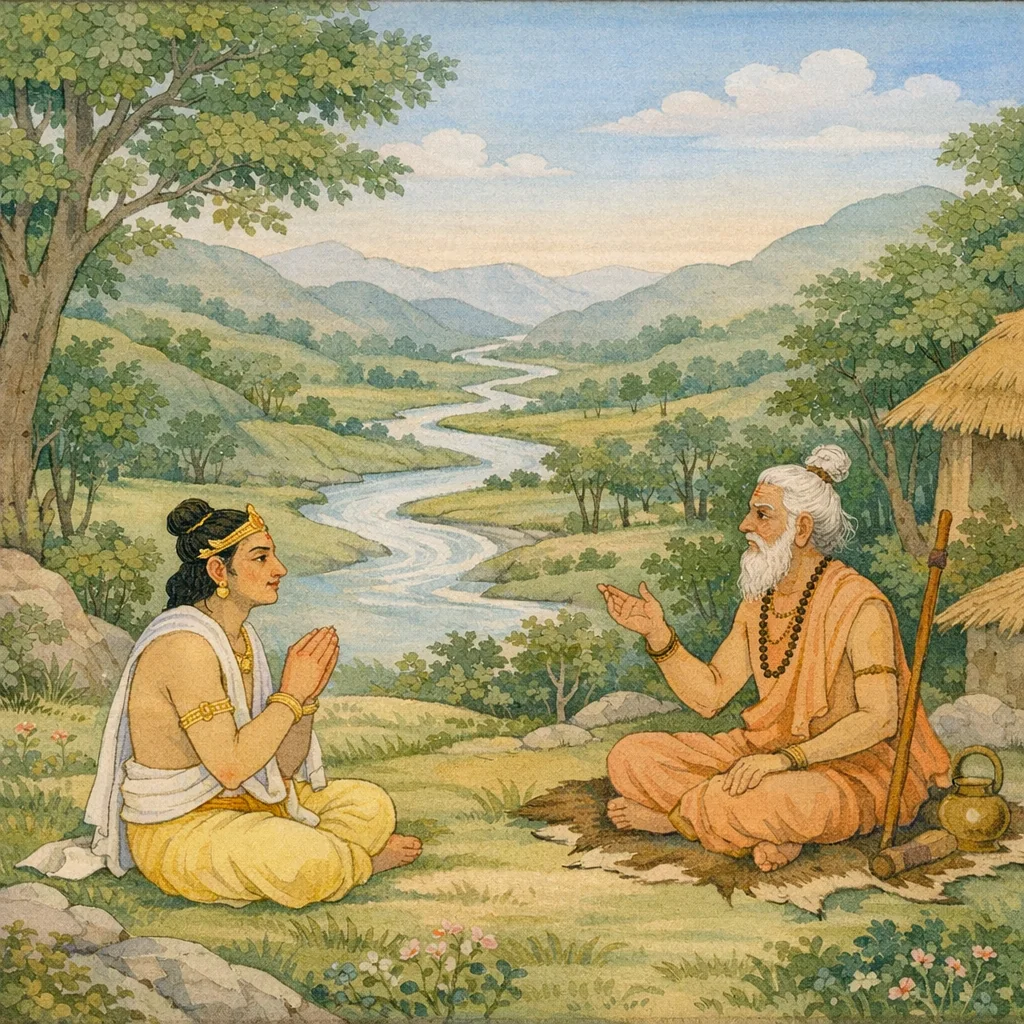
Vaiśampāyana said: Having learned the opinion of his brothers and of the wise divine seer Nārada, King Yudhiṣṭhira addressed Dhaumya—his priest, revered and influential like a grandsire—seeking guidance in the righteous course to follow.
Verse 2
मया स पुरुषव्याप्रो जिष्णु: सत्यपराक्रम: । अस्त्रहेतोर्महाबाहुरमितात्मा विवासित:,“ब्रह्मन! मैंने अस्त्रप्राप्तिके लिये विजयी सत्य-पराक्रमी, महामना एवं प्रतापी पुरुषसिंह महाबाहु अर्जुनको निर्वासित कर रखा है
Vaiśampāyana said: 'By me, that tiger among men—Jiṣṇu (Arjuna), whose prowess is true and unfailing—has been sent into exile. The mighty-armed, great-souled hero was banished for the sake of obtaining celestial weapons.'
Verse 3
स हि वीरोअ<नुरक्तश्न समर्थश्च॒ तपोधन: । कृती च भृशमप्यस्त्रे वासुदेव इव प्रभु:,“वह वीर मुझमें अनुराग रखनेवाला, सामर्थ्यशाली, तपस्याका धनी, पुण्यात्मा और अस्त्र-शस्त्रोंके ज्ञानमें भगवान् श्रीकृष्णकी भाँति प्रभावशाली है
Vaiśaṃpāyana said: “For he is a hero—deeply devoted, capable and effective, rich in ascetic merit, and accomplished in righteous conduct. He is exceedingly skilled in the science of weapons, and in his commanding presence he is like Vāsudeva (Kṛṣṇa) himself.”
Verse 4
अहं होतावुभौ ब्रह्मन् कृष्णावरिविघातिनौ । अभिजानामि विक्रान्तौ तथा व्यास: प्रतापवान्,“विप्रवर! मैं इन दोनों कृष्णनामधारी वीरोंको शत्रुओंका संहार करनेमें समर्थ और महापराक्रमी समझता हूँ। महाप्रतापी वेदव्यासजीकी भी यही धारणा है
Vaiśampāyana said: “O Brahmin, I recognize both of these heroes named Kṛṣṇa as capable of striking down their enemies. I know them to be men of great prowess; and the mighty Vyāsa holds the same conviction.”
Verse 5
त्रियुगौ पुण्डरीकाक्षौ वासुदेवधनंजयौ । नारदो5पि तथा वेद यो5प्यशंसत् सदा मम,“कमलके समान नेत्रोंवाले भगवान् श्रीकृष्ण और अर्जुन तीन युगोंसे सदा साथ रहते आये हैं। नारदजी भी इन दोनोंको इसी रूपमें जानते हैं; और सदा मुझसे इस बातकी चर्चा करते रहते हैं
Vaiśaṃpāyana said: “Lotus-eyed Vāsudeva (Kṛṣṇa) and Dhanañjaya (Arjuna) have remained together through three ages. Nārada too knows them in this very manner, and he repeatedly spoke to me in praise of this truth.”
Verse 6
तथाहमपि जानामि नरनारायणावृषी । शक्तो5यमित्यतो मत्वा मया स प्रेषितो$र्जुन:,“मैं भी ऐसा ही समझता हूँ कि श्रीकृष्ण और अर्जुन सुप्रसिद्ध नर-नारायण ऋषि हैं। अर्जुनको शक्तिशाली समझकर ही मैंने उसे दिव्यास्त्रोंकी प्राप्तिके लिये भेजा है। देवपुत्र अर्जुन इन्द्रसे कम नहीं हैं। यह जानकर ही मैंने उसे देवराज इन्द्रका दर्शन करने और उनसे दिव्यास्त्रोंको प्राप्त करनेके लिये भेजा है। भीष्म और द्रोण अतिरथी वीर हैं। कृपाचार्य तथा अश्वत्थामाको भी जीतना कठिन है। धृतराष्ट्रपुत्र दुर्योधनने इन सभी महारथियोंको युद्धके लिये वरण कर लिया है
Vaiśaṃpāyana said: “I too know it to be so—that Kṛṣṇa and Arjuna are the famed sages Nara and Nārāyaṇa. Judging Arjuna to be capable, I therefore sent him forth to obtain the divine weapons. This is spoken to affirm both Arjuna’s fitness and the righteousness of seeking celestial power for a just cause, even as formidable warriors stand aligned with Duryodhana.”
Verse 7
इन्द्रादनवर: शक्रं सुरसूनु: सुराधिपम् । द्रष्टमस्त्राणि चादातुमिन्द्रादिति विवासित:,“मैं भी ऐसा ही समझता हूँ कि श्रीकृष्ण और अर्जुन सुप्रसिद्ध नर-नारायण ऋषि हैं। अर्जुनको शक्तिशाली समझकर ही मैंने उसे दिव्यास्त्रोंकी प्राप्तिके लिये भेजा है। देवपुत्र अर्जुन इन्द्रसे कम नहीं हैं। यह जानकर ही मैंने उसे देवराज इन्द्रका दर्शन करने और उनसे दिव्यास्त्रोंको प्राप्त करनेके लिये भेजा है। भीष्म और द्रोण अतिरथी वीर हैं। कृपाचार्य तथा अश्वत्थामाको भी जीतना कठिन है। धृतराष्ट्रपुत्र दुर्योधनने इन सभी महारथियोंको युद्धके लिये वरण कर लिया है
Vaiśaṃpāyana said: “That son of the gods—unsurpassed even by Indra—was sent to meet Śakra, the lord of the celestials, in order to behold him and to obtain divine weapons from Indra.”
Verse 8
भीष्मद्रोणावतिरथौ कृपो द्रौणिश्न दुर्जय: । धृतराष्ट्रस्य पुत्रेण वृता युधि महारथा:,“मैं भी ऐसा ही समझता हूँ कि श्रीकृष्ण और अर्जुन सुप्रसिद्ध नर-नारायण ऋषि हैं। अर्जुनको शक्तिशाली समझकर ही मैंने उसे दिव्यास्त्रोंकी प्राप्तिके लिये भेजा है। देवपुत्र अर्जुन इन्द्रसे कम नहीं हैं। यह जानकर ही मैंने उसे देवराज इन्द्रका दर्शन करने और उनसे दिव्यास्त्रोंको प्राप्त करनेके लिये भेजा है। भीष्म और द्रोण अतिरथी वीर हैं। कृपाचार्य तथा अश्वत्थामाको भी जीतना कठिन है। धृतराष्ट्रपुत्र दुर्योधनने इन सभी महारथियोंको युद्धके लिये वरण कर लिया है
Vaiśaṃpāyana said: Bhīṣma and Droṇa are warriors of the highest chariot-rank; Kṛpa and Droṇa’s son (Aśvatthāmā) too are hard to overcome. Duryodhana, the son of Dhṛtarāṣṭra, has chosen these great champions to stand with him in battle—signaling both the scale of the coming conflict and the grave moral weight of aligning one’s strength with an unrighteous cause.
Verse 9
सर्वे वेदविद: शूरा: सर्वास्त्रविदुषस्तथा । योद्धुकामाश्च पार्थन सततं ये महाबला: । सच दिव्यास्त्रवित् कर्ण: सूतपुत्रो महारथ:,“वे सब-के-सब वेदज्ञ, शूरवीर, सम्पूर्ण अस्त्र-शस्त्रोंके ज्ञाता, महाबली और सदा अर्जुनके साथ युद्धकी अभिलाषा रखनेवाले हैं। वह सूतपुत्र महारथी कर्ण भी दिव्यास्त्रोंका ज्ञाता है
Vaiśampāyana said: “All of them are knowers of the Vedas, heroic in valor, and likewise skilled in every weapon. They are mighty men who continually long to fight with Pārtha (Arjuna). And Karṇa too—the charioteer’s son, a great chariot-warrior—is a knower of divine missiles.”
Verse 10
योअस्त्रवेगानिलबल: शरार्चिस्तलनि:स्वन: । रजोधूमो<स्त्रसम्पातो धार्तराष्ट्रिनिलोद्धत:,“कालने उसे प्रलयकालीन संवर्तक नामक महान् अग्निके समान उत्पन्न किया है। अस्त्रोंका वेग ही उसका वायुतुल्य बल है। बाण ही उसकी ज्वाला हैं। हथेलीसे होनेवाली आवाज ही उस दाहक अग्निका शब्द है। युद्धमें उठनेवाली धूल ही उस कर्णरूपी अग्निका धूम है। अस्त्रोंकी वर्षा ही उसकी लपटोंका लगना है। धृतराष्ट्र-पुत्ररूपी वायुका सहारा पाकर वह और भी उद्धत एवं प्रज्वलित हो उठा है। इसमें संदेह नहीं कि वह मेरी सेनाको सूखे तिनकोंकी राशिके समान भस्म कर डालेगा
Vaiśaṃpāyana said: “He is like a great, world-ending fire kindled at the time of dissolution. The force of flying weapons is his wind-like power; arrows are his flames; the sharp claps and impacts are the crackling sound of that burning fire. The dust raised in battle is his smoke; the shower of missiles is the licking of his tongues of flame. Fanned by the wind that is the sons of Dhṛtarāṣṭra, he has grown still more fierce and blazing. Without doubt, he will reduce my army to ashes like heaps of dry straw.”
Verse 11
निसृष्ट इव कालेन युगान्ते ज्वलनो महान् | मम सैन्यमयं कक्ष प्रधक्ष्यति न संशय:,“कालने उसे प्रलयकालीन संवर्तक नामक महान् अग्निके समान उत्पन्न किया है। अस्त्रोंका वेग ही उसका वायुतुल्य बल है। बाण ही उसकी ज्वाला हैं। हथेलीसे होनेवाली आवाज ही उस दाहक अग्निका शब्द है। युद्धमें उठनेवाली धूल ही उस कर्णरूपी अग्निका धूम है। अस्त्रोंकी वर्षा ही उसकी लपटोंका लगना है। धृतराष्ट्र-पुत्ररूपी वायुका सहारा पाकर वह और भी उद्धत एवं प्रज्वलित हो उठा है। इसमें संदेह नहीं कि वह मेरी सेनाको सूखे तिनकोंकी राशिके समान भस्म कर डालेगा
Vaiśaṃpāyana said: “As if unleashed by Time itself, like the great fire that blazes at the end of an age, he will surely burn up the thicket that is my army—there is no doubt.”
Verse 12
त॑ं स कृष्णानिलोद्धूतो दिव्यास्त्रज्वलनो महान् । श्वेतवाजिबलाकाभृद् गाण्डीवेन्द्रायुधोल्बण:,“उस आगको युद्धमें अर्जुन नामक महामेघ ही बुझा सकेगा। श्रीकृष्णरूपी वायुका सहारा पाकर ही वह मेघ उठेगा। दिव्यास्त्रोंका प्रकाश ही उसमें बिजलीकी चमक होगी। रथके श्वेत घोड़े ही उसके निकट उड़नेवाली बकपंक्तियोंकी भाँति सुशोभित होंगे। गाण्डीव धनुष ही इन्द्रधनुषके समान दुःसह दृश्य उपस्थित करनेवाला होगा। वह क्रोधमें भरकर बाणरूपी जलकी धारासे कर्णरूपी प्रज्वलित अग्निको निश्चय ही शान्त कर देगा। शत्रुओंकी राजधानीपर विजय पानेवाला अर्जुन साक्षात् इन्द्रसे सारे दिव्यास्त्र प्राप्त करेगा
Vaiśaṃpāyana said: Stirred onward by the wind that is Kṛṣṇa, that great cloud—its lightning the blaze of divine missiles—appeared, adorned with lines of white horses like flights of cranes, and made terrible by the Gāṇḍīva bow, like Indra’s own weapon. The image proclaims that Arjuna’s power in war is not mere personal prowess: it rises through righteous alliance and divine support, and is directed toward quelling destructive fire with disciplined force.
Verse 13
संरब्ध: शरधाराभि: सुदीप्तं कर्णपावकम् । अर्जुनोदीरितो मेघ: शमयिष्यति संयुगे,“उस आगको युद्धमें अर्जुन नामक महामेघ ही बुझा सकेगा। श्रीकृष्णरूपी वायुका सहारा पाकर ही वह मेघ उठेगा। दिव्यास्त्रोंका प्रकाश ही उसमें बिजलीकी चमक होगी। रथके श्वेत घोड़े ही उसके निकट उड़नेवाली बकपंक्तियोंकी भाँति सुशोभित होंगे। गाण्डीव धनुष ही इन्द्रधनुषके समान दुःसह दृश्य उपस्थित करनेवाला होगा। वह क्रोधमें भरकर बाणरूपी जलकी धारासे कर्णरूपी प्रज्वलित अग्निको निश्चय ही शान्त कर देगा। शत्रुओंकी राजधानीपर विजय पानेवाला अर्जुन साक्षात् इन्द्रसे सारे दिव्यास्त्र प्राप्त करेगा
Vaiśaṃpāyana said: “That blazing fire—Karna, fiercely kindled and fed by torrents of arrows—will be quenched in battle by the cloud that is Arjuna, once he is stirred to rise. In the coming combat, Arjuna’s downpour of shafts will surely subdue Karna’s conflagration.”
Verse 14
स साक्षादेव सर्वाणि शक्रात् परपुरंजय: । दिव्यान्यस्त्राणि बीभत्सुस्ततश्च प्रतिपत्स्यते,“उस आगको युद्धमें अर्जुन नामक महामेघ ही बुझा सकेगा। श्रीकृष्णरूपी वायुका सहारा पाकर ही वह मेघ उठेगा। दिव्यास्त्रोंका प्रकाश ही उसमें बिजलीकी चमक होगी। रथके श्वेत घोड़े ही उसके निकट उड़नेवाली बकपंक्तियोंकी भाँति सुशोभित होंगे। गाण्डीव धनुष ही इन्द्रधनुषके समान दुःसह दृश्य उपस्थित करनेवाला होगा। वह क्रोधमें भरकर बाणरूपी जलकी धारासे कर्णरूपी प्रज्वलित अग्निको निश्चय ही शान्त कर देगा। शत्रुओंकी राजधानीपर विजय पानेवाला अर्जुन साक्षात् इन्द्रसे सारे दिव्यास्त्र प्राप्त करेगा
Vaiśaṃpāyana said: “Then Bībhatsu—Arjuna, the conqueror of enemy strongholds—will receive directly from Śakra (Indra) all the celestial weapons. The statement underscores that extraordinary power in war is not merely seized by force, but is granted through divine sanction to one deemed fit, aligning martial success with rightful purpose and disciplined worthiness.”
Verse 15
अलं स तेषां सर्वेषामिति मे धीयते मति: । नास्ति त्वतिकृतार्थानां रणे5रीणां प्रतिक्रिया
Vaiśampāyana said: “Enough—so my judgment concludes—of all their efforts. For in battle there is no effective countermeasure against foes who have already overreached and committed excess.”
Verse 16
“धृतराष्ट्र-पक्षके उक्त सभी महारथियोंको जीतनेके लिये वह अकेला ही पर्याप्त होगा; ऐसा मेरा दृढ़ विश्वास है। अन्यथा अत्यन्त कृतार्थताका अनुभव करनेवाले शत्रुओंको दबानेका और कोई उपाय नहीं है ।। ते वयं पाण्डवं सर्वे गृहीतास्त्रमरिंदमम् । द्रष्टारो न हि बीभत्सुर्भारमुद्यम्य सीदति,“अतः हम शत्रुहन्ता पाण्डुनन्दन अर्जुनको अवश्य ही सब दिव्यास्त्रोंका ज्ञान प्राप्त करके आया हुआ देखेंगे; क्योंकि वह वीर किसी कार्य-भारको उठाकर उसे पूर्ण किये बिना कभी श्रान्त नहीं होता
I am firmly convinced that he alone will be sufficient to defeat all those great chariot-warriors spoken of on Dhṛtarāṣṭra’s side. Otherwise, there is no other means to subdue enemies who would grow utterly self-satisfied. Therefore, all of us shall indeed see the Pāṇḍava—Arjuna, the foe-subduer—return having mastered the divine weapons; for Bībhatsu never sinks down after taking up a burden of duty, but carries it through to completion.
Verse 17
वयं तु तमृते वीरं वने5स्मिन् द्विपदां वर । अवधानं न गच्छाम: काम्यके सह कृष्णया,“नरश्रेष्ठ] इस काम्यकवनमें वीर अर्जुनके बिना द्रौपदीसहित हम सब पाण्डवोंका मन बिलकुल नहीं लग रहा है
Vaiśampāyana said: “But without that hero, in this forest—O best among men—we, the Pāṇḍavas, together with Kṛṣṇā (Draupadī), cannot steady our minds or find any settled composure here in Kāmyaka. In Arjuna’s absence, even the refuge of the forest gives us no peace.”
Verse 18
भवानन्यद् वन॑ साधु बद्धन्नं फलवच्छुचि । आखूयातु रमणीयं च सेवितं पुण्यकर्मभि:,“इसलिये आप हमें किसी ऐसे रमणीय वनका पता बतायें जो बहुत अच्छा, पवित्र, प्रचुर अन्न और फलसे सम्पन्न तथा पुण्यात्मा पुरुषोंद्वारा सेवित हो
Vaiśampāyana said: “Therefore, please point out to us another forest—truly good and pure—rich in stored provisions and abundant in fruits, delightful to dwell in, and frequented by men of meritorious conduct.”
Verse 19
यत्र कंचिद् वयं कालं वसनन््तः सत्यविक्रमम् । प्रतीक्षामोर<्ड्जुनं वीरं वृष्टिकामा इवाम्बुदम्,“यहाँ हमलोग कुछ काल रहकर सत्यपराक्रमी वीर अर्जुनके आगमनकी उसी प्रकार प्रतीक्षा करें, जैसे वृष्टिकी इच्छा रखनेवाले किसान बादलोंकी राह देखते हैं
Vaiśampāyana said: “Let us stay here for some time and wait for the truly valorous hero Arjuna—just as those who long for rain keep watch for the clouds.”
Verse 20
विविधानाश्रमान् कांश्रिद् द्विजातिभ्य: प्रतिश्रुतान् । सरांसि सरितश्नैव रमणीयांश्व॒ पर्वतान्
Vaiśampāyana said: He pointed out various hermitages—some of them promised or assigned for the twice-born—along with lakes and rivers, and also delightful mountains. The narration emphasizes the careful honoring of commitments to the learned and the reverent mapping of sacred, life-sustaining landscapes.
Verse 21
आचक्ष्व न हि मे ब्रह्मन् रोचते तमृते$र्जुनम् वने5स्मिन् काम्यके वासो गच्छामो<न््यां दिशं प्रति
Vaiśampāyana said: “Tell me, O Brahmin; for I do not approve of staying in this Kāmyaka forest without Arjuna. Let us go toward another direction.”
Verse 85
इस प्रकार श्रीमह्ाभारत वनपवके अन्तर्गत तीर्थयात्रापर्वमें महार्षि पुलस्त्यकी तीर्थयात्राके सम्बन्धरें नारदवाक्यविषयक पचासीवाँ अध्याय पूरा हुआ
Thus, in the Śrī Mahābhārata, within the Vana Parva, in the Tīrthayātrā Parva, the eighty-fifth chapter—concerning Nārada’s discourse in connection with the sage Pulastya’s account of pilgrimage—comes to an end.
Verse 86
“ब्रह्म! आप दूसरे ब्राह्मणोंसे सुने हुए नाना प्रकारके कतिपय आश्रमों, सरोवरों, सरिताओं तथा रमणीय पर्वतोंका पता बताइये। अर्जुनके बिना अब काम्यकवनमें रहना हमें अच्छा नहीं लगता; इसलिये अब दूसरी दिशाको चलेंगे” ।। इति श्रीमहाभारते वनपर्वणि तीर्थयात्रापर्वणि धौम्यतीर्थयात्रायां षडशीतितमो<ध्याय:
“O Brahmin! Tell us of the various hermitages, lakes, rivers, and delightful mountains you have heard about from other Brahmins. Without Arjuna, we no longer find it pleasing to remain in the Kāmyaka forest; therefore we shall now set out in another direction.”
Frequently Asked Questions
Rather than a single dramatic choice, the chapter frames an ethical problem of method: how an exiled ruler should pursue restoration without abandoning dharma—by seeking purification, counsel, and merit through disciplined pilgrimage instead of reactive conduct.
Sacred geography is presented as ethical pedagogy: contact with tīrthas, sages, and exemplary traditions supports self-control, generosity (dakṣiṇā), and clarity of purpose; devotion is integrated by identifying Kṛṣṇa with sanātana dharma and supreme auspiciousness.
A formal phalaśruti is not stated; however, implicit meta-commentary appears in claims that certain rivers remove fear/sin, that Ujjayanta is ‘siddhi-kara,’ and that access to Gokarṇa’s lake is difficult for the undisciplined—functioning as embedded statements of spiritual efficacy.