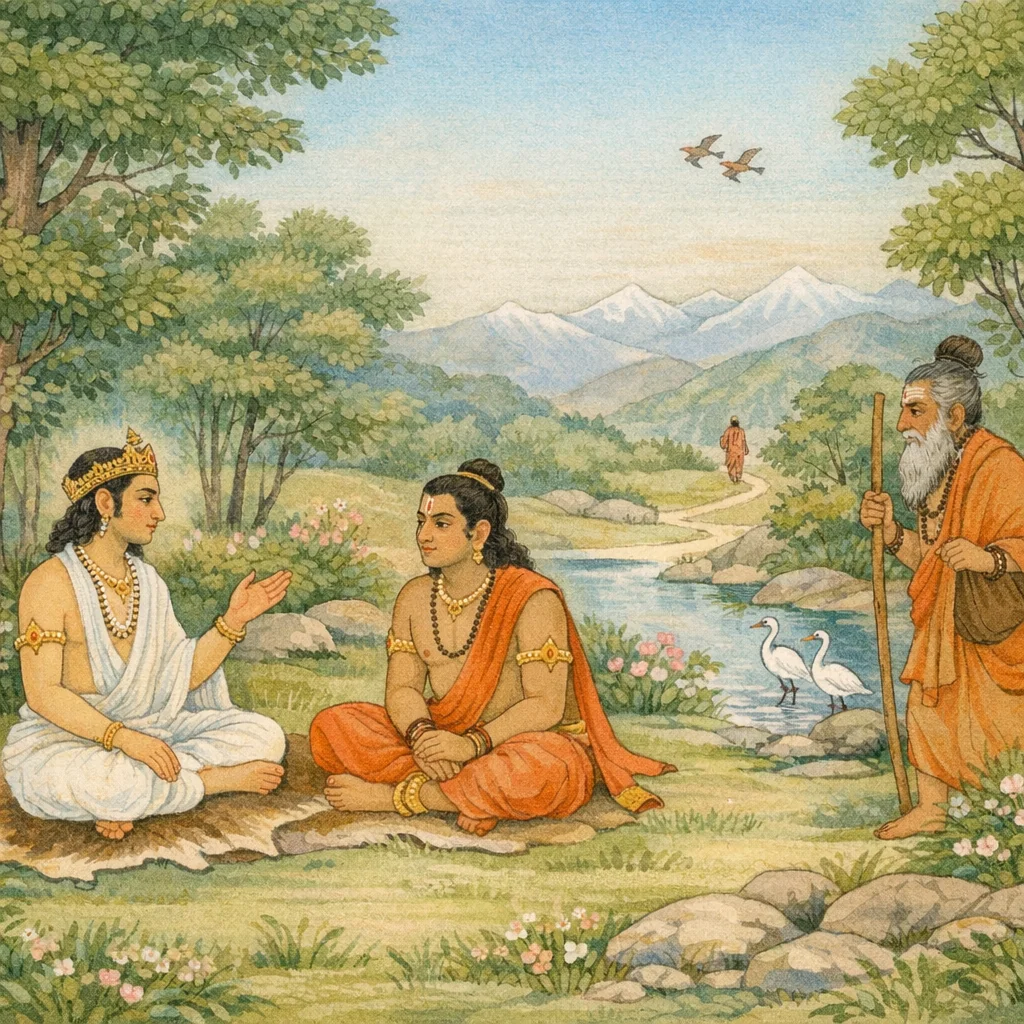
Adhyaya 36
Bhīmasena’s Discourse on Kāla, Resolve, and the Feasibility of Ajñātavāsa (भीमसेनस्य कालोपदेशः)
Upa-parva: Ajñātavāsa–Saṃkalpa and Kṣātra-Nīti Discourse (Bhīma’s Counsel to Yudhiṣṭhira)
Bhīma speaks to Yudhiṣṭhira, framing time (kāla) as an unbounded, immeasurable current that ‘carries all away’ and steadily reduces life even in a single instant. He argues that waiting itself is costly: the thirteen years of exile are not neutral duration but active depletion leading toward mortality. From this premise he advances a kṣātra-ethical critique of inaction—one who does not settle enmities or act decisively sinks into ruin. Bhīma then intensifies the practical argument: given the brothers’ renown and distinctive presence (including Draupadī), concealed living is structurally difficult, like hiding a mountain or the sun. He warns that adversaries and their allies may deploy covert agents to identify them, producing significant danger. The chapter concludes by urging a firm decision toward enemy-neutralization, asserting that for a kṣatriya, strategic engagement is a principal duty when legitimate order is forcibly disrupted.
Chapter Arc: काम्यकवन की शान्ति में भीमसेन का क्रोध धधक उठता है—वह दुर्योधन पर बलपूर्वक चढ़ाई कर अपमान का प्रतिशोध लेना चाहता है, और युधिष्ठिर को निर्णायक उत्तर देना पड़ता है। → युधिष्ठिर राजधर्म और समय-धर्म का स्मरण कराते हुए भीम को बताते हैं कि धर्म की गति ‘सुदुर्विदा’ है; अकेले बल के मद में उठाया गया युद्ध न केवल असम्भव है, बल्कि विनाशकारी भी—क्योंकि दुर्योधन को मारने से पहले उसके सहायक महावीरों को रण में जीतना पड़ेगा। → युधिष्ठिर भीम के ‘केवलचापल्य’ और ‘बलदर्प’ से उपजे आग्रह को रोकते हुए स्पष्ट करते हैं कि अभी प्रतिज्ञा-पूर्ति का मार्ग अर्जुन के दिव्यास्त्र-लाभ से होकर जाता है; उसी हेतु अर्जुन को इन्द्र और रुद्र की ओर (दिव्यास्त्र-प्राप्ति के लिए) अग्रसर होना चाहिए। → इसी क्रम में व्यास का आगमन होता है; वे युधिष्ठिर को ‘प्रतिस्मृतिविद्या’ प्रदान कर स्मृति, धैर्य और धर्मबुद्धि को स्थिर करते हैं। तत्पश्चात पाण्डव पुनः काम्यकवन में लौटकर मंत्रियों-सेवकों सहित निवास करते हैं, धनुर्वेद का अभ्यास करते हैं, वेदमंत्र सुनते हैं और यथाविधि पितृ-देव- विप्रों के लिए निर्वपन करते हैं। → अर्जुन के दिव्यास्त्र-यात्रा का अगला चरण—इन्द्र-रुद्र से साक्षात्कार और अस्त्र-लाभ—निकट भविष्य में निर्णायक बनकर सामने आता है।
Shlokas
Verse 1
हि >> लय ० () है 7 षट्त्रिशो5ध्याय: युधिष्ठिरका भीमसेनको समझाना, व्यासजीका आगमन और युधिष्ठिरको प्रतिस्मृतिविद्याप्रदान तथा पाण्डवोंका पुन: काम्यकवनगमन वैशम्पायन उवाच भीमसेनवच: श्रुत्वा कुन्तीपुत्रो युधिष्ठिर: । निः:श्वस्य पुरुषव्याघ्र: सम्प्रदध्यौ परंतप:,वैशम्पायनजी कहते हैं-जनमेजय! भीमसेन-की बात सुनकर शत्रुओंको संताप देनेवाले पुरुषसिंह कुन्तीपुत्र युधिष्ठिर लम्बी साँस लेकर मन-ही-मन विचार करने लगे --'मैंने राजाओंके धर्म एवं वर्णोके सुनिश्चित सिद्धान्त भी सुने हैं, परंतु जो भविष्य और वर्तमान दोनोंपर दृष्टि रखता है, वही यथार्थदर्शी है
Vaiśampāyana said: Hearing Bhīmasena’s words, Yudhiṣṭhira—the son of Kuntī, a tiger among men and a scorcher of foes—drew a deep breath and began to reflect inwardly. It was a moral pause: before action or reply, the king weighed what is right amid present pressures and future consequences.
Verse 2
श्रुता मे राजधर्माश्न वर्णानां च विनिश्चया: । आयत्यां च तदात्वे च यः पश्यति स पश्यति,वैशम्पायनजी कहते हैं-जनमेजय! भीमसेन-की बात सुनकर शत्रुओंको संताप देनेवाले पुरुषसिंह कुन्तीपुत्र युधिष्ठिर लम्बी साँस लेकर मन-ही-मन विचार करने लगे --'मैंने राजाओंके धर्म एवं वर्णोके सुनिश्चित सिद्धान्त भी सुने हैं, परंतु जो भविष्य और वर्तमान दोनोंपर दृष्टि रखता है, वही यथार्थदर्शी है
Vaiśampāyana said: “I have heard the duties of kings and the settled determinations regarding the social orders. Yet only that person truly sees who keeps his gaze on both what is to come and what is at hand—on the future as well as the present.”
Verse 3
धर्मस्य जानमानो<हं गतिमग्रयां सुदुर्विदाम् । कथं बलात् करिष्यामि मेरोरिव विमर्दनम्,“धर्मकी श्रेष्ठ गति अत्यन्त दुर्बोध है, उसे जानता हुआ भी मैं कैसे बलपूर्वक मेरु पर्वतके समान महान् उस धर्मका मर्दन करूँगा”
“Though I understand that Dharma’s highest course is exceedingly hard to fathom, how could I, by sheer force, attempt to crush or override that Dharma—like trying to grind down Mount Meru itself?”
Verse 4
स मुहूर्तमिव ध्यात्वा विनिश्चित्येतिकृत्यताम् । भीमसेनमिदं वाक्यमपदान्तरमब्रवीत्,इस प्रकार दो घड़ीतक विचार करनेके पश्चात् अपनेको क्या करना है, इसका निश्चय करके युधिष्ठिरने भीमसेनसे अविलम्ब यह बात कही
After reflecting for what seemed like a brief while and firmly deciding what needed to be done, Yudhiṣṭhira at once addressed Bhīmasena with these words—without any delay or digression.
Verse 5
युधिछिर उवाच एवमेतन्महाबाहो यथा वदसि भारत । इदमन्यत् समादत्स्व वाच्यं मे वाक्यकोविद,युधिष्ठिर बोले--महाबाहु भरतकुलतिलक वाक्यविशारद भीम! तुम जैसा कह रहे हो, वह ठीक है, तथापि मेरी यह दूसरी बात भी मानो
Yudhiṣṭhira said: “So it is, mighty-armed one, just as you say, O scion of Bharata’s line. Yet accept this other point of mine as well, O skilled in speech—this is what I must say.”
Verse 6
महापापानि कर्माणि यानि केवलसाहसात् । आरभ्यन्ते भीमसेन व्यथन्ते तानि भारत,भरतनन्दन भीमसेन! जो महान् पापमय कर्म केवल साहसके भरोसे आरम्भ किये जाते हैं, वे सभी कष्टदायक होते हैं
Yudhiṣṭhira said: “O Bhīmasena, deeds that are gravely sinful, undertaken merely on the strength of reckless daring, inevitably bring anguish. O scion of Bharata, such ventures—begun without due reflection on dharma and consequence—turn into sources of suffering.”
Verse 7
सुमन्त्रिते सुविक्रान्ते सुकृते सुविचारिते । सिध्यन्त्यर्था महाबाहो दैवं चात्र प्रदक्षिणम्,महाबाहो! अच्छी तरहसे सलाह और विचार करके पूरा पराक्रम प्रकट करते हुए सुन्दररूपसे जो कार्य किये जाते हैं, वे सफल होते हैं और उसमें दैव भी अनुकूल हो जाता है
Yudhiṣṭhira said: “O mighty-armed one, when an undertaking is well-counselled, boldly executed, properly carried out, and carefully deliberated, its aims come to fruition; and in such a case even fate turns favorable.”
Verse 8
यत् तु केवलचापल्याद् बलदर्पोत्थित: स्वयम् । आरब्धव्यमिदं कार्य मन्यसे शृणु तत्र मे,तुम स्वयं बलके घमण्डसे उन्मत्त हो जो केवल चपलतावश स्वयं इस युद्धरूपी कार्यको अभी आरम्भ करनेके योग्य मान रहे हो, उसके विषयमें मेरी बात सुनो
But if, out of mere fickleness—your mind stirred up by pride in strength—you yourself think that this task, this war, ought to be begun at once, then listen to what I have to say about it.
Verse 9
भूरिश्रवा: शलश्वैव जलसंधश्च वीर्यवान् | भीष्मो द्रोणश्व कर्णश्न द्रोणपुत्रश्न वीर्यवान्,भूरिश्रवा, शल, पराक्रमी जलसंध, भीष्म, द्रोण, कर्ण, बलवान् अश्व॒त्थामा तथा सदाके आततायी दुर्योधन आदि दुर्धर्ष धृतराष्ट्रपत्न--ये सभी अस्त्र-विद्याके ज्ञाता हैं एवं हमने जिन राजाओं तथा भूमिपालोंको युद्धमें कष्ट पहुँचाया है, वे सभी कौरवपक्षमें मिल गये हैं और उधर ही उनका स्नेह हो गया है
Yudhiṣṭhira said: “Bhūriśravas, Śala, and the valiant Jalasaṃdha; Bhīṣma, Droṇa, Karṇa, and Droṇa’s son Aśvatthāmā—these formidable men are masters of weapons and warfare. Moreover, those kings and rulers whom we have previously afflicted in battle have now joined the Kaurava side; their affection has turned toward Duryodhana and his party, making that camp even harder to overcome.”
Verse 10
धार्तराष्ट्रा दुराधर्षा दुर्योधनपुरोगमा: । सर्व एव कृतास्त्राश्न सततं चाततायिन:,भूरिश्रवा, शल, पराक्रमी जलसंध, भीष्म, द्रोण, कर्ण, बलवान् अश्व॒त्थामा तथा सदाके आततायी दुर्योधन आदि दुर्धर्ष धृतराष्ट्रपत्न--ये सभी अस्त्र-विद्याके ज्ञाता हैं एवं हमने जिन राजाओं तथा भूमिपालोंको युद्धमें कष्ट पहुँचाया है, वे सभी कौरवपक्षमें मिल गये हैं और उधर ही उनका स्नेह हो गया है
Yudhiṣṭhira said: “The sons of Dhṛtarāṣṭra, led by Duryodhana, are hard to assail. All of them are trained in weapons and are ever bent on aggression. Bhūriśravas, Śala, the valiant Jalaṃdha, Bhīṣma, Droṇa, Karṇa, and the mighty Aśvatthāmā—together with Duryodhana and others—are constant assailants and formidable. Moreover, the kings and rulers whom we have previously troubled in war have now joined the Kaurava side; their affection has turned toward them.”
Verse 11
राजान: पार्थिवाश्वैव येडस्माभिरुपतापिता: । संश्रिता: कौरवं पक्ष जातस्नेहाश्न तं प्रति,भूरिश्रवा, शल, पराक्रमी जलसंध, भीष्म, द्रोण, कर्ण, बलवान् अश्व॒त्थामा तथा सदाके आततायी दुर्योधन आदि दुर्धर्ष धृतराष्ट्रपत्न--ये सभी अस्त्र-विद्याके ज्ञाता हैं एवं हमने जिन राजाओं तथा भूमिपालोंको युद्धमें कष्ट पहुँचाया है, वे सभी कौरवपक्षमें मिल गये हैं और उधर ही उनका स्नेह हो गया है
Yudhiṣṭhira said: “Those kings and rulers whom we have previously afflicted and harassed have now taken refuge on the Kauravas’ side, their affection turning toward them. Along with them stand formidable warriors—Bhūriśravas, Śala, the valiant Jalasandha, Bhīṣma, Droṇa, Karṇa, and the mighty Aśvatthāmā—and ever also the hard-to-overcome Duryodhana and other aggressors, together with Dhṛtarāṣṭra’s sons. All of these are masters of weapon-lore. Indeed, the very kings and earth-protectors whom we caused suffering in war have all joined the Kaurava faction, and their loyalty has settled there.”
Verse 12
दुर्योधनहिते युक्ता न तथास्मासु भारत । पूर्णकोशा बलोपेता: प्रयतिष्यन्ति संगरे,भारत! वे दुर्योधनके हितमें ही संलग्न होंगे; हमलोगोंके प्रति उनका वैसा सद्धाव नहीं हो सकता। उनका खजाना भरा-पूरा है और वे सैनिक-शक्तिसे भी सम्पन्न हैं, अतः वे युद्ध छिड़नेपर हमारे विरुद्ध ही प्रयत्न करेंगे
Yudhiṣṭhira said: “O Bhārata, they are committed to Duryodhana’s advantage, not to us with the same goodwill. Their treasury is full and they are backed by military strength; therefore, when battle is joined, they will exert themselves against us.”
Verse 13
सर्वे कौरवसैन्यस्य सपुत्रामात्यसैनिका: । संविभक्ता हि मात्राभिभोगिरपि च सर्वश:,मन्त्रियों और पुत्रोंके सहित कौरवसेनाके सभी सैनिकोंको दुर्योधनकी ओरसे पूरे वेतन और सब प्रकारकी उपभोग-सामग्रीका वितरण किया गया है
Yudhiṣṭhira said: “All the soldiers of the Kaurava host—together with the king’s sons and ministers—have been duly provided for. From Duryodhana’s side, their full pay and every kind of provision and enjoyment have been distributed in proper measure.”
Verse 14
दुर्योधनेन ते वीरा मानिताश्व विशेषतः । प्राणांस्त्यक्ष्यन्ति संग्रामे इति मे निश्चिता मति:ः,इतना ही नहीं, दुर्योधनने उन वीरोंका विशेष आदर-सत्कार भी किया है। अतः मेरा यह विश्वास है कि वे उसके लिये संग्राममें (हँसते-हँसते) प्राण दे देंगे
Yudhiṣṭhira said: “Those heroes have been especially honored and treated with distinction by Duryodhana. Therefore I am firmly convinced that, for his sake, they will abandon their very lives in battle.”
Verse 15
समा यद्यपि भीष्मस्य वृत्तिरस्मासु तेषु च द्रोणस्प च महाबाहो कृपस्य च महात्मन:,महाबाहो! यद्यपि पितामह भीष्म, आचार्य द्रोण तथा महामना कृपाचार्यका आन्तरिक स्नेह धृतराष्ट्रके पुत्रों तथा हमलोगोंपर एक-सा ही है, तथापि वे राजा दुर्योधनका दिया हुआ अन्न खाते हैं, अतः उसका ऋण अवश्य चुकायेंगे, ऐसा मुझे प्रतीत होता है। युद्ध छिड़नेपर वे भी दुर्योधनके पक्षसे ही लड़कर अपने दुस्त्यज प्राणोंका भी परित्याग कर देंगे
Yudhiṣṭhira said: “Though Bhīṣma’s conduct is impartial toward both us and them—and likewise that of Droṇa, O mighty-armed one, and the great-souled Kṛpa—still they live on the food given by King Duryodhana. Therefore, it seems to me that they will surely repay that debt. When war breaks out, they will fight from Duryodhana’s side and, clinging to that obligation, will even abandon their hard-to-give-up lives.”
Verse 16
अवश्यं राजपिण्डस्तैन्विंश्य इति मे मति: । तस्मात् त्यक्ष्यन्ति संग्रामे प्राणानपि सुदुस्त्यजान्,महाबाहो! यद्यपि पितामह भीष्म, आचार्य द्रोण तथा महामना कृपाचार्यका आन्तरिक स्नेह धृतराष्ट्रके पुत्रों तथा हमलोगोंपर एक-सा ही है, तथापि वे राजा दुर्योधनका दिया हुआ अन्न खाते हैं, अतः उसका ऋण अवश्य चुकायेंगे, ऐसा मुझे प्रतीत होता है। युद्ध छिड़नेपर वे भी दुर्योधनके पक्षसे ही लड़कर अपने दुस्त्यज प्राणोंका भी परित्याग कर देंगे
Yudhiṣṭhira said: “It seems certain to me that those who live on the king’s bounty must repay it. Therefore, when battle breaks out, they will cast away even their hard-to-surrender lives, O mighty-armed one. For although grandsire Bhīṣma, teacher Droṇa, and the noble Kṛpa bear the same inner affection toward Dhṛtarāṣṭra’s sons as toward us, still they eat the food given by King Duryodhana; hence they will surely feel bound to discharge that debt. When war begins, they too will fight on Duryodhana’s side and, if need be, give up their very lives.”
Verse 17
सर्वे दिव्यास्त्रविद्वांस: सर्वे धर्मपरायणा: । अजेयाश्रैति मे बुद्धिरपि देवैः सवासवै:,वे सब-के-सब दिव्यास्त्रोंके ज्ञाता और धर्मपरायण हैं। मेरी बुद्धिमें तो यहाँतक आता है कि इन्द्र आदि सम्पूर्ण देवता भी उन्हें परास्त नहीं कर सकते
Yudhiṣṭhira said: “All of them are masters of celestial weapons, and all are steadfastly devoted to dharma. My understanding goes so far as to conclude that they are unconquerable—even by the gods, Indra included.”
Verse 18
अमर्षी नित्यसंरब्धस्तत्र कर्णो महारथ: । सर्वस्त्रिविदनाधृष्यो हाुभेद्यकवचावृत:,उस पक्षमें महारथी कर्ण भी है, जो हमारे प्रति सदा अमर्ष और क्रोधसे भरा रहता है। वह सब अस्त्रोंका ज्ञाता, अजेय तथा अभेद्य कवचसे सुरक्षित है
Yudhiṣṭhira said: “On that side too stands Karṇa, a great chariot-warrior—ever resentful and constantly inflamed with anger toward us. He is a knower of every weapon, unassailable in battle, and protected by an impenetrable coat of mail.”
Verse 19
अनिर्जित्य रणे सवनितान् पुरुषसत्तमान् । अशक्यो हासहायेन हन्तुं दुर्योधनस्त्वया,इन समस्त वीर पुरुषोंको युद्धमें परास्त किये बिना तुम अकेले दुर्योधनको नहीं मार सकते
Yudhiṣṭhira said: “Without first defeating in battle those foremost of men along with their forces, it is not possible for you—standing alone and without allies—to slay Duryodhana. A single act of vengeance cannot be separated from the larger field of duty, strategy, and the realities of war.”
Verse 20
न निद्रामधिगच्छामि चिन्तयानो वृकोदर । अतिसर्वान् धनुग्राहान् सूतपुत्रस्य लाघवम्,वृकोदर! सूतपुत्र कर्णके हाथोंकी फुर्ती समस्त धनुर्धरोंसे बढ़-चढ़कर है। उसका स्मरण करके मुझे अच्छी तरह नींद नहीं आती है
Yudhiṣṭhira said: “O Vṛkodara, I cannot attain sleep, for my mind keeps turning over the swift skill of the Sūta’s son. His quickness surpasses that of all who wield the bow; remembering Karṇa’s agility, rest does not come to me.”
Verse 21
वैशम्पायन उवाच एतद् वचनमाज्ञाय भीमसेनो>त्यमर्षण: । बभूव विमनास्त्रस्तो न चैवोवाच किंचन,वैशम्पायनजी कहते हैं--जनमेजय! युधिष्ठदिरका यह वचन सुनकर अत्यन्त क्रोधी भीमसेन उदास और शंकायुक्त हो गये। फिर उनके मुँहसे कोई बात नहीं निकली
Vaiśampāyana said: Having understood those words, Bhīmasena—fierce in his intolerance of insult—became downcast and inwardly shaken with apprehension; and he did not speak anything at all.
Verse 22
तयो: संवदतोरेव॑ तदा पाण्डवर्योर्द्वयो: । आजगाम महायोगी व्यास: सत्यवतीसुत:,दोनों पाण्डवोंमें इस प्रकार बातचीत हो ही रही थी कि महायोगी सत्यवतीनन्दन व्यास वहाँ आ पहुँचे
While the two foremost of the Pāṇḍavas were still engaged in conversation, the great yogin Vyāsa—son of Satyavatī—arrived there.
Verse 23
सो$5भिगम्य यथान्यायं पाण्डवै: प्रतिपूजित: । युधिष्ठटिरमिदं वाक्यमुवाच वदतां वर:,पाण्डवोंने उठकर उनकी अगवानी की और यथायोग्य पूजन किया। तत्पश्चात् वक्ताओंमें श्रेष्ठ व्यासजी युधिष्ठिरसे इस प्रकार बोले--
Approaching them in the proper manner, he was duly received and honored by the Pāṇḍavas. Then Vyāsa—foremost among speakers—addressed Yudhiṣṭhira with these words:
Verse 24
व्यास उवाच युधिष्ठिर महाबाहो वेझि ते हृदयस्थितम् । मनीषया ततः क्षिप्रमागतो5स्मि नरर्षभ,व्यासजीने कहा--नरश्रेष्ठ महाबाहु युधिष्छिर! मैं ध्यानके द्वारा तुम्हारे मनका भाव जान चुका हूँ। इसलिये शीघ्रतापूर्वक यहाँ आया हूँ
Vyāsa said: “O Yudhiṣṭhira, mighty-armed one, I know what is settled in your heart. Perceiving it through my insight, I have therefore come here swiftly, O bull among men.”
Verse 25
भीष्माद् द्रोणात् कृपात् कर्णाद द्रोणपुत्राच्च भारत । दुर्योधनान्नपसुतात् तथा दुःशासनादपि,शत्रुहन्ता भारत! भीष्म, द्रोण, कृपाचार्य, कर्ण, अश्वत्थामा, धृतराष्ट्रपुत्र दुर्योधन और दुःशासनसे भी जो तुम्हारे मनमें भय समा गया है, उसे मैं शास्त्रीय उपायसे नष्ट कर दूँगा
Vyāsa said: “O Bhārata, the fear that has entered your mind—of Bhīṣma, Droṇa, Kṛpa, Karṇa, Droṇa’s son (Aśvatthāmā), and also of Dhṛtarāṣṭra’s son Duryodhana and of Duḥśāsana—I shall remove by means sanctioned by the śāstras.”
Verse 26
यत् ते भयममित्रघ्न हृदि सम्परिवर्तते । तत् ते5हं नाशयिष्यामि विधिदृष्टेन कर्मणा,शत्रुहन्ता भारत! भीष्म, द्रोण, कृपाचार्य, कर्ण, अश्वत्थामा, धृतराष्ट्रपुत्र दुर्योधन और दुःशासनसे भी जो तुम्हारे मनमें भय समा गया है, उसे मैं शास्त्रीय उपायसे नष्ट कर दूँगा
Vyāsa said: “O slayer of foes, whatever fear is churning within your heart, I shall dispel it for you by an action sanctioned by sacred rule.”
Verse 27
तच्छुत्वा धृतिमास्थाय कर्मणा प्रतिपादय । प्रतिपाद्य तु राजेन्द्र ततः क्षिप्रं ज्वरं जहि,राजेन्द्र! उस उपायको सुनकर धैर्यपूर्वक प्रयत्नद्वारा उसका अनुष्ठान करो। उसका अनुष्ठान करके शीघ्र ही अपनी मानसिक चिन्ताका परित्याग कर दो
Hearing that counsel, O best of kings, steady yourself with fortitude and carry it out through deliberate action. And once you have duly performed it, quickly cast off your feverish anxiety—let the mind be freed from torment after right effort is made.
Verse 28
तत एकान्तमुन्नीय पाराशर्यों युधिष्ठिरम् । अब्रवीदुपपन्नार्थमिदं वाक्यविशारद:,तदनन्तर प्रवचनकुशल पराशरनन्दन व्यासजी युधिष्ठिरको एकान्तमें ले गये और उनसे यह युक्तियुक्त वचन बोले--
Then Pārāśarya (Vyāsa), leading Yudhiṣṭhira aside into privacy, addressed him with words that were well-reasoned and apt—spoken with the skill of one fully versed in discourse.
Verse 29
श्रेयसस्ते पर: काल: प्राप्तो भरतसत्तम । येनाभिभविता शत्रून् रणे पार्थो धनुर्धर:,“भरतश्रेष्ठ! तुम्हारे कल्याणका सर्वश्रेष्ठ समय आया है, जिससे धनुर्धर अर्जुन युद्धमें शत्रुओंको पराजित कर देंगे
Vyāsa said: “O best of the Bharatas, the supreme moment for your welfare has arrived—by which the bow-bearing Pārtha (Arjuna) will overcome the enemies in battle.”
Verse 30
गृहाणेमां मया प्रोक्तां सिद्धि मूर्तिमतीमिव । विद्यां प्रतिस्मृतिं नाम प्रपन्नाय ब्रवीमि ते,“मेरी दी हुई इस प्रतिस्मृति नामक विद्याको ग्रहण करो, जो मूर्तिमती सिद्धिके समान है। तुम मेरे शरणागत हो, इसलिये मैं तुम्हें इस विद्याका उपदेश करता हूँ
Vyāsa said: “Receive this knowledge that I have taught—called Pratismṛti—like a tangible, embodied attainment itself. Since you have come to me for refuge, I impart this teaching to you.”
Verse 31
यामवाप्य महाबाहुरर्जुन: साधयिष्यति । अस्त्रहेतोरममहिन्द्रं च रुद्रे चैवाभिगच्छतु,“जिसे तुमसे पाकर महाबाहु अर्जुन अपना सब कार्य सिद्ध करेंगे। पाण्डुनन्दन! ये अर्जुन दिव्यास्त्रोंकी प्राप्तिके लिये देवराज इन्द्र, रुद्र, वरुण, कुबेर तथा धर्मराजके पास जायँँ। ये अपनी तपस्या और पराक्रमसे देवताओंको प्रत्यक्ष देखनेमें समर्थ होंगे
Vyāsa said: “Having obtained that, the mighty-armed Arjuna will accomplish all his aims. For the sake of acquiring divine weapons, let him go to my great lord Indra, and also to Rudra. Through his austerity and valor he will be capable of beholding the gods directly.”
Verse 32
वरुणं च कुबेरं च धर्मराजं च पाण्डव । शक्तो होष सुरान् द्रष्टं तपसा विक्रमेण च,“जिसे तुमसे पाकर महाबाहु अर्जुन अपना सब कार्य सिद्ध करेंगे। पाण्डुनन्दन! ये अर्जुन दिव्यास्त्रोंकी प्राप्तिके लिये देवराज इन्द्र, रुद्र, वरुण, कुबेर तथा धर्मराजके पास जायँँ। ये अपनी तपस्या और पराक्रमसे देवताओंको प्रत्यक्ष देखनेमें समर्थ होंगे
Vyāsa said: “O Pāṇḍava, you will be able to behold the gods—Varuṇa, Kubera, and Dharmarāja—by the power of your austerities and by your valor. Thus, through disciplined effort joined with heroic resolve, Arjuna will obtain the divine weapons by approaching the great deities, and thereby accomplish his purposes.”
Verse 33
ऋषिरेष महातेजा नारायणसहायवान् । पुराण: शाश्वतो देवस्त्वजेयो जिष्णुरच्युत:,“भगवान् नारायण जिनके सखा हैं, वे पुरातन महर्षि महातेजस्वी नर ही अर्जुन हैं। सनातन देव, अजेय, विजयशील तथा अपनी मर्यादासे कभी च्युत न होनेवाले हैं। महाबाहु अर्जुन इन्द्र, रुद्र तथा अन्य लोकपालोंसे दिव्यास्त्र प्राप्त करके महान् कार्य करेंगे
Vyāsa said: “This great-splendoured sage has Nārāyaṇa as his ally. He is ancient and everlasting, a divine being—unconquerable, ever-victorious, and never falling away from his rightful path. With mighty arms, Arjuna will obtain celestial weapons from Indra, Rudra, and the other guardians of the worlds, and will accomplish a great purpose.”
Verse 34
अस्त्राणीन्द्राच्च रुद्राच्च लोकपालेभ्य एव च | समादाय महाबाहुर्महत् कर्म करिष्यति,“भगवान् नारायण जिनके सखा हैं, वे पुरातन महर्षि महातेजस्वी नर ही अर्जुन हैं। सनातन देव, अजेय, विजयशील तथा अपनी मर्यादासे कभी च्युत न होनेवाले हैं। महाबाहु अर्जुन इन्द्र, रुद्र तथा अन्य लोकपालोंसे दिव्यास्त्र प्राप्त करके महान् कार्य करेंगे
Vyāsa said: “That mighty-armed hero will obtain divine weapons from Indra, from Rudra, and from the other guardians of the worlds, and then accomplish a great undertaking. For Arjuna is none other than the ancient seer Nara—radiant with ascetic power—whose companion is Bhagavān Nārāyaṇa. Everlasting, unconquerable, steadfast in victory, and never falling away from his own righteous bounds, Arjuna will receive these celestial missiles and perform a momentous deed.”
Verse 35
वनादस्माच्च कौन्तेय वनमन्यद् विचिन्त्यताम् । निवासार्थाय यत् युक्त भवेद् व: पृथिवीपते,“कुन्तीकुमार! पृथिवीपते! अब तुम अपने निवासके लिये इस वनसे किसी दूसरे वनमें, जो तुम्हारे लिये उपयोगी हो, जानेकी बात सोचो
Vyāsa said: “O son of Kuntī, O lord of the earth, now consider leaving this forest and seeking another forest fit for your dwelling. Choose a place that truly serves your needs, so that life in exile may go forward in safety, restraint, and steadfastness.”
Verse 36
एकत्र चिरवासो हि न प्रीतिजननो भवेत् । तापसानां च सर्वेषां भवेदुद्वेशकारक:,“एक ही स्थानपर अधिक दिनोंतक रहना प्राय: रुचिकर नहीं होता। इसके सिवा, यहाँ तुम्हारा चिरनिवास समस्त तपस्वी महात्माओंके लिये तपमें विघ्न पड़नेके कारण उद्वेगकारक होगा इति श्रीमहाभारते वनपर्वणि अर्जुनाभिगमनपर्वणि काम्यकवनगमने षट्त्रिंशो5ध्याय:
Vyāsa said: “To remain for a long time in a single place is seldom a source of lasting delight. Moreover, your prolonged stay here would become a cause of disturbance to all the ascetics, for it may hinder their austerities.”
Verse 37
मृगाणामुपयोगश्व वीरुदौषधिसंक्षय: । बिभर्षि च बहून् विप्रान् वेदवेदाड्गपारगान्,'यहाँके हिंसक पशुओंके उपयोग--मारनेका काम हो चुका है तथा तुम बहुत-से वेद- वेदांगोंके पारगामी विद्वान् ब्राह्गोंका भरण-पोषण करते हो (और हवन करते हो), इसलिये यहाँ लता-गुल्म और ओषधियोंका क्षय हो गया है”
Vyāsa said: “Because the use of wild animals here has been exhausted (they have been hunted and employed for needs), and because you maintain many learned Brahmins who have mastered the Vedas and the Vedāṅgas (and perform sacrificial rites), the creepers, shrubs, and medicinal plants in this region have been depleted.”
Verse 38
वैशम्पायन उवाच एवमुकक््त्वा प्रपन्नाय शुचये भगवान् प्रभु: । प्रोवाच लोकतत्त्वज्ञो योगी विद्यामनुत्तमाम्,वैशम्पायनजी कहते हैं--जनमेजय! ऐसा कहकर लोकतत्त्वके ज्ञाता एवं शक्तिशाली योगी परम बुद्धिमान् सत्यवतीनन्दन भगवान् व्यासजीने अपनी शरणमें आये हुए पवित्र धर्मराज युधिष्ठिरको उस अत्युत्तम विद्याका उपदेश किया और कुन्तीकुमारकी अनुमति लेकर फिर वहीं अन्तर्धान हो गये
Vaiśampāyana said: Having spoken thus, the blessed and mighty lord—Veda-knowing Vyāsa, the yogin who understands the true principles of the world—then instructed the pure Yudhiṣṭhira, who had taken refuge in him, in that unsurpassed knowledge. (In the surrounding narrative, after granting this teaching and with the consent of Kuntī’s son, he disappears again.)
Verse 39
धर्मराजाय धीमान् स व्यास: सत्यवतीसुतः । अनुज्ञाय च कौन्तेयं तत्रैवान्तरधीयत,वैशम्पायनजी कहते हैं--जनमेजय! ऐसा कहकर लोकतत्त्वके ज्ञाता एवं शक्तिशाली योगी परम बुद्धिमान् सत्यवतीनन्दन भगवान् व्यासजीने अपनी शरणमें आये हुए पवित्र धर्मराज युधिष्ठिरको उस अत्युत्तम विद्याका उपदेश किया और कुन्तीकुमारकी अनुमति लेकर फिर वहीं अन्तर्धान हो गये
Vaiśampāyana said: The wise Vyāsa, son of Satyavatī, having instructed Dharma-rāja Yudhiṣṭhira, and after taking leave with the consent of the son of Kuntī, vanished from that very spot. The scene underscores the reverence due to spiritual instruction: teaching received with humility, and the teacher departing without attachment.
Verse 40
युधिष्ठिरस्तु धर्मात्मा तद् ब्रह्म मनसा यत: । धारयामास मेधावी काले काले सदाभ्यसन्,धर्मात्मा मेधावी संयतचित्त युधिष्ठिरने उस वेदोक्त मन्त्रको ममससे धारण किया और समय-समयपर सदा उसका अभ्यास करने लगे
Vaiśampāyana said: Yudhiṣṭhira, steadfast in dharma, having restrained and directed his mind, held that sacred Vedic formula within himself. Wise and self-controlled, he kept practicing it again and again at the proper times, making disciplined repetition a part of his ethical life.
Verse 41
स व्यासवाक्यमुदितो वनाद् द्वैतवनात् ततः । ययौ सरस्वतीकूले काम्यक॑ं नाम काननम्,तदनन्तर वे व्यासजीकी आज्ञासे प्रसन्नतापूर्वक द्वैतववनसे काम्यकवनमें चले गये, जो सरस्वतीके तटपर सुशोभित है
Pleased by Vyāsa’s words, he then departed from the Dvaitavana forest and went to the woodland called Kāmyaka, which lies along the banks of the Sarasvatī. The passage underscores how respectful acceptance of a sage’s counsel leads to orderly, dharma-aligned action rather than impulsive wandering.
Verse 42
तमन्वयुर्महाराज शिक्षाक्षरविशारदा: । ब्राह्मणास्तपसा युक्ता देवेन्द्रमूषणो यथा,महाराज! जैसे महर्षिगण देवराज इन्द्रका अनुसरण करते हैं, वैसे ही वेदादि शास्त्रोंकी शिक्षा तथा अक्षर ब्रह्मतत्त्वके ज्ञानमें निपुण बहुत-से तपस्वी ब्राह्मण राजा युधिष्ठिरके साथ उस वनमें गये
Vaiśampāyana said: “O great king, many Brahmins—disciplined in austerity and highly skilled in Vedic instruction and the science of syllables/letters—followed along, just as the sages once followed Devendra (Indra). In the same way, those ascetics accompanied King Yudhiṣṭhira into that forest.”
Verse 43
ततः काम्यकमासाद्य पुनस्ते भरतर्षभ । न्यविशन्त महात्मान: सामात्या: सपरिच्छदा:,भरतश्रेष्ठ) वहाँसे काम्यकवनमें आकर मन्त्रियों और सेवकोंसहित वे महात्मा पाण्डव पुनः वहीं बस गये
Then, O bull among the Bharatas, having reached the Kāmyaka forest once again, those great-souled men settled there anew—together with their ministers and attendants, and with all their necessary belongings.
Verse 44
तत्र ते न्यवसन् राजन् किंचित् कालं मनस्विनः । धनुर्वेदपरा वीरा: शृण्वन्तो वेदमुत्तमम्,राजन! वहाँ धनुर्वेदके अभ्यासमें तत्पर हो उत्तम वेदमन्त्रोंका उद्घोष सुनते हुए उन मनस्वी पाण्डवोंने कुछ कालतक निवास किया
Vaiśampāyana said: “There, O King, those high-minded heroes stayed for some time—devoted to the discipline of archery, and listening to the solemn recitation of the supreme Vedic hymns.”
Verse 45
चरन्तो मृगयां नित्यं शुद्धैर्बाणै्मगार्थिन: । पितृदैवतविप्रेभ्यो निर्वपन्तो यथाविधि,वे प्रतेदिन हिंसक पशुओंको मारनेके लिये शुद्ध (शास्त्रानुकूल) बाणोंद्वारा शिकार खेलते थे एवं शास्त्रकी विधिके अनुसार नित्य पितरों तथा देवताओंको अपना-अपना भाग देते थे अर्थात् नित्य श्राद्ध और नित्य होम करते थे
Vaiśampāyana said: Ever engaged in the hunt, seeking game, they pursued it each day with pure—scripturally sanctioned—arrows. And, in accordance with the prescribed rites, they regularly made due offerings to the Fathers, the gods, and the Brahmins—thus maintaining daily śrāddha and daily homa even while living a life that involved violence toward animals.
Frequently Asked Questions
The dilemma is whether restraint and delay remain ethical when they enable ongoing injustice—Bhīma frames prolonged passivity as complicity with loss of rightful order and as a failure of kṣatriya responsibility.
Time is not merely a backdrop but an active force that diminishes life and options; therefore, ethical action must be timely, reality-based (pratyakṣa), and proportionate to persistent threats.
No explicit phalaśruti is presented here; the chapter functions as pragmatic-ethical counsel within the exile narrative, emphasizing interpretive themes (kāla, duty, risk) rather than promising ritual or recitational benefits.