Adhyaya 308
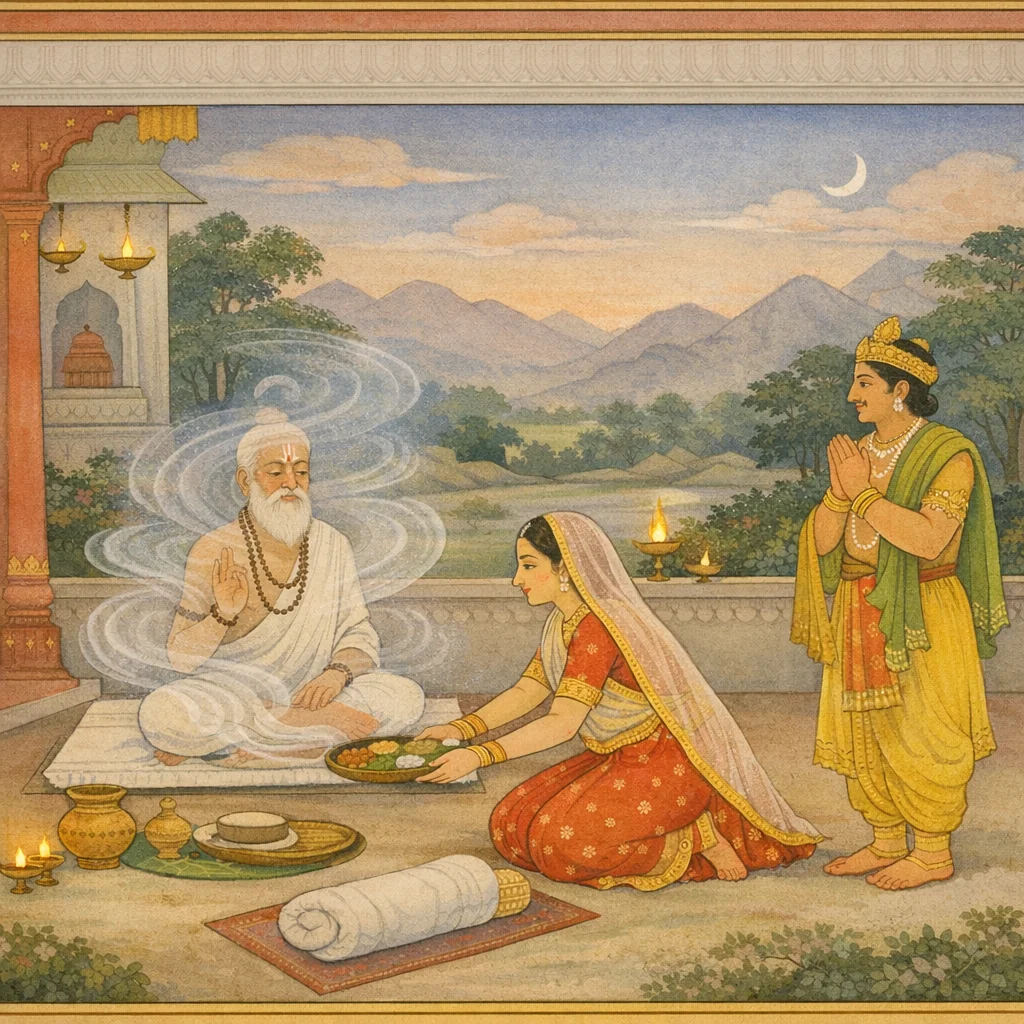
Chapter Arc: वैशम्पायन जनमेजय को बताते हैं कि कैसे किशोरी पृथाः (कुन्ती) के आश्रम-जीवन में एक तपस्वी ब्राह्मण का आगमन हुआ—जो कभी प्रातः, कभी सायं, कभी रात्रि में अतिथि बनकर आता और सेवा की परीक्षा लेता। → ब्राह्मण के अनियमित आगमन के बावजूद कुन्ती हर समय भक्ष्य-भोज्य, शय्या-आसन और सत्कार में दिन-प्रतिदिन वृद्धि करती जाती है; उधर कुन्तिभोज प्रातः-सायं पूछते रहते हैं—क्या ब्राह्मण सेवा से संतुष्ट है?—क्योंकि अतिथि-सेवा में तनिक भी त्रुटि कुल-धर्म पर कलंक बन सकती है। → एक वर्ष पूर्ण होने पर, जप-तप में श्रेष्ठ वह द्विज कुन्ती के सौहृद और निर्दोष आचरण से प्रसन्न होकर उसे अथर्वशिरस्-श्रुत ‘मन्त्रग्राम’ का उपदेश देता है—सेवा का प्रतिफल अब वरदान बनकर उतरता है। → मन्त्र-प्राप्ति के क्षण में ब्राह्मण अंतर्हित हो जाता है; यह अद्भुत दृश्य देखकर राजा विस्मय से भर उठते हैं और पृथाः का विशेष सम्मान करते हैं—कुन्ती की सेवा-साधना सिद्ध मानी जाती है। → मन्त्र हाथ में आते ही भविष्य का द्वार खुलता है—यह दिव्य विद्या कुन्ती के जीवन और वंश-भाग्य को किस प्रकार मोड़ेगी?
Shlokas
Verse 1
अपना स२ (0 अवज असल पञ्चाधिकत्रिशततमोब< ध्याय: कुन्तीकी सेवासे संतुष्ट होकर तपस्वी ब्राह्मणका उसको मन्त्रका उपदेश देना वैशम्पायन उवाच सा तु कन्या महाराज ब्राह्मुणं संशितव्रतम् । तोषयामास शुद्धेन मनसा संशितव्रता,वैशम्पायनजी कहते हैं--महाराज! इस प्रकार वह कन्या पृथा कठोर व्रतका पालन करती हुई शुद्ध हृदयसे उन उत्तम व्रतधारी ब्राह्मणको अपनी सेवाओंद्वारा संतुष्ट रखने लगी
Vaiśampāyana said: O King, that maiden Pṛthā (Kuntī), herself steadfast in disciplined vows, pleased the brāhmaṇa of firm observances with a pure heart through her service.
Verse 2
प्रातरेष्याम्यथेत्युक्त्वा कदाचिद् द्विजसत्तम: | तत आयाति राजेन्द्र सायं रात्रावथो पुन:,राजेन्द्र! वे श्रेष्ठ ब्राह्मण कभी यह कहकर कि “मैं प्रातःकाल लौट आऊँगा” चल देते और सायंकाल अथवा बहुत रात बीतनेपर पुनः: वापस आते थे
Vaiśampāyana said: “At times that foremost of brāhmaṇas would depart after saying, ‘I shall return in the morning.’ Yet, O best of kings, he would come back only in the evening—or even after much of the night had passed.”
Verse 3
तं च सर्वासु वेलासु भक्ष्यभोज्यप्रतिश्रयै: । पूजयामास सा कन्या वर्धमानैस्तु सर्वदा,परंतु वह कन्या प्रतिदिन हर समय पहलेकी अपेक्षा अधिक-अधिक परिणाममें भक्ष्य- भोज्य आदि सामग्री तथा शय्या-आसन आदि प्रस्तुत करके उनका सेवा-सत्कार किया करती थी
And at every hour she honored him with offerings of food and drink and with lodging and hospitality—always increasing them, day by day, beyond what she had provided before.
Verse 4
अन्नादिसमुदाचार: शय्यासनकृतस्तथा । दिवसे दिवसे तस्य वर्धते न तु हीयते,नित्यप्रति अन्न आदिके द्वारा उन ब्राह्मणका सत्कार अन्य दिनोंकी अपेक्षा बढ़कर ही होता था। उनके लिये शय्या और आसन आदिकी सुविधा भी पहलेकी अपेक्षा अधिक ही दी जाती थी। किसी बातमें तनिक भी कमी नहीं की जाती थी
Vaiśampāyana said: The daily rites of hospitality—beginning with the offering of food—and likewise the provision of bed and seat for that brāhmaṇa did not diminish at all. Rather, day by day, the honor shown to him steadily increased.
Verse 5
निर्भ्सनापवादैश्व तथैवाप्रियया गिरा । ब्राह्मणस्य पृथा राजन् न चकाराप्रियं तदा,राजन! वे ब्राह्मण कभी धिक्कारते, कभी बात-बातमें दोषारोपण करते और प्राय: कटु वचन भी बोला करते थे, तो भी पृथा उनके प्रति कभी कोई अप्रिय बर्ताव नहीं करती थी
Vaiśampāyana said: “O king, though that brāhmaṇa would at times rebuke her, at times accuse her, and often address her with harsh and unpleasant words, Pṛthā (Kuntī) did not then respond with any unkindness toward him.”
Verse 6
व्यस्ते काले पुनश्चैति न चैति बहुशो द्विज: । सुदुर्लभमपि हान्नं दीयतामिति सोडब्रवीत्,वे कभी ऐसे समयमें लौटकर आते थे, जब कि पृथाको दूसरे कामोंसे दम लेनेकी भी फुरसत नहीं होती थी और कभी वे कई दिनोंतक आते ही नहीं थे। आनेपर भी ऐसा भोजन माँग लेते जो अत्यन्त दुर्लभ होता
At times the brāhmaṇa would return at an untimely hour, and many times he would not come at all for days. And when he did arrive, he would say, “Give me food,” asking for fare that was exceedingly rare and hard to obtain.
Verse 7
कृतमेव च तत् सर्व यथा तस्मै न््यवेदयत् । शिष्यवत् पुत्रवच्चैव स्वसृवच्च सुसंयता,परंतु कुन्ती उन्हें उनकी माँगी हुई सब वस्तुएँ इस प्रकार प्रस्तुत कर देती थी, मानो उनको पहलेसे ही तैयार करके रखा हो। वह अत्यन्त संयत होकर शिष्य, पुत्र तथा छोटी बहिनकी भाँति सदा उनकी सेवामें लगी रहती थी
Vaiśampāyana said: Kuntī would present to him everything he asked for as though it had already been prepared in advance. With great self-control, she remained constantly engaged in his service—like a disciple in obedience, like a son in dutiful care, and like a younger sister in respectful attentiveness—embodying disciplined devotion and propriety in conduct.
Verse 8
यथोपजोष॑ राजेन्द्र द्विजातिप्रवरस्यथ सा | प्रीतिमुत्पादयामास कन्यारत्नमनिन्दिता,राजेन्द्र! उस अनिन्द्य कन्यारत्न कुन्तीने उन श्रेष्ठ ब्राह्यणको उनकी रुचिके अनुसार सेवा करके अत्यन्त प्रसन्न कर लिया
Vaiśampāyana said: “O best of kings, in the manner that pleased that foremost of the twice-born, the blameless jewel among maidens—Kuntī—served him according to his own liking and thereby won his deep satisfaction.”
Verse 9
तस्यास्तु शीलवृत्तेन तुतोष द्विजसत्तम: । अवधानेन भूयो<स्या: परं यत्नमथाकरोत्,उसके शील, सदाचार तथा सावधानीसे उन द्विजश्रेष्ठको बड़ा संतोष हुआ। उन्होंने कुन्तीका हित करनेका पूरा प्रयत्न किया
Observing her good character and conduct, the foremost of the twice-born was greatly pleased. And, seeing her carefulness, he then exerted himself all the more, making his utmost effort for her welfare.
Verse 10
तां प्रभाते च सायं च पिता पप्रच्छ भारत । अपि तुष्यति ते पुत्रि ब्राह्मण: परिचर्यया,जनमेजय! पिता कुन्तिभोज प्रतिदिन प्रातःकाल और सायंकालमें पूछते थे--“बेटी! तुम्हारी सेवासे ब्राह्मणको संतोष तो है न?”
Vaiśampāyana said: O descendant of Bharata, her father questioned her each day at dawn and again at evening: “My daughter, is the brāhmaṇa truly satisfied with your service?”
Verse 11
त॑ं सा परममित्येव प्रत्युवाच यशस्विनी । ततः प्रीतिमवापाग्रयां कुन्तिभोजो महामना:,वह यशस्विनी कन्या उन्हें उत्तर देती--'हाँ पिताजी! वे बहुत प्रसन्न हैं।। यह सुनकर महामना कुन्तिभोजको बड़ा हर्ष प्राप्त होता था
Vaiśampāyana said: The illustrious maiden replied, “Yes, father—he is exceedingly pleased.” Hearing her words, the noble-minded Kuntibhoja was filled with the highest joy.
Verse 12
ततः संवत्सरे पूर्णो यदासौ जपतां वर: । नापश्यद् दुष्कृतं किंचित् पृथाया: सौहृदे रत:
Then, when a full year had passed, that foremost among those devoted to recitation and prayer—intent on friendship and goodwill toward Pṛthā (Kuntī)—found not the slightest fault or misdeed in her.
Verse 13
ततः प्रीतमना भूत्वा स एनां ब्राह्मणो5ब्रवीत् । प्रीतो5स्मि परमं भद्रे परिचारेण ते शुभे
Then, his mind filled with satisfaction, that brāhmaṇa spoke to her: “Auspicious lady, I am exceedingly pleased—your attentive service has delighted me.”
Verse 14
वरान् वृणीष्व कल्याणि दुरापात् मानुषैरिह | यैस्त्वं सीमन्तिनी: सर्वा यशसाभिभविष्यसि
Vaiśampāyana said: “Choose your boons, auspicious lady—boons that are hard for human beings to obtain in this world—by which you will surpass all other noble women through the power of your fame.”
Verse 15
तदनन्तर जब एक वर्ष पूरा हो गया और पृथाके प्रति वात्सल्य स्नेह रखनेवाले जपकर्ताआओंमें श्रेष्ठ ब्राह्मण दुर्वासाजीने उसकी सेवामें कोई त्रुटि नहीं देखी, तब वे प्रसन्नचित्त होकर पृथासे इस प्रकार बोले--“भद्रे! मैं तुम्हारी सेवासे बहुत प्रसन्न हूँ। शुभे! कल्याणि! तुम मुझसे ऐसे वर माँगो, जो यहाँ दूसरे मनुष्योंके लिये दुर्लभ हों और जिनके कारण तुम संसारकी समस्त सुन्दरियोंको अपने सुयशसे पराजित कर सको” || १२-- १४ || कुन्त्युवाच कृतानि मम सर्वाणि यस्या मे वेदवित्तम । त्वं प्रसन्न: पिता चैव कृतं विप्र वरैर्मम,कुन्ती बोली--वेदवेत्ताओं में श्रेष्ठ! जब मुझ सेविकाके ऊपर आप और पिताजी प्रसन्न हो गये तब मेरी सब कामनाएँ पूर्ण हो गयीं। विप्रवर! मुझे वर लेनेकी आवश्यकता नहीं है
Vaiśampāyana said: When a full year had passed, the brahmin Durvāsā—foremost among ascetics devoted to japa and endowed with affectionate regard for Pṛthā (Kuntī)—found no fault at all in her service. Pleased at heart, he said to her: “Noble lady! I am greatly satisfied with your attendance. Auspicious one, blessed one—ask of me such boons as are rare for other people here, by which you may surpass all the beauties of the world through your own good fame.” Kuntī said: “O best of knowers of the Veda, all my aims are already fulfilled, since you and my father are pleased with me. O foremost of brahmins, I have no need to ask for a boon.”
Verse 16
ब्राह्मण उवाच यदि नेच्छसि मत्तस्त्वं वरं भद्गे शुचिस्मिते । इमं मन्त्र गृहाण त्वमाह्वानाय दिवौकसाम्,ब्राह्मणने कहा--भद्रे! पवित्र मुसकानवाली पृथे! यदि तुम मुझसे वर नहीं लेना चाहती हो तो देवताओंका आवाहन करनेके लिये यह एक मन्त्र ही ग्रहण कर लो
The Brahmin said: “O auspicious lady of pure, gentle smile—if you do not wish to accept a boon from me, then at least receive this mantra, by which the gods may be invoked.”
Verse 17
य॑ य॑ देवं त्वमेतेन मन्त्रेणावाहयिष्यसि । तेन तेन वशे भद्रे स्थातव्यं ते भविष्यति,भद्रे! तुम इस मन्त्रके द्वारा जिस-जिस देवताका आवाहन करोगी वह-वह तुम्हारे अधीन हो जानेके लिये बाध्य होगा
The Brahmin said: “Whichever deity you invoke with this mantra, that very deity will be compelled, O auspicious lady, to come under your control and remain subject to your will.”
Verse 18
अकामो वा सकामो वा स समेष्यति ते वशे । विबुधो मन्त्रसंशान्तो भवेद् भृत्य इवानत:,वह देवता कामनारहित हो या कामनायुक्त, मन्त्रके प्रभावसे शान्तचित्त हो विनीत सेवककी भाँति तुम्हारे पास आकर तुम्हारे अधीन हो जायगा
Whether he is free from desire or driven by desire, that celestial being will come to you and fall under your control. Pacified by the power of the mantra, he will become like a humble servant—bowed down and obedient—approaching you in submission.
Verse 19
वैशम्पायन उवाच न शशाक द्वितीयं सा प्रत्याख्यातुमनिन्दिता । त॑ं वै द्विजातिप्रवरं तदा शापभयान्नूप,वैशम्पायनजी कहते हैं--राजन्! साध्वी पृथा दूसरी बार उन श्रेष्ठ ब्राह्यणकी बात न टाल सकी; क्योंकि वैसा करनेपर उसे उनके शापका भय था
Vaiśampāyana said: The blameless Pṛthā could not refuse him a second time, O king; for at that moment she feared the curse of that foremost among the twice-born.
Verse 20
ततस्तामनवद्याड़ीं ग्राहयामास स द्विज: । मन्त्रग्रामं तदा राजन्नथर्वशिरसि श्रुतम्,राजन! तब ब्राह्मणने निर्दोष अंगोंवाली कुन्तीको उस मन्त्रसमूहका उपदेश दिया जो अथर्ववेदीय उपनिषदमें प्रसिद्ध है
Then that Brahmin instructed Kuntī—she whose limbs were without blemish—by having her learn a collection of sacred formulas, O King, as heard in the Atharvaśiras.
Verse 21
त॑ प्रदाय तु राजेन्द्र कुन्तिभोजमुवाच ह । उषितो5स्मि सुखं राजन् कन्यया परितोषित:,राजेन्द्र! पृथाको वह मन्त्र देकर ब्राह्मणने राजा कुन्तिभोजसे कहा--“राजन! मैं तुम्हारे घरमें तुम्हारी कन्याद्वारा सदा समादृत और संतुष्ट होकर बड़े सुखसे रहा हूँ। अब हम अपनी कार्यसिद्धिके लिये यहाँसे जायँगे। ऐसा कहकर वे ब्राह्मण वहीं अन्तर्धान हो गये
Vaiśaṃpāyana said: After handing her over, the Brahmin addressed King Kuntibhoja: “O best of kings, O King, I have lived happily in your house, fully satisfied and honored through your daughter’s devoted service.”
Verse 22
तव गेहेषु विहित: सदा सुप्रतिपूजित: । साधयिष्यामहे तावदित्युक्त्वान्तरधीयत,राजेन्द्र! पृथाको वह मन्त्र देकर ब्राह्मणने राजा कुन्तिभोजसे कहा--“राजन! मैं तुम्हारे घरमें तुम्हारी कन्याद्वारा सदा समादृत और संतुष्ट होकर बड़े सुखसे रहा हूँ। अब हम अपनी कार्यसिद्धिके लिये यहाँसे जायँगे। ऐसा कहकर वे ब्राह्मण वहीं अन्तर्धान हो गये
Vaiśampāyana said: “Having been lodged in your household and always honored with the highest regard, I have lived content. Now, for the accomplishment of our purpose, we shall depart.” Having spoken thus, O best of kings, the brāhmaṇa vanished from that very place.
Verse 23
सतुराजा द्विजं दृष्टवा तत्रैवान्तर्हितं तदा । बभूव विस्मयाविष्ट: पृथां च समपूजयत्,ब्राह्मगको अन्तर्हित हुआ देख उस समय राजाको बड़ा विस्मय हुआ और उन्होंने अपनी पुत्री कुन्तीका विशेष आदर-सत्कार किया
Seeing that brāhmaṇa vanish right there at that very moment, the king was struck with astonishment. Thereupon he showed special honor to Pṛthā (Kuntī), treating her with heightened reverence.
Verse 304
इस प्रकार श्रीमह्ाभारत वनप्वके अन्तर्गत कुण्डलाहरणपर्वमें कुन्तीके द्वारा ब्राह्मणकी परिचर्याविषयक तीन सौ चारवाँ अध्याय पूरा हुआ
Thus, in the Śrī Mahābhārata, within the Vana Parva, in the section known as the “Kundala-haraṇa Parva,” the three-hundred-and-fourth chapter comes to an end—wherein Kuntī sets forth the proper manner of attending upon and serving a brāhmaṇa.
Verse 305
इति श्रीमहा भारते वनपर्वणि कुण्डलाहरणपर्वणि पृथाया मन्त्रप्राप्तौ पज्चाधिकत्रिशततमो<ध्याय:
Thus, in the revered Mahābhārata, within the Vana Parva, in the section concerning the taking away of the earrings, in the episode of Pṛthā (Kuntī) obtaining a sacred mantra, ends the three-hundred-and-fifth chapter.