Adhyaya 247
Mudgalasya Svarga-nirvedaḥ (Mudgala’s Disenchantment with Heaven)
Upa-parva: Maudgalya–Devadūta Saṃvāda (Discourse on Svarga and Its Limits)
A devadūta addresses Mudgala, describing svarga as an upward, deva-yāna domain accessible to those marked by tapas, major sacrifices, truthfulness, and disciplined virtues (śānti, dāna, non-envy). Multiple radiant lokas of deva-gaṇas are outlined, including Meru and divine pleasure-groves, characterized by absence of hunger, disease, grief, and aging, and by “tejas-made” bodies born of karma rather than parents. The messenger then introduces a critical doctrine: in heaven one merely consumes prior karma’s fruit; no new action is performed there, so merit is exhausted “at the root,” producing eventual descent. The fall is portrayed as psychologically painful—envy at higher splendors, fear when garlands fade, confusion, and distress. Mudgala, after reflection, respectfully dismisses the messenger, rejects svarga due to the great defect of patana, and seeks a state where there is no sorrow, instability, or movement. He adopts equanimity toward praise/blame and practices purified jñāna-yoga and dhyāna, attaining a permanent siddhi described as nirvāṇa-like. The narration then pivots to counsel a Pandava listener: cycles of sukha and duḥkha alternate; through tapas and time (thirteen years), restoration and mental relief are anticipated.
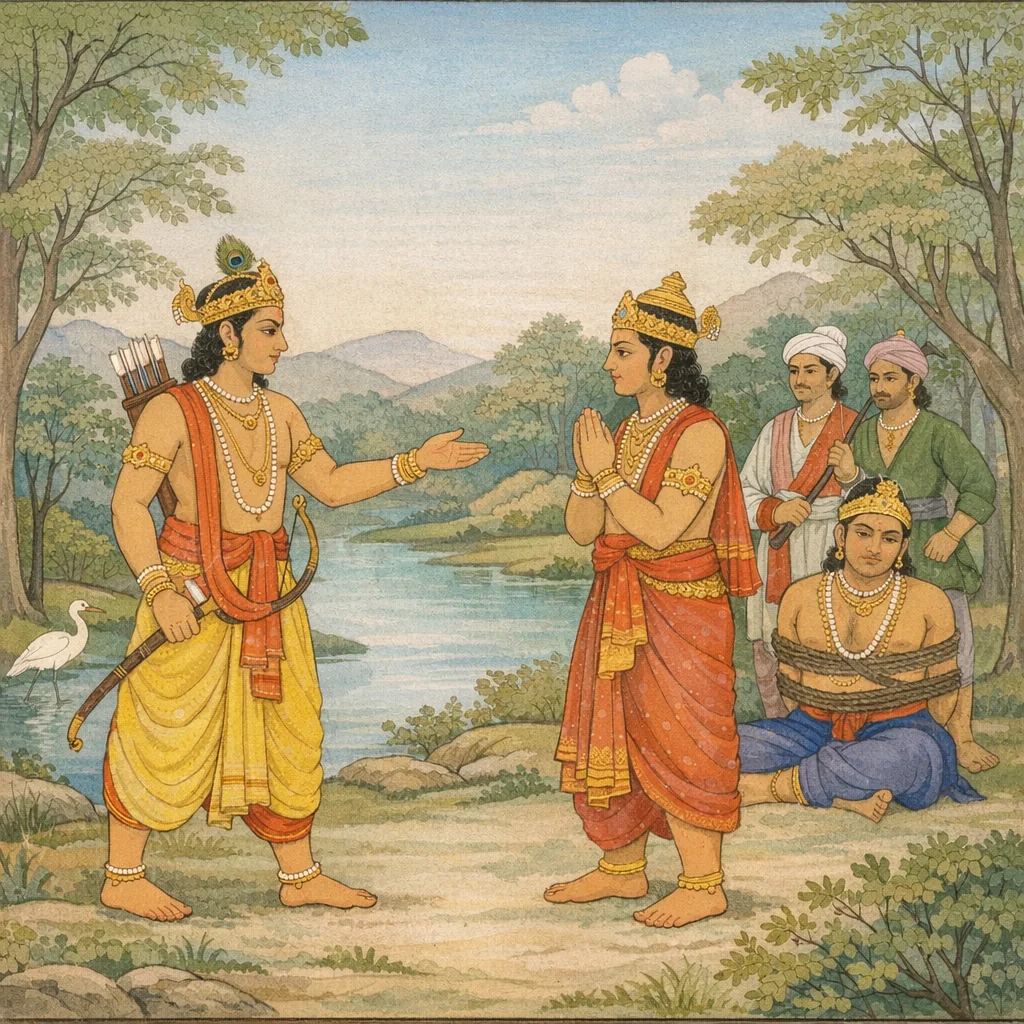
Chapter Arc: द्वैतवन में गन्धर्वों द्वारा पकड़े गए दुर्योधन का समाचार पाण्डवों तक पहुँचता है—और प्रश्न उठता है: शत्रु होकर भी ‘भाई’ को अपमानित अवस्था में छोड़ देना क्या धर्म है? → अर्जुन चित्रसेन से पूछता है कि कौरवों को रोकने का निश्चय क्या है और दुर्योधन को सपरिवार क्यों बाँधा गया। चित्रसेन बताता है कि इन्द्र ने दुर्योधन-कर्ण की द्रौपदी-उपहास की योजना जानकर उसे दण्ड देने को कहा; गन्धर्वों ने उसी हेतु उन्हें दबोचा। → अर्जुन चित्रसेन से विनय-आदेश करता है—‘यदि धर्मराज का संदेश और मेरा प्रिय करना चाहते हो तो हमारे भाई सुयोधन को छोड़ दो।’ यहाँ अर्जुन का क्षात्र-तेज और भ्रातृभाव, दुर्योधन के अपराध-दण्ड के सामने खड़ा हो जाता है। → युधिष्ठिर के पास जाकर सब घटना निवेदित होती है; दुर्योधन को मुक्त किया जाता है। चित्रसेन देवलोक जाकर इन्द्र को समस्त वृत्तान्त कहता है; इन्द्र दिव्य अमृत-वर्षा से गन्धर्वों के मृत साथियों को पुनर्जीवित करता है। दुर्योधन लज्जित-विदीर्ण होकर नगर की ओर लौटता है, और पाण्डव द्वैतवन में तपस्वियों सहित शांत भाव से विहार करते हैं। → दुर्योधन की अपमान-जनित लज्जा और क्रोध अब किस प्रतिशोध-योजना में ढलेगा—यह आगे की कथा के लिए बीज बनकर रह जाता है।
Shlokas
Verse 1
#::73:.8 #::3..7 () हि २ 7 षट्चत्वारिशर्दाधेकद्विशततमो< ध्याय: चित्रसेन, अर्जुन तथा युधिष्ठिरका संवाद और दुर्योधनका छुटकारा वैशम्पायन उवाच ततोथ्डथर्जुनश्षित्रसेनं प्रहसन्निदमब्रवीत् । मध्ये गन्धर्वसैन्यानां महेष्वासो महाद्युति:,वैशम्पायनजी कहते हैं--जनमेजय! तदनन्तर परम कान्तिमान् महाधनुर्धर अर्जुनने गन्धर्वोकी सेनाके बीच चित्रसेनसे हँसते हुए पूछा--“वीर! कौरवोंको बंदी बनानेमें तुम्हारा क्या उद्देश्य था? स्त्रियोंसहित दुर्योधनको तुमने किसलिये कैद किया?”
Vaiśampāyana said: Then Arjuna—radiant and a great archer—standing amid the Gandharva troops, smiled and spoke to Citrasena: “Hero, what was your purpose in taking the Kauravas captive? Why did you seize Duryodhana along with the women?”
Verse 2
कि ते व्यवसितं वीर कौरवाणां विनिग्रहे । किमर्थ च सदारो<यं निगृहीत: सुयोधन:,वैशम्पायनजी कहते हैं--जनमेजय! तदनन्तर परम कान्तिमान् महाधनुर्धर अर्जुनने गन्धर्वोकी सेनाके बीच चित्रसेनसे हँसते हुए पूछा--“वीर! कौरवोंको बंदी बनानेमें तुम्हारा क्या उद्देश्य था? स्त्रियोंसहित दुर्योधनको तुमने किसलिये कैद किया?”
Vaiśampāyana said: “O hero, what was your resolve in subduing the Kauravas? And for what reason was this Suyodhana seized and held captive along with his women?”
Verse 3
चित्रसेन उवाच विदितो5यमभिप्रायस्तत्रस्थेन दुरात्मन: । दुर्योधनस्य पापस्य कर्णस्य च धनंजय,चित्रसेनने कहा--धनंजय! देवराज इन्द्रको स्वर्गमें बैठे-ही-बैठे दुरात्मा दुर्योधन और पापी कर्णका यह अभिप्राय मालूम हो गया था कि ये आपलोगोंको वनमें रहकर अनाथकी भाँति क्लेश उठाते और विषम परिस्थितिमें पड़कर अस्थिरभावसे रहते हुए जानकर भी उस अवस्थामें आपको देखने और दु:ःखी करनेका निश्चय कर चुके हैं। ये स्वयं सम (सुखपूर्ण)-अवस्थामें स्थित हैं, फिर भी आप पाण्डवों तथा यशस्विनी द्रौपदीकी हँसी उड़ानेके लिये वनमें आये हैं। इस प्रकार इनकी (आपलोगोंका अनिष्ट करनेकी) इच्छा जानकर देवेश्वर इन्द्रने मुझसे इस प्रकार कहा--
Citrasena said: “Dhanañjaya, this intention of the wicked Duryodhana and the sinful Karṇa was already known to the lord of the gods while he remained seated in heaven: they had resolved to come and look upon you in the forest—though you dwell there like the unprotected, enduring hardship and living amid adverse conditions—and to cause you grief and humiliation. Though they themselves stand in comfort, they have come to the wilderness only to mock you Pāṇḍavas and the illustrious Draupadī. Knowing their desire to harm you, Indra spoke to me as follows.”
Verse 4
वनस्थान् भवतो ज्ञात्वा क्लिश्यमानाननाथवत् | समस्थो विषमस्थांस्तान द्रक्ष्यमीत्यनवस्थितान्,चित्रसेनने कहा--धनंजय! देवराज इन्द्रको स्वर्गमें बैठे-ही-बैठे दुरात्मा दुर्योधन और पापी कर्णका यह अभिप्राय मालूम हो गया था कि ये आपलोगोंको वनमें रहकर अनाथकी भाँति क्लेश उठाते और विषम परिस्थितिमें पड़कर अस्थिरभावसे रहते हुए जानकर भी उस अवस्थामें आपको देखने और दु:ःखी करनेका निश्चय कर चुके हैं। ये स्वयं सम (सुखपूर्ण)-अवस्थामें स्थित हैं, फिर भी आप पाण्डवों तथा यशस्विनी द्रौपदीकी हँसी उड़ानेके लिये वनमें आये हैं। इस प्रकार इनकी (आपलोगोंका अनिष्ट करनेकी) इच्छा जानकर देवेश्वर इन्द्रने मुझसे इस प्रकार कहा--
Chitrasena said: “Knowing that you dwell in the forest, suffering like people without protection, those men—though themselves secure and at ease—have resolved, ‘We shall go and look upon them in their distress,’ and, with minds fickle and unsteady, have set out with that intent. Indra, lord of the gods, perceived this design of the wicked Duryodhana and the sinful Karna even while seated in heaven; and, understanding their wish to trouble you, spoke to me accordingly.”
Verse 5
इमे5वहसितु प्राप्ता द्रौपदीं च यशस्विनीम् । ज्ञात्वा चिकीर्षितं चैषां मामुवाच सुरेश्वर:,चित्रसेनने कहा--धनंजय! देवराज इन्द्रको स्वर्गमें बैठे-ही-बैठे दुरात्मा दुर्योधन और पापी कर्णका यह अभिप्राय मालूम हो गया था कि ये आपलोगोंको वनमें रहकर अनाथकी भाँति क्लेश उठाते और विषम परिस्थितिमें पड़कर अस्थिरभावसे रहते हुए जानकर भी उस अवस्थामें आपको देखने और दु:ःखी करनेका निश्चय कर चुके हैं। ये स्वयं सम (सुखपूर्ण)-अवस्थामें स्थित हैं, फिर भी आप पाण्डवों तथा यशस्विनी द्रौपदीकी हँसी उड़ानेके लिये वनमें आये हैं। इस प्रकार इनकी (आपलोगोंका अनिष्ट करनेकी) इच्छा जानकर देवेश्वर इन्द्रने मुझसे इस प्रकार कहा--
Chitrasena said: “These men have come here intending to mock you—and also the illustrious Draupadī. Having understood what they were planning to do, the Lord of the gods spoke to me.”
Verse 6
गच्छ दुर्योधनं बद्ध्वा सहामात्यमिहानय । धनंजयश्न ते रक्ष्य: सह भ्रातृभिराहवे
Chitrasena said: “Go—seize Duryodhana, bind him, and bring him here together with his ministers. Yet Dhanañjaya (Arjuna) must be protected by you in battle, along with his brothers.”
Verse 7
सच प्रिय: सखा तुभ्यं शिष्यश्व॒ तव पाण्डव: । “'चित्रसेन! तुम जाओ और दुर्योधनको उसके मन्त्रियोंसहित बाँधकर यहाँ ले आओ। युद्धमें तुम्हें भाइयोंसहित अर्जुनकी रक्षा करनी चाहिये; क्योंकि पाण्डुनन्दन अर्जुन तुम्हारे प्रिय सखा तथा शिष्य हैं ।। वचनाद् देवराजस्य ततो<स्मीहागतो द्रुतम्
Chitrasena said: “And that Pandava is dear to you—he is both your beloved friend and your disciple. ‘Chitrasena, go: bind Duryodhana along with his ministers and bring him here. In battle you must, together with your brothers, protect Arjuna; for Arjuna, the son of Pandu, is your cherished friend and also your pupil.’ Obeying the command of the king of the gods, I have therefore come here swiftly.”
Verse 8
अयं दुरात्मा बद्धश्न गमिष्यामि सुरालयम् | नेष्याम्येनं दुरात्मानं पाकशासनशासनात्,वहाँसे देवराजकी यह आज्ञा मानकर मैं तुरन्त यहाँ चला आया। यह दुरात्मा दुर्योधन मेरी कैदमें आ गया है; अतः अब मैं देवलोकको जाऊँगा और पाकशासन इन्द्रकी आज्ञासे इस दुरात्माको भी वहीं ले जाऊँगा
Chitrasena said: “This wicked man has been bound. I shall now depart for the abode of the gods. And, acting under the command of Pākashāsana (Indra), I will take this evil-minded Duryodhana there as well.”
Verse 9
अजुन उवाच उत्सृज्यतां चित्रसेन भ्रातास्माकं सुयोधन: । धर्मराजस्य संदेशान्मम चेदिच्छसि प्रियम्,अर्जुन बोले--चित्रसेन! दुर्योधन हमलोगोंका भाई है। यदि तुम मेरा प्रिय करना चाहते हो तो धर्मराजके आदेशसे इसे छोड़ दो
Arjuna said: “Release Suyodhana (Duryodhana), O Chitrasena; he is our brother. If you wish to do what is pleasing to me, then, in accordance with the message of Dharmarāja (Yudhiṣṭhira), let him be set free.”
Verse 10
चित्रसेन उवाच पापो<यं नित्यसंतुष्टो न विमोक्षणम्हति । प्रलब्धा धर्मराजस्य कृष्णायाश्न धनंजय,चित्रसेनने कहा--धनंजय! यह पापी सदा राज्यसुख भोगनेके कारण हर्षसे मतवाला हो उठा है; अतः इसे छोड़ना उचित नहीं है। इसने धर्मराज युधिष्ठिर तथा द्रौपदीको धोखा दिया है
Chitrasena said: “O Dhananjaya! This sinner, ever intoxicated by the pleasures of kingship, does not deserve release. He has deceived Dharmarāja Yudhiṣṭhira and Kṛṣṇā (Draupadī).”
Verse 11
नेदं चिकीर्षितं तस्य कुन्तीपुत्रो युधिष्ठिर: । जानाति धर्मराजो हि श्र॒ुत्वा कुरु यथेच्छसि,कुन्तीनन्दन धर्मराज युधिष्ठिर इसके इस कुटिल अभिप्रायको नहीं जानते हैं; अत: यह सब सुनकर तुम्हारी जैसी इच्छा हो, वैसा करो
Chitrasena said: “Kuntī’s son Yudhiṣṭhira—the Dharmarāja—does not know that man’s intended scheme. Therefore, having heard this, act exactly as you wish.”
Verse 12
वैशम्पायन उवाच ते सर्व एव राजानमभिजममुर्युधिष्ठिरम् । अभिगम्य च तत् सर्व शशंसुस्तस्य चेष्टितम्,वैशम्पायनजी कहते हैं--राजन्! तदनन्तर वे सब लोग राजा युधिष्ठिरके पास गये। वहाँ जाकर गन्धरवॉने दुर्योधनकी सारी कुचेष्टा कह सुनायी
Vaiśampāyana said: Then all of them went to King Yudhiṣṭhira. Having approached him, they reported in full the conduct and doings of Duryodhana—laying bare his ill-intent and misdeeds, so that the righteous king might judge the matter in the light of dharma.
Verse 13
अजातशशणभ्रुस्तच्छुत्वा गन्धर्वस्य वचस्तदा । मोक्षयामास तानू सर्वान् गन्धर्वान् प्रशशंस च,गन्धवोका यह कथन सुनकर अजातशत्रु युधिष्ठिने उस समय समस्त कौरवोंको बन्धनसे छुड़ा दिया और गन्धर्वोकी भूरि-भूरि प्रशंसा की--
Vaiśampāyana said: Hearing those words of the Gandharva, Ajātaśaśatru (Yudhiṣṭhira) at once released them all from their bonds and offered abundant praise to the Gandharvas—acting in accordance with restraint, gratitude, and dharma even amid conflict.
Verse 14
दिष्ट्या भवद्धिर्बलिभि: शक्ति: सर्वर्न हिंसित: । दुर्वत्तो धार्तराष्ट्रोड्यं सामात्यज्ञातिबान्धव:,“आप सब लोग बलवान् और सामर्थ्यशाली हैं। आपने मन्त्रियों तथा जाति- भाइयोंसहित इस दुराचारी दुर्योधनका वध नहीं किया, यह बड़े सौभाग्यकी बात है
Vaiśaṃpāyana said: “It is indeed fortunate that you—though powerful and fully capable—have not slain him. This Dhārtarāṣṭra (Duryodhana) is of wicked conduct, surrounded by ministers and supported by kinsmen and allies; yet you have restrained yourselves from violence against him.”
Verse 15
उपकारो महांस्तात कृतो5यं मम खेचरै: । कुलं न परिभूतं मे मोक्षणे5स्य दुरात्मन:,“तात! आकाशचारी गन्धर्वोने यह मेरा बहुत बड़ा उपकार किया कि इस दुरात्माको छोड़ दिया, इसलिये मेरे कुलका अपमान नहीं हुआ
Vaiśampāyana said: “My dear child, the sky-roaming Gandharvas have rendered me a great service: by releasing this wicked man, they ensured that my lineage did not suffer humiliation in the matter of his deliverance.”
Verse 16
आज्ञापयध्वमिष्टानि प्रीयामो दर्शनेन वः । प्राप्प सर्वानिभिप्रायांसततो व्रजत मा चिरम्,“गन्धर्वो! अपनी अभीष्ट सेवाके लिये हमें आज्ञा दीजिये। हम सब लोग आपके दर्शनसे बहुत प्रसन्न हैं। अपनी समस्त मनोवांछित वस्तुओंको प्राप्त करनेके पश्चात् यहाँसे शीघ्रतापूर्वक प्रस्थान कीजियेगा
Vaiśampāyana said: “Command us regarding whatever you desire; we are delighted by your very sight. Having obtained all your intended aims, depart from here without delay.”
Verse 17
अनुज्ञातास्तु गन्धर्वाः पाण्डुपुत्रेण धीमता । सहाप्सरोभि: संदह्ृष्टाश्चित्रसेनमुखा ययु:,बुद्धिमान् पाण्डुपुत्र युधिष्ठिससे आज्ञा लेकर चित्रसेन आदि सब गन्धर्व अप्सराओंके साथ प्रसन्नतापूर्वक वहाँसे विदा हुए
Vaiśampāyana said: Having received leave from the wise son of Pāṇḍu, the Gandharvas—led by Citrasena and accompanied by the Apsarases—departed from that place in gladness.
Verse 18
(देवलोकं ततो गत्वा गन्धर्वै: सहितस्तदा । न्यवेदयच्च तत् सर्व चित्रसेन: शतक्रतो: ।।) देवराडपि गन्धर्वान् मृतांस्तानू समजीवयत् । दिव्येनामृतवर्षेण ये हता: कौरवैर्युधि,तदनन्तर गन्धर्वोंसहित चित्रसेनने देवलोकमें पहुँचकर देवराज इन्द्रके समक्ष सब समाचार निवेदन किया। युद्धमें कौरवोंद्वारा जो गन्धर्व मारे गये थे, उन सबको देवराज इन्द्रने दिव्य अमृतकी वर्षा करके जिला दिया
Then Chitrasena, accompanied by the Gandharvas, went to the world of the gods and reported the entire matter to Śatakratu (Indra). Thereupon the divine king himself revived those Gandharvas who had been slain in battle by the Kauravas, by causing a celestial rain of ambrosia to fall.
Verse 19
ज्ञातींस्तानवमुच्याथ राजदारांश्व सर्वश: । कृत्वा च दुष्करं कर्म प्रीतियुक्ताश्व॒ पाण्डवा:,इस प्रकार उन सब भाई-बंधुओं एवं राजकुलकी महिलाओंको गन्धर्वोंसे छुड़ाकर एवं दुष्कर पराक्रम करके प्रसन्न हुए महारथी महामना पाण्डव स्त्री-बालकोंसहित कौरवोंद्वारा पूजित एवं प्रशंसित हो यज्ञ-मण्डपमें प्रज्वलित अग्नियोंके समान देदीप्यमान हो रहे थे
Vaiśampāyana said: Having thus freed all those kinsmen and the women of the royal household, and having accomplished a deed difficult to perform, the Pāṇḍavas were filled with joy. After rescuing the women and children from the Gandharvas, they were honored and praised by the Kauravas, and in the sacrificial enclosure they shone brilliantly—like fires kindled for a rite—through their hard-won valor and dutiful protection of family.
Verse 20
सस्त्रीकुमारै: कुरुभि: पूज्यमाना महारथा: । बश्राजिरे महात्मान: क्रतुमध्ये यथाग्नय:,इस प्रकार उन सब भाई-बंधुओं एवं राजकुलकी महिलाओंको गन्धर्वोंसे छुड़ाकर एवं दुष्कर पराक्रम करके प्रसन्न हुए महारथी महामना पाण्डव स्त्री-बालकोंसहित कौरवोंद्वारा पूजित एवं प्रशंसित हो यज्ञ-मण्डपमें प्रज्वलित अग्नियोंके समान देदीप्यमान हो रहे थे
Vaiśampāyana said: The great-souled Pāṇḍava warriors, honored by the Kurus together with their women and children, shone in the midst of the sacrificial assembly like blazing fires—celebrated for their hard-won valor and for restoring the Kurus’ household to safety.
Verse 21
तदनन्तर बन्धनमुक्त हुए दुर्योधनसे भाइयोंसहित युधिष्ठिरने प्रेमपूर्वक यह बात कही --
Then, after being released from captivity, Yudhiṣṭhira—together with his brothers and in the presence of Duryodhana—spoke these words with affectionate restraint.
Verse 22
मा सम तात पुनः कार्षीरीदृशं साहसं क्वचित् । न हि साहसकर्तार: सुखमेधन्ति भारत,“तात! फिर कभी ऐसा दुःसाहस न करना। भारत! दुःसाहस करनेवाले मनुष्य कभी सुखी नहीं होते
Vaiśampāyana said: “My dear child, never again commit such a reckless act. O Bhārata, those who act with rash audacity do not truly prosper in happiness.”
Verse 23
ततो दुर्योधन मुक्त भ्रातृभि: सहितस्तदा । युधिष्ठिरस्तु प्रणयादिदं वचनमत्रवीत्,0७) स्वस्तिमान् सहित: सर्वैर्भ्नातृभि: कुरुनन्दन । गृहान् ब्रज यथाकामं वैमनस्यं च मा कृथा: “कुरुनन्दन! अब तुम अपने सब भाइयोंके साथ कुशलपूर्वक इच्छानुसार घर जाओ। हमलोगोंके प्रति मनमें वैमनस्य न रखना?
Then Duryodhana, released and accompanied by his brothers, was about to depart. Out of affectionate regard, Yudhiṣṭhira addressed him: “O joy of the Kurus, go home safely with all your brothers, as you wish. Do not harbor any ill-will toward us.”
Verse 24
वैशम्पायन उवाच पाण्डवेनाभ्यनुज्ञातो राजा दुर्योधनस्तदा । प्रणम्य धर्मपुत्रं तु गतेन्द्रिय इवातुर:
Vaiśampāyana said: Then King Duryodhana, having received permission from the Pāṇḍava, bowed to Dharmaputra. Afflicted, he departed as though his senses had deserted him—his pride checked by the very courtesy he had sought to exploit.
Verse 25
तस्मिन् गते कौरवेये कुन्तीपुत्रो युधिष्ठिर:,दुर्योधनके चले जानेपर द्विजातियोंसे प्रशंसित होते हुए भाइयोंसहित वीर कुन्तीनन्दन युधिष्ठिर वहाँके समस्त तपस्वी मुनियोंसे घिरे रहकर देवताओंके बीचमें बैठे हुए इन्द्रकी भाँति शोभा पाने और प्रसन्नतापूर्वक द्वैतवनमें विहार करने लगे
Vaiśampāyana said: When the Kaurava prince had departed and Duryodhana’s restless movement had passed away, Kuntī’s son Yudhiṣṭhira—praised by the twice-born and accompanied by his brothers—remained there surrounded by all the ascetic sages. Shining like Indra seated among the gods, the heroic son of Kuntī then moved about the Dvaita forest with a calm and contented mind.
Verse 26
भ्रातृभि: सहितो वीर: पूज्यमानो द्विजातिभि: । तपोधनैश्व तैः सर्वैर्वतः शक्र इवामरै:,दुर्योधनके चले जानेपर द्विजातियोंसे प्रशंसित होते हुए भाइयोंसहित वीर कुन्तीनन्दन युधिष्ठिर वहाँके समस्त तपस्वी मुनियोंसे घिरे रहकर देवताओंके बीचमें बैठे हुए इन्द्रकी भाँति शोभा पाने और प्रसन्नतापूर्वक द्वैतवनमें विहार करने लगे
Vaiśampāyana said: Surrounded by his brothers, that heroic son of Kuntī—honoured and revered by the twice-born—sat encircled by all those ascetic sages, shining like Indra amid the gods. Thus, with a serene and contented mind, Yudhiṣṭhira continued to dwell and move about in the Dvaitavana, upheld by the respect of the righteous and the company of the wise.
Verse 27
तथा द्वैतवने तस्मिन् विजहार मुदा युतः,दुर्योधनके चले जानेपर द्विजातियोंसे प्रशंसित होते हुए भाइयोंसहित वीर कुन्तीनन्दन युधिष्ठिर वहाँके समस्त तपस्वी मुनियोंसे घिरे रहकर देवताओंके बीचमें बैठे हुए इन्द्रकी भाँति शोभा पाने और प्रसन्नतापूर्वक द्वैतवनमें विहार करने लगे
Vaiśampāyana said: In that Dvaita forest, Yudhiṣṭhira—the heroic son of Kuntī—dwelt and moved about with a calm joy. When the disturbance caused by Duryodhana became known, the twice-born praised Yudhiṣṭhira; and surrounded by all the ascetic sages of that place, he shone among them like Indra seated amid the gods. Thus, with a composed and cheerful mind, he continued to roam and reside in the Dvaita forest.
Verse 246
विदीर्यमाणो व्रीडावान् जगाम नगर प्रति । वैशम्पायनजी कहते हैं--जनमेजय! पाण्डुनन्दन युधिष्ठिरकी आज्ञा पाकर राजा दुर्योधनने उन धर्मपुत्र अजातशत्रुको प्रणाम करके अपने नगरकी ओर प्रस्थान किया। उस समय जिसकी इन्द्रियाँ काम न देती हों उस रोगीकी भाँति उसका हृदय व्यथासे विदीर्ण हो रहा था। उसे अपने कुकृत्यपर बड़ी लज्जा हो रही थी,इति श्रीमहाभारते वनपर्वणि घोषयात्रापर्वणि दुर्योधनमो क्षणे षट्चत्वारिंशदधिकद्विशततमो< ध्याय: इस प्रकार श्रीमह्ाभारत वनपवके अन्तर्गत घोषयात्रापर्वमें दुर्योधनको छुड़ानेसे सम्बन्ध रखनेवाला दो सौ छियालीसवाँ अध्याय पूरा हुआ
Vaiśampāyana said: Overcome with shame and inwardly torn by anguish, he set out toward his city. Having received Yudhiṣṭhira’s command and paid homage to that righteous, foe-unconquered king, Duryodhana departed for his own capital—his heart splitting with pain like that of a sick man whose senses no longer function, and his mind burning with embarrassment at his own wrongdoing.
Frequently Asked Questions
Whether to accept an exceptionally pleasurable but time-limited reward (svarga) that ends in descent, or to renounce it in favor of a stable, non-declining goal grounded in restraint, insight, and contemplative practice.
Svarga is framed as a conditioned result of prior action; because no new karma is generated there, its enjoyment culminates in exhaustion and fall. Rational spiritual choice therefore evaluates outcomes by permanence and freedom from distress, not by sensory intensity.
Rather than a formal phalaśruti, the chapter provides a meta-instructional pivot: Vyāsa’s counsel to the Pandava listener treats adversity as cyclical and reformative, asserting that disciplined effort (tapas) and time lead to restoration and mental steadiness, aligning worldly recovery with a broader liberation-oriented perspective.