Adhyaya 209
अग्निनाम-वंश-निरूपणम् | Agni-Names and Lineage Enumeration
Upa-parva: Mārkaṇḍeya-Saṃvāda (Genealogies and Functions of Agni)
Mārkaṇḍeya enumerates a lineage and functional taxonomy of Agni. Beginning with the illustrious wife associated with Bṛhaspati and Candramas, the discourse lists sacred fires and offspring, assigning to each a ritual identity: the fire receiving clarified-butter oblations, the fire prominent in cāturmāsya and aśvamedha contexts, and further named forms tied to specific offerings and liturgical moments (e.g., first ājya portion; pūrṇamāsī contexts; sviṣṭakṛt). The chapter also maps moral-psychological and cosmological registers onto fire (e.g., anger/Manyu and the daughter Manyatī; the pervasive utterance ‘Svāhā’), and continues with additional named fires characterized by purity, stability, internal digestion (antarāgni), and universal cognition. The result is a compact reference catalogue connecting genealogy, ritual procedure, and symbolic anthropology.
Chapter Arc: धर्मव्याध के समक्ष ब्राह्मण के मन में एक तीखा संशय उठता है—यदि अहिंसा परम धर्म है, तो संसार के नित्य कर्मों में सर्वत्र हिंसा क्यों दीखती है, और फिर ‘दैव’ (पूर्वकर्म) इतना बलवान क्यों है? → व्याध ‘विधि’ और ‘पुराकृत कर्म’ की दुस्तरता का संकेत देकर प्रश्न को और गहरा करता है: कृषि, भोजन, पशु-आहार, वृक्ष-औषधि-छेदन—जीवन-यापन के साधनों में भी असंख्य प्राणियों का विनाश होता है। साथ ही वह सामाजिक उलटबांसियों की ओर भी उंगली उठाता है—मित्र-मित्र को, शत्रु-शत्रु को, बन्धु-बन्धु को भी ठीक से नहीं देखते; समृद्धि से ईर्ष्या, गुरु-निन्दा, और पण्डितमान का मोह व्याप्त है। → कृषि और सामान्य कर्मों में ‘पराहिंसा’ का प्रत्यक्ष चित्र खड़ा कर (भूमिशायी जीवों का मरण, पशु-वध, वृक्ष-औषधि-छेदन) व्याध ब्राह्मण को धर्म के सूक्ष्म विवेक पर ला खड़ा करता है—जब धर्म-अधर्म लोक में उलटे दिखते हैं, तब निर्णय का आधार क्या हो? → व्याध निष्कर्ष की दिशा देता है: धर्म-अधर्म पर बहुत कहा जा सकता है, पर जो मनुष्य अपने स्वधर्म/स्वकर्म में सम्यक् प्रवृत्त रहता है, वही महायश पाता है—अर्थात् कर्म-निष्ठा, विवेक, और यथाशक्ति दोष-परिहार ही व्यावहारिक मार्ग है। → स्वकर्म-निष्ठा का मानदण्ड तो मिला, पर ब्राह्मण के भीतर यह प्रश्न शेष रहता है कि ‘अनिवार्य हिंसा’ वाले कर्मों में दोष-क्षय और अहिंसा का सर्वोच्च रूप कैसे साधा जाए?
Shlokas
Verse 1
(दाक्षिणात्य अधिक पाठके १६ “लोक मिलाकर कुल १००३ श्लोक हैं) #2:8 #:23:.7 (0) हि २ 7 अष्टाधिकद्विशततमो< ध्याय: धर्मव्याथद्वारा हिंसा और अहिंसाका विवेचन मार्कण्डेय उवाच सतु विप्रमथोवाच धर्मव्याथो युधिष्ठिर । यदहमाचरे कर्म घोरमेतदसंशयम्,मार्कण्डेयजी कहते हैं--युधिष्ठिर! तदनन्तर धर्मव्याधने कौशिक ब्राह्मणसे कहा --'मैं जो यह मांस बेचनेका व्यवसाय कर रहा हूँ, वास्तवमें यह अत्यन्त घोर कर्म है, इसमें संशय नहीं है
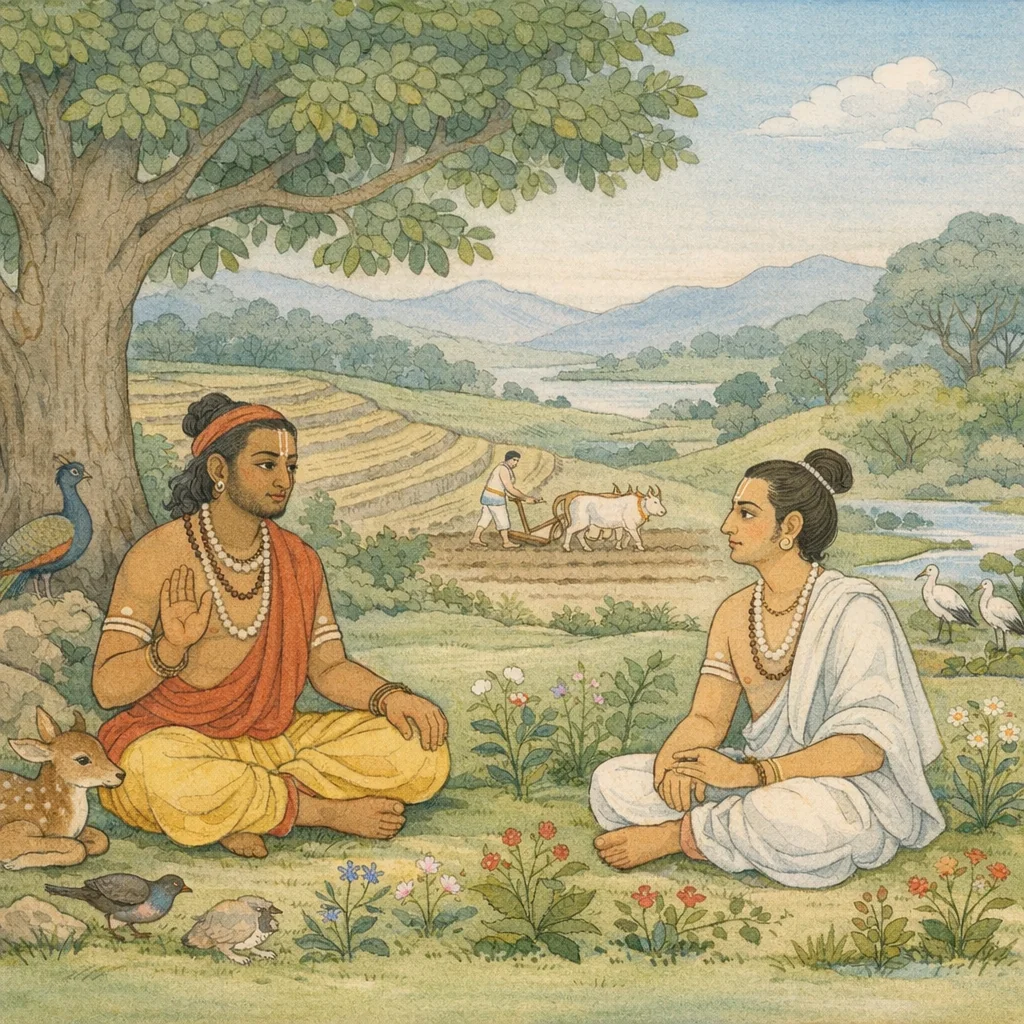
Mārkaṇḍeya said: “O Yudhiṣṭhira, then the dharma-vyādha, the righteous butcher, spoke to the brāhmaṇa Vipramatha: ‘The work I practice—this trade of selling meat—is indeed a dreadful deed; of this there is no doubt.’”
Verse 2
विधिस्तु बलवान ब्रह्मन् दुस्तरं हि पुरा कृतम् । पुरा कृतस्य पापस्य कर्मदोषो भवत्ययम्
Mārkaṇḍeya said: “O Brahmin, destiny is indeed powerful; what has been done in the past is hard to overcome. This is the fault inherent in action: from a sin committed long ago, its karmic consequence inevitably arises.”
Verse 3
दोषस्यैतस्य वै ब्रह्मन् विधाते यत्नवानहम् । 'किंतु ब्रह्मन! दैव बलवान है। पूर्वजन्ममें किये हुए कर्मका ही नाम दैव है। उससे पार पाना बहुत कठिन है। यह जो कर्मदोषजनित व्याधके घर जन्म हुआ है, यह मेरे पूर्वजन्ममें किये हुए पापका ही फल है। ब्रह्मन! मैं इस दोषके निवारणके लिये प्रयत्नशील हूँ ।। २६ || विधिना हि हते पूर्व निमित्तं घातको भवेत्,"क्योंकि विधाताके द्वारा पहलेसे ही जीवकी मृत्यु निश्चित की जाती है; किंतु घातक (कसाई अथवा व्याध) उसमें निमित्त बन जाता है अर्थात् जो स्वेच्छासे ज्ञानपूर्वक जीवहिंसा करता है, वह घातक व्यर्थ ही निमित्त बनकर दोषका भागी होता है
Mārkaṇḍeya said: “O Brahmin, I have indeed been striving to remedy this fault, as far as what is ordained allows. For when a being’s death has already been fixed by destiny, the killer becomes only an instrument in that event. Yet the one who knowingly and willingly commits violence still incurs moral blame, even if he is merely a ‘cause’ in what was fated.”
Verse 4
निमित्तभूता हि वयं कर्मणो<स्य द्विजोत्तम | येषां हतानां मांसानि विक्रीणामीह वै द्विज,द्विजश्रेष्ठस इस कार्यमें हम निमित्तमात्र हैं। ब्रह्मन! मैं जिन मारे गये प्राणियोंका मांस बेचता हूँ, उनके जीते-जी यदि उनका सदुपयोग किया जाता तो बड़ा धर्म होता। मांस- भक्षणमें तो धर्मका नाम भी नहीं है (उलटे महान् अधर्म होता है)। देवता, अतिथि, भरणीय कुटुम्बीजन और पितरोंका पूजन (आदर-सत्कार) अवश्य धर्म है
Mārkaṇḍeya said: “O best of twice-born, we are only the instrumental causes of this deed. O brāhmaṇa, it is the flesh of those slain beings that I sell here. If, while they were alive, they had been put to proper use, that would have been a great act of dharma; but in the eating of flesh there is not even the name of dharma—rather, it becomes a great adharma.”
Verse 5
तेषामपि भवेद् धर्म उपयोगे न भक्षणे | देवतातिथिभृत्यानां पितृणां चापि पूजनम्,द्विजश्रेष्ठस इस कार्यमें हम निमित्तमात्र हैं। ब्रह्मन! मैं जिन मारे गये प्राणियोंका मांस बेचता हूँ, उनके जीते-जी यदि उनका सदुपयोग किया जाता तो बड़ा धर्म होता। मांस- भक्षणमें तो धर्मका नाम भी नहीं है (उलटे महान् अधर्म होता है)। देवता, अतिथि, भरणीय कुटुम्बीजन और पितरोंका पूजन (आदर-सत्कार) अवश्य धर्म है
Mārkaṇḍeya said: “Even in their case, righteousness may arise from proper use, not from eating. Honouring the gods, welcoming guests, caring for those who depend on one, and worshipping the ancestors—these are indeed acts of dharma.”
Verse 6
ओषध्यो वीरुधश्चैव पशवो मृगपक्षिण: । अनादिभूता भूतानामित्यपि श्रूयते श्रुति:,ओषधियाँ, अन्न, तृण, लता, पशु, मृग और पक्षी आदि सभी वस्तुएँ सम्पूर्ण प्राणियोंके अनादि-कालसे उपयोगमें आती रहती हैं--ऐसी श्रुति भी सुनी जाती है
Mārkaṇḍeya said: “Medicinal herbs and plants, grasses and creepers, and also cattle, wild beasts, and birds—these are spoken of in the sacred tradition as beginningless provisions for living beings, ever available for their sustenance.”
Verse 7
आत्ममांसप्रसादेन शिविरौशीनरो नृप: । स्वर्ग सुदुर्गमं प्राप्त: क्षमावान् द्विजसत्तम,द्विजश्रेष्ठ! उशीनरके पुत्र क्षमाशील (और दयालु) राजा शिबिने (एक भूखे बाजको कबूतरके बदले) अपने शरीरका मांस अर्पित कर दिया था और उसीके प्रसादसे उन्हें परम दुर्लभ स्वर्गलोककी प्राप्ति हुई थी
Mārkaṇḍeya said: “By the merit of offering his own flesh, King Śibi of the Uśīnara line attained the exceedingly hard-to-reach heaven. O best of brāhmaṇas, he was a ruler endowed with forbearance.”
Verse 8
स्वधर्म इति कृत्वा तु न त्यजामि द्विजोत्तम । पुरा कृतमिति ज्ञात्वा जीवाम्येतेन कर्मणा,“विप्रवर! मैं अपना स्वधर्म समझकर यह धंधा नहीं छोड़ रहा हूँ। पहलेसे मेरे पूर्वज यही करते आये हैं, ऐसा समझकर मैं इसी कर्मसे जीवन-निर्वाह करता हूँ
‘O best of Brahmins, I do not abandon this occupation, taking it to be my own dharma. Knowing that it is an ancient practice—done from of old by those before me—I sustain my life by this very work.’
Verse 9
स्वकर्म त्यजतो ब्रद्यान्नधर्म इह दृश्यते । स्वकर्मनिरतो यस्तु धर्म: स इति निश्चय:,“ब्रह्म! अपने कर्मका परित्याग करनेवालेको यहाँ अधर्मकी प्राप्ति देखी जाती है। जो अपने कर्ममें तत्पर है, उसीका बर्ताव धर्मपूर्ण है, ऐसा सिद्धान्त है
“O Brahmin, in this world one sees that abandoning one’s own work leads to adharma. But whoever is devoted to their own work—his conduct is dharma; such is the settled conclusion.”
Verse 10
पूर्व हि विहित॑ कर्म देहिनं न विमुज्चति । धात्रा विधिरयं दृष्टो बहुधा कर्मनिर्णये,“पहलेका किया हुआ कर्म देहधारी मनुष्यको नहीं छोड़ता है। बहुधा कर्मका निर्णय करते समय विधाताने इसी विधिको अपने सामने रखा है
Mārkaṇḍeya said: “A deed done earlier does not release an embodied being. In judging actions and their consequences in many ways, the Creator has kept this very principle before him.”
Verse 11
द्रष्टव्या तु भवेत् प्रज्ञा क्रूरे कर्मणि वर्तता । कथं कर्म शुभं कुर्या कथं मुच्ये पराभवात्,'जो क्रूर कर्ममें लगा हुआ है, उसे सदा यह सोचते रहना चाहिये कि “मैं कैसे शुभ कर्म करूँ और किस प्रकार इस निन्दित कर्मसे छुटकारा पाऊँ'
Mārkaṇḍeya said: “Even one engaged in cruel deeds must keep discernment awake: ‘How may I do what is wholesome? How may I be freed from this disgrace and downfall?’”
Verse 12
कर्मणस्तस्य घोरस्य बहुधा निर्णयो भवेत् । दाने च सत्यवाक्ये च गुरुशुश्रूषणे तथा,“बार-बार ऐसा करनेसे उस घोर कर्मसे छूटनेके विषयमें कोई निश्चित उपाय प्राप्त हो जाता है। द्विजश्रेष्ठ! मैं दान, सत्यभाषण, गुरुसेवा, ब्राह्मणपूजन तथा धर्मपालनमें सदा तत्पर रहकर अभिमान और अतिवादसे दूर रहता हूँ
Mārkaṇḍeya said: “For that dreadful deed, a decisive way to secure release from its consequences may be found in many ways—through generosity, through truthful speech, and likewise through devoted service to one’s teacher.”
Verse 13
द्विजातिपूजने चाहं धर्मे च निरत: सदा | अभिमानातिवादा भ्यां निवृत्तोडस्मि द्विजोत्तम,“बार-बार ऐसा करनेसे उस घोर कर्मसे छूटनेके विषयमें कोई निश्चित उपाय प्राप्त हो जाता है। द्विजश्रेष्ठ! मैं दान, सत्यभाषण, गुरुसेवा, ब्राह्मणपूजन तथा धर्मपालनमें सदा तत्पर रहकर अभिमान और अतिवादसे दूर रहता हूँ
Mārkaṇḍeya said: “I am ever devoted to honoring the twice-born and to the practice of dharma. O best of brāhmaṇas, I have withdrawn from pride and from boastful, excessive speech.”
Verse 14
कृषिं साध्विति मन्यन्ते तत्र हिंसा परा स्मृता । कर्षन्तो लाडूलै: पुंसो घ्नन्ति भूमिशयान् बहून् । जीवानन्यांश्व बहुशस्तत्र कि प्रतिभाति ते
Mārkaṇḍeya said: “People consider agriculture a virtuous livelihood; yet in it, violence is remembered as exceedingly great. For when men plough with their implements, they kill many creatures that lie upon or within the earth, and again and again destroy other living beings as well. In such a case, what appears to you as the right course?”
Verse 15
कुछ लोग खेतीको उत्तम मानते हैं, परंतु उसमें भी बहुत बड़ी हिंसा होती है। हल चलानेवाले मनुष्य धरतीके भीतर शयन करनेवाले बहुत-से प्राणियोंकी हत्या कर डालते हैं। इनके सिवा और भी बहुत-से जीवोंका वध वे करते रहते हैं। इस विषयमें आप क्या समझते हैं? ।। धान्यबीजानि यान्याहुर्ब्रीह्यादीनि द्विजोत्तम । सर्वाण्येतानि जीवानि तत्र कि प्रतिभाति ते,'्विजश्रेष्ठ] धान आदि जितने अन्नके बीज हैं, वे सब-के-सब जीव ही हैं; अतः: इस विषयमें आप क्या समझते हैं?
Mārkaṇḍeya said: “O best of the twice-born, the seeds of grain that people speak of—rice and the rest—are all living beings. If so, what is your understanding of this matter?”
Verse 16
अध्याक्रम्य पशुंश्वापि घ्नन्ति वै भक्षयन्ति च । वृक्षांस्तथौषधी श्षापि छिन्दन्ति पुरुषा द्विज,“विप्रवर! कितने ही मनुष्य पशुओंपर आक्रमण करके उन्हे मारते और खाते हैं। वृक्षों तथा ओषधियों (अन्तके पौधों)-को काटते हैं। वृक्षों और फलोंमें भी बहुत-से जीव रहते हैं। जलमें भी नाना प्रकारके जीव रहते हैं। ब्रह्म! उनके विषयमें आप क्या समझते हैं?
Mārkaṇḍeya said: “O twice-born one, men, after assailing animals, kill them and also eat them. Likewise they cut down trees and medicinal plants. (Thus) living beings are harmed in many forms—on land and through vegetation as well.”
Verse 17
जीवा हि बहवो ब्रह्मन् वृक्षेषु च फलेषु च । उदके बहवश्चापि तत्र कि प्रतिभाति ते,“विप्रवर! कितने ही मनुष्य पशुओंपर आक्रमण करके उन्हे मारते और खाते हैं। वृक्षों तथा ओषधियों (अन्तके पौधों)-को काटते हैं। वृक्षों और फलोंमें भी बहुत-से जीव रहते हैं। जलमें भी नाना प्रकारके जीव रहते हैं। ब्रह्म! उनके विषयमें आप क्या समझते हैं?
Mārkaṇḍeya said: “O Brahmin, living beings are indeed many—within trees and within fruits; and many are found in water as well. People attack animals, kill them, and eat them; they also cut down trees and medicinal plants. In view of the fact that life exists in these forms too, what understanding do you hold about this matter?”
Verse 18
सर्व व्याप्तमिदं ब्रह्मन् प्राणिभि: प्राणिजीवनै: । मत्स्यान ग्रसन्ते मत्स्याश्न तत्र कि प्रतिभाति ते,'जीवोंसे ही जीवन-निर्वाह करनेवाले जीवोंद्वारा यह सारा जगत् व्याप्त है। मत्स्य मत्स्योंतकको अपना ग्रास बना लेते हैं। उनके विषयमें आप क्या समझते हैं?
Mārkaṇḍeya said: “O Brahmin, this whole world is pervaded by living beings who sustain their lives by the lives of other beings. Fish devour fish; the greater makes the lesser its prey. What is your understanding of this?”
Verse 19
सत्त्वै: सत्त्वानि जीवन्ति बहुधा द्विजसत्तम | प्राणिनो<न्योन्यभक्षाक्ष तत्र कि प्रतिभाति ते,'द्विजश्रेष्ठीी बहुधा जीव जीवोंसे ही जीवन धारण करते हैं और प्राणी स्वयं ही एक- दूसरेको अपना आहार बना लेते हैं। उनके विषयमें आप क्या समझते हैं?
Mārkaṇḍeya said: “O best of the twice-born, in many ways living beings subsist upon other living beings; creatures become one another’s food. What understanding do you form about this—how does it appear to you?”
Verse 20
चड़्क्रम्यमाणा जीवांश्व धरणीसंश्रितान् बहून् । पद्धयां घ्नन्ति नरा विप्र तत्र कि प्रतिभाति ते,“मनुष्य चलते-फिरते समय धरतीके बहुत-से जीव-जन्तुओंको (असावधानीपूर्वक) पैरोंसे मार देते हैं। ब्रह्म! उनके विषयमें आप क्या समझते हैं?
Mārkaṇḍeya said: “O brāhmaṇa, as people walk about, they unknowingly crush and kill many living creatures that dwell upon the earth. What, in your understanding, is to be thought regarding this?”
Verse 21
उपविष्टा: शयानाक्ष घ्नन्ति जीवाननेकश: । ज्ञानविज्ञानवन्तक्ष तत्र कि प्रतिभाति ते,'ज्ञान-विज्ञानसम्पन्न पुरुष भी (अनजानमें) बैठते-सोते समय अनेक जीवोंकी हिंसा कर बैठते हैं। उनके विषयमें आप क्या समझते हैं?
Mārkaṇḍeya said: “Even people endowed with knowledge and discernment, while merely sitting down or lying asleep, end up killing many living creatures without intending it. What, then, is your understanding about this—how should such unavoidable harm be regarded?”
Verse 22
जीवैग्ग्रस्तमिदं सर्वमाकाशं पृथिवी तथा । अविज्ञानाच्च हिंसन्ति तत्र कि प्रतिभाति ते,“आकाशसे लेकर पृथ्वीतक यह सारा जगत् जीवोंसे भरा हुआ है। कितने ही मनुष्य अनजानमें भी जीवहिंसा करते हैं। इस विषयमें आप क्या समझते हैं?
Mārkaṇḍeya said: “From the sky down to the earth, this entire world is pervaded by living beings. Yet many people, out of ignorance, commit injury to life. What understanding do you have regarding this matter?”
Verse 23
अहिंसेति यदुक्तं हि पुरुषैर्विस्मितै: पुरा । के न हिंसन्ति जीवान् वै लोके5स्मिन् द्विजसत्तम । बहु संचित्य इति वै नास्ति कश्चिदहिंसक:,'पूर्वकालके अभिमानशूब्य श्रेष्ठ पुरुषोंने जो अहिंसाका उपदेश किया है (उसका तत्त्व समझना चाहिये; क्योंकि) द्विजश्रेष्ठ! (स्थूल दृष्टिसे देखा जाय तो) इस संसारमें कौन जीवहिंसा नहीं करते हैं? बहुत सोच-विचारकर मैं इस निश्चयपर पहुँचा हूँ कि कोई भी (क्रियाशील मनुष्य) अहिंसक नहीं है
Mārkaṇḍeya said: “In former times, certain eminent men—speaking with a kind of wonder—taught, ‘Non-violence!’ Yet, O best of the twice-born, who in this world does not in fact harm living beings? After much reflection, I have reached this conclusion: no one who is active in worldly life is entirely non-violent.”
Verse 24
अहिंसायां तु निरता यतयो द्विजसत्तम | कुर्वन्त्येव हि हिंसां ते यत्नादल््पतरा भवेत्,द्विजश्रेष्ठी यतिलोग अहिंसा-धर्मके पालनमें तत्पर होते हैं, परंतु वे भी हिंसा कर ही डालते हैं (अर्थात् उनके द्वारा भी हिंसा हो ही जाती है)। अवश्य ही यत्नपूर्वक चेष्टा करनेसे हिंसाकी मात्रा बहुत कम हो सकती है
Mārkaṇḍeya said: “O best of twice-born ones, even ascetics devoted to non-violence do, in fact, commit violence—inevitably, in the course of living and acting. Yet by deliberate vigilance and effort, that violence can be made very small.”
Verse 25
आलक्ष्याश्नैव पुरुषा: कुले जाता महागुणा: | महाघोराणि कर्माणि कृत्वा लज्जन्ति वै द्विज,“ब्रह्मन्! उत्तम कुलमें उत्पन्न, परम सदगुणसम्पन्न और श्रेष्ठ माने जानेवाले पुरुष भी अत्यन्त भयानक कर्म करके लज्जाका अनुभव करते ही हैं
Mārkaṇḍeya said: “O Brahmin, even men born in noble families—men of great virtues and regarded as eminent—after committing exceedingly dreadful deeds, do indeed feel shame.”
Verse 26
सुहृद: सुहृदो<चन्यां श्र दुर्हदश्चापि दुर्हद: । सम्यक् प्रवृत्तान् पुरुषान् न सम्यगनुपश्यत:,“मित्र दूसरे मित्रोंको और शत्रु अपने शत्रुओंको, वे अच्छे कर्ममें लगे हुए हों तो भी अच्छी दृष्टिसे नहीं देखते
Mārkaṇḍeya said: Friends look upon their own friends, and enemies upon their own enemies, with partial eyes; even when people are rightly engaged in good conduct, they are not seen with a truly fair and discerning vision.
Verse 27
समृद्धैश्न न नन्दन्ति बान्धवा बान्धवैरपि | गुरंश्वैव विनिन्दन्ति मूढा: पण्डितमानिन:,“बन्धु-बान्धव अपने समृद्धिशाली बान्धवोंसे भी प्रसन्न नहीं रहते। अपनेको पण्डित माननेवाले मूढ़ मनुष्य गुरुजनोंकी भी निन्दा करते हैं
Mārkaṇḍeya said: Even when their own kinsmen prosper, some relatives do not feel joy; and those deluded people—who merely imagine themselves to be learned—go so far as to disparage even their elders and teachers.
Verse 28
बहु लोके विपर्यस्तं दृश्यते द्विजसत्तम । धर्मयुक्तमधर्म च तत्र कि प्रतिभाति ते,द्विजश्रेष्ठ! इस प्रकार जगत्में अनेक उलटी बातें दिखायी देती हैं। अधर्म भी धर्मसे युक्त प्रतीत होता है। इस विषयमें आप क्या समझते हैं?
Mārkaṇḍeya said: “O best of twice-born ones, many things in this world appear inverted and contrary to what one expects. Even what is unrighteous can seem clothed in the guise of righteousness. In such a matter, what understanding presents itself to you, O foremost brāhmaṇa?”
Verse 29
वक्तुं बहुविधं शक््यं धर्माधर्मेषु कर्मसु । स्वकर्मनिरतो यो हि स यश: प्राप्रुयान्महत्,“धर्म और अधर्मसम्बन्धी कार्योंके विषयमें और भी बहुत-सी बातें कही जा सकती हैं। अतएव जो अपने कुलोचित कर्ममें लगा हुआ है, वही महान् यशका भागी होता है'
Much can be said in many ways about actions that fall under dharma and adharma. Yet the one who remains devoted to his own rightful duty—his proper work according to his station and lineage—attains great renown.
Verse 208
इति श्रीमहाभारते वनपर्वणि मार्कण्डेयसमास्यापर्वणि पतिव्रतोपाख्याने ब्राह्मणव्याधसंवादे अष्टाधिकद्विशततमो<्ध्याय:
Thus, in the Śrī Mahābhārata, within the Vana Parva—under the section known as the Markandeya Samasya Parva—during the tale of the devoted wife (Pativratā-upākhyāna), in the dialogue between the brāhmaṇa and the hunter, the two-hundred-and-eighth chapter comes to an end. (This is a colophon marking the close of the chapter, not a spoken verse.)
Frequently Asked Questions
How to classify and remember Agni’s multiple manifestations by linking each name to a concrete ritual function, offering-type, or cosmological role, creating a usable taxonomy for interpretation and practice.
The chapter frames order as functional differentiation: one principle (fire) appears as many operational modes—external sacrifice, social rite, and internal digestion—implying disciplined action and correct naming as supports of dharma.
No explicit phalaśruti is stated in the provided verses; the chapter’s meta-function is archival and pedagogical, supplying authoritative nomenclature that supports broader ritual and ethical comprehension.