Adhyaya 183
Vainya-Aśvamedhe Atri–Gautama–Sanatkumāra-Nirṇaya (Vainya’s Sacrifice and the Settlement of a Dharmic Dispute)
Upa-parva: Dāna–Rājadharma Saṃvāda (Atri–Gautama–Sanatkumāra Episode at Vainya’s Aśvamedha)
Mārkaṇḍeya continues an exposition on the eminence and social function of brāhmaṇas by recounting how Ṛṣi Atri, needing resources, considers approaching King Vainya, who is consecrated for an aśvamedha. Atri initially hesitates due to concerns about hostile critics and misinterpretation of his words, but his wife counsels a normative route: request wealth from the yajamāna king, accept it properly, and distribute it among sons and dependents—presented as an exemplary dharma. Atri proceeds to the sacrificial arena and praises Vainya as foremost among rulers, prompting Gautama’s sharp objection that such superlative attribution is misplaced. The dispute draws attention from the assembled sages; Kaśyapa reports the matter, and the council summons Sanatkumāra to remove doubt. Sanatkumāra resolves the question by asserting the mutual dependence of brahma and kṣatra and by describing the king as a principal dharmic institution—identified through multiple honorific designations—whose function includes the suppression of adharma. With the doctrinal point settled, Vainya is pleased and grants Atri extensive gifts (wealth, attendants, gold). Atri accepts according to propriety, returns home, redistributes the gains, and then resumes forest austerities, integrating household responsibility with ascetic orientation.
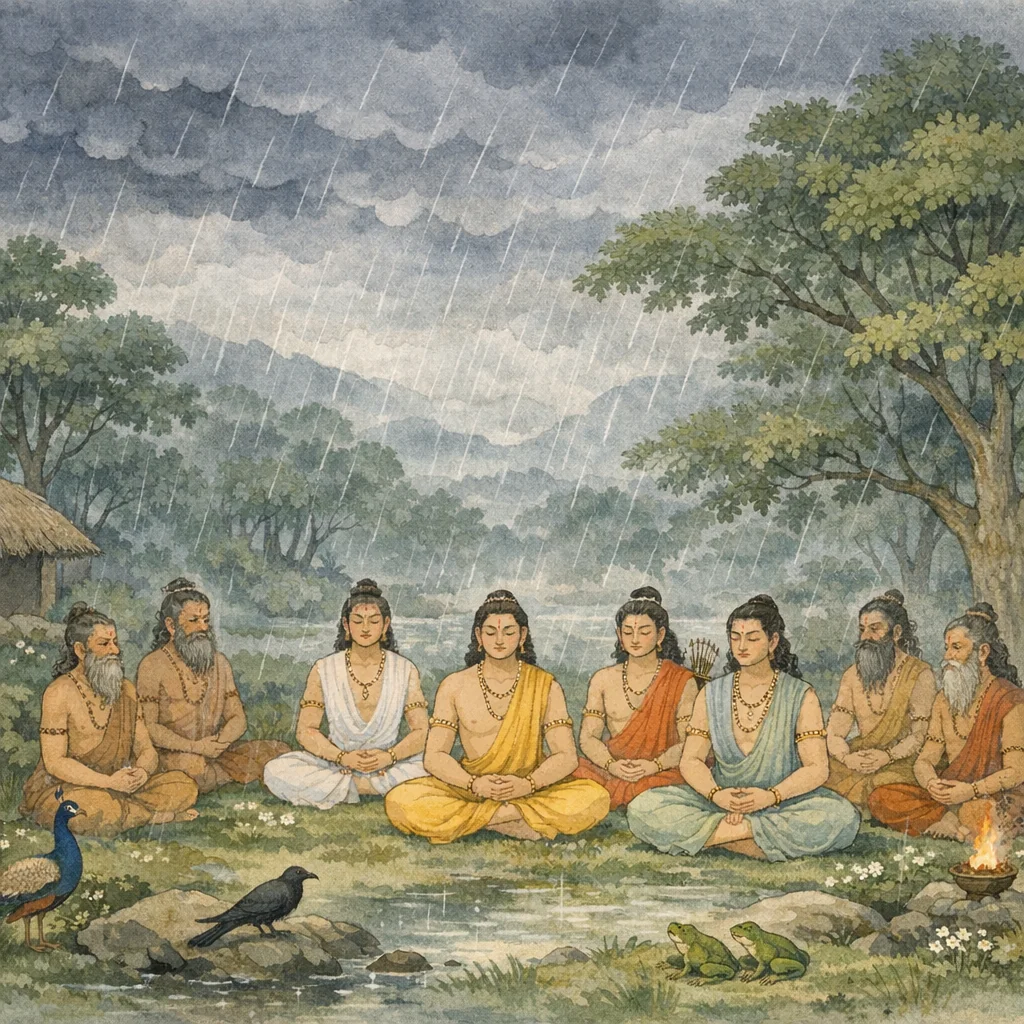
Chapter Arc: आकाश में महाघोष मेघों का घिर आना—दिशाएँ ढँक जाती हैं और दिन-रात अविरल वर्षा का घोष वन को एक नए, रहस्यमय आवरण में लपेट देता है। → जल से सब कुछ सम-विषम, नदी-थल, वृक्ष-पहाड़ का भेद मिटने लगता है; धरती पर घास उग आती है, डाँस और सर्प जैसे जीव निर्भय विचरते हैं, और वन के भीतर भीगते वराह-मृग-पक्षियों के विविध स्वरों से एक उन्मत्त, अनिश्चित वातावरण बनता है। → वर्षा-ऋतु के इस व्यापक रूपांतरण के बीच पाण्डव महात्मा तपस्वियों के साथ ‘उत्तम योग’ का समवेत अभ्यास/आचरण करते हैं—वन की चंचलता के बीच अंतःस्थिरता का शिखर। → कृष्ण-पक्ष के उदय पर पाण्डव धौम्य, सारथियों और सेवकों सहित काम्यक वन की ओर प्रस्थान करते हैं—ऋतु-परिवर्तन से उपजा ठहराव अब यात्रा में बदल जाता है। → काम्यक वन में प्रवेश के साथ अगली घटनाओं के लिए मंच सजता है—वनवास की नई भूमि पर कौन-सा उपाख्यान/परीक्षा पाण्डवों की प्रतीक्षा कर रही है?
Shlokas
Verse 1
इस प्रकार श्रीमहाभारत वनपर्वके अन्तर्गत आजगरपर्वमें भीमसेनके सर्पके भयसे छूटनेसे सम्बन्ध रखनेवाला एक सौ इक्यासीवाँ अध्याय पूरा हुआ ॥/ १८१९ ॥। (दाक्षिणात्य अधिक पाठके २ श्लोक मिलाकर कुल ५१ श्लोक हैं।) अऑडज आटर | आओ अप - ये ही क्रमश: ऊर्ध्वगति, मध्यगति और अधोगतिके नामसे प्रसिद्ध हैं। (मार्कण्डेयसमास्यापर्व) द्वयशीत्यधिकशततमो< ध्याय: वर्षा और शरद्-ऋतुका 8404 98 लक एवं आदिका पुनः द्ैतवनसे | प्रवेश वैशम्पायन उवाच निदाघान्तकर: काल: सर्वभूतसुखावह: । तत्रैव वसतां तेषां प्रावृट् समभिपद्यत,वैशम्पायनजी कहते हैं--जनमेजय! तदनन्तर ग्रीष्म-ऋतुकी समाप्ति सूचित करनेवाला वर्षाकाल आया, जो समस्त प्राणियोंको सुख पहुँचानेवाला था। पाण्डव अभी द्वैतवनमें ही थे, उसी समय वर्षा-ऋतु आ गयी
Vaiśampāyana said: “O Janamejaya, then came the season that marks the end of the scorching summer—bringing comfort to all living beings. While the Pāṇḍavas were still dwelling there in the Dvaitavana forest, the rainy season arrived upon them.”
Verse 2
छादयन्तो महाघोषा: खं दिशश्न बलाहका: । प्रववर्षुदिवारात्रमसिता: सततं तदा,तब काले-काले मेघ जोर-जोरसे गर्जना करते हुए आकाश और दिशाओंमें छा गये और दिन-रात निरन्तर जलकी वर्षा करने लगे
Vaiśaṃpāyana said: Then dark clouds, roaring loudly, spread over the sky and the quarters. They poured down rain continuously, day and night—an unbroken downpour that set a heavy, ominous atmosphere over the scene.
Verse 3
तपात्ययनिकेताश्ष शतशो5थ सहस््रश: । अपेतार्कप्रभाजाला: सविद्युद्धिमलप्रभा:,वे वर्षामें तम्बूके समान जान पड़ते थे। उनकी संख्या सैकड़ों और हजारोंतक पहुँच गयी थी। उन्होंने सूर्यके प्रभापुजजको तो ढँक दिया था और विद्युत्की निर्मल प्रभा धारण कर ली थी
Vaiśampāyana said: Then, in their hundreds and even thousands, there appeared those whose abode was in the season of heat. Their masses no longer bore the glare of the sun; instead, they shone with the spotless radiance of lightning, like rain-clouds gathered thickly in the sky. The scene underscores how nature’s overwhelming display can humble ordinary brilliance and signal a turning of time and circumstance.
Verse 4
विरूढशष्पा धरणी मत्तदंशसरीसूपा । बभूव पयसा सिक्ता शान्ता सर्वमनोरमा,धरतीपर घास जम गयी। मतवाले डाँस और सर्प आदि विचरने लगे। पृथ्वी जलसे अभिषिक्त होकर शान्त और सबके लिये मनोरम हो गयी
Vaiśampāyana said: The earth became covered with fresh shoots of grass, while intoxicated biting insects and creeping creatures such as serpents began to roam about. Sprinkled and refreshed by water, the land grew calm again—pleasant and delightful for all. The scene signals a return of natural balance after disturbance, suggesting that when sustaining resources (like water) are restored, the world settles into harmony and becomes fit for life and well-being.
Verse 5
न सम प्रज्ञायते किंचिदम्भसा समवस्तृते । सम॑ वा विषम वापि नद्यो वा स्थावराणि च,सब ओर इतना पानी भर गया कि ऊँचा-नीचा, समतल, नदी अथवा पेड़-पौधे आदिका पता नहीं चलता था
Vaiśampāyana said: When everything was covered over by water, nothing could be clearly made out—whether the ground was level or uneven, where the rivers ran, or even where the fixed things like trees and plants stood. The scene underscores how overwhelming calamity can erase ordinary distinctions and orientation, leaving beings dependent on discernment and restraint rather than familiar landmarks.
Verse 6
क्षुब्धतोया महावेगा: श्वसमाना इवाशुगा: । सिन्धव: शोभयांचक्रु: काननानि तपात्यये,वर्षा-ऋतुकी नदियाँ बड़े वेगसे छूटनेवाले शीघ्र-गामी बाणोंकी भाँति सनसनाती हुई चलती थीं। उनके जलमें हिलोरें उठती रहती थीं और वे कितने ही काननोंकी शोभा बढ़ाती थीं
Vaiśampāyana said: At the end of the summer’s heat, the rivers—their waters churned and their currents mighty—rushed on with a hissing sound like swift-flying arrows, raising wave after wave and enhancing the beauty of many forest-groves.
Verse 7
नदतां काननान्तेषु श्रूयन्ते विविधा: स्वना: । वृष्टिभिश्रछाद्यमानानां वराहमृगपक्षिणाम्,वनके भीतर वर्षाकी बौछारोंसे भीगते और बोलते हुए वराह, मृग और पक्षियोंकी भाँति-भाँतिकी बोलियाँ सुनायी देती थीं
Vaiśampāyana said: In the depths of the forest, many kinds of cries and calls could be heard—the varied sounds of boars, deer, and birds, drenched and muffled by the rain. The scene conveys a wilderness alive with creatures enduring the monsoon’s force, their voices rising from within the rain-soaked woods.
Verse 8
स्तोकका: शिखिनश्चैव पुंस्कोकिलगणै: सह । मत्ता: परिपतन्ति सम दर्दुराश्चैव दर्पिता:,पपीहा और मोर नर-कोकिलोंके साथ आनन्दोन्मत्त होकर इधर-उधर उड़ने लगे और मेढक भी घमण्डमें आकर इधर-उधर कूदते और टर्र-टर्र करते थे
Vaiśampāyana said: The cuckoos and the peacocks, along with flocks of male cuckoos, became intoxicated with joy and flew about in all directions; and the frogs too, puffed up with exuberance, leapt here and there, croaking loudly—signs of nature’s renewed vitality and the season’s swelling life-force.
Verse 9
तथा बहुविधाकारा प्रावृण्मेघानुनादिता । अभ्यतीता शिवा तेषां चरतां मरुधन्वसु,पाण्डव अभी मरुप्रदेशमें ही विचरते थे, तभी मेघोंकी गर्जनासे गूँजती तथा अनेक प्रकारके रूप-रंग लिये प्रकट हुई मंगलमयी वर्षा-ऋतु भी बीत गयी
Vaiśampāyana said: Thus, while the Pāṇḍavas were roaming in the desert-like Marudhanva region, the auspicious rainy season—resounding with the thunder of Prāvṛt clouds and displaying many changing forms—also passed by. The verse underscores how time and seasons move on even amid hardship, and how endurance in exile is sustained by accepting nature’s cycles without abandoning one’s resolve.
Verse 10
क्रौज्चहंससमाकीर्णा शरत् प्रमुदिताभवत् । रूढकक्षवनप्रस्था प्रसन्नजलनिम्नगा,तत्पश्चात् आनन्दमयी शरद्-ऋतुका शुभागमन हुआ। क्रौज्च और हंस आदि पक्षी चारों ओर विचरने लगे। वनोंमें और पर्वतीय शिखरोंपर कास, कुश आदि बहुत बढ़ गये थे। नदियोंका जल स्वच्छ हो गया। आकाश निर्मल होनेसे नक्षत्रोंका आलोक और उज्ज्वल हो उठा। सब ओर मृग और पक्षी किलोल करने लगे। महात्मा पाण्डवोंके लिये यह शरद्-ऋतु अत्यन्त सुखदायिनी थी
Vaiśampāyana said: When autumn arrived, it became a season of gladness. The landscape was filled with krauñca-cranes and swans; the uplands and forest-slopes were overgrown with fresh kāśa grass and other growth; and the rivers ran with clear, tranquil waters. In this purified, bright season—when the sky is limpid and living creatures move about joyfully—autumn proved especially comforting to the great-souled Pāṇḍavas during their forest life, offering a brief moral respite amid hardship.
Verse 11
विमलाकाशनक्षत्रा शरत् तेषां शिवाभवत् | मृगद्धिजसमाकीर्णा पाण्डवानां महात्मनाम्,तत्पश्चात् आनन्दमयी शरद्-ऋतुका शुभागमन हुआ। क्रौज्च और हंस आदि पक्षी चारों ओर विचरने लगे। वनोंमें और पर्वतीय शिखरोंपर कास, कुश आदि बहुत बढ़ गये थे। नदियोंका जल स्वच्छ हो गया। आकाश निर्मल होनेसे नक्षत्रोंका आलोक और उज्ज्वल हो उठा। सब ओर मृग और पक्षी किलोल करने लगे। महात्मा पाण्डवोंके लिये यह शरद्-ऋतु अत्यन्त सुखदायिनी थी
Vaiśampāyana said: For those high-souled Pāṇḍavas, the autumn season became auspicious and beneficent. The sky turned clear and the stars shone with renewed brilliance; the landscape was filled with roaming deer and birds. In that serene, purified atmosphere, the season brought them a quiet happiness amid their forest life.
Verse 12
दृश्यन्ते शान्तरजस: क्षपा जलदशीतला: । ग्रहनक्षत्रसड्घैश्व॒ सोमेन च विराजिता:,उस समयकी रातें धूलरहित एवं निर्मल दिखायी देती थीं। बादलोंके समान उनमें शीतलता थी। ग्रहों और नक्षत्रोंके समुदाय तथा चन्द्रमा उनकी शोभा बढ़ाते थे
Vaiśampāyana said: The nights appeared clear and free from dust, cool like rain-bearing clouds; adorned by the host of planets and constellations, and made splendid by the Moon.
Verse 13
कुमुदै: पुण्डरीकैश्न शीतवारिधरा: शिवा: । नदी: पुष्करिणीश्रैव ददृशु: समलंकृता:,पाण्डवोंने देखा, नदियाँ और पोखरियाँ कुमुदों तथा कमल-पुष्पोंसे अलंकृत हैं। उनमें शीतल जल भरा हुआ है और वे सबके लिये सुखदायिनी प्रतीत होती हैं
Vaiśampāyana said: The Pāṇḍavas beheld rivers and lotus-ponds beautifully adorned with white water-lilies and lotuses. Filled with cool, refreshing water, they appeared auspicious and soothing to all—an image of nature’s quiet benevolence amid the hardships of exile.
Verse 14
आकाशनीकाशतटां तीरवानीरसंकुलाम् । बभूव चरतां हर्ष: पुण्यतीर्था सरस्वतीम्,पावन तीर्थोंसे विभूषित सरस्वती नदीका तट आकाशके समान निर्मल दिखायी देता था। उसके दोनों किनारे बेंतकी लहलहाती हुई लताओंसे आच्छादित थे। वहाँ विचरते हुए पाण्डवोंको बड़ा आनन्द मिलता था
Vaiśampāyana said: The bank of the Sarasvatī, adorned with sacred tīrthas, appeared as pure and clear as the sky. Both shores were covered with luxuriant, waving cane-vines. As the Pāṇḍavas wandered there, they were filled with great delight.
Verse 15
ते वै मुमुदिरे वीरा: प्रसन्नसलिलां शिवाम् | पश्यन्तो दृढ्धन्वान: परिपूर्णा सरस्वतीम्,वीर पाण्डव सुदृढ़ धनुष धारण करनेवाले थे। उन्होंने स्वच्छ जलसे भरी हुई कल्याणमयी सरस्वतीका दर्शन करके बड़े आनन्दका अनुभव किया
Vaiśampāyana said: The heroic Pāṇḍavas, firm in their bows and steadfast of heart, rejoiced greatly on beholding the Sarasvatī—auspicious and serene, filled with clear, tranquil waters.
Verse 16
तेषां पुण्यतमा रात्रि: पर्वसंधौ सम शारदी । तत्रैव वसतामासीत् कार्तिकी जनमेजय,जनमेजय! उनके वहीं रहते समय पर्वकी संधि-वेलामें कार्तिककी शरत्पूर्णिमाकी परम पुण्यमयी रात्रि आयी
Vaiśampāyana said: While they were staying there, at the juncture of the sacred observance (parva), there came the most meritorious night—the autumnal full-moon night of Kārtika, O Janamejaya.
Verse 17
पुण्यकृद्धिर्महास त्त्वैस्तापसै: सह पाण्डवा: । तत् सर्वे भरतश्रेष्ठा: समूहुर्योगमुत्तमम्,उस समय भरतश्रेष्ठ पाण्डवोंने महान् सत्त्वगुणसे सम्पन्न, पुण्यात्मा, तपस्वी मुनियोंके साथ स्नान-दानादिके द्वारा उस उत्तम योगको पूर्णतः सफल बनाया
Vaiśaṃpāyana said: Then the Pāṇḍavas, together with great-souled ascetics rich in purity and merit—O best of the Bharatas—brought that supreme discipline (yoga) to completion through acts such as bathing and charitable giving.
Verse 18
तमिस्राभ्युदये तस्मिन् धौम्येन सह पाण्डवा: । सूतै: पौरोगवैश्वैव काम्यकं प्रययुर्वनम्,फिर कृष्ण-पक्षका उदय होनेपर पाण्डवलोग धौम्य मुनि, सारथिगण तथा पाकशालाध्यक्षके साथ काम्यक-वनकी ओर चल दिये
Vaiśampāyana said: When the dark fortnight (kṛṣṇa-pakṣa) began, the Pāṇḍavas—together with the sage Dhaumya, and accompanied by their charioteers and attendants—set out for the Kāmyaka forest.
Verse 182
इति श्रीमहाभारते वनपर्वणि मार्कण्डेयसमास्यापर्वणि काम्यकवनप्रवेशे द्यशीत्यधिकशततमो<ध्याय:
Thus, in the Śrī Mahābhārata, within the Vana Parva—under the section summarizing the discourse of Mārkaṇḍeya—this concludes the one-hundred-and-eighty-third chapter, concerning the Pāṇḍavas’ entry into the Kāmyaka forest.
Frequently Asked Questions
Atri’s dilemma concerns whether requesting wealth at a royal sacrifice risks improper dependence or reputational distortion, versus the dharmic obligation to secure resources for dependents through legitimate, socially sanctioned channels.
Sanatkumāra teaches that brahma and kṣatra are mutually sustaining institutions, and that the king—properly constituted—functions as a primary instrument for maintaining dharma and restraining adharma in society.
While no explicit phalaśruti is stated here, the chapter implicitly frames correct speech, lawful receipt of gifts, and redistribution as outcomes that preserve social order—presenting rājadharma and dāna as practical means for dharma’s continuity.