Adhyaya 178
Nahūṣa as Ajagara: Virtue Hierarchy, Karmic Gati, and the Psychology of Mind–Intellect
Upa-parva: Ajagara–Nahūṣa Saṃvāda (Dialogue with the Python/Serpent Nahūṣa)
Chapter 178 presents a multi-part discourse between Yudhiṣṭhira and a serpent (later disclosed as Nahūṣa). The exchange begins with an ethical inquiry: which actions yield the highest destination (anuttamā gati). The serpent proposes a compact program—giving to the worthy, speaking pleasantly, speaking truth, and remaining devoted to non-violence—then elaborates a contextual hierarchy among dāna, satya, priya-vākya, and ahiṃsā based on the gravity of the task at hand. Yudhiṣṭhira next asks about the certainty of karmic results and how an embodied or disembodied agent experiences objects; the serpent outlines three primary trajectories (human, heavenly, and animal births) conditioned by conduct, contrasting ahiṃsā-aligned causes with desire–anger–violence–greed that precipitate regression. The dialogue then turns technical: perception is mediated sequentially through mind (manas), with intellect (buddhi) generating discriminations; simultaneous grasping of all sense-objects is rejected. The serpent locates the self’s operative focus ‘between the eyebrows’ as a figurative seat for cognitive coordination. Finally, Nahūṣa recounts his fall from celestial privilege through pride, Agastya’s curse, and release through Yudhiṣṭhira’s dharmic conversation; the chapter closes by affirming that ethical disciplines—not birth—are the true means, and Bhīma is declared safe as Nahūṣa returns to heaven.
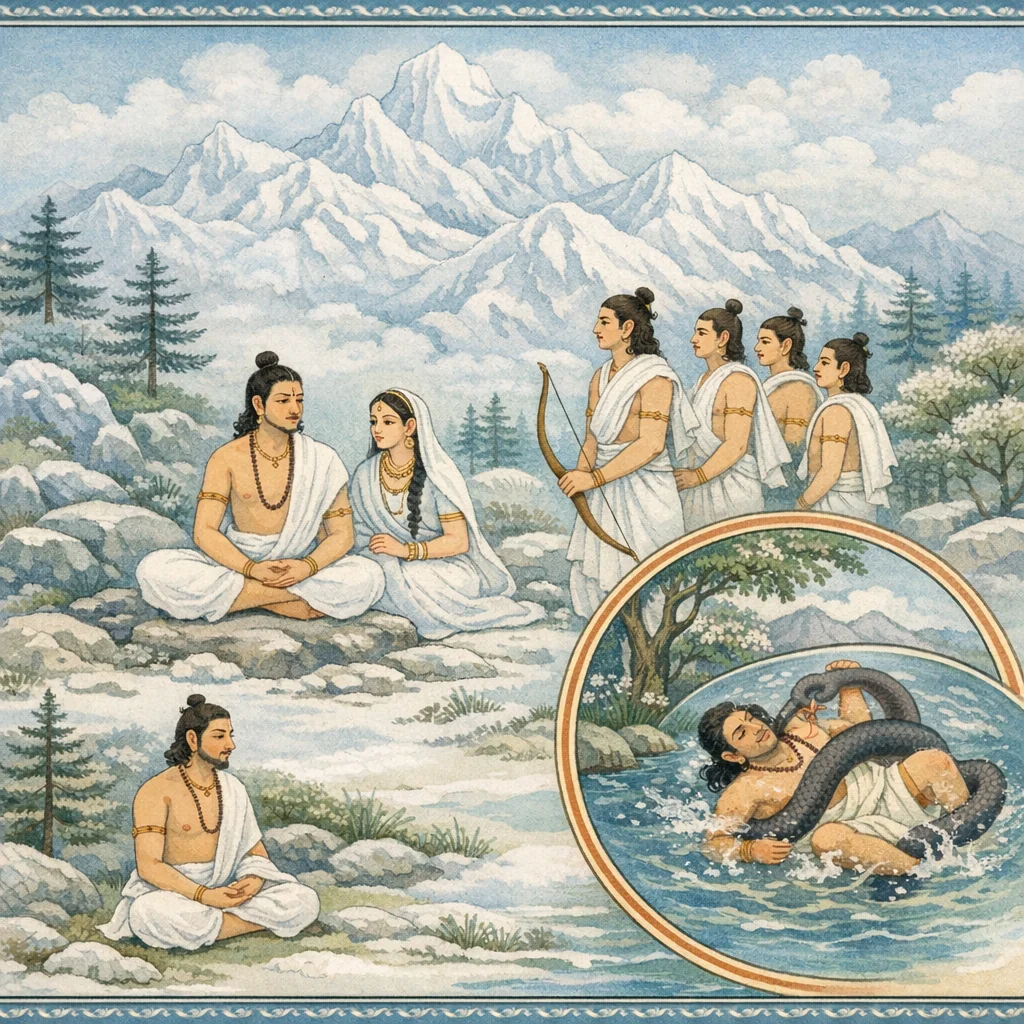
Chapter Arc: गन्धमादन से आगे बढ़ते हुए पाण्डवों की दृष्टि श्वेत-मेघ-प्रभ कैलास पर पड़ती है—और वनवास की कठोरता के बीच एक दिव्य शिखर उन्हें फिर से आशा और हर्ष देता है। → कैलास-दर्शन के उल्लास के साथ यात्रा का विस्तार होता है: वे कुबेर-प्रिय प्रदेशों, चैत्ररथ-सम वन-वैभव और सरस्वती-तट की रमणीयता में प्रवेश करते हैं; पर यह सौन्दर्य केवल विश्राम नहीं—वनवास के बारहवें वर्ष की दहलीज़ पर समय का दबाव और धर्म-पालन की कसौटी भी साथ चलती है। → सरस्वती-तट के निकट वह प्रसंग स्मरण में उभरता है जहाँ वृकोदर (भीम) ग्राह से जकड़े जाते हैं और धर्मराज युधिष्ठिर अपने तेज, धैर्य और धर्म-निष्ठा से संकट का निराकरण करते हैं—वन के सौन्दर्य के बीच अचानक जीवन-मरण का तीखा मोड़। → वृषपर्वा से भेंट और सत्कार से उनका शोक-मोह दूर होता है; चैत्ररथ-प्रकाश वन में वे एक संवत्सर तक मृगया-प्रधान जीवन बिताते हैं और फिर बारहवें वर्ष के समीप आते हुए तप, श्री और संयम से युक्त होकर आगे बढ़ते हैं। → बारहवें वर्ष का वन-विहार पूर्णता की ओर है—अज्ञातवास और आगामी परीक्षा की छाया सरस्वती-तट की शान्ति पर धीरे-धीरे उतरती है।
Shlokas
Verse 1
इस प्रकार श्रीमहाभारत वनपर्वके अन्तर्गत आजगरपर्वमें गन्धमादनसे प्रस्थानविषयक एक सौ छिह्तत्तरवाँ अध्याय पूरा हुआ ॥/ १७६ ॥/ हि न हुक है सप्तसप्तत्याधेकशततमोब< ध्याय: पाण्डवोंका गन्धमादनसे ह6/26:३40 4" 88:44 और विशाखयूप वनमें होते हुए सरस्वती-तटवर्ती द्वैतवनमें प्रवेश वैशम्पायन उवाच नगोत्तमं प्रस्रवणैरुपेतं दिशां गजै: किन्नरपक्षिभिश्न सुखं निवासं जहतां हि तेषां न प्रीतिरासीद् भरतर्षभाणाम्,वैशम्पायनजी कहते हैं--जनमेजय! पर्वतश्रेष्ठ गन्धमादन अनेकानेक निर्डरोंसे सुशोभित तथा दिग्गजों, किन्नरों और पक्षियोंसे सुसेवित होनेके कारण भरतवंशियों-में श्रेष्ठ पाण्डवोंके लिये एक सुखदायक निवास था, उसे छोड़ते समय उनका मन प्रसन्न नहीं था
Vaiśampāyana said: O Janamejaya, Gandhamādana—the finest of mountains—adorned with many waterfalls and frequented by the elephants of the quarters, as well as by Kinnaras and birds, had been a pleasant dwelling for the Pāṇḍavas, the best of the Bharata line. Yet when they had to leave that happy abode, their hearts were not filled with joy—showing how even the righteous, though disciplined, feel the weight of separation from a place of peace when duty and the journey onward demand departure.
Verse 2
ततस्तु तेषां पुनरेव हर्ष: कैलासमालोक्य महान् बभूव कुबेरकान्तं भरतर्षभाणां महीधरं वारिधरप्रकाशम्
Then, on beholding Mount Kailāsa, a great joy arose in them once again. That mountain—beloved of Kubera—appeared to those best of the Bharatas as a mighty peak, shining like a rain-bearing cloud, renewing their spirits as they approached a sacred and awe-inspiring realm.
Verse 3
तत्पश्चात् कुबेरके प्रिय भूधर कैलाशको, जो श्वेत बादलोंके समान प्रकाशित हो रहा था, देखकर भरतकुलभूषण पाण्बुपुत्रोंकोी पुनः महान् हर्ष प्राप्त हुआ ।। समुच्छूयान् पर्वतसंनिरोधान् गोष्ठान् हरीणां गिरिसेतुमाला: बहून् प्रपातांश्व॒ समीक्ष्य वीरा: स्थलानि निम्नानि च तत्र तत्र,नरश्रेष्ठ पाण्डव अपने हाथोंमें खड्ग और धनुष लिये हुए थे। वे ऊँचाई, पर्वतोंके सकरे स्थान, सिंहोंकी मादें, पर्वतीय नदियोंको पार करनेके लिये बने हुए पुल, बहुत-से झरने और नीची भूमियोंको जहाँ-तहाँ देखते हुए तथा मृग, पक्षी एवं हाथियोंसे सेवित दूसरे-दूसरे विशाल वनोंका अवलोकन करते हुए विश्वासपूर्वक आगे बढ़ने लगे
Then, after that, on seeing Mount Kailāsa—beloved of Kubera—shining like white clouds, the Pāṇḍu princes, ornaments of the Bharata line, were filled once more with great joy. Armed with sword and bow, those foremost of men advanced with steady confidence, observing here and there the lofty heights, narrow mountain passes, herds of deer, chains of mountain-bridges for crossing the streams, many waterfalls, and low-lying tracts; and they surveyed one vast forest after another, frequented by beasts, birds, and elephants.
Verse 4
तथैव चान्यानि महावनानि मृगद्धिजानेकपसेवितानि आलोकयन्तो$भिययु: प्रतीता- स्ते धन्विन: खड्गधरा नराग्रया:,नरश्रेष्ठ पाण्डव अपने हाथोंमें खड्ग और धनुष लिये हुए थे। वे ऊँचाई, पर्वतोंके सकरे स्थान, सिंहोंकी मादें, पर्वतीय नदियोंको पार करनेके लिये बने हुए पुल, बहुत-से झरने और नीची भूमियोंको जहाँ-तहाँ देखते हुए तथा मृग, पक्षी एवं हाथियोंसे सेवित दूसरे-दूसरे विशाल वनोंका अवलोकन करते हुए विश्वासपूर्वक आगे बढ़ने लगे
Vaiśampāyana said: In the same manner, those foremost of men—the Pāṇḍavas—bearing bows and swords, moved forward with steady confidence. As they went, they kept observing the terrain: heights and narrow mountain passes, lion-haunted tracts, bridges laid for crossing mountain rivers, many cascades, and low-lying stretches. They also surveyed other vast forests, frequented by deer, birds, and elephants—pressing on with alertness and resolve amid the hardships of exile.
Verse 5
वनानि रम्याणि नदी: सरांसि गुहा गिरीणां गिरिगह्वराणि एते निवासा: सततं बभूवु- दिवानिशं प्राप्प नरर्षभाणाम्,पुरुषरत्न पाण्डव कभी रमणीय वनोंमें, कभी सरोवरोंके किनारे, कभी नदियोंके तटपर और कभी पर्वतोंकी छोटी-बड़ी गुफाओंमें दिन या रातके समय ठहरते जाते थे। सदा ऐसे ही स्थानोंमें उनका निवास होता था
Vaiśampāyana said: For those bull-like men among humans (the Pāṇḍavas), delightful forests, riverbanks, lakes, and the caves and rocky hollows of mountains became their constant dwelling places. Moving on by day and by night, they repeatedly took shelter in such wild retreats—an image of endurance and disciplined life in exile.
Verse 6
ते दुर्गवासं बहुधा निरुष्य व्यतीत्य कैलासमचिन्त्यरूपम् आसेदुरत्यर्थमनोरमं ते तमाश्रमाग्रयं वृषपर्वणस्तु,अनेक बार दुर्गम स्थानोंमें निवास करके अचिन्त्यरूप कैलासपर्वतको पीछे छोड़कर वे पुनः वृषपर्वाके अत्यन्त मनोरम उस श्रेष्ठ आश्रममें आ पहुँचे
Vaiśampāyana said: After repeatedly enduring life in difficult, hard-to-reach places, and having passed beyond Mount Kailāsa of inconceivable form, they arrived again at that supremely delightful, excellent hermitage belonging to King Vṛṣaparvan.
Verse 7
समेत्य राज्ञा वृषपर्वणा ते प्रत्यर्चितास्तेन च वीतमोहा: शशंसिरे विस्तरश: प्रवासं गिरौ यथावद् वृषपर्वणस्ते
Having met with King Vṛṣaparvan, they were duly honored by him; and, their confusion dispelled, they reported in full the details of their sojourn on the mountain—exactly as it had occurred—to that very Vṛṣaparvan.
Verse 8
वहाँ राजा वृषपर्वासे मिलकर और उनसे भलीभाँति पूजित होकर उन सबका शोक- मोह दूर हो गया। फिर उन्होंने वृषपर्वासे गन्धमादन पर्वतपर अपने रहनेके वृत्तान्तका यथार्थरूपसे एवं विस्तारपूर्वक वर्णन किया ।। सुखोषितास्तस्य त एकरात्रं पुण्याश्रमे देवमहर्षिजुष्टे अभ्याययुस्ते बदरीं विशालां सुखेन वीरा: पुनरेव वासम्,उस पवित्र आश्रममें देवता और महर्षि निवास किया करते थे। वहाँ एक रात सुखपूर्वक रहकर वे वीर पाण्डव फिर विशालापुरीके बदरिकाश्रमतीर्थमें चले आये और वहाँ बड़े आनन्दसे रहे
Vaiśaṃpāyana said: Having spent a single night in that holy hermitage—frequented by the gods and great seers—the heroic Pāṇḍavas set out again with ease for the vast Badarī. There they resumed their stay in peace.
Verse 9
ऊषुस्ततस्तत्र महानुभावा नारायणस्थानगता: समग्रा: कुबेरकान्तां नलिनीं विशोका: सम्पश्यमाना: सुरसिद्धजुष्टाम्
Vaiśampāyana said: Then those great-souled ones stayed there together, having reached the sacred abode of Nārāyaṇa. Free from sorrow, they beheld the lotus-lake beloved of Kubera—frequented and honored by gods and perfected beings—an auspicious sight that calms the mind and elevates the heart.
Verse 10
तत्पश्चात् वहाँ भगवान् नर-नारायणके क्षेत्रमें आकर सभी महानुभाव पाण्डवोंने सुखपूर्वक निवास किया और शोकरहित हो कुबेरकी उस प्रिय पुष्करिणीका दर्शन किया, जिसका सेवन देवता और सिद्ध पुरुष किया करते हैं ।। तां चाथ दृष्टवा नलिनीं विशोका: पाण्डो: सुता: सर्वनरप्रधाना: ते रेमिरे नन्दनवासमेत्य द्विजर्षयो वीतमला यथैव,सम्पूर्ण मनुष्योंमें श्रेष्ठ वे पाण्डुपुत्र उस पुष्करिणीका दर्शन करके शोकरहित हो वहाँ इस प्रकार आनन्दका अनुभव करने लगे, मानो निर्मल ब्रह्मर्षिगण इन्द्रके नन्दनवनमें सानन्द विचर रहे हों
Then, having come to the sacred region of the blessed Nara and Nārāyaṇa, all the illustrious sons of Pāṇḍu dwelt there in comfort. Free from grief, they beheld Kubera’s beloved lotus-lake—one frequented even by gods and perfected beings. Seeing that lotus-filled pool, the foremost among men, Pāṇḍu’s sons, their sorrow eased, delighted there as though stainless seer-sages were roaming joyfully in Indra’s Nandana grove.
Verse 11
ततः क्रमेणोपययुर्न॒वीरा यथागतेनैव पथा समग्रा: विहृत्य मासं सुखिनो बदर्या किरातराज्ञो विषयं सुबाहो:,इसके बाद वे सारे नरवीर जिस मार्गसे आये थे, क्रमशः उसी मार्गसे चल दिये। बदरिकाश्रममें एक मासतक सुखपूर्वक विहार करके उन्होंने किरातनरेश सुबाहुके राज्यकी ओर प्रस्थान किया
Then, in due order, all those heroic men set out again by the very route on which they had come. Having spent a month in pleasant repose at Badarī—rest disciplined and renewing—they proceeded toward the territory of the Kirāta king Subāhu, keeping to the rightful path and proper sequence.
Verse 12
पीनांस्तुषारान् दरदांश्व॒ सर्वान् देशान् कुलिन्दस्य च भूमिरत्नान् अतीत्य दुर्ग हिमवत्प्रदेशं पुरं सुबाहोर्ददृशुर्नुवीरा:,कुलिन्दके तुषार, दरद आदि धन-धान्यसे युक्त और प्रचुर रत्नोंसे सम्पन्न देशोंको लाँघते हुए हिमालयके दुर्गम स्थानोंको पार करके उन नरवीरोंने राजा सुबाहुका नगर देखा
Vaiśampāyana said: Having crossed the prosperous lands of Tuṣāra and Darada, and all the regions of Kulinda rich in grain, wealth, and earth-born gems, and then passing through the difficult tracts of the Himālaya, those heroic men at last beheld the city of King Subāhu.
Verse 13
श्रुत्वा च तान् पार्थिवपुत्रपौत्रान् प्राप्तान् सुबाहुर्विषये समग्रान् प्रत्युद्ययौ प्रीतियुत: स राजा त॑ चाभ्यनन्दन् वृषभा: कुरूणाम्,राजा सुबाहुने जब सुना कि मेरे राज्यमें राजपुत्र पाण्डवगण पधारे हुए हैं, तब बहुत प्रसन्न होकर नगरसे बाहर आ उसने उन सबकी अगवानी की। फिर कुरुश्रेष्ठ युधिष्ठिर आदिने भी उनका बड़ा समादर किया
Vaiśampāyana said: Hearing that the sons and grandsons of kings—the Pāṇḍavas—had all arrived within his domain, King Subāhu, filled with joy, went out from the city to welcome them. And the foremost of the Kurus, headed by Yudhiṣṭhira, in turn received and honored him with due regard.
Verse 14
समेत्य राज्ञा तु सुबाहुना ते सूतैर्विशोकप्रमुखैश्न सर्वे सहेन्द्रसेनै: परिचारिकैश्न पौरोगवैर्ये च महानसस्था:,राजा सुबाहुसे मिलकर वे विशोक आदि अपने सारथियों, इन्द्रसेन आदि परिचारकों, अग्रगामी सेवकों तथा रसोइयोंसे भी मिले
Vaiśampāyana said: Having come together with King Subāhu, all of them also met with the charioteers headed by Viśoka, along with attendants such as Indrasena, the foremost household servants, and those stationed in the royal kitchen.
Verse 15
सुखोषितास्तत्र त एकरात्र॑ सूतान् समादाय रथांश्व सर्वान् घटोत्कचं सानुचरं विसृज्य ततोभ्ययुर्यामुनमद्रिराजम्,वहाँ उन सबने एक रात बड़े सुखसे निवास किया। पाण्डवोंने अपने सारे सारथियों तथा रथोंको साथ ले लिया और अनुचरोंसहित घटोत्कचको विदा करके वहाँसे पर्वतराजको प्रस्थान किया जहाँ यमुनाका उद्गम-स्थान है
Vaiśampāyana said: Having spent one night there in comfort, they gathered all their charioteers, along with their chariots and horses. Then, dismissing Ghaṭotkaca together with his attendants, they set out for the king of mountains by the Yamunā—toward the place where the river has its source.
Verse 16
तस्मिन् गिरौ प्रस्नरवणोपपन्न- हिमोत्तरीयारुणपाण्डुसानौ विशाखयूपं समुपेत्य चक्ु- स्तदा निवासं पुरुषप्रवीरा:,झरनोंसे युक्त हिमराशि उस पर्वतरूपी पुरुषके लिये उत्तरीयका काम करती थी और उसका अरुण एवं श्वेत रंगका शिखर बालसूर्यकी किरणें पड़नेसे सफेद एवं लाल पगड़ीके समान शोभा पाता था। उसके ऊपर विशाखयूप नामक वनमें पहुँचकर नरवीर पाण्डवोंने उस समय निवास किया
Vaiśampāyana said: On that mountain—where the sound of cascading streams was ever present, and where snow lay upon the slopes like an upper garment, its summit shining in reddish and pale-white hues—the foremost of men, the Pāṇḍavas, reached the forest called Viśākhayūpa and made their dwelling there at that time.
Verse 17
वराहनानामृगपक्षिजुष्ट महावन चैत्ररथप्रकाशम् शिवेन पार्था मृगयाप्रधाना: संवत्सरं तत्र वने विजहुः,वह विशाल वन चैत्ररथ वनके समान शोभायमान था। वहाँ सूअर, नाना प्रकारके मृग तथा पक्षी निवास करते थे। उन दिनों पाण्डवोंका वहाँ हिंस्र जीवोंको मारना ही प्रधान काम था। वहाँ वे एक वर्षतक बड़े सुखसे विचरते रहे
Vaiśampāyana said: The Pārthas spent a full year roaming in that great forest, bright and lovely like Caitraratha, frequented by boars, many kinds of deer, and birds. Living there under auspicious conditions, their chief occupation was hunting—part of their forest discipline and survival, not mere sport.
Verse 18
तत्राससादातिबलं भुजड़ं क्षुधार्दितं मृत्युमिवोग्ररूपम् वृकोदर: पर्वतकन्दरायां विषादमोहव्यथितान्तरात्मा,उसी यात्रामें भीमसेन एक दिन पर्वतकी कन्दरामें भूखसे पीड़ित एक अजगरके पास जा पहुँचे, जो अत्यन्त बलवान होनेके साथ ही मृत्युके समान भयानक था। उस समय उनकी अनन््तरात्मा विषाद एवं मोहसे व्यथित हो उठी
Vaiśampāyana said: There, Vṛkodara (Bhīma) came upon a mighty serpent, tormented by hunger, dreadful in form like Death itself, in a mountain cave. At that moment his inner being was shaken—afflicted by dejection and delusion.
Verse 19
दीपो5भवद् यत्र वृकोदरस्य युधिष्ठिरो धर्मभृतां वरिष्ठ: अमोक्षयद् यस्तमनन्ततेजा ग्राहेण संवेष्टितसर्वगात्रम्,उस अवसरपर धर्मात्माओंमें श्रेष्ठ अत्यन्त तेजस्वी युधिष्ठिर भीमसेनके लिये द्वीपकी भाँति अवलम्ब हो गये। अजगरने भीमसेनके सम्पूर्ण शरीरको लपेट लिया था, परंतु युधिष्ठिरने (अजगरको उसके प्रश्नोंके उत्तरद्वारा संतुष्ट करके) उन्हें छुड़ा दिया
Vaiśampāyana said: In that crisis, Yudhiṣṭhira—foremost among the upholders of dharma—became like an island-lamp of refuge for Vṛkodara (Bhīma). When the serpent had coiled around Bhīma’s entire body, the infinitely radiant Yudhiṣṭhira freed him by steadfast dharma, satisfying the captor through right answers rather than violence.
Verse 20
ते द्वादशं वर्षमुपोपयातं वने विहर्तु कुरव: प्रतीता: तस्माद् वनाच्चैत्ररथप्रकाशात् श्रिया ज्वलन्तस्तपसा च युक्ता:
Vaiśampāyana said: When the twelfth year had arrived, the Kurus, resolved to pass their time in the forest, set out from that woodland—bright like Citraratha—radiant with prosperity and strengthened by austerity.
Verse 21
ततश्न यात्वा मरुधन्वपारश्व सदा भरनुर्वेदरतिप्रधाना: सरस्वतीमेत्य निवासकामा: सरस्ततो द्वैतवनं प्रतीयु:
Vaiśaṃpāyana said: Then, having gone to the region adjoining Marudhanva, those foremost in delighting in the Veda and in the bearing of arms, desiring a place to dwell, reached the Sarasvatī; and from that lake they proceeded to the Dvaitavana forest.
Verse 22
अब इन पाण्डवोंके वनवासका बारहवाँ वर्ष आ पहुँचा था। उसे भी वनमें सानन्द व्यतीत करनेके लिये उनके मनमें बड़ा उत्साह था। अपनी अद्भुत कान्तिसे प्रकाशित होते हुए तपस्वी पाण्डव चैत्ररथ वनके समान शोभा पानेवाले उस वनसे निकलकर मरुभूमिके पास सरस्वतीके तटपर गये और वहीं निवास करनेकी इच्छासे द्वैतवनके द्वैत सरोवरके समीप गये। उस समय पाण्डवोंका विशेष प्रेम सदा धनुर्वेदमें ही लक्षित होता था ।। समीक्ष्य तान् द्वैतवने निविष्टान् निवासिनस्तत्र ततो5भिजग्मु: तपोदमाचारसमाधियुक्ता- स्तृणोदपात्रावरणाश्मकुट्टा:,उन्हें द्वैतववनमें आया देख वहाँके निवासी उनके दर्शनके लिये निकट आये। वे सब-के- सब तपस्या, इन्द्रिय-संयम, सदाचार और समाधिमें तत्पर रहनेवाले थे। तिनकेकी चटाई, जलपात्र, ओढ़नेका कपड़ा और सिल-लोढ़े--यही उनके पास सामग्री थी
Seeing the Pāṇḍavas settled in the Dvaita forest, the local forest-dwellers came forward to meet them. They were all devoted to austerity, self-restraint, right conduct, and meditative absorption; their simple possessions were only grass-mats, water-vessels, a covering cloth, and stone implements for grinding.
Verse 23
प्लक्षाक्षरोहीतकवेतसाश्र तथा बदर्य: खदिरा: शिरीषा: बिल्वेड्गुदा: पीलुशमीकरीरा: सरस्वतीतीररुहा बभूवु:,सरस्वतीके तटपर पाकड़, बहेड़ा, रोहितक, बेंत, बेर, खैर, सिरस, बेल, इंगुदी, पीलु, शमी और करीर आदिके वृक्ष खड़े थे। वह नदी यक्ष, गन्धर्व और महर्षियोंको प्रिय थी। देवताओंकी तो वह मानो बस्ती ही थी। राजपुत्र पाण्डव बड़ी प्रसन्नता और सुखसे वहाँ विचरने और निवास करने लगे
Vaiśampāyana said: Along the banks of the Sarasvatī stood many trees—plakṣa, akṣa, rohītaka, vetasa, and also jujube, khadira, and śirīṣa, as well as bilva, iṅgudī, pīlu, śamī, and karīra—growing thickly on the river’s edge. The river was beloved of Yakṣas, Gandharvas, and great seers, seeming like a very dwelling-place of the gods; and the royal sons, the Pāṇḍavas, roamed and dwelt there in gladness and ease.
Verse 24
तां यक्षगन्धर्वमहर्षिकान्ता- मागारभूतामिव देवतानाम् सरस्वती प्रीतियुता श्चरन्त: सुखं विजहुर्नरदेवपुत्रा:,सरस्वतीके तटपर पाकड़, बहेड़ा, रोहितक, बेंत, बेर, खैर, सिरस, बेल, इंगुदी, पीलु, शमी और करीर आदिके वृक्ष खड़े थे। वह नदी यक्ष, गन्धर्व और महर्षियोंको प्रिय थी। देवताओंकी तो वह मानो बस्ती ही थी। राजपुत्र पाण्डव बड़ी प्रसन्नता और सुखसे वहाँ विचरने और निवास करने लगे
Vaiśaṃpāyana said: Delighting in the Sarasvatī—beloved of Yakṣas, Gandharvas, and great seers, and seeming like a very dwelling-place of the gods—the sons of the king (the Pāṇḍavas) wandered there with affection and lived joyfully, passing their time in contentment.
Verse 177
इति श्रीमहाभारते वनपर्वणि आजगरपर्वणि पुनर्द्धतवनप्रवेशे सप्तसप्तत्यधिकशततमो<ध्याय:
Thus ends the one-hundred-and-seventy-eighth chapter of the Vana Parva of the Śrī Mahābhārata, within the section known as the Ājagara episode, concerning the renewed entry into the forest.
Frequently Asked Questions
How to prioritize competing virtues—dāna, satya, pleasing speech, and ahiṃsā—when each is commendable, yet real situations demand a ranked choice based on consequences and moral weight.
Experience is mediated through instruments: the mind moves through objects in sequence, while intellect forms discriminations; therefore, ‘simultaneous’ grasp of all sense-objects is not supported within this model.
Yes: Nahūṣa’s narrative functions as exemplum—pride causes decline, while disciplined virtues (satya, dama, tapas, yoga, ahiṃsā, dāna) enable restoration; moral attainment is presented as conduct-based rather than birth-based.