Adhyaya 118
तीर्थयात्रा: सागरतीर्थ-शूर्पारक-प्रभासगमनम् (Pilgrimage to Sea Tīrthas, Śūrpāraka, and Prabhāsa)
Upa-parva: Tīrtha-yātrā (Pilgrimage Circuit) — Coastal and Western Sacred Sites
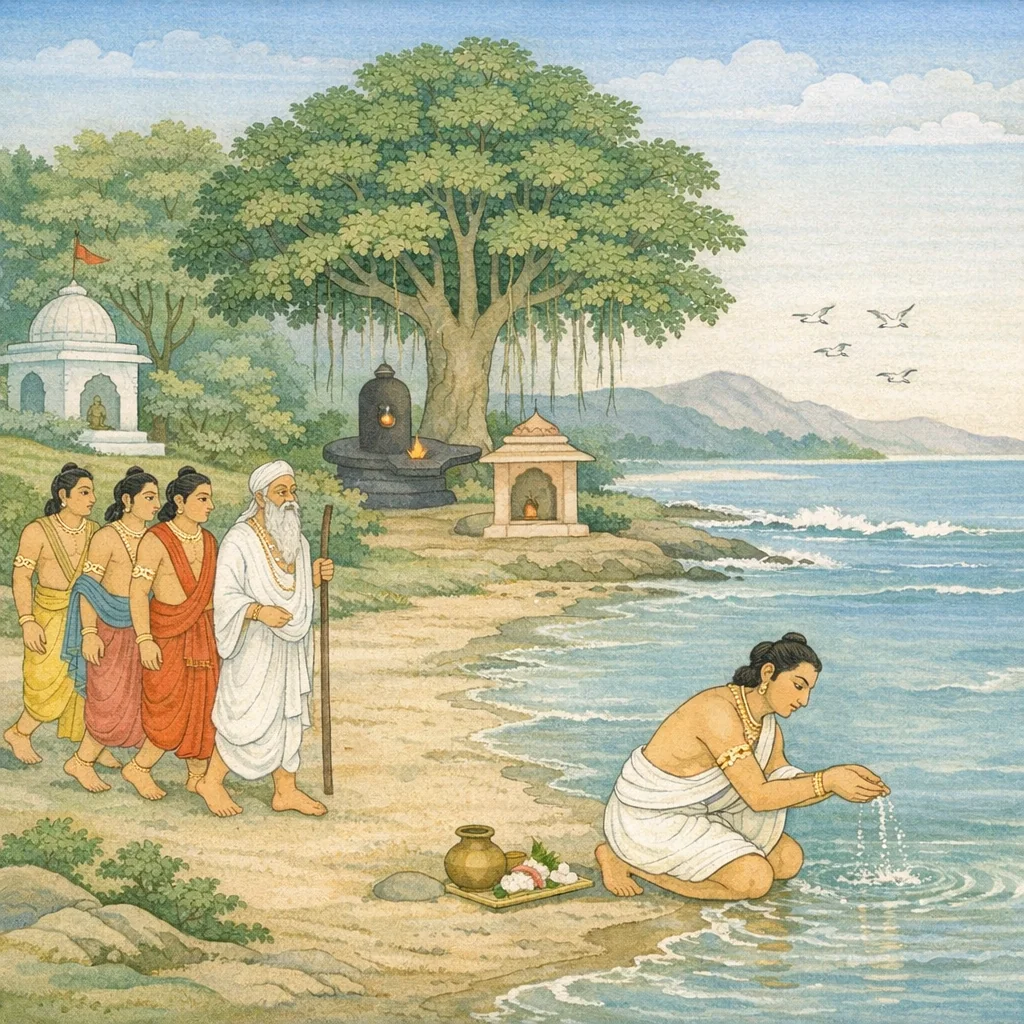
Vaiśaṃpāyana describes Yudhiṣṭhira’s sequential visitation of sacred fords and coastal holy places. The king, accompanied by his brothers and Draupadī, performs repeated ritual bathings (abhiṣeka), offerings to ancestors and deities, and substantial gifts to Brahmin specialists, while also commemorating Arjuna’s extraordinary feats and gaining joy through sage-approval. The itinerary moves through Draviḍa regions toward ocean-associated tīrthas, including Agastya-related sanctuaries, the Godāvarī’s sea-ward course, and the highly praised Śūrpāraka, where revered altars and divine abodes are enumerated (Vasus, Maruts, Aśvins, Indra, Viṣṇu, Savitṛ, Soma, Rudra, Sarasvatī, Siddhas, Pūṣan, and others). After diverse fasts and donations, the party reaches the famed Prabhāsa, where Yudhiṣṭhira undertakes a twelve-day austerity with minimal sustenance and ritual fire observances. Hearing of this intense tapas, Balarāma and Kṛṣṇa arrive with Vṛṣṇi chiefs; seeing the Pandavas’ hardship and Draupadī’s undeserved suffering, they respond with visible grief, then exchange formal honors and receive a full account of the exile and Arjuna’s mission for celestial weapons.
Chapter Arc: लोमश ऋषि परीक्षितनन्दन जनमेजय को बताते हैं कि सदाचारी पाण्डुपुत्र युधिष्ठिर, भाइयों सहित अभिषिक्त-सा संयम धारण करके, समुद्रगामिनी पुण्य-धारा की ओर तीर्थयात्रा में आगे बढ़ते हैं। → युधिष्ठिर गोदावरी-प्रवाह और समुद्र-संबद्ध अनेक तीर्थों में क्रमशः स्नान-दान करते हुए देवगणों (वसु, मरुत, आदित्य), इन्द्र-विष्णु-सविता, चन्द्र-दिवाकर, वरुण, साध्य, धाता, पितृगण, रुद्र-गण तथा सरस्वती-सिद्धगण आदि के पुण्यायतनों का दर्शन करते हैं—यात्रा का विस्तार उनके मन में ‘कृतकृत्यता’ और ‘अभीष्ट-प्राप्ति’ की तीव्र आकांक्षा जगाता है। → समुद्र-तीर्थों का क्रम पूर्ण करते हुए वे शूर्पारक जैसे परमपुण्य स्थल का दर्शन करते हैं; वहीं तीर्थ-सम्पदा का समुच्चय उनके भीतर ‘धर्म-यात्रा’ की पराकाष्ठा बनकर उभरता है—देवताओं का तर्पण, ब्राह्मणों का सत्कार, और मन का परिपूर्ण होना। → युधिष्ठिर अपने भाइयों को उन महापुरुषों के वन-वास, पराक्रम और इन्द्र-लोक-गमन जैसी कथाओं/प्रसंगों का स्मरण कराते हैं; यह सुनकर पाण्डव (और साथ के महात्मा) दुःखार्ति से आँसू बहाते हैं—तीर्थयात्रा बाह्य से अंतर्मुखी शुद्धि में परिणत होती है। → प्रभास-तीर्थ में आगे ‘यादव-पाण्डव समागम’ का प्रसंग सन्निकट है, जहाँ तीर्थयात्रा का फल मानवीय मिलन और राजधर्म के नए संकेतों में बदलने वाला है।
Shlokas
Verse 1
इस प्रकार श्रीमहाभारत वनपर्वके अन्तर्गत तीर्थयात्रापर्वमें लोमशती र्थयात्राके प्रस॑ंगमें कार्तवीर्योपाख्यानविषयक एक सौ सत्रहवाँ अध्याय पूरा हुआ ॥/ ११७ ॥। हि मय ० | है >> अष्टादशाधिकशततमोब&् ध्याय: युधिष्ठिरका विभिन्न तीथॉमें 24% प्रभासक्षेत्रमें पहुँचकर तपस्यामें प्रवृत्त होना और [का पाण्डवोंसे मिलना वैशम्पायन उवाच गच्छन् स तीर्थानि महानुभाव: पुण्यानि रम्याणि ददर्श राजा | सर्वाणि विप्रैरुषशोभितानि क्वचित् क्वचिद् भारत सागरस्य,वैशम्पायनजी कहते हैं--जनमेजय! आगे जाते हुए महानुभाव राजा युधिष्छिरने समुद्रतटके समस्त पुण्य तीर्थोंका दर्शन किया। वे सभी तीर्थ परम मनोहर थे। उनमें कहीं- कहीं ब्राह्मणलोग निवास करते थे, जिससे उन तीर्थोंकी बड़ी शोभा होती थी
Vaiśampāyana said: As he journeyed on, the illustrious king Yudhiṣṭhira beheld the sacred fords—holy and delightful—along the sea-coast. Here and there those tīrthas were graced by the presence of brāhmaṇas dwelling there, which heightened their sanctity and splendor.
Verse 2
स वृत्तवांस्तेषु कृताभिषेक: सहानुजः: पार्थिवपुत्रपौत्र: । समुद्रगां पुण्यतमां प्रशस्तां जगाम पारिक्षित पाण्डुपुत्र:,परीक्षितनन्दन! सदाचारी पाण्डुकुमार युधिष्ठिर कश्यपपुत्र सूर्यदेवके पौत्र थे (क्योंकि उनकी उत्पत्ति सूर्यकुमार धर्मसे हुई थी)। वे भाइयोंसहित उन तीर्थोमें स्नान करके समुद्रगामिनी पुण्यमयी प्रशस्ता नदीके तटपर गये
Vaiśampāyana said: Having duly performed the prescribed bathing rites at those sacred fords, the righteous son of Pāṇḍu—Yudhiṣṭhira, descendant of kings—set out with his younger brothers and reached a most holy and renowned river that flows to the sea, O Parīkṣit.
Verse 3
तत्रापि चाप्लुत्य महानुभाव: संतर्पयामास सका सुरांश्व । द्विजातिमुख्येषु धनं गोदावरीं सागरगामगच्छत्,महानुभाव युधिष्ठटिरने वहाँ भी स्नान करके देवताओं और पितरोंका तर्पण किया तथा श्रेष्ठ ब्राह्यणोंको धन दान करके सागरगामिनी गोदावरी नदीकी ओर प्रस्थान किया
There too, that great-souled one bathed and offered tarpaṇa to the gods and the ancestors; then, having bestowed wealth upon the foremost brāhmaṇas, he set out toward the Godāvarī, the river that flows to the sea.
Verse 4
ततो विपाप्मा द्रविडेषु राजन् समुद्रमासाद्य च लोकपुण्यम् । अगस्त्यतीर्थ च महापवित्रं नारीतीर्थान्यथ वीरो ददर्श,जनमेजय! गोदावरीमें स्नान करके पवित्र हो वे वहाँसे द्रविड़देशमें घूमते हुए संसारके पुण्यमय तीर्थ समुद्रके तटपर गये। वहाँ स्नानादि करनेके पश्चात् वीर पाण्डुकुमारने आगे बढ़कर परम पवित्र अगस्त्यतीर्थ तथा -नारीतीर्थोंका दर्शन किया
Vaiśampāyana said: Then that hero, now cleansed of sin, O King, wandered through the Draviḍa lands and reached the sea-shore, a sacred place renowned for the merit it bestows upon the world. After bathing and performing the proper observances there, the valiant son of Pāṇḍu went on and beheld the supremely pure Agastya-tīrtha, and also the various holy fords known as the Nārī-tīrthas, O Janamejaya.
Verse 5
तत्रार्जुनस्थाग्रय धनुर्धरस्य निशम्य तत् कर्म नरैरशक्यम् | सम्पूज्यमान: परमर्षिसड्घै: परां मुर्द पाण्डुसुत: स लेभे,वहाँ श्रेष्ठ धनुर्धर अर्जुनके उस पराक्रमको, जो दूसरे मनुष्योंके लिये असम्भव था, सुनकर पाण्डुनन्दन युधिष्ठिरको बड़ी प्रसन्नता प्राप्त हुई। उन तीर्थोमें बड़े-बड़े ऋषिगण भी उनका सत्कार करते थे। जनमेजय! द्रौपदी तथा भाइयोंके साथ राजा युधिष्ठिरने उन पाँचों तीर्थोमें स्नान करके अर्जुनके पराक्रमकी प्रशंसा करते हुए बड़े हर्षका अनुभव किया
There, hearing of the deed of Arjuna—the foremost of bowmen—an exploit impossible for ordinary men, that son of Pāṇḍu (Yudhiṣṭhira) attained supreme joy. Honoured and welcomed by assemblies of great seers, he rejoiced, praising Arjuna’s prowess.
Verse 6
स तेषु तीर्थेष्वभिषिक्तगात्र: कृष्णासहाय: सहितो<्नुजैश्न । सम्पूजयन् विक्रममर्जुनस्य रेमे महीपाल पति: पृथिव्या:,वहाँ श्रेष्ठ धनुर्धर अर्जुनके उस पराक्रमको, जो दूसरे मनुष्योंके लिये असम्भव था, सुनकर पाण्डुनन्दन युधिष्ठिरको बड़ी प्रसन्नता प्राप्त हुई। उन तीर्थोमें बड़े-बड़े ऋषिगण भी उनका सत्कार करते थे। जनमेजय! द्रौपदी तथा भाइयोंके साथ राजा युधिष्ठिरने उन पाँचों तीर्थोमें स्नान करके अर्जुनके पराक्रमकी प्रशंसा करते हुए बड़े हर्षका अनुभव किया
Vaiśaṃpāyana said: Having bathed in those sacred fords, King Yudhiṣṭhira—the lord of the earth—accompanied by Kṛṣṇā (Draupadī) and joined by his younger brothers, rejoiced. As he honored and praised Arjuna’s valor, he experienced deep gladness; and in those holy places great ṛṣis, too, received and honored them.
Verse 7
ततः सहस्राणि गवां प्रदाय तीर्थेषु तेष्वम्बुधरोत्तमस्य । हृष्ट: सह भ्रातृभिरर्जुनस्य संकीर्तयामास गवां प्रदानम्,तदनन्तर समुद्रतटवर्ती उन सभी तीर्थोर्में सहस्रों गोदान करके भाइयोंसहित युधिष्छिरने प्रसन्नतापूर्वक अर्जुनके द्वारा किये हुए गोदानका बारंबार वर्णन किया
Then, after giving away thousands of cows at those sacred fords along the shore of the great ocean, Yudhiṣṭhira—delighted and accompanied by his brothers—repeatedly proclaimed and celebrated Arjuna’s act of gifting cows.
Verse 8
स तानि तीर्थानि च सागरस्य पुण्यानि चान्यानि बहूनि राजन । क्रमेण गच्छन् परिपूर्णकाम: शूर्पारक॑ पुण्यतमं ददर्श,राजन! समुद्रसम्बन्धी तथा अन्य बहुत-से पुण्य तीर्थो्में क्रमश: भ्रमण करते हुए पूर्णकाम राजा युधिष्ठिरने अत्यन्त पुण्यमय शूर्पारकतीर्थका दर्शन किया
O king, journeying in due order through the ocean’s sacred fords and many other holy places, Yudhiṣṭhira—his aims fulfilled—beheld the supremely meritorious tīrtha of Śūrpāraka.
Verse 9
तत्रोदथे: कंचिदतीत्य देशं ख्यातं पृथिव्यां वनमाससाद । तप्तं सुरैस्तत्र तपः पुरस्ता- दिष्टं तथा पुण्यपरैनरिन्द्रै:,वहाँ समुद्रके कुछ भागको लाँघकर वे एक ऐसे वनमें आये जो भूमण्डलमें सर्वत्र विख्यात था। वहाँ पूर्वकालमें देवताओंने तपस्या की थी और पुण्यात्मा नरेशोंने यज्ञोंका अनुष्ठान किया था
Vaiśampāyana said: Having crossed a certain stretch of the ocean, they reached a forest renowned throughout the world. In former times the gods had practiced austerities there, and likewise righteous kings—rich in merit—had performed sacrificial rites.
Verse 10
स तत्र तामग्रयधनुर्धरस्य वेदीं ददर्शायतपीनबाहु: । ऋचीकपुत्रस्थ तपस्विसड्चै: समावृतां पुण्यकृदर्चनीयाम्,लम्बी और मोटी भुजाओंवाले युधिष्ठिरने उस वनमें धनुर्धरशिरोमणि ऋचीकवंशी परशुरामजीकी वेदी देखी, जो पुण्यात्मा पुरुषोंके लिये पूजनीय थी तथा तपस्वियोंके समुदाय उसे सदा घेरे रहते थे
Vaiśampāyana said: There, Yudhiṣṭhira—broad-shouldered and strong-armed—beheld the sacred altar of the foremost of bowmen, Paraśurāma, the descendant of Ṛcīka. Revered by the righteous, it was continually surrounded by assemblies of ascetics.
Verse 11
ततो वसूनां वसुधाधिप: स मरुठ्गणानां च तथाश्रिनोशक्ष । वैवस्वतादित्य धने श्वराणा- मिन्द्रस्य विष्णो: सवितुर्विभोश्व,राजन! तत्पश्चात् उन महात्मा नरेशने वसु, मरुठ्वण, अश्विनीकुमार, यम, आदित्य, कुबेर, इन्द्र, विष्णु, भगवान् सविता, शिव, चन्द्रमा, सूर्य, वरुण, साध्यगण, धाता, पितृगण, अपने गणोंसहित रुद्र, सरस्वती, सिद्धसमुदाय तथा अन्य पुण्यमय देवताओंके परम पवित्र और मनोहर मन्दिरोंके दर्शन किये
Vaiśampāyana said: Then that king, O ruler, beheld the sacred and delightful shrines of many divine hosts—the Vasus and Maruts, the Aśvin twins, Yama, the Ādityas, Kubera lord of wealth, Indra, Viṣṇu, the venerable Savitṛ, Śiva, the Moon and the Sun, Varuṇa, the Sādhyas, Dhātṛ, the Pitṛs, Rudra with his attendants, Sarasvatī, the assembly of Siddhas, and other auspicious deities—each with their own retinues.
Verse 12
भवस्य चन्द्रस्य दिवाकरस्य पतेरपां साध्यगणस्य चैव । धातु: पितृणां च तथा महात्मा रुद्रस्य राजन् सगणस्य चैव,राजन! तत्पश्चात् उन महात्मा नरेशने वसु, मरुठ्वण, अश्विनीकुमार, यम, आदित्य, कुबेर, इन्द्र, विष्णु, भगवान् सविता, शिव, चन्द्रमा, सूर्य, वरुण, साध्यगण, धाता, पितृगण, अपने गणोंसहित रुद्र, सरस्वती, सिद्धसमुदाय तथा अन्य पुण्यमय देवताओंके परम पवित्र और मनोहर मन्दिरोंके दर्शन किये
Vaiśampāyana said: “O king, he beheld the sacred shrines of Bhava (Śiva), of the Moon, of the Sun, of Varuṇa the lord of waters, and of the host of Sādhyas; also of Dhātṛ and of the Pitṛs (the Ancestors); and likewise of the great-souled Rudra together with his attendant hosts.”
Verse 13
सरस्वत्या: सिद्धगणस्य चैव पुण्याश्न ये चाप्यमरास्तथान्ये । पुण्यानि चाप्यायतनानि तेषां ददर्श राजा सुमनोहराणि,राजन! तत्पश्चात् उन महात्मा नरेशने वसु, मरुठ्वण, अश्विनीकुमार, यम, आदित्य, कुबेर, इन्द्र, विष्णु, भगवान् सविता, शिव, चन्द्रमा, सूर्य, वरुण, साध्यगण, धाता, पितृगण, अपने गणोंसहित रुद्र, सरस्वती, सिद्धसमुदाय तथा अन्य पुण्यमय देवताओंके परम पवित्र और मनोहर मन्दिरोंके दर्शन किये
Vaiśampāyana said: “The king beheld the supremely pure and delightful sanctuaries of Sarasvatī, of the hosts of Siddhas, and of other deathless gods who partake of sacred offerings. He saw their holy abodes, most fair to the eye.”
Verse 14
तेषूपवासान् विबुधानुपोष्य दत्त्वा च रत्नानि महान्ति राजा । तीर्थेषु सर्वेषु परिप्लुताड़: पुन: स शूर्पारकमाजगाम,उन तीर्थोंके निकट निवास करनेवाले दिद्वान् ब्राह्मणोंको वस्त्राभूषणोंसे आच्छादित एवं विभूषित करके उन्हें बहुमूल्य रत्नोंकी भेंट दे वहाँके सभी तीर्थोमें सनान करके महाराज युधिष्ठिर पुनः शूर्परिक-क्षेत्रमें लौट आये
Vaiśampāyana said: “Having duly honored the learned Brahmins who lived near those sacred places—sustaining them during their fasts, clothing and adorning them, and presenting them with precious gems—the king bathed at all the tīrthas. He then returned once more to the region of Śūrpāraka.”
Verse 15
स तेन तीर्थन तु सागरस्य पुन: प्रयातः सह सोदरीयै: । द्विजै: पृथिव्यां प्रथितं महद्ि- स्तीर्थ प्रभासं समुपाजगाम,वहाँसे प्रस्थित हो वे भाइयोंसहित सागरतटवर्ती तीर्थोंके मार्गसे होते हुए फिर प्रभासक्षेत्र आये जो श्रेष्ठ ब्राह्मणोंके कारण भूमण्डलमें अधिक प्रसिद्ध है
Vaiśampāyana said: “Having visited that sacred ford by the sea, he set out again with his brothers. Traveling along the coastal pilgrimage route, he once more arrived at the holy place Prabhāsa—widely renowned across the earth, especially because of the presence and sanctity of eminent Brahmins.”
Verse 16
तत्राभिषिक्त: पृथुलोहिताक्ष: सहानुजैर्देवगणान् पितृश्न । संतर्पयामास तथैव कृष्णा ते चापि विप्रा: सह लोमशेन,वहाँ भाइयोंसहित स्नान करके विशाल एवं लाल नेत्रोंवाले राजा युधिष्ठिरने देवताओं और पितरोंका तर्पण किया। इसी प्रकार द्रौपदीने, साथ आये हुए उन ब्राह्मणोंने तथा महर्षि लोमशने भी वहाँ स्नान एवं तर्पण किये
There, after bathing, King Yudhiṣṭhira—broad and red-eyed—together with his younger brothers, offered tarpana to the hosts of gods and to the Pitṛs (the Ancestors). In the same manner, Draupadī, the accompanying Brahmins, and the sage Lomaśa also bathed there and performed tarpana.
Verse 17
स द्वादशाहं जलवायुभक्ष: कुर्वन् क्षपाह:सु तदाभिषेकम् । समन्ततोःग्नीनुपदीपयित्वा तेपे तपो धर्मभूतां वरिष्ठ:,धर्मात्माओंमें श्रेष्ठ युधिष्ठिर वहाँ बारह दिनोंतक केवल जल और वायु पीकर रहते हुए दिनमें और रातमें भी स्नान करते तथा अपने चारों ओर आग जलाकर तपस्यामें लगे रहते थे
For twelve days, Yudhiṣṭhira—the foremost among the righteous—lived on nothing but water and air. By day and by night he repeatedly performed ritual bathing, and after kindling fires all around himself, he undertook austere penance grounded in dharma, disciplining himself to purify his intent and uphold ethical order amid hardship.
Verse 18
तमुग्रमास्थाय तपश्चरन्तं शुश्राव रामश्न जनार्दनश्व । तौ सर्ववृष्णिप्रवरौ ससैन्यौ युधिष्ठिरं जग्मतुराजमीढम्,इसी समय वृष्णिवंशशिरोमणि भगवान् श्रीकृष्ण और बलरामने सुना कि महाराज युधिष्ठिर प्रभासक्षेत्रमें उग्र तपस्या कर रहे हैं; तब वे अपने सैनिकोंसहित अजमीढकुलभूषण युधिष्ठिरसे मिलनेके लिये गये
Vaiśampāyana said: Balarāma and Janārdana (Kṛṣṇa) heard that Yudhiṣṭhira, having undertaken a severe vow, was practicing intense austerities. Then those two foremost among the Vṛṣṇis, accompanied by their forces, went to meet Yudhiṣṭhira, the glory of the Ājamīḍha line, to lend support to righteous endurance and uphold dharma in a time of hardship.
Verse 19
ते वृष्णय: पाण्डुसुतान् समीक्ष्य भूमौ शयानान् मलदिग्धगात्रान् अनर्तहतीं द्रौपदी चापि दृष्टवा सुदु:खिताश्लुक्रुशुरातनादम्,वहाँ जाकर वृष्णिवंशियोंने देखा, पाण्डवलोग पृथ्वीपर सो रहे हैं, उनके सारे अंग धूलसे सने हुए हैं तथा कष्टसहनके अयोग्य द्रौपदी भी भारी दुर्दशा भोग रही है। यह सब देखकर वे बड़े दुःखी हुए और आर्त स्वरसे रोने लगे
Vaiśampāyana said: When the Vṛṣṇis went there and saw the sons of Pāṇḍu lying on the ground, their bodies smeared with dust and grime, and also beheld Draupadī—unable to endure such suffering—fallen into grievous distress, they were overwhelmed with sorrow and cried out in a lamenting, anguished voice.
Verse 20
ततः स रामं॑ च जनार्दनं च कार्ष्णि च साम्बं च शिनेश्व पौत्रम् अन्यांश्व वृष्णीनुपगम्य पूजां चक्रे यथाधर्ममहीनसत्त्व:,(उस महान् संकटमें भी) महाराज युधिष्ठिरने अपना धैर्य नहीं छोड़ा था। उन्होंने बलराम, श्रीकृष्ण, प्रद्युम्न, साम्ब, सात्यकि तथा अन्यान्य वृष्णिवंशियोंके पास जा-जाकर धर्मानुसार उन सबका आदर-सत्कार किया
Then, undaunted in spirit even amid that great crisis, King Yudhiṣṭhira went to Balarāma, to Janārdana (Kṛṣṇa), to Kāṛṣṇi (Pradyumna), to Sāmba, to the grandson of Śini (Sātyaki), and to the other Vṛṣṇis; approaching each in turn, he honored them with due reverence in accordance with dharma.
Verse 21
ते चापि सर्वान् प्रतिपूज्य पार्था- स्तै: सत्कृता: पाण्डुसुतैस्तथैव । युधिष्ठिरं सम्परिवार्य राज- न्लुपाविशन् देवगणा यथेन्द्रम्,राजन! पाण्थुपुत्रोंद्वारा सत्कृत होकर यादवोंने भी उन सबका यथोचित सत्कार किया और फिर देवता जैसे इन्द्रके चारों ओर बैठ जाते हैं उसी प्रकार वे धर्मराज युधिष्ठिरको सब ओरसे घेरकर बैठ गये
Vaiśampāyana said: The Pārthas, having duly honored them all, were in turn honored by the Vṛṣṇis in the same way. Then, O king, surrounding Yudhiṣṭhira on every side, they sat down—just as the hosts of gods sit around Indra—signaling reverence for righteous leadership and the ethical order upheld by the king.
Verse 22
तेषां स सर्व चरित॑ परेषां वने च वासं परमप्रतीत: । अस्त्रार्थमिन्द्रस्य गतं च पार्थ निवेशनं हृष्टमना: शशंस,तत्पश्चात् राजा युधिष्ठिरने अत्यन्त विश्वस्त होकर यादवोंसे शत्रुओंकी सारी करतूतें कह सुनायीं और अपने वनवासका भी सब समाचार बताया। साथ ही बड़ी प्रसन्नताके साथ यह भी सूचित किया कि अर्जुन दिव्यास्त्रोंकी प्राप्तिके लिये इन्द्रलोकमें गये हैं
Vaiśampāyana said: Fully confident, he related to King Yudhiṣṭhira the entire conduct and stratagems of their adversaries, and also reported in detail the circumstances of their dwelling in the forest. With a heart uplifted by hope, he further announced that Pārtha (Arjuna) had gone to Indra’s realm to obtain divine weapons—prudent preparation, undertaken not for aggression but to safeguard dharma against the hostility drawing near.
Verse 23
श्रुत्वा तु ते तस्य वच: प्रतीता- स्तांक्षापि दृष्टवा सुकुशानतीव । नेत्रोद्धवं सम्मुमुचुर्महार्हा दुःखार्तिजं वारि महानुभावा:,युधिष्ठिरका यह वचन सुनकर उन्हें कुछ सान्त्वना मिली। परंतु पाण्डवोंको अत्यन्त दुर्बल देखकर वे परम पूजनीय महानुभाव यादव वीर दुःख और वेदनासे पीड़ित हो आँसू बहाने लगे
Hearing his words, they felt somewhat reassured; yet, on seeing the Pāṇḍavas reduced to extreme emaciation, those venerable, great-souled Yādava heroes could not restrain their tears—shedding grief-born water from their eyes, stricken with sorrow and pain.
Verse 118
इति श्रीमहाभारते वनपर्वणि तीर्थयात्रापर्वणि लोमशतीर्थयात्रायां प्रभासे यादवपाण्डवसमागमे अष्टादशाधिकशततमो<ध्याय:
Thus, in the Śrī Mahābhārata, within the Vana Parva—specifically the pilgrimage section—during Lomasa’s pilgrimage narrative, at Prabhāsa, in the episode of the meeting between the Yādavas and the Pāṇḍavas, ends the one-hundred-and-eighteenth chapter.
Frequently Asked Questions
How a dispossessed ruler sustains public legitimacy: Yudhiṣṭhira reasserts kingship through purification rites, generosity, and controlled austerity rather than through immediate political power or coercion.
Dharma is practiced through consistent, observable disciplines—pilgrimage, offerings, and restraint—so that personal suffering is converted into communal stability and moral credibility.
No explicit standalone phalaśruti is stated in these verses; merit is conveyed implicitly through repeated emphasis on purification (abhiṣeka), sanctioned tīrthas, proper gifting, and the esteem of sages and allied leaders.