Adhyaya 86
कृष्ण-दूतविषये दुर्योधनस्य बन्धन-प्रस्तावः — Duryodhana’s Proposal to Detain Krishna (Envoy-Ethics Debate)
Upa-parva: Kṛṣṇa-dūta (Embassy of Kṛṣṇa) — Court Deliberations at Hastināpura
Chapter 86 presents a structured court exchange on the ethics and strategic consequences of dealing with Kṛṣṇa as envoy. Duryodhana first concedes Vidura’s assessment that Kṛṣṇa is firmly aligned with the Pāṇḍavas, then argues that lavish honor-gifts are inappropriate, framing them as a status risk and an inducement that might be misconstrued as fear-based appeasement. He asserts that a prudent actor should avoid actions that entail kṣatriya avamāna (dishonor). Vaiśaṃpāyana reports Bhīṣma’s reply to Dhṛtarāṣṭra: Kṛṣṇa is not diminished by disrespect and is not properly an object of contempt; what Kṛṣṇa advises should be executed without suspicion because it will be dharmya (righteous) and arthya (pragmatically beneficial). Duryodhana then rejects power-sharing and proposes a decisive stratagem: detain Kṛṣṇa so that the Vṛṣṇis, the realm, and the Pāṇḍavas become controllable. Dhṛtarāṣṭra, distressed, prohibits the idea, citing that Kṛṣṇa is a relative, dear, and a blameless envoy. Bhīṣma sharply condemns Duryodhana’s destructive course and censures Dhṛtarāṣṭra for enabling it, then exits in anger—signaling institutional breakdown in counsel and accelerating the diplomatic impasse.
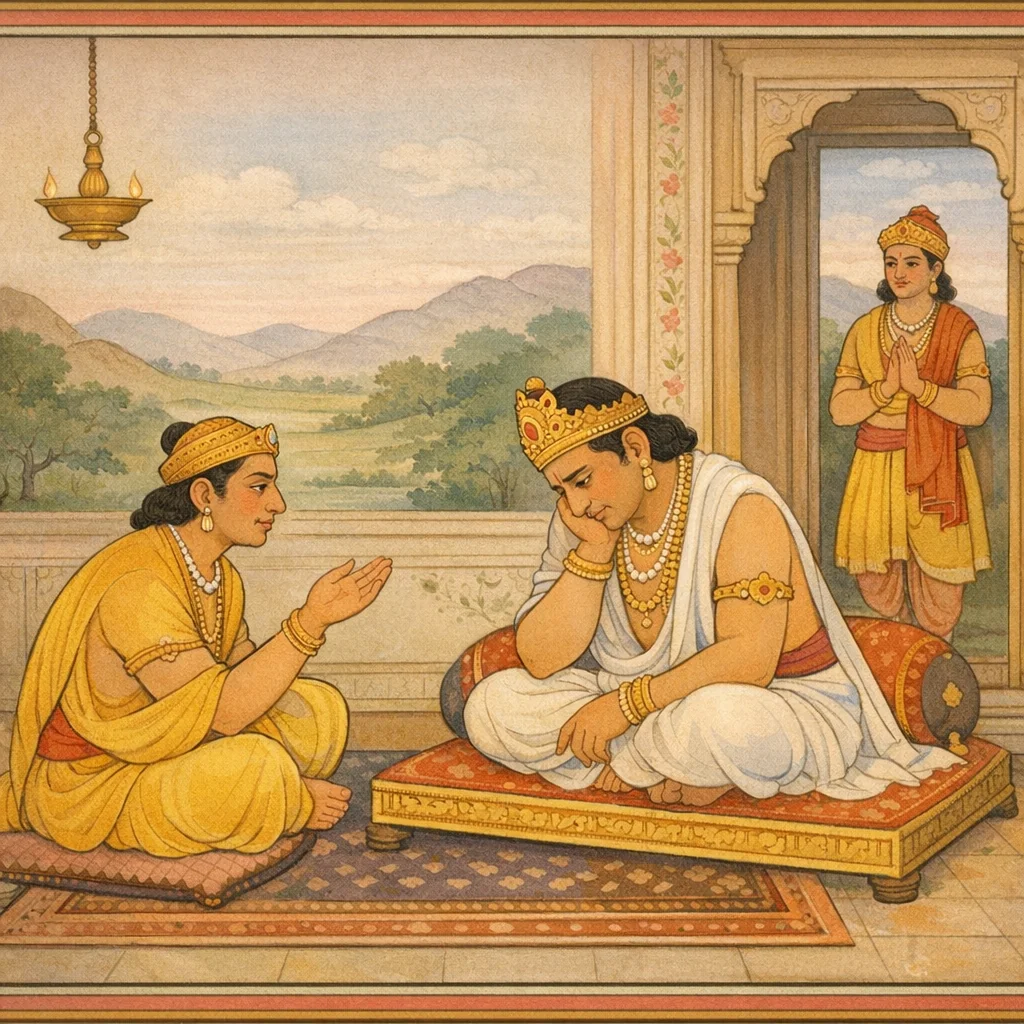
Chapter Arc: राजसभा के भीतर वृद्ध धृतराष्ट्र के सामने विदुर खड़े हैं—और समय की अंतिम घड़ी-सी निकट है, क्योंकि केशव शांति-प्रयोजन लेकर कुरुदेश में प्रवेश कर चुके हैं। → विदुर धृतराष्ट्र को उनकी वृद्धावस्था और राजधर्म की जिम्मेदारी स्मरण कराते हैं: प्रजा उन्हें धर्म का आधार मानती है जैसे समुद्र में लहरें और आकाश में चंद्र-सूर्य की रेखाएँ। वे चेताते हैं कि कुटिलता और ‘बाल्य’ (मूर्खता) का आश्रय छोड़कर सरलता अपनाएँ, क्योंकि पुत्र-पौत्र, सुहृद और प्रियजन सब दांव पर हैं। साथ ही वे बताते हैं कि धृतराष्ट्र कृष्ण के आतिथ्य में बहुत कुछ देना चाहते हैं, पर कृष्ण का वास्तविक ‘अतिथि-प्रिय’ उपहार भोग-वस्तुएँ नहीं—शांति का कार्य-सिद्धि है। → विदुर का निर्णायक आग्रह: ‘केशव तुम, दुर्योधन और पाण्डव—तीनों के बीच शम (संधि) चाहते हैं; अतः उसी प्रयोजन को पूरा करो।’ वे धृतराष्ट्र को पिता-धर्म पर स्थिर करते हैं—‘तुम पिता हो, पाण्डव भी तुम्हारे पुत्र हैं; उनके प्रति पितृवत् आचरण करो।’ → अध्याय विदुर के उपदेश-समापन पर ठहरता है: कृष्ण के आगमन का सार-संदेश स्पष्ट कर दिया गया—राजा का धर्म है कि वह शांति-यज्ञ को सफल करे, न कि केवल औपचारिक सत्कार में उलझे। → कृष्ण की शांति-यात्रा अब सभा के द्वार पर है—क्या धृतराष्ट्र पिता-धर्म चुनेंगे, या दुर्योधन की हठ के आगे विवेक फिर झुक जाएगा?
Shlokas
Verse 1
अपन कराता छा अ-कऋाजज सप्ताशीतितमोब ध्याय: विदुरका धृतराष्ट्रको 68593 आज्ञाका पालन करनेके समझाना विदुर उवाच राजन् बहुमतश्नासि त्रैलोक्यस्यापि सत्तम: । सम्भावितश्न लोकस्य सम्मतश्षासि भारत,विदुरजी बोले--राजन्! आप तीनों लोकोंके श्रेष्ठतम पुरुष हैं और सर्वत्र आपका बहुत सम्मान होता है। भारत! इस लोकमें भी आपकी बड़ी प्रतिष्ठा और सम्मान है
Vidura said: “O King, you are highly esteemed—indeed, the foremost even among the three worlds. You are honored by the people and widely accepted as worthy of respect, O Bhārata.”
Verse 2
यत् त्वमेवंगते ब्रूया: पश्चिमे वयसि स्थित: । शास्त्राद् वा सुप्रतर्काद् वा सुस्थिर: स्थविरो हासि,इस समय आप अन्तिम अवस्था (बुढ़ापे)-में स्थित हैं। ऐसी स्थितिमें आप जो कुछ कह रहे हैं, वह शास्त्रसे अथवा लौकिक युक्तिसे भी ठीक ही है। इस सुस्थिर विचारके कारण ही आप वास्तवमें स्थविर (वृद्ध) हैं
Vidura said: “Since you stand in the final stage of life, what you speak in this situation is indeed sound—whether grounded in śāstra or in clear worldly reasoning. It is precisely because your judgment is so steady that you are truly ‘sthavira’, an elder in the real sense.”
Verse 3
लेखा शशिनि भा: सूर्ये महोर्मिरिव सागरे । धर्मस्त्वयि तथा राजन्निति व्यवसिता: प्रजा:
Vidura said: “As the moon bears its markings, as the sun bears its radiance, and as the ocean bears its mighty waves—so too, O King, the people are firmly convinced that dharma abides in you.”
Verse 4
राजन! जैसे चन्द्रमामें कला है, सूर्यमें प्रभा है और समुद्रमें उत्ताल तरंगें हैं, उसी प्रकार आपमें धर्मकी स्थिति है। यह समस्त प्रजा निश्चितरूपसे जानती है ।। सदैव भावितो लोको गुणौघचैस्तव पार्थिव । गुणानां रक्षणे नित्यं प्रयतस्व सबान्धव:,भूपाल! आपके सदगुणसमूहसे सदा ही इस जगत्की उन्नति एवं प्रतिष्ठा हो रही है। अतः आप अपने बन्धु-बान्धवोंसहित सदा ही इन सदगुणोंकी रक्षाके लिये प्रयत्न कीजिये
Vidura addresses the king: “O King, just as the moon bears its phases, the sun its radiance, and the ocean its surging waves, so in you dharma stands established—this the whole people know with certainty. By the flood of your virtues the world is continually sustained and honored; therefore, together with your kinsmen, strive always to protect and preserve those virtues.”
Verse 5
आर्जवं प्रतिपद्यस्व मा बाल्याद् बहु नीनश: । राजन पुत्रांश्व पोत्रांश्व सुहृदश्चैव सुप्रियान्,राजन! आप सरलताको अपनाइये। मूर्खतावश कुटिलताका आश्रय ले अपने अत्यन्त प्रिय पुत्रों, पौत्रों तथा सुहृदोंका महान् सर्वनाश न कीजिये
Vidura urges the king: “O King, take up straightforwardness and integrity. Do not let childish folly drive you into crooked, deceitful conduct that would bring great ruin upon those dearest to you—your sons, grandsons, and beloved friends.”
Verse 6
यत् त्वमिच्छसि कृष्णाय राजन्नतिथये बहु । एतदन्यच्च दाशार्ह: पृथिवीमपि चाहति,नरेश्वर! श्रीकृष्णको अतिथिरूपमें पाकर आप जो उन्हें बहुत-सी वस्तुएँ देना चाहते हैं, उन सबके साथ-साथ वे आपसे इस समूची पृथ्वीके भी पानेके अधिकारी हैं
Vidura said: “O King, the many gifts you wish to offer Kṛṣṇa as an honored guest—along with all that and more, the Dāśārha is worthy even of the whole earth. O lord of men, do not think his visit can be satisfied by ordinary hospitality; his rightful claim and moral stature extend to sovereignty itself.”
Verse 7
नतुत्व॑ं धर्ममुद्दिश्य तस्य वा प्रियकारणात् | एतद् दित्ससि कृष्णाय सत्येनात्मानमालभे,मैं सत्यकी शपथ खाकर अपने शरीरको छूकर कहता हूँ कि आप धर्मपालनके उद्देश्य्से अथवा श्रीकृष्णका प्रिय करनेके लिये उन्हें वे सब वस्तुएँ नहीं देना चाहते हैं
Vidura declared on oath, touching his own body as a solemn pledge: “It is not for the sake of dharma, nor out of a desire to please Śrī Kṛṣṇa, that you are willing to grant him this request.”
Verse 8
मायैषा सत्यमेवैतच्छझैतद् भूरिदक्षिण । जानामि त्वन्मतं राजन् गूढं बाह्न कर्मणा,यज्ञोंमें बहुत-सी दक्षिणा देनेवाले महाराज! मैं सच कहता हूँ। यह सब आपकी माया और प्रवंचनामात्र है। आपके इन बाह्ाव्यवहारोंमें छिपा हुआ जो आपका वास्तविक अभिप्राय है, उसे मैं समझता हूँ
O great king, lavish in sacrificial gifts! I speak the truth: all this is but māyā and deception. O King, I know your real intent, hidden beneath these outward acts.
Verse 9
पज्च पज्चैव लिप्सन्ति ग्रामकान् पाण्डवा नृूप । न च दित्ससि तेभ्यस्तांस्तच्छमं न करिष्यसि,नरेन्द्र! बेचारे पाँचों भाई पाण्डव आपसे केवल पाँच गाँव ही पाना चाहते हैं; परंतु आप उन्हें वे गाँव भी नहीं देना चाहते हैं। इससे स्पष्ट सूचित होता है कि आप (सन्दधिद्वारा) शान्तिस्थापन नहीं करेंगे
Vidura said: “O king, the Pāṇḍavas seek only five villages—five for the five brothers. Yet you will not grant even those to them. This makes it plain, O lord of men, that you will not bring about peace.”
Verse 10
अर्थन तु महाबाहुं वाष्णेयं त्वं जिहीर्षसि । अनेन चाप्युपायेन पाण्डवेभ्यो बिभेत्स्यसि,आप तो धन देकर महाबाहु श्रीकृष्णको अपने पक्षमें लाना चाहते हैं और इस उपायसे आप यह आशा रखते हैं कि आप उन्हें पाण्डवोंकी ओरसे फोड़ लेंगे
Vidura said: “By means of wealth, O mighty-armed one, you seek to win over Vāṣṇeya (Kṛṣṇa) to your side. And by this very stratagem you hope to make him break away from the Pāṇḍavas—so that they will be left in fear and insecurity.”
Verse 11
न च वित्तेन शक््यो5सौ नोटद्यमेन न गर्हया । अन्यो धनंजयात् कर्तुमेतत् तत्त्वं ब्रवीमि ते,परंतु मैं आपको असली बात बताये देता हूँ; आप धन देकर अथवा दूसरा कोई उद्योग या निन्दा करके श्रीकृष्णको अर्जुनसे पृथक् नहीं कर सकते
Vidura said: He cannot be won by wealth, nor by exertion, nor by censure. No one can separate him from Dhanañjaya (Arjuna). This is the truth I tell you: Kṛṣṇa’s bond with Arjuna is not a matter of bargain, pressure, or blame, but of steadfast alignment in purpose and dharma.
Verse 12
वेद कृष्णस्य माहात्म्यं वेदास्य दृढभक्तिताम् । अत्याज्यमस्य जानामि प्राणैस्तुल्यं धनंजयम्,मैं श्रीकृष्णके माहात्म्यको जानता हूँ। श्रीकृष्णके प्रति अर्जुनकी जो सुदृढ़ भक्ति है, उससे भी परिचित हूँ। अतः मैं यह निश्चितरूपसे जानता हूँ कि श्रीकृष्ण अपने प्राणोंके समान प्रिय सखा अर्जुनको कभी त्याग नहीं सकते
Vidura says: “I know the greatness of Kṛṣṇa, and I also know the steadfast devotion that Arjuna bears toward him. Therefore I am certain of this: Kṛṣṇa will never abandon Dhanañjaya (Arjuna), who is as dear to him as his own life.”
Verse 13
अन्यत् कुम्भादपां पूर्णादन्यत् पादावसेचनात् । अन्यत् कुशलसम्प्रश्नान्नैषिष्यति जनार्दन:,इसलिये आपकी दी हुई वस्तुओंमेंसे जलसे भरे हुए कलश, पैर धोनेके लिये जल और कुशल-प्रश्नको छोड़कर दूसरी किसी वस्तुको श्रीकृष्ण नहीं स्वीकार करेंगे
Vidura says: “Apart from a water-pot filled with water, water for washing the feet, and courteous inquiries after well-being, Janārdana (Kṛṣṇa) will accept nothing else from what you offer.” The point is ethical and diplomatic: Kṛṣṇa comes as an envoy committed to dharma, not as one to be won over by gifts; only the minimal rites of hospitality and respectful speech are appropriate.
Verse 14
यत् त्वस्य प्रियमातिथ्यं मानाहस्य महात्मन: । तदस्मै क्रियतां राजन् मानाहोंडसौ जनार्दन:,राजन! सम्माननीय महात्मा श्रीकृष्णका जो परम प्रिय आतिथ्य है, वह तो कीजिये ही; क्योंकि वे भगवान् जनार्दन सबके द्वारा सम्मान पानेके योग्य हैं
Vidura said: “O King, be sure to offer him the hospitality that is dear to him—he, the noble-souled one who truly deserves honor. Let it be done for him, for this Janārdana is indeed worthy of reverence.”
Verse 15
आशंसमान: कल्याणं कुरूनभ्येति केशव: । येनैव राजन्नर्थन तदेवास्मा उपाकुरु,महाराज! भगवान् केशव उभयपक्षके कल्याणकी इच्छा लेकर जिस प्रयोजनसे इस कुरुदेशमें आ रहे हैं, वही उन्हें उपहारमें दीजिये
Vidura says: “Keśava is coming to the Kurus with the hope of securing what is good. O King, grant him precisely that very aim for which he has come.”
Verse 16
शममिच्छति दाशार्हस्तव दुर्योधनस्य च । पाण्डवानां च राजेन्द्र तदस्थ वचन कुरु,राजेन्द्र! दशार्हकुलभूषण श्रीकृष्ण आप, दुर्योधन तथा पाण्डवोंमें संधि कराकर शान्ति स्थापित करना चाहते हैं। अतः उनके इस कथनका पालन कीजिये (इसीसे वे संतुष्ट होंगे)
Vidura said: “O king, Śrī Kṛṣṇa of the Dāśārha line seeks reconciliation—between you, Duryodhana, and the Pāṇḍavas—so that peace may be established. Therefore, O best of kings, accept and act upon his counsel.”
Verse 17
पितासि राजन पुत्रास्ते वृद्धस्त्वं शिशव: परे | वर्तस्व पितृवत् तेषु वर्तन्ते ते हि पुत्रवत्,महाराज! आप पिता हैं और पाण्डव आपके पुत्र हैं। आप वृद्ध हैं और वे शिशु हैं। आप उनके प्रति पिताके समान स्नेहपूर्ण बर्ताव कीजिये। वे आपके प्रति सदा ही पुत्रोंकी भाँति श्रद्धा- भक्ति रखते हैं
Vidura reminded the king: “O King, you are their father and the Pāṇḍavas are your sons. You are the elder, while they are as children. Therefore, conduct yourself toward them with a father’s affection and protection; for they, indeed, behave toward you with the reverence and loyalty of sons.”
Verse 87
इति श्रीमहाभारते उद्योगपर्वणि भगवद्यानपर्वणि विदुरवाक्ये सप्ताशीतितमो< ध्याय:,इस प्रकार श्रीमहाभारत उद्योगपर्वके अन्तर्गत भगवद्यानपर्वमें विदुरवाक्यविषयक सतासीवाँ अध्याय पूरा हुआ
Thus, in the Śrī Mahābhārata, within the Udyoga Parva—specifically the section on the Lord’s embassy—ends the eighty-seventh chapter, centered on Vidura’s counsel. The colophon marks the close of Vidura’s dharma-grounded instruction, offered as prudent guidance to avert conflict.
Frequently Asked Questions
Whether a ruler may override dūta-dharma by coercively restraining an envoy for political advantage, despite norms of hospitality, kinship obligations, and the long-term destabilization implied by such a breach.
The chapter contrasts honor-based rationalizations with elder counsel: durable polity requires restraint, respect for institutional norms, and attention to dharma-artha alignment; impulsive coercion against protected roles (like envoys) erodes legitimacy and invites cascading conflict.
No explicit phalaśruti appears; instead, the meta-commentary is narrative: Bhīṣma’s departure and Dhṛtarāṣṭra’s distress function as interpretive signals that violating envoy ethics and rejecting counsel is portrayed as a decisive step toward irreparable escalation.