Adhyaya 53
Saṃjaya’s Warning to Dhṛtarāṣṭra: Accountability, Alliance-Shift, and the Pāṇḍava Strategic Edge
Upa-parva: Sanjaya–Dhritarashtra Niti Dialogue (Udyoga-parva contextual unit)
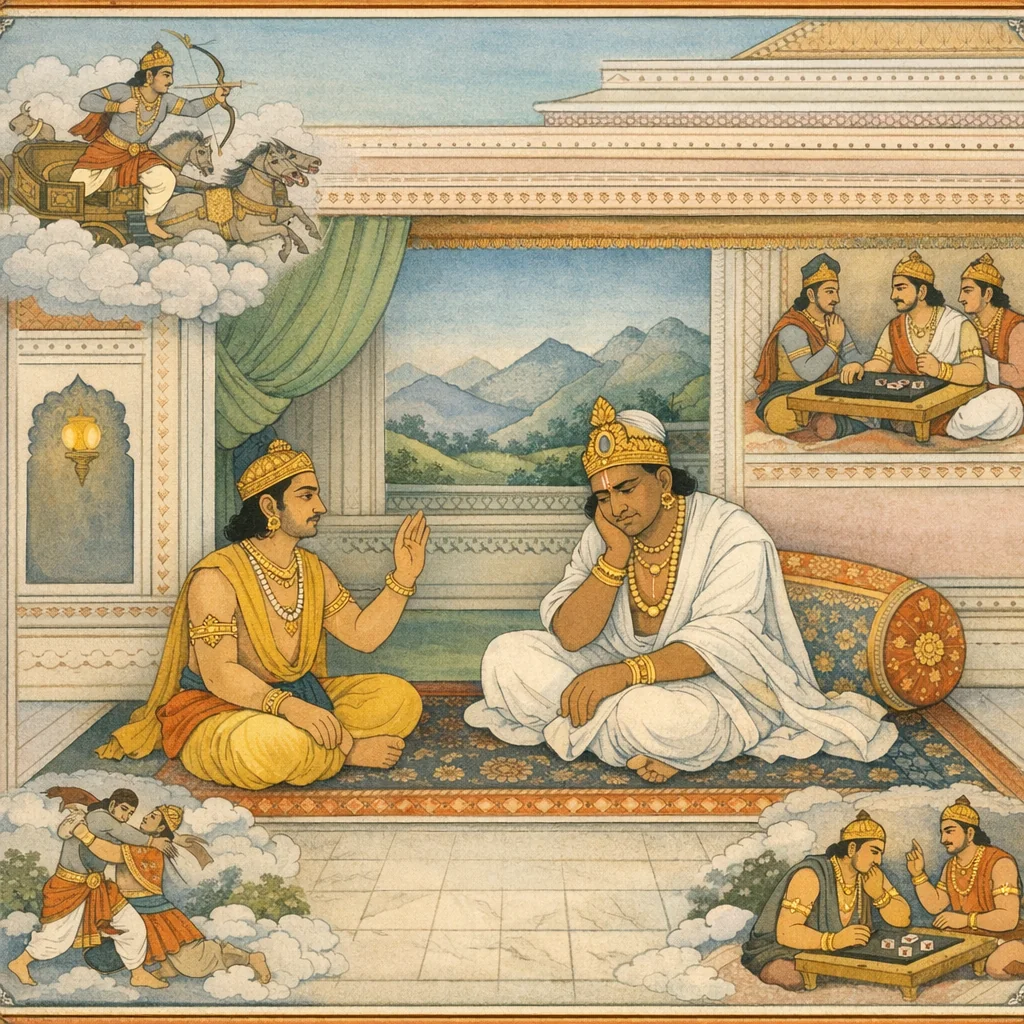
Saṃjaya affirms Dhṛtarāṣṭra’s stated recognition of danger yet questions how a consistently “steady” king could become captive to his son’s will (1–2). He asserts that this is not a moment for self-exculpation: the king initiated and sustained the pattern of injury against the Pāṇḍavas (3). Saṃjaya frames paternal and guru-like responsibility as protective rather than harmful—true guidance is not betrayal (4). He recalls Dhṛtarāṣṭra’s earlier complacent pride during the dicing episode and his disregard for harsh words spoken against the Pāṇḍavas, warning that the ‘precipice’ was ignored while imagining total victory (5–6). He challenges ownership claims over the kingdom and conquests, stating that the realm and recovered lands were secured by the Pāṇḍavas’ valor, though the king credits himself (7–8). He cites Arjuna’s rescue of the Kuru princes from the Gandharva episode as evidence of dependency and obligation (9). Saṃjaya reiterates the moral and political impropriety of taking pleasure in the Pāṇḍavas’ repeated exile (10). He then shifts to a stark capability assessment: Arjuna’s arrow-storm is portrayed as overwhelming; paired with Kṛṣṇa’s Sudarśana and Arjuna’s Gāṇḍīva, the chariot’s insignia and white steeds symbolize a formidable strategic system (11–13). The chapter claims sovereignty effectively belongs to the side with Bhīma and Arjuna as principal fighters (14), forecasting Kaurava losses as their forces ‘sink’ under Bhīma’s pressure and as morale collapses (15–16). Saṃjaya notes alliance realignments—Matsyas, Pāñcālas, Kekayas, Śālvas, and Śūrasenas no longer honor Dhṛtarāṣṭra and instead support Arjuna, recognizing his competence (17). Concluding, he argues Duryodhana should be restrained by all means as a harmful actor with followers, and that Dhṛtarāṣṭra has no grounds for lament if he refuses corrective action; Saṃjaya references that he and Vidura had already warned during the dicing episode, rendering present complaints futile without governance reform (18–19).
Chapter Arc: धृतराष्ट्र पाण्डव-बल की चर्चा कर विलाप-सा करते हैं, पर संजय तुरंत उनके आत्म-भ्रम को काटते हुए कहते हैं कि यह असहायता का रोना व्यर्थ है—राजा होकर भी आप पुत्रवश हो गए हैं। → संजय धृतराष्ट्र के पुराने अपराधों की परतें खोलते हैं: सभा में पाण्डवों पर कठोर वचन, अन्याय को अनदेखा करना, और दुर्योधन को रोकने में बार-बार विफल होना। वे स्मरण कराते हैं कि संकट में भी पाण्डवों ने ही आपके पुत्रों की लाज बचाई थी (चित्रसेन-प्रसंग), फिर भी द्वेष नहीं रुका। → संजय का तीखा उपदेश चरम पर पहुँचता है: ‘तत्त्वज्ञ’ होकर भी आप पुत्रवश क्यों बहते हैं? दुर्योधन—‘पापपुरुष’—को सानुग (साथियों सहित) हर उपाय से नियंत्रित कीजिए; अन्यथा आपके पक्ष को भीम-अर्जुन के भय से विजय नहीं मिल सकती। → संजय धृतराष्ट्र को राजधर्म की ओर लौटाते हैं—अनीश (असमर्थ) की तरह विलाप छोड़कर शासन-कर्तव्य निभाइए, दुर्योधन पर अंकुश लगाइए, और पाण्डवों के प्रति किए गए अन्याय का परिणाम समझिए। → धृतराष्ट्र क्या पुत्रमोह तोड़कर दुर्योधन को रोकेगा, या संजय की चेतावनी के बावजूद विनाश की ओर ही बढ़ेगा?
Shlokas
Verse 1
ऑपनआक्रात बछ। जि: चतुष्पठ्चाशत्तमोडध्याय: संजयका धृतराष्ट्रको उनके दोष बताते हुए दुर्योधनपर शासन करनेकी सलाह देना संजय उवाच एवमेतन्महाराज यथा वदसि भारत | युद्धे विनाश: क्षत्रस्य गाण्डीवेन प्रदृश्यते,संजयने कहा--महाराज! आप जैसा कह रहे हैं, वही ठीक है। भारत! युद्धमें तो गाण्डीव धनुषके द्वारा क्षत्रियसमुदायका विनाश ही दिखायी देता है
Sañjaya said: “Yes, O great king, it is exactly as you say, O descendant of Bharata. In war, what is seen ahead is the destruction of the warrior order—brought about by the Gāṇḍīva bow.”
Verse 2
इदं तु नाभिजानामि तव धीरस्य नित्यश: । यत् पुत्रवशमागच्छेस्तत्त्वज्ञ: सव्यसाचिन:,परंतु सदासे बुद्धिमान् माने जानेवाले आपके सम्बन्धमें मैं यह नहीं समझ पाता हूँ कि आप स्व्यसाची अर्जुनके बल-पराक्रमको अच्छी तरह जानते हुए भी क्यों अपने पुत्रोंके अधीन हो रहे हैं?
“Yet I cannot understand this about you—so often regarded as steadfast and wise: why do you yield to your sons’ sway, even though you know well the strength and prowess of Arjuna, the Savyasācī?”
Verse 3
नैष कालो महाराज तव शश्चत् कृतागस: । त्वया होवादित: पार्था निकृता भरतर्षभ,भरतकुलभूषण महाराज! आप (स्वभावसे ही) पाण्डवोंका अपराध करनेवाले हैं। इस कारण इस समय आपके द्वारा जो विचार व्यक्त किया गया है, यह सदा स्थिर रहनेवाला नहीं है। आपने आरम्भसे ही कुन्तीपुत्रोंक साथ कपटपूर्ण बर्ताव किया है
Sanjaya said: “O King, this is not the moment for words that will endure, for you have long been one who has committed wrongdoing. From the very beginning you have dealt deceitfully with the sons of Kunti, O bull among the Bharatas.”
Verse 4
पिता श्रेष्ठ: सुहृद् यश्च सम्यक् प्रणिहितात्मवान् | आस्थेयं हि हितं तेन न द्रोग्धा गुरुरुच्यते,जो पिताके पदपर प्रतिष्ठित है, श्रेष्ठ सुहृदू है और मनमें भलीभाँति सावधानी रखनेवाला है, उसे अपने आश्रितोंका हितसाधन ही करना चाहिये। द्रोह रखनेवाला पुरुष पिता अथवा गुरुजन नहीं कहला सकता
Sañjaya said: “A father—who is truly excellent, a genuine well-wisher, and one whose mind is rightly disciplined—ought to pursue only the welfare of those who depend on him. A man who harbors betrayal cannot be called a father or a teacher.”
Verse 5
इदं जितमिदं लब्धमिति श्रुत्वा पराजितान् । द्यूतकाले महाराज स्मयसे सम कुमारवत्,महाराज! द्यूतक्रीड़ाके समय जब आप अपने पुत्रोंके मुखसे सुनते कि यह जीता, यह पाया तथा पाण्डवोंकी पराजय हो रही है, तब आप बालकोंकी तरह मुसकरा उठते थे
Sañjaya said: “O great king, at the time of the dice-game, when you heard from your sons, ‘This has been won, this has been gained,’ and saw the Pāṇḍavas being defeated, you would smile—like a child.”
Verse 6
परुषाण्युच्यमानांश्व पुरा पार्थनुपेक्षसे । कृत्स्नं राज्यं जयन्तीति प्रपातं नानुपश्यसि,उस समय पाण्डवोंके प्रति कितनी ही कठोर बातें कही जा रही थीं, परंतु मेरे पुत्र सारा राज्य जीतते चले जा रहे हैं, यह जानकर आप उनकी उपेक्षा करते जाते थे। यह सब इनके भावी विनाश या पतनका कारण होगा, इसकी ओर आपकी दृष्टि नहीं जाती थी
Sanjaya said: “Even earlier, when many harsh words were being spoken against the sons of Pṛthā, you kept disregarding them, thinking, ‘My sons are conquering the entire kingdom.’ You did not perceive that this very attitude was leading toward a precipice—toward their future ruin and downfall.”
Verse 7
पित्रयं राज्यं महाराज कुरवस्ते सजाड्ला: । अथ वीरैर्जितामुर्वीमखिलां प्रत्यपद्यथा:,महाराज! कुरुजांगल देश ही आपका पैतृक राज्य है, किंतु शेष सारी पृथ्वी उन वीर पाण्डवोंने ही जीती है, जिसे आप पा गये हैं
Sanjaya said: “O great king, the Kuru realm is indeed your ancestral inheritance; yet the rest of the entire earth was conquered by those heroic Pāṇḍavas. It is that hard-won dominion which you have now come to possess.”
Verse 8
बाहुवीर्यार्जिता भूमिस्तव पार्थनिवेदिता । मयेदं कृतमित्येव मन्यसे राजसत्तम,नृपश्रेष्ठ! कुन्तीपुत्रोंने अपने बाहुबलसे जीतकर यह भूमि आपकी सेवामें समर्पित की है, परंतु आप उसे अपनी जीती मानते हैं
Sañjaya said: “This land was won by the might of the Pāṇḍavas’ arms and then respectfully offered into your service. Yet you, O best of kings, imagine, ‘This was done by me alone.’”
Verse 9
ग्रस्तान् गन्धर्वराजेन मज्जतो हा[प्लवेडम्भसि | आनिनाय पुनः पार्थ: पुत्रांस्ते राजसत्तम,राजशिरोमणे! (घोषयात्राके समय) गन्धर्वराज चित्रसेनने आपके पुत्रोंको कैद कर लिया था। वे सब-के-सब बिना नावके पानीमें डूब रहे थे, उस समय उन्हें अर्जुन ही पुनः छुड़ाकर ले आये थे
Sañjaya said: “O best of kings! During the Ghoṣa-yātrā, Citrāsena, king of the Gandharvas, seized your sons. With no boat, they were sinking in the waters; then Arjuna, Pārtha’s son, freed them again and brought them back.”
Verse 10
कुमारवच्च स्मयसे द्यूते विनिकृतेषु यत् । पाण्डवेषु वने राजन प्रव्रजत्सु पुन: पुनः:
Sañjaya said: “O King, you smile like a child at what was deceitfully done in the game of dice, and you keep smiling again and again as the Pāṇḍavas are driven to depart for the forest.”
Verse 11
राजन! पाण्डवलोग जब द्यूतक्रीड़ामें छले गये और हारकर वनमें जाने लगे, उस समय आप बच्चोंकी तरह बार-बार मुसकराकर अपनी प्रसन्नता प्रकट कर रहे थे ।। प्रवर्षत: शरत्रातानर्जुनस्य शितान् बहून् । अप्यर्णवा विशुष्येयु: कि पुनर्मासयोनय:,जब अर्जुन असंख्य तीखे बाणसमूहोंकी वर्षा करने लगेंगे, उस समय समुद्र भी सूख जा सकते हैं, फिर हाड़-मांसके शरीरोंसे पैदा हुए प्राणियोंकी तो बात ही क्या है?
Sañjaya said: “O King, when the Pāṇḍavas were deceived in the gambling match and, having lost, were setting out for the forest, you kept smiling again and again like a child, openly displaying your delight. But when Arjuna begins to pour down countless sharp arrows in volleys, even the oceans could be dried up—how much more, then, those living beings born of flesh.”
Verse 12
अस्यतां फाल्गुन: श्रेष्ठो गाण्डीवं धनुषां बरम् । केशव: सर्वभूतानामायुधानां सुदर्शनम्
Sañjaya said: “Let the foremost archer Phālguna discharge his peerless bow, the Gāṇḍīva—best among bows; and let Keśava wield the Sudarśana, the supreme weapon among all beings.”
Verse 13
एवमेतानि स रथे वहज्छवेतहयो रणे
Sañjaya said: “Thus, bearing all these arms and preparations, he moved in his chariot—drawn by white horses—into the battle, conveying the resolve and readiness that precede righteous conflict.”
Verse 14
क्षपयिष्यति नो राजन् कालचक्रमिवोद्यतम् | राजन्! इस प्रकार इन सभी श्रेष्ठतम वस्तुओंको अपने साथ लिये हुए जब श्वेत घोड़ोंवाले अर्जुन रथपर आरूढ़ हो रणभूमिमें उपस्थित होंगे, उस समय ऊपर उठे हुए कालचक्रके समान वे हम सब लोगोंका संहार कर डालेंगे || १३ हू ।। तस्याद्य वसुधा राजन् निखिला भरतर्षभ
Sañjaya said: “O King, he will destroy us, like the wheel of Time when it has been set in motion and raised aloft.” The line casts Arjuna’s coming not merely as human prowess but as the inexorable working of kāla (Time), implying that adharma and obstinacy invite an unavoidable fate once war is unleashed.
Verse 15
यस्य भीमार्जुनौ योधौ स राजा राजसत्तम | राजाओंमें श्रेष्ठ भरतभूषण महाराज! अब तो यह सारी पृथ्वी उसीके अधिकारमें रहेगी, जिसकी ओरसे भीमसेन और अर्जुन-जैसे योद्धा लड़नेवाले होंगे। वही राजा होगा ।। १४ || तथा भीमहतप्रायां मज्जन्तीं तव वाहिनीम्
Sañjaya said: “O best of kings, ornament of the Bharata line! He alone will be the true king on whose side warriors like Bhima and Arjuna fight. From this point onward, the whole earth will fall under the authority of that very man. And thus your army, nearly destroyed by Bhima, is sinking.”
Verse 16
दुर्योधनमुखा दृष्ट्वा क्षयं यास्यन्ति कौरवा: । आपकी सेनाके अधिकांश वीर भीमसेनके हाथों मारे जायँगे और दुर्योधन आदि कौरव विपत्तिके समुद्रमें डूबती हुई इस सेनाको देखते-देखते स्वयं भी नष्ट हो जायँगे || १५ ह ।। न भीमार्जुनयोर्भीता लप्स्यन्ते विजयं विभो
Sañjaya said: “With Duryodhana at their head, the Kauravas will meet destruction. Even without fearing Bhīma and Arjuna, they will not attain victory, O mighty one.”
Verse 17
मत्स्यास्त्वामद्य नार्चन्ति पठचालाक्षु सकेकया:,मत्स्यदेशके क्षत्रिय अब आपका आदर नहीं करते हैं। पांचाल, केकय, शाल्व तथा शूरसेन देशोंके सभी राजा एवं राजकुमार आपकी अवहेलना करते हैं। वे सब परम बुद्धिमान् अर्जुनके पराक्रमको जानते हैं, अतः उन्हींके पक्षमें मिल गये हैं
Sañjaya said: “Today the Kshatriyas of Matsya no longer honor you. The kings and princes of Panchāla, Kekaya, Śālva, and Śūrasena disregard you. They all know the prowess of Arjuna, the supremely wise; therefore they have joined his side.”
Verse 18
शाल्वेया: शूरसेनाश्व सर्वे त्वामवजानते । पार्थ होते गता: सर्वे वीर्यज्ञास्तस्थ धीमत:,मत्स्यदेशके क्षत्रिय अब आपका आदर नहीं करते हैं। पांचाल, केकय, शाल्व तथा शूरसेन देशोंके सभी राजा एवं राजकुमार आपकी अवहेलना करते हैं। वे सब परम बुद्धिमान् अर्जुनके पराक्रमको जानते हैं, अतः उन्हींके पक्षमें मिल गये हैं
Sañjaya said: “The Śālvas and the Śūrasenas—all of them—hold you in contempt. Knowing the prowess of the wise Pārtha (Arjuna), they have all gone over to his side.”
Verse 19
भक््त्या हास्य विरुध्यन्ते तव पुत्र: सदैव ते । अनहनिव तु वधे धर्मयुक्तान् विकर्मणा,युधिष्ठिरके प्रति भक्ति रखनेके कारण वे सब सदा ही आपके पुत्रोंके साथ विरोध रखते हैं। महाराज! जो सदा धर्ममें तत्पर रहनेके कारण वध (और क्लेश पाने)-के कदापि योग्य नहीं थे, उन पाण्डुपुत्रोंकी जिसने सदा विपरीत बर्तावसे कष्ट पहुँचाया है और जो इस समय भी उनके प्रति द्वेषभाव ही रखता है, आपके उस पापी पुत्र दुर्योधनको ही सभी उपायोंसे साथियोंसहित काबूमें रखना चाहिये। आप बारंबार इस तरह शोक न करेें। द्यूतक्रीड़ाके समय मैंने तथा परम बुद्धिमान् विदुरजीने भी आपको यही सलाह दी थी, (परंतु आपने ध्यान नहीं दिया)
Sañjaya said: “Out of devotion to dharma and to Yudhiṣṭhira, they are always set in opposition to your sons. Yet those men, steadfast in righteousness and never deserving of slaughter, have been afflicted by wrongful conduct. Therefore your sinful son Duryodhana—who has continually harmed them by perverse behavior and even now bears hatred toward them—should be restrained by every means, together with his companions. Do not grieve again and again in this way. At the time of the dice-game, I and the supremely wise Vidura gave you this very counsel, but you did not heed it.”
Verse 20
यो5क्लेशयत् पाण्डुपुत्रान् यो विद्वेष्ट्यधुनापि वै । सर्वोपायैर्नियन्तव्य: सानुग: पापपूरुष:,युधिष्ठिरके प्रति भक्ति रखनेके कारण वे सब सदा ही आपके पुत्रोंके साथ विरोध रखते हैं। महाराज! जो सदा धर्ममें तत्पर रहनेके कारण वध (और क्लेश पाने)-के कदापि योग्य नहीं थे, उन पाण्डुपुत्रोंकी जिसने सदा विपरीत बर्तावसे कष्ट पहुँचाया है और जो इस समय भी उनके प्रति द्वेषभाव ही रखता है, आपके उस पापी पुत्र दुर्योधनको ही सभी उपायोंसे साथियोंसहित काबूमें रखना चाहिये। आप बारंबार इस तरह शोक न करेें। द्यूतक्रीड़ाके समय मैंने तथा परम बुद्धिमान् विदुरजीने भी आपको यही सलाह दी थी, (परंतु आपने ध्यान नहीं दिया)
Sañjaya said: “He who has tormented the sons of Pāṇḍu, and who even now truly hates them—that sinful man, together with his followers, must be restrained by every possible means.”
Verse 21
तव पुत्रो महाराज नानुशोचितुमहसि । द्यूतकाले मया चोक्त विदुरेण च धीमता,युधिष्ठिरके प्रति भक्ति रखनेके कारण वे सब सदा ही आपके पुत्रोंके साथ विरोध रखते हैं। महाराज! जो सदा धर्ममें तत्पर रहनेके कारण वध (और क्लेश पाने)-के कदापि योग्य नहीं थे, उन पाण्डुपुत्रोंकी जिसने सदा विपरीत बर्तावसे कष्ट पहुँचाया है और जो इस समय भी उनके प्रति द्वेषभाव ही रखता है, आपके उस पापी पुत्र दुर्योधनको ही सभी उपायोंसे साथियोंसहित काबूमें रखना चाहिये। आप बारंबार इस तरह शोक न करेें। द्यूतक्रीड़ाके समय मैंने तथा परम बुद्धिमान् विदुरजीने भी आपको यही सलाह दी थी, (परंतु आपने ध्यान नहीं दिया)
Sañjaya said: “O great king, you ought not to grieve for your son. At the time of the dice-game, both I and the wise Vidura told you the same: restrain that sinful Duryodhana—who has long tormented the Pāṇḍavas by hostile conduct and even now bears them hatred—by every means, together with his companions. Do not fall again and again into this sorrow.”
Verse 22
यदिदं ते विलपितं पाण्डवान् प्रति भारत | अनीशेनेव राजेन्द्र सर्वमेतन्निरर्थकम्,राजेन्द्र! आपने जो पाण्डवोंके बल-पराक्रमकी चर्चा करके असमर्थकी भाँति विलाप किया है, यह सब व्यर्थ है
Sañjaya said: “O Bhārata, this lament of yours directed against the Pāṇḍavas—spoken as though by one who is powerless, O king—amounts to nothing; it is futile.”
Verse 53
इस प्रकार श्रीमह्याभारत उद्योगपर्वके अन्तर्गत यानसंधिपर्वमें धृतराष्ट्रवाक्यविषयक तिरपनवाँ अध्याय पूरा हुआ
Thus ends the fifty-third chapter of the Udyoga Parva of the revered Mahābhārata, within the section known as the Yāna–Saṃdhi Parva, comprising the discourse attributed to Dhṛtarāṣṭra. This closing colophon marks the completion of a unit of narration, signaling a transition in the diplomatic and ethical deliberations that precede the outbreak of war.
Verse 54
इति श्रीमहाभारते उद्योगपर्वणि यानसंधिपर्वणि संजयवाक्ये चतुष्पञ्चाशत्तमो<ध्याय:
Thus, in the Śrī Mahābhārata, within the Udyoga Parvan—specifically the section on the mission and negotiations for peace—ends the fifty-fourth chapter, in the narration spoken by Sañjaya. This is a formal colophon marking the close of the chapter, situating the discourse within the ethical tension between diplomacy and the looming war.
Verse 126
वानरो रोचमानश्न केतुः केतुमतां वर: । बाण चलानेवाले वीरोंमें अर्जुन श्रेष्ठ हैं, धनुषोंमें गाण्डीव उत्तम है, समस्त प्राणियोंमें भगवान् श्रीकृष्ण श्रेष्ठ हैं, आयुधोंमें सुदर्शन चक्र श्रेष्ठ है और पताकावाले ध्वजोंमें वानरसे उपलक्षित ध्वज ही श्रेष्ठ एवं प्रकाशमान है
Sañjaya said: “The banner marked by the monkey—radiant and foremost among all standards—shines as the best of flag-bearing emblems.” In context, this praise of Arjuna’s monkey-banner (Hanumān’s sign) functions as an ethical assurance: the side aligned with righteous purpose is strengthened not only by weapons and skill, but by auspicious symbols that inspire courage and steadiness in dharma.
Verse 166
तव पुत्रा महाराज राजानश्वानुसारिण: । प्रभो! महाराज! आपके पुत्र तथा इनका साथ देनेवाले नरेश भीमसेन और अर्जुनसे भयभीत होकर कभी विजय नहीं पा सकेंगे
Sañjaya said: O great king, your sons—together with the allied kings who follow their lead—will never attain victory, for they are overawed and shaken by fear of Bhīmasena and Arjuna. Ethically, the verse underscores that power without inner steadiness and righteous confidence collapses in the face of resolute, capable opponents.
Frequently Asked Questions
The dilemma is whether Dhṛtarāṣṭra will accept responsibility and restrain his son despite familial attachment, or continue enabling harmful policy—thereby converting passive complicity into active ethical failure.
Governance requires disciplined restraint and truthful assessment: a ruler must treat counsel as protective duty, acknowledge causality from prior unjust acts, and prioritize institutional dharma over personal attachment and pride.
No explicit phalaśruti is stated; the chapter’s meta-commentary operates as a pragmatic warning—without corrective governance, lamentation is ineffective, and consequences follow from earlier choices.