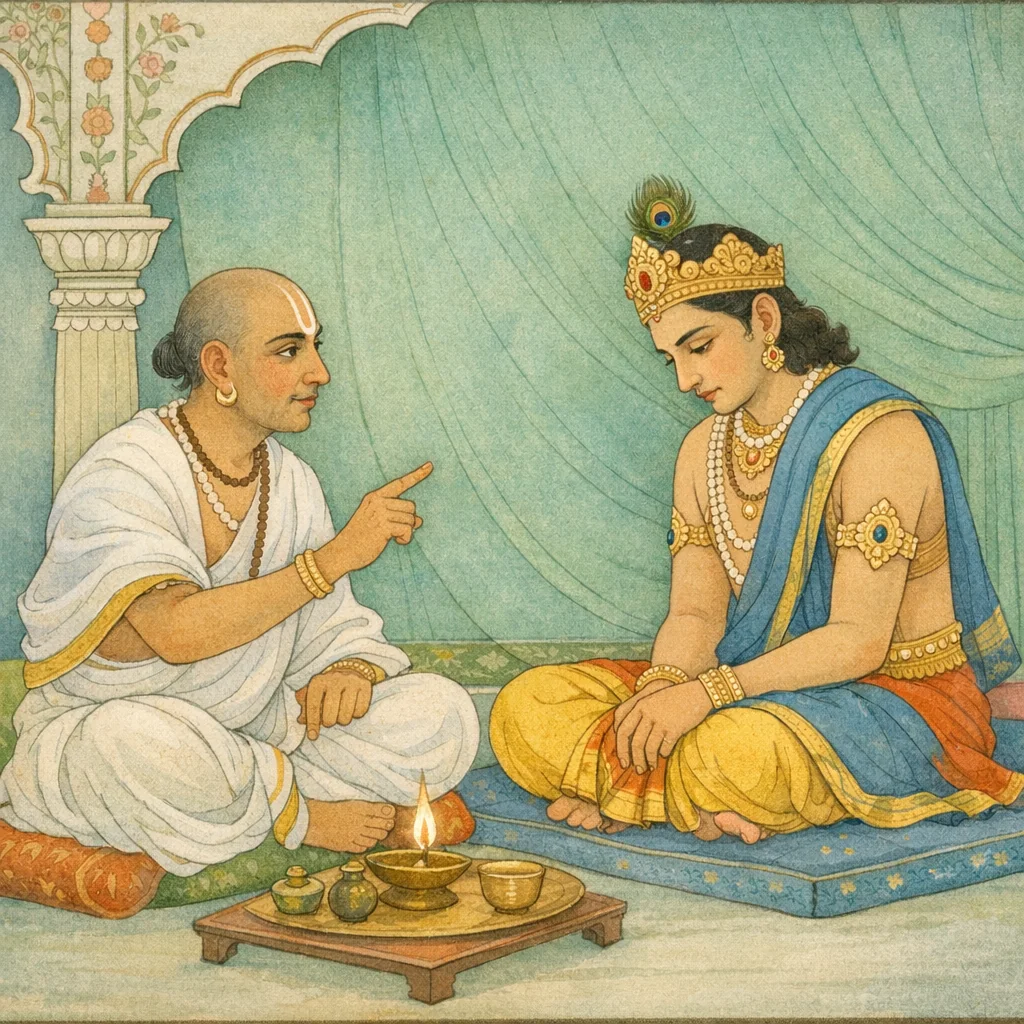
Adhyaya 26
अध्याय २६ — युद्ध-निन्दा, काम-दोष, तथा धार्तराष्ट्र-नीति-विश्लेषण (War-aversion, Desire as a Policy Fault, and Analysis of Dhṛtarāṣṭra’s Governance)
Upa-parva: Sañjaya–Yudhiṣṭhira Saṃvāda (Peace Counsel Episode) — Udyoga Parva
Chapter 26 presents Yudhiṣṭhira’s address to Sañjaya as an ethical-political critique of war-making. He questions the logic of seeking war, asserting that non-war is weightier than war when alternatives exist, and that only a misdirected agent would choose conflict knowingly. The discourse diagnoses desire (kāma) and sensory attachment as self-reinforcing, comparing acquisition-driven appetite to fire fed by clarified butter—growing rather than being satisfied. Yudhiṣṭhira then turns to institutional accountability: Dhṛtarāṣṭra’s partiality toward a poorly guided son, the disregard of Vidura’s prudent counsel, and the elevation of compromised advisors are presented as governance failures. Strategically, he emphasizes that key Kaurava actors already know Arjuna’s unmatched archery, undermining overconfidence and exposing the irrationality of escalation. The chapter closes with a conditional peace proposal: Yudhiṣṭhira signals willingness to accept a limited settlement (Indraprastha as his domain) if Duryodhana yields, framing peace as still conceivable if policy reverses from desire-driven obstinacy to restraint.
Chapter Arc: संजय युधिष्ठिर के सामने युद्ध के दोषों का चित्र खींचता है—राज्य के लिए रक्तपात नहीं, तो क्या भिक्षा-वृत्ति भी उससे श्रेष्ठ नहीं? → वह मनुष्य-जीवन की क्षणभंगुरता और दुःख-बहुलता दिखाकर युधिष्ठिर को पाप से रोकता है: युद्ध से राज्य मिले भी तो वह यश के अनुरूप नहीं; और कर्म का फल कर्ता का पीछा नहीं छोड़ता—पुण्य-पाप दोनों का लेखा अटल है। → संजय का तीखा नैतिक प्रश्न: कृप, शल्य, सौमदत्ति (भीष्म-पक्ष), विकर्ण, विविंशति, कर्ण और स्वयं दुर्योधन—इन सबको मारकर जो राज्य मिलेगा, वह कैसा ‘सुख’ देगा? उस सुख का स्वरूप बताओ, पार्थ! → वह युधिष्ठिर को स्मरण कराता है कि इस ‘क्षेत्र’ में जो कर्म होता है वही निर्णायक है; परलोक के लिए भी वही कर्म साथ जाता है—अतः हिंसा-जन्य विजय के स्थान पर संयम, त्याग, और धर्मसम्मत मार्ग को चुनना श्रेयस्कर है। → यदि तुम अपने अमात्यों/हितैषियों की कामना के कारण ऐसा कर्म करना चाहते हो, तो उनसे अपना भाग देकर पीछे हट जाओ—देवयान-पथ से मत गिरो: क्या युधिष्ठिर इस उपदेश को स्वीकारेंगे या धर्म-रक्षा हेतु युद्ध को अनिवार्य मानेंगे?
Shlokas
Verse 1
/ अपन क्राा बछ। >> आर: 2 सप्तविशो<्ध्याय: कम धिष्ठटिरको युद्धमें दोषकी सम्भावना बतलाकर | युद्धसे उपरत करनेका प्रयत्न करना संजय उवाच धर्मनित्या पाण्डव ते विचेष्टा लोके श्रुता दृश्यते चापि पार्थ । महाश्रावं जीवितं चाप्यनित्यं सम्पश्य त्वं पाण्डव मा व्यनीनश:,संजय बोला--पाण्डुनन्दन! आपकी प्रत्येक चेष्टा सदा धर्मके अनुसार ही होती है। कुन्तीकुमार! आपकी वह थधर्मयुक्त चेष्टा लोकमें तो विख्यात है ही, देखनेमें भी आ रही है। यद्यपि यह जीवन अनित्य है तथापि इससे महान् सुयशकी प्राप्ति हो सकती है। पाण्डव! आप जीवनकी उस अनित्यतापर दृष्टिपात करें और अपनी कीर्तिको नष्ट न होने दें
Sañjaya said: “O Pāṇḍava, O Pārtha, your every undertaking stands firmly in accord with dharma; it is famed in the world and is plain before our eyes. Though life is impermanent, it can yield great and enduring renown. Therefore, keeping life’s transience in view, O Pāṇḍava, do not let your fame be diminished.”
Verse 2
न चेद् भागं कुरवो&चन्यत्र युद्धात् प्रयच्छेरंस्तुभ्यमजातशत्रो । भैक्षचर्यामन्धकवृष्णिराज्ये श्रेयो मन््ये न तु युद्धेन राज्यम्,अजातशत्रो! यदि कौरव युद्ध किये बिना आपको राज्यका भाग न दें, तो भी अन्धक और वृष्णिवंशी क्षत्रियोंके राज्यमें भीख माँगकर जीवन-निर्वाह कर लेना मैं आपके लिये श्रेष्ठ समझता हूँ; परंतु युद्ध करके राज्य लेना अच्छा नहीं समझता
Sañjaya said: “O Ajātaśatru, if the Kurus will grant you your rightful share only through war, then I deem it better for you to live by begging in the realm of the Andhakas and Vṛṣṇis than to win a kingdom by fighting. To take sovereignty through battle is not, in my view, the better course for you.”
Verse 3
अल्पकालं जीवितं यन्मनुष्ये महास्रावं नित्यदुः:खं चल॑ च । भूयश्व तद् यशसो नानुरूपं तस्मात् पाप॑ पाण्डव मा कृथास्त्वम्,मनुष्यका जो यह जीवन है, वह बहुत थोड़े समयतक रहनेवाला है। इसको क्षीण करनेवाले महान् दोष इसे प्राप्त होते रहते हैं। यह सदा दुःखमय और चंचल है। अतः पाण्डुनन्दन! आप युद्धरूपी पाप न कीजिये। वह आपके सुयशके अनुरूप नहीं है
Sañjaya said: “Human life is brief. It is continually worn away by great afflictions; it is ever sorrow-laden and unsteady. Moreover, such a deed is not in keeping with your good fame. Therefore, O Pāṇḍava, do not commit the sin of war.”
Verse 4
कामा मनुष्यं प्रसजन्त एते धर्मस्य ये विघ्नमूलं नरेन्द्र | पूर्व नरस्तान् मतिमान् प्रणिघ्न- ल््लोंके प्रशंसां लभतेडनवद्याम्,नरेन्द्र! जो धर्माचरणमें विघध्न डालनेकी मूल कारण हैं, वे कामनाएँ प्रत्येक मनुष्यको अपनी ओर खींचती हैं। अतः बुद्धिमान् मनुष्य पहले उन कामनाओंको नष्ट करता है, तदनन्तर जगतमें निर्मल प्रशंसाका भागी होता है
Sañjaya said: “O king, those desires which are the very root of obstacles to dharma seize and draw every person toward themselves. Therefore, a wise man first strikes down those desires; then he attains in the world a blameless, pure praise.”
Verse 5
निबन्धनी हार्थतृष्णेह पार्थ तामिच्छतां बाध्यते धर्म एव । धर्म तु यः प्रवृणीते स बुद्ध: कामे गृध्नो हीयते<र्थानुरोधात्,कुन्तीनन्दन! इस संसारमें धनकी तृष्णा ही बन्धनमें डालनेवाली है। जो धनकी तृष्णामें फँसता है, उसका धर्म भी नष्ट हो जाता है। जो धर्मका वरण करता है, वही ज्ञानी है। भोगोंकी इच्छा करनेवाला मनुष्य तो धनमें आसक्त होनेके कारण धर्मसे भ्रष्ट हो जाता है
Sanjaya said: “O Partha, in this world it is craving for wealth that becomes the very bond. For those who chase it, dharma itself is overpowered and diminished. But the one who chooses dharma is truly wise; the person greedy for pleasures declines, for attachment to gain drags him away from righteousness.”
Verse 6
धर्म कृत्वा कर्मणां तात मुख्य महाप्रताप: सवितेव भाति । हीनो हि धर्मेण महीमपीमां लब्ध्वा नर: सीदति पापबुद्धि:,तात! धर्म, अर्थ और काम तीनोंमें धर्मको प्रधान मानकर तदनुसार चलनेवाला पुरुष महाप्रतापी होकर सूर्यकी भाँति चमक उठता है; परंतु जो धर्मसे हीन है और जिसकी बुद्धि पापमें ही लगी हुई है, वह मनुष्य इस सारी पृथ्वीको पाकर भी कष्ट ही भोगता रहता है
Sanjaya said: “Dear one, a man who makes dharma the foremost guide of all his actions becomes mighty in splendor and shines like the sun. But one who is devoid of dharma, whose mind is fixed on sin, suffers distress even after gaining this entire earth.”
Verse 7
वेदो5धीतक्नरितं ब्रह्मचर्य यज्ञैरिषं ब्राह्मणेभ्यश्व दत्तम् । परं स्थानं मन्यमानेन भूय आत्मा दत्तो वर्षपूगं सुखेभ्य:,आपने परलोकपर विश्वास करके वेदोंका अध्ययन, ब्रह्मचर्यका पालन एवं यज्ञोंका अनुष्ठान किया है तथा ब्राह्मणोंको दान दिया है और अनन्त वर्षोतक वहाँके सुख भोगनेके लिये अपने-आपको भी समर्पित कर दिया है
Sañjaya said: “Trusting in the reality of the next world, he studied the Veda, observed brahmacarya, performed sacrifices, and gave gifts to the Brahmins. Believing that this would lead to the highest state, he even surrendered himself—so as to enjoy the pleasures there for countless years.”
Verse 8
सुखप्रिये सेवमानो 5तिवेलं योगाभ्यासे यो न करोति कर्म । वित्तक्षये हीनसुखो5तिवेलं दुःखं शेते कामवेगप्रणुन्न:,जो मनुष्य भोग तथा प्रिय (पुत्रादि)-का निरन्तर सेवन करते हुए योगाभ्यासोपयोगी कर्मका सेवन नहीं करता, वह धनका क्षय हो जानेपर सुखसे वंचित हो कामवेगसे अत्यन्त विक्षुब्ध होकर सदा दुःखशय्यापर शयन करता रहता है
Sañjaya said: “A man who, being devoted to pleasures, indulges in them excessively and does not perform the disciplines and duties that support spiritual practice—when his wealth is exhausted, he becomes bereft of happiness; driven and agitated by the force of desire, he lies down again and again upon a bed of sorrow.”
Verse 9
एवं पुनर्ब्रह्म॒चर्याप्रसक्तो हित्वा धर्म यः प्रकरोत्यधर्मम् । अश्रद्धधत् परलोकाय मूढो हित्वा देहं तप्यते प्रेत्य मन्द:,जो ब्रह्मचर्यपालनमें प्रवृत्त न हो धर्मका त्याग करके अधर्मका आचरण करता है तथा जो मूढ़ परलोकपर विश्वास नहीं रखता है, वह मन्दभाग्य मानव शरीर त्यागनेके पश्चात् परलोकमें बड़ा कष्ट पाता है
Sañjaya said: Likewise, one who is not devoted to the discipline of brahmacarya, who abandons dharma and instead commits adharma, and who—deluded—lacks faith in the reality of the next world: that dull-witted, ill-fated person, after giving up the body, suffers greatly after death in the hereafter.
Verse 10
न कर्मणां विप्रणाशो<्त्यमुत्र पुण्यानां वाप्यथवा पापकानाम् | पूर्व कर्तुर्गच्छति पुण्यपापं पश्चात् त्वेनमनुयात्येव कर्ता,पुण्य अथवा पाप किन्हीं भी कर्मोका परलोकमें नाश नहीं होता है। पहले कतकके पुण्य और पाप परलोकमें जाते हैं, फिर उन्हींके पीछे-पीछे कर्ता जाता है
Sañjaya said: In the world beyond, none of one’s deeds is destroyed—whether meritorious or sinful. First, the doer’s merit and sin go onward to the next world; then the doer himself follows after them.
Verse 11
न्यायोपेतं ब्राह्मणेभ्यो5थ दत्तं श्रद्धापूतं गन्धरसोपपन्नम् । अन्वाहार्येषूत्तमदक्षिणेषु तथारूपं कर्म विख्यायते ते,लोकमें आपके कर्म इस रूपमें विख्यात हैं कि आपने उत्तम दक्षिणायुक्त वृद्धिश्राद्ध आदिके अवसरोंपर ब्राह्मणोंको न्यायोपार्जित प्रचुर धन एवं श्रद्धासहित उत्तम गन्धयुक्त, सुस्वादु एवं पवित्र अन्नका दान किया है
Sañjaya said: Your deeds are renowned in the world as being of this kind: at ancestral rites and other solemn offerings, you have given to Brahmins gifts acquired by just means—abundant wealth and food made pure by faith—endowed with fine fragrance and pleasing taste, and accompanied by the best honoraria.
Verse 12
इह क्षेत्रे क्रियते पार्थ कार्य न वै किज्चित् क्रियते प्रेत्य कार्यम् कृतं त्वया पारलौक्यं च कर्म पुण्यं महत् सद्धिरतिप्रशस्तम्,कुन्तीनन्दन! इस शरीरके रहते हुए ही कोई भी सत्कर्म किया जा सकता है। मरनेके बाद कोई कार्य नहीं किया जा सकता। आपने तो परलोकमें सुख देनेवाला महान् पुण्यकर्म किया है, जिसकी साधु पुरुषोंने भूरि-भूरि प्रशंसा की है
Sañjaya said: “O Partha, it is here, in this very field of embodied life, that what ought to be done can be accomplished; after death, no task can be performed. You have already done a great meritorious deed—one that bears fruit in the next world—highly and repeatedly praised by the righteous.”
Verse 13
जहाति मृत्युं च जरां भयं च न क्षुत्पिपासे मनसो5प्रियाणि । न कर्तव्यं विद्यते तत्र किज्चि- दन्यत्र वै चेन्द्रियप्रीणनाद्धि,(पुण्यात्मा) मनुष्य (स्वर्गलोकमें जाकर) मृत्यु, बुढ़ापा तथा भय त्याग देता है। वहाँ उसे मनके प्रतिकूल भूख-प्यासका कष्ट भी नहीं सहन करना पड़ता है। परलोकमें इन्द्रियोंको सुख पहुँचानेके सिवा दूसरा कोई कर्तव्य नहीं रह जाता है-
Sañjaya said: In that other world, a virtuous person casts off death, old age, and fear; nor does he endure hunger and thirst—those experiences that are unwelcome to the mind. There, no duty remains to be performed, except the enjoyment and gratification of the senses.
Verse 14
एवंरूपं कर्मफल नरेन्द्र मात्रावहं हृदयस्य प्रियेण । स क्रोधजं पाण्डव हर्षजं च लोकावुभौ मा प्रहासीश्चिराय,नरेन्द्र! इस प्रकार हृदयको प्रिय लगनेवाले विषयसे कर्मफलकी प्रार्थना नहीं करनी चाहिये। पाण्डुनन्दन! आप क्रोधजनित नरक और हर्षजनित स्वर्ग--इन दोनों लोकोंमें कभी न जाय; (अपितु सनातन मोक्ष-सुखके लिये निष्काम कर्म अथवा ज्ञानयोगका ही साधन करें)
Sañjaya said: “O king, one should not pray for such a kind of reward of action—something merely measured out by what is pleasing to the heart. O son of Pandu, may you not, for a long time, fall into either of the two worlds: the hell born of anger or the heaven born of exultant attachment.”
Verse 15
अन्तं गत्वा कर्मणां मा प्रजह्मा: सत्यं दमं चार्जवमानृशंस्यम् । अश्वमेधं राजसूयं तथेज्या: पापस्यान्तं कर्मणो मा पुनर्गा:,इस तरह (ज्ञानाग्निके द्वारा) कर्मोंको दग्ध करके सत्य, दम, आर्जव (सरलता) तथा अनृशंसता (दया) इन सदगुणोंका कभी त्याग न करें। अश्वमेध, राजसूय और अन्य यज्ञोंको भी न छोड़ें, परंतु युद्ध-जैसे पापकर्मके निकट फिर कभी न जाये
Sañjaya said: “Having brought your actions to their proper consummation, do not abandon truth, self-restraint, straightforwardness, and compassion. Do not give up the Aśvamedha, the Rājasūya, and other sacrificial rites; yet never again draw near to the end of sinful action—such as war.”
Verse 16
तच्चेदेवं द्वेषरूपेण पार्था: करिष्यध्वं कर्म पापं चिराय । निवसध्व॑ वर्षपूगान् वनेषु दुःखं वासं पाण्डवा धर्म एव,कुन्तीकुमारो! यदि आपलोगोंको राज्यके लिये चिरस्थायी विद्वेषके रूपमें युद्धरूप पापकर्म ही करना है, तब तो मैं यही कहूँगा कि आप बहुत वर्षोतक दुःखमय वनवासका ही कष्ट भोगते रहें। पाण्डवो! वह वनवास ही आपके लिये धर्मरूप होगा
Sañjaya said: “If, O sons of Pṛthā, you are determined to undertake for a long time the sinful act of war in the form of enduring hatred for the sake of a kingdom, then my counsel is this: live for many years in the forests, enduring the hardship of that sorrowful dwelling. O Pāṇḍavas—O son of Kuntī—such forest-life itself would be the path of dharma for you, rather than a war born of rancour.”
Verse 17
अप्रव्रज्येमा सम हित्वा55पुरस्ता- दात्माधीनं यद् बल॑ होतदासीत् । नित्यं च वश्या: सचिवास्तवेमे जनार्दनो युयुधानश्न वीर:
Sañjaya said: “Had we not withdrawn from our former course—abandoning the earlier, self-governed strength that was truly ours—then these ministers of yours would not have remained perpetually compliant. And Janardana (Krishna) and the hero Yuyudhana (Satyaki) as well (would not have been so restrained).”
Verse 18
पहले [(ट्यूतक्रीड़ाके समय ही) हमलोग बलपूर्वक इन्हें अपने वशमें रखकर वनमें गये बिना ही यहाँ रह सकते थे; क्योंकि आज जो सेना एकत्र हुई है, यह पहले भी अपने ही लोगोंके अधीन थी और ये भगवान् श्रीकृष्ण तथा वीरवर सात्यकि सदासे ही आपलोगोंके (प्रेमके कारण) वशीभूत एवं आपके सहायक रहे हैं ।। मत्स्यो राजा रुक्मरथः सपुत्र: प्रहारिभि: सह वीरैविराट: । राजानश्न ये विजिता: पुरस्तात् त्वामेव ते संश्रयेयु: समस््ता:,प्रहार करनेमें कुशल वीर सैनिकों तथा पुत्रोंके साथ सुवर्णमय रथसे सुशोभित मत्स्यदेशके राजा विराट तथा दूसरे भी बहुत-से नरेश, जिन्हें पहले आपलोगोंने युद्धमें जीता था, वे सब-के-सब संग्राममें आपका ही पक्ष लेते
Sañjaya said: “Virāṭa, the king of the Matsyas—whose chariot is adorned with gold—together with his sons and with valiant warriors skilled in striking, and many other kings whom you had formerly subdued in battle, would all, without exception, take refuge in you alone and stand on your side in the coming conflict.”
Verse 19
महासहाय: प्रतपन् बलस्थ: पुरस्कृतो वासुदेवार्जुना भ्याम् । वरान् हनिष्यन द्विषतो रज्भमध्ये व्यनेष्यथा धार्तराष्ट्रस्य दर्पम्,उस समय आप महान् सहायकोंसे सम्पन्न और बलशाली थे, आप श्रीकृष्ण तथा अर्जुनके आगे-आगे चलकर शत्रुओंपर आक्रमण कर सकते थे। समरांगणमें अपने महान् शत्रुओंका संहार करते हुए आप दुर्योधनके घमंडको चूर-चूर कर सकते थे
Sañjaya said: “Endowed with mighty allies and standing firm in strength, with Vāsudeva and Arjuna placed at your fore, you could have advanced to strike the hostile champions. In the heart of battle, while slaying the foremost of your enemies, you would have shattered the pride of Dhṛtarāṣṭra’s son (Duryodhana).”
Verse 20
बल॑ कस्माद् वर्धयित्वा परस्य निजान् कस्मात् कर्शयित्वा सहायान् | निरुष्य कस्माद् वर्षपूगान् वनेषु युयुत्ससे पाण्डव हीनकालम्,पाण्डुनन्दन! फिर क्या कारण है कि आपने शत्रुकी शक्तिको बढ़नेका अवसर दिया? किसलिये अपने सहायकोंको दुर्बल बनाया और क्यों बारह वर्षोतक वनमें निवास किया? फिर आज जब वह अनुकूल अवसर बीत चुका है, आपको युद्ध करनेकी इच्छा क्यों हुई है?
Sañjaya said: “Why did you allow the enemy’s strength to grow? Why did you weaken your own supporters? Why did you spend a long succession of years living in the forests? And now, when that favorable moment has already passed, why do you desire to wage war, O Pāṇḍava, O son of Pāṇḍu?”
Verse 21
अप्राज्ञो वा पाण्डव युध्यमानो- <धर्मज्ञो वा भूतिमथो< भ्युपैति । प्रज्ञावान् वा बुध्यमानो5पि धर्म संस्तम्भाद् वा सो5पि भूतेरपैति,पाण्डुकुमार! अज्ञानी अथवा पापी मनुष्य भी युद्ध करके सम्पत्ति प्राप्त कर लेता है और बुद्धिमान् अथवा धर्मज्ञ पुरुष भी दैवी बाधाके कारण पराजित होकर एऐश्वर्यसे हाथ धो बैठता है
Sañjaya said: “O Pāṇḍava, whether a man is foolish or even discerning, if he fights, he may still come into prosperity. And even a wise man—one who understands dharma—may, through the pressure of fate and overpowering circumstances, be driven away from prosperity. Thus, in war, success and loss do not always follow intelligence or righteousness alone.”
Verse 22
नाथर्मे ते धीयते पार्थ बुद्धि- न संरम्भात् कर्म चकर्थ पापम् । आत्थ कि तत् कारणं यस्य हेतो: प्रज्ञाविरुद्धं कर्म चिकीर्षमीदम्,कुन्तीनन्दन! आपकी बुद्धि कभी अधर्ममें नहीं लगती तथा आपने क्रोधमें आकर भी कभी पापकर्म नहीं किया है, तो बताइये, कौन-सा ऐसा (प्रबल) कारण है, जिसके लिये अब आप अपनी बुद्धिके विरुद्ध यह युद्ध-जैसा पापकर्म करना चाहते हैं?
Sañjaya said: “O Pārtha, your mind never turns toward unrighteousness, and even in anger you have never committed a sinful deed. Tell me then—what compelling cause is it, for whose sake you now wish to undertake this act, opposed to your own better judgment, a deed as sinful as war?”
Verse 23
अव्याधिजं कटुकं शीर्षरोगि यशोमुषं पापफलोदयं वा । सतां पेयं यन्न पिबन्त्यसन्तो मन्युं महाराज पिब प्रशाम्य,महाराज! जो बिना व्याधिके ही उत्पन्न होता है, स्वादमें कडुआ है, जिसके कारण सिरमें दर्द होने लगता है, जो यशका नाशक और पापरूप फलको प्रकट करनेवाला है, जो सज्जन पुरुषोंके ही पीने योग्य है, जिसे असाधु पुरुष नहीं पीते हैं, उस क्रोधको आप पी लीजिये और शान्त हो जाइये
Sañjaya said: “O King, drink down that wrath and become calm—wrath that arises without any real injury, tastes bitter, brings headache, steals away one’s good fame, and ripens into sinful consequences. It is a draught fit only for the truly noble; the ignoble do not drink it.”
Verse 24
पापानुबन्धं को नु तं कामयेत क्षमैव ते ज्यायसी नोत भोगा: | यत्र भीष्म: शान्तनवो हतः स्याद् यत्र द्रोण: सहपुत्रो हतः स्यात्,जो पापकी जड़ है, उस क्रोधकी इच्छा कौन करेगा? आपकी दृष्टिमें तो क्षमा ही सबसे श्रेष्ठ वस्तु है, वे भोग नहीं, जिनके लिये शान्तनुनन्दन भीष्म तथा पुत्रसहित आचार्य द्रोणकी हत्या की जाय
Sañjaya said: “Who would ever desire that anger which is bound up with sin? In your judgment, forgiveness alone is the higher good—not the pleasures for whose sake Bhīṣma, the son of Śāntanu, would be slain, and Droṇa too would be slain together with his son.”
Verse 25
कृप: शल्य: सौमदत्तिविकर्णो विविंशति: कर्णदुर्योधनौ च | एतान् हत्वा कीदृशं तत् सुखं स्याद् यद् विन्देथास्तदनु ब्रूहि पार्थ,कुन्तीनन्दन! ऐसा कौन-सा सुख हो सकता है, जिसे आप कृपाचार्य, शल्य, भूरिश्रवा, विकर्ण, विविंशति, कर्ण तथा दुर्योधन--इन सबका वध करके पाना चाहते हैं, कृपया बताइये
Sanjaya said: “Kṛpa, Śalya, the son of Somadatta (Bhūriśravas), Vikarna, Viviṁśati, and also Karṇa and Duryodhana—having slain these men, what kind of happiness could that be which you hope to gain? Tell me, O Pārtha, son of Kuntī.”
Verse 26
इस प्रकार श्रीमह्याभारत उद्योगपर्वके अन्तर्गत संजययानपर्वमें युधिष्ठिरवाक्यविषयक छब्बीसवाँ अध्याय पूरा हुआ,लब्ध्वापीमां पृथिवीं सागरान्तां जरामृत्यू नैव हि त्वं प्रजह्मा: । प्रियाप्रिये सुखदु:खे च राज- न्रेवं विद्वान् नैव युद्ध कुरु त्वम्ू राजन! समुद्रपर्यन्त इस सारी पृथ्वीको पाकर भी आप जरा-मृत्यु, प्रिय-अप्रिय तथा सुख-दुःखसे पिण्ड नहीं छुड़ा सकते। आप इन सब बातोंको अच्छी तरह जानते हैं; अतः मेरी प्रार्थना है कि आप युद्ध न करें
Sanjaya said: Even if you were to obtain this whole earth, bounded by the ocean, you still would not escape old age and death, nor the alternations of the dear and the undesired, pleasure and pain. Since you understand these truths, O king, my plea is that you do not choose war.
Verse 27
अमात्यानां यदि कामस्य हेतो- रेवं युक्त कर्म चिकीर्षसि त्वम् अफक्रामे: स्वं प्रदायैव तेषां मा गास्त्वं वै देवयानात् पथोडद्य,यदि आप अपने मन्त्रियोंकी इच्छासे ही ऐसा पापमय युद्ध करना चाहते हैं तो अपना सर्वस्व उन मन्त्रियोंको ही देकर वानप्रस्थ ग्रहण कर लीजिये; परंतु अपने कुटुम्बका वध करके देवयानमार्गसे भ्रष्ट न होइये इति श्रीमहाभारते उद्योगपर्वणि सञ्जययानपर्वणि संजयवाक्ये सप्तविंशो5ध्याय: ।। २७ || इस प्रकार श्रीमहाभारत उद्योगपर्वके अन्तर्गत यंजययानपर्वमें संजयवाक्यविषयक सत्ताईसवाँ अध्याय पूरा हुआ
Sanjaya said: “If, merely to satisfy the desire of your ministers, you intend to undertake such a course of action, then withdraw—hand over your own wealth to those very ministers and retire. But do not, by killing your own kinsmen, fall today from the path that leads to the gods.”
Frequently Asked Questions
The dilemma is whether a ruler should accept the burdens of conflict to secure claims or prioritize a negotiated settlement when war is foreseeable, costly, and rooted in avoidable desire-driven decisions.
Desire is portrayed as non-satiating and self-amplifying; policy guided by acquisition and sensory attachment tends toward escalation, whereas restraint and counsel-based deliberation preserve stability.
No explicit phalaśruti is stated in this passage; its meta-function is diagnostic and instructional, framing ethical governance and restraint as prerequisites for social order rather than promising a ritualized reward.