Adhyaya 173
अम्बाया निर्वेदः तपोव्रताभ्यर्थना च (Ambā’s Despair and Petition for Ascetic Vows)
Upa-parva: Ambā-Upākhyāna (Bhīṣma–Ambā Narrative Episode)
Bhīṣma narrates Ambā’s internal deliberation as she leaves the city in distress. She assesses her situation as uniquely adverse, citing estrangement from kin and rejection by Śālva, and concludes she cannot return to Vāraṇasāhvaya (Kāśī). In a sequence of self-directed and outward-directed reproaches, she apportions blame among herself, Bhīṣma, her father who arranged the svayaṃvara, Śālva, and even destiny, framing her suffering as the maturation of prior deeds (karma). She then identifies Bhīṣma Śāṃtanava as the principal ‘face’ of her misfortune and considers retaliation through tapas or martial means, while acknowledging Bhīṣma’s near-invincibility in direct combat. Determined, she proceeds to an āśrama of eminent ascetics, spends the night under their protection, and recounts her history in full—abduction, release, and rejection. A senior brāhmaṇa-ascetic (Śaikhāvatya), observing her grief, asks what remedy is possible through ascetic means. Ambā petitions for permission to renounce and undertake severe austerities, explaining her refusal to return home and requesting instruction and compassion. The sage consoles her with exempla and scriptural reasoning and, together with other twice-born ascetics, commits to assisting her intended course.
Chapter Arc: भीष्म द्वारा काशी-राजकन्याओं के हरण का स्मरण होते ही सत्यवती के हर्षाश्रु और विवाह-व्यवस्था का प्रसंग उठता है—पर उसी क्षण ज्येष्ठा कन्या अम्बा लज्जा और दृढ़ता के साथ अपना सत्य प्रकट करने को खड़ी होती है। → अम्बा भीष्म की धर्मज्ञता और सत्यव्रत की कीर्ति का स्मरण कराते हुए कहती है कि वह मन से शाल्वराज को चाहती है; अतः उसे कुरुवंश के गृह में रखना राजधर्म और स्त्री-धर्म—दोनों के विरुद्ध होगा। वह आग्रह करती है कि भीष्म बुद्धि से विचार कर वही करें जो धर्मसम्मत और क्षम्य हो। → अम्बा का निर्णायक वचन—‘मैं अन्यकामना वाली हूँ; शाल्वराज मेरी प्रतीक्षा करता है; अतः मुझे समनुज्ञा दो’—भीष्म के सामने धर्म-संकट को तीक्ष्ण कर देता है: विजय-प्राप्ति से उपजा अधिकार बनाम स्त्री की स्वेच्छा और पूर्व-प्रतिज्ञा। → अध्याय का अंत अम्बा के निवेदन पर ठहरता है—वह कृपा और धर्म के नाम पर मुक्त किए जाने की याचना करती है, और भीष्म को अपने सत्यव्रत के अनुरूप निर्णय लेने के लिए बाध्य करती है। → भीष्म अब क्या करेंगे—अम्बा को छोड़ेंगे या ‘जीते हुए’ दायित्व के नाम पर विवाह-बंधन में बाँधेंगे—यही अनिर्णीत प्रश्न अगले प्रसंग की ओर ले जाता है।
Shlokas
Verse 1
[दाक्षिणात्य अधिक पाठका १ श्लोक मिलाकर कुल २४ “लोक हैं।] ऑपन-माज बक। अ्-"ऋ चतुःसप्तरत्यांधेकशततमो< ध्याय: अम्बाका शाल्वराजके प्रति अपना अनुराग प्रकट करके उनके पास जानेके लिये भीष्मसे आज्ञा माँगना भीष्म उवाच ततोऊ<हं भरतश्रेष्ठ मातरं वीरमातरम् । अभिगम्योपसंगृहा दाशेयीमिदमनब्रुवम्,भीष्मजी कहते हैं--भरतश्रेष्ठ तदनन्तर मैंने वीरजननी दाशराजकी कन्या माता सत्यवतीके पास जाकर उनके चरणोंमें प्रणाम करके इस प्रकार कहा--
Bhīṣma said: “Then, O best of the Bharatas, I approached my mother—she who is the mother of heroes. Having gone to her and, in reverence, taken hold of her feet (that is, bowed at her feet), I spoke these words to Satyavatī, the daughter of the fisherman-chief.”
Verse 2
इमा: काशिपते: कन्या मया निर्जित्य पार्थिवान् विचित्रवीर्यस्य कृते वीर्यशुल्का हृता इति,“माँ! ये काशिराजकी कन्याएँ हैं। पराक्रम ही इनका शुल्क था। इसलिये मैं समस्त राजाओंको जीतकर भाई विचित्रवीर्यके लिये इन्हें हर लाया हूँ!
Bhīṣma said: “Mother, these are the daughters of the lord of Kāśī. Their bride-price was valor; therefore, having conquered the assembled kings, I have carried them away for my brother Vicitravīrya.”
Verse 3
ततो मूर्थन्युपाप्राय पर्यश्रुनयना नृप । आह सत्यवती ह्ृष्टा दिष्ट्या पुत्र जितं त्वया,नरेश्वर! यह सुनकर माता सत्यवतीके नेत्रोंमें हर्षके आँसू छलक आये। उन्होंने मेरा मस्तक सूँघकर प्रसन्नतापूर्वक कहा--“बेटा! बड़े सौभाग्यकी बात है कि तुम विजयी हुए"
Then, O king, Satyavatī drew near, her eyes brimming with tears. In maternal affection she touched and smelled my head; delighted, she said, “My son, by good fortune you have won—well done, O lord of men.”
Verse 4
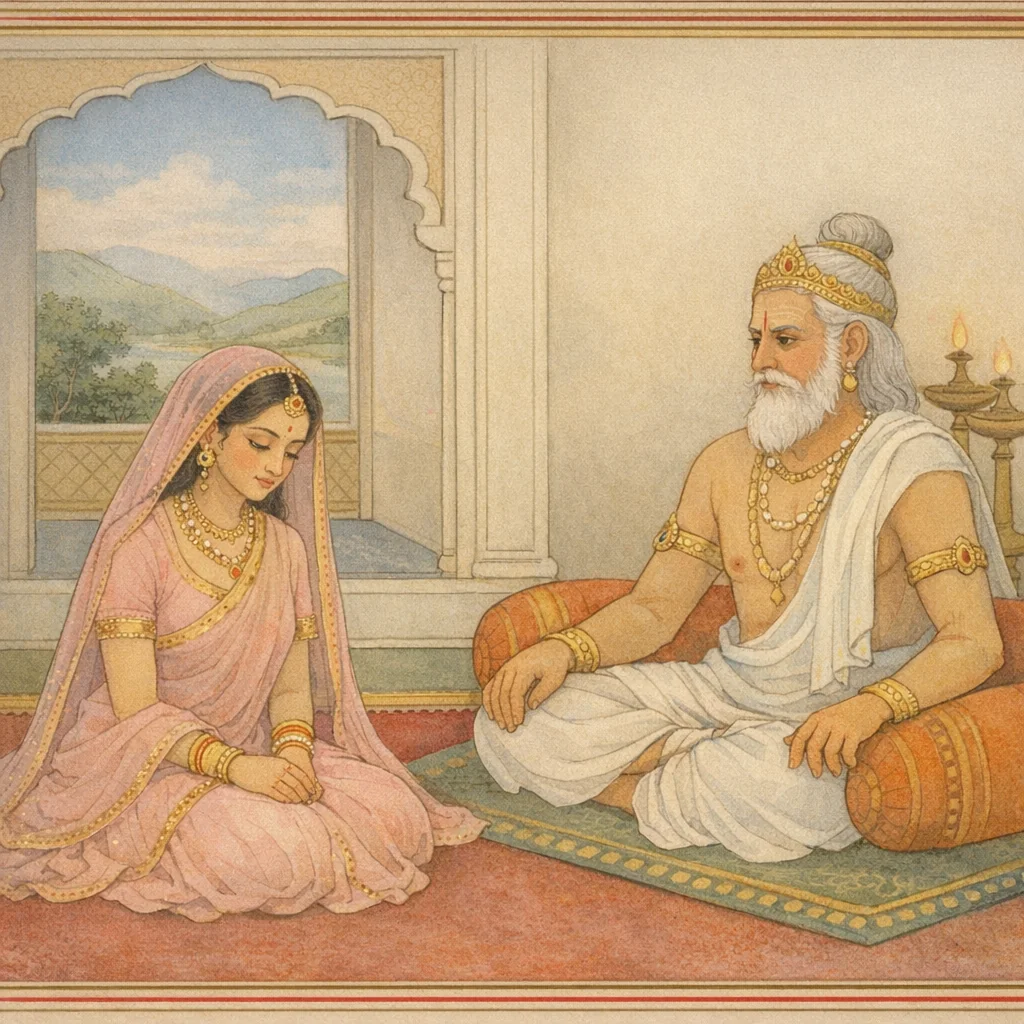
सत्यवत्यास्त्वनुमते विवाहे समुपस्थिते । उवाच वाक्यं सब्रीडा ज्येष्ठा काशिपते: सुता,सत्यवतीकी अनुमतिसे जब विवाहका कार्य उपस्थित हुआ, तब काशिराजकी ज्येष्ठ पुत्री अम्बाने कुछ लज्जित होकर मुझसे कहा--
Bhīṣma said: When, with Satyavatī’s consent, the arrangements for the marriage had come to hand, the eldest daughter of the lord of Kāśī—Ambā—spoke to me, her words tinged with modest hesitation.
Verse 5
भीष्म त्वमसि धर्मज्ञ: सर्वशास्त्रविशारद: । श्रुत्वा च वचन धर्म्य महां कर्तुमिहाहसि,'भीष्म! तुम धर्मके ज्ञाता और सम्पूर्ण शास्त्रोंके ज्ञानमें निपुण हो। मेरी बात सुनकर मेरे साथ धर्मपूर्ण बर्ताव करना चाहिये
“Bhīṣma, you are a knower of dharma and well-versed in all the śāstras. Having heard my righteous words, you ought to act here with nobility and in accordance with dharma toward me.”
Verse 6
मया शाल्वपति: पूर्व मनसाभिवृतो वर: । तेन चास्मि वृता पूर्व रहस्यविदिते पितु:,“मैंने अपने मनसे पहले शाल्वराजको अपना पति चुन लिया है और उन्होंने भी एकान्तमें मेरा वरण कर लिया है। यह पहलेकी बात है, जो मेरे पिताको भी ज्ञात नहीं है
I had already, in my heart, chosen the king of Śālva as my husband; and he too had earlier accepted me in private—an understanding kept secret and not even known to my father.
Verse 7
कथं मामन्यकामां त्वं राजधर्ममतीत्य वै | वासयेथा गृहे भीष्म कौरव: सन् विशेषत:,'भीष्म! मैं दूसरेकी कामना करनेवाली राजकन्या हूँ। तुम विशेषतः कुरुवंशी होकर राजधर्मका उल्लंघन करके मुझे अपने घरमें कैसे रखोगे?
“How could you, O Bhīṣma, set aside the duties of kingship and keep me in your house—me who desires another? All the more, how could you do so when you are a Kaurava, bound by the strict standards of royal dharma?”
Verse 8
एतद् बुद्धया विनिश्चित्य मनसा भरतर्षभ । यत् क्षमं ते महाबाहो तदिहारब्धुमहसि,“महाबाहु भरतश्रेष्ठ! अपनी बुद्धि और मनसे इस विषयमें निश्चित विचार करके तुम्हें जो उचित प्रतीत हो, वही करना चाहिये
Bhīṣma said: “O bull among the Bharatas, having carefully resolved this with your intellect and reflected upon it in your mind, O mighty-armed one, you should undertake here precisely what seems proper and fitting for you.”
Verse 9
स मां प्रतीक्षते व्यक्त शाल्वराजो विशाम्पते । तस्मान्मां त्वं कुरुश्रेष्ठ समनुज्ञातुमहसि,'प्रजानाथ! शाल्वराज निश्चय ही मेरी प्रतीक्षा करते होंगे; अतः कुरुश्रेष्ठ! तुम्हें मुझे उनकी सेवामें जानेकी आज्ञा देनी चाहिये
Bhīṣma said: “O lord of the people, it is certain that King Śālva is waiting for me. Therefore, O best of the Kurus, you ought to grant me permission to go and attend upon him.”
Verse 10
कृपां कुरु महाबाहो मयि धर्मभूतां वर । त्वं हि सत्यव्रतो वीर पृथिव्यामिति न: श्रुतम्,'धर्मात्माओंमें श्रेष्ठ महाबाहु वीर! मुझपर कृपा करो। मैंने सुना है कि इस पृथ्वीपर तुम सत्यव्रती महात्मा हो"
Bhīṣma said: “Show compassion to me, O mighty-armed one—compassion grounded in dharma, O best of men. For we have heard it said upon this earth that you, O hero, are steadfast in your vow of truth.”
Verse 174
इति श्रीमहाभारते उद्योगपर्वणि अम्बोपाख्यानपर्वणि अम्बावाक्ये चतु:सप्तत्यधिकशततमो<ध्याय:
Thus, in the revered Mahābhārata, within the Udyoga Parva, in the section known as the Ambopākhyāna (the episode of Ambā), in the portion containing Ambā’s words, ends the one-hundred-and-seventy-fourth chapter. This colophon marks the close of a narrative unit, framing Ambā’s testimony within the wider ethical and political tensions of the Udyoga Parva.
Frequently Asked Questions
Ambā confronts competing obligations: returning to her kin despite social stigma, accepting a rejection that negates her marital claim, or pursuing a corrective path that challenges an elder’s prior actions—each option carrying ethical and reputational costs.
The chapter frames suffering as interpreted through karma and agency: while fate is invoked, Ambā also asserts deliberate choice—seeking tapas and counsel—illustrating how individuals in the epic negotiate responsibility amid constrained social structures.
No formal phalaśruti is presented here; the meta-level significance lies in positioning tapas and ascetic counsel as legitimate instruments of moral redress within the epic’s broader discourse on dharma, consequence, and transformative resolve.