Adhyaya 138
Kṛṣṇasya Karṇam Prati Sāntvavacana (Kṛṣṇa’s Conciliatory Address to Karṇa)
Upa-parva: Karna–Krishna Saṃvāda (Diplomatic Appeal to Rādheya)
Dhṛtarāṣṭra asks Sañjaya to report, in full tonal detail, what Kṛṣṇa said to Karṇa while they were positioned on the chariot. Sañjaya characterizes Kṛṣṇa’s speech as sequential, gentle, pleasing, dharma-aligned, truthful, and beneficial. Kṛṣṇa then addresses Karṇa (Rādheya/Vasuṣeṇa) by affirming his learning and grounding in subtle dharmaśāstra. He introduces a legal-ethical argument about paternity categories—children born to an unmarried maiden (kānīna) and related classifications—concluding that Karṇa is, by dharma, a son of Pāṇḍu. Building on this legitimacy claim, Kṛṣṇa offers an explicit political settlement: Karṇa should come with him, be recognized by the Pāṇḍavas, and be consecrated as king, with Yudhiṣṭhira designated as yuvarāja (heir). The chapter elaborates a ceremonial and social tableau of reintegration: brothers, allies, and groups would honor Karṇa; ritual items and attendants are enumerated; and a vision of stable rule with fraternal concord is projected as the strategic outcome.
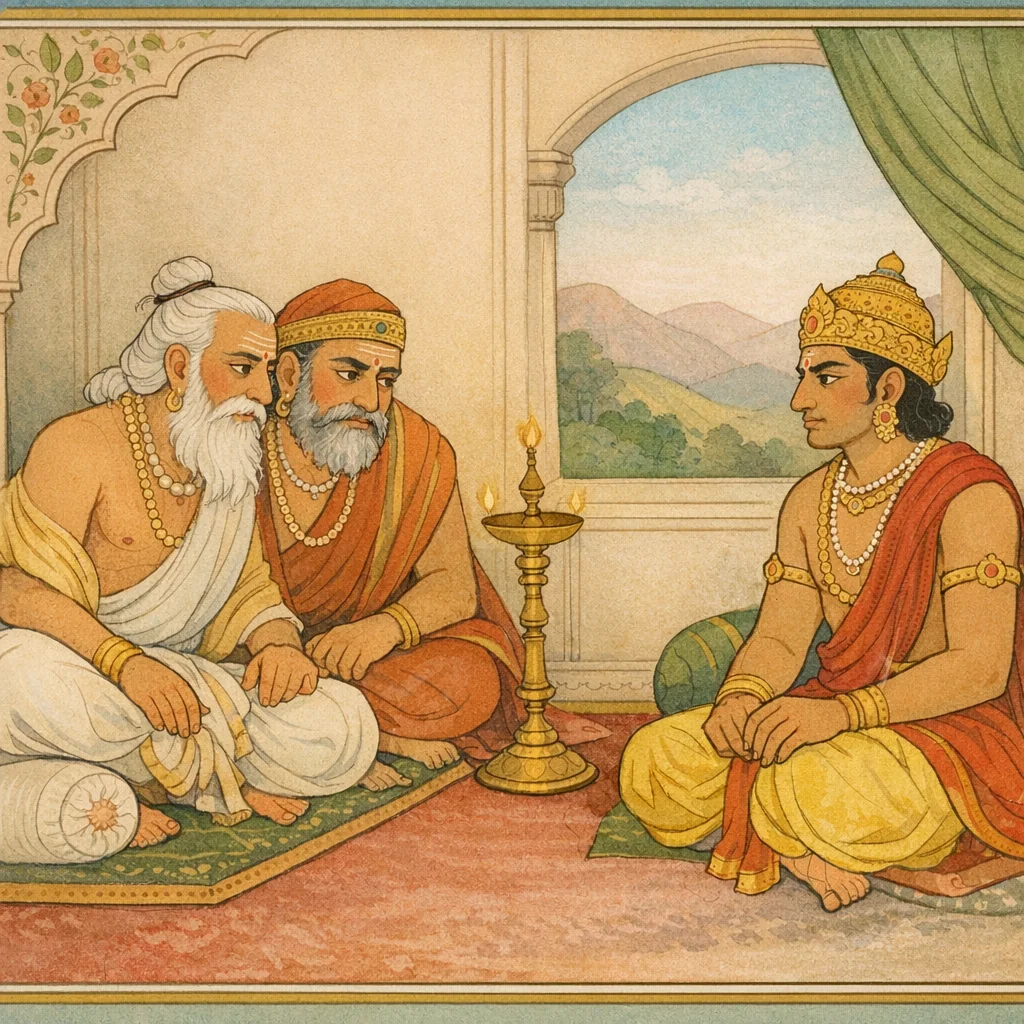
Chapter Arc: दुर्योधन की हठधर्मिता और उदासी को देखकर कुरुवृद्ध भीष्म और आचार्य द्रोण पास-पास बैठकर एक-दूसरे की ओर देखते हैं—अब अंतिम बार उसे संधि की ओर मोड़ने का प्रयत्न करना ही शेष है। → भीष्म अपने ही प्रियतम शिष्य अर्जुन के विरुद्ध युद्ध करने की विवशता का विषाद प्रकट करते हैं; द्रोण दुर्योधन को बार-बार समझाते हैं कि भीष्म, विदुर और वासुदेव जैसे हितैषियों की बात न मानकर वह विनाश की ओर बढ़ रहा है, जैसे उफनती नदी में ग्राह-मकरों के बीच कोई अविवेकी व्यक्ति उतर पड़े। → द्रोण का कठोर नैतिक निदान—‘पापात्मा को रोको तो भी वह पाप चाहता है, शुभात्मा को उकसाओ तो भी वह शुभ चाहता है’—और उसी के साथ दुर्योधन की जिद को ‘बल है’ के मद में अंधी छलांग बताकर युद्ध-त्याग का अंतिम आग्रह। → द्रोण स्पष्ट कहते हैं कि युद्ध से कोई लाभ नहीं; कुरुवंश की वृद्धि के लिए शांति करो, अन्यथा पुत्रों, अमात्यों और सेना सहित यमक्षय (मृत्यु-लोक) की ओर जाओगे। अध्याय भीष्म-द्रोण के उपदेशात्मक संवाद पर समाप्त होता है। → दुर्योधन इस अंतिम चेतावनी को स्वीकार करेगा या हठ पर अडिग रहकर युद्ध को अपरिहार्य बना देगा—यह प्रश्न अगले प्रसंग पर टिका रहता है।
Shlokas
Verse 1
ऑपनआक्रा बछ। अ्-क्ााज एकोनचत्वारिशर्दाधिकशततमो< ध्याय: भीष्मसे वार्तालाप आरम्भ करके द्रोणाचार्यका दुर्योधनको पुन: संधिके लिये समझाना वैशम्पायन उवाच एवमुक्तस्तु विमनास्तिर्यग्दृष्टिरधोमुख: । संहत्य च भ्रुवोर्मध्यं न किंचिद् व्याजहार ह,वैशम्पायनजी कहते हैं--जनमेजय! भीष्म और द्रोणाचार्यके इस प्रकार कहनेपर दुर्योधनका मन उदास हो गया। उसने टेढ़ी आँखोंसे देखकर और भौंहोंको बीचसे सिकोड़कर मुँह नीचा कर लिया। वह उन दोनोंसे कुछ बोला नहीं
Vaiśampāyana said: When he had been addressed in this manner, Duryodhana became dispirited. Casting a sidelong glance, lowering his face, and knitting his brows, he uttered not a single word. The scene underscores how counsel grounded in prudence and dharma can meet the wall of pride and inner agitation, revealing a moral failure not in speech but in the refusal to respond to wise restraint.
Verse 2
तं॑ वै विमनसं दृष्टवा सम्प्रेक्ष्यान्योन्यमन्तिकात् | पुनरेवोत्तरं वाक्यमुक्तवन्तौ नरर्षभौ,उसे उदास देख नरश्रेष्ठ भीष्म और द्रोण एक-दूसरेकी ओर देखते हुए उसके निकट ही पुनः इस प्रकार बात करने लगे
Seeing him dejected and mentally unsettled, the two best of men—Bhīṣma and Droṇa—looked at one another from nearby; then, once again, they spoke in reply. The moment underscores how elders, sensing a wavering mind at a critical ethical juncture, confer silently and then choose words meant to steady judgment amid impending conflict.
Verse 3
भीष्म उवाच शुश्रूषुमनसूयं च ब्रह्म॒ण्यं सत्यवादिनम् । प्रतियोत्स्यामहे पार्थमतो दुःखतरं नु किम्,भीष्म बोले--अहो! जो गुरुजनोंकी सेवाके लिये उत्सुक, किसीके भी दोष न देखनेवाले, ब्राह्मणभक्त और सत्यवादी हैं, उन्हीं युधिष्ठिरसे हमें युद्ध करना पड़ेगा; इससे बढ़कर महान् दुःखकी बात और क्या होगी?
Bhishma said: “We must take up arms against that son of Pritha—one who is eager to serve his elders, free from fault-finding, devoted to the Brahmins, and steadfast in truth. What sorrow could be greater than this?”
Verse 4
द्रोण उदाच अश्वत्थाम्नि यथा पुत्रे भूयो मम धनंजये । बहुमान: परो राजन् संनतिश्व कपिध्वजे,द्रोणाचार्यने कहा--राजन! मेरा अपने पुत्र अश्वत्थामाके प्रति जैसा आदर है, उससे भी अधिक अर्जुनके प्रति है। कपिध्वज अर्जुनमें मेरे प्रति बहुत विनयभाव है
Droṇa said: “O King, the regard I have for Dhanañjaya (Arjuna) is even greater than the affection I bear for my own son Aśvatthāman. Indeed, my esteem for him is supreme; and the monkey-bannered Arjuna also shows me deep humility and respectful deference.”
Verse 5
तं च पुत्रात् प्रियतमं प्रतियोत्स्ये धनंजयम् । क्षात्रं धर्ममनुष्ठाय धिगस्तु क्षत्रजीविकाम्,मेरे पुत्रसे भी बढ़कर प्रियतम उन्हीं अर्जुनसे मुझे क्षत्रियरर्मका आश्रय लेकर युद्ध करना पड़ेगा क्षात्र-वृत्तिको धिक्कार है!
And I must fight Dhanañjaya—who is dearer to me even than my own son—while performing the warrior’s duty. Fie upon the livelihood of the Kṣatriya, for it compels one to battle even those most beloved, in the name of dharma.
Verse 6
यस्य लोके समो नास्ति कश्चिदन्यो धनुर्धर: । मत्प्रसादात् स बीभत्सु: श्रेयानन्यैर्धनुर्धरै:,मेरी ही कृपासे अर्जुन अन्य धनुर्धरोंसे श्रेष्ठ हो गये हैं। इस समय जगत्में उनके समान दूसरा कोई धनुर्धर नहीं है
Bhishma said: “In this world there is no other bowman equal to him. By my favor, that terrible warrior Arjuna has become superior to all other archers; at present, no second bowman comparable to him exists.”
Verse 7
मित्रध्रुग् दुष्टभावश्च नास्तिको5थानृजु: शठ: । न सत्सु लभते पूजां यज्ञे मूर्ख इवागत:,जैसे यज्ञमें आया हुआ मूर्ख ब्राह्मण प्रतिष्ठा नहीं पाता, उसी प्रकार जो मित्रद्रोही, दुर्भावनायुक्त, नास्तिक, कुटिल और शठ है, वह सत्पुरुषोंमें कभी सम्मान नहीं पाता है
Bhīṣma said: One who betrays friends, harbors a wicked disposition, denies the sacred (is an unbeliever), and is crooked and deceitful—such a person never gains honor among the virtuous. Just as a foolish brāhmaṇa who turns up at a sacrifice receives no esteem, so too the malicious and faithless find no true respect in the company of the good.
Verse 8
वार्यमाणो$पि पापेभ्य: पापात्मा पापमिच्छति । चोद्यमानो5पि पापेन शुभात्मा शुभमिच्छति,पापात्मा मनुष्यको पापोंसे रोका जाय तो भी वह पाप ही करना चाहता है और जिसका हृदय शुभ संकल्पसे युक्त है, वह पुण्यात्मा पुरुष किसी पापीके द्वारा पापके लिये प्रेरित होनेपर भी शुभ कर्म करनेकी ही इच्छा रखता है
Bhīṣma said: Even when restrained from sinful acts, a sinful-minded person still longs to commit sin. And even when urged toward sin by a sinner, a person of auspicious nature continues to desire only what is good.
Verse 9
मिथ्योपचरिता होते वर्तमाना हानु प्रिये | अहितत्वाय कल्पन्ते दोषा भरतसत्तम,भरतश्रेष्ठ! तुमने पाण्डवोंके साथ सदा मिथ्या बर्ताव--छल-कपट ही किया है तो भी ये सदा तुम्हारा प्रिय करनेमें ही लगे रहे हैं। अतः तुम्हारे ये ईर्ष्या-द्वेष आदि दोष तुम्हारा ही अहित करनेवाले होंगे
Bhishma said: “O best of the Bharatas! Though you have always dealt with the Pandavas through false conduct—deceit and guile—yet they have remained intent on pleasing you. Therefore your faults, such as envy and hatred, will turn to your own harm.”
Verse 10
त्वमुक्तः कुरुवृद्धेन मया च विदुरेण च । वासुदेवेन च तथा श्रेयो नैवाभिमन्यसे,कुरुकुलके वृद्ध पुरुष भीष्मजीने, मैंने, विदुरजीने तथा भगवान् श्रीकृष्णने भी तुमसे तुम्हारे कल्याणकी ही बात बतायी है; तथापि तुम उसे मान नहीं रहे हो
Bhishma said: You have been counseled by the elder of the Kuru house, by me, by Vidura, and likewise by Vasudeva—each urging what is truly for your welfare. Yet you still refuse to accept that beneficial course.
Verse 11
अस्ति मे बलमित्येव सहसा त्वं तितीर्षसि । सग्राहनक्रमकरं गज्रावेगमिवोष्णगे,जैसे कोई अविवेकी मनुष्य वर्षाकालमें बढ़े हुए ग्राह और मकर आदि जलजन्तुओंसे युक्त गंगाजीके वेगको दोनों बाहुओंसे तैरना चाहता हो, उसी प्रकार तुम मेरे पास बल है, ऐसा समझकर पाण्डव-सेनाको सहसा लाँघ जानेकी इच्छा रखते हो
Bhīṣma said: “Merely thinking, ‘I have strength,’ you rashly wish to cross over. It is like a foolish man in the rainy season trying to swim across the rushing Gaṅgā—teeming with crocodiles, gharials, and makaras—using only his two arms. In the same way, trusting only in your own power, you desire to overleap the Pāṇḍava host in sudden haste.”
Verse 12
वास एव यथा त्यक्तं प्रावृण्वानो $भिमन्यसे । स्रजं त्यक्तामिव प्राप्य लोभाद् यौधिष्ठिरी श्रियम्,जैसे कोई दूसरेका छोड़ा हुआ वस्त्र पहन ले और उसे अपना मानने लगे, उसी प्रकार तुम त्यागी हुई मालाकी भाँति युधिष्ठिरकी राजलक्ष्मीको पाकर अब उसे लोभवश अपनी समझते हो
“As one who puts on a garment cast off by another and imagines it to be his own, so do you: having obtained Yudhiṣṭhira’s royal fortune like a garland that was discarded, you now, out of greed, take it to be yours.”
Verse 13
द्रौपदीसहितं पार्थ सायुधैर्भ्नातृभिर्वृतम् । वनस्थमपि राज्यस्थ: पाण्डवं को विजेष्यति,अपने अस्त्र-शस्त्रधारी भाइयोंसे घिरे हुए द्रौपदी-सहित पाण्डुनन्दन युधिष्ठिर वनमें रहें तो भी उन्हें राज्यसिंहासनपर बैठा हुआ कौन नरेश युद्धमें जीत सकेगा?
Bhīṣma said: “O Pārtha, who could ever defeat in battle that Pāṇḍava—Yudhiṣṭhira—when he is accompanied by Draupadī and surrounded by his weapon-bearing brothers? Even if he lives in the forest, he is, in truth, fit to sit upon the royal throne; such a one is not easily overcome.”
Verse 14
निदेशे यस्य राजानः सर्वे तिष्ठन्ति किड्करा: । तमैलविलमासाद्य धर्मराजो व्यराजत,समस्त राजा जिनकी आज्ञामें किंकरकी भाँति खड़े रहते हैं, उन्हीं राजराज कुबेरसे मिलकर धर्मराज युधिष्ठिर उनके साथ विराजमान हुए थे
Bhīṣma said: “At whose command all kings stand like attendants—having approached that lord of wealth, Ailavila (Kubera), Dharma-rāja Yudhiṣṭhira shone forth, seated in his company.”
Verse 15
कुबेरसदन प्राप्य ततो रत्नान्यवाप्य च । स्फीतमाक्रम्य ते राष्ट्र राज्यमिच्छन्ति पाण्डवा:,कुबेरके भवनमें जाकर उनसे भाँति-भाँतिके रत्न लेकर अब पाण्डव तुम्हारे समृद्धिशाली राष्ट्रपर आक्रमण करके अपना राज्य वापस लेना चाहते हैं
Bhīṣma said: “Having reached Kubera’s abode and obtained various jewels there, the Pāṇḍavas now seek to recover their kingship by marching against your prosperous realm.”
Verse 16
दत्त हुतमधीतं च ब्राह्मणास्तर्पिता धनै: । आवयोर्गतमायुश्न॒ कृतकृत्यौ च विद्धि नौ,हम दोनोंने तो दान, यज्ञ और स्वाध्याय कर लिये। धनसे ब्राह्मणोंको तृप्त कर लिया। अब हमारी आयु समाप्त हो चुकी है, अतः हमें तो तुम कृतकृत्य ही समझो
Bhīṣma said: “We have already done what was to be done—given gifts, offered sacrifices, and pursued sacred study. With our wealth we have satisfied the Brahmins. Now our allotted span of life has run its course; therefore, know us to be fulfilled in duty, with nothing essential left undone.”
Verse 17
त्वं तु हित्वा सुखं राज्यं मित्राणि च धनानि च | विग्रहं पाण्डवै: कृत्वा महद् व्यसनमाप्स्यसि,परंतु तुम पाण्डवोंसे युद्ध ठानकर सुख, राज्य, मित्र और धन सब कुछ खोकर बड़े भारी संकटमें पड़ जाओगे
Bhīṣma warned: “But you—if you cast aside peace and well-being, along with your kingdom, friends, and wealth, and choose hostility with the Pāṇḍavas—you will bring upon yourself a great calamity.”
Verse 18
द्रौपदी यस्य चाशास्ते विजयं सत्यवादिनी । तपोघोरब्रता देवी कथं जेष्यसि पाण्डवम्,तपस्या एवं घोर व्रतका पालन करनेवाली सत्यवादिनी देवी द्रौपदी जिनकी विजयकी कामना करती है, उन पाण्डुनन्दन युधिष्ठिरको तुम कैसे जीत सकोगे?
Bhīṣma said: “How will you ever defeat that son of Pāṇḍu—Yudhiṣṭhira—whose victory is invoked by Draupadī, the truth-speaking goddess, steadfast in severe austerities and formidable vows?”
Verse 19
मन्त्री जनार्दनो यस्य भ्राता यस्य धनंजय: । सर्वशस्त्रभृतां श्रेष्ठ; कथं जेष्पसि पाण्डवम्,भगवान् श्रीकृष्ण जिनके मन्त्री और समस्त शस्त्रधारियोंमें श्रेष्ठ अर्जुन जिनके भाई हैं, उन पाण्दुपुत्र युधिष्ठिरको तुम कैसे जीतोगे?
Bhīṣma said: “How will you ever conquer that son of Pāṇḍu (Yudhiṣṭhira), whose counselor is Bhagavān Janārdana (Kṛṣṇa), and whose brother is Dhanañjaya (Arjuna), the foremost among all bearers of weapons?”
Verse 20
सहाया ब्राह्मणा यस्य धृतिमन्तो जितेन्द्रिया: । तमुग्रतपसं वीरं कथं जेष्यसि पाण्डवम्
Bhīṣma said: “He whose allies are brāhmaṇas—steadfast in resolve and masters of their senses—how will you defeat that Pāṇḍava hero, a man of fierce austerity?”
Verse 21
धैर्यवान् और जितेन्द्रिय ब्राह्मण जिनके सहायक हैं, उन उग्र तपस्वी वीर पाण्डवको तुम कैसे जीत सकोगे? ।। पुनरुक्तं च वक्ष्यामि यत् कार्य भूतिमिच्छता । सुहृदा मज्जमानेषु सुहृत्सु व्यसनार्णवे,जिस समय अपने बहुत-से सुहृद् संकटके समुद्रमें डूब रहे हों, उस समय कल्याणकी इच्छा रखनेवाले एक सुहृदका जो कर्तव्य है--उस अवसर-पर उसे जैसी बात कहनी चाहिये, वह यद्यपि पहले कही जा चुकी है, तथापि मैं उसे दुबारा कहूँगा
How could you ever conquer those heroic Pāṇḍavas—fierce in austerity—who are supported by steadfast, self-controlled brāhmaṇas? Again I shall state what must be done by one who seeks true welfare: when many dear friends are sinking in an ocean of calamity, the duty of a well-wishing friend is to speak what is needed at that moment. Though it has been said before, I will say it once more.
Verse 22
अलं युद्धेन तैवीरि: शाम्य त्वं कुरुवृद्धये । मा गम: ससुतामात्य: सबलश्न यमक्षयम्,राजन! युद्धसे तुम्हें कोई लाभ नहीं होगा। तुम कुरुकुलकी वृद्धिके लिये उन वीर पाण्डवोंके साथ संधि कर लो। पुत्रों, मन्त्रियों तथा सेनाओंसहित यमलोकमें जानेकी तैयारी न करो
Bhīṣma said: “Enough of war with those heroic men. For the increase and welfare of the Kuru line, make peace. Do not set out, O king, with your sons, ministers, and army, toward the imperishable realm of Yama—death will bring you no gain from this conflict.”
Verse 138
इस प्रकार श्रीमहाभारत उद्योगपर्वके अन्तर्गत भगवद्यानपर्वमें भीष्य-द्रोग-वाक्यविषयक एक सौ अड्भतीसवाँ अध्याय पूरा हुआ
Thus ends the one hundred and thirty-eighth chapter of the Udyoga Parva of the Śrī Mahābhārata, within the section known as the Bhagavad-yāna Parva, dealing with the words and counsel of Bhīṣma and Droṇa. The narrator marks the close of this unit, signaling a transition in the unfolding ethical and political deliberations that precede war.
Verse 139
इति श्रीमहाभारते उद्योगपर्वणि भगवद्यानपर्वणि भीष्मद्रोणवाक्ये एकोनचत्वारिंशदिधिकशततमो<ध्याय:
Thus, in the Śrī Mahābhārata, within the Udyoga Parva—specifically the section concerning the Lord’s embassy—ends the chapter containing the words of Bhīṣma and Droṇa, being the one-hundred-and-thirty-ninth chapter. This is a colophon marking the close of the chapter and situating the discourse within the ethical and political crisis preceding war.
Frequently Asked Questions
Whether Karṇa should prioritize dharma-defined lineage and fraternal obligation (accepting recognition as Kuntī’s son and aligning with the Pāṇḍavas) over established loyalties and political commitments already formed in the Kuru conflict.
That persuasion aimed at conflict reduction should integrate ethical reasoning, accurate social-legal categories, and a practical, dignity-preserving settlement—so that reconciliation is not merely sentimental but institutionally viable.
No explicit phalaśruti is presented in this excerpt; the chapter’s meta-function is pragmatic and ethical—demonstrating how dharma discourse and political design are deployed to avert escalation.