Adhyaya 1
स्वर्गे दुर्योधनदर्शनम् | Duryodhana Seen in Heaven (Triviṣṭapa)
Upa-parva: Svargārohaṇa (Heaven-Entry Episode): Yudhiṣṭhira Encounters Duryodhana in Triviṣṭapa
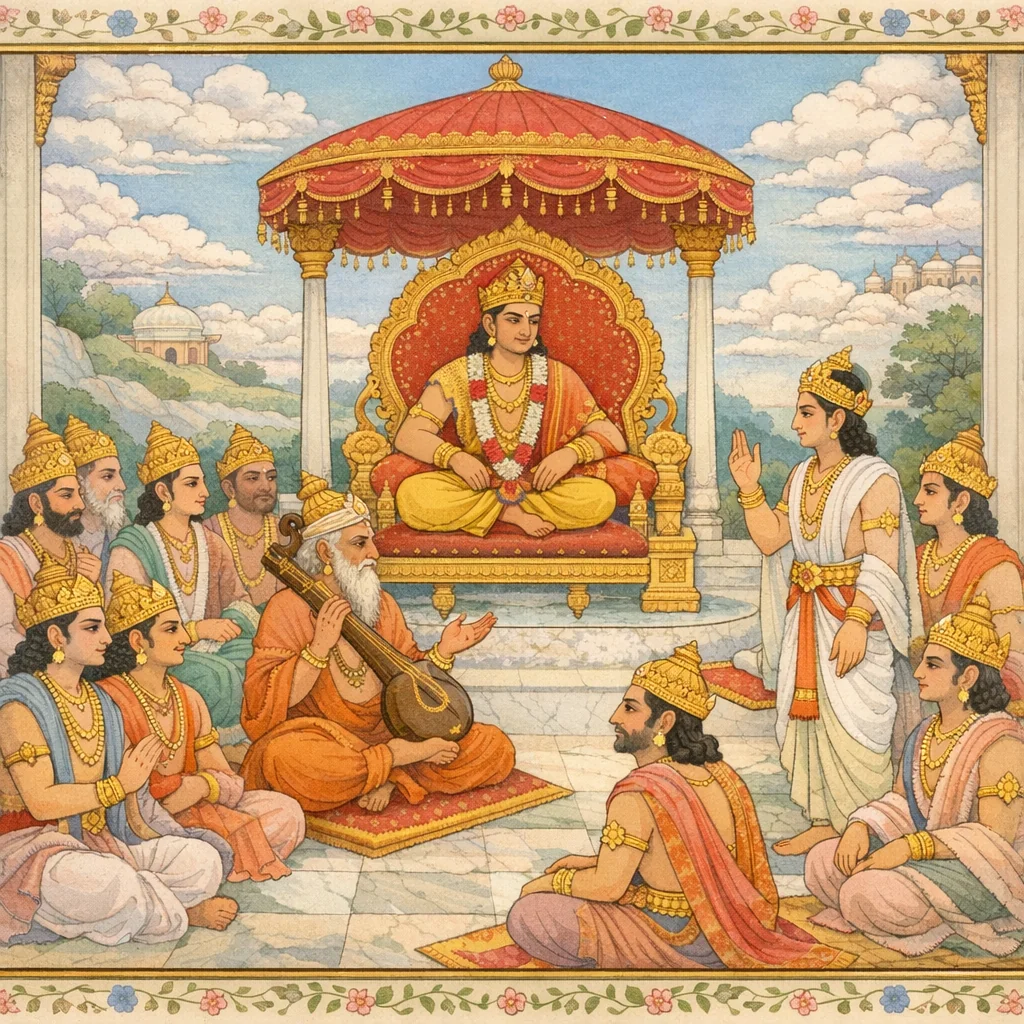
Janamejaya requests an account of the posthumous stations attained by his forebears (Pāṇḍavas and Dhārtarāṣṭras) after reaching svarga. Vaiśaṃpāyana begins by narrating Yudhiṣṭhira’s arrival in triviṣṭapa and his immediate perception of Duryodhana seated in splendor among luminous deities and righteous royal figures. The sight provokes Yudhiṣṭhira’s indignation: he verbally rejects companionship with Duryodhana, recalling the broad devastation attributed to Duryodhana’s choices, the deaths of kin and allies, and Draupadī’s public suffering in the assembly. Yudhiṣṭhira expresses a desire to go where his brothers are rather than remain near Duryodhana. Nārada responds by instructing that in svarga, opposition and enmity do not persist; Duryodhana is honored due to the ‘heroic realm’ attained through kṣatriya-duty in battle. Nārada further advises Yudhiṣṭhira not to dwell on dice-related afflictions and wartime hardships, framing them as concluded within the heavenly order. Yudhiṣṭhira then questions the whereabouts of his brothers and allied warriors (including Karṇa, Dhṛṣṭadyumna, Sātyaki, the Draupadeyas, Śikhaṇḍin, Abhimanyu, Virāṭa, Drupada, and others), signaling the chapter’s transition from moral protest to a structured inquiry about posthumous destinies.
Chapter Arc: जनमेजय, व्यास की आज्ञा से वैशम्पायन स्वर्गारोहण के अद्भुत प्रसंग का द्वार खोलते हैं—युधिष्ठिर और उनके पूर्वज त्रिविष्टप में क्या देखते हैं, यह सुनो। → स्वर्ग में पहुँचकर धर्मराज युधिष्ठिर एक चमकते सूर्य-सम तेजस्वी दृश्य देखते हैं: देवों-साध्यों के बीच दुर्योधन को वीर-लक्ष्मी से विभूषित, उच्च आसन पर। यह दृश्य युधिष्ठिर के भीतर असह्य विरोध और नैतिक प्रश्न जगा देता है—जिसने पृथ्वी का विनाश कराया, वह यहाँ कैसे? → युधिष्ठिर का तीखा प्रतिवाद फूट पड़ता है: यदि दुर्योधन को ‘सनातन’ वीरलोक मिले हैं, तो फिर धर्म-अधर्म का न्याय कहाँ? वे नारद से अपने प्रिय पाण्डव-पक्षीय वीरों—धृष्टद्युम्न, सात्यकि, द्रौपदेय, शिखण्डी, अभिमन्यु, विराट-द्रुपद आदि—को दिखाने की माँग करते हैं। → नारद/देवर्षि क्षत्रधर्म का सिद्धान्त सामने रखते हैं: जिन्होंने रण में शरीर की आहुति दी, भय में न डिगे, वे वीरगति के अधिकारी हुए—यही दुर्योधन के स्वर्ग-स्थान का कारण है। पर युधिष्ठिर की तृप्ति नहीं होती; वे अपने जनों को देखे बिना स्वर्ग को स्वीकार नहीं करते। → युधिष्ठिर की दृष्टि अपने प्रिय वीरों को खोजती रह जाती है—वे कहाँ हैं, और स्वर्ग का न्याय किस रूप में प्रकट होगा?
Shlokas
Verse 1
दक्षिण भारतीय पाठसे लिये गये अ प्रहाप्रस्थानिकपर्वकी कुल एलोकसंख्या-- ११४॥। नशा रत (0) आज अत +- ॥| ३० श्रीपरमात्मने नमः ।। श्रीमहाभारतम् स्वर्गारोहणपर्व प्रथमो5 ध्याय: स्वर्गमें नारद और युधिष्ठिरकी बातचीत नारायणं नमस्कृत्य नरं चैव नरोत्तमम् | देवीं सरस्वतीं व्यासं ततो जयमुदीरयेत् ।। अन्तर्यामी नारायणस्वरूप भगवान् श्रीकृष्ण, (उनके नित्य सखा) नरस्वरूप नरश्रेष्ठ अर्जुन, (उनकी लीला प्रकट करनेवाली) भगवती सरस्वती और (उन लीलाओंका संकलन करनेवाले) महर्षि वेदव्यासको नमस्कार करके जय (महाभारत)-का पाठ करना चाहिये ।। जनमेजय उवाच स्वर्ग त्रिविष्टपं प्राप्प मम पूर्वपितामहा: । पाण्डवा धार्तराष्ट्रश्न कानि स्थानानि भेजिरे,जनमेजयने पूछा--मुने! मेरे पूर्वपितामह पाण्डव और धृतराष्ट्रके पुत्र स्वर्गलोकमें पहुँचकर किन-किन स्थानोंको प्राप्त हुए? द्रौपदी च सभामध्ये पाञ्चाली धर्मचारिणी । पर्याकृष्टानवद्याज्ी पत्नी नो गुरुसंनिधौ इति श्रीमहाभारते स्वर्गारोहणपर्वणि स्वर्गे नारदयुधिष्ठिरसंवादे प्रथमो5ध्याय: ।। ३१ || इस प्रकार श्रीमह्याभारत स्वगरिह्रणपर्वमें स्वर्गणें नारद और युधिष्ठिरका संवादविषयक पहला अध्याय पूरा हुआ
Janamejaya said: “O sage, when my forefathers—the Pāṇḍavas—and the sons of Dhṛtarāṣṭra reached heaven, Triviṣṭapa, the realm of the Thirty-three, what stations or abodes did each of them attain?”
Verse 2
एतदिच्छाम्यहं श्रोतुं सर्वविच्चासि मे मतः । महर्षिणाभ्यनुज्ञातो व्यासेनादूभुतकर्मणा,मैं यह सब सुनना चाहता हूँ। आप अदभुतकर्मा महर्षि व्यासकी आज्ञा पाकर सर्वज्ञ हो गये हैं--ऐसा मेरा विश्वास है
Janamejaya said: “I wish to hear all this. It is my conviction that you are fully knowledgeable, for you have been authorized by the great sage Vyāsa, whose deeds are wondrous. Therefore, recount it to me as it truly happened.”
Verse 3
वैशग्पायन उवाच स्वर्ग त्रिविष्टपं प्राप्प तव पूर्वपितामहा: । युधिष्ठिरप्रभूतयो यदकुर्वत तच्छूणु,वैशम्पायनजीने कहा--जनमेजय! जहाँ तीनों लोकोंका अन्तर्भाव है, उस स्वर्गमें पहुँचकर तुम्हारे पूर्वपितामह युधिष्ठिर आदिने जो कुछ किया, वह बताया जाता है, सुनो
Vaiśaṃpāyana said: O Janamejaya! When your forefathers—Yudhiṣṭhira and the rest—reached heaven, Triviṣṭapa, which encompasses the three worlds, what they did there is now told; listen.
Verse 4
स्वर्ग त्रिविष्टपं प्राप्प धर्मराजो युधिष्ठिर: । दुर्योधन श्रिया जुष्टं ददर्शासीनमासने,स्वर्गलोकमें पहुँचकर धर्मराज युधिष्ठिरने देखा कि दुर्योधन स्वर्गीय शोभासे सम्पन्न हो तेजस्वी देवताओं तथा पुण्यकर्मा साध्यगणोंके साथ एक दिव्य सिंहासनपर बैठकर वीरोचित शोभासे संयुक्त हो सूर्यके समान देदीप्यमान हो रहा है
Having reached heaven, Triviṣṭapa, Dharmarāja Yudhiṣṭhira beheld Duryodhana, endowed with celestial splendor, seated upon a divine throne, in the company of radiant gods and the meritorious Sādhyas.
Verse 5
भ्राजमानमिवादित्यं वीरलक्ष्म्याभिसंवृतम् । देवैभ्राजिष्णुभि: साध्यै: सहितं पुण्यकर्मभि:,स्वर्गलोकमें पहुँचकर धर्मराज युधिष्ठिरने देखा कि दुर्योधन स्वर्गीय शोभासे सम्पन्न हो तेजस्वी देवताओं तथा पुण्यकर्मा साध्यगणोंके साथ एक दिव्य सिंहासनपर बैठकर वीरोचित शोभासे संयुक्त हो सूर्यके समान देदीप्यमान हो रहा है
He shone like the sun, encompassed by heroic splendor, in the company of radiant gods and the Sādhyas, doers of meritorious deeds.
Verse 6
ततो युधिष्छिरो दृष्टवा दुर्योधनममर्षित: । सहसा संनिवृत्तो5भूच्छियं दृष्टवा सुयोधने
Then Yudhiṣṭhira, on seeing Duryodhana, was stirred with indignation; yet he at once checked himself when he beheld prosperity and splendor resting upon Suyodhana.
Verse 7
दुर्योधनको ऐसी अवस्थामें देख उसे मिली हुई शोभा और सम्पत्तिका अवलोकन कर राजा युधिष्ठिर अमर्षसे भर गये और सहसा दूसरी ओर लौट पड़े ।। ब्रुवन्नुच्चैर्वचस्तान् वै नाहं दुर्योधनेन वै । सहित: कामये लोकॉल्लुब्धेनादीर्घदर्शिना,फिर उच्चस्वरसे उन सब लोगोंसे बोले--'देवताओ! जिसके कारण हमने अपने समस्त सुहृदों और बन्धुओंका हठपूर्वक युद्धमें संहार कर डाला और सारी पृथ्वी उजाड़ डाली, जिसने पहले हमलोगोंको महान् वनमें भारी क्लेश पहुँचाया था तथा जो निर्दोष अंगोंवाली हमारी धर्मपरायणा पत्नी पाउ्चालराजकुमारी द्रौपदीको भरी सभामें गुरुजनोंके समीप घसीट लाया था, उस लोभी और अदूरदर्शी दुर्योधनके साथ रहकर मैं इन पुण्यलोकोंको पानेकी इच्छा नहीं रखता
Vaiśaṃpāyana said: Seeing Duryodhana in such a condition—beholding the splendor and prosperity he had obtained—King Yudhiṣṭhira was filled with indignation. At once he turned away to the other side and, speaking aloud to those present, declared: “I do not desire these heavenly worlds if I must share them with Duryodhana—greedy and short-sighted as he is: the very man because of whom we, driven into a stubborn war, destroyed our friends and kinsmen and laid waste the earth; who earlier caused us grievous suffering in the great forest; and who dragged our blameless, dharma-devoted wife Draupadī, the Pāñcāla princess, into the assembly before the elders.”
Verse 8
यत्कृते पृथिवी सर्वा सुहृदो बान्धवास्तथा । हतास्माभि: प्रसह्याजौ क्लिष्टै: पूर्व महावने,फिर उच्चस्वरसे उन सब लोगोंसे बोले--'देवताओ! जिसके कारण हमने अपने समस्त सुहृदों और बन्धुओंका हठपूर्वक युद्धमें संहार कर डाला और सारी पृथ्वी उजाड़ डाली, जिसने पहले हमलोगोंको महान् वनमें भारी क्लेश पहुँचाया था तथा जो निर्दोष अंगोंवाली हमारी धर्मपरायणा पत्नी पाउ्चालराजकुमारी द्रौपदीको भरी सभामें गुरुजनोंके समीप घसीट लाया था, उस लोभी और अदूरदर्शी दुर्योधनके साथ रहकर मैं इन पुण्यलोकोंको पानेकी इच्छा नहीं रखता
Vaiśaṃpāyana said: “For his sake the whole earth was laid waste, and our friends and kinsmen too were forcibly slain by us in battle; and because of him we earlier, in the great forest, endured grievous suffering—”
Verse 9
फिर उच्चस्वरसे उन सब लोगोंसे बोले--'देवताओ! जिसके कारण हमने अपने समस्त सुहृदों और बन्धुओंका हठपूर्वक युद्धमें संहार कर डाला और सारी पृथ्वी उजाड़ डाली, जिसने पहले हमलोगोंको महान् वनमें भारी क्लेश पहुँचाया था तथा जो निर्दोष अंगोंवाली हमारी धर्मपरायणा पत्नी पाउ्चालराजकुमारी द्रौपदीको भरी सभामें गुरुजनोंके समीप घसीट लाया था, उस लोभी और अदूरदर्शी दुर्योधनके साथ रहकर मैं इन पुण्यलोकोंको पानेकी इच्छा नहीं रखता
Vaiśampāyana said: Then, raising his voice, he spoke to them all: “O gods! Because of him we stubbornly slaughtered all our friends and kinsmen in war and laid the whole earth waste; he had earlier driven us into grievous suffering in the great forest; and he dragged our blameless-limbed, dharma-devoted wife—Draupadī, the princess of the Pāñcāla king—into the crowded assembly in the presence of elders. Remaining in the company of that greedy, short-sighted Duryodhana, I do not desire to attain these meritorious heavenly worlds.”
Verse 10
अस्ति देवा न मे काम: सुयोधनमुदीक्षितुम् । तत्राहं गन्तुमिच्छामि यत्र ते भ्रातरो मम,“देवगण! मैं दुर्योधनको देखना भी नहीं चाहता; मेरी तो वहीं जानेकी इच्छा है, जहाँ मेरे भाई हैं!
Vaiśaṃpāyana said: “O gods, I have no desire even to look upon Suyodhana (Duryodhana). I wish to go there—where my brothers are.”
Verse 11
नैवमित्यब्रवीत् तं तु नारद: प्रहसन्निव । स्वर्गे निवासे राजेन्द्र विरुद्ध चापि नश्यति,यह सुनकर नारदजी उनसे हँसते हुए-से बोले, “नहीं-नहीं ऐसा न कहो; स्वर्गमें निवास करनेपर पहलेका वैर-विरोध शान्त हो जाता है
Vaiśaṃpāyana said: Nārada, smiling as though in gentle amusement, replied to him, “Do not speak like that, O king. When one dwells in heaven, even former enmity and opposition are dissolved.”
Verse 12
युधिष्ठिर महाबाहो मैवं वोच: कथंचन । दुर्योधनं प्रति नृपं शृणु चेदं वचो मम,“महाबाहु युधिष्छिर! तुम्हें राजा दुर्योधनके प्रति किसी तरह ऐसी बात मुँहसे नहीं निकालनी चाहिये। मेरी इस बातको ध्यान देकर सुनो
Vaiśaṃpāyana said: “O mighty-armed Yudhiṣṭhira, do not, in any manner, utter such words regarding King Duryodhana. Listen attentively to what I say.”
Verse 13
एष दुर्योधनो राजा पूज्यते त्रिदशै: सह । सद्धिश्व॒ राजप्रवरैर्य इमे स्वर्गवासिन:,“ये राजा दुर्योधन देवताओंसहित जन श्रेष्ठ नरेशोंद्वारा भी पूजित एवं सम्मानित होते हैं, जो कि ये चिरकालसे स्वर्गलोकमें निवास करते हैं
Vaiśaṃpāyana said: “Behold King Duryodhana—he is honored in heaven together with the gods, and also by the Siddhas and the foremost of kings who dwell in that celestial realm.”
Verse 14
वीरलोकगति): प्राप्ता युद्धे हुत्वा55त्मनस्तनुम् । यूयं सर्वे सुरसमा येन युद्धे समासिता:,“इन्होंने युद्धमोें अपने शरीरकी आहुति देकर वीरोंकी गति पायी है। जिन्होंने युद्धमें देवतुल्य तेजस्वी तुम समस्त भाइयोंका डटकर सामना किया है, जो पृथ्वीपति दुर्योधन महान् भयके समय भी निर्भय बने रहे, उन्होंने क्षत्रियरधर्मके अनुसार यह स्थान प्राप्त किया है
Vaiśaṃpāyana said: “They have attained the destiny of the heroes, having offered their own bodies as an oblation in battle. For they stood firm in war against all of you—brothers radiant like the gods. Thus, by meeting death in combat without shrinking back, they have reached the station granted by the kṣatriya’s code.”
Verse 15
स एष क्षत्रधर्मेण स्थानमेतदवाप्तवान् | भये महति यो5भीतो बभूव पृथिवीपति:,“इन्होंने युद्धमोें अपने शरीरकी आहुति देकर वीरोंकी गति पायी है। जिन्होंने युद्धमें देवतुल्य तेजस्वी तुम समस्त भाइयोंका डटकर सामना किया है, जो पृथ्वीपति दुर्योधन महान् भयके समय भी निर्भय बने रहे, उन्होंने क्षत्रियरधर्मके अनुसार यह स्थान प्राप्त किया है
Vaiśaṃpāyana said: “This king has attained this state in accordance with the kṣatriya’s code. In the midst of great terror he did not lose heart; remaining fearless, the lord of the earth has won this station.”
Verse 16
न तन्मनसि कर्ताव्यं पुत्र यद् द्यूतकारितम् । द्रौपद्याश्न परिक्लेशं न चिन्तयितुमहसि,“वत्स! इनके द्वारा जुएमें जो अपराध हुआ है, उसे अब तुम्हें मनमें नहीं लाना चाहिये। द्रौपदीको भी इनसे जो क्लेश प्राप्त हुआ है इसे अब तुम्हें भुला देना चाहिये
Vaiśaṃpāyana said: “My son, you should not keep in your mind the wrong that was done through the gambling. Nor should you continue to dwell on the suffering that befell Draupadī because of them. Let it be released from your thoughts.”
Verse 17
ये चान्येडपि परिक्लेशा युष्माकं ज्ञातिकारिता: । संग्रामेष्वथ वान्यत्र न तान् संस्मर्तुमहसि,“तुम लोगोंको अपने भाई-बन्धुओंसे युद्धमें या अन्यत्र और भी जो कष्ट उठाने पड़े हैं, उन सबको यहाँ याद रखना तुम्हारे लिये उचित नहीं है
Vaiśaṃpāyana said: “And whatever other hardships you have endured—brought about through your own kinsmen—whether in battles or elsewhere, it is not fitting for you to recall them here.”
Verse 18
समागच्छ यथान्यायं राज्ञा दुर्योधनेन वै | स्वर्गोड्यं नेह वैराणि भवन्ति मनुजाधिप,“अब तुम राजा दुर्योधनके साथ न्यायपूर्वक मिलो। नरेश्वर! यह स्वर्गलोक है, यहाँ पहलेके वैर-विरोध नहीं रहते हैं!
Vaiśaṃpāyana said: “Approach and unite, as is proper and just, with King Duryodhana. O lord of men, this is the world of heaven; here, former enmities and hostilities do not persist.”
Verse 19
नारदेनैवमुक्तस्तु कुरुराजो युधिष्ठिर: । भ्रातृन् पप्रच्छ मेधावी वाक्यमेतदुवाच ह,नारदजीके ऐसा कहनेपर बुद्धिमान् कुरुराज युधिष्ठिरने अपने भाइयोंका पता पूछा और यह बात कही--
When Nārada had spoken thus, Yudhiṣṭhira—the wise king of the Kurus—asked about his brothers and then spoke these words.
Verse 20
यदि दुर्योधनस्यैते वीरलोका: सनातना: । अधर्मज्ञस्थ पापस्य पृथिवीसुद्ददां द्रुह:,*देवर्ष! जिसके कारण घोड़े, हाथी और मनुष्योंसहित सारी पृथ्वी नष्ट हो गयी, जिसके वैरका बदला लेनेकी इच्छासे हमें भी क्रोधकी आगमें जलना पड़ा, जो धर्मका नाम भी नहीं जानता था, जिसने जीवनभर भूमण्डलके समस्त सुहृदोंके साथ द्रोह ही किया है, उस पापी दुर्योधनको यदि ये सनातन वीरलोक प्राप्त हुए हैं तो जो वे वीर, महात्मा, महान् व्रतधारी, सत्यप्रतिज्ञ विश्वविख्यात शूर और सत्यवादी मेरे भाई हैं उन्हें इस समय कौन-से लोक प्राप्त हुए हैं? मैं उनको देखना चाहता हूँ। कुन्तीके सत्यप्रतिज्ञ पुत्र महात्मा कर्णसे भी मिलना चाहता हूँ
Vaiśaṃpāyana said: “If these eternal worlds reserved for heroes have been granted to Duryodhana—sinful and ignorant of dharma, a betrayer who brought ruin upon the earth with its horses, elephants, and men—then what worlds have my brothers attained at this time: those heroic, great-souled, great-vowed, truth-pledged, world-renowned warriors who spoke truth? I wish to see them. And I also wish to meet the great-souled Karṇa, Kuntī’s son, steadfast in truth.”
Verse 21
यत्कृते पृथिवी नष्टा सहया सनरद्विपा । वयं च मन्युना दग्धा वैरं प्रतिचिकीर्षव:,*देवर्ष! जिसके कारण घोड़े, हाथी और मनुष्योंसहित सारी पृथ्वी नष्ट हो गयी, जिसके वैरका बदला लेनेकी इच्छासे हमें भी क्रोधकी आगमें जलना पड़ा, जो धर्मका नाम भी नहीं जानता था, जिसने जीवनभर भूमण्डलके समस्त सुहृदोंके साथ द्रोह ही किया है, उस पापी दुर्योधनको यदि ये सनातन वीरलोक प्राप्त हुए हैं तो जो वे वीर, महात्मा, महान् व्रतधारी, सत्यप्रतिज्ञ विश्वविख्यात शूर और सत्यवादी मेरे भाई हैं उन्हें इस समय कौन-से लोक प्राप्त हुए हैं? मैं उनको देखना चाहता हूँ। कुन्तीके सत्यप्रतिज्ञ पुत्र महात्मा कर्णसे भी मिलना चाहता हूँ
Vaiśaṃpāyana said: “For whose sake the earth was ruined—together with its horses, elephants, and men—and because of the desire to repay that enmity we too were burned by the fire of wrath.”
Verse 22
ये ते वीरा महात्मानो भ्रातरो मे महाव्रता: । सत्यप्रतिज्ञा लोकस्य शूरा वै सत्यवादिन:,*देवर्ष! जिसके कारण घोड़े, हाथी और मनुष्योंसहित सारी पृथ्वी नष्ट हो गयी, जिसके वैरका बदला लेनेकी इच्छासे हमें भी क्रोधकी आगमें जलना पड़ा, जो धर्मका नाम भी नहीं जानता था, जिसने जीवनभर भूमण्डलके समस्त सुहृदोंके साथ द्रोह ही किया है, उस पापी दुर्योधनको यदि ये सनातन वीरलोक प्राप्त हुए हैं तो जो वे वीर, महात्मा, महान् व्रतधारी, सत्यप्रतिज्ञ विश्वविख्यात शूर और सत्यवादी मेरे भाई हैं उन्हें इस समय कौन-से लोक प्राप्त हुए हैं? मैं उनको देखना चाहता हूँ। कुन्तीके सत्यप्रतिज्ञ पुत्र महात्मा कर्णसे भी मिलना चाहता हूँ
Vaiśaṃpāyana said: “Those heroes—my brothers—were great-souled and firm in their vows, renowned in the world for keeping their promises, truly valiant, and devoted to truth. If that sinful Duryodhana—who did not even know the name of dharma, who throughout life betrayed all well-wishers of the earth, and because of whose enmity the whole world with horses, elephants, and men was destroyed, and in whose revenge-driven fury we too were scorched—has attained these eternal realms of heroes, then what realms have my brothers attained now? I wish to see them. And I also wish to meet the great-souled Karṇa, Kuntī’s son, steadfast in truth.”
Verse 23
तेषामिदानीं के लोका द्रष्टमिच्छामि तानहम् | कर्ण चैव महात्मानं कौन्तेयं सत्यसंगरम्,*देवर्ष! जिसके कारण घोड़े, हाथी और मनुष्योंसहित सारी पृथ्वी नष्ट हो गयी, जिसके वैरका बदला लेनेकी इच्छासे हमें भी क्रोधकी आगमें जलना पड़ा, जो धर्मका नाम भी नहीं जानता था, जिसने जीवनभर भूमण्डलके समस्त सुहृदोंके साथ द्रोह ही किया है, उस पापी दुर्योधनको यदि ये सनातन वीरलोक प्राप्त हुए हैं तो जो वे वीर, महात्मा, महान् व्रतधारी, सत्यप्रतिज्ञ विश्वविख्यात शूर और सत्यवादी मेरे भाई हैं उन्हें इस समय कौन-से लोक प्राप्त हुए हैं? मैं उनको देखना चाहता हूँ। कुन्तीके सत्यप्रतिज्ञ पुत्र महात्मा कर्णसे भी मिलना चाहता हूँ
Vaiśaṃpāyana said: “Now I wish to see what worlds have been attained by them. And I also desire to behold the great-souled Karṇa—the son of Kuntī—steadfast in truth and unwavering in battle.”
Verse 24
धृष्टद्युम्नं सात्यकिं च धृष्टद्युम्नस्य चात्मजान् | येच शस्त्रैर्वधं प्राप्ता: क्षत्रधर्मेण पार्थिवा:,*धृष्टद्युम्न, सात्यकि तथा धृष्टद्युम्नके पुत्रोंकी भी देखना चाहता हूँ। ब्रह्म! नारदजी! जो भूपाल क्षत्रियधर्मके अनुसार शस्त्रोंद्वारा वधको प्राप्त हुए हैं, वे कहाँ हैं? मैं इन राजाओंको यहाँ नहीं देखता हूँ। मैं इन समस्त राजाओंसे मिलना चाहता हूँ। विराट, द्रुपद, धृष्टकेतु आदि पाञज्चालराजकुमार शिखण्डी, द्रौपदीके सभी पुत्रों तथा दुर्धर्ष वीर अभिमन्युको भी मैं देखना चाहता हूँ”
Vaiśaṃpāyana said: “(I wish to see) Dhṛṣṭadyumna, Sātyaki, and the sons of Dhṛṣṭadyumna; and also those kings who met their death by weapons in accordance with kṣatriya-duty. Where are they? I do not see these rulers here. I long to meet all those kings.”
Verse 25
क्व नु ते पार्थिवान् ब्रद्मुन्नैतान् पश्यामि नारद । विराटद्रुपदौ चैव धृष्टकेतुमुखांश्व॒ तान्,*धृष्टद्युम्न, सात्यकि तथा धृष्टद्युम्नके पुत्रोंकी भी देखना चाहता हूँ। ब्रह्म! नारदजी! जो भूपाल क्षत्रियधर्मके अनुसार शस्त्रोंद्वारा वधको प्राप्त हुए हैं, वे कहाँ हैं? मैं इन राजाओंको यहाँ नहीं देखता हूँ। मैं इन समस्त राजाओंसे मिलना चाहता हूँ। विराट, द्रुपद, धृष्टकेतु आदि पाञज्चालराजकुमार शिखण्डी, द्रौपदीके सभी पुत्रों तथा दुर्धर्ष वीर अभिमन्युको भी मैं देखना चाहता हूँ”
Vaiśaṃpāyana said: “O sage, tell me—where are those kings? O Nārada, I do not see them here. Where are Virāṭa and Drupada, and those led by Dhṛṣṭaketu? I wish to behold Śikhaṇḍin, all the sons of Draupadī, and the unconquerable hero Abhimanyu as well.”
Verse 26
शिखण्डिनं च पाज्चाल्यं द्रौपदेयांक्ष सर्वश: । अभिमन्यु च दुर्धर्ष द्रष्ठमिच्छामि नारद,*धृष्टद्युम्न, सात्यकि तथा धृष्टद्युम्नके पुत्रोंकी भी देखना चाहता हूँ। ब्रह्म! नारदजी! जो भूपाल क्षत्रियधर्मके अनुसार शस्त्रोंद्वारा वधको प्राप्त हुए हैं, वे कहाँ हैं? मैं इन राजाओंको यहाँ नहीं देखता हूँ। मैं इन समस्त राजाओंसे मिलना चाहता हूँ। विराट, द्रुपद, धृष्टकेतु आदि पाञज्चालराजकुमार शिखण्डी, द्रौपदीके सभी पुत्रों तथा दुर्धर्ष वीर अभिमन्युको भी मैं देखना चाहता हूँ”
Vaiśaṃpāyana said: “O Nārada, I wish to see Śikhaṇḍin of the Pāñcālas, all the sons of Draupadī, and the unconquerable hero Abhimanyu.”
Frequently Asked Questions
Yudhiṣṭhira confronts a dissonance between lived ethical memory (harm, humiliation, and loss attributed to Duryodhana) and the heavenly spectacle of Duryodhana’s honor, raising the problem of how justice is assessed beyond human courts.
The chapter teaches that svarga is characterized by the cessation of hostility and that posthumous standing may reflect role-duty fulfilled (especially kṣatriya conduct in battle), urging restraint from reactivating past grievances in a realm where their oppositional force is dissolved.
No explicit phalaśruti appears in this chapter segment; its meta-function is interpretive, reframing the epic’s moral calculus by distinguishing human grievance from the text’s portrayal of cosmic adjudication and reconciliation.