Adhyaya 17
Adhyāya 17 — Gandhārī’s Vilāpa at Duryodhana’s Body (स्त्रीपर्व, अध्याय १७)
Upa-parva: Strī-parva — Gandhārī’s Lament over Duryodhana (Duryodhana-śayana-vilāpa episode)
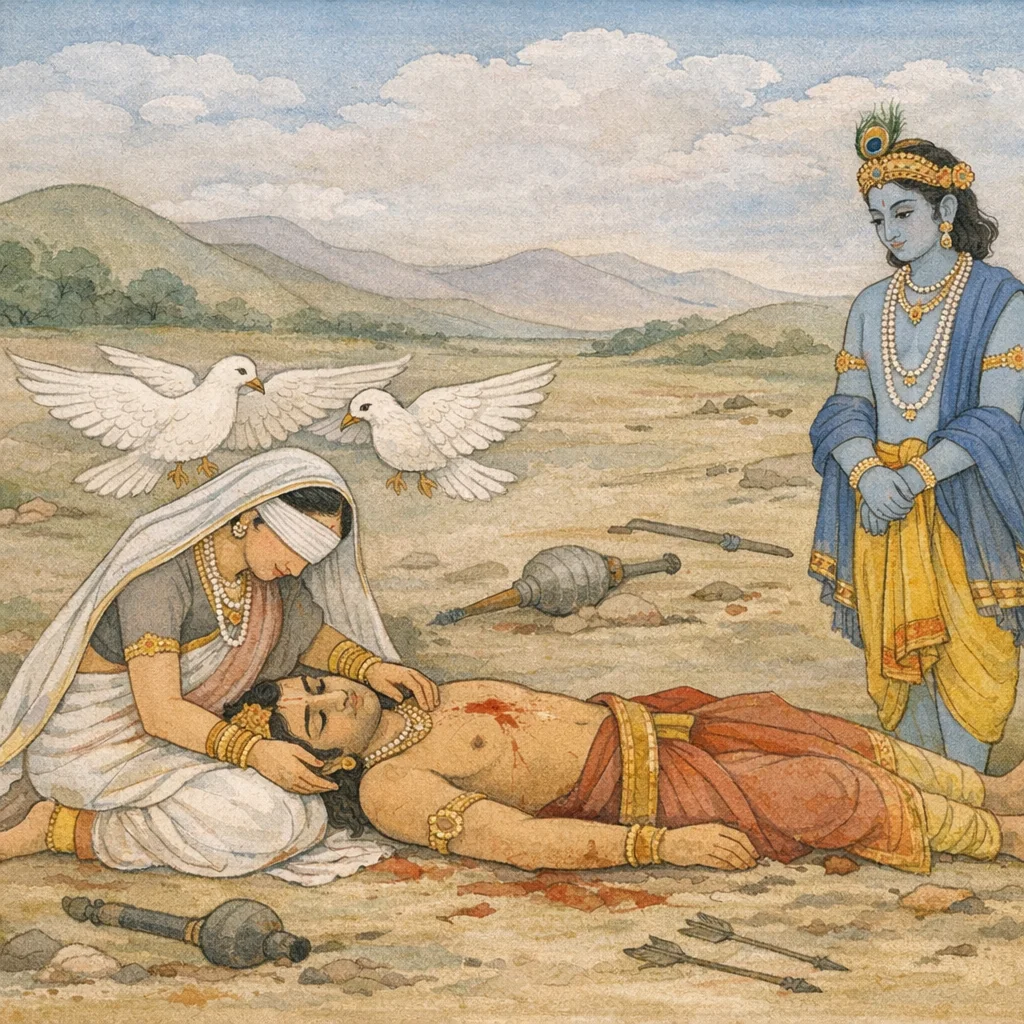
Vaiśaṃpāyana narrates Gandhārī’s immediate response upon seeing Duryodhana slain: she collapses like a cut plantain, regains consciousness, repeatedly cries out, embraces the body, and laments intensely. Addressing Kṛṣṇa nearby, she recalls Duryodhana’s earlier request for her blessing of victory and her reply—“yato dharmas tato jayaḥ”—presented as prior knowledge of impending calamity. She distinguishes her present sorrow: not primarily for Duryodhana, whom she portrays as having attained a difficult warrior’s end, but for Dhṛtarāṣṭra, now bereft of kin. Gandhārī then catalogs reversals of status: the once-honored king now lying in dust, formerly fanned by women now fanned by birds, once attended by rulers now surrounded by scavengers. She attributes the fall to Bhīmasena’s decisive strike and reflects on Duryodhana’s earlier disrespect toward elders (including Vidura and his father), framing death as the culmination of flawed judgment. The chapter widens to battlefield sociology: women attending the fallen, including a focused depiction of Lakṣmaṇā’s mother in intimate mourning gestures. The passage closes with Gandhārī’s inference that if scriptural teachings and traditions hold, Duryodhana has attained realms earned by strength, underscoring the epic’s tension between ethical critique and recognition of warrior destinies.
Chapter Arc: युद्ध-भूमि में रक्त से सने दुर्योधन के शव को देखकर गान्धारी का मूर्छित होकर गिर पड़ना और फिर चेतना में लौटते ही ‘हा हा पुत्र!’ कहकर करुण क्रन्दन। → गान्धारी दुर्योधन के रक्तोक्षित शरीर को निहारती हैं; उसके वैभव और आज की निस्तब्धता का तीखा विरोध उभरता है—जिसे कभी युवतियाँ व्यजन झलती थीं, आज उसे पक्षी अपने पंखों से हवा दे रहे हैं। पास खड़े हृषीकेश (श्रीकृष्ण) से वे युद्ध, कुल-क्षय और अपने पुत्र के भाग्य पर प्रश्न करती हैं। साथ ही दुर्योधन की पुत्रवधू का विलाप दृश्य को और भी असह्य बना देता है—वह कभी पुत्र के लिए, कभी पति के लिए छटपटाती प्रतीत होती है। → गान्धारी का श्रीकृष्ण के सम्मुख तीखा, शोक-भरा संबोधन—‘उपस्थितेऽस्मिन् संग्रामे ज्ञातीनां संक्षये’—और यह अंतर्दाह कि यदि श्रुति-स्मृति सत्य हैं तो बाहुबल से अर्जित राज्य का स्वामी दुर्योधन अब किस लोक को प्राप्त हुआ; साथ ही पुत्रवधू का वीर के वक्ष पर गिरकर सिर पटकना और मुख पोंछते हुए करुण विलाप। → शोक का प्रवाह स्थिर होकर स्मृति और विवेक की ओर मुड़ता है: गान्धारी दुर्योधन के अंत को स्वीकारते हुए भी उसके लिए लोक-गति की आशा/शंका में डूबी रहती हैं, और श्रीकृष्ण से धर्म-सत्य के संदर्भ में उत्तर चाहती हैं। दृश्य का केंद्र युद्ध-विजय नहीं, पराजय के बाद का मानवीय टूटन बन जाता है। → गान्धारी के प्रश्नों और भीतर उठते रोष/न्याय-बोध का उत्तर श्रीकृष्ण कैसे देंगे—और यह शोक आगे किस रूप में परिणत होगा?
Shlokas
Verse 1
ऑपन--माज छा जज सप्तदशो< ध्याय: दुर्योधन तथा उसके पास रोती हुई पुत्रवधूको देखकर गान्धारीका श्रीकृष्णके सम्मुख विलाप वैशम्पायन उवाच दुर्योधन हतं दृष्टवा गान्धारी शोककर्शिता । सहसा न्यपतद् भूमौ छिन्नेव कदली वने,वैशम्पायनजी कहते हैं--जनमेजय! दुर्योधनको मारा गया देखकर शोकसे पीड़ित हुई गान्धारी वनमें कटे हुए केलेके वृक्षकी तरह सहसा पृथ्वीपर गिर पड़ीं
Vaiśampāyana said: “O Janamejaya, seeing Duryodhana slain, Gāndhārī—wasted by grief—suddenly fell to the ground, like a banana plant cut down in the forest.”
Verse 2
सातु लब्ध्वा पुनः संज्ञां विक्रुश्य च विलप्य च दुर्योधनमभिप्रेक्ष्य शयानं रुधिरोक्षितम्,पुनः होशमें आनेपर अपने पुत्रको पुकार-पुकारकर वे विलाप करने लगीं। दुर्योधनको खूनसे लथपथ होकर सोया देख उसे हृदयसे लगाकर गान्धारी दीन होकर रोने लगीं। उनकी सारी इन्द्रियाँ व्याकुल हो उठी थीं। वे शोकसे आतुर हो 'हा पुत्र! हा पुत्र!! कहकर विलाप करने लगीं
Having regained consciousness, she cried out and lamented again and again. Looking upon Duryodhana lying there, drenched in blood, Gāndhārī—overcome with grief—clung to him in her heart and wept, her senses thrown into turmoil, wailing, “Alas, my son! Alas, my son!”
Verse 3
परिष्वज्य च गान्धारी कृपणं पर्यदेवयत् । हा हा पुत्रेति शोकार्ता विललापाकुलेन्द्रिया,पुनः होशमें आनेपर अपने पुत्रको पुकार-पुकारकर वे विलाप करने लगीं। दुर्योधनको खूनसे लथपथ होकर सोया देख उसे हृदयसे लगाकर गान्धारी दीन होकर रोने लगीं। उनकी सारी इन्द्रियाँ व्याकुल हो उठी थीं। वे शोकसे आतुर हो 'हा पुत्र! हा पुत्र!! कहकर विलाप करने लगीं
Vaiśaṃpāyana said: Embracing him, Gāndhārī lamented piteously. Overwhelmed by grief, her senses thrown into turmoil, she wailed again and again, crying, “Alas, my son! Alas, my son!”
Verse 4
सुगूढजत्रुविपुलं हारनिष्कविभूषितम् । वारिणा नेत्रजेनोर: सिंचन्ती शोकतापिता,दुर्योधनके गलेकी विशाल हड्डी मांससे छिपी हुई थी। उसने गलेमें हार और निष्क पहन रखे थे। उन आभूषणोंसे विभूषित बेटेके वक्ष:स्थलको आँसुओंसे सींचती हुई गान्धरी शोकाग्निसे संतप्त हो रही थीं
Vaiśaṃpāyana said: Gandhārī, scorched by grief, kept sprinkling with the water of her tears the broad chest of her son—his massive collarbone region hidden beneath flesh—adorned with a necklace and a niṣka (gold ornament).
Verse 5
समीपस्थं हृषीकेशमिदं वचनमत्रवीत् । उपस्थिते5स्मिन् संग्रामे ज्ञातीनां संक्षये विभो,वे पास ही खड़े हुए श्रीकृष्णसे इस प्रकार कहने लगीं--वृष्णिनन्दन! प्रभो! भाई- बन्धुओंका विनाश करनेवाला जब यह भीषण संग्राम उपस्थित हुआ था, उस समय इस नृपश्रेष्ठ दुर्योधनने मुझसे हाथ जोड़कर कहा--“माताजी! कुटुम्बीजनोंके इस संग्राममें आप मुझे मेरी विजयके लिये आशीर्वाद दें”
Vaiśampāyana said: Standing near Hṛṣīkeśa (Kṛṣṇa), she spoke these words: “O Lord, when this dreadful war—bringing about the destruction of kinsmen—had come upon us, that foremost of kings, Duryodhana, with joined palms, said to me: ‘Mother, in this battle among relatives, grant me your blessing for victory.’”
Verse 6
मामयं प्राह वार्ष्णेय प्राउजलिनृपसत्तम: । अस्मिन् ज्ञातिसमुद्धर्षे जयमम्बा ब्रवीतु मे,वे पास ही खड़े हुए श्रीकृष्णसे इस प्रकार कहने लगीं--वृष्णिनन्दन! प्रभो! भाई- बन्धुओंका विनाश करनेवाला जब यह भीषण संग्राम उपस्थित हुआ था, उस समय इस नृपश्रेष्ठ दुर्योधनने मुझसे हाथ जोड़कर कहा--“माताजी! कुटुम्बीजनोंके इस संग्राममें आप मुझे मेरी विजयके लिये आशीर्वाद दें”
Vaiśaṃpāyana said: “O Vārṣṇeya (Kṛṣṇa), the foremost of kings (Duryodhana) once addressed me with folded hands. When this dreadful upheaval among kinsmen—the war that destroys one’s own relatives—had arisen, he said: ‘Mother, in this battle of our family, speak for me a blessing for victory.’”
Verse 7
इत्युक्ते जानती सर्वमहं स्वव्यसनागमम् । अब्रवं पुरुषव्यापत्र यतो धर्मस्ततो जय:,'पुरुषसिंह श्रीकृष्ण! उसके ऐसा कहनेपर मैं यह सब जानती थी कि मुझपर बड़ा भारी संकट आनेवाला है, तथापि मैंने उससे यही कहा--'जहाँ धर्म है, वहीं विजय है!
When he had spoken thus, though I already understood everything—that a great calamity was about to befall me—I still replied, “O tiger among men, where dharma stands, there indeed is victory.”
Verse 8
यथा च युध्यमानस्त्वं न वै मुहा[सि पुत्रक । ध्रुवं शस्त्रजिताल्लोकान प्राप्स्यस्पमरवत् प्रभो,“बेटा! शक्तिशाली पुत्र! यदि तुम युद्ध करते हुए धर्मसे मोहित न होओगे तो निश्चय ही देवताओंके समान श्त्रोंद्वारा जीते हुए लोकोंको प्राप्त कर लोगे”
Vaiśaṃpāyana said: “And if, while fighting, you do not fall into delusion, my son, then surely, O lord, you will attain worlds won by the power of weapons—like the immortals.”
Verse 9
इत्येवमब्रुव॑ पूर्व नैनं शोचामि वै प्रभो । धृतराष्ट्र तु शोचामि कृपणं हतबान्धवम्,'प्रभो! यह बात मैंने पहले ही कह दी थी; इसलिये मुझे इस दुर्योधनके लिये शोक नहीं हो रहा है। मैं तो इन दीन राजा धृतराष्ट्रके लिये शोकमग्न हो रही हूँ, जिनके सारे भाई-बन्धु मार डाले गये
O lord, I had said this long before; therefore I do not grieve for Duryodhana. I grieve instead for the wretched king Dhṛtarāṣṭra, bereft of all his kinsmen.
Verse 10
अमर्षणं युधां श्रेष्ठ कृतास्त्र युद्धदुर्मदम् । शयानं वीरशयने पश्य माधव मे सुतम्,“माधव! अमर्षशील, योद्धाओंमें श्रेष्ठ, अस्त्र-विद्याके ज्ञाता, रणदुर्मद तथा वीरशय्यापर सोये हुए मेरे इस पुत्रको देखो तो सही
Vaiśampāyana said: “O Mādhava, look at my son—unyielding in spirit, the best among warriors, trained in the use of weapons, and once intoxicated with the pride of battle—now lying upon the hero’s bed (the battlefield).”
Verse 11
यो<यं मूर्धाभिषिक्तानामग्रे याति परंतप: । सो<यं पांसुषु शेतेडद्य पश्य कालस्य पर्ययम्,'शत्रुओंको संताप देनेवाला जो दुर्योधन मूर्धाभिषिक्त राजाओंके आगे-आगे चलता था, वही आज यह धूलमें लोट रहा है। कालके इस उलट-फेरको तो देखो
Vaiśampāyana said: “He who, a scorcher of foes, used to walk at the very front of consecrated kings—he, that same man, lies today in the dust. Behold the reversal wrought by Time.”
Verse 12
ध्रुवं दुर्योधनो वीरो गतिं न सुलभां गत: । तथा हाभिमुख: शेते शयने वीरसेविते,“निश्चय ही वीर दुर्योधन उस उत्तम गतिको प्राप्त हुआ है, जो सबके लिये सुलभ नहीं है; क्योंकि यह वीरसेवित शय्यापर सामने मुँह किये सो रहा है
Vaiśampāyana said: “Surely the hero Duryodhana has attained a destiny not easily reached by all; for he lies there facing forward upon a warrior-honoured bed.”
Verse 13
यं पुरा पर्युपासीना रमयन्ति वरस्त्रिय: । तं॑ वीरशयने सुप्तं रमयन्त्यशिवा: शिवा:,'पूर्वालमें जिसके पास बैठकर सुन्दरी स्त्रियाँ उसका मनोरंजन करती थीं, वीरशय्यापर सोये हुए आज उसी वीरका ये अमंगलकारिणी गीदड़ियाँ मन-बहलाव करती हैं
Vaiśampāyana said: “He whom, in former days, noble and beautiful women would sit around and delight with entertainments—him, now asleep upon the hero’s bed, these inauspicious jackals ‘entertain’ instead.”
Verse 14
य॑ं पुरा पर्युपासीना रमयन्ति महीक्षित: । महीतलस्थं निहतं गृध्रास्तं पर्युपासते,“जिसके पास पहले राजा लोग बैठकर उसे आनन्द प्रदान करते थे, आज मरकर धरतीपर पड़े उसी वीरके पास गीध बैठे हुए हैं
Vaiśampāyana said: “He whom kings once surrounded, seated near him and delighting him with their attendance—now lies slain upon the earth; and vultures sit around that very hero.”
Verse 15
यं पुरा व्यजनै रम्यैरुपवीजन्ति योषित: । तमद्य पक्षव्यजनैरुपवीजन्ति पक्षिण:,“पहले जिसके पास खड़ी होकर युवतियाँ सुन्दर पंखे झला करती थीं, आज उसीको पक्षीगण अपनी पाँखोंसे हवा करते हैं
Vaiśampāyana said: “He whom, in former days, maidens would stand by and gently fan with lovely hand-fans—him today the birds fan with the fans of their own wings.”
Verse 16
एष शेते महाबाहुर्बलवान् सत्यविक्रम: । सिंहेनेव द्विप: संख्ये भीमसेनेन पातित:,“यह महाबाहु सत्यपराक्रमी बलवान् वीर दुर्योधन भीमसेनके द्वारा गिराया जाकर युद्धस्थलमें सिंहके मारे हुए गजराजके समान सो रहा है
Vaiśampāyana said: “Here lies the mighty-armed, powerful hero of true prowess—Duryodhana—struck down by Bhīmasena. On the battlefield he now rests like a great elephant felled by a lion.”
Verse 17
पश्य दुर्योधन कृष्ण शयानं रुधिरोक्षितम् | निहतं भीमसेनेन गदां सम्मृज्य भारतम्,“श्रीकृष्ण! भीमसेनकी चोट खाकर खूनसे लथपथ हो गदा लिये धरतीपर सोये हुए दुर्योधनको अपनी आँखसे देख लो इति श्रीमहा भारते स्त्रीपर्वणि स्त्रीविलापपर्वणि दुर्योधनदर्शने सप्तदशो5ध्याय: ।। १७ || इस प्रकार श्रीमह्ाभारत स्त्रीपर्वके अन्तर्गत स्त्रीविलापपर्वमें दुर्योधनका दर्शनविषयक सत्रहवाँ अध्याय पूरा हुआ
Vaiśampāyana said: “O Kṛṣṇa, look with your own eyes upon Duryodhana—lying on the ground, drenched in blood—slain by Bhīmasena, still clutching his mace, O descendant of Bharata.”
Verse 18
अक्षौहिणीर्महाबाहुर्दश चैकां च केशव । आनयद् यः पुरा संख्ये सो5नयान्निधनं गत:,“केशव! जिस महाबाहु वीरने पहले ग्यारह अक्षौहिणी सेनाओंको जुटा लिया था, वही अपनी अनीतिके कारण युद्धमें मार डाला गया
Vaiśampāyana said: “O Keśava, that mighty-armed warrior who once, in the reckoning of war, mustered eleven akṣauhiṇīs of troops—he has now met his destruction because of unrighteous conduct.”
Verse 19
एष दुर्योधन: शेते महेष्वासो महाबल: । शार्टूल इव सिंहेन भीमसेनेन पातितः,'सिंहके मारे हुए दूसरे सिंहके समान भीमसेनके हाथों मारा गया यह महाबली महाथनुर्धर दुर्योधन सो रहा है
Vaiśampāyana said: “Here lies Duryodhana—mighty in strength and a great archer—felled by Bhīmasena, like a tiger brought down by a lion.”
Verse 20
विदुरं हवमत्यैष पितरं चैव मन्दभाक् | बालो वृद्धावमानेन मन्दो मृत्युवशं गत:,“यह मूर्ख और अभागा बालक विदुर तथा अपने पिताका अपमान करके बड़े-बूढ़ोंकी अवहेलनाके पापसे ही कालके गालमें चला गया है
Vaiśampāyana said: “This foolish, ill-fated boy, having insulted Vidura and even his own father, has—through the sin of scorning and dishonouring elders—fallen into the grasp of Death.”
Verse 21
नि:सपत्ना मही यस्य त्रयोदश समा: स्थिता । स शेते निहतो भूमौ पुत्रो मे पृथिवीपति:,“यह सारी पृथ्वी तेरह वर्षोतक निष्कण्टकभावसे जिसके अधिकारमें रही है, वही मेरा पुत्र पृथ्वीपति दुर्योधन आज मारा जाकर पृथ्वीपर पड़ा है
Vaiśampāyana said: “He whose sovereignty held this earth uncontested for thirteen years—my son, the lord of the land, Duryodhana—now lies slain upon the ground.”
Verse 22
अपश्यं कृष्ण पृथिवीं धार्तराष्ट्रानुशासिताम् । पूर्णा हस्तिगवाश्वैश्व वाष्णेय न तु तच्चिरम्,वृष्णिनन्दन श्रीकृष्ण! मैंने दुर्योधनद्वारा शासित हुई इस पृथ्वीको हाथी, घोड़े और गौओंसे भरी-पूरी देखा था; किंतु वह राज्य चिरस्थायी न रह सका
Vaiśampāyana said: “O Kṛṣṇa, O scion of the Vṛṣṇis, I once saw this earth ruled under the command of Dhṛtarāṣṭra’s son—abounding in elephants, cattle, and horses. Yet that sovereignty did not endure for long.”
Verse 23
तामेवाद्य महाबाहो पश्याम्यन्यानुशासिताम् | हीनां हस्तिगवाश्वेन कि नु जीवामि माधव,“महाबाहु माधव! आज उसी पृथ्वीको मैं देखती हूँ कि वह दूसरेके शासनमें जाकर हाथी, घोड़े और गाय-बैलोंसे हीन हो गयी है; फिर मैं किसलिये जीवन धारण करूँ?
“O mighty-armed Mādhava, today I see that very Earth—now ruled under another’s command—has been stripped of elephants, cattle, and horses. For what reason, then, should I continue to live?”
Verse 24
इदं कष्टतरं पश्य पुत्रस्यापि वधान्मम । यदिमा: पर्युपासन्ते हतान् शूरान् रणे स्त्रिय:,मेरे लिये पुत्रके ववसे भी अधिक कष्ट देनेवाली बात यह है कि स्त्रियाँ रणभूमिमें मारे गये अपने शूरवीर पतियोंके पास बैठी रो रही हैं। इनकी दयनीय दशा तो देखो
Vaiśampāyana said: “Behold something even more painful for me than the killing of my own son: these women sit close by their fallen heroes on the battlefield, keeping vigil and weeping. Look upon their pitiable condition.”
Verse 25
प्रकीर्णकेशां सुश्रोणी दुर्योधनशुभाड्कगाम् । रुक्मवेदीनिभां पश्य कृष्ण लक्ष्मणमातरम्,श्रीकृष्ण! सुवर्णकी वेदीके समान तेजस्विनी तथा सुन्दर कटि-प्रदेशवाली उस लक्ष्मणकी माताको तो देखो, जो दुर्योधनके शुभ-अंकमें स्थित हो केश खोले रो रही है
Vaiśampāyana said: “O Kṛṣṇa, behold Lakṣmaṇā’s mother—her hair dishevelled, her fair hips now bowed by grief—sitting upon Duryodhana’s auspicious lap. She shines like a golden altar, yet in this moment she weeps, undone by the calamity that has followed the war.”
Verse 26
नूनमेषा पुरा बाला जीवमाने महीभुजे । भुजावाश्रित्य रमते सुभुजस्य मनस्विनी,“पहले जब राजा दुर्योधन जीवित था, तब निश्चय ही यह मनस्विनी बाला सुन्दर बाहोंवाले अपने वीर पतिकी दोनों भुजाओंका आश्रय लेकर इसी तरह उसके साथ सानन्द क्रीड़ा करती रही होगी
Vaiśampāyana said: “Surely, when that lord of the earth was still alive, this young, high-spirited woman—leaning upon the arms of her handsome-armed husband—must have delighted in playful intimacy with him in just this way.”
Verse 27
कथं तु शतधा नेदं हृदयं मम दीर्यते । पश्यन्त्या निहतं पुत्र पुत्रेण सहितं रणे,“रणभूमिमें वही मेरा पुत्र अपने पुत्रके साथ ही मार डाला गया है, इसे इस अवस्थामें देखकर मेरे इस हृदयके सैकड़ों टुकड़े क्यों नहीं हो जाते?
Vaiśampāyana said: “How does my heart not split into a hundred pieces when I behold my son slain on the battlefield—slain together with his own son? Seeing such a state, how can the heart endure?”
Verse 28
पुत्र रुधिरसंसिक्तमुपजिप्रत्यनिन्दिता । दुर्योधन तु वामोरु: पाणिना परिमार्जती
Vaiśampāyana said: The blameless lady, her tongue lolling out, wiped with her hand the blood-smeared body (or limb) of her son Duryodhana. The scene lays bare the stark human cost of war: even amid rightful grief, the aftermath of an adharma-driven conflict reduces royal households to helpless mourning and intimate acts of care for the fallen.
Verse 29
'सुन्दर जाँघोवाली मेरी सती साध्वी पुत्रवधू कभी खूनसे भीगे हुए अपने पुत्र लक्ष्मणका मुँह सूँघती है तो कभी पति दुर्योधनका शरीर अपने हाथसे पोंछती है ।। कि नु शोचति भर्तरिं पुत्रं चैषा मनस्विनी । तथा हावस्थिता भाति पुत्र चाप्यभिवीक्ष्य सा,“पता नहीं, यह मनस्विनी बहू पुत्रके लिये शोक करती है या पतिके लिये? कुछ ऐसी ही अवस्थामें वह जान पड़ती है। माधव! वह देखो, वह विशाललोचना वधू पुत्रकी ओर देखकर दोनों हाथोंसे सिर पीटती हुई अपने वीर पति कुरुराजकी छातीपर गिर पड़ी है
Vaiśampāyana said: “Is this strong-minded woman grieving for her husband, or for her son? For she appears to be in such a state—now looking toward her son, now collapsing in anguish—so that it is hard to discern where her sorrow is fixed.” In the ethical shadow of war, the verse highlights the divided loyalties of a widow-mother and the human cost that overwhelms all claims of victory.
Verse 30
स्वशिर: पठचशाखाभ्यामभिहत्यायतेक्षणा । पतत्युरसि वीरस्य कुरुराजस्य माधव,“पता नहीं, यह मनस्विनी बहू पुत्रके लिये शोक करती है या पतिके लिये? कुछ ऐसी ही अवस्थामें वह जान पड़ती है। माधव! वह देखो, वह विशाललोचना वधू पुत्रकी ओर देखकर दोनों हाथोंसे सिर पीटती हुई अपने वीर पति कुरुराजकी छातीपर गिर पड़ी है
Vaiśampāyana said: “Mādhava, look—this large-eyed bride, after striking her own head with both forearms in grief, collapses upon the chest of her heroic husband, the Kuru king. It is hard to tell whether her sorrow is for her son or for her husband; in such a state of anguish she appears.”
Verse 31
पुण्डरीकनिभा भाति पुण्डरीकान्तरप्रभा । मुखं विमृज्य पुत्रस्य भर्तुश्चैव तपस्विनी,“कमलपुष्पके भीतरी भागकी-सी मनोहर कान्तिवाली मेरी तपस्विनी पुत्रवधू जो प्रफुल्ल कमलके समान सुशोभित हो रही है, कभी अपने पुत्रका मुँह पोंछती है तो कभी अपने पतिका
Vaiśaṃpāyana said: Radiant like a white lotus, with a glow like the light within a lotus, the ascetic woman—ever devoted—kept wiping the face of her son and also of her husband. In the midst of grief, her tender service becomes an ethical image of steadfast familial duty and compassion even amid the devastation of war.
Verse 32
यदि सत्यागमा: सन्ति यदि वै श्रुतयस्तथा । ध्रुव॑ं लोकानवाप्तो<यं नूपो बाहुबलार्जितान्,“श्रीकृष्ण! यदि वेद-शास्त्र सत्य हैं तो मेरा पुत्र यह राजा दुर्योधन निश्चय ही अपने बाहुबलसे प्राप्त हुए पुण्यमय लोकोंमें गया है"
Vaiśampāyana said: “If the sacred traditions are true, and if the Vedas indeed speak truth, then this king—having won them by the strength of his own arms—has certainly attained those worlds (of merit).”
Frequently Asked Questions
The dilemma is interpretive and ethical: how to reconcile a warrior’s valor and “difficult-to-attain” end with the critique of his prior conduct (disrespect of elders, policy choices) and the collective suffering produced by those choices.
The chapter teaches that political power and martial prestige are unstable under kāla, and that dharma is not validated by victory rhetoric but by the long arc of outcomes; grief functions as a truthful register of karma’s social cost.
No formal phalaśruti is stated here; instead, the closing inference (“if āgamas and śrutis are valid…”) operates as a restrained meta-claim about posthumous destiny, inviting reflection rather than promising merit from recitation.