Adhyaya 13
Gāndhārī’s Grief, Vyāsa’s Pacification, and the Ethics of Retaliation (गान्धारी-शोकः शमोपदेशश्च)
Upa-parva: Gāndhārī-śoka–śama-upadeśa (Episode: Restraining Gāndhārī’s wrath)
Vaiśaṃpāyana reports that, with Dhṛtarāṣṭra’s permission, the Kuru elders and the Pāṇḍavas accompanied by Kṛṣṇa approach Gāndhārī. On learning that Yudhiṣṭhira survives while her sons are slain, Gāndhārī—overwhelmed by putraśoka—inclines toward a punitive intention against the Pāṇḍavas. Vyāsa, discerning her inward resolve, arrives after ritual purification and with heightened perception, and counsels her to abandon wrath and adopt śama, reminding her of her repeated instruction to Duryodhana during the eighteen days: “where dharma is, there is victory.” He urges consistency with her earlier truth-speaking and dharmic posture. Gāndhārī replies that she does not wish the Pāṇḍavas destroyed and accepts protective responsibility toward them as Kuntī and Dhṛtarāṣṭra would; she assigns the broader catastrophe to Duryodhana’s offenses and allied instigators. Yet she marks an ethical objection: Bhīma’s blow below the waist in the mace duel—despite strategic context—appears to her as a deviation from the dharma articulated by the wise, raising the question of whether warriors should abandon declared norms for survival.
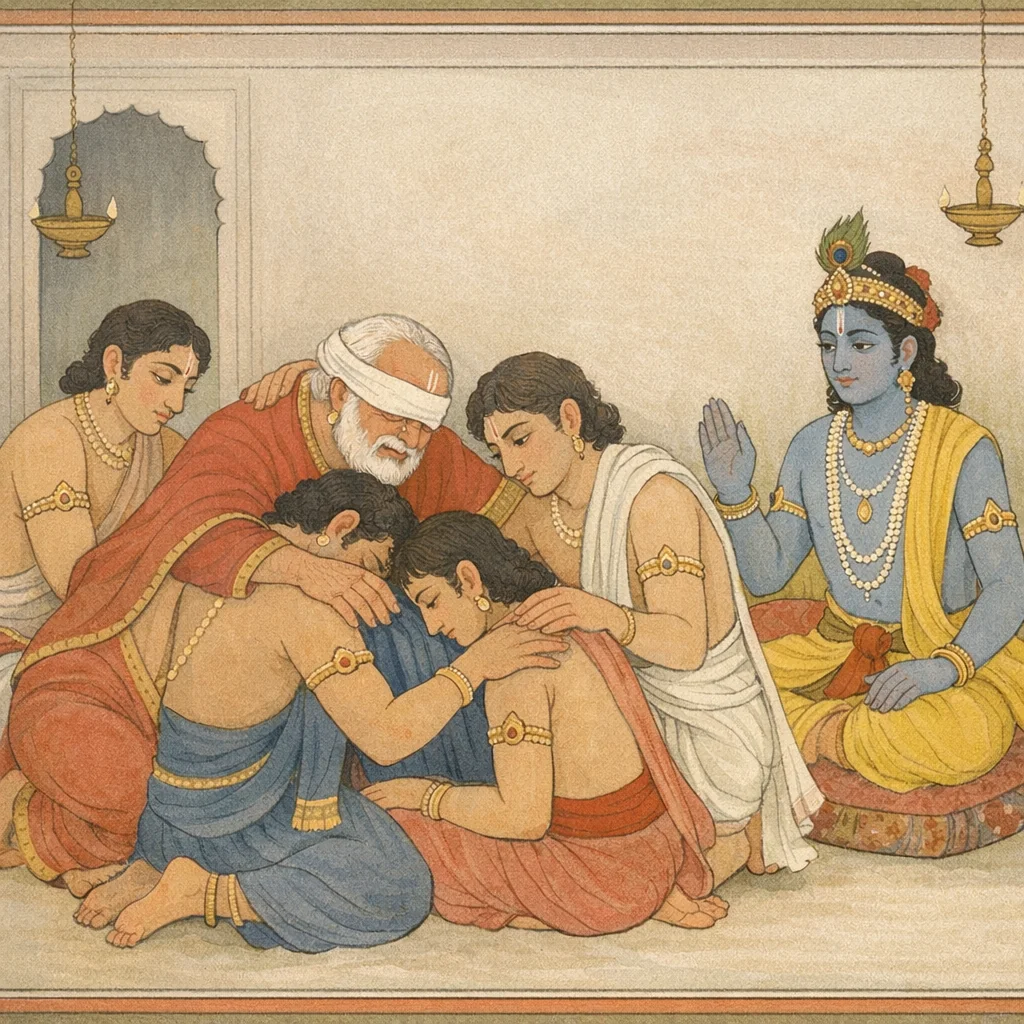
Chapter Arc: युद्धोत्तर शोक में डूबे धृतराष्ट्र के पास सेवक शौच-सम्बन्धी कार्यों के लिए आते हैं—राजा का मन अभी भी क्रोध, ग्लानि और पुत्र-शोक से काँप रहा है। → श्रीकृष्ण धृतराष्ट्र के भीतर उठते प्रतिशोध और आत्म-दोषारोपण को लक्ष्य कर कठोर वाणी में फटकारते हैं—राजा को स्थिरप्रज्ञ होकर अपने दोष देखने, देश-काल का विचार करने और क्रोध को त्यागने का उपदेश देते हैं; दुर्योधन द्वारा द्रौपदी-अपमान जैसे अपराधों की स्मृति भी उभरती है। → कृष्ण की सत्य-भरी कठोरता धृतराष्ट्र के भीतर जमे क्रोध को तोड़ देती है; राजा स्वीकार करता है कि अब उसका मन शांत है, ज्वर-सा रोष उतर गया है, और वह पाण्डवों—विशेषतः भीम—से मिलने को व्याकुल है। → धृतराष्ट्र पाण्डवों के निकट जाकर रोते हुए भीम और अर्जुन तथा माद्री-पुत्रों (नकुल-सहदेव) को हृदय से लगाता/स्पर्श करता है, उन्हें आश्वासन देता है और कल्याण-वचन कहता है—शत्रुता की जगह क्षणिक मेल और शोक-साझेदारी स्थापित होती है। → यह आलिंगन क्या स्थायी क्षमा में बदलेगा, या शोक के भीतर छिपी राजनीति और प्रतिशोध फिर सिर उठाएंगे?
Shlokas
Verse 1
ऑपनआक्राता बछ। अर: त्रयोदशो< ध्याय: श्रीकृष्णका धृतराष्ट्रको फटकारकर उनका क्रोध शान्त करना और धृतराष्ट्रका पाण्डवोंको हृदयसे लगाना वैशम्पायन उवाच तत एनमुपातिष्ठन् शौचार्थ परिचारका: । कृतशौचं पुनश्चैनं प्रोवाच मधुसूदन:
Vaiśampāyana said: Then the attendants appointed for his purification approached and attended upon him. When he had completed the rites of cleansing, Madhusūdana (Śrī Kṛṣṇa) addressed him again—seeking to restrain anger and restore a humane, dharmic disposition in the grief-stricken king.
Verse 2
वैशम्पायनजी कहते हैं--राजन! तदनन्तर सेवक-गण शौच-सम्बन्धी कार्य सम्पन्न करानेके लिये राजा धृतराष्ट्रकी सेवामें उपस्थित हुए। जब वे शौचकृत्य पूर्ण कर चुके, तब भगवान् मधुसूदनने फिर उनसे कहा-- ।। राजन्नधीता वेदास्ते शास्त्राणि विविधानि च । श्रुतानि च पुराणानि राजधर्माश्व केवला:,“राजन! आपने वेदों और नाना प्रकारके शास्त्रोंका अध्ययन किया है। सभी पुराणों और केवल राजधर्मोंका भी श्रवण किया है
Vaiśampāyana said: “O King! Thereafter the attendants came to serve King Dhṛtarāṣṭra and to complete the rites of purification. When he had finished his cleansing duties, the Blessed Madhusūdana again addressed him: ‘O King, you have studied the Vedas and many kinds of śāstras; you have heard the Purāṇas as well, and even the principles of royal duty in their entirety.’”
Verse 3
एवं विद्वान महाप्राज्ञ: समर्थ: सन् बलाबले | आत्मापराधात् कस्मात् त्वं कुरुष कोपमीदृशम्
Vaiśampāyana said: “Though you are learned, profoundly wise, and fully capable—one who understands both strength and weakness—why, because of your own fault, do you stir up anger of this kind?”
Verse 4
'ऐसे विद्वान, परम बुद्धिमान् और बलाबलका निर्णय करनेमें समर्थ होकर भी अपने ही अपराधसे होनेवाले इस विनाशको देखकर आप ऐसा क्रोध क्यों कर रहे हैं? ।। उत्तवांस्त्वां तदैवाहं भीष्मद्रोणी च भारत । विदुर: संजयश्चैव वाक््यं राजन् न तत् कृथा:,“भरतनन्दन! मैंने तो उसी समय आपसे यह बात कह दी थी, भीष्म, द्रोणाचार्य, विदुर और संजयने भी आपको समझाया था। राजन! परंतु आपने किसीकी बात नहीं मानी
Vaiśampāyana said: “Though you are learned, supremely intelligent, and able to judge what is strength and what is weakness, why do you now give way to anger when you behold this ruin—brought about by your own wrongdoing? I told you this very thing at the time, O descendant of Bharata; Bhīṣma and Droṇa did as well, and Vidura and Saṃjaya too. Yet, O king, you did not act upon their counsel.”
Verse 5
स वार्यमाणो नास्माकमकार्षीवचनं तदा | पाण्डवानधिकाज्जानन् बले शौर्ये च कौरव,“कुरुनन्दन! हमलोगोंने आपको बहुत रोका; परंतु आपने बल और शॉौर्यमें पाण्डवोंको बढ़ा-चढ़ा जानकर भी हमारा कहना नहीं माना
Vaiśampāyana said: “Though we repeatedly tried to restrain him, he did not heed our counsel at that time. Even while knowing that the Pāṇḍavas surpassed the Kauravas in strength and in valor, O descendant of Kuru, he still refused to accept what we said.”
Verse 6
राजा हि यः: स्थिरप्रज्ञ: स्वयं दोषानवेक्षते । देशकालविभागं च परं श्रेय: स विन्दति,“जिसकी बुद्धि स्थिर है, ऐसा जो राजा स्वयं दोषोंको देखता और देश-कालके विभागको समझता है, वह परम कल्याणका भागी होता है
“For a king whose understanding is steady—who personally examines his own faults and also discerns the proper distinctions of place and time—attains the highest good.”
Verse 7
उच्यमानस्तु यः श्रेयो गृह्नीते नो हिताहिते । आपद: समनुप्राप्प स शोचत्यनये स्थित:,“जो हितकी बात बतानेपर भी हिताहितकी बातको नहीं समझ पाता, वह अन्यायका आश्रय ले बड़ी भारी विपत्तिमें पड़कर शोक करता है
Vaiśampāyana said: “Even when what is truly beneficial is being pointed out to him, the person who fails to discern what is wholesome from what is harmful—once calamities close in upon him—clings to unrighteousness and then grieves, trapped in that wrongful course.”
Verse 8
ततोअन्यवृत्तमात्मानं समवेक्षस्व भारत । राजंस्त्वं हविधेयात्मा दुर्योधनवशे स्थित:
Then, O Bhārata, look closely at your own altered course of conduct. O king, you have become one whose will is governed by another, standing under the sway of Duryodhana—an ethical warning that loss of self-rule and discernment leads a ruler away from dharma and into ruinous choices.
Verse 9
“भरतनन्दन! आप अपनी ओर तो देखिये। आपका बर्ताव सदा ही न्यायके विपरीत रहा है। राजन! आप अपने मनको वशमें न करके सदा दुर्योधनके अधीन रहे हैं ।। आत्मापराधादापतन्नस्तत् कि भीम॑ जिघांससि । तस्मात् संयच्छ कोपं त्वं स्वमनुस्मर दुष्कृतम्,“अपने ही अपराधसे विपत्तिमें पड़कर आप भीमसेनको क्यों मार डालना चाहते हैं? इसलिये क्रोधको रोकिये और अपने दुष्कर्मोंको याद कीजिये
“O descendant of Bharata! Look first to yourself. Your conduct has ever run contrary to justice. O king, without mastering your own mind you have always remained under Duryodhana. Having fallen into calamity through your own wrongdoing, why do you now wish to kill Bhīmasena? Therefore restrain your anger, and recall your own evil deeds.”
Verse 10
है 4 ५ है है ॥ 2 यस्तु तां स्पर्थया क्षुद्र: पाउ्चालीमानयत् सभाम् | स हतो भीमसेनेन वैरं प्रतिजिहीर्षता,“जिस नीच दुर्योधनने मनमें जलन रखनेके कारण पांचालराजकुमारी कृष्णाको भरी सभामें बुलाकर अपमानित किया, उसे वैरका बदला लेनेकी इच्छासे भीमसेनने मार डाला
Vaiśampāyana said: The vile man who, out of jealous craving, had Draupadī of the Pāñcālas brought into the royal assembly to be humiliated—him Bhīmasena slew, intent on exacting vengeance and fulfilling the pledged enmity.
Verse 11
आत्मनोऊतिक्रमं पश्य पुत्रस्य च दुरात्मन: । यदनागसि पाण्डूनां परित्यागस्त्वया कृत:,“आप अपने और दुरात्मा पुत्र दुर्योधनके उस अत्याचारपर तो दृष्टि डालिये, जब कि बिना किसी अपराधके ही आपने पाण्डवोंका परित्याग कर दिया था”
Look upon the wrongdoing committed by you yourself, and also by your wicked-souled son—how you abandoned the Pāṇḍavas even though they were without fault. The verse presses an ethical reckoning: the calamity now unfolding is rooted in an earlier, unjust rejection of the innocent.
Verse 12
वैशम्पायन उवाच एवमुक्त: स कृष्णेन सर्व सत्यं जनाधिप । उवाच देवकीपुत्रं धृतराष्ट्री महीपति:
Vaiśampāyana said: Thus addressed by Kṛṣṇa with words that were wholly truthful, O lord of men, that king—Dhṛtarāṣṭra—spoke in reply to Devakī’s son. The narrative underscores that counsel grounded in truth (satya) becomes the moral basis on which even a grief-stricken ruler must respond and take responsibility.
Verse 13
वैशम्पायनजी कहते हैं--नरेश्वर! जब इस प्रकार भगवान् श्रीकृष्णने सब सच्ची- सच्ची बातें कह डालीं, तब पृथ्वीपति धृतराष्ट्रने देवकीनन्दन श्रीकृष्णसे कहा-- ।। एवमेतन्महाबाहो यथा वदसि माधव । पुत्रस्नेहस्तु बलवान् धैर्यान्मां समचालयत्,“महाबाहु! माधव! आप जैसा कह रहे हैं, ठीक ऐसी ही बात है; परंतु पुत्रका स्नेह प्रबल होता है, जिसने मुझे धैर्यसे विचलित कर दिया था इति श्रीमहा भारते स्त्रीपर्वणि जलप्रदानिकपर्वणि धृतराष्ट्रकोपविमोचने पाण्डवपरिष्वड्जो नाम त्रयोदशो5 ध्याय: इस प्रकार श्रीमह्याभारत स्त्रीपर्वके अन्तर्गत जलप्रदानिकपर्वमें (धुत्तराष्रका क्रोध छोड़कर पाण्डवॉंको हृदयये लगाना” नामक तेरहवाँ अध्याय पूरा हुआ
Vaiśampāyana said: “O king, when Lord Śrī Kṛṣṇa had spoken all these truths plainly, the ruler Dhṛtarāṣṭra addressed Devakī’s son, Śrī Kṛṣṇa: ‘So it is, O mighty-armed one, exactly as you say, O Mādhava. Yet a father’s attachment to his sons is powerful; it shook me from my steadiness and led me astray.’”
Verse 14
दिष्ट्या तु पुरुषव्याप्रो बलवान् सत्यविक्रम: । त्वद्गुप्तो नागमत् कृष्ण भीमो बाह्वन्तरं मम,“श्रीकृष्ण! सौभाग्यकी बात है कि आपसे सुरक्षित होकर बलवान सत्यपराक्रमी पुरुषसिंह भीमसेन मेरी दोनों भुजाओंके बीचमें नहीं आये
Vaiśampāyana said: “It is indeed fortunate. Protected by you, O Kṛṣṇa, the mighty Bhīma—lion among men, whose valor is true to its word—did not come within the reach of my arms.”
Verse 15
इदानीं त्वहमव्यग्रो गतमन्युर्गतज्वर: । मध्यमं पाण्डवं वीर द्रष्टमेच्छामि माधव,“माधव! अब इस समय मैं शान्त हूँ। मेरा क्रोध उतर गया है और चिन्ता भी दूर हो गयी है; अतः मैं मध्यम पाण्डव वीर अर्जुनको देखना चाहता हूँ
Vaiśampāyana said: “Now I am composed and undistracted. My anger has subsided and my feverish agitation has passed. Therefore, O Mādhava, I wish to see the heroic Pāṇḍava in the middle—Arjuna.”
Verse 16
हतेषु पार्थिवेन्द्रेषु पुत्रेषु निहतेषु च । पाण्डुपुत्रेषु वै शर्म प्रीतिश्नाप्यवतिछ्ठते,“समस्त राजाओं तथा अपने पुत्रोंके मारे जानेपर अब मेरा प्रेम और हितचिन्तन पाण्डुके इन पुत्रोंपर ही आश्रित है”
Vaiśampāyana said: “Now that the kings have been slain, and my own sons too have been killed, my affection and concern for welfare rest only upon the sons of Pāṇḍu.”
Verse 17
ततः स भीम॑ च धनंजयं च माद्रयाश्न पुत्रौ पुरुषप्रवीरी । पस्पर्श गात्रै: प्ररुदन् सुगात्रा- नाश्वास्य कल्याणमुवाच चैतान्,तदनन्तर रोते हुए धृतराष्ट्रने सुन्दर शरीरवाले भीमसेन, अर्जुन तथा माद्रीके दोनों पुत्र नरवीर नकुल-सहदेवको अपने अंगोंसे लगाया और उन्हें सान्त्वना देकर कहा--*तुम्हारा कल्याण हो”
Vaiśampāyana said: Then Dhṛtarāṣṭra, weeping, drew to himself with his limbs Bhīmasena and Dhanañjaya (Arjuna), and also the two heroic sons of Mādrī. Touching those noble-bodied warriors, he consoled them and said, “May good befall you.”
Frequently Asked Questions
The dilemma is whether grief-formed anger justifies retaliatory condemnation of the victors, and whether wartime necessity can override declared norms of rule-bound combat without corroding dharma.
The chapter teaches that restraint is an ethical technology for post-crisis governance: one must align present reactions with prior dharmic commitments, converting grief into accountable speech rather than destabilizing retribution.
No explicit phalaśruti appears in this passage; its meta-function is transitional—establishing the epic’s shift from victory narrative to moral audit, preparing later instruction on dharma and social repair.