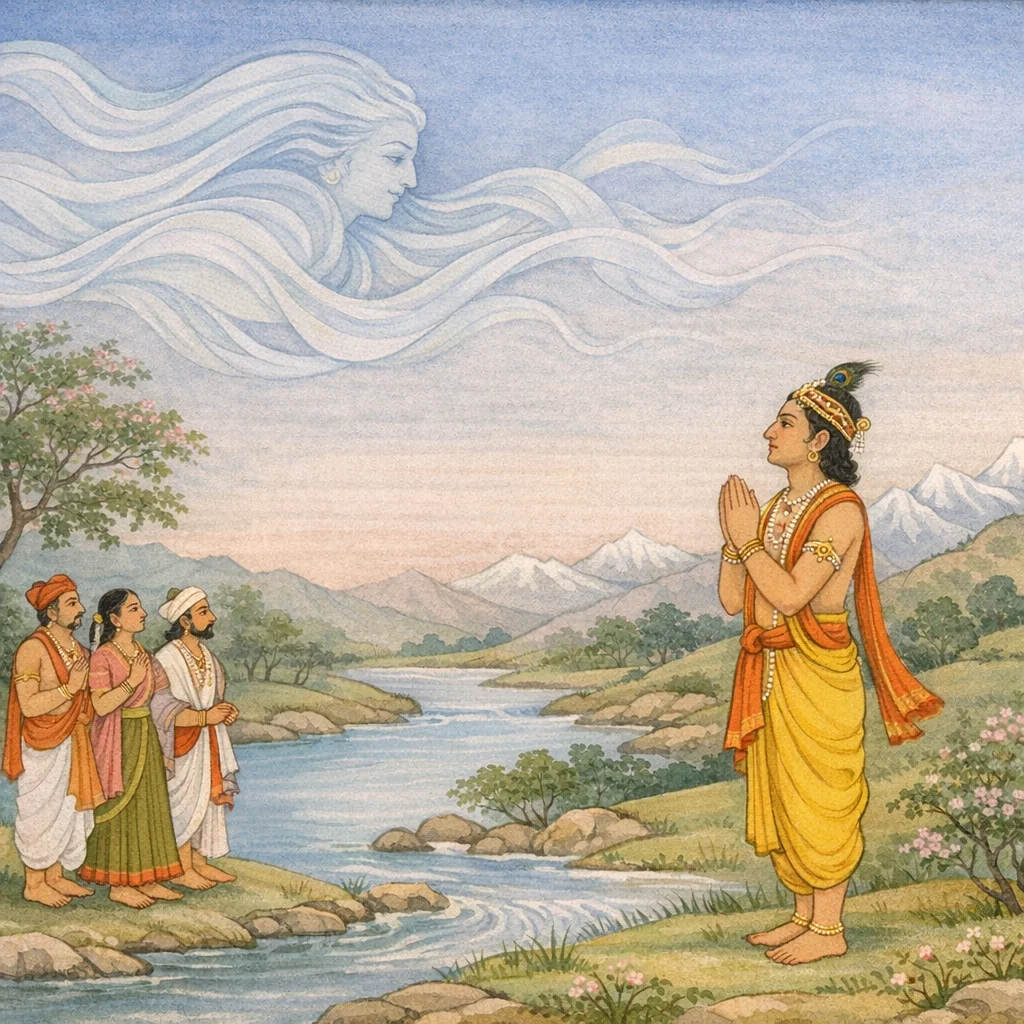
Adhyaya 73
Rājapurohita-lakṣaṇa and Purūravas–Vāyu Saṃvāda (Varṇa, Sovereignty, and Abhaya-dāna)
Upa-parva: Rājadharmānuśāsana Parva (Instruction on Kingship and Governance)
Bhīṣma opens by defining the rājapurohita as the royal appointee who safeguards the righteous and restrains harmful conduct (śl. 1). He then introduces an ancient itihāsa: Purūravas Aila questions Vāyu (Mātariśvan) regarding the origin of the brāhmaṇa, the three varṇas, and the basis of superiority (śl. 2–3). Vāyu replies with a cosmogonic-functional account: brāhmaṇa from Brahmā’s mouth, kṣatriya from arms, vaiśya from thighs, and śūdra from feet, with the fourth described as oriented toward service of the first three (śl. 4–5). The brāhmaṇa is portrayed as born for guarding the ‘treasury of dharma’ and as teacher/elder of all varṇas (śl. 6, 10–11), while the kṣatriya is instituted as protector wielding punishment for public security (śl. 7). The vaiśya sustains the social body through wealth and grain; the śūdra serves (śl. 8). Purūravas asks whose the earth is—of the dvija or the kṣatra—when considering dharma and wealth (śl. 9). Vāyu asserts a normative primacy of the brāhmaṇa in entitlement and guidance, yet explains a contingency principle: in absence of a ‘husband’ the earth takes the nearest protector, analogized to a woman accepting the devara; thus sovereignty can attach to kṣatra by proximity and necessity (śl. 12–13). A prescriptive governance ethic follows: one who conquers land should dedicate it to a learned, disciplined, dharma-knowing brāhmaṇa who is not wealth-driven and who can guide the king with complete intelligence and refined speech (śl. 14–16). The king prospers in fame by following such instruction; the purohita shares in the merit of the dharma enacted (śl. 17–18). Social welfare is linked to the king’s protection: subjects remain fearless, aligned to their duties, and the king receives a share in the dharma practiced under his safeguarding (śl. 19–20). The chapter also frames ritual and cosmic order as dependent on orderly kingship; without a king, coordinated activity collapses (śl. 21–22). A brief psychological-ethical note depicts fearlessness as enabling enjoyment and well-being, culminating in a high valuation of ‘abhaya-dāna’ (the gift of security) as surpassing other gifts (śl. 23–25). The closing verses identify kingship as a sustaining form of order—Indra, Yama, and Dharma are metaphorically called ‘king’—and assert that the world is upheld by the king’s stabilizing function (śl. 26).
Chapter Arc: भीष्म राजधर्म का सूत्र खोलते हैं—राजा का पहला कर्तव्य सत्पुरुषों की रक्षा और असत् का निरोध है; और इस हेतु सदाचारी, विद्वान पुरोहित का होना राज्य-रक्षा जितना ही अनिवार्य है। → उसी सिद्धान्त को प्रमाणित करने के लिए भीष्म एक प्राचीन संवाद-इतिहास उठाते हैं: इला-पुत्र पुरूरवा और मातरिश्वन् (वायु) का प्रश्नोत्तर, जहाँ पुरूरवा पूछता है—ब्राह्मण की उत्पत्ति क्या है, वर्ण-व्यवस्था कैसे बनी, और पृथ्वी पर अधिकार धर्मतः किसका है—द्विज का या क्षत्रिय का? → वायु का निर्णायक प्रतिपादन: जगत में जो कुछ है वह धर्म-निपुण ब्राह्मण-तत्त्व के अधीन माना गया है; और यदि राजा स्वधर्म से स्वर्ग-मार्ग चाहता है तो जो भूमि वह जीतता है उसे ब्राह्मण को निवेदित करे—क्योंकि राजा का धर्म ब्राह्मण द्वारा निदर्शित मार्ग पर ही ‘सरस्वती’ की तरह कल्याण की ओर ले जाता है। → राजधर्म का संतुलित निष्कर्ष स्थापित होता है: प्रजा के धर्माचरण का एक चौथाई भाग राजा को फलरूप मिलता है, क्योंकि योगक्षेम (सुरक्षा-समृद्धि) राजसत्ता पर प्रतिष्ठित है; यज्ञ-श्राद्ध से देव-पितर भी इसी लोक में पोषित होते हैं—अतः प्रजापालन ही धर्म-चक्र का धुरा है। → राजा के अधिकार, दण्ड, और पुरोहित-नीति के सूक्ष्म नियम आगे के उपदेश में और कठोर कसौटी पर रखे जाने को शेष रहते हैं।
Shlokas
Verse 1
ऑपन--माजल छा सं: द्विसप्ततितमो< ध्याय: राजाके लिये सदाचारी विद्वान पुरोहितकी आवश्यकता तथा प्रजापालनका महत्त्व भीष्म उवाच य एव तु सतो रक्षेदसतश्न निवर्तयेत् स एव राज्ञ: कर्तव्यो राजन् राजपुरोहित:,भीष्मजीने कहा--राजन्! राजाको चाहिये कि वह एक ऐसे विद्वान ब्राह्यणको अपना पुरोहित बनावे, जो उसके सत्कर्मोंकी रक्षा करे और उसे असत् कर्मसे दूर रखे (तथा जो उसके शुभकी रक्षा और अशुभका निवारण करे)
Bhishma said: “O King, the ruler should appoint as royal priest that learned Brahmin who safeguards him in righteous conduct and restrains him from unrighteous acts—one who protects the king’s good and prevents his harm.”
Verse 2
अत्राप्युदाहरन्तीममितिहासं पुरातनम् । पुरूरवस ऐलस्य संवादं मातरिश्वन:,इस विषयमें विद्वान्ू लोग इला कुमार पुरूरवा तथा वायुके संवादरूप प्राचीन इतिहासका उदाहरण दिया करते हैं
Here too, the learned cite an ancient example from old tradition: the dialogue between Purūravas, son of Ilā, and Mātariśvan (Vāyu). By recalling this venerable account, Bhīṣma indicates that the ethical point at hand rests on authoritative precedent and reflective counsel, not on mere opinion.
Verse 3
पुरूरवा उवाच कुतःस्विद् ब्राह्मणो जातो वर्णाश्वापि कुतस्त्रय: । कस्माच्च भवति श्रेष्ठस्तन्मे व्याख्यातुमहसि,पुरूरवाने पूछा--वायुदेव! ब्राह्मणकी उत्पत्ति किससे हुई है? अन्य तीनों वर्ण भी किससे उत्पन्न हुए हैं तथा ब्राह्मण उन सबसे श्रेष्ठ क्यों है? यह मुझे स्पष्टरूपसे बतानेकी कृपा करें
Purūravas said: “O Vāyu, from what source was the Brāhmaṇa born? From what source were the other three varṇas produced? And for what reason is the Brāhmaṇa regarded as the foremost among them? Please explain this to me clearly.”
Verse 4
मातरिश्वोवाच ब्राह्मणो मुखत: सृष्टो ब्रह्मणो राजसत्तम । बाहुभ्यां क्षत्रिय: सृष्ट ऊरुभ्यां वैश्य एव च,वायुने कहा--नृपश्रेष्ठ! ब्रह्माजीके मुखसे ब्राह्मणकी, दोनों भुजाओंसे क्षत्रियकी तथा दोनों ऊरुओंसे वैश्यकी सृष्टि हुई है
Mātariśvan said: “O best of kings, the Brāhmaṇa was created from Brahmā’s mouth; from his two arms the Kṣatriya was created; and from his two thighs the Vaiśya as well.” This teaching presents social roles as arising from a cosmic order, implying that dharma is to be understood through one’s appointed function and responsibility, not through power or pride of birth.
Verse 5
वर्णानां परिचर्यार्थ त्रयाणां भरतर्षभ | वर्णश्तुर्थ: पश्चात् तु पद्धयां शूद्रो विनिर्मित:,भरतश्रेष्ठ इसके बाद इन तीनों वर्णोकी सेवाके लिये ब्रह्माजीके दोनों पैरोंसे चौथे वर्ण शूद्रकी रचना हुई
Purūravas said: “O bull among the Bharatas, for the purpose of serving the three varṇas, the fourth varṇa was later brought forth—Śūdra, fashioned from the two feet (of Brahmā).” The statement frames social duty as functional: service and support of the other orders, presented as part of a created moral arrangement.
Verse 6
ब्राह्मणो जायमानो हि पृथिव्यामनुजायते । ईश्वर: सर्वभूतानां धर्मकोशस्य गुप्तये,ब्राह्मण जन्मकालसे ही भूतलपर धर्मकोषकी रक्षाके लिये अन्य सब वर्णोका नियन्ता होता है
Purūravas said: “When a Brāhmaṇa is born upon the earth, it is as though he is born anew as the guardian of the world’s moral treasury. He is meant to stand as a regulating authority over all beings, for the protection and preservation of the storehouse of dharma.”
Verse 7
अतः पृथिव्या यन्तारं क्षत्रियं दण्डधारिणम् | द्वितीयं वर्णमकरोत् प्रजानामनुगुप्तये,तदनन्तर ब्रह्माजीने पृथ्वीपर शासन करनेवाले और दण्डधारणमें समर्थ दूसरे वर्ण क्षत्रियको प्रजाजनोंकी रक्षाके लिये नियुक्त किया
Therefore, for the governance of the earth, Brahmā established the Kṣatriya—the bearer of the rod of punishment—as the second social order, appointing him for the protection and safeguarding of the people.
Verse 8
वैश्यस्तु धनधान्येन त्रीन् वर्णान् विधृयादिमान् । शूद्रो होतान् परिचरेदिति ब्रह्मानुशासनम्,वैश्य धन-धान्यके द्वारा इन तीनों वर्णोका पोषण करे और शाूद्र शेष तीनों वर्णोंकी सेवामें संलग्न रहे, यह ब्रह्माजीका आदेश है
Purūravas said: “By means of wealth and grain, the Vaiśya should sustain these three social orders; and the Śūdra should attend upon and serve the other three—such is the ordinance laid down by Brahmā.”
Verse 9
ऐल उवाच द्विजस्य क्षत्रबन्धोर्वा कस्येयं पृथिवी भवेत् । धर्मत: सह वित्तेन सम्यग वायो प्रचक्ष्व मे,पुरूरवाने पूछा--वायुदेव! धन-धान्यसहित यह पृथ्वी धर्मतः किसकी है? ब्राह्मणकी या क्षत्रियकी? यह मुझे ठीक-ठीक बताइये
Aila said: “Tell me correctly, O Vāyu—whose is this earth by right of dharma, together with its wealth? Does it belong to the brāhmaṇa, or to the kṣatriya (even one who is merely a ‘kṣatra-bandhu’)? Explain this to me precisely.”
Verse 10
वायुरुवाच विप्रस्य सर्वमेवैतद् यत्र किज्चिज्जगतीगतम् । ज्येछ्वेनाभिजनेनेह तद्धर्मकृुशला विदु:,वायुदेवने कहा--राजन्! धर्मनिपुण विद्वान् ऐसा मानते हैं कि उत्तम स्थानसे उत्पन्न और ज्येष्ठ होनेके कारण इस पृथ्वीपर जो कुछ है, वह सब ब्राह्मणका ही है
Vāyu said: “O king, those who are skilled in dharma hold that whatever exists here on this earth—anything at all that has come into the world—belongs entirely to the brāhmaṇa, by reason of his seniority and noble origin.”
Verse 11
स्वमेव ब्राह्म॒णो भुड्क्ते स्वं वस्ते स्वं ददाति च । गुरुहिं सर्ववर्णानां ज्येष्ठ: श्रेष्ठक्ष वै द्विज:,ब्राह्णण अपना ही खाता, अपना ही पहनता और अपना ही देता है। निश्चय ही ब्राह्मण सब वर्णोंका गुरु, ज्येष्ठ और श्रेष्ठ है
Aila said: “A brāhmaṇa lives by what is his own—he eats what is his, wears what is his, and gives what is his. Indeed, the twice-born brāhmaṇa is the teacher of all the social orders, and is regarded as the eldest and the foremost among them.”
Verse 12
पत्यभावे यथैव स्त्री देवरं कुरुते पतिम् । आनन्तर्यात् तथा क्षत्रं पृथिवी कुरुते पतिम् । एष ते प्रथम: कल्प आपद्यन्यो भवेत् तत:,जैसे वाग्दानके अनन्तर पतिके मर जानेपर स्त्री देवरको पति बनाती है-, उसी प्रकार पृथ्वी ब्राह्मणके बाद ही क्षत्रियका पतिरूपमें वरण करती है, यह तुम्हें मैंने अनादि कालसे प्रचलित प्रथम श्रेणीका नियम बताया है। आपत्तिकालमें इसमें फेर-फार भी हो सकता है
Aila said: “Just as, when her husband is absent (or has died), a woman takes her husband’s younger brother as her husband, so too the Earth, in due succession, chooses the Kshatriya as her lord only after the Brahmin. This is the first, anciently established rule I have told you; but in times of distress, a different arrangement may arise thereafter.”
Verse 13
यदि स्वर्ग परं स्थान स्वधर्म परिमार्गसि । यत् किज्चिज्जयसे भूमिं ब्राह्मणाय निवेदय,यदि तुम स्वधर्म-पालनके फलस्वरूप स्वर्गलोकमें उत्तम स्थानकी खोज कर रहे हो (चाहते हो) तो जितनी भूमिपर तुम विजय प्राप्त करो, वह सब शास्त्र और सदाचारसे सम्पन्न, धर्मज्ञ, तपस्वी तथा स्वधर्मसे संतुष्ट ब्राह्मणको पुरोहित बनाकर सौंप दो, जो कि धनोपार्जनमें आसक्त न हो
Aila said: “If, by following your own dharma, you are seeking the highest station in heaven, then whatever land you conquer, dedicate it to a Brahmin—one grounded in scripture and good conduct, a knower of dharma, austere, content with his own duty, and not attached to the pursuit of wealth—appointing him as your priest and entrusting that land to him.”
Verse 14
श्रुतवृत्तोपपन्नाय धर्मज्ञाय तपस्विने । स्वधर्मपरितृप्ताय यो न वित्तपरो भवेत्,यदि तुम स्वधर्म-पालनके फलस्वरूप स्वर्गलोकमें उत्तम स्थानकी खोज कर रहे हो (चाहते हो) तो जितनी भूमिपर तुम विजय प्राप्त करो, वह सब शास्त्र और सदाचारसे सम्पन्न, धर्मज्ञ, तपस्वी तथा स्वधर्मसे संतुष्ट ब्राह्मणको पुरोहित बनाकर सौंप दो, जो कि धनोपार्जनमें आसक्त न हो
Aila said: “Entrust it to a Brahmin who is grounded in sacred learning and good conduct, who knows dharma, who is devoted to austerity, and who is content with his own rightful duties—one who is not driven by wealth. If you seek an excellent station in heaven as the fruit of upholding your own dharma, then whatever land you conquer, hand it over to such a Brahmin as your priest.”
Verse 15
यो राजानं नवेद् बुद्धया सर्वतः परिपूर्णया । ब्राह्मणो हि कुले जात: कृतप्रज्ञो विनीतवान्,तथा जो सर्वतोभावसे परिपूर्ण अपनी बुद्धिके द्वारा राजाको सन्मार्गपर ले जा सके; क्योंकि जो ब्राह्मण उत्तम कुलमें उत्पन्न, विशुद्ध बुद्धिसे युक्त और विनयशील होता है, वह विचित्र वाणी बोलकर राजाको कल्याणके पथपर ले जाता है। जो ब्राह्मणका बताया हुआ धर्म है, उसीको राजा आचरणमें लाता है
A Brahmin—born in a noble lineage, endowed with mature discernment, and trained in humility—should, with an intellect complete in every respect, guide the king onto the right path. For it is such a Brahmin, speaking with skill and insight, who leads the ruler toward welfare; and the king should bring into practice the dharma that the Brahmin teaches.
Verse 16
श्रेयो नयति राजान ब्रुवंश्चित्रां सरस्वतीम् । राजा चरति यद् धर्म ब्राह्मणेन निदर्शितम्,तथा जो सर्वतोभावसे परिपूर्ण अपनी बुद्धिके द्वारा राजाको सन्मार्गपर ले जा सके; क्योंकि जो ब्राह्मण उत्तम कुलमें उत्पन्न, विशुद्ध बुद्धिसे युक्त और विनयशील होता है, वह विचित्र वाणी बोलकर राजाको कल्याणके पथपर ले जाता है। जो ब्राह्मणका बताया हुआ धर्म है, उसीको राजा आचरणमें लाता है
Aila said: “A Brahmin, speaking in a wondrous and persuasive manner, guides the king toward what is truly beneficial. The king then puts into practice that very dharma which has been pointed out and exemplified by the Brahmin.”
Verse 17
शुश्रूषुरनहंवादी क्षत्रधर्मव्रते स्थित: । तावता सत्कृतः प्राज्ञश्चिरं यशसि तिष्ठति
A man who is attentive in service, free from boastful speech, and firmly established in the vowed discipline of kṣatriya-dharma—by just so much conduct, when he is honored by the good, the wise one stands for a long time in enduring fame.
Verse 18
एवमेव प्रजा: सर्वा राजानमभिसंश्रिता:
Even so, all subjects take refuge in the king—looking to him for protection, order, and the steady upholding of dharma.
Verse 19
राष्ट्र चरन्ति यं धर्म राज्ञा साध्वभिरक्षिता:
A kingdom prospers by following that dharma which is rightly protected by a virtuous king; under such guardianship, the people move and live in orderly conduct.
Verse 20
देवा मनुष्या: पितरो गन्धर्वोरगराक्षसा:
Aila said: “The gods, human beings, the ancestral fathers (Pitṛs), the Gandharvas, the Uragas (serpent-beings), and the Rākṣasas …” (He begins an inclusive enumeration of classes of beings, indicating that the point being made is meant to apply broadly across the moral and cosmic order.)
Verse 21
यज्ञमेवोपजीवन्ति नास्ति चेष्टमराजके । देवता, मनुष्य, पितर, गन्धर्व, नाग और राक्षस--ये सबके सब यज्ञका आश्रय लेकर जीवन-निर्वाह करते हैं; परंतु जहाँ कोई राजा नहीं है, उस राज्यमें यज्ञ नहीं होता है || २० हे || इतो दत्तेन जीवन्ति देवता: पितरस्तथा
Aila said: “All beings subsist by the sacrifice (yajña); but in a realm without a king there is no ordered undertaking—no proper performance of sacrifice. By what is offered here (in sacrifice and gifts), the gods and the ancestors likewise sustain their life.”
Verse 22
छायायामप्सु वायौ च सुखमुष्णेडधिगच्छति
A person finds relief and comfort from heat by resorting to shade, to water, and to a cooling breeze—showing that well-being arises from seeking the proper refuge and remedy suited to one’s condition.
Verse 23
शब्दे स्पर्शे रसे रूपे गन्धे च रमते मन:
Aila said: The mind delights in sound, touch, taste, form, and smell—restlessly seeking pleasure through the five sense-objects. In this teaching context, the verse points to how attachment to sensory enjoyment pulls one away from steadiness, self-mastery, and the ethical discipline needed for dharma.
Verse 24
तेषु भोगेषु सर्वेषु न भीतो लभते सुखम् | अभयस्य हि यो दाता तस्यैव सुमहत् फलम् | न हि प्राणसमं दान त्रिषु लोकेषु विद्यते
Among all enjoyments, one who is free from fear alone truly attains happiness. For the giver of fearlessness receives a very great reward; indeed, in the three worlds no gift is equal to the gift of life (the saving or preserving of another’s life).
Verse 25
साधारण अवस्थामें प्रत्येक मनुष्यका मन शब्द, स्पर्श, रूप, रस और गन्धमें आनन्दका अनुभव करता है; परंतु भयभीत मनुष्यको उन सभी भोगोंमें कोई सुख नहीं मिलता है, इसलिये जो अभयदान करनेवाला है, उसीको महान् फलकी प्राप्ति होती है; क्योंकि तीनों लोकोंमें प्राणदानके समान दूसरा कोई दान नहीं है ।। इन्द्रो राजा यमो राजा धर्मो राजा तथैव च । राजा बिभर्ति रूपाणि राज्ञा सर्वमिदं धृतम्,राजा इन्द्र है, राजा यमराज है तथा राजा ही धर्मराज है। राजा अनेक रूप धारण करता है और राजाने ही इस सम्पूर्ण जगत्को धारण कर रखा है
A person’s mind, in ordinary circumstances, finds delight in sound, touch, form, taste, and smell. But when one is seized by fear, none of these enjoyments yields happiness. Therefore, the giver of fearlessness attains a great reward, for in the three worlds there is no gift equal to the gift of life. The king is Indra; the king is Yama; the king is Dharma as well. The king assumes many forms, and by the king this entire world is upheld.
Verse 72
इति श्रीमहाभारते शान्तिपर्वणि राजधर्मानुशासनपर्वणि द्विसप्ततितमो<5ध्याय: ।। ७२ || इस प्रकार श्रीमह्या भारत शान्तिपर्वके अन्तर्गत राजधमनुशासनपर्वमें बह्त्तरवाँ अध्याय पूरा हुआ
Thus, in the Śrī Mahābhārata, within the Śānti Parva—specifically in the section on the instruction regarding the duties of kings (Rājadharmānuśāsana Parva)—the seventy-second chapter comes to an end. (Verse 72)
Verse 176
तस्य धर्मस्य सर्वस्य भागी राजपुरोहित: । क्षत्रियधर्ममें तत्पर रहनेवाला, अहंकारशून्य तथा पुरोहितकी बात सुननेके लिये उत्सुक, उतनेसे ही सम्मानको प्राप्त हुआ विद्वान् नरेश चिरकालतक यशस्वी बना रहता है तथा राजपुरोहित उसके सम्पूर्ण धर्मका भागीदार होता है
A king who is devoted to the kṣatriya’s duty, free from pride, and eager to heed his priest’s counsel attains honor by that very disposition. Such a learned ruler remains illustrious for a long time; and the royal priest becomes a sharer in the entirety of that king’s dharma—because righteous rule is sustained through humility and guidance, not mere power.
Verse 186
सम्यग्वृत्ता: स्वधर्मस्था न कुतश्चिद् भयान्विता: । इस प्रकार राजाके आश्रयमें रहकर सारी प्रजा सदाचारपरायण, अपने-अपने धर्ममें तत्पर और सब ओरसे निर्भय हो जाती है
Living under the king’s protection, the entire populace becomes well-conducted and disciplined, steadfast in their respective duties, and free from fear from any quarter. The verse underscores the ethical function of kingship: when rule is righteous and protective, social order and personal dharma naturally flourish, and insecurity recedes.
Verse 196
चतुर्थ तस्य धर्मस्य राजा भागं तु विन्दति । राजाके द्वारा भलीभाँति सुरक्षित हुए मनुष्य राज्यमें जिस धर्मका आचरण करते हैं, उसका एक चौथाई भाग राजा भी प्राप्त कर लेता है
Aila said: Of that dharma which people practice while being well protected through the king’s governance, the king himself obtains a fourth share. The verse frames kingship as a moral partnership: when the ruler provides security and order, he partakes in the ethical merit generated by his subjects’ righteous conduct.
Verse 216
राजन्येवास्य धर्मस्य योगक्षेम: प्रतिष्ठित: । देवता और पितर भी इस मर्त्यलोकसे ही दिये गये यज्ञ और श्राद्धसे जीवन यापन करते हैं। अतः इस धर्मका योगक्षेम राजापर ही अवलम्बित है
Aiḷa said: “O king, the stability and secure continuance of this dharma rests chiefly upon the ruler. Even the gods and the ancestors sustain their existence through the sacrifices and śrāddha offerings given in this mortal world. Therefore, the preservation and welfare of this dharma ultimately depend upon the king.”
Verse 226
अग्नौ वाससि सूर्ये च सुखं शीते<थधिगच्छति । जब गर्मी पड़ती है, उस समय मनुष्य छायामें, जलमें और वायुमें सुखका अनुभव करता है। इसी प्रकार सर्दी पड़नेपर अग्नि और सूर्यके तापसे तथा कपड़ा ओढ़नेसे उसे सुख मिलता है (परंतु अराजकताका भय उपस्थित होनेपर मनुष्यको कहीं किसी वस्तुसे भी सुख प्राप्त नहीं होता है)
A person finds comfort in fire, in clothing, and in the sun when cold prevails. The point is that human well-being depends on suitable supports and conditions: in heat one seeks shade, water, and breeze; in cold one seeks warmth and covering. Yet when the fear of lawlessness and insecurity arises, no external object can truly yield comfort—because safety and order are the ground of all ordinary pleasures.
Frequently Asked Questions
Purūravas asks how social authority and ownership of the earth should be understood—whether primacy belongs to the dvija (brāhmaṇa) or to kṣatra—when judged by dharma and material capacity, prompting a theory of normative authority versus protective sovereignty.
Stable rule depends on (1) appointing a purohita who protects the virtuous and restrains harmful conduct, and (2) prioritizing public security; the ‘gift of fearlessness’ is treated as a supreme civic good that enables lawful prosperity and social order.
Yes: the king is said to obtain a share of the dharma practiced in the realm under his protection, and the rājapurohita is described as sharing in the merit of the dharmic order the king implements through counsel.