Adhyaya 6
शोकाकुल-युधिष्ठिरं प्रति कुन्त्याः कालोचितोपदेशः | Kuntī’s Timely Counsel to the Grief-Stricken Yudhiṣṭhira
Upa-parva: Śoka-nivāraṇa (Kuntī–Yudhiṣṭhira Saṃvāda) — Early Śānti-parva Context
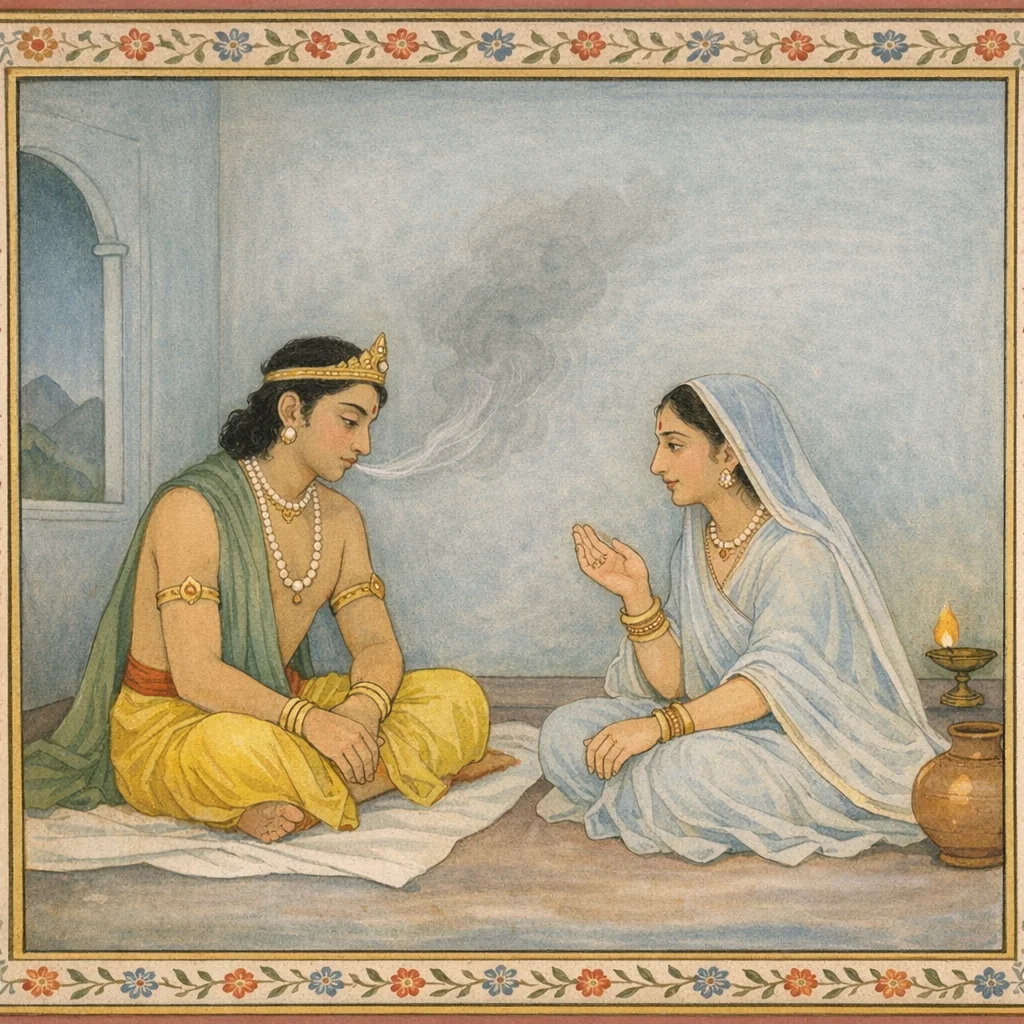
Vaiśaṃpāyana reports that after Nārada concludes his address, Yudhiṣṭhira remains absorbed in grief. The king is described with lowered face, heavy sighs, and tearful eyes—an embodied depiction of post-conflict sorrow and mental agitation. Kuntī, herself afflicted by grief, speaks in a measured and gentle manner, urging Yudhiṣṭhira not to succumb to lamentation and to listen to her purposeful words. She recalls her prior efforts to clarify to him the matter of brotherhood/kinship, including an episode connected with Bhāskara/Divākara (the solar deity) who, in a dream context, is said to have communicated counsel oriented toward welfare. Kuntī states that neither she nor the solar figure could previously persuade or reconcile the relevant party due to bonds of affection and the complexity of the situation; over time, that person became absorbed in hostility and antagonism, and Kuntī admits she overlooked him as harmful to their interests. In response, Yudhiṣṭhira—tearful and distressed—accuses Kuntī of burdening him through concealed counsel and, in acute sorrow, utters a generalized curse that women in all worlds will not be able to keep secrets. The chapter closes with Yudhiṣṭhira’s continued mental unrest, remembrance of kin and allies, and the onset of dispassion (nirveda) under the pressure of grief.
Chapter Arc: युद्ध की नृशंस स्मृतियाँ—बलवान योद्धा द्वारा प्रतिद्वन्द्वी को पिण्डली दबाकर चीर डालने जैसी विभीषिका—युधिष्ठिर के भीतर फिर से धधक उठती हैं। → शोक से व्याकुल युधिष्ठिर नाग की भाँति दीर्घ निःश्वास लेते हैं; कुन्ती मधुर परन्तु कालोचित, अर्थपूर्ण वचन कहकर उन्हें उस पुराने, दबे हुए सत्य की ओर ले जाती हैं जिसे हितैषी ने समय रहते कहना चाहा था। → कुन्ती स्वीकार करती हैं कि ‘गूढ़-मन्त्र’ (गुप्त रहस्य) के कारण वह पीड़ित रही—और उसी क्षण युधिष्ठिर का शोक आँसुओं में फूट पड़ता है; वे स्त्रियों को शाप देते हैं कि वे रहस्य धारण न कर सकें। → युधिष्ठिर पुत्र-पौत्र, सम्बन्धी और सुहृदों का स्मरण कर उद्विग्न हो उठते हैं; शोकाग्नि धूम सहित प्रज्वलित अग्नि-सी बनकर अंततः उन्हें निर्वेद (वैराग्य/उदासी) की ओर ढकेल देती है। → कुन्ती के रहस्योद्घाटन के बाद युधिष्ठिर का निर्वेद क्या उन्हें राज्य-धर्म से विमुख करेगा या उन्हें किसी उच्चतर शान्ति-मार्ग की ओर ले जाएगा?
Shlokas
Verse 1
/ #फशार (0) आसजअान- > जहाँ बलवान् योद्धा अपने प्रतिद्वन्धीको दुर्बल पा उसकी एक पिण्डलीको पैरसे दबाकर दूसरीको ऊपर उठा सारे शरीरको बीचसे चीर डालता है, वह बाहुकण्टक नामक युद्ध कहा गया है। जैसा कि निम्नांकित वचनसे सूचित होता है-- एकां जंघां पदा55क्रम्य परामुद्यम्य पाट्यते | केतकीपत्रवच्छत्रोर्युद्धं तद् बाहुकण्टकम् ।।' इति षष्ठो 5 ध्याय: युधिष्ठिरकी चिन्ता, कुन्तीका उन्हें समझाना और स्ट्रियोंको युधिष्ठिरका शाप वैशम्पायन उवाच एतावदुकक््त्वा देवर्षिविरिराम स नारद: । युधिष्िरस्तु राजर्षिदेध्यौ शोकपरिप्लुत:,वैशम्पायनजी कहते हैं--राजन्! इतना कहकर देवर्षि नारद तो चुप हो गये, किंतु राजर्षि युधिष्ठिर शोकमग्न हो चिन्ता करने लगे
Vaiśampāyana said: Having said only this much, the divine seer Nārada fell silent. But King Yudhiṣṭhira—royal sage though he was—remained immersed in grief and began to ponder deeply, his mind flooded by sorrow.
Verse 2
त॑ दीनमनसं वीर॑ शोकोपहतमातुरम् । निःश्वसन्तं यथा नागं पर्यश्रुनयनं तथा,उनका मन बहुत दुखी हो गया। वे शोकके मारे व्याकुल हो सर्पकी भाँति लंबी साँस खींचने लगे। उनकी आँखोंसे आँसू बहने लगा। वीर युधिष्ठिरकी ऐसी अवस्था देख कुन्तीके सारे अंगोंमें शोक व्याप्त हो गया। वे दुःखसे अचेत-सी हो गयीं और मधुर वाणीमें समयके अनुसार अर्थभरी बात कहने लगीं--
Vaiśampāyana said: The hero’s mind sank into despondency; struck down by grief, he became distressed. He heaved long breaths like a serpent, and his eyes overflowed with tears. Seeing Yudhiṣṭhira in such a condition, Kuntī was pervaded by sorrow in every limb; as if faint with grief, she began to speak in a gentle voice, offering words suited to the moment and rich in meaning.
Verse 3
कुन्ती शोकपरीताजड्ी दुःखोपहतचेतना । अब्रवीन्मधुराभाषा काले वचनमर्थवत्,उनका मन बहुत दुखी हो गया। वे शोकके मारे व्याकुल हो सर्पकी भाँति लंबी साँस खींचने लगे। उनकी आँखोंसे आँसू बहने लगा। वीर युधिष्ठिरकी ऐसी अवस्था देख कुन्तीके सारे अंगोंमें शोक व्याप्त हो गया। वे दुःखसे अचेत-सी हो गयीं और मधुर वाणीमें समयके अनुसार अर्थभरी बात कहने लगीं--
Vaiśampāyana said: Kuntī, overwhelmed by grief and stunned in mind, her consciousness struck down by sorrow, spoke in a sweet voice—uttering, at the fitting moment, words that were full of meaning. Seeing the heroic Yudhiṣṭhira in such a condition, grief spread through all her limbs; as if insensible from pain, she nevertheless began to speak with timely, purposeful counsel.
Verse 4
युधिष्ठिर महाबाहो नैनं शोचितुम्सि । जहि शोकं महाप्राज्ञ शुणु चेदं वचो मम,“महाबाहु युधिष्ठिर! तुम्हें कर्णके लिये शोक नहीं करना चाहिये। महामते! शोक छोड़ो और मेरी यह बात सुनो
Vaiśampāyana said: “O mighty-armed Yudhiṣṭhira, you should not grieve for him. O great-minded one, cast off sorrow and listen to these words of mine.”
Verse 5
इस प्रकार श्रीमह्याभारत शान्तिपर्वके अन्तर्गत राजधर्मानुशासनपर्वमें कर्णके पराक्रमका कथन नामक पाँचवाँ अध्याय पूरा हुआ,यातित: स मया पूर्व भ्रात्र्यं ज्ञापयितुं तव । भास्करेण च देवेन पित्रा धर्मभूतां वर “धर्मात्माओंमें श्रेष्ठ युधिष्ठिर! मैंने पहले कर्णको यह बतानेका प्रयत्न किया था कि पाण्डव तुम्हारे भाई हैं। उसके पिता भगवान् भास्करने भी ऐसी ही चेष्टा की
Thus ends the fifth chapter, called “The Account of Karṇa’s Valor,” within the Rājadharmānuśāsana section of the Śānti Parvan of the Śrī Mahābhārata. Nārada says: “O best among the righteous, I had earlier urged him, seeking to make known to you the bond of brotherhood. His father too—the divine Bhāskara—made the same effort.”
Verse 6
यद्वाच्यं हितकामेन सुहदा हितमिच्छता । तथा दिवाकरेणोक्तः स्वप्रान्ते मम चाग्रत:,“हितकी इच्छा रखनेवाले एक हितैषी सुहदको जो कुछ कहना चाहिये, वही भगवान् सूर्यने उससे स्वप्नमें और मेरे सामने भी कहा इति श्रीमहाभारते शान्तिपर्वणि राजधर्मानुशासनपर्वणि स्त्रीशापे षष्ठो5ध्याय: ।। ६ || इस प्रकार श्रीमह्ााभारत शान्तिपर्वके अन्तर्गत राजधमनिशासनपर्वमें स्रियोंकों युधिष्ठिरका शापविषयक छठा अध्याय पूरा हुआ
Vaiśampāyana said: Whatever a well-wishing friend—seeking another’s good and intent on benefit—ought to say, those very words were spoken by the Sun-god, both at the end of a dream and also in my presence. (Thus ends the sixth chapter in the Śānti Parva, in the Rājadharmānuśāsana section, concerning the episode of the women’s curse.)
Verse 7
न चैनमशकदू भानुरहं वा स्नेहकारणै: । पुरा प्रत्यनुनेतुं वा नेतुं वाप्यपेकतां त्वया,"परंतु भगवान् सूर्य एवं मैं दोनों ही स्नेहके कारण दिखाकर अपने पक्षमें करने या तुमलोगोंसे एकता (मेल) करानेमें सफल न हो सके
Vaiśampāyana said: Neither the Sun-god Bhānu nor I was able, even earlier, to win him over by appeals grounded in affection, nor to bring about unity with you (your side).
Verse 8
ततः कालपरीत: स वैरस्योद्धरणे रत: । प्रतीपकारी युष्माकमिति चोपेक्षितो मया,“तदनन्तर वह कालके वशीभूत हो वैरका बदला लेनेमें लग गया और तुमलोगोंके विपरीत ही सारे कार्य करने लगा; यह देखकर मैंने उसकी उपेक्षा कर दी”
Vaiśampāyana said: Then, overcome by the force of time, he became intent on extracting revenge. Seeing him act in ways hostile to you—working against your interests—I therefore chose to disregard him.
Verse 9
इत्युक्तो धर्मराजस्तु मात्रा बाष्पाकुलेक्षण: । उवाच वाक्यं धर्मात्मा शोकव्याकुलितेन्द्रिय:,माताके ऐसा कहनेपर धर्मराज युधिष्ठिरके नेत्रोंमें आँसू भर आया, शोकसे उनकी इन्द्रियाँ व्याकुल हो गयीं और वे धर्मात्मा नरेश उनसे इस प्रकार बोले--'माँ! आपने इस गोपनीय बातको गुप्त रखकर मुझे बड़ा कष्ट दिया"
Thus addressed by his mother, King Yudhiṣṭhira’s eyes filled with tears. Overwhelmed by grief and with his senses shaken, that righteous-minded ruler spoke in reply—lamenting that by keeping such a confidential matter hidden, she had caused him deep anguish.
Verse 10
भवत्या गूढमन्त्रत्वात् पीडितो<स्मीत्युवाच ताम्,माताके ऐसा कहनेपर धर्मराज युधिष्ठिरके नेत्रोंमें आँसू भर आया, शोकसे उनकी इन्द्रियाँ व्याकुल हो गयीं और वे धर्मात्मा नरेश उनसे इस प्रकार बोले--'माँ! आपने इस गोपनीय बातको गुप्त रखकर मुझे बड़ा कष्ट दिया"
Vaiśampāyana said: “Afflicted because you kept this matter as a hidden secret, I have been made to suffer,” he said to her. Hearing this, Dharmarāja Yudhiṣṭhira’s eyes filled with tears; grief agitated his senses, and that righteous king spoke to his mother: “Mother, by concealing this confidential truth, you have caused me great pain.”
Verse 11
शशाप च महातेजा: सर्वलोकेषु योषित: । न गुहां धारयिष्यन्तीत्येवं दुः:खसमन्वित:,फिर महातेजस्वी युधिष्ठिरने अत्यन्त दुखी होकर सारे संसारकी स्त्रियोंको यह शाप दे दिया कि “आजलसे स्त्रियाँ अपने मनमें कोई गोपनीय बात नहीं छिपा सकेंगी”
Vaiśaṃpāyana said: Overwhelmed by grief, that mighty one uttered a curse against women in all the worlds, declaring, “They shall not be able to keep a secret concealed within.” The passage frames the outburst as a sorrow-driven lapse, showing how intense suffering can distort judgment and lead to ethically fraught speech.
Verse 12
स राजा पुत्रपौत्राणां सम्बन्धिसुहृदां तदा । स्मरन्नुद्विग्नहददयो बभूवोद्धिग्नचेतन:,राजा युधिष्ठिरका हृदय अपने पुत्रों, पौत्रों, सम्बन्धियों तथा सुहृदोंको याद करके उद्विग्न हो उठा। उनके मनमें व्याकुलता छा गयी
Vaiśampāyana said: At that time, the king—remembering his sons and grandsons, his kinsmen and well-wishers—became deeply agitated at heart; his mind was overwhelmed with distress. The verse underscores the moral weight of kingship after catastrophe: memory of one’s own people becomes a source of anguish, not comfort, when dharma has been shaken by war and loss.
Verse 13
तत: शोकपरीतात्मा सधूम इव पावक: । निर्वेदमगमद् धीमान् राजा संतापपीडित:,तत्पश्चात् शोकसे व्याकुलचित्त हुए बुद्धिमान् राजा युधिष्ठिर संतापसे पीड़ित हो धूमयुक्त अग्निके समान धीरे-धीरे जलने लगे तथा राज्य और जीवनसे विरक्त हो उठे
Then the wise king, his inner being overwhelmed by grief and tormented by anguish, sank into dispassion. Like a fire wreathed in smoke, he seemed to burn inwardly—his mind clouded by sorrow and turning away from the attractions of life and kingship.
Frequently Asked Questions
The dilemma concerns whether withholding or revealing consequential kinship and counsel is ethically justified when disclosure may destabilize relationships, yet secrecy can later amplify grief, blame, and social rupture.
The chapter models disciplined counsel under distress: grief should be addressed through timely, purposeful speech and reflection, while recognition of past omissions should guide future responsibility rather than deepen paralysis.
No explicit phalaśruti appears in this passage; its meta-function is narrative-ethical, showing how speech, secrecy, and remorse operate as causal forces shaping inner stability and public order in the post-war setting.