Adhyaya 39
युधिष्ठिरस्य नगरप्रवेशः — चार्वाकप्रकरणं (Yudhiṣṭhira’s Entry into the City and the Cārvāka Episode)
Upa-parva: Rājadharmānuśāsana (Reception of the King and Protection of Brāhmaṇas episode)
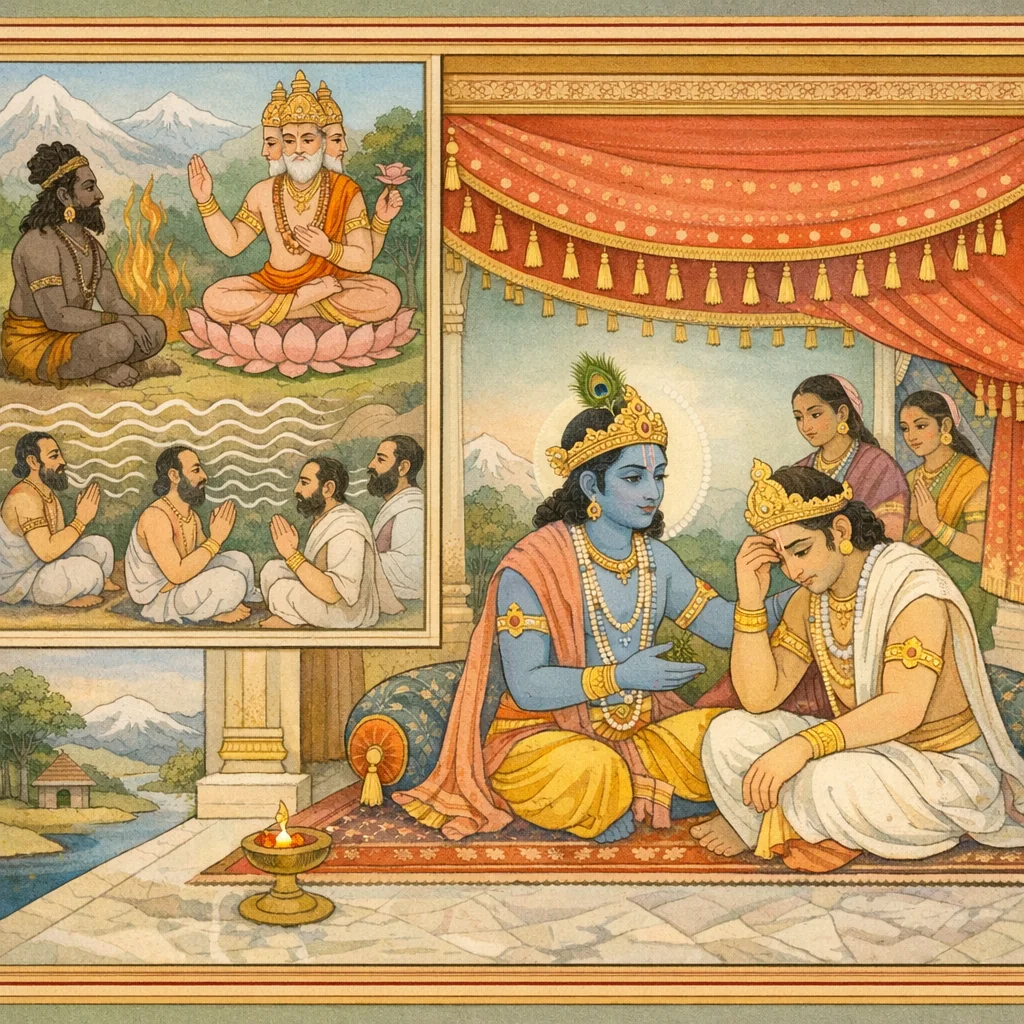
Vaiśaṃpāyana describes the ceremonial entry of the Pāṇḍavas into the city: crowds gather to see them; the royal road is decorated; households and women praise Yudhiṣṭhira, Bhīma, Arjuna, and the Mādrī-sons, and also commend Kṛṣṇā (Draupadī) for her conduct and vows. Yudhiṣṭhira proceeds to the palace, receives auspicious greetings from citizens and countryfolk, and is honored at the palace gate with blessings from brāhmaṇas. Inside, he worships household and royal deities with offerings, then again meets brāhmaṇas and honors them formally, distributing gifts (wealth, cattle, garments, and desired items). Amid auspicious recitations and victory acclamations, a disruptive figure appears: Cārvāka, a rākṣasa and associate of Duryodhana, disguised as an ascetic/brāhmaṇa, publicly accuses Yudhiṣṭhira of kin-slaying and questions the value of kingship after such destruction. Yudhiṣṭhira responds with a plea for fairness and compassion, indicating his distressed condition. The brāhmaṇas deny authorship of the accusation, recognize Cārvāka through purified insight, and identify him explicitly as a rākṣasa in disguise. They then neutralize him through forceful sacred utterance (brahmatejas/brahmadaṇḍa), after which Vāsudeva teaches that brāhmaṇas are always to be honored as ‘earth-moving deities’ whose speech carries sanction and beneficence. Vāsudeva narrates a prior-account: in Kṛtayuga Cārvāka obtained a boon of fearlessness from Brahmā except against brāhmaṇas, and his death was foreseen to occur when he would insult brāhmaṇas due to attachment to Duryodhana. The chapter concludes with reassurance: the slain kinsmen fell according to kṣatriya-dharma and attained higher worlds; Yudhiṣṭhira is urged to assume welfare-oriented kingship—protect subjects, restrain adversaries, and safeguard brāhmaṇas.
Chapter Arc: युद्धोत्तर सभा में युधिष्ठिर भ्राताओं सहित स्थिर खड़े हैं; शोक और ग्लानि के बीच धर्म का मार्ग धुँधला पड़ता दिखता है। → श्रीकृष्ण ब्राह्मण-पूजा और ब्राह्मण-वाणी की अद्भुत शक्ति का प्रतिपादन करते हुए चार्वाक राक्षस की प्राचीन कथा छेड़ते हैं—कैसे उसने तप कर ब्रह्मा से वर पाया और फिर उसी वर-बल से देवताओं व लोक को संताप देने लगा। → कथा का निर्णायक बिंदु यह उद्घोष है कि जो द्विजों का अपमान करता है, उसे क्रुद्ध ब्राह्मण अपनी वाग्बल से ‘भस्म’ कर देते हैं—चार्वाक का अंत वाणी-शक्ति से सुनिश्चित है। → श्रीकृष्ण युधिष्ठिर को धैर्य देते हैं: तुमने क्षत्रधर्म के अनुसार युद्ध किया; जो वीर मरे वे स्वर्गगत हैं। अब ग्लानि त्यागकर राज्य-कर्तव्य निभाओ—शत्रुओं का दमन, प्रजा-रक्षा और द्विजों का सत्कार।
Shlokas
Verse 1
अपने-आप छा अर: एकोनचत्वारिशोड ध्याय: चार्वाकको प्राप्त हुए वर आदिका श्रीकृष्णद्वारा वर्णन वैशम्पायन उवाच ततस्तत्र तु राजानं तिष्ठन्तं भ्रातृभि: सह । उवाच देवकीपुत्र: सर्वदर्शी जनार्दन:,वैशम्पायनजी कहते हैं--जनमेजय! तदनन्तर सर्वदर्शी देवकीनन्दन भगवान् श्रीकृष्णने वहाँ भाइयोंसहित खड़े हुए राजा युधिष्ठिससे कहा
Vaiśampāyana said: Then, at that place, Janārdana—Kṛṣṇa, the son of Devakī, all-seeing—addressed King Yudhiṣṭhira as he stood together with his brothers. The scene turns from the aftermath of war toward counsel: the righteous king, burdened by grief and responsibility, is about to be guided toward steadiness in dharma and kingship.
Verse 2
वायुदेव उवाच ब्राह्म॒णास्तात लोके5स्मिन्नर्चनीया: सदा मम । एते भूमिचरा देवा वाग्विषा: सुप्रसादका:,श्रीकृष्ण बोले--तात! इस संसारमें ब्राह्मण मेरे लिये सदा ही पूजनीय हैं। ये पृथ्वीपर विचरनेवाले देवता हैं। कुपित होने पर इनकी वाणीमें विषका-सा प्रभाव होता है। ये सहज ही प्रसन्न होते और दूसरोंको भी प्रसन्न करते हैं
Vāyudeva said: “Dear one, in this world the brāhmaṇas are always worthy of reverence for me. They are gods who move upon the earth. When angered, their speech can strike like poison; yet by nature they are easily pleased and they also bring peace and satisfaction to others.”
Verse 3
पुरा कृतयुगे राजंश्चार्वाको नाम राक्षस: । तपस्तेपे महाबाहो बदर्या बहुवार्षिकम्,राजन्! महाबाहो! पहले सत्ययुग की बात है, चार्वाक राक्षसने बहुत वर्षोंतक बदरिकाश्रममें तपस्या की
Vāyu said: “In ancient times, in the Kṛta (Satya) Yuga, O King, there was a rākṣasa named Cārvāka. O mighty-armed one, he performed austerities for many years at Badarī.”
Verse 4
वरेण च्छन्द्यमानश्व ब्रह्मणा च पुन: पुनः । अभयं सर्वभूते भ्यो वरयामास भारत,भरतनन्दन! जब ब्रह्माजीने उससे बारंबार वर माँगनेका अनुरोध किया, तब उसने यही वर माँगा कि मुझे किसी भी प्राणीसे भय न हो
Urged again and again by Brahmā to choose a boon, he asked for this alone, O Bhārata: that he might be fearless with respect to all beings—free from dread of any creature.
Verse 5
द्विजावमानादन्यत्र प्रादाद् वरमनुत्तमम् | अभयं सर्वभूतेभ्यो ददौ तस्मै जगत्पति:,जगदीश्वर ब्रह्माजीने उसे यह परम उत्तम वर देते हुए कहा कि “तुम्हें ब्राह्मणका अपमान करनेके सिवा और कहीं किसीसे भय नहीं है” इस तरह उन्होंने उसे सम्पूर्ण प्राणियोंकी ओरसे अभयदान दे दिया
The Lord of the world granted him an unsurpassed boon: that he would have no fear from any quarter—except in the case of insulting a brahmin. Thus the cosmic ruler bestowed upon him assurance of safety from all living beings, while ethically binding him to reverence the twice-born and to avoid sacrilege against sacred learning and conduct.
Verse 6
स तु लब्धवर: पापो देवानमितविक्रम: । राक्षसस्तापयामास तीव्रकर्मा महाबल:,वर पाकर वह अमित पराक्रमी महाबली और दु:ःसह कर्म करनेवाला पापात्मा राक्षस देवताओंको संताप देने लगा
But that sinful Rākṣasa, having obtained a boon and possessed of immeasurable prowess, began to afflict the gods. Mighty in strength and relentless in action, he used his hard-won power not for restraint or righteousness, but to torment the divine order.
Verse 7
ततो देवा: समेताश्च ब्रह्माणमिदमन्रुवन् । वधाय रक्षसस्तस्य बलविप्रकृतास्तदा,तब उसके बलसे तिरस्कृत हुए सब देवताओंने एकत्र हो ब्रह्माजीसे उसके वधके लिये प्रार्थना की
Then the gods, having assembled together, addressed Brahmā with these words: having been overpowered and humiliated by the might of that rākṣasa, they petitioned for his destruction.
Verse 8
तानुवाच ततो देवो विहितस्तत्र वै मया । यथास्य भविता मृत्युरचिरेणेति भारत,भरतनन्दन! तब ब्रह्माजीने देवताओंसे कहा--“मैंने ऐसा विधान कर दिया है जिससे शीघ्र ही उस राक्षसकी मृत्यु हो जायगी
Then the deity spoke to them: “Here indeed have I established a decree, O Bhārata, so that this being’s death shall come to pass before long.”
Verse 9
राजा दुर्योधनो नाम सखास्य भविता नृषु । तस्य स्नेहावबद्धो 5सौ ब्राह्मणानवमंस्यते,“मनुष्योंमें राजा दुर्योधन उसका मित्र होगा और उसीके स्नेहसे बँधकर वह राक्षस ब्राह्मगोंका अपमान कर बैठेगा
Vāyu said: “Among men, a king named Duryodhana will become his friend. Bound fast by attachment to that friendship, that being will go so far as to insult the brāhmaṇas.”
Verse 10
तत्रैनं रुषिता विप्रा विप्रकारप्रधर्षिता: । थक्ष्यन्ति वाग्बला: पापं ततो नाशं गमिष्यति,“उसके विरुद्धाचरणसे तिरस्कृत हो रोषमें भरे हुए वाक॒शक्तिसे सम्पन्न ब्राह्मण वहीं उस पापीको जला देंगे। इससे उसका नाश हो जायगा”
There, the Brahmins—angered and affronted by his misconduct toward Brahmins—will, empowered by the force of their speech, scorch that sinner. From that, he will go to destruction.
Verse 11
स एष निहतः शेते ब्रह्मदण्डेन राक्षस: । चार्वाको नृपतिश्रेष्ठ मा शुचो भरतर्षभ,नृपश्रेष्ठ॒ भरतभूषण! अब आप शोक न करें। यह वही राक्षस चार्वाक ब्रह्मदण्डसे मारा जाकर पृथ्वीपर पड़ा है
Vāyu said: “This very rākṣasa Cārvāka now lies slain, struck down by the brahma-daṇḍa, the Brahmanical rod of chastisement. O best of kings, O bull among the Bharatas, do not grieve.”
Verse 12
हतास्ते क्षत्रधर्मेण ज्ञातयस्तव पार्थिव । स्वर्गताश्न महात्मानो वीरा: क्षत्रियपुड़वा:,राजन! आपने क्षत्रियरर्मके अनुसार भाई-बन्धुओंका वध किया है। वे महामनस्वी क्षत्रियशिरोमणि वीर स्वर्गलोकमें चले गये हैं
Vāyu said: “O king, your kinsmen have been slain in accordance with kṣatriya-dharma, the warrior’s duty. Those great-souled heroes—foremost among warriors—have gone to heaven.”
Verse 13
स त्वमातिष्ठ कार्याणि मा ते5भूद् ग्लानिरच्युत | शत्रून् जहि प्रजा रक्ष द्विजांश्व॒ परिपूजय,अच्युत! अब आप अपने कर्तव्यका पालन करें। आपके मनमें ग्लानि न हो। आप शत्रुओंको मारिये, प्रजाकी रक्षा कीजिये और ब्राह्मणोंका आदर सत्कार करते रहिये
Vāyu said: “Therefore, stand firm in the duties appointed to you, O Acyuta; let no despondency arise in you. Strike down the enemies, protect the people, and continue to honor and duly revere the Brāhmaṇas.”
Verse 39
इति श्रीमहा भारते शान्तिपर्वणि राजधर्मानुशासनपर्वणि चार्वाकवरदानादिकथ ने एकोनचत्वारिंशो5ध्याय:
Thus ends the thirty-ninth chapter in the Śānti Parva of the Śrī Mahābhārata, within the section on instruction concerning the king’s duties (Rājadharma), in the narration dealing with Cārvāka and the granting of boons and related matters.
Frequently Asked Questions
The dilemma is legitimacy under moral burden: how Yudhiṣṭhira should receive sovereignty and public honor while carrying responsibility for widespread kin-loss, and how he should respond to accusatory speech without destabilizing civic order.
The chapter teaches that stable rule depends on dharma-aligned institutions: public welfare, restraint in the face of provocation, and sustained honor and protection of learned communities whose speech functions as ethical regulation within society.
There is no explicit phalaśruti formula; the meta-commentary appears as Vāsudeva’s doctrinal framing and etiological backstory, which interprets the event as evidence of the protective boundary around brāhmaṇas and as reassurance regarding kṣatriya-dharma and post-conflict governance.