Adhyaya 360
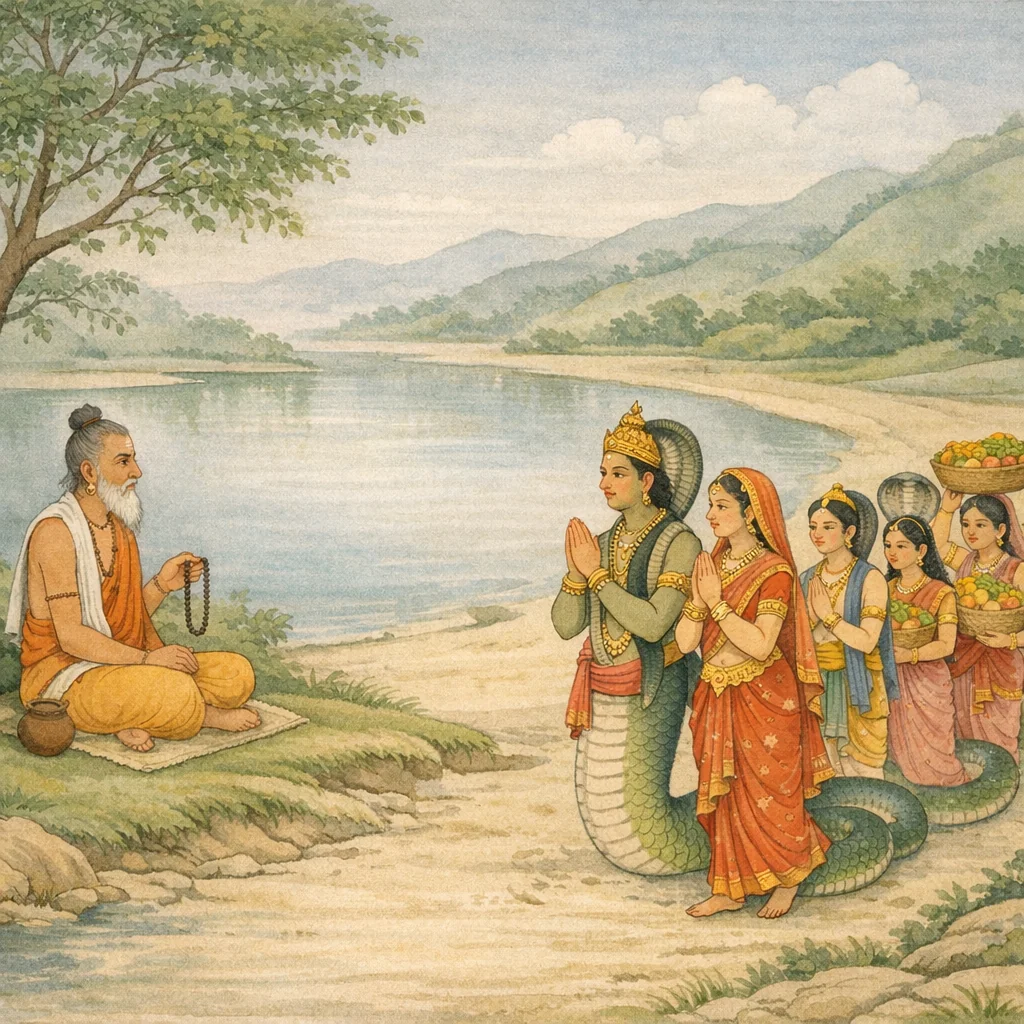
Chapter Arc: भीष्म उस ब्राह्मण की कथा उठाते हैं जो नागराज के दर्शन हेतु गोमती-तट पर कठोर व्रत लेकर निराहार बैठा है—मानो तपस्या के द्वार पर स्वयं अतिथि-धर्म परीक्षा लेने आ पहुँचा हो। → नागराज के भाई-बन्धु, पत्नी-पुत्र सहित, एकत्र होकर उस एकान्त तपस्वी के पास आते हैं; वे उसे बार-बार अर्चना कर गृहस्थ-धर्म के अनुसार आतिथ्य स्वीकार करने का आग्रह करते हैं—मूल, फल, अन्न आदि देने को तत्पर। → ब्राह्मण स्पष्ट कह देता है कि उपदेश/विनय से ही वह तृप्त है; उसका व्रत नागराज के आगमन तक है—और यदि आठ रात बीत जाने पर भी नागराज न आए, तभी वह भोजन करेगा। → ब्राह्मण की अनुमति/आज्ञा पाकर नागगण असफल-से (कृतार्थ न होकर) अपने भवन लौट जाते हैं; तपस्वी का संकल्प अडिग रहता है और प्रतीक्षा जारी। → क्या आठ रात्रियों के भीतर नागराज स्वयं दर्शन देगा, या ब्राह्मण का व्रत किसी और गूढ़ परीक्षा में परिवर्तित होगा?
Shlokas
Verse 1
अत अष्टपञ्चाशर्दाधिकत्रिशततमोब् ध्याय: नागराजके दर्शनके लिये ब्राह्मणकी तपस्या तथा नागराजके परिवारवालोंका भोजनके लिये ब्राह्मणसे आग्रह करना भीष्म उवाच अथ तेन नरश्रेष्ठ ब्राह्मणेन तपस्विना । निराहारेण वसता दु:खितास्ते भुजड़मा:,भीष्मजी कहते हैं--नरश्रेष्ठ]!ी तदनन्तर गोमतीके तटपर रहता हुआ वह ब्राह्मण निराहार रहकर तपस्या करने लगा। उसके भोजन न करनेसे वहाँ रहनेवाले नागोंको बड़ा दुःख हुआ
Bhishma said: Then that foremost of men, the ascetic Brahmin, remained there practicing austerity without taking any food. Because he did not eat, the serpents dwelling in that place became deeply distressed—an ethical tension arises between the ascetic’s vow and the suffering it inadvertently causes to other beings who depend on the normal order of hospitality and exchange.
Verse 2
सर्वे सम्भूय सहिता हास्य नागस्य बान्धवा: | भ्रातरस्तनया भार्या ययुस्तं ब्राह्मणं प्रति,तब नागराजके भाई-बन्धु, स्त्री-पुत्र सब मिलकर उस ब्राह्मणके पास गये
Bhishma said: All the kinsmen of that serpent—having assembled together in one body—his brothers, sons, and wife, went to that Brahmin. The scene underscores a collective familial response in the face of a moral crisis, suggesting that when harm or wrongdoing is involved, responsibility and remedy are not merely individual but shared by the whole community bound by relationship.
Verse 3
ते5पश्यन् पुलिने तं वै विविक्ते नियतव्रतम् । समासीन निराहारं द्विजं जप्पपरायणम्,उन्होंने देखा, ब्राह्मण गोमतीके तटपर एकान्त प्रदेशमें व्रत और नियमके पालनमें तत्पर हो निराहार बैठा हुआ है और मन्त्रका जप कर रहा है
They saw, on the riverbank in a secluded spot, a Brahmin steadfast in vows and disciplined observances—seated without food, wholly devoted to the repetition of sacred mantras. The scene highlights the ethical ideal of self-restraint and inner worship, where spiritual effort is pursued away from display and distraction.
Verse 4
ते सर्वे समतिक्रम्य विप्रमभ्यर्च्य चासकृत् । ऊचुर्वाक्यमसंदिग्धमातिथेयस्य बान्धवा:,अतिथि-सत्कारके लिये प्रसिद्ध हुए नागराजके सब भाई-बन्धु ब्राह्मणके पास जा उसकी बारंबार पूजा करके संदेहरहित वाणीमें बोले--
Bhishma said: Having all approached him, those kinsmen of the host—renowned for honoring guests—reverently worshipped the brahmin again and again. Then, in words free from doubt or duplicity, they addressed him, exemplifying the ethical ideal that a guest must be received with clarity, respect, and sincere intent.
Verse 5
षष्ठो हि दिवसस्तेउद्य प्राप्तस्येह तपोधन । न चाभिभाषसे किंचिदाहारं धर्मवत्सल,“धर्मवत्सल तपोधन! आपको यहाँ आये आज छ: दिन हो गये; किंतु अभीतक आप कुछ भोजन लानेके लिये हमें आज्ञा नहीं दे रहे हैं
Bhishma said: “O ascetic rich in austerity, today makes the sixth day since you arrived here. Yet, O lover of dharma, you have not spoken even a word instructing us to bring you any food.”
Verse 6
अस्मानभिगतश्चासि वयं च त्वामुपस्थिता: । कार्य चातिथ्यमस्माभिवरयं सर्वे कुटुम्बिन:
Bhīṣma said: “You have come to us, and we too stand here in attendance upon you. Therefore, it is our duty to offer you hospitality—indeed, all of us householders consider this the foremost obligation.”
Verse 7
“आप हमारे घर अतिथिके रूपमें आये हैं और हम आपकी सेवामें उपस्थित हुए हैं। आपका आतिथ्य करना हमारा कर्तव्य है; क्योंकि हम सब लोग गृहस्थ हैं ।। मूलं फलं वा पर्ण वा पयो वा द्विजसत्तम | आहारहेतोरन्नं वा भोक्तुमर्हसि ब्राह्मण,द्विजश्रेष्ठ ब्राह्मणदेव! आप क्षुधाकी निवृत्तिके लिये हमारे लाये हुए फल-मूल, साग, दूध अथवा अन्नको अवश्य ग्रहण करनेकी कृपा करें
Bhishma said: “You have come to our house as a guest, and we stand ready to serve you. To offer hospitality to you is our duty, for we are householders. O best of the twice-born, O Brahmin—please accept, to relieve your hunger, whatever we have brought: roots or fruits, leafy greens, milk, or cooked food. You are worthy to partake.”
Verse 8
त्यक्ताहारेण भवता वने निवसता त्वया । बालवृद्धमिदं सर्व पीड्यते धर्मसंकटात्,“इस वनमें रहकर आपने भोजन छोड़ दिया है। इससे हमारे धर्ममें बाधा आती है। बालकसे लेकर वृद्धतक हम सब लोगोंको इस बातसे बड़ा कष्ट हो रहा है
Bhishma said: “By dwelling in this forest and renouncing food, you have cast us into a crisis of dharma. From children to the aged, all of us are distressed, for this situation obstructs what is right and proper.”
Verse 9
न हि नो भ्रूणहा कश्चिज्जातापद्यनूृतोडपि वा | पूर्वाशी वा कुले हास्मिन् देवतातिथिबन्धुषु,“हमारे इस कुलमें कोई भी ऐसा नहीं है, जिसने कभी भ्रूणहत्या की हो, जिसकी संतान पैदा होकर मर गयी हो, जिसने मिथ्या भाषण किया हो अथवा जो देवता, अतिथि एवं बन्धुओंकों अन्न देनेके पहले ही भोजन कर लेता हो”
Bhishma said: “In our lineage there has been no one who has slain an embryo, nor anyone whose child was born only to die, nor anyone given to false speech, nor anyone who eats before first offering food to the gods, to guests, and to kinsmen.”
Verse 10
ब्राह्मण उवाच उपदेशेन युष्माकमाहारो<यं कृतो मया । द्विरून दशरात्र वै नागस्यथागमनं प्रति,ब्राह्मणने कहा--नागगण! आपलोगोंके इस उपदेशसे ही मैं तृप्त हो गया। आपलोग ऐसा समझें कि मैंने यह आहार ही प्राप्त कर लिया। नागराजके आनेमें केवल आठ रातें बाकी हैं
The Brahmin said: “By your instruction it is as though I have obtained this very food; I am satisfied through your counsel alone. Know that fewer than ten nights remain until the coming of the Nāga-king.”
Verse 11
यद्युष्टरात्रेडतिक्रान्ते नागमिष्यति पन्नग: । तदाहारं करिष्यामि तन्निमित्तमिदं व्रतम्,यदि आठ रात बीत जानेपर भी नागराज नहीं आयेंगे तो मैं भोजन कर लूँगा। उनके आगमनके लिये ही मैंने यह व्रत लिया है
The Brahmin said: “If, even after the passing of eight nights, the serpent-king does not come, then I shall take food. This vow has been undertaken solely for the sake of his coming.”
Verse 12
कर्तव्यो न च संतापो गम्यतां च यथागतम् । तन्निमित्तमिदं सर्व नैतद् भेत्तुमिहाहथ,आपलोगोंको इसके लिये संताप नहीं करना चाहिये। आप जैसे आये हैं, वैसे ही घर लौट जाइये। नागराजके दर्शनके लिये ही मेरा यह सारा व्रत और नियम है। अतः आपलोग इसे भंग न करें
“There is no cause for grief; do what must be done, and return home just as you came. This entire observance and discipline of mine is undertaken for that very purpose—to obtain the sight of the Nāga-king. Therefore, you should not break or disrupt it here.”
Verse 13
ते तेन समनुज्ञाता ब्राह्मणेन भुजड़मा: । स्वमेव भवन जग्मुरकृतार्था नरर्षभ,नरश्रेष्ठ! उस ब्राह्मणके इस प्रकार आदेश देनेपर वे नाग अपने प्रयत्नमें असफल हो घरको ही लौट गये
Thus permitted by that brāhmaṇa, the serpents departed and returned to their own dwelling, their effort having failed. O best of men, they went back without accomplishing the purpose for which they had come—an implicit reminder that even powerful beings are checked when a righteous person withholds consent, and that desire without dharmic sanction ends in frustration.
Verse 357
इस प्रकार श्रीमहाभारत शान्तिपर्वके अन्तर्गत गोक्षधर्मपर्वमें उज्छवृत्तिका उपाख्यानविषयक तीन सौ सत्तावनवाँ अध्याय पूरा हुआ
Thus ends the three hundred and fifty-seventh chapter of the Śānti Parva of the Śrī Mahābhārata, within the section known as the Gokṣa-dharma Parva, dealing with the illustrative tale (upākhyāna) of Ujjhavṛttikā. This closing colophon signals the completion of that chapter’s teaching, framed as an ethical exemplum within the larger discourse on dharma.
Verse 358
इति श्रीमहाभारते शान्तिपर्वणि मोक्षधर्मपर्वणि उज्छवृत्त्युपाख्याने अष्टपञ्चाशदधिकत्रिशततमो< ध्याय:,इस प्रकार श्रीमह्ाभारत शान्तिपर्वके अन्तर्गत गोक्षधर्मपर्वमें उज्छवृत्तिका उपाख्यानविषयक तीन सौ अट्ठावनवाँ अध्याय पूरा हुआ
Thus, in the Śrī Mahābhārata, within the Śānti Parva—specifically in the Mokṣa-dharma section—ends the three-hundred-and-fifty-eighth chapter, which contains the episode concerning the ujjha-vṛtti (the austere mode of livelihood).