Adhyaya 359
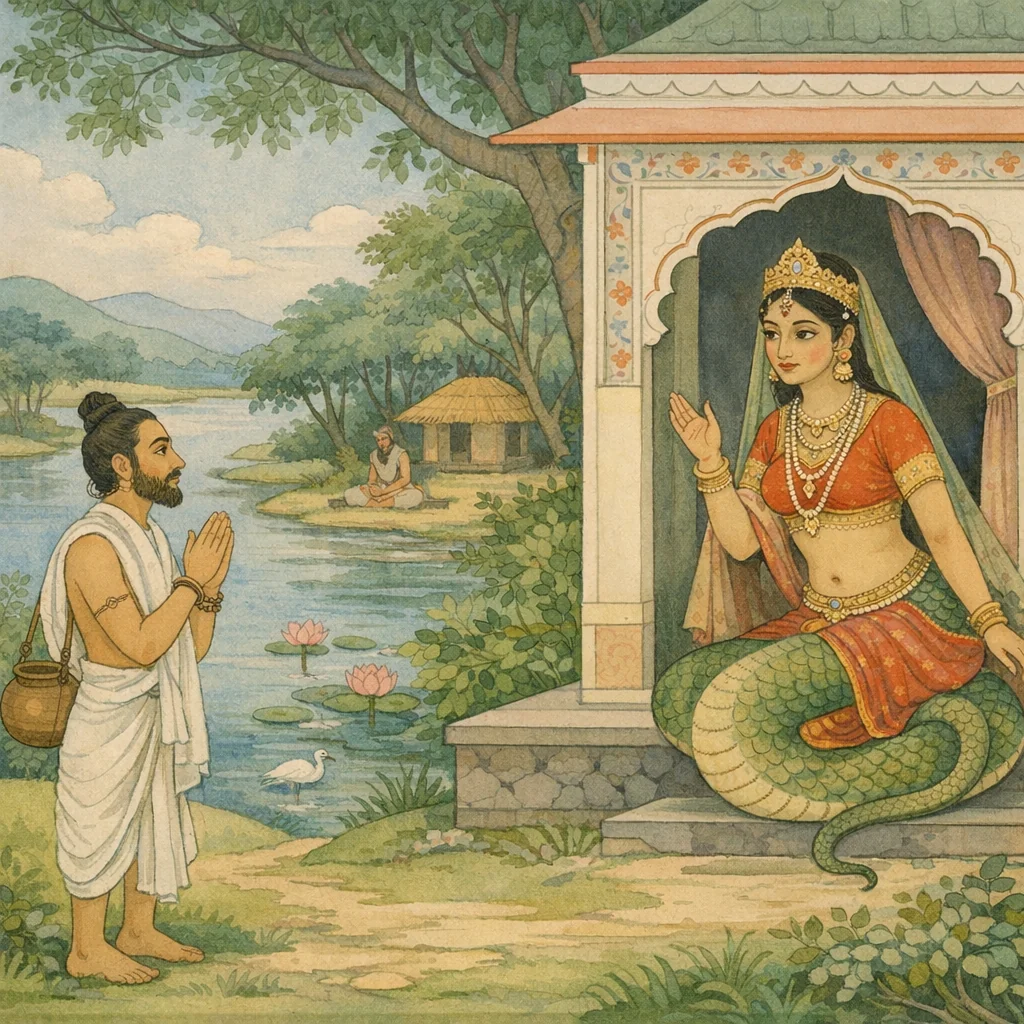
Chapter Arc: एक ब्राह्मण, अपने अतिथि-मुनि के निर्देश से, एक विशिष्ट नागराज की खोज में निकलता है—किसी गूढ़ प्रयोजन से, जो उसे पन्नग-आश्रम तक खींच लाता है। → वह विधिपूर्वक नागायतन पहुँचकर ‘भोः’ शब्द से अलंकृत विनम्र वचन बोलता है और नागराज का पता पूछता है; भीतर से नागपत्नी—धर्मवत्सला, पतिव्रता—उसका सत्कार करती है, पर साथ ही संकेत देती है कि नागराज प्रवास में हैं और उनके दर्शन का कारण/मार्ग जानना आवश्यक है। → ब्राह्मण स्पष्ट करता है कि उसका परम कार्य और परम अभीष्ट नागराज से भेंट ही है; वह निश्चयपूर्वक उसी प्रतीक्षा में महावन में ठहरने का संकल्प लेता है—यह दृढ़ता ही अध्याय का शिखर है। → नागपत्नी ब्राह्मण की बात सुनकर उसे उचित आश्वासन/मार्गदर्शन देती है; ब्राह्मण उसके कथन को बार-बार मन में धारण कर नदी के पुलिन (तट) की ओर जाकर प्रतीक्षा/अगले चरण के लिए प्रस्थान करता है। → नागराज कब और किस हेतु से लौटेंगे—और ब्राह्मण का ‘परम कार्य’ क्या फल देगा—यह अगले प्रसंग के लिए खुला रह जाता है।
Shlokas
Verse 1
/ ऑपन-माज बक। डे सप्तपजञज्चाशर्दाधिकत्रिशततमो< ध्याय: नागपत्नीके द्वारा ब्राह्मणका सत्कार और वार्तालापके बाद ब्राह्मणके द्वारा नागराजके आगमनकी प्रतीक्षा भीष्म उवाच स वनानि विचित्राणि तीर्थानि च सरांसि च । अभिगच्छन् क्रमेण सम कंचिन्मुनिमुपस्थित:,भीष्मजी कहते हैं--राजन्! वह ब्राह्मण क्रमशः अनेकानेक विचित्र वनों, तीर्थों और सरोवरोंको लाँघता हुआ किसी मुनिके आश्रमपर उपस्थित हुआ
Bhishma said: That brahmin, proceeding step by step, passed through many wondrous forests, sacred fords, and lakes, and in due course arrived at the hermitage of a certain sage—continuing his journey with reverence for holy places and disciplined purpose.
Verse 2
तं स तेन यथोद्दिष्टं नागं विप्रेण ब्राह्मण: । पर्यपृच्छद् यथान्यायं श्रुत्वैव च जगाम स:,उस मुनिसे ब्राह्मणने अपने अतिथिके बताये हुए नागका पता पूछा। मुनिने जो कुछ बताया, उसे यथावत््रूपसे सुनकर वह पुनः आगे बढ़ा
Bhishma said: The brahmin, following exactly what the sage had indicated, inquired in the proper manner about that serpent. Having heard the account just as it was told, he then proceeded onward. The passage highlights disciplined conduct—seeking information respectfully and acting only after attentive listening.
Verse 3
सो5भिगम्य यथान्यायं नागायतनमर्थवित् | प्रोक्ततानहमस्मीति भो:शब्दालंकृतं वच:,अपने उद्देश्यको ठीक-ठीक समझनेवाला वह ब्राह्मण विधिपूर्वक यात्रा करके नागके घरपर जा पहुँचा। घरके द्वारपर पहुँचकर उसने “भो:' शब्दसे विभूषित वचन बोलते हुए पुकार लगायी--*कोई है? मैं यहाँ द्वारपर आया हूँ
Bhishma said: Understanding his purpose clearly, the wise man proceeded in the proper manner and reached the dwelling of the Nāga. Arriving at the doorway, he called out with courteous words adorned by the respectful address “bhoḥ,” saying, “I have come here; I am at the door.”
Verse 4
तत् तस्य वचन श्रुत्वा रूपिणी धर्मवत्सला । दर्शयामास तं विप्रं नागपत्नी पतिव्रता,उसकी वह बात सुनकर धर्मके प्रति अनुराग रखनेवाली नागराजकी परम सुन्दरी पतिव्रता पत्नीने उस ब्राह्मणको दर्शन दिया
Hearing his words, the beautiful lady devoted to dharma—the chaste wife of the lord of serpents—revealed herself and granted an audience to that brāhmaṇa.
Verse 5
सा तस्मै विधिवत् पूजां चक्रे धर्मपरायणा । स्वागतेनागतं कृत्वा कि करोमीति चाब्रवीत्,उस धर्मपरायणा सतीने ब्राह्मणका विधिपूर्वक पूजन किया और स्वागत करते हुए कहा--'ब्राह्मणदेव! आज्ञा दीजिये, मैं आपकी क्या सेवा करूँ?”
She, devoted to dharma, performed for him the proper rites of worship. Having welcomed the guest with due hospitality, she said, “Revered brāhmaṇa, please command me—what service shall I render to you?”
Verse 6
ब्राह्मण उवाच विश्रान्तो5 भ्यर्चितश्षास्मि भवत्या शलक्ष्णया गिरा । द्रष्टमिच्छामि भवति देवं नागमनुत्तमम्,ब्राह्मणने कहा--देवि! आपने मधुर वाणीसे मेरा स्वागत और पूजन किया। इससे मेरी सारी थकावट दूर हो गयी। अब मैं परम उत्तम नागदेवका दर्शन करना चाहता हूँ
The Brāhmaṇa said: “Lady, by your gentle words you have welcomed and honored me, and my weariness has been relieved. Now I wish to behold that supremely excellent divine Nāga.”
Verse 7
एतद्धि परमं कार्यमेतन्मे परमेप्सितम् । अनेन चार्थेनास्म्यद्य सम्प्राप्त: पन्नगगाश्रमम्,यही मेरा सबसे बड़ा कार्य है और यही मेरा महान् मनोरथ है, मैं इसी उददेश्यसे आज नागराजके इस आश्रमपर आया हूँ
“This indeed is my highest duty, and this is what I most supremely desire to accomplish. For this very purpose I have come today to the āśrama of the lord of serpents.”
Verse 8
नागभायोवाच आर्य: सूर्यरथं वोढुं गतोडसौ मासचारिक: । सप्ताष्टभिर्दिनैर्विप्र दर्शयिष्यत्यसंशयम्,नागपत्नीने कहा--विप्रवर! मेरे माननीय पतिदेव सूर्यदेवका रथ ढोनेके लिये गये हुए हैं। वर्ष एक बार एक मासतक उन्हें यह कार्य करना पड़ता है। पंद्रह दिनोंमें ही वे यहाँ दर्शन देंगे--इसमें संशय नहीं है
The Nāga’s wife said: “Noble sir, my husband has gone to bear the chariot of the Sun. This duty comes to him for a month each year. Within seven or eight days, O brāhmaṇa, he will surely appear here—there is no doubt.”
Verse 9
एतद्विदितमार्यस्य विवासकरणं तव । भर्तुर्भवतु कि चान्यत् क्रियतां तद् वदस्व मे,मेरे पतिदेव-आर्यपुत्रके प्रवासका यह कारण आपको विदित हो। उनके दर्शनके सिवा और क्या काम है? यह मुझे बताइये; जिससे वह पूर्ण किया जाय
“You already know, noble one, the reason for my husband’s absence. What remains to be done except securing a meeting with him? Tell me what should be undertaken, so that it may be duly accomplished.”
Verse 10
ब्राह्मण उवाच अनेन निनश्चयेनाहं साध्वि सम्प्राप्तवानिह । प्रतीक्षन्नागमं देवि वत्स्याम्यस्मिन् महावने,ब्राह्मणने कहा--सती-साध्वी देवि! मैं उनके दर्शन करनेका निश्चय करके ही यहाँ आया हूँ; अतः उनके आगमनकी प्रतीक्षा करता हुआ मैं इस महान् वनमें निवास करूँगा
The brāhmaṇa said: “Virtuous lady, I have come here with a firm resolve to see him. Therefore I shall dwell in this great forest, waiting for his arrival.”
Verse 11
जब नागराज यहाँ आ जाया, तब उन्हें शान्तभावसे यह बतला देना चाहिये कि मैं यहाँ आया हूँ। तुम्हें ऐसी बात उनसे कहनी चाहिये, जिससे वे मेरे निकट आकर मुझे दर्शन दें
“When the king of serpents arrives here, calmly inform him, ‘I have come here.’ Speak in such a way that he approaches me and grants me an audience.”
Verse 12
अहमप्यत्र वत्स्यामि गोमत्या: पुलिने शुभे | काल॑ परिमिताहारो यथोक्तं परिपालयन्,मैं भी यहाँ गोमतीके सुन्दर तटपर परिमित आहार करके तुम्हारे बताये हुए समयकी प्रतीक्षा करता हुआ निवास करूँगा
The brāhmaṇa said: “I too shall stay here, on the auspicious bank of the Gomati. With my food intake measured by time, I will abide exactly by what you have prescribed, waiting for the appointed moment.”
Verse 13
सम्प्राप्तस्यैव चाव्यग्रमावेद्योडहमिहागत: । ममाभिगमन प्राप्तो वाच्यक्ष वचन त्वया,ततः स विप्रस्तां नागीं समाधाय पुन: पुनः । तदेव पुलिन नद्या: प्रययौ ब्राह्मणर्षभ: तदनन्तर वह श्रेष्ठ ब्राह्मण नागपत्नीको बारंबार (नागराजको भेजनेके लिये) जताकर गोमती नदीके तटपर ही चला गया
The brāhmaṇa said: “I have come here without agitation and have reported the matter as it truly stands. Since you have come to meet me, convey this message on my behalf.” Then that best of brāhmaṇas, after repeatedly instructing and settling the nāga-woman, returned once more to that very riverbank, proceeding along the sandy shore of the river.
Verse 356
इस प्रकार श्रीमहाभारत शान्तिपर्वके अन्तर्गत गोक्षधर्मपर्वमें उज्छवृत्तिका उपाख्यानविषयक तीन सौ छप्पनवाँ अध्याय पूरा हुआ
Thus ends the three hundred and fifty-sixth chapter of the Śānti Parva of the Śrī Mahābhārata, within the section known as the Gokṣa-dharma Parva, dealing with the illustrative tale (upākhyāna) of Ujjhavṛttikā. This closing colophon marks the completion of that chapter’s teaching on dharma through narrative example.
Verse 357
इति श्रीमहाभारते शान्तिपर्वणि मोक्षधर्मपर्वणि उज्छवृत्त्युपाख्याने सप्तपञ्चाशदधिकत्रिशततमो<ध्याय:
Thus, in the Śrī Mahābhārata, within the Śānti Parva—specifically the Mokṣa-dharma section—this concludes the episode known as the ‘Upākhyāna of Ucchavṛtti (the one who lives by gleaning).’ Here ends the three-hundred-and-fifty-seventh chapter (i.e., the 357th adhyāya).