Adhyaya 275
नारद-समङ्ग-संवादः — The Nārada–Samaṅga Dialogue on Fearlessness and Equanimity
Upa-parva: Mokṣa-dharma (Mokṣa-dharma-parvan / Liberation-oriented Instruction)
Yudhiṣṭhira asks Bhīṣma for a method by which fear arising from grief (śoka), suffering (duḥkha), and death (mṛtyu) may not afflict him. Bhīṣma responds by introducing an ancient exemplum: a dialogue between the sage Nārada and Samaṅga. Nārada observes Samaṅga’s unusual composure—appearing satisfied, unagitated, and childlike in ease—despite worldly instability. Samaṅga explains his steadiness by claiming insight into the constituents and patterns of beings, the cycles of undertakings and results, and the diversity of outcomes in the world. He notes that many live under varying conditions—strong and weak, affluent and poor—implying that mere circumstance does not justify agitation. The discourse then pivots to an ethic of non-grief: pleasure and pain are under the governance of time and causality; untrained senses lead to confusion and sorrow; pride intensifies delusion. Samaṅga articulates practical equanimity: do not cling to desired enjoyments, do not exult in gain nor collapse in loss, do not envy others, and relinquish craving (tṛṣṇā) and delusion (moha). He concludes that through sustained austerity and insight he has attained a state in which sorrow does not overpower him, presenting a liberation-oriented model for Yudhiṣṭhira’s question.
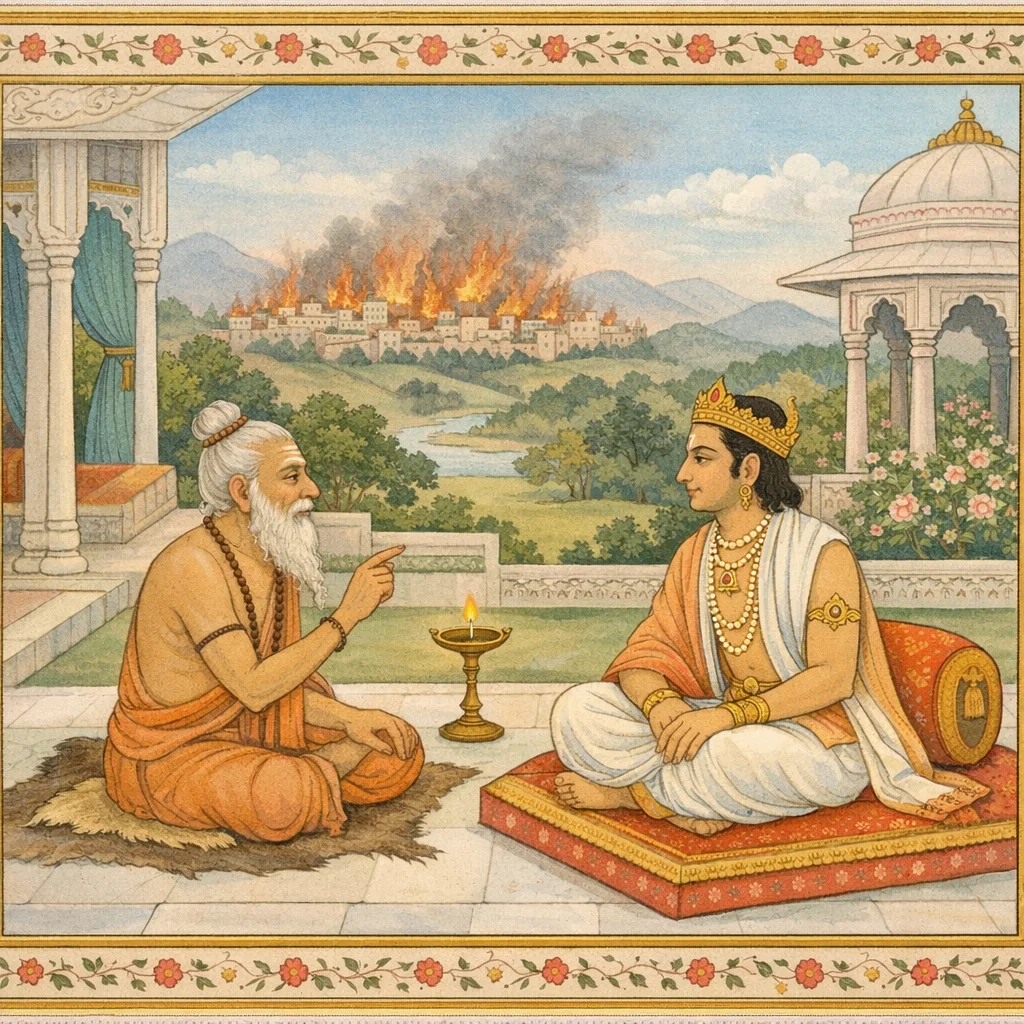
Chapter Arc: युधिष्ठिर, अपने कुल-नाश और धन-लोभ से उपजे पापों को स्मरण कर, भीष्म से पूछता है—यह ‘अर्थोद्धवा तृष्णा’ कैसे निवृत्त हो, जिसने हमें क्रूर और पापी बनाया? → भीष्म उत्तर में पुरातन इतिवृत्त उठाते हैं: माण्डव्य मुनि और विदेहराज जनक का संवाद। जनक का वैराग्य-घोष—‘मिथिला जल रही हो, तो भी मेरा कुछ नहीं जलता’—सुनकर प्रश्न तीखा होता है: राजसत्ता, वैभव और विषयों के बीच यह निर्लेपता कैसे संभव? → जनक का निर्णायक उपदेश: लौकिक और दिव्य सुख भी तृष्णाक्षय-सुख की ‘षोडशी कला’ तक नहीं पहुँचते; और जहाँ ‘ममत्व’ कल्पित होता है, वही वस्तु नाश पर परिताप बन जाती है—यहीं तृष्णा की जड़ (अहं-मम) पर प्रहार होता है। → माण्डव्य जनक-वचन से प्रसन्न होकर उसे पूजता है और मोक्षमार्ग का आश्रय लेता है; भीष्म के माध्यम से युधिष्ठिर को संकेत मिलता है कि पाप-प्रवृत्ति का मूल धन नहीं, तृष्णा और ममता है—इनका क्षय ही शान्ति है।
Shlokas
Verse 1
अफ-#-#रू- षट्सप्तत्याधिकद्विशततमो<ध्याय: तृष्णाके परित्यागके विषयमें माण्डव्य मुनि और जनकका संवाद युधिछिर उवाच भ्रातर: पितर: पौत्रा ज्ञातय: सुहृद: सुता: । अर्थहेतोह्ता: क्र्रैरस्माभि: पापकर्मभि:,युधिष्ठिरने पूछा--पितामह! हमलोग बड़े पापी और क्रूर हैं। हमने धनके लिये ही भाई, पिता, पौत्र, कुटुम्बीजन, सुहृद् और पुत्र--इन सबका संहार कर डाला। यह जो धनजनित तृष्णा है, इसीने हमसे बड़े-बड़े पाप करवाये हैं। हम इस तृष्णाको किस तरह दूर करें?
Yudhiṣṭhira said: “Grandfather, we are cruel and steeped in sin. For the sake of wealth alone, we—through wicked deeds—have caused the death of our brothers, fathers, grandsons, kinsmen, friends, and even sons. This craving born of riches has driven us into grievous wrongdoing. How can we uproot this thirst (tṛṣṇā)?”
Verse 2
येयमर्थोद्धिवा तृष्णा कथमेतां पितामह । निवर्तयेयं पापानि तृष्णया कारिता वयम्,युधिष्ठिरने पूछा--पितामह! हमलोग बड़े पापी और क्रूर हैं। हमने धनके लिये ही भाई, पिता, पौत्र, कुटुम्बीजन, सुहृद् और पुत्र--इन सबका संहार कर डाला। यह जो धनजनित तृष्णा है, इसीने हमसे बड़े-बड़े पाप करवाये हैं। हम इस तृष्णाको किस तरह दूर करें?
Yudhiṣṭhira said: “Grandfather, how may we turn back and uproot this craving that springs from wealth? Driven by desire, we have been made to commit sins. By what means can this thirst for gain be brought to an end?”
Verse 3
भीष्म उवाच अत्राप्युदाहरन्तीममितिहासं पुरातनम् । गीत॑ विदेहराजेन माण्डव्यायानुपृच्छते,भीष्मजी बोले--राजन्! एक बार माण्डव्य मुनिने विदेहगाज जनकसे ऐसा ही प्रश्न किया था, उसके उत्तरमें विदेहराजने जो उदगार प्रकट किया था, उसी प्राचीन इतिहासको विज्ञ पुरुष ऐसे अवसरोंपर उदाहरणके तौरपर दुहराया करते हैं
Bhishma said: “Here too, the learned cite an ancient precedent. When the sage Mandavya questioned him, the king of Videha, Janaka, expressed a teaching in reply; that old account is repeated as an illustrative example on occasions such as this.”
Verse 4
सुसुखं बत जीवामि यस्य मे नास्ति किंचन । मिथिलायां प्रदीप्तायां न मे दह्युति किंचन,राजा जनकने कहा था कि मैं बड़े सुखसे जीवन व्यतीत करता हूँ; क्योंकि इस जगत्की कोई भी वस्तु मेरी नहीं है। किसीपर भी मेरा ममत्व नहीं है। यदि सारी मिथिलामें आग लग जाय तो भी मेरा कुछ नहीं जलता है
Bhishma said: “Indeed, I live in great ease, for nothing whatsoever is mine. Even if Mithilā were to be set ablaze, nothing of mine would burn.” (This saying, attributed to King Janaka, teaches non-possessiveness: when the sense of ‘mine’ (mamatā) is relinquished, one remains inwardly unshaken amid loss, disaster, or upheaval.)
Verse 5
अर्था: खलु समृद्धा हि बाढं दु:खं विजानताम् | असमृद्धास्त्वपि सदा मोहयन्त्यविचक्षणान्,जो विवेकी हैं, उन्हें बड़े समृद्धिसम्पन्न विषय भी दुःखरूप ही जान पढ़ते हैं। परंतु अज्ञानियोंको तुच्छ विषय भी सदा मोहमें डाले रहते हैं। लोकमें जो कामजनित सुख है तथा जो स्वर्गका दिव्य एवं महान् सुख है, वे दोनों तृष्णाक्षयसे होनेवाले सुखकी सोलहवीं कलाकी भी तुलना पानेके योग्य नहीं हैं
Bhishma said: “To those who truly understand, even objects and enjoyments that appear highly prosperous are recognized as a source of intense suffering. Yet even meagre possessions and petty pleasures continually delude the undiscerning. The teaching points to inner discernment: craving makes all enjoyments unstable and binding, whereas the wise see through their glitter and turn toward freedom from desire.”
Verse 6
यच्च कामसुखं लोके यच्च दिव्यं महत्सुखम् । तृष्णाक्षयसुखस्यैते नाहत: षोडशीं कलाम्,जो विवेकी हैं, उन्हें बड़े समृद्धिसम्पन्न विषय भी दुःखरूप ही जान पढ़ते हैं। परंतु अज्ञानियोंको तुच्छ विषय भी सदा मोहमें डाले रहते हैं। लोकमें जो कामजनित सुख है तथा जो स्वर्गका दिव्य एवं महान् सुख है, वे दोनों तृष्णाक्षयसे होनेवाले सुखकी सोलहवीं कलाकी भी तुलना पानेके योग्य नहीं हैं
Bhishma said: Whatever pleasure arises from desire in this world, and whatever divine, great happiness is found in heaven—both of these do not equal even a sixteenth part of the happiness that comes from the exhaustion of craving. The wise, seeing clearly, recognize even abundant and refined enjoyments as bound up with suffering, while the ignorant remain continually deluded even by petty objects of sense.
Verse 7
यथैव श्ज् गो: काले वर्धमानस्य वर्धते । तथैव तृष्णा वित्तेन वर्धमानेन वर्धते,जिस प्रकार समयानुसार बड़े होते हुए बछड़ेका सींग भी उसके शरीरके साथ ही बढ़ता है, उसी प्रकार बढ़ते हुए धनके साथ उसकी तृष्णा भी बढ़ती जाती है
Bhīṣma said: Just as a cow’s horn grows along with the calf as time passes and it matures, so too does craving grow along with wealth as it increases. The teaching is that accumulation does not naturally bring contentment; without restraint, prosperity becomes fuel for ever-expanding desire.
Verse 8
किंचिदेव ममत्वेन यदा भवति कल्पितम् । तदेव परितापाय नाशे सम्पद्यते पुन:
Bhishma said: When even a little thing is imagined as ‘mine’ through possessiveness, that very attachment later becomes a source of torment, and in the end it again results in loss and destruction.
Verse 9
कोई भी वस्तु क्यों न हो, जब उसके प्रति ममता कर ली जाती है--वह वस्तु अपनी मान ली जाती है, तब नष्ट होनेपर वही संतापका कारण बन जाती है ।। न कामाननुरुद्धोत दुःखं कामेषु वै रति: । प्राप्पार्थमुपयुज्जीत धर्म कामान् विसर्जयेत्,इसलिये कामनाओं या भोगोंकी वृद्धिके लिये आग्रह नहीं रखना चाहिये। भोगोंमें जो आसक्ति होती है, वह दुःखरूप ही है। धन पाकर भी उसे धर्ममें ही लगा देना चाहिये। काम भोगोंको तो सर्वथा त्याग ही देना चाहिये
Bhishma teaches that clinging to sense-objects only multiplies sorrow: attachment to pleasures is itself a form of suffering. Therefore one should not stubbornly pursue the growth of desires and enjoyments. Whatever wealth or means one obtains should be employed in the service of dharma, while indulgent pleasures are to be relinquished altogether.
Verse 10
विद्वान् सर्वेषु भूतेषु आत्मना सोपमो भवेत् | कृतकृत्यो विशुद्धात्मा सर्व त्यजति चैव ह,विद्वान् पुरुष सभी प्राणियोंके प्रति अपने समान ही भाव रखे। इससे वह कृतकृत्य और शुद्धचित्त होकर समस्त दोषोंको त्याग देता है
Bhishma said: A wise person should regard all beings as equal to oneself, measuring them by the same inner standard. By cultivating this impartial empathy, one becomes fulfilled in duty and purified in mind, and thus casts off every fault and blemish.
Verse 11
उभे सत्यानृते त्यक्त्वा शोकानन्दौ प्रियाप्रिये भयाभयं च संत्यज्य स प्रशान्तो निरामय:,वह सत्य-असत्य, हर्ष-शोक, प्रिय-अप्रिय तथा भय-अभय आदि सभी द्वद्धोंको त्यागकर अत्यन्त शान्त और निर्विकार हो जाता है
Bhīṣma said: Having renounced both truth and untruth as objects of clinging, and abandoning the pairs of opposites—sorrow and joy, the dear and the undesired, fear and fearlessness—one becomes utterly tranquil and free from inner affliction.
Verse 12
या दुस्त्यजा दुर्मतिभिर्या न जीर्य॑ति जीर्यत: । योडसौ प्राणान्तिको रोगस्तां तृष्णां त्यजत: सुखम्,खोटी बुद्धिवाले मूढ़ पुरुषोंके लिये जिसका त्याग करना कठिन है, जो शरीरके जराजीर्ण हो जानेपर भी स्वयं जीर्ण न होकर नयी-नवेली ही बनी रहती है तथा जिसे प्राणान््तकालतक रहनेवाला रोग माना गया है, उस तृष्णाको जो त्याग देता है, उसीको परम सुख मिलता है
Bhishma said: That craving which is hard for the misguided to abandon, which does not grow old even when the body grows old, and which is regarded as a disease that lasts until one’s final breath—whoever casts off that thirst, for him there is true happiness.
Verse 13
चारित्रमात्मन: पश्यंश्रन्द्रशुद्धमनामयम् । धर्मात्मा लभते कीर्ति प्रेत्य चेह यथासुखम्,जो अपने सदाचारको चन्द्रमाके समान विशुद्ध, उज्ज्वल एवं निर्विकार देखता है, वह धर्मात्मा पुरुष इहलोक और परलोकमें कीर्ति एवं उत्तम सुख पाता है
Bhishma says: One who looks upon his own conduct as pure as the moon—bright, stainless, and free from blemish—such a righteous person attains good fame, and enjoys fitting happiness both here in this world and after death in the next.
Verse 14
राज्ञस्तद् वचन श्रुत्वा प्रीतिमानभवद् द्विज: । पूजयित्वा च तद् वाक््यं माण्डव्यो मोक्षमाश्रित:,राजाके ये वचन सुनकर ब्रह्मर्षि माण्डव्य बड़े प्रसन्न हुए। उनके कथनकी प्रशंसा करके मुनिने मोक्षमार्गका आश्रय लिया
Hearing the king’s words, the brahmin became filled with joy. Honouring and commending that statement, the sage Māṇḍavya embraced the path that leads to liberation (mokṣa), turning from worldly concerns in accordance with dharma.
Verse 275
इस प्रकार श्रीमहाभारत शान्तिपर्वके अन्तर्गत गोक्षधर्मपर्वमें नारद और आसितदेवलका संवादविषयक दो सौ पचहतत्तरवाँ अध्याय पूरा हुआ
Thus ends the two hundred and seventy-fifth chapter in the Śānti Parva of the Śrī Mahābhārata, within the section known as the Gokṣa-dharma Parva, presenting the dialogue between Nārada and Āsita Devala.
Verse 276
इति श्रीमहाभारते शान्तिपर्वणि मोक्षधर्मपर्वणि माण्डव्यजनकसंवादे षट्सप्तत्यधिकद्विशततमो<ध्याय:
Thus ends, in the Śrī Mahābhārata, within the Śānti Parva—specifically the Mokṣa-dharma section—the dialogue between Māṇḍavya and King Janaka: the two-hundred-and-seventy-sixth chapter.
Frequently Asked Questions
Yudhiṣṭhira seeks a stable method to avoid being overwhelmed by the triad of grief, suffering, and fear of death—i.e., how to live and rule without chronic existential anxiety.
Cultivate a witness-like equanimity: do not fixate on pleasure or recoil from pain, restrain the senses, relinquish craving and pride, and treat gain/loss as unstable outcomes governed by time and causality.
Yes, implicitly: Samaṅga states that through sustained tapas and realized understanding, sorrow no longer overpowers him—presenting liberation from grief and fear as the practical result of disciplined insight.