Adhyaya 255
Jājali–Tulādhāra-saṃvāda: Yajña, Vṛtti, and Ātma-tīrtha (जाजलि-तुलाधार-संवादः)
Upa-parva: Mokṣa-dharma (Dialogues on Liberation and Ethical Renunciation)
Adhyāya 255 presents a structured disputation. Jājali challenges Tulādhāra by defending agriculture and the sacrificial economy: food arises from cultivation; humans live by cattle and plants; yajña is socially sustaining, and rejecting it seems to threaten worldly continuity. Tulādhāra replies by rejecting the label of nāstika while critiquing ritual distortion driven by greed and ignorance of Vedic intent. He reframes “offering” as ethical and intellectual practices—salutation, self-study, medicinal and non-harmful supports—arguing that acquisitive giving can generate theft and misconduct. The chapter links the moral quality of sacrificer and priests to the character of the populace, and describes a causal chain (offering → sun → rain → food → beings) while warning that fruit-seeking ritual breeds hypocrisy and harm. It then turns toward inner sufficiency: the wise do not seek heaven through ostentatious rites; they follow the path of the good with minimal injury. Tulādhāra advances the doctrine of ātma-tīrtha—self as the primary pilgrimage—asserting that disciplined conduct and reasoned dharma lead to auspicious worlds. Bhīṣma closes by endorsing Tulādhāra’s rationally grounded, socially practiced dharmas as those consistently served by the virtuous.
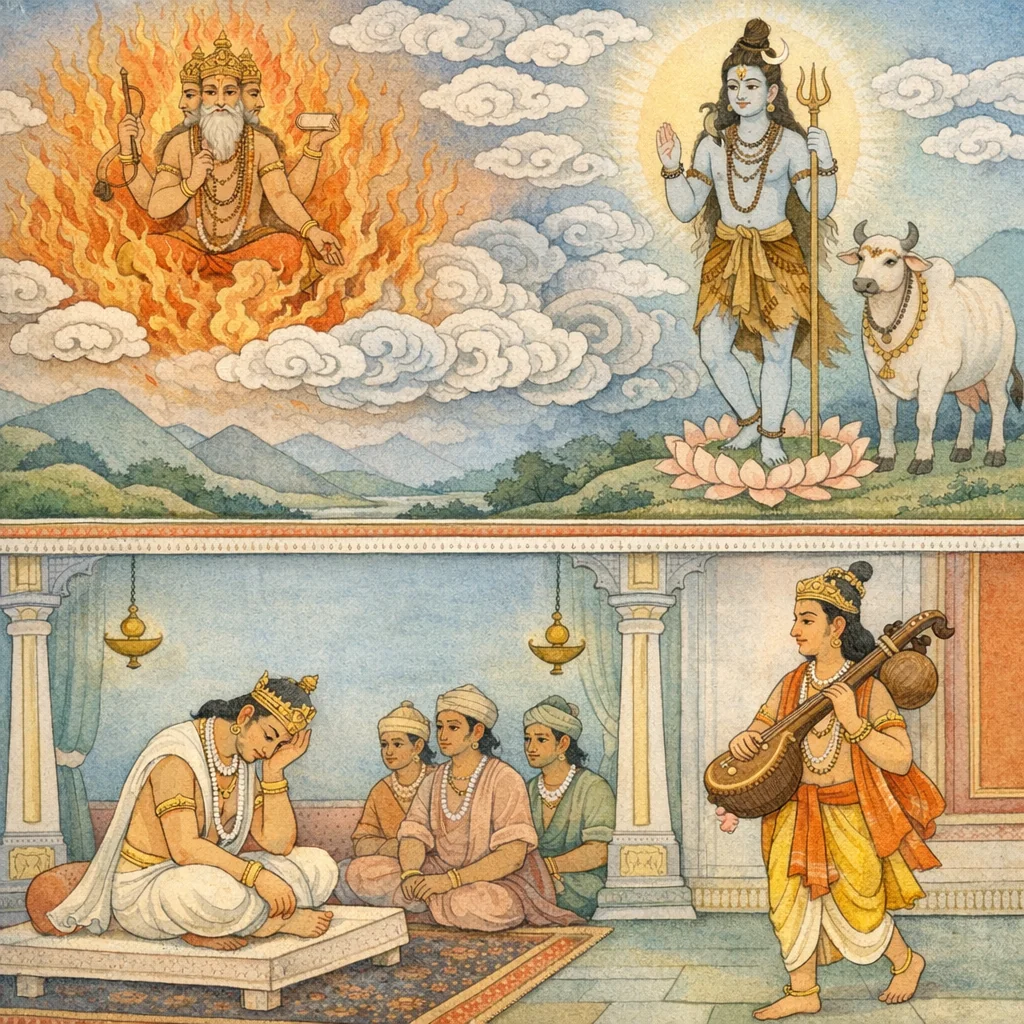
Chapter Arc: युधिष्ठिर रणभूमि में असंख्य मृत राजाओं की ओर देखकर विस्मित-व्याकुल होकर भीष्म से पूछते हैं—इतने महाबली, नागायुत-बल वाले नरेशों को आखिर कौन मार सका? → युधिष्ठिर का प्रश्न युद्ध-कारण से आगे बढ़कर ‘मृत्यु’ की अदृश्य सत्ता पर टिक जाता है—जब समान तेज-बल वाले वीर भी गिर जाते हैं, तो संहार का वास्तविक कर्ता कौन है? भीष्म उत्तर में प्राचीन कथा का द्वार खोलते हैं: कृतयुग में अकम्पन नामक राजा शत्रुवश होकर पुत्रशोक से दग्ध है और उसी शोक-क्रोध की धारा उसे महर्षि नारद के सान्निध्य तक ले आती है। → कथा का शिखर उस ब्रह्म-क्रोध में है जहाँ ब्रह्मा के रोष से अग्नि प्रकट होकर स्वर्ग-पृथ्वी-अंतरिक्ष सहित चराचर जगत को दग्ध करने लगती है; तब प्रजाहित की चिंता से शिव (स्थाणु/शम्भु) का आवाहन होता है और ब्रह्मा तेज से ज्वलित होकर उनसे वर-याचना/प्रार्थना के रूप में संवाद आरम्भ करते हैं—‘शम्भो, आज मैं तुम्हारा प्रिय करूँ; जो तुम्हारे हृदय में है, कहो।’ → भीष्म युधिष्ठिर को संकेत देते हैं कि मृत्यु और संहार किसी एक योद्धा की व्यक्तिगत शक्ति नहीं, बल्कि ब्रह्माण्डीय व्यवस्था (देव-तत्त्वों का संतुलन, क्रोध-शमन, प्रजाहित) के अधीन है; कथा ‘मृत्यु–प्रजापति संवाद’ की भूमिका बनकर यह स्थापित करती है कि विनाश भी धर्म-रक्षा और सृष्टि-नियमन का अंग है। → ब्रह्मा द्वारा शिव को वर देने की घोषणा के साथ संवाद का वास्तविक विषय—मृत्यु की स्थापना/नियमन और प्रजाओं के हित का उपाय—अगले प्रसंग में खुलने को छोड़ दिया जाता है।
Shlokas
Verse 1
युधिष्ठिरने पूछा--पितामह! ये जो असंख्य भूपाल (प्राणशून्य होकर) इस भूतलपर सेनाके बीचमें सो रहे हैं इनकी ओर दृष्टिपात कीजिये। ये महान् बलवान् थे तो भी संज्ञाहीन होकर पड़े हैं
Yudhishthira said: “Grandfather, look upon these countless kings who, bereft of life, now lie upon this earth amid the armies. Though they were once mighty and powerful, they have fallen here senseless and inert.”
Verse 2
एकैकशो भीमबला नागायुतबलास्तथा । एते हि निहता: संख्ये तुल्यतेजोबलैनरै:,इनमेंसे एक-एक नरेश भयानक बलसे सम्पन्न था। दस-दस हजार हाथियोंकी शक्ति रखता था। वे सब-के-सब इस युद्धस्थलमें अपने समान ही तेजस्वी और बलवान् मनुष्योंद्वारा मारे गये हैं
Yudhiṣṭhira said: “Each of those kings, one by one, possessed terrifying might—each with the strength of ten thousand elephants. Yet all of them have been slain on the battlefield by men equal to them in brilliance and power.”
Verse 3
नैषां पश्यामि हन्तारं प्राणिनां संयुगे परम् विक्रमेणोपसम्पन्नास्तेजोबलसमन्विता:,इन प्राणशक्ति-सम्पन्न नरेशोंको कोई दूसरा वीर संग्रामभूमिमें मार सके--ऐसा मुझे नहीं दिखायी देता था; क्योंकि वे सब-के-सब बल-पराक्रमसे सम्पन्न और तेजस्वी थे
Yudhiṣṭhira said: “In the clash of battle I could see no one who might truly be the slayer of these men. Endowed with consummate prowess, and possessed of radiant energy and strength, they appeared beyond the reach of any other warrior’s might.”
Verse 4
अथ चेमे महाप्राज्ञा: शेरते हि गतासव: । मृता इति च शब्दो<यं वर्तत्येषु गतासुषु,किंतु इस समय ये महाबुद्धिमान् भूपाल निष्प्राण होकर पड़े हैं। इनके प्राण निकल जानेपर इनके लिये मृत शब्दका व्यवहार होता है; अर्थात् “ये मर गये” ऐसा कहा जाता है
Yudhiṣṭhira said: “And now these highly wise kings lie here, bereft of life. When the life-breath has departed, the word ‘dead’ is applied to such beings—people say, ‘They have died.’”
Verse 5
इमे मृता नृपतय: प्रायशो भीमविक्रमा: । तत्र मे संशयो जात: कुतः संज्ञा मृता इति,ये जो नरेश मृत्युको प्राप्त हो गये हैं, इनमें बहुत-से भयानक पराक्रमसे सम्पन्न हैं। यहाँ मेरे मनमें यह संदेह होता है कि इन्हें मृत नाम कैसे दिया गया? किसकी मृत्यु होती है? किससे मृत्यु होती है? और किस कारणसे मृत्यु यहाँ समस्त प्राणियोंका अपहरण करती है? देवतुल्य पितामह! मुझे यह सब बतानेकी कृपा करें
Yudhiṣṭhira said: “These kings have died—most of them possessed of dreadful prowess. Yet a doubt arises in me: why are they designated ‘dead’? Whose is this ‘death’? From what does death arise, and by what cause does death here carry away the life of all beings? O grandsire, equal to the gods, please tell me all this.”
Verse 6
कस्य मृत्यु: कुतो मृत्यु: केन मृत्युरिह प्रजा: । हरत्यमरसंकाश तनमे ब्रूहि पितामह,ये जो नरेश मृत्युको प्राप्त हो गये हैं, इनमें बहुत-से भयानक पराक्रमसे सम्पन्न हैं। यहाँ मेरे मनमें यह संदेह होता है कि इन्हें मृत नाम कैसे दिया गया? किसकी मृत्यु होती है? किससे मृत्यु होती है? और किस कारणसे मृत्यु यहाँ समस्त प्राणियोंका अपहरण करती है? देवतुल्य पितामह! मुझे यह सब बतानेकी कृपा करें
Yudhiṣṭhira said: “Whose is death? From where does death arise? By what agency does death occur here, and how does it carry off living beings? O grandsire, radiant like the immortals, tell me this.”
Verse 7
भीष्म उवाच पुरा कृतयुगे तात राजा ह्यासीदकम्पन: । स शत्रुवशमापन्न: संग्रामे क्षीणवाहन:,भीष्मजीने कहा--तात! प्राचीन सत्ययुगकी बात है, अकम्पन नामके एक राजा थे। एक समय संग्राममें उनका रथ नष्ट हो गया और वे शत्रुके वशमें पड़ गये
Bhishma said: “In former times, dear one, in the Kṛta Yuga there lived a king named Akampana. Once, in battle, his chariot and means of conveyance were ruined; weakened and left without support, he fell into the enemy’s power.”
Verse 8
तस्य पुत्रो हरिनाम नारायणसमो बले । स शत्रुभिरहत: संख्ये सबल: सपदानुग:,उनके एक पुत्र था, जिसका नाम था हरि। वह बलमें भगवान् नारायणके ही समान जान पड़ता था, परंतु उस समराज्णमें शत्रुओंने सेना और सेवकोंसहित उस राजकुमारको मार गिराया
Bhishma said: “He had a son named Hari, whose strength seemed equal to that of Narayana Himself. Yet in that king’s realm, enemies struck him down in battle—killing the prince along with his forces and attendants.”
Verse 9
स राजा शत्रुवशग: पुत्रशोकसमन्वित: । यद्च्छया शान्तिपरो ददर्श भुवि नारदम्,राजा अकम्पन स्वतन्त्र भूपाल न रहकर शत्रुके अधीन हो गये तथा पुत्रके शोकमें डूबे रहने लगे। वे शान्तिका उपाय ढूँढ़ रहे थे। इतनेहीमें दैवेच्छासे भूतलपर विचरते हुए देवर्षि नारदका उन्हें दर्शन हुआ
Bhishma said: That king, having fallen under the control of his enemies and overwhelmed by grief for his son, was intent on finding peace. By chance, as ordained by fate, he then beheld Narada, the divine seer, moving upon the earth—an encounter suggesting that even in defeat and sorrow, guidance toward reconciliation and right conduct may arrive through providence.
Verse 10
तस्मै स सर्वमाचष्ट यथावृत्तं जनेश्वर: । शन्रुभिग्रहणं संख्ये पुत्रस्य मरणं तथा,राजाने युद्धस्थलमें शत्रुओंद्वारा अपने पकड़े जाने एवं पुत्रकी मृत्यु होनेका सारा समाचार यथावत् रूपसे नारदजीके सामने कह सुनाया
Bhishma said: Then the king, lord of his people, related everything to him exactly as it had occurred—how, in the battle, he had been seized by the enemies, and how his son had met his death. The verse underscores the ethical weight of truthful reporting and the sober acceptance of the consequences of war.
Verse 11
तस्य तद् वचन श्रुत्वा नारदो5थ तपोधन: । आख्यानमिदमाचष्ट पुत्रशोकापहं तदा,राजाका वह कथन सुनकर तपस्याके धनी नारदजीने उस समय उनसे यह प्राचीन इतिहास कहना आरम्भ किया, जो उनके पुत्रशोकको मिटानेवाला था
Bhishma said: Hearing the king’s words, Narada—rich in ascetic power—then began to recount this ancient narrative at that time, a tale intended to remove the grief of a son’s loss. The episode frames consolation not as mere comfort, but as instruction: sorrow is eased by understanding dharma, the nature of fate, and the limits of human control.
Verse 12
नारद उवाच राजन् शृणु समाख्यानमद्येदं बहुविस्तरम् । यथावृत्तं श्रुतं चैव मयेदं वसुधाधिप,नारदजी बोले--राजन्! आज यह अत्यन्त विस्तृत आख्यान सुनो। पृथ्वीनाथ! मैंने इसे जैसा सुना है, वह यथावत् वृत्तान्त तुम्हें सुना रहा हूँ
Narada said: “O King, listen today to this highly detailed account. O lord of the earth, I shall relate it to you exactly as it occurred and as I have heard it.”
Verse 13
प्रजा: सृष्टवा महातेजा: प्रजासगे पितामह: । अतीव वृद्धा बहुला नामृष्यत पुनः प्रजा:,प्रजाकी सृष्टि करते समय महातेजस्वी पितामह ब्रह्माने जब बहुत-से प्राणियोंकी सृष्टि कर डाली, तब उनकी संख्या बहुत अधिक हो गयी। इतनी अधिक प्रजाओंका होना ब्रह्माजीसे सहन न हो सका
Narada said: Having created living beings, the Grandsire Brahmā—of great splendor—found that, in the very act of creation, the population had grown exceedingly vast and numerous. The sheer excess of beings became intolerable to him, prompting him to reconsider how creation should proceed in a sustainable and orderly way.
Verse 14
न हान्तरमभूत् किज्चित् क्वचिज्जन्तुभिरच्युत । निरुच्छवासमिवोजन्नद्ध त्रलोक्यमभवन्नूप,अपने धर्मसे कभी च्युत न होनेवाले नरेश! उस समय कहीं कोई थोड़ा-सा भी ऐसा स्थान नहीं रह गया, जो जीव-जन्तुओंसे भरा न हो। सारी त्रिलोकी अवरुद्ध हो गयी। लोगोंका कहीं साँस लेना भी असम्भव-सा हो गया--सबका दम घुटने लगा
Nārada said: “O Acyuta—O king who never swerves from dharma—at that time there remained nowhere even the slightest open space that was not filled with living creatures. The three worlds became as though blocked up; it was as if people could not even draw breath—everyone felt choked.”
Verse 15
तस्य चिन्ता समुत्पन्ना संहारं प्रति भूपते । चिन्तयन् नाध्यगच्छच्च संहारे हेतुकारणम्,भूपाल! अब ब्रह्माजीके मनमें प्रजाके संहारकी--उनकी संख्या घटानेकी चिन्ता उत्पन्न हुई। वे बहुत देरतक सोचते-विचारते रहे, परंतु प्रजाके संहारका कोई युक्तियुक्त कारण ध्यानमें नहीं आया
Nārada said: “O king, in his mind there arose a concern about bringing about a dissolution—reducing the multitude of creatures. Yet, though he reflected for a long time, he could not discern any sound and fitting cause that would justify the destruction of the beings.”
Verse 16
तस्य रोषान्महाराज खेभ्योअग्निरुदतिष्ठत । तेन सर्वा दिशो राजन् ददाह स पितामह:,महाराज! उस समय रोषवश ब्रह्माजीके नेत्र आदि इन्द्रियगोलकोंसे अग्नि प्रकट हो गयी। राजन! उस अग्निसे पितामहने सम्पूर्ण दिशाओंको दग्ध करना आरम्भ किया
Nārada said: “O great king, from his wrath a fire sprang forth from the apertures of his sense-organs. With that fire, O king, the Grandsire began to burn all the directions.”
Verse 17
ततो दिवं भुवं खं च जगच्च सचराचरम् । ददाह पावको राजन् भगवत्कोपसम्भव:,राजन्! तब भगवान् ब्रह्माके क्रोधसे प्रकट हुई वह आग स्वर्ग, पृथ्वी, अन्तरिक्ष तथा चराचर प्राणियोंसहित सम्पूर्ण जगत्को जलाने लगी
Nārada said: “Then, O king, the fire that had arisen from the wrath of the Blessed Lord blazed forth and began to burn the whole universe—heaven, earth, and the mid-region—together with all beings, moving and unmoving.”
Verse 18
तत्रादहान्त भूतानि जड़मानि ध्रुवाणि च | महता क्रोधवेगेन कुपिते प्रपितामहे
Nārada said: “There, when the Prāpitāmaha (the Grandsire) was enraged, he burned up the beings—both the inert and the steadfast—driven by a mighty surge of wrath.”
Verse 19
प्रपितामह ब्रह्माके कुपित होनेपर उनके क्रोधके महान् वेगसे सभी स्थावर-जजड़म प्राणी दन्ध होने लगे ।। ततो<थध्वरजट: स्थाणुर्वेदाध्वरपति: शिव: । जगाम शरण देवो ब्रह्माणं परवीरहा,तब यज्ञ ही जिनकी जटाएँ हैं तथा जो वेदों और यज्ञोंके प्रतिपालक हैं, वे शत्रुवीरोंका संहार करनेवाले कल्याणकारी भगवान् शिव ब्रह्माजीकी शरणमें गये
Nārada said: Then the blessed Lord Śiva—called Sthāṇu, whose matted locks are like the sacrificial rite itself, the guardian of the Vedas and of sacrifice, and the slayer of hostile heroes—went for refuge to Brahmā. In the background, when Brahmā’s anger flared with tremendous force, beings of every kind—moving and unmoving—began to be scorched; therefore Śiva sought Brahmā’s protection to avert the destructive surge and restore cosmic order.
Verse 20
तस्मिन्नभिगते स्थाणौ प्रजानां हितकाम्यया । अब्रवीत् परमो देवो ज्वलन्निव तदा शिवम्,प्रजावर्गके हितकी इच्छासे महादेवजीके अपने सामने आनेपर तेजसे जलते हुए-से परमदेव ब्रह्माजी उनसे इस प्रकार बोले--
When Sthāṇu (Śiva) had thus come, intent on the welfare of creatures, the Supreme God (Brahmā), blazing as it were with radiance, then addressed Śiva.
Verse 21
करवाण्यद्य क॑ काम॑ वराहोंडसि मतो मम । कर्ता हास्मि प्रियं शम्भो तव यद् हृदि वर्तते,'शम्भो! मैं तुम्हें वर पानेके योग्य समझता हूँ, बोलो, आज तुम्हारी कौन-सी इच्छा पूर्ण करूँ? तुम्हारे हृदयमें जो भी प्रिय मनोरथ हो, उसे मैं पूर्ण करूँगा”
Narada said: “O Śambhu, I deem you worthy to receive a boon. Tell me—what desire of yours shall I fulfill today? Whatever cherished wish abides in your heart, I will bring it to completion.”
Verse 256
इति श्रीमहा भारते शान्तिपर्वणि मोक्षधर्मपर्वणि मृत्युप्रजापतिसंवादोपक्रमे षट्पञ्चाशदधिकद्विशततमो<ध्याय:
Thus, in the revered Mahābhārata, within the Śānti Parva—specifically the Mokṣadharma section—begins the introductory portion of the dialogue between Mṛtyu (Death) and Prajāpati. Here concludes the two-hundred-and-fifty-sixth chapter (the 256th adhyāya).
Frequently Asked Questions
Whether dharma is best secured through externally maintained sacrificial institutions tied to livelihood and social continuity, or through internalized discipline that minimizes harm and resists greed-driven ritual economies.
Ritual value depends on intention and ethical quality; practices such as self-restraint, truthfulness, study, and non-injury can function as “offerings,” and the self (ātman) is presented as the most reliable tīrtha for moral purification.
Yes: Bhīṣma explicitly affirms Tulādhāra’s dharmas as rationally coherent (upapatti-sampanna) and habitually practiced by the virtuous, functioning as an internal validation marker for the discourse within Śānti-parva.