Adhyaya 248
मृत्युकारणप्रश्नः / Inquiry into the Cause and Designation of Death
Upa-parva: Mṛtyu-hetu-nirūpaṇa (Inquiry into the Cause and Meaning of Death) — embedded instructional episode
Yudhiṣṭhira observes that many powerful earth-protectors (pṛthivīpāla) lie motionless on the ground, each formerly of formidable strength, yet now described uniformly as ‘mṛta’ (dead). He frames a semantic-philosophical doubt: if their vigor and heroic capacity were evident, who is the ‘slayer’ in such a context, and on what basis does the designation ‘dead’ apply to those who have lost life-breath (gatāsu)? He then asks Bhīṣma to specify whose death it is, whence death arises, and by what agency death ‘takes away’ beings. Bhīṣma replies by shifting to an instructive precedent: in kṛtayuga, King Avikampaka, defeated and grieving his son Hari’s death, encounters Nārada. Nārada promises an extensive account to remove grief, then begins a cosmological explanation: after creating beings, Brahmā confronts excessive proliferation such that the worlds become crowded; contemplating dissolution, a fire arises from the sky due to Brahmā’s wrath and begins consuming the cosmos. Śiva (Sthāṇu), concerned for beings, approaches Brahmā for refuge; Brahmā, pleased, offers a boon—setting the stage for a regulated solution to destruction and, by implication, a principled account of mortality and cosmic balance.
Chapter Arc: व्यास आत्म-तत्त्व की देहरी पर श्रोता को खड़ा करते हैं—सृष्टि के गुणों को रचने वाला स्वभाव-युक्त तत्त्व कौन है, और उन गुणों पर अधिष्ठान करने वाला ‘क्षेत्रज्ञ’ कौन। → दो मतों का द्वंद्व उभरता है: एक पक्ष कहता है कि तत्त्वज्ञान से गुण नष्ट हो जाते हैं और फिर प्रवृत्ति का पता नहीं चलता; दूसरा पक्ष निवृत्ति को ही परम मानता है। व्यास कहते हैं—दोनों को तौलकर बुद्धि के अनुसार सिद्धान्त निश्चित करो। इसी बीच अज्ञानी की दशा नदी में डूबते मनुष्य जैसी बताई जाती है—संसार में उतरते ही वह ताम्य (कष्ट) पाता है। → ‘तैरना जानने वाला’ विद्वान का रूपक चरम पर पहुँचता है—जो आत्मा को केवल ज्ञान-रूप में जान लेता है, वह जल में भी स्थिर रहता है, भय से परे चलता है; परलोक का जो महाभय अज्ञानी को कंपाता है, वही विद्वान के लिए नहीं रहता, क्योंकि उसकी गति सनातनी है। → विद्वान की दृष्टि-शुद्धि स्थापित होती है: वह रोगी-आतुर लोक को देखकर दोषारोपण या शोक में नहीं गिरता; कृत-अकृत दोनों को जानकर कुशल रहता है। निष्काम कर्म का विधान भी जोड़ा जाता है—अनभिसंधि (फल-आकांक्षा) रहित कर्म पूर्व के सकाम/अशुभ कर्मों को भी क्षीण कर देता है। → ज्ञान और निष्काम कर्म के इस संगम के बाद प्रश्न खुला रह जाता है—साधक अपने स्वभाव में रहते हुए किस प्रकार निरन्तर ‘अनभिसंधि’ को स्थिर रखे, ताकि प्रवृत्ति में रहते हुए भी निवृत्ति का फल पा सके?
Shlokas
Verse 1
भीकम (2 अमान एकोनपज्चाशर्दाधिकद्विशततमो< ध्याय: ज्ञानके साधन तथा ज्ञानीके लक्षण और महिमा व्यास उवाच सृजते तु गुणान् सच्चं क्षेत्रज्ञस्त्वधितिष्ठति । गुणान् विक्रियत: सर्वानुदासीनवदी श्वर:,व्यासजी कहते हैं--पुत्र! प्रकृति ही गुणोंकी सृष्टि करती है। क्षेत्रज्--आत्मा तो उदासीनकी भाँति उन सम्पूर्ण विकारशील गुणोंको देखा करता है। वह स्वाधीन एवं उनका अधिष्ठाता है इस प्रकार श्रीमहाभारत शान्तिपर्वके अन्तर्गत मोक्षधर्मपर्वमें शुकदेवका अनुप्रश्नविषयक दो सौ उनचासवाँ अध्याय पूरा हुआ ॥/ २४९ ॥। अपन बक। हक २ पज्चाशदधिकद्वधिशततमो< ध्याय: परमात्माकी प्राप्तिका साधन, संसार-नदीका वर्णन और ज्ञानसे ब्रह्मकी प्राप्ति शुक उवाच यस्माद् धर्मात् परो धर्मों विद्यते नेह कश्नन । यो विशिष्ट श्न धर्मेभ्यस्तं भवान् प्रव्रवीतु मे
Vyāsa said: “Truly, it is Prakṛti that brings forth the guṇas. The knower of the field—the Self—presides over them; like one who remains detached, the Lord merely witnesses all those guṇas as they undergo their various transformations.”
Verse 2
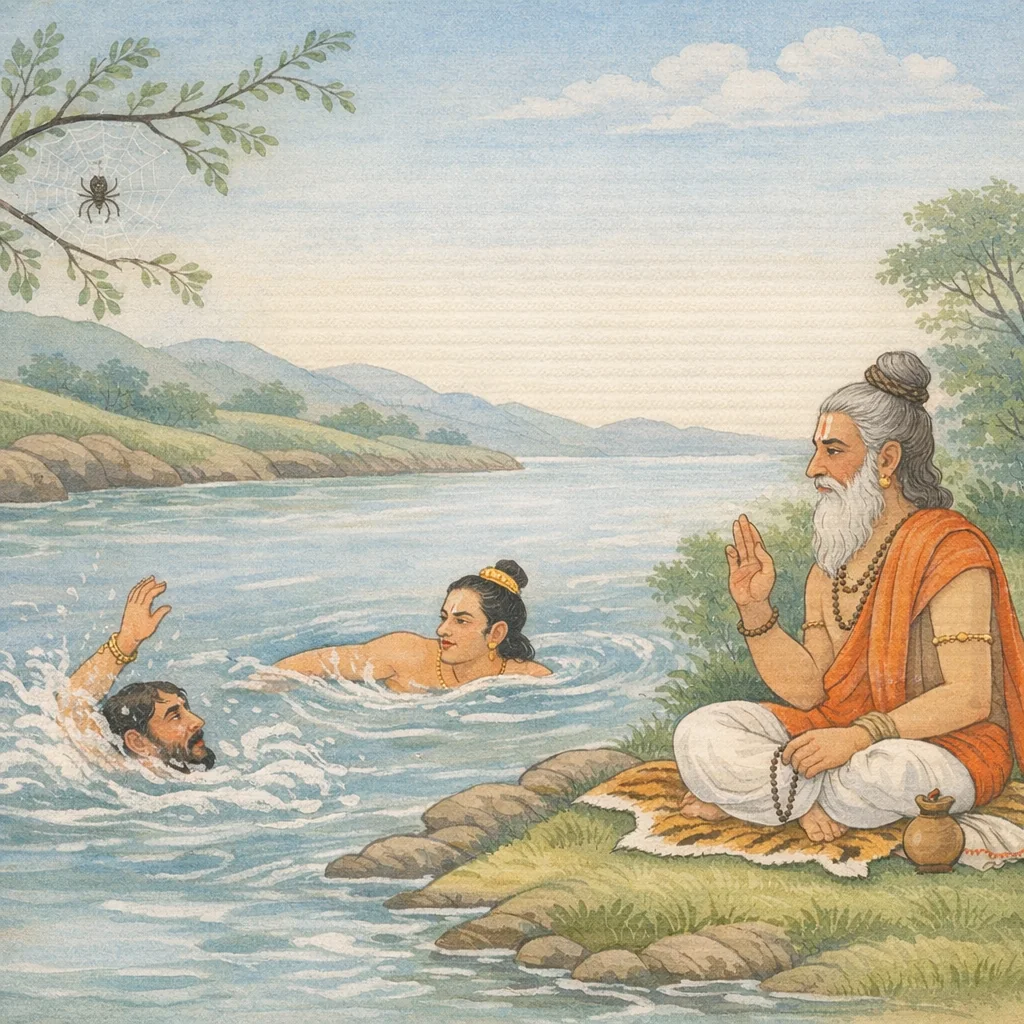
स्वभावयुक्त तत् सर्व यदिमान् सृजते गुणान् । ऊर्णनाभिर्यथा सूत्र सृजते तद्गुणांस्तथा,जैसे मकड़ी अपने शरीरसे तन्तुओंकी सृष्टि करती है, उसी प्रकार प्रकृति भी समस्त त्रिगुणात्मक पदार्थोंको उत्पन्न करती है। प्रकृति जो इन सब विषयोंकी सृष्टि करती है, वह सब उसके स्वभावसे ही होता है
Vyāsa said: All this that brings forth these qualities does so in accordance with its own inherent nature. Just as a spider spins out its thread from itself, so does Prakṛti, by its own constitution, generate the manifold products constituted of the three guṇas.
Verse 3
प्रध्वस्ता न निवर्तन्ते प्रवृत्तिनोपलभ्यते । एवमेके व्यवस्यन्ति निवृत्तिरिति चापरे,किन्हींका मत है कि तत्त्वज्ञानसे जब गुणोंका नाश कर दिया जाता है, तब भी वे सर्वथा नष्ट नहीं होते; किंतु तत्त्वज्ञके लिये उनकी उपलब्धि नहीं होती अर्थात् उसका उनसे सम्बन्ध नहीं रहता। दूसरे लोग मानते हैं कि उनकी सर्वथा निवृत्ति हो जाती है अर्थात् उनका अस्तित्त्व नहीं रहता
Vyāsa said: “Some hold that even when the guṇas are ‘destroyed’ through true knowledge, they do not utterly cease; rather, for the knower they are no longer apprehended—there is no operative connection with them. Others maintain that there is complete cessation, that is, a total withdrawal in which they no longer exist at all.”
Verse 4
उभयं सम्प्रधार्यतदध्यवस्येद् यथामति । अनेनैव विधानेन भवेद् गर्भशयो महान्,इन दोनों मतोंपर अपनी बुद्धिके अनुसार विचार करके सिद्धान्तका निश्चय करे। इस प्रकार निश्चय करनेसे (बार-बार) गर्भमें शयन करनेवाला जीव महान् हो जाता है
Vyāsa said: “Having carefully weighed both views, one should, according to one’s own discernment, arrive at a settled conclusion. By deciding in this very manner—through reflective examination and firm resolve—the embodied being who repeatedly lies in the womb (i.e., undergoes rebirth) becomes ‘great’: his inner stature grows through right understanding and deliberate choice.”
Verse 5
अनादिनिधनो ह्ात्मा त॑ बुद्ध्वा विचरेन्नर: । अक्रुध्यन्नप्रद्ृष्यंश्व नित्यं विगतमत्सर:,आत्मा आदि और अन्तसे रहित है। उसे जानकर मनुष्य सदा हर्ष, क्रोध और ईर्ष्या- देषसे रहित हो विचरता रहे
Vyāsa said: Knowing the Self to be without beginning and without end, a person should move through life accordingly—ever free from anger, not given to fault-finding or hostile looks, and constantly rid of envy and jealousy.
Verse 6
इत्येवं हृदयग्रन्थिं बुद्धिचिन्तामयं दूढम् । अनित्यं सुखमासीत अशोचंश्छिन्नसंशय:,साधकको चाहिये कि बुद्धिके चिन्ता आदि धर्मोंसे सुदृढ़ हुई हृदयकी अविद्यामयी अनित्य ग्रन्थिको उपर्युक्त प्रकारसे काटकर शोक और संदेहसे रहित हो सुखपूर्वक परमात्मस्वरूपमें स्थित हो जाय
Vyāsa said: “Thus, having cut through the heart’s knot—firmly tightened by the mind’s and intellect’s habitual brooding—one should abide in a happiness that is not dependent on what is transient, becoming free from grief and with all doubt severed, resting steadily in the Self.”
Verse 7
ताम्येयु: प्रच्युता: पृथ्व्या यथा पूर्णा नदीं नरा: | अवगाढा हाविद्वांसो विद्धि लोकमिमं तथा,जैसे तैरनेकी कला न जाननेवाले मनुष्य यदि किनारेकी भूमिसे जलपूर्ण नदीमें गिर पड़ते हैं तो गोते खाते हुए महान् क्लेश सहन करते हैं; उसी प्रकार अज्ञानी मनुष्य इस संसार-सागरमें ड्ूबकर कष्ट भोगते रहते हैं--ऐसा समझो
Vyāsa said: Just as men who have fallen from the riverbank into a river swollen to the brim—lacking the skill to swim—sink and struggle, enduring great distress, so too the ignorant, plunged into this world-ocean, keep suffering. Understand it in this way.
Verse 8
नतु ताम्यति वै विद्वान् स्थले चरति तत्त्ववित् । एवं यो विन्दते55त्मानं केवल ज्ञानमात्मन:,परंतु जो तैरना जानता है, वह कष्ट नहीं उठाता। वह तो जलमें भी स्थलकी ही भाँति चलता है, उसी तरह ज्ञानस्वरूप विशुद्ध आत्माको प्राप्त हुआ तत्त्ववेत्ता संसार-सागरसे पार हो जाता है
But the wise, the knower of truth, does not sink into such distress; even in the water he moves as though on firm ground. In the same way, the seer of reality who finds the Self—pure, consisting of knowledge alone—crosses beyond the ocean of saṁsāra.
Verse 9
एवं बुद्ध्वा नर: सर्व भूतानामागतिं गतिम् | समवेक्ष्य च वैषम्यं लभते शममुत्तमम्,जो मनुष्य इस प्रकार सम्पूर्ण प्राणियोंक आवागमनको जानता तथा उनकी विषम अवस्थापर विचार करता है, उसे परम उत्तम शान्ति प्राप्त होती है
Vyāsa said: Having thus understood the coming and going—the course of transmigration—of all beings, and having carefully reflected on the inequalities of their conditions, a person attains the highest peace.
Verse 10
एतद्ू वै जन्मसामर्थ्य॑ ब्राह्मणस्य विशेषत: । आत्मज्ञानं शमश्लैव पर्याप्तं तत्परायणम्,विशेषरूपसे ब्राह्मणमें और समानभावसे मनुष्यमात्रमें इस ज्ञानको प्राप्त करनेकी जन्मसिद्ध शक्ति है। मन और इन्द्रियोंका संयम तथा आत्मज्ञान मोक्ष-प्राप्तिके लिये पर्याप्त साधन है
Vyāsa said: “This indeed is the special inborn capacity of a brāhmaṇa: self-knowledge and inner calm (mastery of the mind and senses). When one is devoted to that goal alone, these are sufficient means for attaining the highest end (liberation).”
Verse 11
एतद् बुद्ध्वा भवेत् शुद्ध: किमन्यद् बुद्धलक्षणम् । विज्ञायैतद् विमुच्यन्ते कृतकृत्या मनीषिण:,शम और आत्मतत्त्वको जानकर पुरुष अत्यन्त शुद्ध-बुद्ध हो जाता है। ज्ञानीका इसके सिवा और क्या लक्षण हो सकता है। बुद्धिमान् मनुष्य इस आत्मतत्त्वको जानकर कृतार्थ और मुक्त हो जाते हैं
Knowing this, a person becomes purified; what other mark of true awakened understanding could there be? By realizing this very truth, the wise become fulfilled in purpose and are released—having accomplished what is to be accomplished.
Verse 12
न भवति विदुषां महद्धयं यदविदुषां सुमहद्धयं परत्र । न हि गतिरधिकास्ति कस्यचिद् भवति हि या विदुष: सनातनी,परलोकमें जो अज्ञानी मनुष्योंको महान् भय प्राप्त होता है, यह महान् भय ज्ञानी पुरुषोंको नहीं होता। ज्ञानीको जो सनातन गति प्राप्त होती है, उससे बढ़कर उत्तम गति और किसीको भी प्राप्त नहीं होती
Vyāsa said: The great fear that befalls the ignorant regarding the hereafter does not arise for the wise. For no one attains any higher course than that eternal destiny which belongs to the truly knowing.
Verse 13
लोकमातुरमसूयते जन- स्तत् तदेव च निरीक्ष्य शोचते । तत्र पश्य कुशलानशोचतो ये विदुस्तदुभयं कृताकृतम्,कुछ लोग मनुष्योंको दुखी और रोगी देखकर उनमें दोष-दृष्टि करते हैं और दूसरे लोग उनकी वह अवस्था देखकर शोक करते हैं। परंतु जो कार्य और कारण दोनोंको तत्त्वसे जानते हैं, वे शोक नहीं करते। तुम उन्हीं लोगोंको वहाँ कुशल समझो
People, seeing others afflicted and suffering, sometimes respond with fault-finding; others, seeing the same condition, fall into grief. But those who truly understand both the deed and the non-deed—cause and effect, what is done and what is not done—do not grieve. Consider such ungrieving knowers to be the truly wise and well-disposed in that situation.
Verse 14
यत् करोत्यनभिसंधिपूर्वक॑ तच्च निर्णुदति तत् पुराकृतम् । न प्रियं तदुभयं न चाप्रियं तस्य तज्जनयतीह कुर्वत:
Vyāsa said: Whatever a person does here without prior intention or ulterior motive, that act cancels out (or wards off) what was done in the past. For such a doer, the two results—pleasant and unpleasant—do not arise as binding outcomes; neither the agreeable nor the disagreeable is produced for him by that action while he acts in this manner.
Verse 249
कर्मपरायण मनुष्य निष्कामभावसे जिस कर्मका अनुष्ठान करते हैं, वह पहलेके किये हुए सकाम या अशुभ कर्मोको भी नष्ट कर देता है; इस प्रकार कर्म करनेवाले साधकके कर्म इस लोकमें या परलोकमें कहीं भी उसका भला-बुरा या दोनों कुछ भी नहीं कर सकते ।। इति श्रीमहाभारते शान्तिपर्वणि मोक्षधर्मपर्वणि शुकानुप्रश्ने एकोनपजञ्चाशदधिकद्धिशततमो< ध्याय:
Vyāsa said: When a person devoted to action performs his duties in a desireless spirit, that very practice destroys even earlier deeds done with selfish intent or tainted by harm. Thus, for the seeker who acts in this way, his actions can no longer produce—here in this world or in the next—any good result, bad result, or mixed result for him at all.
Frequently Asked Questions
The dilemma is interpretive and ethical: how to attribute agency and meaning to widespread loss—whether ‘death’ is merely an outcome of combatants’ actions or a deeper causal principle tied to cosmic order and definitional clarity.
The chapter models disciplined inquiry: grief should be met with analysis of causality and categories (life-breath, designation, agency), and with the understanding that dissolution can be conceived as regulated rather than arbitrary.
No explicit phalaśruti appears in the provided passage; the meta-function is implicit—Nārada frames the forthcoming narrative as ‘putraśokāpaha’ (removing grief), indicating the instructional benefit of understanding the causal account.