Adhyaya 233
कर्मविद्या-भेदः (Karma–Vidyā Distinction: Paths of Bondage and Release)
Upa-parva: Mokṣa-dharma (Liberation Teachings) — Knowledge (Vidyā) and Action (Karma) Discourse
Śuka asks how Vedic teaching can simultaneously enjoin action and renunciation, and requests clarification on the respective destinations attained through vidyā (knowledge) and karma (ritual/ethical action). Bhīṣma responds by invoking the Parāśara lineage and frames the issue as an analysis of kṣara/akṣara (perishable/imperishable). Two Vedic pathways are identified: pravṛtti-dharma (engaged action) and nivṛtti-dharma (withdrawal/renunciation). The chapter states that beings are bound by karma and released by vidyā; accordingly, discerning renunciants refrain from action as a primary means. Karma is described as producing embodied results and cyclical experiences (pleasure/pain, becoming/non-becoming), whereas vidyā leads to a state characterized by the absence of death, birth, decay, and fluctuation—identified with the supreme, unmanifest Brahman. The discourse also introduces an analytic anthropology: a karmic, mutable person contrasted with a vidyā-constituted principle; the guṇas (tamas, rajas, sattva) are treated as qualities of the jīva, while a higher knower (kṣetrajña) is indicated as the transcendent principle that impels the worlds.
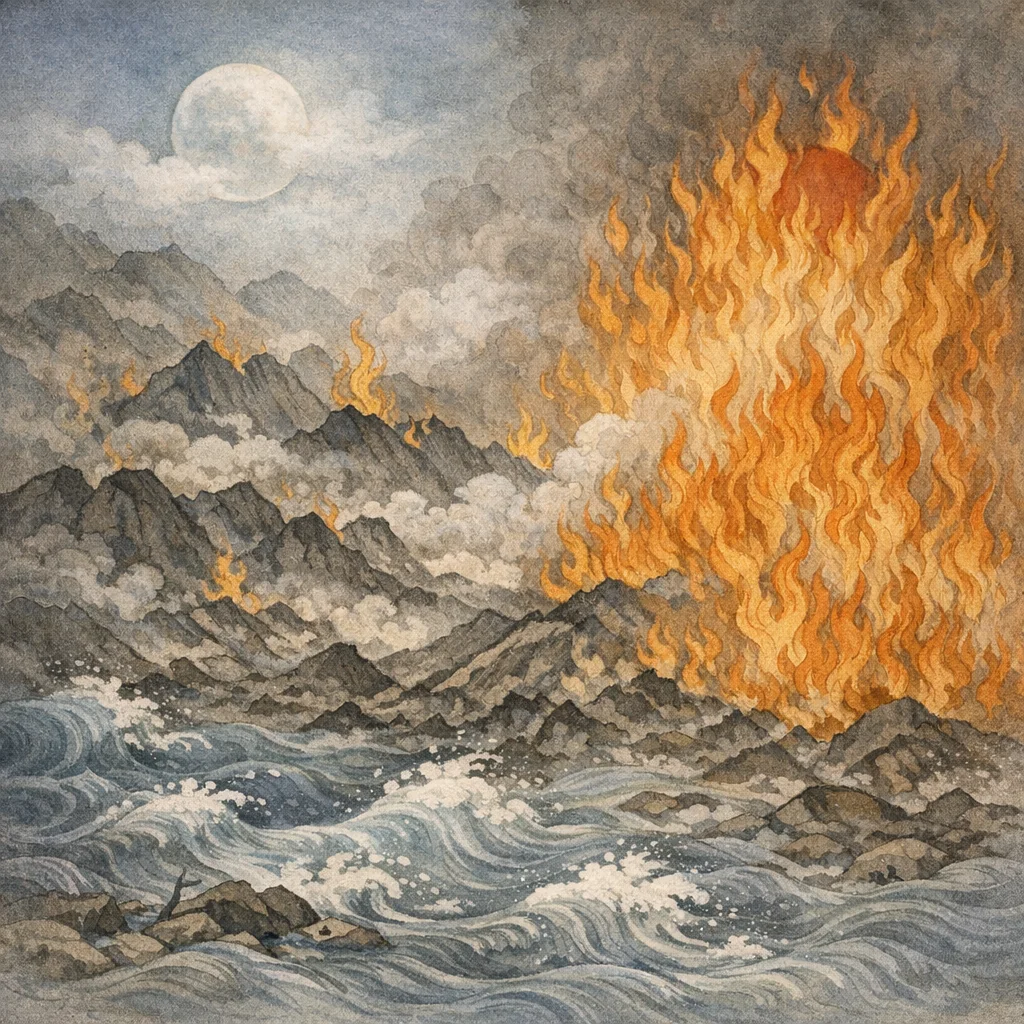
Chapter Arc: शुकदेव के प्रश्नोत्तर-प्रवाह में सृष्टि के आदिसूत्रों से कथा उठती है—मानस-निर्मित सप्तर्षियों के नामोच्चार के साथ ब्रह्मा की रचना-शक्ति का संकेत। → वर्णन प्रलय-चित्र की ओर मुड़ता है: सूर्य और अग्नि की ज्वालाएँ ऊपर-नीचे से जगत को घेर लेती हैं; पृथ्वी के स्थावर-जंगम पहले दग्ध होकर उसी भूमित्व में लीन होने लगते हैं; फिर महास्वन जल-राशि सब ओर उमड़कर चर-अचर को ढँक लेती है। → महाप्रलय का चरम: अग्नि की लपटें सूर्य को भी अपने भीतर समेट लेती हैं और नभ सर्वत्र तेज से भर उठता है; रूप-रस-गन्ध-स्पर्श का नाम मिट जाता है—आकाश ‘नादवत्’ रह जाता है; चन्द्रमा मन को आत्मगुण में प्रविष्ट कर ‘ग्रस’ लेता है—मानसिक जगत भी अव्यक्त में डूब जाता है। → उपसंहार में सिद्धान्त स्थिर होता है—विस्तार और संक्षेप (सृष्टि-लय) अव्यक्त परब्रह्म में बारंबार होते हैं; युग-सहस्रों के आदि में दिन-रात्रि की भाँति यह चक्र चलता रहता है।
Shlokas
Verse 1
2८5 9 शीला > इन सप्तर्षियोंके नाम इस प्रकार हैं-- मरीचिरद्रिराश्षात्रि: पुलस्त्य: पुलह: क्रतु: | वसिष्ठ इति सप्तैते मानसा निर्मिता हि ते ।। (महा० शान्ति० ३४०६९) मरीचि, अंगिरा, अत्रि, पुलस्त्य, पुलह, क्रतु और वसिष्ठ--ये सातों महर्षि तुम्हारे (ब्रह्माजीके) द्वारा ही अपने मनसे रचे हुए हैं। - स्वाध्याय, गार्हस्थ्य, संध्यावन्दनादि, कृच्छुचान्द्रायणादि, यज्ञ, पूर्तकर्म, योग, दान, गुरुशुश्रूषा और समाधि--ये दस क्रमयोग हैं। त्रयस्त्रिशर्दाधिकद्धिशततमो< ध्याय: ब्राह्मप्रलय एवं महाप्रलयका वर्णन व्यास उवाच प्रत्याहारं तु वक्ष्यामि शर्वर्यादौ गतेडहनि । यथेदं कुरुतेध्यात्मं सुसूक्ष्मं विश्वमीश्वर:,व्यासजी कहते हैं--बेटा! अब मैं यह बता रहा हूँ कि ब्रह्माजीका दिन बीतनेपर उनकी रात्रि आरम्भ होनेके पहले ही किस प्रकार इस सृष्टिका लय होता है तथा लोकेश्वर ब्रह्माजी स्थूल जगत्को अत्यन्त सूक्ष्म करके इसे कैसे अपने भीतर लीन कर लेते हैं?
Vyāsa said: “Now I shall explain withdrawal (pratyāhāra): when Brahmā’s day has passed and the onset of his night begins, how the Lord of the worlds draws this entire universe inward—making the gross creation exceedingly subtle—and dissolves it into himself.”
Verse 2
दिवि सूर्यस्तथा सप्त दहन्ति शिखिनोडर्चिष: । सर्वमेतत् तदार्चिरभिं: पूर्ण जाज्वल्यते जगत्,जब प्रलयका समय आता है, तब आकाशमें ऊपरसे सूर्य और नीचेसे अग्निकी सात ज्वालाएँ संसारको भस्म करने लगती हैं। उस समय यह सारा जगत् ज्वालाओंसे व्याप्त होकर जाज्वल्यमान दिखायी देने लगता है
Vyāsa said: “When the time of dissolution arrives, the sun blazes in the sky, and seven fiery tongues of flame rise from below; they begin to consume the world. Then the entire universe appears filled and engulfed by flames, shining with a terrible, all-pervading conflagration.”
Verse 3
पृथिव्यां यानि भूतानि जड़मानि ध्रुवाणि च | तान्येवाग्रे प्रलीयन्ते भूमित्वमुपयान्ति च,भूतलके जितने भी चराचर प्राणी हैं, वे सब पहले ही दग्ध होकर पृथ्वीमें एकाकार हो जाते हैं
Vyāsa said: All beings that exist upon the earth—whether inert and insentient, or seemingly stable and enduring—are the very ones that, in the end, dissolve first and merge back into earthhood.
Verse 4
ततः प्रलीने सर्वस्मिन् स्थावरे जड़मे तथा । निर्वक्षा निस्तृणा भूमिर्दृश्यते कूर्मपृष्ठठत्,तदनन्तर स्थावर-जंगम सम्पूर्ण प्राणियोंक लीन हो जानेपर तृण और वृक्षोंसे रहित हुई यह भूमि कछुएकी पीठ-सी दिखायी देने लगती है
Vyāsa said: When everything has dissolved—both the immobile world and the inert—then the earth, bereft of trees and stripped of grass, appears like the back of a tortoise.
Verse 5
भूमेरपि गुणं गन्धमाप आददते यदा । आत्तगन्धा तदा भूमि: प्रलयत्वाय कल्पते,तत्पश्चात् जब जल पृथ्वीके गुण गन्धको ग्रहण कर लेता है, तब गन्धहीन हुई पृथ्वी अपने कारणभूत जलमें लीन हो जाती है
Vyāsa explains the sequence of dissolution: when water draws to itself the earth’s distinctive quality—smell—the earth, bereft of fragrance, becomes fit for pralaya and merges back into its causal source, water.
Verse 6
आपम्तत्र प्रतिष्ठन्ति ऊर्मिमत्यो महास्वना: | सर्वमेवेदमापूर्य तिष्ठन्ति च चरन्ति च,फिर तो जल गम्भीर शब्द करता हुआ चारों ओर उमड़ पड़ता है और उसमें उत्ताल तरंगें उठने लगती हैं। वह सम्पूर्ण विश्वको अपनेमें निमग्न करके लहराता रहता है
Vyāsa said: There the waters surge and settle, roaring with a mighty sound and heaving with towering waves. Filling everything on all sides, they seem at once to stand in place and yet to move—engulfing the whole world within themselves as they roll and swell.
Verse 7
अपामपि गुणं॑ तात ज्योतिराददते यदा | आपस्तदा त्वात्तगुणा ज्योति:षूपरमन्ति वै,वत्स! तदनन्तर तेज जलके गुण रसको ग्रहण कर लेता है और रसहीन जल तेजमें लीन हो जाता है
Vyāsa said: “Dear child, when fire takes up even the quality of water, then the waters—having had their quality taken away—indeed come to rest, absorbed into the fires, O son.”
Verse 8
यदा<5<दित्यं स्थितं मध्ये गूहन्ति शिखिनोड<र्चिष: । सर्वमेवेदमर्चिरभि: पूर्ण जाज्वल्यते नभ:,उस समय जब आगकी लपटें सूर्यकोी अपने भीतर करके चारों ओरसे ढक लेती हैं, तब सम्पूर्ण आकाश ज्वालाओंसे व्याप्त होकर प्रज्वलित होता-सा जान पड़ता है
Vyāsa said: “When, with the sun standing in the midst, the blazing tongues of fire conceal it and cover it on every side, then the whole sky seems filled with flames and appears as though it is blazing everywhere.”
Verse 9
ज्योतिषो5पि गुणं रूप॑ वायुराददते यदा । प्रशाम्पति ततो ज्योतिर्वायुर्दोधूयते महान्,फिर तेजके गुण रूपको वायुतत्त्व ग्रहण कर लेता है। इससे आग शान्त हो जाती है और वायुमें मिल जाती है। तब वायु अपने महान् वेगसे सम्पूर्ण आकाशको क्षुब्ध कर डालती है
Vyāsa said: “When the principle of Wind takes up even the qualities and form of Light (fire), then that light is quenched and merges into Wind. Thereupon Wind, with its mighty force, churns and agitates the whole expanse of space.”
Verse 10
ततसस््तु स्वनमासाद्य वायु: सम्भवमात्मन: । अधश्नोर्ध्व च तिर्यक् च दोधवीति दिशों दश,वह बड़े जोरसे हरहराती और अपने वेगसे उत्पन्न आवाजको फैलाती हुई ऊपर-नीचे तथा इधर-उधर दसों दिशाओंमें चलने लगती है
Then, reaching its own roaring sound—born of its own force—the wind, howling loudly, began to surge and whirl, moving downward and upward and sideways, sweeping through all ten directions.
Verse 11
वायोरपि गुणं स्पर्शमाकाशं ग्रसते यदा । प्रशाम्यति तदा वायु: खं तु तिषछतति नादवत्,इसके बाद आकाश वायुके गुण स्पर्शको भी ग्रस लेता है। तब वायु शान्त हो जाती और आकाशकमें मिल जाती है; फिर तो आकाश महान् शब्दसे युक्त हो अकेला ही रह जाता है
Vyāsa explains the progressive withdrawal of the elements: when space (ākāśa) absorbs even the quality of touch (sparśa) belonging to wind (vāyu), the wind becomes pacified and dissolves into space. Then space alone remains, characterized by sound (nāda).
Verse 12
अरूपमरसस्पर्शमगन्ध॑ न च मूर्तिमत् । सर्वलोकप्रणदितं खं तु तिषछति नादवत्,उसमें रूप, रस, गन्ध और स्पर्शका नाम भी नहीं रह जाता। किसी भी मूर्त पदार्थकी सत्ता नहीं रहती। जिसका शब्द सभी लोकोंमें निनादित होता था, वह आकाश ही केवल शब्द गुणसे युक्त होकर शेष रहता है
Vyāsa explains that in the ultimate dissolution, form, taste, smell, and touch no longer remain, and no embodied, tangible substance persists. What had once resounded throughout all the worlds is reduced to space alone—remaining only with the quality of sound, like mere reverberation.
Verse 13
आकाश स्य गुणं शब्दमभिव्यक्तात्मकं मन: । मनसो व्यक्तमव्यक्तं ब्राह्मुः सम्प्रतिसंचर:,तत्पश्चात् दृश्य प्रपंचको व्यक्त करनेवाला मन आकाशके गुण शब्दको, जो मनसे ही प्रकट हुआ था, अपनेमें लीन कर लेता है। इस तरह व्यक्त मन और अव्यक्त (महत्तत्त्व) का ब्रह्माके मनमें लय होना ब्राह्म प्रलय कहलाता है
Vyāsa said: Mind, whose function is to make things manifest, draws back into itself sound—the quality of space—which had been expressed through mind itself. In this way, when the manifest mind and the unmanifest (the Mahat principle) dissolve into Brahmā’s mind, that withdrawal is called the “Brahmic dissolution” (brāhma pralaya).
Verse 14
तदात्मगुणमाविश्य मनो ग्रसति चन्द्रमा: । मनस्युपरते चापि चन्द्रमस्युपतिषछ्ठते,महाप्रलयके समय चन्द्रमा व्यक्त मनको आत्मगुणमें प्रविष्ट करके स्वयं उसको ग्रस लेते हैं। तब मन उपरत (शान्त) हो जाता है; फिर वह चन्द्रमामें उपस्थित रहता है
Vyāsa said: Entering into that quality which is the Moon’s own essence, the Moon absorbs the mind. When the mind has thus become stilled and withdrawn, it abides within the Moon. This describes a cosmic dissolution in which the faculties are reabsorbed into their subtle sources, illustrating how even the mind is not ultimate but returns to a higher principle in the great end-time.
Verse 15
त॑ तु कालेन महता संकल्प: कुरुते वशे । चित्तं ग्रसति संकल्पं तच्च ज्ञानमनुत्तमम्,तत्पश्चात् संकल्प (अव्यक्त मन) दीर्घकालमें उस व्यक्तमनसहित चन्द्रमाको अपने वशीभूत कर लेता है और समशष्टि बुद्धि संकल्पको ग्रस लेती है। उसी बुद्धिको परम उत्तम ज्ञान माना गया है
Vyāsa said: Then, over a vast stretch of time, saṅkalpa (the determining will—the unmanifest mind) brings the Moon, together with the manifest mind, under its sway. Thereafter citta (the collective intelligence, buddhi) absorbs saṅkalpa; and that very intelligence is regarded as the highest knowledge.
Verse 16
कालो गिरति विज्ञानं कालं॑ बलमिति श्रुति: । बल॑ कालो ग्रसति तु त॑ विद्वान् कुरुते वशे,सुननेमें आया है कि काल ज्ञान (समष्टि बुद्धि) को ग्रस लेता है, शक्ति उस कालको अपने अधीन कर लेती है; फिर महाकाल शक्तिको और परब्रह्मय महाकालको अपने अधीन कर लेता है
Vyāsa said: Time consumes discernment; and the tradition declares that strength can master time. Yet time, in turn, devours even strength—therefore the wise person brings that very power under control, refusing to be ruled by it.
Verse 17
आकाशस्य यथा घोषं तं॑ विद्वान् कुरुते55त्मनि । तदव्यक्तं परं ब्रह्म तच्छाश्वतमनुत्तमम् | एवं सर्वाणि भूतानि ब्रह्मैव प्रतिसंचर:,जिस प्रकार आकाश अपने गुण शब्दको आत्मसात् कर लेता है, उसी प्रकार ब्रह्म महाकालको अपनेमें विलीन कर लेता है। वह परब्रह्म परमात्मा अव्यक्त, सनातन और सर्वोत्तम है। इस प्रकार सम्पूर्ण प्राणियोंका लय होता है और सबके लयका अधिष्ठान परब्रह्म परमात्मा ही है
Vyāsa said: “Just as space, in its own way, absorbs the sound that arises within it back into itself, so too the Supreme Brahman draws even Great Time into itself. That highest Brahman—unmanifest, eternal, and unsurpassed—is the final ground of dissolution. Thus all beings return into Brahman alone, and Brahman is the ultimate support and destination of every return.”
Verse 18
यथावत् कीर्तितं सम्यगेवमेतदसंशयम् । बोध्यं विद्यामयं दृष्टवा योगिभि: परमात्मभि:,इस प्रकार परमात्मस्वरूप योगियोंने इस ज्ञानमय बोध्यतत्त्वका साक्षात्कार करके इसका यथार्थरूपसे वर्णन किया है, यह उत्तम ज्ञान नि:संदेह ऐसा ही है
Vyāsa said: “This has been described exactly as it truly is—so indeed it is, without any doubt. Having directly beheld that knowable, knowledge-constituted Reality, the yogins who are established in the Supreme Self have spoken of it in its proper form.”
Verse 19
एवं विस्तारसंक्षेपौ ब्रह्माव्यक्ते पुन: पुन: । युगसाहस्रयोरादावहो रात्रस्तथैव च,इस प्रकार बारंबार अव्यक्त परब्रह्ममें सृष्टिका विस्तार और लय होता है। ब्रह्माजीका दिन एक हजार चतुर्युगका होता है और उनकी रात भी उतनी ही बड़ी होती है; यह बात पहले ही बता दी गयी है
“Thus, again and again, within the unmanifest Brahman (avyakta), creation expands and is dissolved. A single day of Brahmā lasts a thousand caturyugas, and his night is of equal length—this has already been stated before.”
Verse 232
इस प्रकार श्रीमह्या भारत शान्तिपर्वके अन्तर्गत मोक्षधर्मपर्वमें शुकदेवजीका अनुप्रश्रविषयक दो सौ बत्तीसवाँ अध्याय पूरा हुआ
Thus ends the two hundred and thirty-second chapter in the Mokṣadharma section of the Śānti Parva of the sacred Mahābhārata, dealing with Śukadeva and the topic of attentive listening and inquiry.
Verse 233
इति श्रीमहाभारते शान्तिपर्वणि मोक्षधर्मपर्वणि शुकानुप्रश्ने त्रयस्त्रिंशदधिकद्वधिशततमो< ध्याय:,इस प्रकार श्रीमहाभारत शान्तिपर्वके अन्तर्गत मोक्षधर्मपर्वमें शुकका अनुप्रश्नविषयक दो सौ तैतीसवाँ अध्याय पूरा हुआ
Thus, in the Śrī Mahābhārata, within the Śānti Parvan and specifically the Mokṣa-dharma section, the two-hundred-and-thirty-third chapter—concerning Śuka’s follow-up inquiry—comes to an end.
Frequently Asked Questions
The dilemma is how to reconcile Vedic statements that appear opposed—injunctions to perform karma and injunctions to abandon karma—and how each route determines one’s existential destination.
Karma is presented as productive of conditioned outcomes and bondage, while vidyā is presented as the liberating insight leading to an imperishable state described through negations (no birth, death, decay) and affirmed as Brahman.
No explicit phalaśruti formula is given in these verses; the ‘result’ is embedded doctrinally as the contrast between karmic fruition (rebirth and experiential dualities) and the vidyā-attained state of non-sorrow and imperishability.