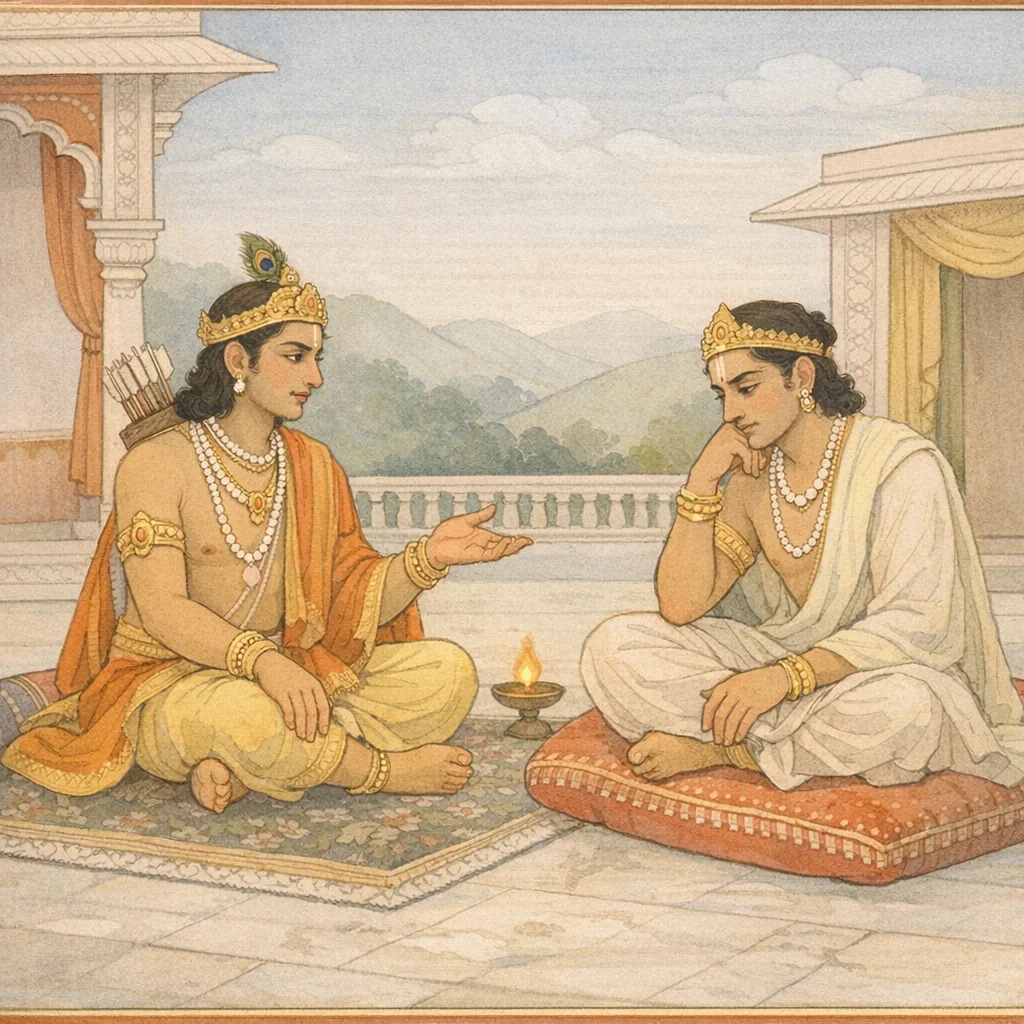
Adhyaya 22
अर्जुनस्य युधिष्ठिरं प्रति क्षात्रधर्मोपदेशः | Arjuna’s Counsel to Yudhiṣṭhira on Kṣatra-Dharma
Upa-parva: Rājadharmānuśāsana Upa-Parva (राजधर्मानुशासन उपपर्व)
Vaiśaṃpāyana reports that Arjuna again addresses his elder brother, describing Yudhiṣṭhira as inwardly distressed despite having attained uncontested sovereignty through kṣatriya duty. Arjuna argues that for kṣatriyas, death in sanctioned armed engagement is regarded as a distinguished end, and that kṣatra-dharma is characteristically austere, weapon-centered, and time-bound to rightful necessity. He contrasts role-ethics by noting that ascetic practices are classically associated with brāhmaṇas, while the kṣatriya is not enjoined to live by mendicancy, dependence, or withdrawal. Arjuna urges Yudhiṣṭhira—praised as discerning and competent—to abandon grief, harden resolve, and re-enter disciplined action. He recommends public rites and generosity (yajña and dāna) as constructive royal obligations. As exemplum, he cites Indra’s attainment of lordship through decisive action against wrongful kin, presenting the act as ritually and socially validated. Arjuna concludes with a determinist register: what has occurred is aligned with destiny (diṣṭa) and cannot be overstepped; therefore, mourning should yield to governance and restoration.
Chapter Arc: युद्ध की धूल बैठ चुकी है, पर युधिष्ठिर के भीतर का रण अभी थमा नहीं—राज्य मिलकर भी वे शोक और ग्लानि में तप रहे हैं; इसी बीच अर्जुन क्षत्रियधर्म की प्रशंसा करते हुए उन्हें फिर समझाने उठता है। → अर्जुन युधिष्ठिर को स्मरण कराता है कि क्षत्रिय के लिए राज्य दुर्लभ है और उसे क्षत्रधर्म से प्राप्त कर शोक में गलना शोभा नहीं; संग्राम में निधन क्षत्रियों के लिए मान्य मार्ग है—यही स्मृति युधिष्ठिर के वैराग्य को चुनौती देती है। → अर्जुन का निर्णायक प्रतिपादन: क्षत्रिय के लिए त्याग-यज्ञ-तप या पराश्रित जीविका नहीं, बल्कि प्रजा-रक्षा और राज्य-धारण ही प्रधान कर्म है; जो घटा वह ‘दिष्ट’ था—भाग्य/नियति को अतिक्रमित नहीं किया जा सकता। → अर्जुन युधिष्ठिर की धर्मज्ञता, राजनैपुण्य और लोक-ज्ञान को आधार बनाकर उन्हें राजधर्म में स्थिर होने का आग्रह करता है; क्षत्रधर्म को ब्रह्मसम्भव और लोक-प्रशस्त बताकर शासन को धर्म-पालन का साधन ठहराता है। → युधिष्ठिर अर्जुन की कठोर-करुण सलाह को कैसे ग्रहण करेंगे—क्या वे शोक से उठकर राजधर्म स्वीकार करेंगे या वैराग्य का आग्रह बनाए रखेंगे?
Shlokas
Verse 1
ऑपन---र< बछ। ] अत्ऑफाए:म दाविशोद्ध्याय: क्षत्रियधर्मकी प्रशंसा करते हुए अर्जुनका पुनः राजा युधिष्ठिरको समझाना वैशम्पायन उवाच अस्मिन्नेवान्तरे वाक्यं पुनरेवार्जुनोडब्रवीत् । निर्विण्णमनसं ज्येष्ठटमिदं भ्रातरमच्युतम्,वैशम्पायनजी कहते हैं--जनमेजय! इसी बीचमें देवस्थानका भाषण समाप्त होते ही अर्जुनने खिन्नचित्त होकर बैठे हुए तथा कभी धर्मसे च्युत न होनेवाले अपने बड़े भाई युधिष्ठिससे इस प्रकार कहा--
Vaiśampāyana said: “Janamejaya, just then—when the preceding discourse had come to an end—Arjuna once again addressed his eldest brother. Seeing Yudhiṣṭhira seated in dejection, yet unwavering from dharma, Arjuna spoke to steady his resolve and reaffirm the kingly duty of a kṣatriya.”
Verse 2
क्षत्रधर्मेण धर्मज्ञ प्राप्य राज्यं सुदुर्लभम् । जित्वा चारीन् नरश्रेष्ठ तप्यते कि भृशं भवान्,“धर्मके ज्ञाता नरश्रेष्ठ) आप क्षत्रियधर्मके अनुसार इस परम दुर्लभ राज्यको पाकर और शत्रुओंको जीतकर इतने अधिक संतप्त क्यों हो रहे हैं?
“O knower of dharma, O best of men—having attained this exceedingly hard-to-win kingdom by the duty of a kṣatriya, and having conquered your foes, why are you tormented so intensely? Why does such burning remorse still seize you?”
Verse 3
क्षत्रियाणां महाराज संग्रामे निधनं मतम् । विशिष्ट बहुभिय॑ज्ञि: क्षत्रधर्ममनुस्मर,“महाराज! आप क्षत्रियधर्मको स्मरण तो कीजिये, क्षत्रियोंके लिये संग्राममें मर जाना तो बहुसंख्यक यज्ञोंसे भी बढ़कर माना गया है
“O great king, remember the dharma of a kṣatriya. For kṣatriyas, to meet death in battle is held to be superior even to the merit gained by many sacrifices.”
Verse 4
ब्राह्मणानां तपस्त्याग: प्रेत्य धर्मविधि: स्मृत: । क्षत्रियाणां च निधन संग्रामे विहितं प्रभो,'प्रभो! तप और त्याग ब्राह्मणोंके धर्म हैं जो मृत्युके पश्चात् परलोकमें धर्मजनित फल देनेवाले हैं। क्षत्रियोंके लिये संग्राममें प्राप्त हुई मृत्यु ही पारलौकिक पुण्यफलकी प्राप्ति करानेवाली है
Vaiśampāyana said: For Brahmins, austerity and renunciation are remembered as the ordained rule of dharma—bearing their rightful fruit after death in the next world. For Kṣatriyas, O lord, death attained in battle is likewise prescribed, and is held to confer the merit that ripens beyond this life.
Verse 5
क्षात्रधर्मो महारौद्र: शस्त्रनित्य इति स्मृतः । वधश्च भरतश्रेष्ठ काले शस्त्रेण संयुगे,“भरतश्रेष्ठ! क्षत्रियोंका धर्म बड़ा भयंकर है। उसमें सदा शस्त्रसे ही काम पड़ता है और समय आनेपर युद्धमें शस्त्रद्वारा उनका वध भी हो जाता है (अत: उनके लिये शोक करनेका कोई कारण नहीं है)
Vaiśampāyana said: “O best of the Bharatas, the kṣatriya’s dharma is remembered as exceedingly fierce, ever bound to weapons. And when the time comes, in the clash of battle, death too occurs by weapons. Therefore, for those who live by this law of arms, grief has no proper ground.”
Verse 6
ब्राह्मणस्यापि चेद् राजन क्षत्रधर्मेण वर्तत: । प्रशस्तं जीवितं लोके क्षत्र हि ब्रह्मसम्भवम्,“राजन! ब्राह्मण भी यदि क्षत्रियधर्मके अनुसार जीवन-निर्वाह करता हो तो लोकमें उसका जीवन उत्तम ही माना गया है; क्योंकि क्षत्रियकी उत्पत्ति ब्राह्मणसे ही हुई है
“O king, even a Brahmin, if he lives in accordance with the kṣatriya’s dharma, is held to live an excellent life in this world; for the kṣatriya is born from the Brahmin.”
Verse 7
न त्यागो न पुनर्यज्ञो न तपो मनुजेश्वर । क्षत्रियस्यथ विधीयन्ते न परस्वोपजीवनम्,“नरेश्वर! क्षत्रियके लिये त्याग, यज्ञ, तप और दूसरेके धनसे जीवन-निर्वाहका विधान नहीं है
Vaiśampāyana said: “O lord of men, for a kṣatriya there is no prescribed rule of living by renunciation, by sacrificial rites, or by austerity—nor is he enjoined to sustain himself by dependence on another’s wealth. His proper course is to uphold his own duty and livelihood in accordance with the kṣatriya way.”
Verse 8
स भवान् सर्वधर्मज्ञो धर्मात्मा भरतर्षभ । राजा मनीषी निपुणो लोके दृष्टपरावर:,“भरतश्रेष्ठ) आप तो सम्पूर्ण धर्मोके ज्ञाता, धर्मात्मा, राजा, मनीषी, कर्मकृुशल और संसारमें आगे-पीछेकी सब बातोंपर दृष्टि रखनेवाले हैं
Vaiśampāyana said: “O bull among the Bharatas, you are a knower of all dharmas—righteous in spirit, a king of mature intelligence, skilled in action, and one who sees clearly the full range of worldly consequences, both near and far.”
Verse 9
त्यक्त्वा संतापजं शोकं दंशितो भव कर्मणि | क्षत्रियस्य विशेषेण हृदयं वज़ञसंनिभम्,“आप यह शोक-संताप छोड़कर क्षत्रियोचित कर्म करनेके लिये तैयार हो जाइये। क्षत्रियका हृदय तो विशेषरूपसे वज्रके तुल्य कठोर होता है
Vaiśaṃpāyana said: “Cast aside the grief born of burning anguish, and steel yourself for action. For a kṣatriya’s heart, above all, is meant to be hard as a thunderbolt.”
Verse 10
जित्वारीन क्षत्रधर्मेण प्राप्प राज्यमकण्टकम् । विजितात्मा मनुष्येन्द्र यज्ञदानपरो भव,“नरेन्द्र! आपने क्षत्रियधर्मके अनुसार शत्रुओंको जीतकर निष्कण्टक राज्य प्राप्त किया है। अब अपने मनको वशमें करके यज्ञ और दानमें संलग्न हो जाइये
Vaiśampāyana said: “Having conquered your foes in accordance with the kṣatriya code and having obtained a kingdom free of thorns (free from hostile obstacles), O lord of men, now master your own mind and devote yourself to sacrifice and to giving.”
Verse 11
इन्द्रो वै ब्रह्मण: पुत्र: क्षत्रिय: कर्मणा भवत् । ज्ञातीनां पापवृत्तीनां जघान नवतीर्नव,'देखिये। इन्द्र ब्राह्मणके पुत्र हैं, किंतु कर्मसे क्षत्रिय हो गये हैं। उन्होंने पापमें प्रवृत्त हुए अपने ही भाई-बन्धुओं (दैत्यों)-मेंसे आठ सौ दस व्यक्तियोंको मार डाला
Behold: Indra was the son of a brāhmaṇa, yet by his deeds he became a kṣatriya. He slew among his own kin who had turned to sin—the Daityas—nine times ninety-nine, eight hundred and one in all.
Verse 12
तच्चास्य कर्म पूज्यं च प्रशस्यं च विशाम्पते । तेनेन्द्रत्वं समापेदे देवानामिति नः श्रुतम्,'प्रजानाथ! उनका वह कर्म पूजनीय एवं प्रशंसाके योग्य माना गया। उन्होंने उसी कर्मसे देवेन्द्रपद प्राप्त कर लिया, ऐसा हमने सुना है
Vaiśampāyana said: “O lord of the people, that deed of his is regarded as worthy of worship and praise. By that very act he attained the sovereignty of Indra among the gods—so have we heard.”
Verse 13
स त्वं यज्ञैमहाराज यजस्व बहुदक्षिणै: । यथैवेन्द्रो मनुष्येन्द्र चिराय विगतज्वर:,“महाराज! नरेन्द्र। आप भी इन्द्रके समान ही चिन्ता और शोकसे रहित हो दीर्घ कालतक बहुत-सी दक्षिणावाले यज्ञोंका अनुष्ठान करते रहिये
Vaiśampāyana said: “Therefore, O great king, perform sacrifices—rich in gifts to the officiants. Like Indra, O lord of men, remain for a long time free from feverish distress, anxiety, and grief, and sustain your rule through such righteous rites.”
Verse 14
मा त्वमेवं गते किंचिच्छोचेथा: क्षत्रियर्षभ । गतास्ते क्षत्रधर्मेण शस्त्रपूता: परां गतिम्,'क्षत्रियशिरोमणे! ऐसी अवस्थामें आप तनिक भी शोक न कीजिये। युद्धमें मारे गये वे सभी वीर क्षत्रियधर्मके अनुसार शस्त्रोंसे पवित्र होकर परम गतिको प्राप्त हो गये हैं
O bull among kṣatriyas, in such a plight do not grieve even a little. Those heroes who fell in battle, true to kṣatriya-dharma, have been purified by their weapons and have attained the highest state.
Verse 15
भवितव्यं तथा तच्च यद् वृत्तं भरतर्षभ । दिष्टं हि राजशार्दटूल न शक््यमतिवर्तितुम्,“भरतश्रेष्ठ) जो कुछ हुआ है, वह उसी रूपमें होनेवाला था। राजसिंह! दैवके विधानका उल्लंघन नहीं किया जा सकता
Vaiśampāyana said: “O bull among the Bharatas, whatever has occurred was destined to occur in just that way. O tiger among kings, the ordinance of fate cannot be transgressed.”
Verse 22
इति श्रीमहा भारते शान्तिपर्वणि राजधर्मानुशासनपर्वणि अर्जुनवाक्ये द्वाविंशोडध्याय:
Thus, in the Śrī Mahābhārata, within the Śānti Parva—specifically in the Rājadharmānuśāsana section on the instruction concerning the duties of kings—ends the twenty-second chapter, presented in the context of Arjuna’s words.
Verse 29
इस प्रकार श्रीमह्याभारत शान्तिपर्वके अन्तर्गत राजधमानुशासनपर्वमें देवस्थानवाक्यविषयक इक्कीसवाँ अध्याय पूरा हुआ
Thus ends the twenty-first chapter, concerning the words of Devastāna, within the Rājadharmānuśāsana section of the Śānti Parva of the revered Mahābhārata.
Frequently Asked Questions
The chapter addresses the tension between personal remorse and public duty: whether a ruler may withdraw into grief after sanctioned conflict, or must assume responsibility and govern to restore order.
Arjuna instructs Yudhiṣṭhira to relinquish debilitating sorrow, reaffirm kṣatra-dharma, and perform constructive royal acts—self-mastery, governance, yajña, and dāna—as means of social stabilization.
No explicit phalaśruti is stated in these verses; instead, the chapter’s meta-logic emphasizes legitimacy through duty and the interpretive closure of events via diṣṭa (the inevitability of what has occurred).