Adhyaya 179
Adhyāya 179 — Bharadvāja’s Reductionist Inquiry into Jīva and Pañcabhūta Dissolution
Upa-parva: Mokṣa-dharma (Liberation Discourse) — Materialist Critique of the Jīva
Bharadvāja argues that what is designated as “jīva” is redundant if breathing, speech, and motion are attributable to vāyu (wind/breath), and if bodily heat and digestion are attributable to agni (fire). He asserts that at death no separate jīva is perceived: vāyu departs and uṣmabhāva (heat) is extinguished. He challenges the notion that a jīva, if wind-like and conjoined with vāyu, should be perceptible and travel with the maruts; instead, composites disperse. He frames the body as a fivefold common compound (pañcasādhāraṇa), vulnerable to dissolution when any element is impaired: water diminishes without intake, vāyu is affected by breath-restraint, space is disrupted by internal rupture, fire wanes without nourishment, and earth (solidity) decays through disease and wounds. From this, he asks what the jīva could perceive, pursue, hear, or say once the fivefold condition is broken. He further questions post-mortem efficacy of gifts (e.g., the cow that is thought to aid the donor in the other world) if donor, recipient, and object meet dissolution. The chapter closes with irreversible-death analogies: a body consumed by animals, fallen from heights, or burned does not revive; a cut tree’s root does not regrow though seeds propagate, suggesting continuity belongs to causal succession (seed-to-seed) rather than the return of an identical individual.
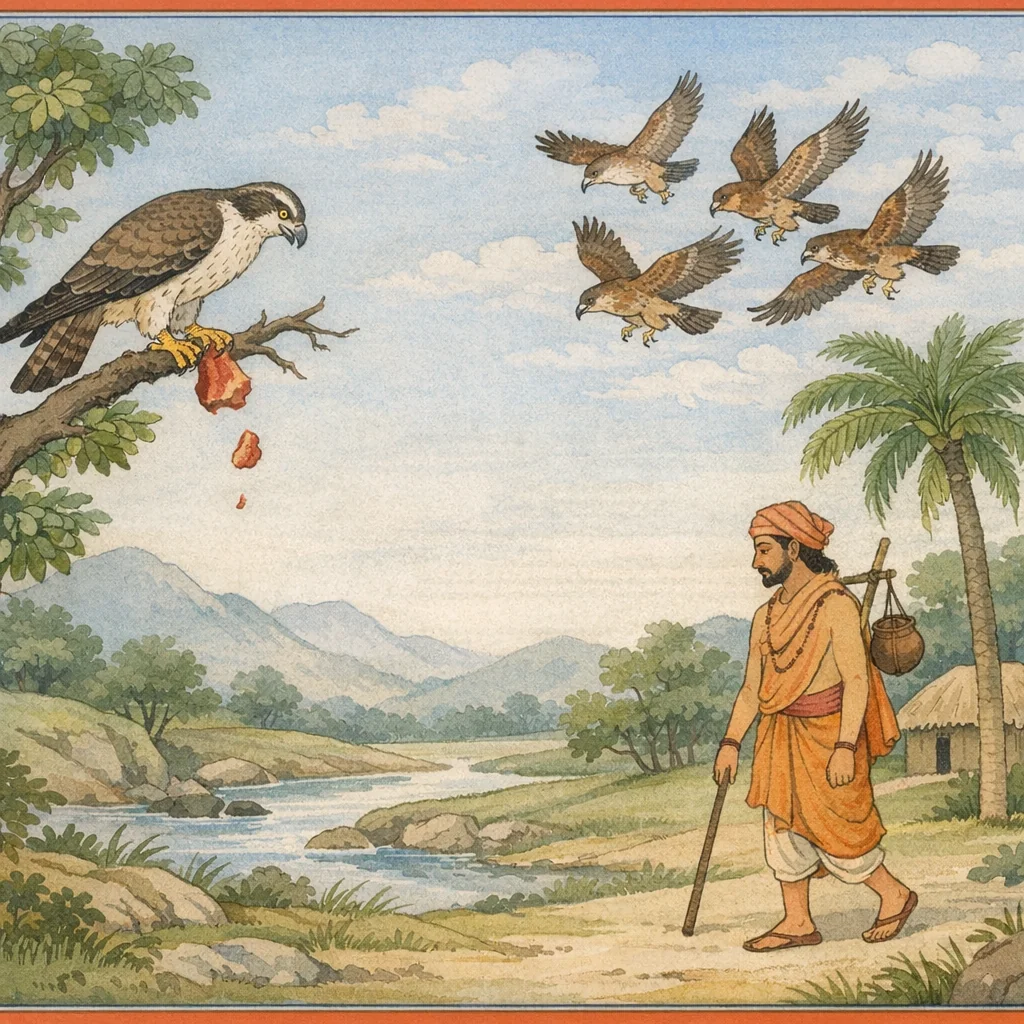
Chapter Arc: एक ताड़के वृक्ष के नीचे बैठा बटोही और ऊपर बैठा काक—काक के आते ही पका फल गिर पड़ता है; साधारण-सी घटना से वैराग्य का द्वार खुलता है। → युधिष्ठिर के सामने संसार-बंधन की जड़ें उभरती हैं—धन, स्वामित्व, संग-साथ, और ‘मेरा’ का आग्रह। जनक का वाक्य गूंजता है: ‘मेरे पास अनन्त-सा वैभव है, फिर भी मेरा कुछ नहीं’; फिर बोध्य मुनि के उपदेश-रहित उपदेश की भूमिका बनती है—वह आदेश नहीं देते, केवल लक्षण बताते हैं ताकि श्रोता स्वयं विचार करे। → कुरर (मांस-टुकड़ा लिए पक्षी) का दृष्टान्त: दूसरे पक्षी उसे सताते हैं; वह मांस छोड़ देता है तो शान्ति पा लेता है—त्याग ही सुख का द्वार है। इसी के साथ भिक्षावृत्ति वाले मुनियों और ‘अद्रोह’ (अहिंसक, वैर-रहित) जीवन का आदर्श सामने आता है। → बोध्य का निष्कर्ष व्यवहारिक बनता है: कलह का मूल संग-आसक्ति है—बहुतों में नित्य कलह, दो में भी निश्चित तकरार; इसलिए साधक ‘कुमारी-शंख’ की तरह एकाकी विचरे, कम-से-कम अपेक्षा रखे, और वैराग्य से शान्ति साधे। → युधिष्ठिर के लिए प्रश्न खुला रह जाता है—राजधर्म निभाते हुए भीतर से ‘अस्वामित्व’ और ‘असंग’ कैसे जिया जाए?
Shlokas
Verse 1
है अर ० छा | अ-क्रा् - एक ताड़के वृक्षके नीचे एक बटोही बैठा था। उसी वृक्षके ऊपर एक काक भी आ बैठा। काकके आते ही ताड़का एक पका हुआ फल नीचे गिरा। यद्यपि फल पककर आप-से-आप ही गिरा था, पर पथिक दोनों बातोंको साथ होते देख, यही समझ गया कि कौवेके आनेसे ही ताड़का फल गिरा है; अतः जहाँ संयोगवश अचानक कोई घटना घटित हो जाय, वहाँ उसे काकतालीयन्यायसे घटित हुई बताया जाता है। यहाँ बछड़ोंका आना और ऊँटका रास्तेमें बैठे रहना--ये बातें संयोगवश हो गयी थीं। अष्टस प्तत्याधेकशततमो< ध्याय: जनककी कक्ति तथा राजा नहुषके प्रश्नोंके उत्तरमें बोध्यगीता भीष्म उवाच अत्राप्युदाहरन्तीममितिहासं पुरातनम् । गीत॑ विदेहराजेन जनकेन प्रशाम्यता,भीष्मजी कहते हैं--राजन्! इसी विषयमें शान्तभावको प्राप्त हुए विदेहगाज जनकने जो उदगार प्रकट किया था, उस प्राचीन इतिहासका उदाहरण दिया जाता है
Bhishma said: “O King, in this very matter people also cite an ancient historical example—namely, the utterance sung by Janaka, the king of Videha, when he had attained inner calm.”
Verse 2
अनन्तमिव मे वित्तं यस्य मे नास्ति किज्चन । मिथिलायां प्रदीप्तायां न मे दह्यति किउड्चन,[जनक बोले--] मेरे पास अनन्त-सा धन-वैभव है; फिर भी मेरा कुछ नहीं है। इस मिथिलापुरीमें आग लग जाय तो भी मेरा कुछ नहीं जलता
Bhishma said: “My wealth appears limitless, yet in truth nothing is ‘mine’. Even if Mithilā were to be set ablaze, nothing of mine would be burned.”
Verse 3
अनत्रैवोदाहरन्तीमं बोध्यस्य पदसंचयम् । निर्वेद॑ प्रति विन्यस्तं तं निबोध युधिषछिर,युधिष्ठिर! इसी प्रसंगमें वैराग्यको लक्ष्य करके बोध्य मुनिने जो वचन कहे हैं, उन्हें बताता हूँ, सुनो
Bhishma said: “Here itself I shall cite the collected sayings (verses) of the sage Bodhya, set forth with renunciation as their aim. Listen to them attentively, O Yudhishthira.”
Verse 4
बोध्यं शान्तमृषिं राजा नाहुष: पर्यपृच्छत । निर्वेदाच्छान्तिमापन्नं शास्त्रप्रज्ञानतर्पितम्,कहते हैं, किसी समय नहुषनन्दन राजा ययातिने वैराग्यसे शान्तभावको प्राप्त हुए शास्त्रके उत्कृष्ट ज्ञानसे परितृष्त परम शान्त बोध्य ऋषिसे पूछा--
Bhishma said: King Nahusha questioned the sage Bodhya, a tranquil seer who had attained peace through dispassion and was fully satisfied by the highest understanding of the scriptures. Thus the ruler, seeking clarity, approached a renunciate whose inner calm and scriptural wisdom were fit to guide right conduct and right living.
Verse 5
उपदेशं महाप्राज्ञ शमस्योपदिशस्व मे । कां बुद्धि समनुध्याय शान्तश्नरसि निर्वृत:,“महाप्राज्ञ! आप मुझे ऐसा उपदेश दीजिये, जिससे मुझे शान्ति मिले। कौन-सी ऐसी बुद्धि है, जिसका आश्रय लेकर आप शान्ति और संतोषके साथ विचरते हैं?”
Bhishma said: “O great sage of profound wisdom, instruct me in the discipline of inner stillness that leads to peace. What understanding do you contemplate and rely upon, by which you move through life tranquil and content?”
Verse 6
बोध्य उवाच उपदेशेन वर्तामि नानुशास्मीह कंचन । लक्षणं तस्य बक्ष्येडहं तत् स्वयं परिमृश्यताम्,बोध्यने कहा--राजन्! मैं किसीको उपदेश नहीं देता, बल्कि स्वयं दूसरोंसे प्राप्त हुए उपदेशके अनुसार आचरण करता हूँ। मैं अपनेको मिले हुए उपदेशका लक्षण बता रहा हूँ (जिनसे उपदेश मिला है, उन गुरुओंका संकेतमात्र कर रहा हूँ), उसपर तुम स्वयं विचार करो
Bodhya said: “I live by instruction; I do not presume to command anyone here. I shall state the distinguishing mark of that instruction—reflect on it for yourself.”
Verse 7
पिड़ला कुरर: सर्प: सारड्डान्वेषणं वने । इषुकार: कुमारी च षडेते गुरवो मम,पिंगला, कुरर पक्षी, सर्प, वनमें सारंगका अन्वेषण, बाण बनानेवाला और कुमारी कन्या--ये छः मेरे गुरु हैं
Bodhya said: “Pingalā, the kurara bird, the serpent, the search for the sāraṅga in the forest, the arrow-maker, and the maiden—these six are my teachers.”
Verse 8
भीष्म उवाच आशा बलवती राजन नैराश्यं परमं सुखम् । आशा निराशां कृत्वा तु सुखं स्वपिति पिड्रला,भीष्मजी कहते हैं--राजन्! बोध्यको अपने गुरुओंसे जो उपदेश प्राप्त हुआ था, वह इस प्रकार समझना चाहिये--आशा बड़ी प्रबल है। वही सबको दुःख देती है। निराशा ही परम सुख है। आशाको निराशाके रूपमें परिणत करके पिंगला वेश्या सुखसे सो गयी। (पिंगला आशाके त्यागका उपदेश देनेके कारण गुरु हुई)
Bhishma said: “O King, hope is exceedingly powerful; it is hope that drives beings into distress. Freedom from hope—the abandonment of expectation—is the highest happiness. Having turned hope into hopelessness, the courtesan Pingalā slept in peace.”
Verse 9
सामिषं कुररं दृष्टवा वध्यमानं निरामिषै: । आमिषस्य परित्यागात् कुरर: सुखमेधते,चोंचमें मांसका टुकड़ा लिये उड़ते हुए कुरर (क्रौंच पक्षीको देखकर दूसरे पक्षी जो मांस नहीं लिये हुए थे, उसे मारने लगे। तब उसने उस मांसके टुकड़ेको त्याग दिया। अतः पक्षियोंने उसका पीछा करना छोड़ दिया। इस प्रकार आमिषके त्यागसे क्रौंचपक्षी सुखी हो गया। भोगोंके परित्यागका उपदेश देनेके कारण कुरर (क्रौंच) पक्षी गुरु हुआ
Bhīṣma said: Seeing a kurara bird carrying flesh, other birds that had no flesh attacked it. When it abandoned the morsel of meat, they stopped pursuing it. Thus, by giving up the bait of sense-enjoyment, the kurara became at ease and flourished in happiness—so the kurara became a “teacher” by instructing renunciation of pleasures.
Verse 10
गृहारम्भो हि दुःखाय न सुखाय कदाचन । सर्प: परकृतं वेश्म प्रविश्य सुखमेधते,घर बनानेका खटपट करना दुःखका ही कारण है। उससे कभी सुख नहीं मिलता। देखो, साँप दूसरोंके बनाये हुए घर (बिल) में प्रवेश करके सुखसे रहता है। (अतः अनिकेत रहने--घर-द्वारके चक्करमें न पड़नेका उपदेश देनेके कारण सर्प गुरु हुआ)
Bhishma said: “The undertaking of building and maintaining a household is truly a cause of suffering, never of lasting happiness. Consider the snake: it enters a dwelling made by another and lives there at ease.” In this ethical illustration, Bhishma commends non-attachment and freedom from the burdens of acquisition, using the snake as a “teacher” of living without possessiveness.
Verse 11
सुखं जीवन्ति मुनयो भैक्ष्यवृत्ति समाश्रिता: । अद्रोहेणैव भूतानां सारड्रा इव पक्षिण:,जिस प्रकार पपीहा पक्षी किसी भी प्राणीसे वैर न करके याचनावृत्तिसे अपना निर्वाह करते हैं, उसी प्रकार मुनिजन भिक्षावृत्तिका आश्रय लेकर सुखसे जीवन व्यतीत करते हैं (अद्रोहका उपदेश देनेके कारण पपीहा गुरु हुआ)
Bhīṣma said: “Sages live happily by taking refuge in the way of life sustained by alms. Like the sāraṅga birds, they maintain themselves without hostility toward any living being—harmless, uncontentious, and dependent on what is freely given.”
Verse 12
इषुकारो नर: कश्चिदिषावासक्तमानस: । समीपेनापि गच्छन्तं राजानं नावबुद्धवान्,एक बार एक बाण बनानेवालेको देखा गया, वह अपने काममें ऐसा दत्तचित्त था कि उसके पाससे निकली हुई राजाकी सवारीका भी उसे कुछ पता नहीं चला (उसके द्वारा एकाग्रचिचत्तताका उपदेश प्राप्त हुआ; इसलिये वह गुरु हो गया)
Bhishma said: “There was once a certain arrow-maker, a man whose mind was wholly absorbed in his arrows. Even when the king passed close by, he did not notice him at all.” The episode is cited to illustrate the power of single-pointed concentration (ekāgratā): when the mind is fully gathered into its task, external distractions lose their hold—hence such a person can become a “teacher” by example.
Verse 13
बहूनां कलहो नित्य द्वयो: संकथन ध्रुवम् । एकाकी विचरिष्यामि कुमारीशंखको यथा,बहुत मनुष्य एक साथ रहें तो उनमें प्रतिदिन कलह होता है और दो रहें तो भी उनमें बातचीत तो अवश्य ही होती है; अतः मैं कुमारी कन्याके हाथमें धारण की हुई शंखकी एक- एक चूड़ीके समान अकेला ही विचरुँगा-
Bhishma said: “Where many live together, quarrel arises day after day; and even where only two remain, conversation is inevitable. Therefore I shall wander alone—like a single conch bangle worn on the hand of an unmarried maiden.”
Verse 177
इस प्रकार श्रीमह्याभारत शान्तिपर्वके अन्तर्गत मोक्षधर्मपर्वमें मद्किगीताविषयक एक सौ सतहत्तरवाँ अध्याय पूरा हुआ
Thus ends the one hundred and seventy-seventh chapter on the subject of the Madgītā, within the Mokṣadharma section of the Śānti Parva of the revered Mahābhārata. This closing colophon signals the completion of a doctrinal unit concerned with liberation-oriented teaching, framed within Bhīṣma’s instruction.
Verse 178
इति श्रीमहाभारते शान्तिपर्वणि मोक्षधर्मपर्वणि बोध्यगीतायां अष्टसप्तत्यधिकशततमो< ध्याय:,इस प्रकार श्रीमहाभारत शान्तिपर्वके अन्तर्गत गोक्षधर्मपर्वमें बोध्यगीताविषयक एक सौ अठहत्तरवाँ अध्याय पूरा हुआ
Thus, in the Śrī Mahābhārata, within the Śānti Parvan, in the Mokṣadharma section, the one-hundred-and-seventy-eighth chapter concerning the Bodhya-gītā comes to an end. (This is a colophon marking the close of the chapter rather than a doctrinal verse.)
Frequently Asked Questions
He claims that “jīva” is conceptually unnecessary if respiration, movement, speech, and heat can be explained as functions of vāyu and agni within a five-element composite, and if no separate jīva is empirically found at death.
The chapter instructs critical scrutiny of metaphysical assertions by testing them against observable dissolution and causal reasoning, distinguishing between process-based continuity (seed succession) and claims of personal survival.
No explicit phalaśruti is present in the provided verses; the meta-function is argumentative—clarifying the stakes of mokṣa inquiry by interrogating what, if anything, persists beyond elemental disaggregation.