Adhyaya 72
Dhṛtarāṣṭra–Saṃjaya Saṃvāda: Anuśocana, Nimittāni, and Vidura’s Warning
Upa-parva: Draupadī-Parikarṣaṇa & Anuśocana (Court Humiliation and Dhṛtarāṣṭra’s Remorse)
Vaiśaṃpāyana reports that after the Pāṇḍavas depart for the forest, Dhṛtarāṣṭra is seized by anxiety. Saṃjaya interrogates the cause of his grief, framing it as the predictable consequence of having expelled formidable allies. Dhṛtarāṣṭra and Saṃjaya articulate a moral psychology of decline: when ruin approaches, discernment is inverted and harmful choices appear attractive; Time need not strike directly—misperception itself becomes Time’s force. The chapter then revisits the court outrage surrounding Draupadī’s coercive summoning despite counsel from Bhīṣma, Droṇa, and Vidura, naming the agents and emphasizing institutional complicity. Social and cosmic disturbances follow: women’s cries, Brahmin anger, ritual interruptions, meteors, eclipsing signs, fires, and collapsing standards—presented as nimitta (portents) of disorder. In response, Dhṛtarāṣṭra offers Draupadī boons; she chooses the release and re-authorization of the Pāṇḍavas. Vidura closes with a strategic-ethical warning: the Pāṇḍavas and their allies will not tolerate further injury, and prudent policy is reconciliation (śama) rather than escalation.
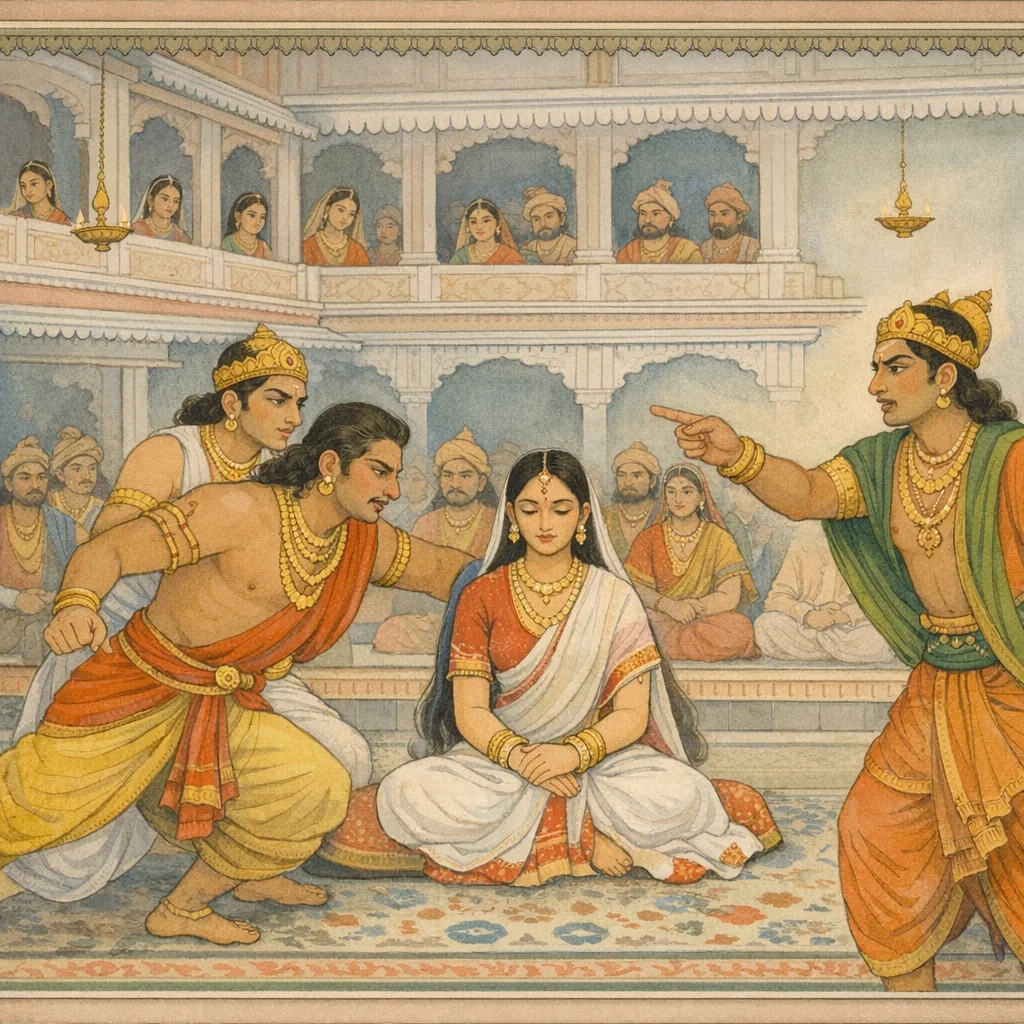
Chapter Arc: सभामध्य में अपमान और द्यूत-पराजय के बाद भीमसेन क्रोध से उबल उठता है; कौरवों के बीच वह ‘अब शत्रुओं का वध’ करने को उद्यत दिखता है। → कर्ण स्त्री-स्वभाव और ‘स्त्रीगति’ जैसी कटु उक्तियों से वातावरण को और विषाक्त करता है; पाण्डव क्रोधाविष्ट हैं, पर द्रौपदी ही उस डूबते हुए पक्ष की ‘नौका’ बनकर धैर्य का आधार बनती है। → वैशम्पायन के कथनानुसार भीमसेन कौरव-सभा में द्रौपदी के विषय में कही गई बातों से व्यथित होकर उग्र प्रतिज्ञा-भाव में फूट पड़ता है; अर्जुन भी कर्ण की परुष वाणी का प्रतिवाद करता है और ‘उत्तम पुरुष’ की मर्यादा का स्मरण कराता है। → युधिष्ठिर अपने बाहुबल से भीम को रोकते हैं—‘मैवम्’ कहकर उसे शांत होकर बैठने का आदेश देते हैं; क्रोध को वश में कर वे तत्काल रक्तपात को टालते हैं। → भीम का दबा हुआ प्रतिशोध और अपमान की ज्वाला भीतर ही भीतर सुलगती रहती है—यह संकेत छोड़कर अध्याय समाप्त होता है कि यह क्रोध आगे चलकर महायुद्ध में प्रलय बनेगा।
Shlokas
Verse 1
अपन का बछ। ] अतपकडफा<ज द्विसप्ततितमो< ध्याय: शत्रुओंको मारनेके लिये उद्यत हुए भीमको युधिष्ठटिरका शान्त करना कर्ण उवाच या नः श्रुता मनुष्येषु स्त्रियो रूपेण सम्मता: । तासामेतादृशं कर्म न कस्याश्वन शुश्रुम,कर्ण बोला--मैंने मनुष्योंमें जिन सुन्दरी स्त्रियोंके नाम सुने हैं, उनमेंसे किसीने भी ऐसा अदभुत कार्य किया हो, यह मेरे सुननेमें नहीं आया
Karna said: “Among human beings, we have heard of women celebrated for their beauty; yet we have never heard of any of them performing a deed like this.”
Verse 2
क्रोधाविष्टेषु पार्थषु धार्तराष्ट्रेषु चाप्यति । द्रौपदी पाण्डुपुत्राणां कृष्णा शान्तिरिहा भवत्,कुन्तीके पुत्र तथा धृतराष्ट्रके पुत्र सभी एक-दूसरेके प्रति अत्यन्त क्रोधसे भरे हुए थे, ऐसे समयमें यह ट्रुपदकुमारी कृष्णा इन पाण्डवोंको परम शान्ति देनेवाली बन गयी
When the sons of Pāṇḍu and the sons of Dhṛtarāṣṭra alike were seized by wrath, Draupadī—Kṛṣṇā—became here the very bringer of peace to the sons of Pāṇḍu.
Verse 3
अप्लवे5म्भसि मग्नानामप्रतिछे निमज्जताम् । पाज्चाली पाण्डुपुत्राणां नौरेषा पारगाभवत्,पाण्डवलोग नौका और आधारसे रहित जलनमें गोते खा रहे थे अर्थात् संकटके अथाह सागरमें डूब रहे थे, किंतु यह पांचालराजकुमारी इनके लिये पार लगानेवाली नौका बन गयी
Karna said: “When the sons of Pāṇḍu were sinking in an unfathomable flood—without any firm support, going under again and again—this Pāñcālī became for them a boat that could carry them across.”
Verse 4
वैशम्पायन उवाच तद् वै श्रुत्वा भीमसेन: कुरुमध्येउत्यमर्षण: । स्त्रीगति: पाण्डुपुत्राणामित्युवाच सुदुर्मना:,वैशम्पायनजी कहते हैं--राजन्! कौरवोंके बीचमें कर्णकी वह बात सुनकर अत्यन्त असहनशील भीमसेन मन-ही-मन बहुत दुःखी होकर बोले--'हाय! पाण्डवोंको उबारनेवाली एक स्त्री हुई!
Vaiśampāyana said: Hearing that, Bhīmasena—fiercely intolerant of insult—stood amid the Kurus, and, deeply dejected at heart, exclaimed: “Alas! For the sons of Pāṇḍu, their very deliverance has come to depend upon a woman!”
Verse 5
भीम उवाच त्रीणि ज्योतींषि पुरुष इति वै देवलोडब्रवीत् । अपत्यं कर्म विद्या च यतः सृष्टा: प्रजास्तत:,भीमसेनने कहा--महर्षि देवलका कथन है कि पुरुषमें तीन प्रकारकी ज्योतियाँ हैं-- संतान, कर्म और ज्ञान; क्योंकि इन्हींसे सारी प्रजाकी सृष्टि हुई
Bhima said: “The sage Devala has indeed declared that within a man there are three lights—offspring, action, and knowledge. From these, all beings and the continuity of society are brought forth.”
Verse 6
अमेध्ये वै गतप्राणे शून्ये ज्ञातिभिरुज्िते । देहे त्रितयमेवैतत् पुरुषस्योपयुज्यते,जब यह शरीर प्राणरहित होकर शून्य एवं अपवित्र हो जाता है तथा समस्त बन्धु- बान्धव उसे त्याग देते हैं, तब ये ही ज्ञान आदि तीनों ज्योतियाँ (परलोकगत) पुरुषके उपयोगमें आती हैं
Bhima said: When the body becomes lifeless, hollow, and impure, and even one’s own kinsmen abandon it, then only this triad truly serves a person—those inner lights such as knowledge and the like—bearing fruit for him beyond this world.
Verse 7
तन्नो ज्योतिरभिहतं दाराणामभिमर्शनात् | धनंजय कथंस्वित् स्यादपत्यमभिमृष्टजम्,धनंजय! हमारी धर्मपत्नी द्रौपदीके शरीरका बल-पूर्वक स्पर्श करके दुःशासनने उसे अपवित्र कर दिया है, इससे हमारी संतानरूप ज्योति नष्ट हो गयी। जो पराये पुरुषसे छू गयी, उस स्त्रीसे उत्पन्न संतान किस कामकी होगी?
Bhima said: “Our lineage-light has been struck down because our wife has been forcibly touched. O Dhanañjaya, how could there be any worthy offspring born from a woman who has been violated by another man’s touch?”
Verse 8
अजुन उवाच न चैवोक्ता न चानुक्ता हीनतः परुषा गिर: | भारत प्रतिजल्पन्ति सदा तूत्तमपूरुषा:,अर्जुन बोले--भारत! (द्रौपदी सती है। उसके विषयमें आप ऐसी बात न कहें। दुःशासनने अवश्य नीचता की है, किंतु) श्रेष्ठ पुरुष नीच पुरुषोंद्वारा कही या न कही गयी कड़वी बातोंका कभी उत्तर नहीं देते
Arjuna said: “O Bhārata, whether harsh words are spoken or left unspoken by a base person, the truly noble do not engage in petty retorts. The best of men do not answer bitterness with bitterness.”
Verse 9
स्मरन्ति सुकृतान्येव न वैराणि कृतान्यपि । सन्त: प्रतिविजानन्तो लब्धसम्भावना: स्वयम्,प्रतिशोधका उपाय जानते हुए भी सत्पुरुष दूसरोंके उपकारोंको ही याद रखते हैं, उनके द्वारा किये हुए वैरको नहीं। उन साधु पुरुषोंको स्वयं सबसे सम्मान प्राप्त होता रहता है
Arjuna said: “The good remember only the kindnesses done, not even the hostilities committed against them. Though they understand the means of retaliation, noble people do not pursue revenge; and by their very conduct they themselves continually attain honor and esteem from all.”
Verse 10
भीम उवाच इहैवैतांस्त्वहं सर्वान् हन्मि शत्रूनू समागतान् | अथ निष्क्रम्य राजेन्द्र समूलान् हन्मि भारत,भीमसेनने (राजा युधिष्ठिरसे) कहा--भरतवंशी राजराजेश्वर! (यदि आपकी आज्ञा हो, तो) यहाँ आये हुए इन सब शत्रुओंको मैं यहीं समाप्त कर दूँ और यहाँसे बाहर निकलकर इनके मूलका भी नाश कर डालूँ
Bhima said: “If you permit, O king of kings, descendant of Bharata—these enemies who have assembled here I will slay on this very spot. And then, going out from here, I will uproot them entirely and destroy them at the source.”
Verse 11
कि नो विवदितेनेह किमुक्तेन च भारत | अद्यैवैतान् निहन्मीह प्रशाधि पृथिवीमिमाम्
Bhima said: “What is the use of disputation here, and what is the use of further words, O Bharata? Even today I shall strike these men down right here; command me, and rule this earth.”
Verse 12
भारत! अब यहाँ विवाद या उत्तर-प्रत्युत्तर करनेकी हमें क्या आवश्यकता है? मैं आज ही इन सबको यमलोक भेज देता हूँ, आप इस सारी पृथ्वीका शासन कीजिये ।। इत्युक्त्वा भीमसेनस्तु कनिष्ठैर्भ्रातृभि: सह । मृगमध्ये यथा सिंहो मुहुर्मुहुरुदैक्षत
“O descendant of Bharata! What need have we here for argument or for back-and-forth replies? This very day I will send all of them to Yama’s realm; you should rule this entire earth.” Having spoken thus, Bhīmasena—together with his younger brothers—kept looking around again and again, like a lion amid a herd of deer, poised for action.
Verse 13
अपने छोटे भाइयोंके साथ खड़े हुए भीमसेन उपर्युक्त बात कहकर शत्रुओंकी ओर बार-बार देखने लगे; मानो सिंह मृगोंके समूहमें खड़ा हो उन््हींकी ओर देख रहा हो ।। सान्त्व्यमानो वीक्षमाण: पार्थेनाक्लिष्टकर्मणा । खिद्यत्येव महाबाहुरन्तर्दाहिन वीर्यवान्,अनायास ही महान् पराक्रम कर दिखानेवाले अर्जुन शत्रुओंकी ओर देखनेवाले भीमसेनको बार-बार शान्त कर रहे थे, परंतु पराक्रमी महाबाहु भीमसेन अपने भीतर धधकती हुई क्रोधाग्निसे जल रहे थे
As Bhīmasena stood with his younger brothers, he kept casting repeated glances toward the enemy—like a lion stationed amid a herd of deer, staring them down. Though Arjuna, tireless in action, tried again and again to soothe him, the mighty-armed, valiant Bhīma still burned within, tormented by an inner blaze of wrath.
Verse 14
क्ुद्धस्य तस्य स्रोतो भ्य: कर्णादिभ्यो नराधिप । सधूम: सस्फुलिड्रार्चि: पावक: समजायत,राजन! उस समय क्रोधमें भरे हुए भीमसेनकी श्रवणादि इन्द्रियोंके छिद्रों तथा रोमकूपोंसे धूम और चिनगारियोंसहित आगकी लपटें निकल रहीं थीं
O king, Bhima, inflamed with wrath, appeared as if fire itself had arisen from the openings of his senses—his ears and the rest—sending forth flames accompanied by smoke and sparks.
Verse 15
भ्रुकुटीकृतदुष्प्रेक्ष्य्म भवत् तस्य तन्मुखम् | युगान्तकाले सम्प्राप्ते कृतान्तस्येव रूपिण:,भौंहें तनी होनेके कारण प्रलयकालमें मूर्तिमान्ू यमराजकी भाँति उनके भयानक मुखकी ओर देखना भी कठिन हो रहा था
Bhima said: “With his brows drawn together, his face became so dreadful that it was hard to look upon—like Death himself embodied when the end of an age has arrived.”
Verse 16
युधिष्ठिरस्तमावार्य बाहुना बाहुशालिनम् | मैवमित्यब्रवीच्चैनं जोषमास्स्वेति भारत,भारत! तब विशाल भुजाओंसे सुशोभित होनेवाले भीमसेनको अपने एक हाथसे रोकते हुए युधिष्ठिरने कहा--'ऐसा न करो, शान्तिपूर्वक बैठ जाओ'
Yudhiṣṭhira, restraining the mighty-armed Bhīma with his own arm, said to him, “Do not do this. Sit down quietly, O Bhārata.”
Verse 17
निवार्य च महाबाहुं कोपसंरक्तलोचनम् | पितरं समुपातिष्ठद् धृतराष्ट्र कृताञ्जलि:,उस समय महाबाहु भीमके नेत्र क्रोधसे लाल हो रहे थे। उन्हें रोककर राजा युधिष्ठिर हाथ जोड़े हुए अपने ताऊ महाराज धृतराष्ट्रके पास गये
Holding back the mighty-armed Bhīma, whose eyes were reddened with anger, Yudhiṣṭhira approached his elder, King Dhṛtarāṣṭra, and stood before him with folded hands—choosing restraint and reverence over an outburst.
Verse 72
इति श्रीमहा भारते सभापर्वणि द्यूतपर्वणि भीमक्रोधे द्विसप्ततितमोडध्याय:
Thus ends the seventy-second chapter of the Dice-episode within the Sabha Parva of the Mahābhārata, known as “Bhīma’s Wrath.”
Frequently Asked Questions
The dilemma is whether a ruler can preserve dynastic advantage after an unethical court act by treating it as finished business, or whether dharma requires immediate corrective action—acknowledging wrongdoing, preventing repetition, and restoring political balance through restraint.
The chapter teaches that ethical failure often begins as cognitive distortion: when decline is near, harmful options appear beneficial. Therefore, governance must privilege counsel, self-limitation, and repair over factional gratification.
No explicit phalaśruti is stated here; the meta-commentary is embedded as causal instruction—nimittas and social reactions function as diagnostic signals that adharma in public institutions produces compounding consequences.