Adhyaya 29
नकुलस्य प्रतीची-दिग्विजयः (Nakula’s Conquest of the Western Quarter)
Upa-parva: Digvijaya (Nakula’s Western Campaign) — within the Rājasūya/Digvijaya sequence
Vaiśaṃpāyana narrates Nakula’s campaign to the west from Khāṇḍavaprastha as part of the broader rājasūya-oriented digvijaya. The march is described with martial acoustics—lion-roars, soldiers’ shouts, and chariot-wheel resonance—marking the performative dimension of royal power. Nakula brings under control a sequence of territories and groups, including Rohītaka (associated with Kārttikeya), and a range of named polities and communities (e.g., Śibī, Trigarta, Ambaṣṭha, Mālava, Pañcakarpaṭa), as well as populations linked to the Sindhu region and Sarasvatī corridor, and mountain dwellers. He rapidly subordinates western rulers such as the Ramaṭha, Hāra, and Hūṇa groupings, often described as yielding to command rather than prolonged battle. From his station, Nakula sends communication to Vāsudeva; Vāsudeva acknowledges governance arrangements involving ten kingdoms. Nakula proceeds to Śākala, where he respectfully aligns his maternal uncle Śalya (Madra), receives honors and abundant jewels, then subdues coastal/sea-basin Mleccha groups including Pahlavas and Barbaras. He returns with collected wealth—transported by thousands of camels—and delivers the tribute to Yudhiṣṭhira at Indraprastha, concluding the western quarter’s integration under Varuṇa’s direction as already secured in association with Vāsudeva’s prior victories.
Chapter Arc: राजसूय-यज्ञ की तैयारी में पाण्डवों का दिग्विजय आरम्भ होता है—और इस अध्याय में भीमसेन, ‘महता बलचक्रेण’ सुसज्जित सेना के साथ दक्षिण दिशा को जीतने निकल पड़ते हैं। → भीम का रथ-चक्र आगे बढ़ता जाता है: पहले पांचालों की महानगरी (अहिच्छत्र) में पहुँचकर वे विविध उपायों से उन्हें अनुकूल करते हैं; फिर दशार्ण, पुलिन्द-नगर आदि जनपदों की ओर बढ़ते हुए राजाओं को या तो साम से, या बल से अधीन करते हैं। हर नए राज्य के साथ यह प्रश्न तीखा होता जाता है—कौन स्वेच्छा से कर देगा और कौन युद्ध को बुलाएगा। → दशार्ण-देश में राजा सुधर्मा के साथ भीमसेन का ‘निरायुध’ (अस्त्र-रहित) महायुद्ध—जहाँ केवल बाहुबल, धैर्य और राज-गौरव आमने-सामने खड़े होते हैं। → भीम अल्पकाल में दशार्ण को जीतकर आगे दक्षिण में पुलिन्द-नगर के राजा सुमित्र को वश में करते हैं; चेदिराज भी पाण्डव की चिकीर्षा सुनकर नगर से निकलकर सम्मानपूर्वक भेंट करता है—इस प्रकार दक्षिण-दिग्विजय का मार्ग प्रशस्त होता है और राजसूय हेतु कर/स्वीकृति का संकलन बढ़ता है। → भीम का विजय-चक्र अभी रुका नहीं—दक्षिण की आगे की रियासतें और संभावित प्रतिरोध अगले अध्यायों में प्रतीक्षा करते हैं।
Shlokas
Verse 1
(दाक्षिणात्य अधिक पाठके ५८ श्लोक मिलाकर कुल ७९ श्लोक हैं) > तीतरके समान चितकबरे रंगवाले। एकोनत्रिशो<ड ध्याय: भीमसेनका फट जीतनेके लिये प्रस्थान और देशोंपर विजय पाना वैशम्पायन उवाच एतस्मिन्नेव काले तु भीमसेनो5पि वीर्यवान् । धर्मराजमनुप्राप्य ययौ प्राचीं दिशं प्रति,महता बलचक्रेण परराष्ट्रावमर्दिना । हस्त्यश्वरथपूर्णेन दंशितेन प्रतापवान् २ ।। वृतो भरतशार्टूलो द्विषच्छोकविवर्द्धन: । वैशम्पायनजी कहते हैं--जनमेजय! इसी समय शत्रुओंका शोक बढ़ानेवाले भरतवंशशिरोमणि महाप्रतापी एवं पराक्रमी भीमसेन भी धर्मराजकी आज्ञा ले, शत्रुके राज्यको कुचल देनेवाली और हाथी, घोड़े एवं रथसे भरी हुई, कवच आदिसे सुसज्जित विशाल सेनाके साथ पूर्व दिशाको जीतनेके लिये चले
Vaiśampāyana said: At that very time, Bhīmasena too—mighty in valor—having approached King Dharma (Yudhiṣṭhira) and received his sanction, set out toward the eastern quarter. He went with a vast, wheel-like host that would crush hostile kingdoms—filled with elephants, horses, and chariots, and fully armed and armored. Thus attended, that tiger among the Bharatas advanced, increasing the sorrow of his foes.
Verse 2
महता बलचक्रेण परराष्ट्रावमर्दिना । हस्त्यश्वरथपूर्णेन दंशितेन प्रतापवान् २ ।। वृतो भरतशार्टूलो द्विषच्छोकविवर्द्धन: । वैशम्पायनजी कहते हैं--जनमेजय! इसी समय शत्रुओंका शोक बढ़ानेवाले भरतवंशशिरोमणि महाप्रतापी एवं पराक्रमी भीमसेन भी धर्मराजकी आज्ञा ले, शत्रुके राज्यको कुचल देनेवाली और हाथी, घोड़े एवं रथसे भरी हुई, कवच आदिसे सुसज्जित विशाल सेनाके साथ पूर्व दिशाको जीतनेके लिये चले
Vaiśampāyana said: O Janamejaya, then Bhīmasena—the mighty hero, the tiger among the Bharatas, increaser of his enemies’ grief—having received the command of Dharmarāja, set forth to conquer the eastern quarter, surrounded by a vast wheel of forces that crushed hostile kingdoms, filled with elephants, horses, and chariots, fully armed and arrayed.
Verse 3
स गत्वा नरशार्दूल: पज्चालानां पुरं महत्,महता बलचक्रेण परराष्ट्रावमर्दिना । हस्त्यश्वरथपूर्णेन दंशितेन प्रतापवान् २ ।। वृतो भरतशार्टूलो द्विषच्छोकविवर्द्धन: । वैशम्पायनजी कहते हैं--जनमेजय! इसी समय शत्रुओंका शोक बढ़ानेवाले भरतवंशशिरोमणि महाप्रतापी एवं पराक्रमी भीमसेन भी धर्मराजकी आज्ञा ले, शत्रुके राज्यको कुचल देनेवाली और हाथी, घोड़े एवं रथसे भरी हुई, कवच आदिसे सुसज्जित विशाल सेनाके साथ पूर्व दिशाको जीतनेके लिये चले
Vaiśampāyana said: That tiger among men set out and reached the great city of the Pāñcālas, attended by a vast, wheel-like host that crushed hostile kingdoms. That mighty warrior—his forces filled with elephants, horses, and chariots, and equipped with armor—advanced as a foremost scion of the Bharatas, increasing the sorrow of his foes.
Verse 4
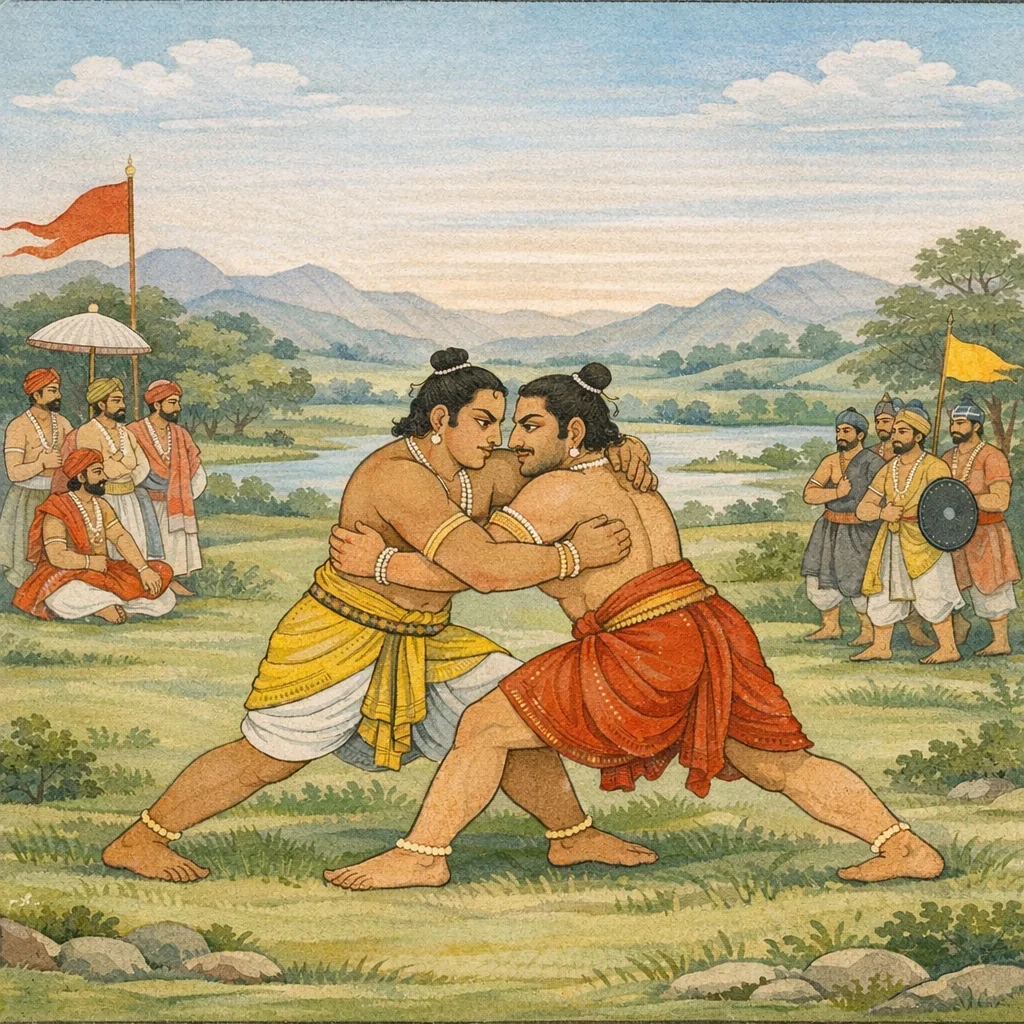
ततः स गण्डकाउछूरो विदेहान् भरतर्षभ:,महता बलचक्रेण परराष्ट्रावमर्दिना । हस्त्यश्वरथपूर्णेन दंशितेन प्रतापवान् २ ।। वृतो भरतशार्टूलो द्विषच्छोकविवर्द्धन: । वैशम्पायनजी कहते हैं--जनमेजय! इसी समय शत्रुओंका शोक बढ़ानेवाले भरतवंशशिरोमणि महाप्रतापी एवं पराक्रमी भीमसेन भी धर्मराजकी आज्ञा ले, शत्रुके राज्यको कुचल देनेवाली और हाथी, घोड़े एवं रथसे भरी हुई, कवच आदिसे सुसज्जित विशाल सेनाके साथ पूर्व दिशाको जीतनेके लिये चले वहाँसे आगे जाकर उन भरतवंशशिरोमणि शूर-वीर भीमने गण्डक (गण्डकी नदीके तटवर्ती) और विदेह (मिथिला) देशोंको थोड़े ही समयमें जीतकर दशार्ण देशको भी अपने अधिकारमें कर लिया। वहाँ दशार्णनरेश सुधर्माने भीमसेनके साथ बिना अस्त्र-शस्त्रके ही महान् युद्ध किया। उन दोनोंका वह मल्लयुद्ध रोंगटे खड़े कर देनेवाला था
Vaiśaṃpāyana said: Then that mighty bull among the Bharatas advanced against the Gaṇḍaka region and the Videhas. Surrounded by a vast, well-armed host—an overpowering wheel of force that crushed hostile kingdoms—filled with elephants, horses, and chariots, he moved forward, increasing the grief of his enemies.
Verse 5
विजित्याल्पेन कालेन दशार्णानजयत प्रभु: । तत्र दाशार्णको राजा सुधर्मा लोमहर्षणम् । कृतवान् भीमसेनेन महद् युद्ध निरायुधम्,महता बलचक्रेण परराष्ट्रावमर्दिना । हस्त्यश्वरथपूर्णेन दंशितेन प्रतापवान् २ ।। वृतो भरतशार्टूलो द्विषच्छोकविवर्द्धन: । वैशम्पायनजी कहते हैं--जनमेजय! इसी समय शत्रुओंका शोक बढ़ानेवाले भरतवंशशिरोमणि महाप्रतापी एवं पराक्रमी भीमसेन भी धर्मराजकी आज्ञा ले, शत्रुके राज्यको कुचल देनेवाली और हाथी, घोड़े एवं रथसे भरी हुई, कवच आदिसे सुसज्जित विशाल सेनाके साथ पूर्व दिशाको जीतनेके लिये चले वहाँसे आगे जाकर उन भरतवंशशिरोमणि शूर-वीर भीमने गण्डक (गण्डकी नदीके तटवर्ती) और विदेह (मिथिला) देशोंको थोड़े ही समयमें जीतकर दशार्ण देशको भी अपने अधिकारमें कर लिया। वहाँ दशार्णनरेश सुधर्माने भीमसेनके साथ बिना अस्त्र-शस्त्रके ही महान् युद्ध किया। उन दोनोंका वह मल्लयुद्ध रोंगटे खड़े कर देनेवाला था
Vaiśampāyana said: In a short time the mighty Bhīmasena conquered the Daśārṇa country. There, the Daśārṇa king Sudharmā engaged Bhīmasena in a great and hair-raising battle without weapons—a sheer contest of strength. And Bhīma, the tiger among the Bharatas and increaser of his enemies’ grief, surrounded by a vast, well-equipped host filled with elephants, horses, and chariots, crushed hostile realms by the force of his power.
Verse 6
भीमसेनस्तु तद् दृष्टवा तस्य कर्म महात्मन: । अधिसेनापतिं चक्रे सुधर्माणं महाबलम्,महता बलचक्रेण परराष्ट्रावमर्दिना । हस्त्यश्वरथपूर्णेन दंशितेन प्रतापवान् २ ।। वृतो भरतशार्टूलो द्विषच्छोकविवर्द्धन: । वैशम्पायनजी कहते हैं--जनमेजय! इसी समय शत्रुओंका शोक बढ़ानेवाले भरतवंशशिरोमणि महाप्रतापी एवं पराक्रमी भीमसेन भी धर्मराजकी आज्ञा ले, शत्रुके राज्यको कुचल देनेवाली और हाथी, घोड़े एवं रथसे भरी हुई, कवच आदिसे सुसज्जित विशाल सेनाके साथ पूर्व दिशाको जीतनेके लिये चले भीमसेनने उस महामना राजाका यह अद्भुत पराक्रम देखकर महाबली सुधर्माको अपना प्रधान सेनापति बना दिया
Vaiśampāyana said: Seeing that extraordinary deed of that great-souled king, Bhīmasena appointed the mighty Sudharmā as his chief commander. Then Bhīma—the tiger among the Bharatas, increaser of his enemies’ grief—set out again, surrounded by a vast, well-armoured host rich in elephants, horses, and chariots, a force that crushed hostile kingdoms.
Verse 7
ततः प्राचीं दिशं भीमो ययौ भीमपराक्रम: । सैन्येन महता राजन् कम्पयन्निव मेदिनीम्,महता बलचक्रेण परराष्ट्रावमर्दिना । हस्त्यश्वरथपूर्णेन दंशितेन प्रतापवान् २ ।। वृतो भरतशार्टूलो द्विषच्छोकविवर्द्धन: । वैशम्पायनजी कहते हैं--जनमेजय! इसी समय शत्रुओंका शोक बढ़ानेवाले भरतवंशशिरोमणि महाप्रतापी एवं पराक्रमी भीमसेन भी धर्मराजकी आज्ञा ले, शत्रुके राज्यको कुचल देनेवाली और हाथी, घोड़े एवं रथसे भरी हुई, कवच आदिसे सुसज्जित विशाल सेनाके साथ पूर्व दिशाको जीतनेके लिये चले राजन्! इसके बाद भयानक पराक्रमी भीमसेन पुनः विशाल सेनाके साथ पृथ्वीको कँपाते हुए पूर्व दिशाकी ओर बढ़े
Vaiśaṃpāyana said: Then Bhīma, of dreadful prowess, set out toward the eastern quarter, O King, with a vast army—so great that it seemed to make the earth tremble. Surrounded by a mighty wheel of force that crushed hostile realms, his host was filled with elephants, horses, and chariots, and was fully armed and armored. That tiger among the Bhāratas, increasing the sorrow of his enemies, advanced to win the East in obedience to Dharmarāja’s command—an assertion of royal duty through disciplined, organized power rather than private violence.
Verse 8
सो<श्वमेधेश्वरं राजन् रोचमानं सहानुगम् । जिगाय समरे वीरो बलेन बलिनां वर:,महता बलचक्रेण परराष्ट्रावमर्दिना । हस्त्यश्वरथपूर्णेन दंशितेन प्रतापवान् २ ।। वृतो भरतशार्टूलो द्विषच्छोकविवर्द्धन: । वैशम्पायनजी कहते हैं--जनमेजय! इसी समय शत्रुओंका शोक बढ़ानेवाले भरतवंशशिरोमणि महाप्रतापी एवं पराक्रमी भीमसेन भी धर्मराजकी आज्ञा ले, शत्रुके राज्यको कुचल देनेवाली और हाथी, घोड़े एवं रथसे भरी हुई, कवच आदिसे सुसज्जित विशाल सेनाके साथ पूर्व दिशाको जीतनेके लिये चले जनमेजय! बलवानोंमें श्रेष्ठ वीरवर भीमने अश्वमेध-देशके राजा रोचमानको उनके सेवकोंसहित बलपूर्वक जीत लिया
Vaiśampāyana said: O King (Janamejaya), that heroic Bhīma—foremost among the strong—defeated in battle the king Rocamāna, lord of the Aśvamedha country, together with his followers. Surrounded by a vast, well-armed host—filled with elephants, horses, and chariots—whose wheel of force crushed hostile realms, the mighty Bharata-tiger advanced, increasing the sorrow of his enemies. Acting under the command of Dharmarāja, his conquest is presented as disciplined royal duty rather than mere personal aggression.
Verse 9
सतं निर्जित्य कौन्तेयो नातितीव्रेण कर्मणा । पूर्वदेशं महावीरयों विजिग्ये कुरुनन्दन:,महता बलचक्रेण परराष्ट्रावमर्दिना । हस्त्यश्वरथपूर्णेन दंशितेन प्रतापवान् २ ।। वृतो भरतशार्टूलो द्विषच्छोकविवर्द्धन: । वैशम्पायनजी कहते हैं--जनमेजय! इसी समय शत्रुओंका शोक बढ़ानेवाले भरतवंशशिरोमणि महाप्रतापी एवं पराक्रमी भीमसेन भी धर्मराजकी आज्ञा ले, शत्रुके राज्यको कुचल देनेवाली और हाथी, घोड़े एवं रथसे भरी हुई, कवच आदिसे सुसज्जित विशाल सेनाके साथ पूर्व दिशाको जीतनेके लिये चले उन्हें हराकर महापराक्रमी कुरुनन्दन कुन्तीकुमार भीमने कोमल बर्तावके द्वारा ही पूर्ववेशपर विजय प्राप्त कर ली
Vaiśampāyana said: Having subdued the hostile chiefs, the son of Kuntī—mighty Kurunandana—won the eastern region, not by excessively harsh measures, but through restrained action. Surrounded by a vast, well-ordered host that crushed enemy kingdoms—filled with elephants, horses, and chariots, and fully armed—this valiant tiger among the Bharatas advanced, increasing the sorrow of his foes. The narrative underscores conquest carried out under royal command with controlled force rather than needless cruelty.
Verse 10
ततो दक्षिणमागम्य पुलिन्दनगरं महत् | सुकुमारं वशे चक्रे सुमित्रं च नराधिपम्,महता बलचक्रेण परराष्ट्रावमर्दिना । हस्त्यश्वरथपूर्णेन दंशितेन प्रतापवान् २ ।। वृतो भरतशार्टूलो द्विषच्छोकविवर्द्धन: । वैशम्पायनजी कहते हैं--जनमेजय! इसी समय शत्रुओंका शोक बढ़ानेवाले भरतवंशशिरोमणि महाप्रतापी एवं पराक्रमी भीमसेन भी धर्मराजकी आज्ञा ले, शत्रुके राज्यको कुचल देनेवाली और हाथी, घोड़े एवं रथसे भरी हुई, कवच आदिसे सुसज्जित विशाल सेनाके साथ पूर्व दिशाको जीतनेके लिये चले तदनन्तर दक्षिण आकर पुलिन्दोंके महान् नगर सुकुमार और वहाँके राजा सुमित्रको अपने अधीन कर लिया
Vaiśampāyana said: Then, turning south, the mighty hero came to the great city of the Pulindas. With a vast, well-equipped host—crushing hostile realms, and filled with elephants, horses, and chariots—he brought the city of Sukumāra under control, and also subdued Sumitra, the ruler of men there. Thus the tiger among the Bharatas, increasing the sorrow of his foes, advanced in the campaign of conquest carried out under royal command—an assertion of sovereignty through force, framed within the political duty of securing tribute and obedience.
Verse 11
ततस्तु धर्मराजस्य शासनाद् भरतर्षभ: । शिशुपालं महावीर्यमभ्यगाज्जनमेजय,महता बलचक्रेण परराष्ट्रावमर्दिना । हस्त्यश्वरथपूर्णेन दंशितेन प्रतापवान् २ ।। वृतो भरतशार्टूलो द्विषच्छोकविवर्द्धन: । वैशम्पायनजी कहते हैं--जनमेजय! इसी समय शत्रुओंका शोक बढ़ानेवाले भरतवंशशिरोमणि महाप्रतापी एवं पराक्रमी भीमसेन भी धर्मराजकी आज्ञा ले, शत्रुके राज्यको कुचल देनेवाली और हाथी, घोड़े एवं रथसे भरी हुई, कवच आदिसे सुसज्जित विशाल सेनाके साथ पूर्व दिशाको जीतनेके लिये चले जनमेजय! तत्पश्चात् भरतश्रेष्ठ भीम धर्मराजकी आज्ञासे महापराक्रमी शिशुपालके यहाँ गये
Vaiśampāyana said: Then, O Janamejaya, at the command of Dharmarāja (Yudhiṣṭhira), that bull among the Bhāratas—mighty in valor—set out toward the powerful Śiśupāla. Surrounded by a vast, well-armed host—an encircling force that crushed hostile kingdoms, filled with elephants, horses, and chariots, and equipped with armor—he advanced as a terror to enemies, increasing the grief of foes. In ethical terms, the movement is framed not as personal aggression but as action undertaken under rightful royal instruction, aimed at establishing the king’s ordered sovereignty.
Verse 12
चेदिराजो5पि तच्छुत्वा पाण्डवस्य चिकीर्षितम् । उपनिष्क्रम्य नगरात् प्रत्यगृह्नात् परंतप,महता बलचक्रेण परराष्ट्रावमर्दिना । हस्त्यश्वरथपूर्णेन दंशितेन प्रतापवान् २ ।। वृतो भरतशार्टूलो द्विषच्छोकविवर्द्धन: । वैशम्पायनजी कहते हैं--जनमेजय! इसी समय शत्रुओंका शोक बढ़ानेवाले भरतवंशशिरोमणि महाप्रतापी एवं पराक्रमी भीमसेन भी धर्मराजकी आज्ञा ले, शत्रुके राज्यको कुचल देनेवाली और हाथी, घोड़े एवं रथसे भरी हुई, कवच आदिसे सुसज्जित विशाल सेनाके साथ पूर्व दिशाको जीतनेके लिये चले परंतप! चेदिराज शिशुपालने भी पाण्डुकुमार भीमका अभिप्राय जानकर नगरसे बाहर आ स्वागत-सत्कारके साथ उन्हें अपनाया
Vaiśampāyana said: “O scorcher of foes! The king of Cedi too, having heard what the Pāṇḍava intended, came out of the city and received him with due welcome. That mighty hero—tiger among the Bharatas, increaser of his enemies’ grief—was attended by a vast, well-armed host, a wheel of forces that crushed hostile kingdoms, filled with elephants, horses, and chariots, and arrayed in armor.”
Verse 13
तौ समेत्य महाराज कुरुचेदिवृषौ तदा । उभयोरात्मकुलयो: कौशल्यं पर्यपृच्छताम्,महता बलचक्रेण परराष्ट्रावमर्दिना । हस्त्यश्वरथपूर्णेन दंशितेन प्रतापवान् २ ।। वृतो भरतशार्टूलो द्विषच्छोकविवर्द्धन: । वैशम्पायनजी कहते हैं--जनमेजय! इसी समय शत्रुओंका शोक बढ़ानेवाले भरतवंशशिरोमणि महाप्रतापी एवं पराक्रमी भीमसेन भी धर्मराजकी आज्ञा ले, शत्रुके राज्यको कुचल देनेवाली और हाथी, घोड़े एवं रथसे भरी हुई, कवच आदिसे सुसज्जित विशाल सेनाके साथ पूर्व दिशाको जीतनेके लिये चले महाराज! कुरुकुल और चेदिकुलके वे श्रेष्ठ पुरुष परस्पर मिलकर दोनोंने दोनों कुलोंके कुशल-प्रश्न पूछे
Vaiśampāyana said: “O King, at that time those two eminent bulls among the Kurus and the Cedis met together and, with due courtesy, inquired after the welfare and good condition of each other’s families.”
Verse 14
ततो निवेद्य तद् राष्ट्र चेदिराजो विशाम्पते । उवाच भीम॑ प्रहसन् किमिदं कुरुषेडनघ,महता बलचक्रेण परराष्ट्रावमर्दिना । हस्त्यश्वरथपूर्णेन दंशितेन प्रतापवान् २ ।। वृतो भरतशार्टूलो द्विषच्छोकविवर्द्धन: । वैशम्पायनजी कहते हैं--जनमेजय! इसी समय शत्रुओंका शोक बढ़ानेवाले भरतवंशशिरोमणि महाप्रतापी एवं पराक्रमी भीमसेन भी धर्मराजकी आज्ञा ले, शत्रुके राज्यको कुचल देनेवाली और हाथी, घोड़े एवं रथसे भरी हुई, कवच आदिसे सुसज्जित विशाल सेनाके साथ पूर्व दिशाको जीतनेके लिये चले राजन! तदनन्तर चेदिराजने अपना राष्ट्र भीमसेनको सौंपकर हँसते हुए पूछा--“अनघ! यह क्या करते हो?”
Vaiśampāyana said: “Then the king of Cedi, having entrusted that kingdom, addressed Bhīma with a smile: ‘Blameless one, what is this you are doing? Surrounded by a great wheel of forces—mighty, crushing the realms of others—filled with elephants, horses, and chariots, and fully armed—you, the tiger among the Bharatas, increaser of your enemies’ grief…’”
Verse 15
तस्य भीमस्तदा55चख्यौ धर्मराजचिकीर्षितम् । सचतं प्रतिगृहौव तथा चक्रे नराधिप:,महता बलचक्रेण परराष्ट्रावमर्दिना । हस्त्यश्वरथपूर्णेन दंशितेन प्रतापवान् २ ।। वृतो भरतशार्टूलो द्विषच्छोकविवर्द्धन: । वैशम्पायनजी कहते हैं--जनमेजय! इसी समय शत्रुओंका शोक बढ़ानेवाले भरतवंशशिरोमणि महाप्रतापी एवं पराक्रमी भीमसेन भी धर्मराजकी आज्ञा ले, शत्रुके राज्यको कुचल देनेवाली और हाथी, घोड़े एवं रथसे भरी हुई, कवच आदिसे सुसज्जित विशाल सेनाके साथ पूर्व दिशाको जीतनेके लिये चले तब भीमने उससे धर्मराज जो कुछ करना चाहते थे, वह सब कह सुनाया। तदनन्तर राजा शिशुपालने उनकी बात मानकर कर देना स्वीकार कर लिया
Vaiśampāyana said: “Then Bhīma disclosed to him what Dharmarāja intended to accomplish. The king accepted that plan and acted accordingly. And Bhīma—the tiger among the Bharatas, increaser of his enemies’ grief—set forth in full splendor, surrounded by a vast, well-armed host, a wheel of forces that could crush hostile realms, filled with elephants, horses, and chariots, and protected by armor.”
Verse 16
ततो भीमस्तत्र राजन्नुषित्वा त्रिदश क्षपा: । सत्कृत: शिशुपालेन ययौ सबलवाहन:,महता बलचक्रेण परराष्ट्रावमर्दिना । हस्त्यश्वरथपूर्णेन दंशितेन प्रतापवान् २ ।। वृतो भरतशार्टूलो द्विषच्छोकविवर्द्धन: । वैशम्पायनजी कहते हैं--जनमेजय! इसी समय शत्रुओंका शोक बढ़ानेवाले भरतवंशशिरोमणि महाप्रतापी एवं पराक्रमी भीमसेन भी धर्मराजकी आज्ञा ले, शत्रुके राज्यको कुचल देनेवाली और हाथी, घोड़े एवं रथसे भरी हुई, कवच आदिसे सुसज्जित विशाल सेनाके साथ पूर्व दिशाको जीतनेके लिये चले राजन्! उसके बाद शिशुपालसे सम्मानित हो भीमसेन अपनी सेना और सवारियोंके साथ तेरह दिन वहाँ रह गये। तत्पश्चात् वहाँसे विदा हुए
Vaiśampāyana said: “Then Bhīma, O King, having stayed there for thirteen nights and having been honored by Śiśupāla, set out with his troops and mounts. Mighty and radiant, he marched with a vast, well-armed battle-array—filled with elephants, horses, and chariots—an army fit to crush hostile kingdoms. Thus the tiger among the Bharatas, increaser of his enemies’ grief, departed to carry out the king’s command and advance the campaign of conquest.”
Verse 17
महता बलचक्रेण परराष्ट्रावमर्दिना । हस्त्यश्वरथपूर्णेन दंशितेन प्रतापवान् २ ।। वृतो भरतशार्टूलो द्विषच्छोकविवर्द्धन: । वैशम्पायनजी कहते हैं--जनमेजय! इसी समय शत्रुओंका शोक बढ़ानेवाले भरतवंशशिरोमणि महाप्रतापी एवं पराक्रमी भीमसेन भी धर्मराजकी आज्ञा ले, शत्रुके राज्यको कुचल देनेवाली और हाथी, घोड़े एवं रथसे भरी हुई, कवच आदिसे सुसज्जित विशाल सेनाके साथ पूर्व दिशाको जीतनेके लिये चले
Vaiśampāyana said: O Janamejaya, then Bhīmasena—the mighty hero, the tiger among the Bharatas, increaser of his enemies’ grief—having received the command of Dharmarāja, set forth to conquer the eastern quarter, surrounded by a vast wheel of forces: a fully armed host, filled with elephants, horses, and chariots, that would crush hostile kingdoms.
Verse 18
महता बलचक्रेण परराष्ट्रावमर्दिना । हस्त्यश्वरथपूर्णेन दंशितेन प्रतापवान् २ ।। वृतो भरतशार्टूलो द्विषच्छोकविवर्द्धन: । वैशम्पायनजी कहते हैं--जनमेजय! इसी समय शत्रुओंका शोक बढ़ानेवाले भरतवंशशिरोमणि महाप्रतापी एवं पराक्रमी भीमसेन भी धर्मराजकी आज्ञा ले, शत्रुके राज्यको कुचल देनेवाली और हाथी, घोड़े एवं रथसे भरी हुई, कवच आदिसे सुसज्जित विशाल सेनाके साथ पूर्व दिशाको जीतनेके लिये चले
Vaiśampāyana said: Then that mighty hero—the tiger among the Bharatas, increaser of his enemies’ grief—set forth, surrounded by a vast, well-armoured host: a crushing wheel of power filled with elephants, horses, and chariots, ready to trample hostile realms. In the epic’s moral frame, this march is shown as a sanctioned act of royal policy—force employed under the king’s command to secure order and sovereignty, even as it deepens the sorrow of those who resist.
Verse 19
महता बलचक्रेण परराष्ट्रावमर्दिना । हस्त्यश्वरथपूर्णेन दंशितेन प्रतापवान् २ ।। वृतो भरतशार्टूलो द्विषच्छोकविवर्द्धन: । वैशम्पायनजी कहते हैं--जनमेजय! इसी समय शत्रुओंका शोक बढ़ानेवाले भरतवंशशिरोमणि महाप्रतापी एवं पराक्रमी भीमसेन भी धर्मराजकी आज्ञा ले, शत्रुके राज्यको कुचल देनेवाली और हाथी, घोड़े एवं रथसे भरी हुई, कवच आदिसे सुसज्जित विशाल सेनाके साथ पूर्व दिशाको जीतनेके लिये चले
Vaiśampāyana said: Surrounded by a vast wheel of forces—an army that crushed hostile kingdoms, filled with elephants, horses, and chariots, and fully armed—Bhīmasena, the mighty hero, the tiger among the Bharatas, increaser of his enemies’ sorrow, set forth (in obedience to the king’s command) to subdue the eastern quarter. The passage frames conquest not as private ambition but as disciplined action under royal order.
Verse 20
महता बलचक्रेण परराष्ट्रावमर्दिना । हस्त्यश्वरथपूर्णेन दंशितेन प्रतापवान् २ ।। वृतो भरतशार्टूलो द्विषच्छोकविवर्द्धन: । वैशम्पायनजी कहते हैं--जनमेजय! इसी समय शत्रुओंका शोक बढ़ानेवाले भरतवंशशिरोमणि महाप्रतापी एवं पराक्रमी भीमसेन भी धर्मराजकी आज्ञा ले, शत्रुके राज्यको कुचल देनेवाली और हाथी, घोड़े एवं रथसे भरी हुई, कवच आदिसे सुसज्जित विशाल सेनाके साथ पूर्व दिशाको जीतनेके लिये चले
Vaiśampāyana said: Surrounded by a vast wheel of forces—an army that crushed hostile kingdoms, filled with elephants, horses, and chariots, and fully armed—the mighty and radiant hero, the tiger among the Bharatas, became a cause of increased sorrow to his enemies as he set forth to carry out the king’s command.
Verse 21
महता बलचक्रेण परराष्ट्रावमर्दिना । हस्त्यश्वरथपूर्णेन दंशितेन प्रतापवान् २ ।। वृतो भरतशार्टूलो द्विषच्छोकविवर्द्धन: । वैशम्पायनजी कहते हैं--जनमेजय! इसी समय शत्रुओंका शोक बढ़ानेवाले भरतवंशशिरोमणि महाप्रतापी एवं पराक्रमी भीमसेन भी धर्मराजकी आज्ञा ले, शत्रुके राज्यको कुचल देनेवाली और हाथी, घोड़े एवं रथसे भरी हुई, कवच आदिसे सुसज्जित विशाल सेनाके साथ पूर्व दिशाको जीतनेके लिये चले
Vaiśampāyana said: Surrounded by a vast wheel of forces—one that would crush the enemy’s realm—filled with elephants, horses, and chariots, and fully armed, Bhīmasena, the mighty hero, the tiger among the Bharatas, increaser of his foes’ grief, set forth, having taken the king’s command, to conquer the eastern quarter. The passage underscores royal duty executed through organized power: conquest is framed not as private aggression but as a sanctioned campaign under the ruler’s order.
Verse 22
महता बलचक्रेण परराष्ट्रावमर्दिना । हस्त्यश्वरथपूर्णेन दंशितेन प्रतापवान् २ ।। वृतो भरतशार्टूलो द्विषच्छोकविवर्द्धन: । वैशम्पायनजी कहते हैं--जनमेजय! इसी समय शत्रुओंका शोक बढ़ानेवाले भरतवंशशिरोमणि महाप्रतापी एवं पराक्रमी भीमसेन भी धर्मराजकी आज्ञा ले, शत्रुके राज्यको कुचल देनेवाली और हाथी, घोड़े एवं रथसे भरी हुई, कवच आदिसे सुसज्जित विशाल सेनाके साथ पूर्व दिशाको जीतनेके लिये चले
Vaiśampāyana said: That mighty hero—the tiger among the Bharatas—was surrounded by a vast, wheel-like host, able to crush the kingdoms of enemies, filled with elephants, horses, and chariots, and fully armed and armored; thus did the grief of his foes increase. Within the epic’s moral order, the verse presents conquest as royal duty: disciplined power exercised under rightful command against hostile realms.
Verse 23
महता बलचक्रेण परराष्ट्रावमर्दिना । हस्त्यश्वरथपूर्णेन दंशितेन प्रतापवान् २ ।। वृतो भरतशार्टूलो द्विषच्छोकविवर्द्धन: । वैशम्पायनजी कहते हैं--जनमेजय! इसी समय शत्रुओंका शोक बढ़ानेवाले भरतवंशशिरोमणि महाप्रतापी एवं पराक्रमी भीमसेन भी धर्मराजकी आज्ञा ले, शत्रुके राज्यको कुचल देनेवाली और हाथी, घोड़े एवं रथसे भरी हुई, कवच आदिसे सुसज्जित विशाल सेनाके साथ पूर्व दिशाको जीतनेके लिये चले
Vaiśampāyana said: That mighty hero—the tiger among the Bharatas—was surrounded by a vast host, ordered like a wheel of war, equipped to crush hostile kingdoms, filled with elephants, horses, and chariots, and fully armed. An increaser of his enemies’ grief, he set forth by the king’s command to subdue the opposing realms. The verse stresses that conquest is not private rage, but duty carried out under legitimate authority and martial order.
Verse 29
इति श्रीमहाभारते सभापर्वणि दिग्विजयपर्वणि भीमदिग्विजये एकोनत्रिंशो5ध्याय:
Thus ends the twenty-ninth chapter of the Mahābhārata in the Sabhā Parva, within the Digvijaya section (the conquest of the quarters), specifically recounting Bhīma’s campaign. This colophon closes the narrative unit and places it within the epic’s ethical frame: royal expansion undertaken for Yudhiṣṭhira’s sovereignty and the coming rājasūya.
Verse 33
पज्चालान् विविधोपायै: सान्त्वयामास पाण्डव: । नरश्रेष्ठ भीमसेनने पहले पांचालोंकी महानगरी अहिच्छत्रामें जाकर भाँति-भाँतिके उपायोंसे पांचाल वीरोंको समझा-बुझाकर वशमें किया
Vaiśampāyana said: The Pāṇḍava, employing many different expedients, conciliated the Pañcālas and brought them under control—showing that in the epic, political ends are pursued not only by force, but also through persuasion and tact.
Frequently Asked Questions
The chapter implicitly stages a governance dilemma: how to reconcile coercive expansion (kṣātra action) with ordered legitimacy—seeking submission, tribute, and administrative compliance rather than unchecked violence—so that conquest serves a recognized political-ritual objective.
Power is depicted as most durable when institutionalized: conquest is followed by communication, acknowledgment, and redistribution to the sovereign center, indicating that authority is sustained through procedure, accountability, and integration of diverse regions into a coherent polity.
No explicit phalaśruti appears in this adhyāya; its meta-function is archival and administrative—recording the scope of Nakula’s western alignment and the material basis it provides for Yudhiṣṭhira’s rājasūya trajectory.