Adhyaya 2
मौसलोत्पत्तिः — The Birth of the Musala and the Sages’ Pronouncement
Upa-parva: Mausala-śāpa-prasaṅga (The Episode of the Musala Curse at Dvārakā)
Janamejaya asks how the Andhakas, Vṛṣṇis, and Bhoja mahārathas were destroyed even as Vāsudeva looked on. Vaiśaṃpāyana locates the catastrophe in a curse-triggering incident: in the thirty-sixth year, a great internal dissension arises among the Vṛṣṇis, and—driven by kāla—they strike one another with musalas. Janamejaya then asks by what imprecation the clans met destruction. Vaiśaṃpāyana recounts the arrival of Viśvāmitra, Kaṇva, and Nārada at Dvārakā, whom Sāraṇa and other heroes approach after dressing Sāmba as a woman and posing a taunting question about childbirth. The sages, provoked by deception, declare that Sāmba—Vāsudeva’s descendant—will produce a terrible iron musala destined to destroy the Vṛṣṇi-Andhaka line, sparing only Rāma and Janārdana; they further foretell Balarāma’s departure to the sea and Kṛṣṇa’s death by the hunter Jarā. Kṛṣṇa, understanding the inevitability (kṛtānta), does not seek to reverse it. The next day the musala is born; the king orders it ground to fine powder and cast into the ocean and proclaims a citywide ban on intoxicants with severe penalties, and the populace complies out of fear of royal sanction.
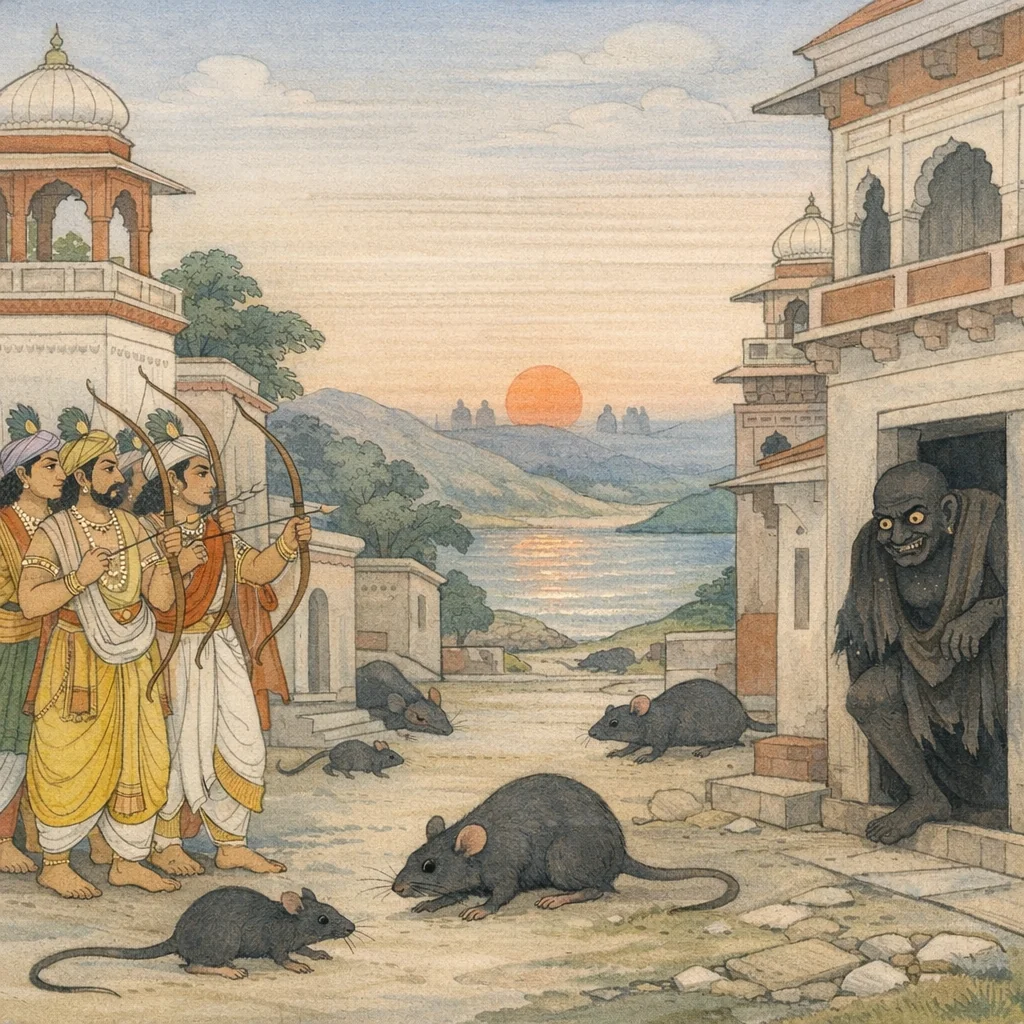
Chapter Arc: द्वारका में अनिष्ट-सूचक उत्पातों की बाढ़—विकराल, विकट, मुण्ड पुरुष का प्रकट होना और वृष्णियों के गृहों में भय का फैलना। → वृष्णि-वीर उस अद्भुत पुरुष पर शतसहस्र बाण बरसाते हैं, पर वह वेधित नहीं होता; नगर-जीवन में विकृति बढ़ती जाती है—चूहे असामान्य रूप से फैलते हैं, रात्रि में सोए जनों के केश-नख कुतरते हैं, पशु-योनि में भी उलट-फेर और अशुभ संकेत दिखते हैं; वृष्णि-समाज पाप को निर्लज्जता से करने लगता है, यज्ञ-श्राद्धादि भी मानो केवल बाह्य-आवरण रह जाते हैं। → उदय-अस्त के समय सूर्य का कबन्धों से घिरा दिखना और पूर्वोक्त दारुण उत्पातों की स्मृति (युधिष्ठिर द्वारा पहले कही गई बात) के साथ कृष्ण का यह निश्चय कि गान्धारी का शाप सत्य होकर रहेगा—और उसी क्षण उनका निर्णायक आदेश: तीर्थयात्रा। → केशव के शासन से राजकीय पुरुष नगर में घोषणा करते हैं—‘समुद्र-तीर्थों की यात्रा करनी है’; भय और अनिष्ट को एक अनुशासनात्मक, नियति-स्वीकृत दिशा दी जाती है। → तीर्थयात्रा का यह आदेश क्या वृष्णि-विनाश को टालने का उपाय है, या उसी विनाश की ओर ले जाने वाला अंतिम पथ?
Shlokas
Verse 1
#स्जम (2) असजमनसा द्वितीयो&्ध्याय: द्वारकामें भयंकर उत्पात देखकर भगवान् श्रीकृष्णका यदुवंशियोंको तीर्थयात्राके लिये आदेश देना वैशम्पायन उवाच एवं प्रयतमानानां वृष्णीनामन्धकैः सह । कालो गृहाणि सर्वेषां परिचक्राम नित्यश:,वैशम्पायनजी कहते हैं--राजन्! इस प्रकार वृष्णि और अन्धकवंशके लोग अपने ऊपर आनेवाले संकटका निवारण करनेके लिये भाँति-भाँतिके प्रयत्न कर रहे थे और उधर काल प्रतिदिन सबके घरोंमें चक्कर लगाया करता था
Vaiśampāyana said: “O King, while the Vṛṣṇis, together with the Andhakas, were striving in various ways to avert the calamity that was approaching them, Time itself moved through the houses of all, day after day.”
Verse 2
करालो विकटो मुण्ड: पुरुष: कृष्णपिड्रल: । गृहाण्यावेक्ष्य वृष्णीनां नादृश्यत क्वचित् क्वचित्,उसका स्वरूप विकराल और वेश विकट था। उसके शरीरका रंग काला और पीला था। वह मूँड़ मुड़ाये हुए पुरुषके रूपमें वृष्णिवंशियोंके घरोंमें प्रवेश करके सबको देखता और कभी-कभी अदृश्य हो जाता था इति श्रीमहा भारते मौसलपर्वणि उत्पातदर्शने द्वितीयो$ध्याय:
Vaiśampāyana said: A man of dreadful appearance and grotesque guise, with a shaven head and a dark-yellowish complexion, would enter the houses of the Vṛṣṇis and stare about at them; and then, at times, he would vanish from sight. The episode is an ominous portent—an ethical warning that when a community’s conduct declines and arrogance rises, unseen forces of disorder begin to move among them, foreshadowing inevitable ruin.
Verse 3
तमघध्नन्त महेष्वासा: शरै: शतसहस््रश: । न चाशक्यत वेद्धुं स सर्वभूतात्ययस्तदा
Vaiśampāyana said: The mighty archers assailed him again and again with hundreds of thousands of arrows, seeking to strike him down. Yet at that time he could not be pierced at all—for he had become, as it were, the very ‘passing-away’ of all beings, a figure of inevitable destruction beyond ordinary harm.
Verse 4
उसे देखनेपर बड़े-बड़े धनुर्धर वीर उसके ऊपर लाखों बाणोंका प्रहार करते थे; परंतु सम्पूर्ण भूतोंका विनाश करनेवाले उस कालको वे वेध नहीं पाते थे ।। उत्पेदिरे महावाता दारुणाश्ष् दिने दिने | वृष्ण्यन्धकविनाशाय बहवो लोमहर्षणा:,अब प्रतिदिन अनेक बार भयंकर आँधी उठने लगी, जो रोंगटे खड़े कर देनेवाली थी। उससे वृष्णियों और अन्धकोंके विनाशकी सूचना मिल रही थी
Vaiśampāyana said: Day after day, many dreadful, hair-raising gales arose again and again—ominous portents foretelling the destruction of the Vṛṣṇis and the Andhakas. Even mighty archers, though they might shower countless arrows at what they saw, could not pierce or arrest Time, the destroyer of all beings; thus the narrative underscores the moral inevitability of destiny ripening from prior causes.
Verse 5
विवृद्धमूषिका रथ्या विभिन्नमणिकास्तथा । केशा नखाश्न सुप्तानामद्यन्ते मूषिकैनिशि,चूहे इतने बढ़ गये थे कि वे सड़कोंपर छाये रहते थे। मिट्टीके बरतनोंमें छेद कर देते थे तथा रातमें सोये हुए मनुष्योंके केश और नख कुतरकर खा जाया करते थे
Vaiśampāyana said: The mice had multiplied greatly and overran the streets. They gnawed through earthen vessels, and at night they even chewed and ate the hair and nails of people while they slept. The scene signals a grave social and moral disorder—an ominous decay of safety and cleanliness that mirrors the collapse of right order after the great war.
Verse 6
चीचीकूचीति वाशन्ति सारिका वृष्णिवेश्मसु । नोपशाम्यति शब्दक्ष स दिवारात्रमेव हि,वृष्णिवंशियोंके घरोंमें मैनाएँ दिन-रात चें-चें किया करती थीं। उनकी आवाज कभी एक क्षणके लिये भी बंद नहीं होती थी
Vaiśampāyana said: In the houses of the Vṛṣṇis, the myna-birds kept crying out “chīchīkūchī” incessantly. That harsh sound did not subside even for a moment, continuing day and night—an ominous sign of the unrest and impending ruin that was about to overtake the clan.
Verse 7
अन्वकुर्वन्नुलूकानां सारसा विरुतं तथा । अजा: शिवानां विरुतमन्वकुर्वत भारत,भारत! सारस उल्लुओंकी और बकरे गीदड़ोंकी बोलीकी नकल करने लगे
Vaiśampāyana said: “O Bhārata, Bhārata! The cranes began imitating the hooting of the owls, and the goats began imitating the cries of the jackals.”
Verse 8
पाण्डुरा रक्तपादाश्न विहगा: कालचोदिता: । वृष्ण्यन्धकानां गेहेषु कपोता व्यचरंस्तदा,कालकी प्रेरणासे वृष्णियों और अन्धकोंके घरोंमें सफेद पंख और लाल पैरोंवाले कबूतर घूमने लगे
Vaiśaṃpāyana said: Driven by Time (fate), pale-feathered birds with red feet—pigeons—began to wander about within the houses of the Vṛṣṇis and Andhakas.
Verse 9
इस प्रकार श्रीमह्याभारत मौसलपर्वमें मुसलकी उत्पत्तिविषयक पहला अध्याय पूरा हुआ,व्यजायन्त खरा गोषु करभा<श्वतरीषु च । शुनीष्वपि बिडालाश्न मूषिका नकुलीषु च गौओंके पेटसे गदहे, खच्चरियोंसे हाथी, कुतियोंसे बिलाव और नेवलियोंके गर्भसे चूहे पैदा होने लगे
Vaiśampāyana said: In those days, the natural order of birth became inverted as an ominous sign. Donkeys were born from cows; elephants from she-mules; cats even from bitches; and mice from mongooses.
Verse 10
नापत्रपन्त पापानि कुर्वन्तो वृष्णयस्तदा । प्राद्धिषन् ब्राह्मणांश्वापि पितृन् देवांस्तथैव च,उन दिनों वृष्णिवंशी खुल्लमखुल्ला पाप करते और उसके लिये लज्जित नहीं होते थे। वे ब्राह्मणों, देवताओं और पितरोंसे भी द्वेष रखने लगे
Vaiśaṃpāyana said: At that time the Vṛṣṇis, committing sinful acts openly, felt no shame. They even turned hostile toward the Brāhmaṇas, and likewise toward the Pitṛs (ancestors) and the Devas.
Verse 11
गुरूंश्चाप्पवमन्यन्ते न तु रामजनार्दनौ । पत्न्य: पतीनुच्चरन्त पत्नीक्ष पतयस्तथा,इतना ही नहीं, वे गुरुजनोंका भी अपमान करते थे। केवल बलराम और श्रीकृष्णका ही तिरस्कार नहीं करते थे। पत्नियाँ पतियोंको और पति अपनी पत्नियोंको धोखा देने लगे
Vaiśaṃpāyana said: They even began to show contempt for their elders and teachers. Yet they did not dare to insult Balarāma and Janārdana (Kṛṣṇa). Meanwhile, moral order within households collapsed: wives deceived their husbands, and husbands likewise betrayed their wives.
Verse 12
विभावसु: प्रज्वलितो वाम॑ विपरिवर्तते । नीललोहितमज्जिष्ठा विसृजन्नर्चिष: पृथक्,अग्निदेव प्रजजलित होकर अपनी लपटोंको वामावर्त घुमाते थे। उनसे कभी नीले रंगकी, कभी रक्तवर्णी और कभी मजीठके रंगकी पृथक्-पृथक् लपटें निकलती थीं
Vaiśampāyana said: The blazing Fire (Vibhāvasu) began to whirl in an inauspicious leftward spiral, casting forth separate tongues of flame—some blue, some blood-red, and some the deep madder hue. Those unnatural colors and the fire’s leftward turning signaled a grave disturbance in dharma and the cosmic order, foreshadowing calamity rather than auspicious rite.
Verse 13
उदयास्तमने नित्यं पुर्या तस्यां दिवाकर: । व्यदृश्यतासकृत् पुम्भि: कबन्धै: परिवारित:,उस नगरीमें रहनेवाले लोगोंको उदय और अस्तके समय सूर्यदेव प्रतिदिन बारंबार कबन्धोंसे घिरे दिखायी देते थे
Vaiśampāyana said: In that city, every day at sunrise and at sunset, the Sun was repeatedly seen by the inhabitants as though encircled by headless trunks—an ominous sign foretelling calamity and the collapse of order.
Verse 14
महानसेषु सिद्धेषु संस्कृतेइतीव भारत । आहार्यमाणे कृमयो व्यदृश्यन्त सहस्रश:,अच्छी तरह छौंक-बघारकर जो रसोइयाँ तैयार की जाती थीं, उन्हें परोसकर जब लोग भोजनके लिये बैठते थे तब उनमें हजारों कीड़े दिखायी देने लगते थे
Vaiśampāyana said: O Bhārata, even when the dishes were fully prepared in the kitchens and properly seasoned, at the very moment they were being served for eating, thousands of worms were seen in them. Thus, what should have sustained life became repulsive and unfit, signaling a moral and cosmic disorder overtaking the Yādavas’ world.
Verse 15
पुण्याहे वाच्यमाने तु जपत्सु च महात्मसु | अभिधावन्त: श्रूयन्ते न चादृश्यत कश्नन,जब पुण्याहवाचन किया जाता और महात्मा पुरुष जप करने लगते थे, उस समय कुछ लोगोंके दौड़नेकी आवाज सुनायी देती थी; परंतु कोई दिखायी नहीं देता था
Vaiśampāyana said: While the auspicious-day rite was being proclaimed and the noble men were engaged in recitation, the sound of people running about was heard—yet no one at all could be seen. The scene suggests an ominous, unseen disturbance intruding upon sacred observance, hinting at the moral unraveling soon to follow.
Verse 16
परस्परं च नक्षत्र हन्यमानं पुन: पुनः | ग्रहैरपश्यन् सर्वे ते नात्मनस्तु कथंचन,सब लोग बारंबार यह देखते थे कि नक्षत्र आपसमें तथा ग्रहोंके साथ भी टकरा जाते हैं, परन्तु कोई भी किसी तरह अपने नक्षत्रको नहीं देख पाता था
Vaiśampāyana said: Again and again they all witnessed the stars striking one another, and even colliding with the planets; yet none of them could in any way behold his own star. The omen suggests a world-order turning against itself—confusion in the heavens mirroring the loss of clarity and self-knowledge among men, and foreshadowing inevitable ruin.
Verse 17
नदन्तं पाउ्चजन्यं च वृष्ण्यन्धकनिवेशने । समन्तात् पर्यवाशन्त रासभा दारुणस्वरा:,जब भगवान् श्रीकृष्णका पाज्चजन्य शंख बजता था, तब वृष्णियों और अन्धकोंके घरके आस-पास चारों ओर भयंकर स्वरवाले गदहे रेंकने लगते थे
Vaiśampāyana said: In the settlement of the Vṛṣṇis and the Andhakas, whenever the Pāñcajanya conch was sounded, donkeys with dreadful cries would bray all around. That ominous clamor stood as a moral warning: when a community’s inner order decays, even sacred and heroic signals are answered by portents that foretell ruin.
Verse 18
एवं पश्यन् हृषीकेश: सम्प्राप्तं कालपर्ययम् । त्रयोदश्याममावास्यां तान् दृष्ट्वा प्राब्रवीदिदम्,इस तरह कालका उलट-फेर प्राप्त हुआ देख और त्रयोदशी तिथिको अमावास्याका संयोग जान भगवान् श्रीकृष्णने सब लोगोंसे कहा--
Seeing that a reversal of time’s ordained course had arrived, Hṛṣīkeśa (Kṛṣṇa) recognized the ominous concurrence of the thirteenth lunar day with the new-moon night. Having observed them all, he then addressed the gathered people—signaling that what was unfolding was not chance, but destiny ripening, calling for sober restraint and readiness.
Verse 19
चतुर्दशी पञ्चदशी कृतेयं राहुणा पुनः । प्राप्ते वै भारते युद्धे प्राप्ता चाद्य क्षयाय न:,“वीरो! इस समय राहुने फिर चतुर्दशीको ही अमावास्या बना दिया है। महाभारतयुद्धके समय जैसा योग था वैसा ही आज भी है। यह सब हमलोगोंके विनाशका सूचक है!
Vaiśampāyana said: “O heroes! Rāhu has once again turned the fourteenth and fifteenth lunar days into a single new-moon darkness. The very same ominous conjunction that appeared at the time of the Bhārata war has returned today as well. This is a portent of our destruction.”
Verse 20
विमृशन्नेव काल॑ तं॑ परिचिन्त्य जनार्दन: । मेने प्राप्त स षट्त्रिंशं वर्ष वै केशिसूदन:,इस प्रकार समयका विचार करते हुए केशिहन्ता श्रीकृष्णने जब उसका विशेष चिन्तन किया, तब उन्हें मालूम हुआ कि महाभारतयुद्धके बाद यह छत्तीसवाँ वर्ष आ पहुँचा
Vaiśampāyana said: Reflecting on that course of time and pondering it closely, Janārdana—Keśi’s slayer—understood that the thirty-sixth year since the great Bhārata war had now arrived. The verse underscores an air of inevitability: time ripens consequences, and even the Lord’s deeds in the world unfold in harmony with the destined order.
Verse 21
पुत्रशोकाभिसंतप्ता गान्धारी हतबान्धवा | यदनुव्याजहारार्ता तदिदं समुपागमत्,वे बोले--“बन्धु-बान्धवोंके मारे जानेपर पुत्रशोकसे संतप्त हुई गान्धारी देवीने अत्यन्त व्यथित होकर हमारे कुलके लिये जो शाप दिया था उसके सफल होनेका यह समय आ गया है
Vaiśaṃpāyana said: Gandhārī, scorched by grief for her sons and bereft of her kinsmen, had once—overwhelmed with anguish—uttered a curse against our lineage. Now the time has arrived for that curse to bear its destined fruit.
Verse 22
इदं च तदनुप्राप्तमब्रवीद् यद् युधिष्ठिर: । पुरा व्यूढेष्वनीकेषु दृष्टवोत्पातान् सुदारुणान्,'पूर्वकालमें कौरव-पाण्डवोंकी सेनाएँ जब व्यूहबद्ध होकर आमने-सामने खड़ी हुईं, उस समय भयानक उत्पातोंको देखकर युधिष्ठिरने जो कुछ कहा था, वैसा ही लक्षण इस समय भी उपस्थित है”
Vaiśampāyana said: “And now that very same situation has come to pass—just as Yudhiṣṭhira once spoke long ago, when the Kaurava and Pāṇḍava forces stood facing each other in battle-array, after he had seen exceedingly dreadful portents.”
Verse 23
इत्युक्त्वा वासुदेवस्तु चिकीर्ष: सत्यमेव तत् । आज्ञापयामास तदा तीर्थयात्रामरिंदम:,ऐसा कहकर शत्रुदमन भगवान् श्रीकृष्णने गान्धारीके उस कथनको सत्य करनेकी इच्छासे यदुवंशियोंको उस समय तीर्थयात्राके लिये आज्ञा दी
Vaiśaṃpāyana said: Having spoken thus, Vāsudeva—resolved to make that very statement come true—then issued the command for a pilgrimage to the sacred fords, O subduer of foes.
Verse 24
अघोषयन्त पुरुषास्तत्र केशवशासनात् । तीर्थयात्रा समुद्रे व: कार्येति पुरुषर्षभा:,भगवान् श्रीकृष्णके आदेशसे राजकीय पुरुषोंने उस पुरीमें यह घोषणा कर दी कि 'पुरुषप्रवर यादवो! तुम्हें समुद्रमें ही तीर्थयात्राके लिये चलना चाहिये। अर्थात् सबको प्रभासक्षेत्रमें उपस्थित होना चाहिये”
Vaiśampāyana said: At Keśava’s command, the royal attendants there made a public proclamation: “O best of men (O foremost among the Yādavas), you must undertake a pilgrimage to the sea; you are to set out for the sacred coastal tīrtha.”
Frequently Asked Questions
The dilemma centers on whether elite humor and dominance-display can override norms of reverence: the Vṛṣṇis’ staged deception of visiting ṛṣis tests the boundary between social play and ethical transgression, and the text treats the violation as consequential.
The chapter teaches that collective outcomes emerge from both immediate misconduct and long causal accumulation; once a destructive trajectory is matured (kāla/kṛtānta), even capable agents may be limited to witnessing and preparing rather than reversing it.
No explicit phalaśruti appears in these verses; the meta-commentary is implicit in the framing—Janamejaya’s inquiry and Vaiśaṃpāyana’s causal narration—positioning the episode as a didactic case study in dharma, governance, and karmic consequence.