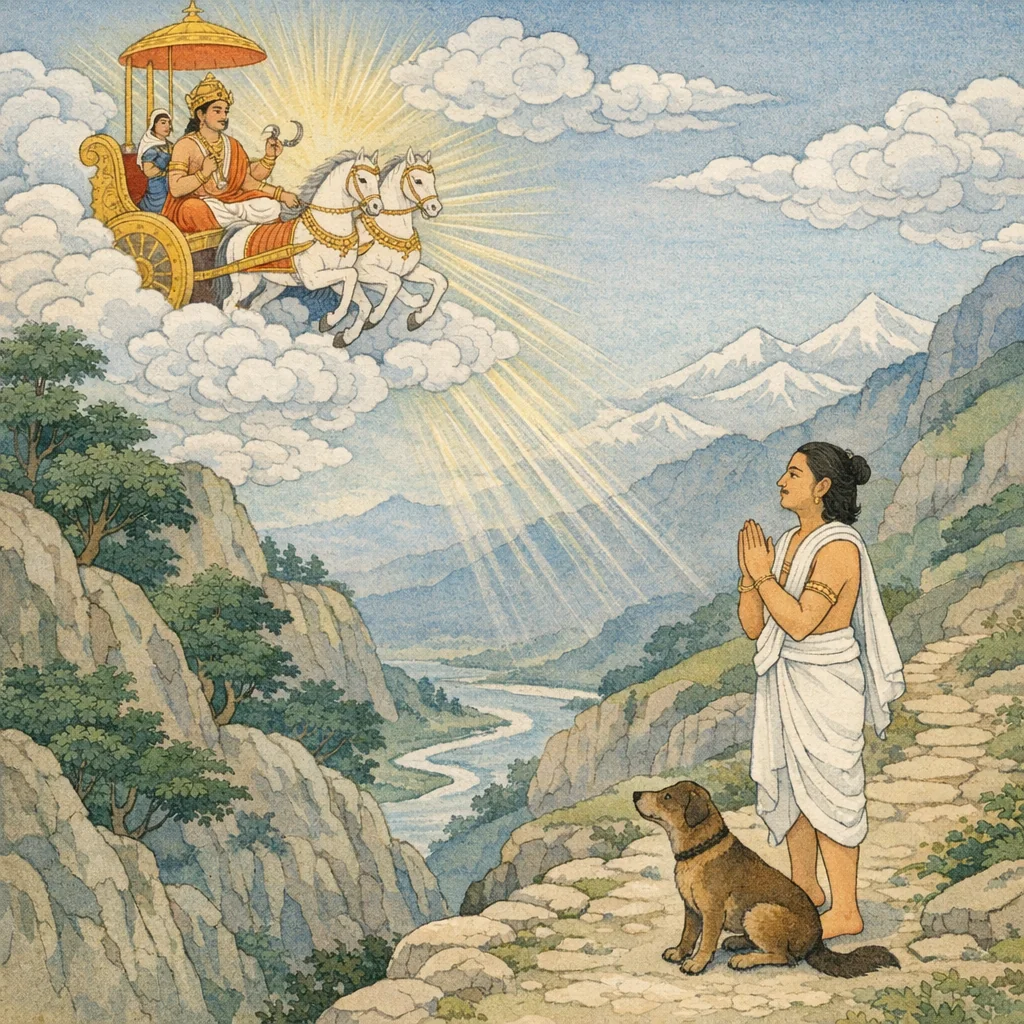
Adhyaya 3
Adhyāya 3: Indra’s Invitation and Yudhiṣṭhira’s Refusal to Abandon the Dog (Svargārohaṇa Test)
Upa-parva: Svargārohaṇa-saṃvāda (Indra–Yudhiṣṭhira Dialogue on Ascending to Heaven)
Vaiśaṃpāyana describes Indra’s thunderous arrival and invitation for Yudhiṣṭhira to mount the celestial chariot. Seeing his companions fallen, Yudhiṣṭhira requests that his brothers and Draupadī be allowed to accompany him and refuses to seek svarga alone. Indra replies that they have already reached the divine realm after casting off mortal bodies and assures Yudhiṣṭhira of bodily ascent. A further dispute arises over a dog that has remained devoted: Indra urges abandonment, citing heavenly exclusion and alleged loss of merit associated with dogs. Yudhiṣṭhira counters with a structured ethical argument: abandoning a devotee is a grave sin, comparable (in his framing) to major transgressions such as betrayal and harm to protected persons; moreover, he distinguishes his earlier “leaving” of the dead from abandoning the living dependent. Dharma then reveals approval, praising Yudhiṣṭhira’s compassion and recalling earlier tests (e.g., Dvaita-vana episode), declaring his unmatched status and confirming his attainment. Devas and ṛṣis accompany him; Nārada publicly attests the rarity of bodily ascent. Yudhiṣṭhira reiterates his wish to go wherever his brothers and Draupadī have gone, refusing isolated bliss.
Chapter Arc: भाइयों और द्रौपदी के पतन के बाद भी युधिष्ठिर का पग नहीं रुकता; पर स्वर्ग-मार्ग पर देवेन्द्र का साक्षात् आगमन कथा को दिव्य न्यायालय में बदल देता है। → युधिष्ठिर अपने गिरे हुए भ्राताओं को देखकर शोकाकुल होकर इन्द्र से विनती करता है कि वे भी साथ स्वर्ग जाएँ; इन्द्र उत्तर देता है कि वे देह त्यागकर पहले ही स्वर्ग पहुँच चुके हैं, पर युधिष्ठिर को इसी शरीर सहित स्वर्ग-प्रवेश का अधिकार है—एक शर्त के साथ। → इन्द्र जब श्वान को छोड़ देने का संकेत देता है, तब युधिष्ठिर धर्म-प्रतिज्ञा पर अडिग होकर कहता है कि यह श्वान उसका भक्त और शरणागत है; वह उसे त्यागकर स्वर्ग नहीं जाएगा—और वह चार महापापों के समकक्ष ‘भक्त-त्याग’ को मानता है। → युधिष्ठिर स्पष्ट करता है कि उसे अन्य लोक नहीं चाहिए; उसे वही स्थान स्वीकार है जो उसके भ्राताओं और द्रौपदी को मिला है—शुभ हो या पाप। वह देवेन्द्र से पुनः कहता है कि उनके बिना वह वहाँ ठहर नहीं सकता और वहीं जाना चाहता है जहाँ वे गए हैं। → युधिष्ठिर की अडिग करुणा और धर्म-निष्ठा के सामने देवेन्द्र का अगला निर्णय क्या होगा—स्वर्ग का द्वार श्वान सहित खुलेगा या परीक्षा और कठोर होगी?
Shlokas
Verse 1
इस प्रकार श्रीमह्ाभारत गहाप्रस्थानिकपर्वमें द्रौपदी आदिका पतनविषयक दूसरा अध्याय पूरा हुआ ॥/ २ ॥ अपन क्ाा छा अर: तृतीयो<थध्याय: इन्द्र और धर्म आदिके साथ वार्तालाप, बिक बने धर्ममें दृढ़ रहना तथा सदेह स्वर्गमें जाना वैशम्पायन उवाच ततः सन्नादयन् शक्रो दिवं भूमिं च सर्वश: । रथेनोपययोौ पार्थमारोहेत्यब्रवीच्च तम्,वैशम्पायनजी कहते हैं--जनमेजय! तदनन्तर आकाश और पृथ्वीको सब ओरसे प्रतिध्वनित करते हुए देवराज इन्द्र रथके साथ युधिष्ठिरके पास आ पहुँचे और उनसे बोले --'कुन्तीनन्दन! तुम इस रथपर सवार हो जाओ'
Vaiśampāyana said: Then Śakra (Indra), making heaven and earth resound on every side, approached Pārtha (Yudhiṣṭhira) with his chariot and said to him, “Mount this chariot.”
Verse 2
स्वभातृन् पतितान् दृष्टवा धर्मराजो युधिष्ठिर: । अब्रवीच्छोकसंतप्त: सहस्राक्षमिदं वच:,अपने भाइयोंको धराशायी हुआ देख धर्मराज युधिष्ठिर शोकसे संतप्त हो इन्द्रसे इस प्रकार बोले--
Seeing his own brothers fallen upon the ground, King Yudhiṣṭhira—Dharmarāja—scorched by grief, addressed Sahasrākṣa (Indra) with these words:
Verse 3
भ्रातर: पतिता मे>त्र गच्छेयुस्ते मया सह । न विना क्षातृभि: स्वर्गमिच्छे गन्तुं सुरेश्वर,'देवेश्वर! मेरे भाई मार्गमें गिरे पड़े हैं। वे भी मेरे साथ चलें, इसकी व्यवस्था कीजिये; क्योंकि मैं भाइयोंके बिना स्वर्गमें जाना नहीं चाहता इति श्रीमहाभारते महाप्रस्थानिके पर्वणि युधिष्ठिरस्वर्गारोहे तृतीयो5ध्याय:
Yudhiṣṭhira said: “Here my brothers have fallen upon the path. Arrange that they too may go together with me. For I do not wish to enter heaven without my brothers.”
Verse 4
सुकुमारी सुखारहा च राजपुत्री पुरंदर । सास्माभि: सह गच्छेत तद् भवाननुमन्यताम्,'पुरन्दर! राजकुमारी द्रौपदी सुकुमारी है। वह सुख पानेके योग्य है। वह भी हमलोगोंके साथ चले, इसकी अनुमति दीजिये”
Vaiśampāyana said: “O Purandara, Draupadī is a delicate princess, worthy of comfort and well-being. Please grant permission that she too may go together with us.”
Verse 5
शक्र उवाच भ्रातृन् द्रक्ष्यसि स्वर्गे त्वमग्रतस्त्रिदिवं गतान् । कृष्णया सहितान् सर्वान् मा शुचो भरतर्षभ,इन्द्रने कहा--भरतश्रेष्ठ! तुम्हारे सभी भाई तुमसे पहले ही स्वर्गमें पहुँच गये हैं। उनके साथ द्रौपदी भी है। वहाँ चलनेपर वे सब तुम्हें मिलेंगे
Śakra (Indra) said: “O bull among the Bharatas, do not grieve. In heaven you will behold your brothers, who have already gone ahead to the divine world. You will find them all there, together with Kṛṣṇā (Draupadī).”
Verse 6
निक्षिप्य मानुषं देहं गतास्ते भरतर्षभ | अनेन त्वं शरीरेण स्वर्गे गन्ता न संशय:,भरतभूषण! वे मानवशरीरका परित्याग करके स्वर्गमें गये हैं; किंतु तुम इसी शरीरसे वहाँ चलोगे, इसमें संशय नहीं है
Śakra said: “O bull among the Bharatas, they have gone to heaven after casting off the human body. But you, adorned glory of the Bharata line, will go to heaven with this very body—of this there is no doubt.”
Verse 7
युधिछिर उवाच अयं श्वा भूतभव्येश भक्तो मां नित्यमेव ह | स गच्छेत मया सार्धमानृशंस्या हि मे मति:
Yudhiṣṭhira said: “This dog has been devoted to me constantly, through what has been and what is to come. Let him go together with me; for my resolve is grounded in compassion and non-cruelty.”
Verse 8
युधिष्ठिर बोले--भूत और वर्तमानके स्वामी देवराज! यह कुत्ता मेरा बड़ा भक्त है। इसने सदा ही मेरा साथ दिया है; अतः यह भी मेरे साथ चले--ऐसी आज्ञा दीजिये; क्योंकि मेरी बुद्धिमें निष्ठरताका अभाव है ।। शक्र उवाच अमर्त्यत्वं मत्समत्वं च राजन् श्रियं कृत्स्नां महतीं चैव सिद्धिम् । संप्राप्तोड्द्य स्वर्गसुखानि च त्वं त्यज श्वान॑ नात्र नृशंसमस्ति
Śakra (Indra) said: “O king, today you have attained immortality, equality with me, complete prosperity, and great perfection. You have reached the joys of heaven; therefore abandon the dog. There is no cruelty in this.”
Verse 9
इन्द्रने कहा--राजन! तुम्हें अमरता, मेरी समानता, पूर्ण लक्ष्मी और बहुत बड़ी सिद्धि प्राप्त हुई है, साथ ही तुम्हें स्वर्गीय सुख भी उपलब्ध हुए हैं; अतः इस कुत्तेको छोड़ो और मेरे साथ चलो। इसमें कोई कठोरता नहीं है ।। युधिछिर उवाच अनार्यमार्येण सहस्ननेत्र शक््यं कर्तु दुष्करमेतदार्य । मा मे श्रिया सड़मनं तयास्तु यस्या: कृते भक्तजनं त्यजेयम्,युधिष्ठिर बोले--सहसनेत्रधारी देवराज! किसी आर्यपुरुषके द्वारा निम्न श्रेणीका काम होना अत्यन्त कठिन है। मुझे ऐसी लक्ष्मीकी प्राप्ति कभी न हो जिसके लिये भक्तजनका त्याग करना पड़े
Yudhiṣṭhira said: “O Sahasranetra (Indra), for a noble man to perform an ignoble act is exceedingly difficult—indeed, it is unworthy of the noble. May I never attain such prosperity, nor be joined with such fortune, for whose sake one would abandon a devoted companion.”
Verse 10
इन्द्र उवाच स्वर्गे लोके श्ववतां नास्ति घिष्ण्य- मिष्टापूर्त क्रोधवशा हरन्ति । ततो विचार्य क्रियतां धर्मराज त्यज श्वानं नात्र नृशंसमस्ति
Indra said: “In the heavenly world there is no place for one who keeps a dog. Such creatures, driven by anger, spoil the merit gained from sacrifices and charitable works. Therefore, O Dharmarāja, reflect and decide: abandon the dog. There is no cruelty in this.”
Verse 11
इन्द्रने कहा--धर्मराज! कुत्ता रखनेवालोंके लिये स्वर्गलोकमें स्थान नहीं है। उनके यज्ञ करने और कुआँ, बावड़ी आदि बनवानेका जो पुण्य होता है उसे क्रोधवश नामक राक्षस हर लेते हैं; इसलिये सोच-विचारकर काम करो। छोड़ दो इस कुत्तेको। ऐसा करनेमें कोई निर्दयता नहीं है ।। युधिछिर उवाच भक्त त्यागं प्राहुरत्यन्तपापं तुल्यं लोके ब्रह्मुवध्याकृतेन । तस्मान्नाहं जातु कथंचनाद्य त्यक्ष्याम्येनं स्वसुखार्थी महेन्द्र,युधिष्ठिर बोले--महेन्द्र! भक्तका त्याग करनेसे जो पाप होता है, उसका अन्त कभी नहीं होता--ऐसा महात्मा पुरुष कहते हैं। संसारमें भक्तका त्याग ब्रह्महत्याके समान माना गया है; अतः मैं अपने सुखके लिये कभी किसी तरह भी आज इस कुत्तेका त्याग नहीं करूँगा
Yudhiṣṭhira said: “The wise declare that abandoning one who is devoted and has sought refuge is an inexpiable sin, regarded in this world as equal to the killing of a brāhmaṇa. Therefore, O Mahendra, I will not, in any manner, abandon this dog today for the sake of my own happiness.”
Verse 12
भीतं भक्त नान्यदस्तीति चार्त॑ प्राप्तं क्षीणं रक्षणे प्राणलिप्सुम् । प्राणत्यागादप्यहं नैव मोक्तुं यतेयं वै नित्यमेतद् व्रतं मे,जो डरा हुआ हो, भक्त हो, मेरा दूसरा कोई सहारा नहीं है--ऐसा कहते हुए आर्तभावसे शरणमें आया हो, अपनी रक्षामें असमर्थ--दुर्बल हो और अपने प्राण बचाना चाहता हो, ऐसे पुरुषको प्राण जानेपर भी मैं नहीं छोड़ सकता; यह मेरा सदाका व्रत है
Yudhiṣṭhira said: “Even if my own life must be given up, I cannot abandon a man who comes to me in fear and devotion, crying, ‘I have no other refuge,’ who is distressed, weakened and unable to protect himself, and who seeks only to preserve his life. This is my constant vow—ever to strive to protect such a suppliant.”
Verse 13
इन्द्र रवाच शुना दृष्ट क्रोधवशा हरन्ति यद्दत्तमिष्टं विवृतमथो हुतं च । तस्माच्छुनस्त्यागमिमं कुरुष्व शुनस्त्यागाद् प्राप्स्यसे देवलोकम्,इन्द्रने कहा--वीरवर! मनुष्य जो कुछ दान, यज्ञ, स्वाध्याय और हवन आदि पुण्यकर्म करता है, उसपर यदि कुत्तेकी दृष्टि भी पड़ जाय तो उसके फलको क्रोधवश नामक राक्षस हर ले जाते हैं; इसलिये इस कुत्तेका त्याग कर दो। कुत्तेको त्याग देनेसे ही तुम देवलोकमें पहुँच सकोगे
Indra said: “If a dog so much as casts its gaze upon what a man has earned through merit—what he has given in charity, what he has offered in sacrifice, what he has recited in sacred study, and what he has poured into the fire—then the demonic forces called ‘Krodhavaśa’ seize away the fruit of those acts in wrath. Therefore, abandon this dog. Only by giving up the dog will you attain the world of the gods.”
Verse 14
त्यक्त्वा भ्रातृन् दयितां चापि कृष्णां प्राप्तो लोक: कर्मणा स्वेन वीर | श्वानं चैनं न त्यजसे कथं नु त्यागं कृत्स्नं चास्थितो मुहा[से5द्य,वीर! तुमने अपने भाइयों तथा प्यारी पत्नी द्रौपदीका परित्याग करके अपने किये हुए पुण्यकर्मोंके फलस्वरूप देवलोकको प्राप्त किया है। फिर तुम इस कुत्तेको क्यों नहीं त्याग देते? सब कुछ छोड़कर अब कुत्तेके मोहमें कैसे पड़ गये
Indra said: “O hero, having abandoned your brothers and even your beloved Kṛṣṇā (Draupadī), you have attained the heavenly world by the merit of your own deeds. Why, then, do you not abandon this dog? How is it that, after taking up complete renunciation, you have now fallen into delusion—clinging to a dog?”
Verse 15
युधिछिर उवाच न विद्यते संधिरथापि विग्रहो मृतैर्मत्यैरिति लोकेषु निष्ठा । न ते मया जीवयितुं हि शक््या- स्ततस्त्यागस्तेषु कृतो न जीवताम्,युधिष्ठिरने कहा--भगवन्! संसारमें यह निश्चित बात है कि मरे हुए मनुष्योंके साथ न तो किसीका मेल होता है न विरोध ही। द्रौपदी तथा अपने भाइयोंको जीवित करना मेरे वशकी बात नहीं है; अतः मर जानेपर मैंने उनका त्याग किया है, जीवितावस्थामें नहीं
Yudhiṣṭhira said: “In the world it is held as a settled truth that with the dead there can be neither reconciliation nor hostility. I have no power to restore Draupadī and my brothers to life; therefore I have let them go only after their death—not while they were living.”
Verse 16
भीतिप्रदानं शरणागतस्य स्त्रिया वधो ब्राह्मणस्वापहार: । मित्रद्रोहस्तानि चत्वारि शक्र भक्तत्यागश्चनैव समो मतो मे
Yudhiṣṭhira said: “To terrify one who has sought refuge, to kill a woman, to steal a brāhmaṇa’s property, and to betray a friend—these four, O Śakra, are grievous sins. Yet, in my judgment, none of them is equal to the abandonment of devotion (to the Divine).”
Verse 17
शरणमें आये हुए को भय देना, स्त्रीका वध करना, ब्राह्मणका धन लूटना और मित्रोंके साथ द्रोह करना--ये चार अधर्म एक ओर और भक्तका त्याग दूसरी ओर हो तो मेरी समझमें यह अकेला ही उन चारोंके बराबर है ।। वैशग्पायन उवाच तद् धर्मराजस्य वचो निशम्य धर्मस्वरूपी भगवानुवाच । युधिष्ठिरं प्रीतियुक्तो नरेन्द्र श्ल_्ष्णै्वाक्यै: संस्तवसम्प्रयुक्तै:,वैशम्पायनजी कहते हैं--जनमेजय! धर्मराज युधिष्ठिरका यह कथन सुनकर कुत्तेका रूप धारण करके आये हुए धर्मस्वरूपी भगवान् बड़े प्रसन्न हुए और राजा युधिष्ठिरकी प्रशंसा करते हुए मधुर वचनोंद्वारा उनसे इस प्रकार बोले--
Yudhiṣṭhira said: “To frighten one who has sought refuge, to kill a woman, to plunder a brāhmaṇa’s wealth, and to betray one’s friends—these four are adharma on one side; and on the other side is the abandonment of a devotee. In my judgment, that single act equals those four.” Vaiśampāyana said: “Hearing this statement of Dharmarāja Yudhiṣṭhira, the Lord who is Dharma itself—having come in the form of a dog—was greatly pleased. Praising King Yudhiṣṭhira, he addressed him with gentle, commendatory words.”
Verse 18
धर्मरज उवाच अभिजातोऊसि राजेन्द्र पितुर्व॒त्तेन मेधया । अनुक्रोशेन चानेन सर्वभूतेषु भारत,साक्षात् धर्मराजने कहा--राजेन्द्र! भरतनन्दन! तुम अपने सदाचार, बुद्धि तथा सम्पूर्ण प्राणियोंके प्रति होनेवाली इस दयाके कारण वास्तवमें सुयोग्य पिताके उत्तम कुलमें उत्पन्न सिद्ध हो रहे हो
Dharmarāja said: “O king, you are truly well-born—proving yourself worthy of a noble father’s lineage—by your upright conduct, your intelligence, and this compassion you show toward all living beings, O descendant of Bharata.”
Verse 19
पुरा द्वैतवने चासि मया पुत्र परीक्षित: । पानीयार्थे पराक्रान्ता यत्र ते भ्रातरो हता:
Dharmarāja said: “Formerly, in the Dvaitavana forest, my son, you were tested by me—when you had gone forth with resolve to fetch water, at the very place where your brothers lay slain.”
Verse 20
बेटा! पूर्वकालमें द्वैतववनके भीतर रहते समय भी एक बार मैंने तुम्हारी परीक्षा ली थी; जब कि तुम्हारे सभी भाई पानी लानेके लिये उद्योग करते हुए मारे गये थे ।। भीमार्जुनौ परित्यज्य यत्र त्वं भ्रातरावुभौ । मात्रो: साम्यमभीप्सन् वै नकुलं जीवमिच्छसि
Dharmarāja said: “Earlier, when we were living in the Dvaitavana forest, I once tested you—at the time when all your brothers, striving to fetch water, had fallen. There, setting aside Bhīma and Arjuna, you chose to save Nakula, desiring fairness between the two mothers.”
Verse 21
उस समय तुमने कुन्ती और माद्री दोनों माताओंमें समानताकी इच्छा रखकर अपने सगे भाई भीम और अर्जुनको छोड़ केवल नकुलको जीवित करना चाहा था ।। अयं श्वा भक्त इत्येवं त्यक्तो देवरथस्त्वया । तस्मात् स्वर्गे न ते तुल्य: कश्चिदस्ति नराधिप:
Dharmarāja said: “At that time, wishing to show equal regard to both mothers—Kuntī and Mādrī—you chose to spare only Nakula, even at the cost of leaving your own full brothers Bhīma and Arjuna. And when you were told, ‘This is a devoted dog,’ you did not abandon him. Therefore, O king, in heaven there is no one equal to you.”
Verse 22
इस समय भी “यह कुत्ता मेरा भक्त है” ऐसा सोचकर तुमने देवराज इन्द्रके भी रथका परित्याग कर दिया है; अतः स्वर्गलोकमें तुम्हारे समान दूसरा कोई राजा नहीं है ।। अतस्तवाक्षया लोका: स्वशरीरेण भारत । प्राप्तोडसि भरतश्रेष्ठ दिव्यां गतिमनुत्तमाम्,भारत! भरतश्रेष्ठ! यही कारण है कि तुम्हें अपने इसी शरीरसे अक्षय लोकोंकी प्राप्ति हुई है। तुम परम उत्तम दिव्य गतिको पा गये हो
Dharmarāja said: Even now, thinking, “This dog is my devotee,” you have renounced even the chariot of Indra, the king of the gods. Therefore, in heaven there is no other king equal to you. Hence, O Bhārata, O best of the Bharatas, you have attained imperishable worlds with this very body; you have reached the unsurpassed, divine state.
Verse 23
वैशम्पायन उवाच ततो धर्मक्ष शक्रश्न मरुतश्षाश्विनावपि । देवा देवर्षयश्चैव रथमारोप्य पाण्डवम्,वैशम्पायनजी कहते हैं--यों कहकर धर्म, इन्द्र, मरुद्गण, अश्विनीकुमार, देवता तथा देवर्षियोंने पाण्डुपुत्र युधिष्ठिक्तो रथपर बिठाकर अपने-अपने विमानोंद्वारा स्वर्गलोकको प्रस्थान किया। वे सब-के-सब इच्छानुसार विचरनेवाले, रजोगुणशून्य पुण्यात्मा, पवित्र वाणी, बुद्धि और कर्मवाले तथा सिद्ध थे
Vaiśampāyana said: Then Dharma and Śakra (Indra), along with the Maruts and the two Aśvins, and also the gods and the divine seers, placed the Pāṇḍava (Yudhiṣṭhira) upon a chariot. Having thus honored him, they set out for heaven in their respective celestial vehicles—signifying that steadfast dharma, tested to its utmost, is at last received and upheld by the cosmic order itself.
Verse 24
प्रययु: स्वैर्विमानैस्ते सिद्धा: कामविहारिण: । सर्वे विरजस: पुण्या: पुण्यवाग्बुद्धिकर्मिण:,वैशम्पायनजी कहते हैं--यों कहकर धर्म, इन्द्र, मरुद्गण, अश्विनीकुमार, देवता तथा देवर्षियोंने पाण्डुपुत्र युधिष्ठिक्तो रथपर बिठाकर अपने-अपने विमानोंद्वारा स्वर्गलोकको प्रस्थान किया। वे सब-के-सब इच्छानुसार विचरनेवाले, रजोगुणशून्य पुण्यात्मा, पवित्र वाणी, बुद्धि और कर्मवाले तथा सिद्ध थे
Vaiśampāyana said: Then those perfected beings departed in their own celestial chariots. Free to move as they wished, they were all stainless—beyond the dust of passion—holy in nature, and endowed with purity in speech, understanding, and action. The scene underscores that true attainment is marked not by power but by inner clarity and ethical refinement.
Verse 25
स तं रथं समास्थाय राजा कुरुकुलोदवह: । ऊर्ध्वमाचक्रमे शीघ्रं तेजसा55वृत्य रोदसी,कुरुकुलतिलक राजा युधिष्ठिर उस रथमें बैठकर अपने तेजसे पृथ्वी और आकाशको व्याप्त करते हुए तीव्र गतिसे ऊपरकी ओर जाने लगे
Vaiśampāyana said: Mounting that chariot, King Yudhiṣṭhira—the foremost bearer of the Kuru line—began to ascend swiftly. By the radiance of his own spiritual merit and kingly splendor, he seemed to pervade both earth and sky, signaling the culmination of a life lived in dharma and the transition from worldly sovereignty to the final journey beyond it.
Verse 26
ततो देवनिकायस्थो नारद: सर्वलोकवित् | उवाचोच्चैस्तदा वाक््यं बृहद्वादी बृहत्तपा:,उस समय सम्पूर्ण लोकोंका वृत्तान्त जाननेवाले, बोलनेमें कुशल तथा महान् तपस्वी देवर्षि नारदजीने देवमण्डलमें स्थित हो उच्च स्वरसे कहा--
Then Nārada—stationed among the hosts of the gods, knowing the affairs of all the worlds, eloquent in speech and great in austerity—raised his voice and spoke aloud. The scene signals that what follows is not mere rumor but a proclamation grounded in cosmic knowledge and moral authority.
Verse 27
ये5पि राजर्षय: सर्वे ते चापि समुपस्थिता: । कीर्ति प्रच्छाद्य तेषां वै कुरुराजो5धितिष्ठति,“जितने राजर्षि स्वर्गमें आये हैं, वे सभी यहाँ उपस्थित हैं, किंतु कुरुगाज युधिष्ठिर अपने सुयशसे उन सबकी कीर्तिको आच्छादित करके विराजमान हो रहे हैं
Vaiśampāyana said: “Even all those royal seers who have come to heaven are present here; yet the Kuru king (Yudhiṣṭhira) sits in eminence, his own spotless fame veiling the renown of them all.”
Verse 28
लोकानावृत्य यशसा तेजसा वृत्तसम्पदा । स्वशरीरेण सम्प्राप्तं नान््यं शुश्रुम पाण्डवात्
Vaiśampāyana said: Having covered the worlds with his fame, his splendor, and the wealth of his noble conduct, the Pāṇḍava attained his destined end in his own body; we heard of no other outcome for him.
Verse 29
“अपने यश, तेज और सदाचाररूप सम्पत्तिसे तीनों लोकोंको आवृत करके अपने भौतिक शरीरसे स्वर्गलोकमें आनेका सौभाग्य पाण्डुनन्दन युधिष्ठिरकके सिवा और किसी राजाको प्राप्त हुआ हो, ऐसा हमने कभी नहीं सुना है ।। तेजांसि यानि दृष्टानि भूमिछेन त्वया विभो । वेश्मानि भुवि देवानां पश्यामूनि सहस्रश:
Vaiśampāyana said: We have never heard of any king other than Yudhiṣṭhira, the son of Pāṇḍu, who—having covered the three worlds with the wealth of his fame, splendor, and righteous conduct—was granted the rare fortune of reaching heaven in his very physical body. O mighty one, behold now, in countless numbers, those radiances you have seen while still on earth—these are the celestial dwellings of the gods upon this path.
Verse 30
'प्रभो! युधिष्ठिर! पृथ्वीपर रहते हुए तुमने आकाशमें नक्षत्र और ताराओंके रूपमें जितने तेज देखे हैं, वे इन देवताओंके सहस्रों लोक हैं; इनकी ओर देखो” ।। नारदस्य वच: श्रुत्वा राजा वचनमब्रवीत् | देवानामन्त्रय धर्मात्मा स्वपक्षांश्चैव पार्थिवान्,नारदजीकी बात सुनकर धर्मात्मा राजा युधिष्ठिरने देवताओं तथा अपने पक्षके राजाओंकी अनुमति लेकर कहा--
“O lord Yudhiṣṭhira! While you lived upon the earth, the splendors you saw in the sky as stars and constellations—those are the thousands of worlds belonging to these gods. Look toward them.” Hearing Nārada’s words, the righteous king spoke, having first obtained the assent of the gods and also of the kings who were on his side.
Verse 31
शुभं वा यदि वा पापं भ्रातृणां स्थानमद्य मे । तदेव प्राप्तुमिच्छामि लोकानन्यान्न कामये
Whether my brothers’ destination is auspicious or sinful, I wish today to reach that very state. I do not desire any other worlds apart from theirs.
Verse 32
'देवेश्वर! मेरे भाइयोंको शुभ या अशुभ जो भी स्थान प्राप्त हुआ हो उसीको मैं भी पाना चाहता हूँ। उसके सिवा दूसरे लोकोंमें जानेकी मेरी इच्छा नहीं है” ।। राज्ञस्तु वचन श्रुत्वा देवराज: पुरंदर: । आनृशंस्यसमायुक्त प्रत्युवाच युधिछ्ठिरम्,राजाकी बात सुनकर देवराज इन्द्रने युधिष्ठिससे कोमल वाणीमें कहा--
“O Lord of the gods! Whatever auspicious or inauspicious state my brothers have attained, that alone I too wish to attain. Apart from that, I have no desire to go to other worlds.” Hearing the king’s words, Indra—the sovereign of the gods, the slayer of cities—moved by compassion, replied to Yudhiṣṭhira in gentle speech.
Verse 33
स्थाने5स्मिन् वस राजेन्द्र कर्मभिर्निर्जिते शुभै: । किं त्वं मानुष्यकं स्नेहमद्यापि परिकर्षसि,“महाराज! तुम अपने शुभ कर्माद्वारा प्राप्त हुए इस स्वर्गलोकमें निवास करो। मनुष्यलोकके स्नेहपाशको क्यों अभीतक खींचे ला रहे हो?
Vaiśampāyana said: “O best of kings, dwell here in this realm won by your auspicious deeds. Why do you still cling to, and keep drawing after you, the bonds of human attachment even now?”
Verse 34
सिद्धि प्राप्तोडसि परमां यथा नान्य: पुमान् क्वचित् | नैव ते भ्रातर: स्थान सम्प्राप्ता: कुरुनन्दन,कुरुनन्दन! तुम्हें वह उत्तम सिद्धि प्राप्त हुई है जिसे दूसरा मनुष्य कभी और कहीं नहीं पा सका। तुम्हारे भाई ऐसा स्थान नहीं पा सके हैं
Vaiśampāyana said: “O delight of the Kurus, you have attained the highest consummation—such as no other man has ever attained anywhere. Your brothers, however, did not reach that same state.”
Verse 35
अद्यापि मानुषो भाव: स्पृशते त्वां नराधिप । स्वर्गोडयं पश्य देवर्षीन् सिद्धांश्व त्रेदिवालयान्,“नरेश्वर! क्या अब भी मानवभाव तुम्हारा स्पर्श कर रहा है? राजन! यह स्वर्गलोक है। इन स्वर्गवासी देवर्षियों तथा सिद्धोंका दर्शन करो”
Vaiśampāyana said: “O king, does the human sense of limitation still touch you even now? Behold this rising vision of heaven—look upon the divine seers and the perfected beings who dwell in the celestial realm.”
Verse 36
युधिष्ठिरस्तु देवेन्द्रमेवंवादिनमी श्वरम् । पुनरेवाब्रवीद् धीमानिदं वचनमर्थवत्,ऐसी बात कहते हुए ऐश्वर्यशाली देवराजसे बुद्धिमान् युधिष्ठिरने पुनः यह अर्थयुक्त वचन कहा--
Vaiśampāyana said: As Indra, the lord of the gods, spoke in this manner, the wise Yudhiṣṭhira once again addressed him with words of clear purpose—signaling that even before divine authority, he would rest his course on reasoned dharma and meaningful speech rather than mere acquiescence.
Verse 37
तैर्विना नोत्सहे वस्तुमिह दैत्यनिबर्हण । गन्तुमिच्छामि तत्राहं यत्र ते भ्रातरो गता:,'दैत्यसूदन! अपने भाइयोंके बिना मुझे यहाँ रहनेका उत्साह नहीं होता; अतः मैं वहीं जाना चाहता हूँ, जहाँ मेरे भाई गये हैं तथा जहाँ ऊँचे कदवाली, श्यामवर्णा, बुद्धिमती सत्त्वगुणसम्पन्ना एवं युवतियोंमें श्रेष्ठ मेरी द्रौपदी गयी है
Yudhiṣṭhira said: “O slayer of the asuras, without my brothers I have no heart to dwell here. Therefore I wish to go where my brothers have gone; and there too has gone my Draupadī—tall of form, dark of hue, wise, rich in sattva, and the best among maidens.”
Verse 38
यत्र सा बृहती श्यामा बुद्धिसत्त्वगुणान्विता । द्रौपदी योषितां श्रेष्ठा यत्र चैव गता मम,'दैत्यसूदन! अपने भाइयोंके बिना मुझे यहाँ रहनेका उत्साह नहीं होता; अतः मैं वहीं जाना चाहता हूँ, जहाँ मेरे भाई गये हैं तथा जहाँ ऊँचे कदवाली, श्यामवर्णा, बुद्धिमती सत्त्वगुणसम्पन्ना एवं युवतियोंमें श्रेष्ठ मेरी द्रौपदी गयी है
Vaiśaṃpāyana said: “I too wish to go to that very place where my Draupadī has gone—tall of stature, dark-hued, endowed with intelligence and the sāttvika virtues, the foremost among women.”
Frequently Asked Questions
Whether Yudhiṣṭhira should accept entry to svarga by abandoning a dependent companion (the dog) and proceeding without his fallen kin, or uphold non-abandonment and loyalty even at the cost of heavenly access.
Dharma is validated as consistency: principled care for dependents and refusal to trade integrity for reward is portrayed as superior to compliance with status-based conventions.
Yes in functional form: Dharma’s praise and Nārada’s proclamation act as meta-commentary, marking Yudhiṣṭhira’s bodily ascent as exceptionally rare and framing the episode as a completed dharma-test with confirmatory outcome.