Adhyaya 83
Saumadatti-vadha and Bhīma–Alambusa-saṃyoga (सौमदत्तिवधः तथा भीमालम्बुससंयोगः)
Upa-parva: Droṇa-parva — Battlefield Engagements (Sañjaya–Dhṛtarāṣṭra Reportage Unit)
Sañjaya reports that Saumadatti (Bhīṣma’s son) strikes the five Draupadeyas with successive volleys, briefly disorienting them. Śatānīka (Nakula’s son) and the other Draupadeyas counterattack, but Saumadatti responds by placing single arrows into each warrior’s chest, prompting the five brothers to surround and press him from their chariots. The Pāṇḍava elders then execute a systematic neutralization: Arjuna kills Saumadatti’s horses; Bhīma cuts his bow and continues to wound him; Yudhiṣṭhira fells his banner; Nakula removes the charioteer from the chariot-platform; and Sahadeva, recognizing the moment of vulnerability, delivers the decisive act by severing Saumadatti’s head with a razor-edged arrow. Seeing the fallen head, the Kaurava forces scatter in alarm. The chapter then shifts to Alambusa’s engagement with Bhīma. Alambusa inflicts heavy damage, including the destruction of Bhīma’s supporting fighters and a temporary incapacitation of Bhīma. Bhīma recovers, intensifies his assault, and Alambusa adopts frightening forms, taunts Bhīma with the memory of a slain brother (Bakā), and uses concealment and arrow-rain to disrupt Pāṇḍava ranks, producing mass confusion and vivid battlefield imagery (a ‘river’ of blood and debris). Hearing the opposing army’s roar, Bhīma responds with a powerful astric discharge (Tvāṣṭra-astra), countering the adversary’s extraordinary tactics and driving Alambusa away toward Droṇa’s formation. The Pāṇḍavas proclaim victory and commend Bhīma’s resilience and tactical recovery.
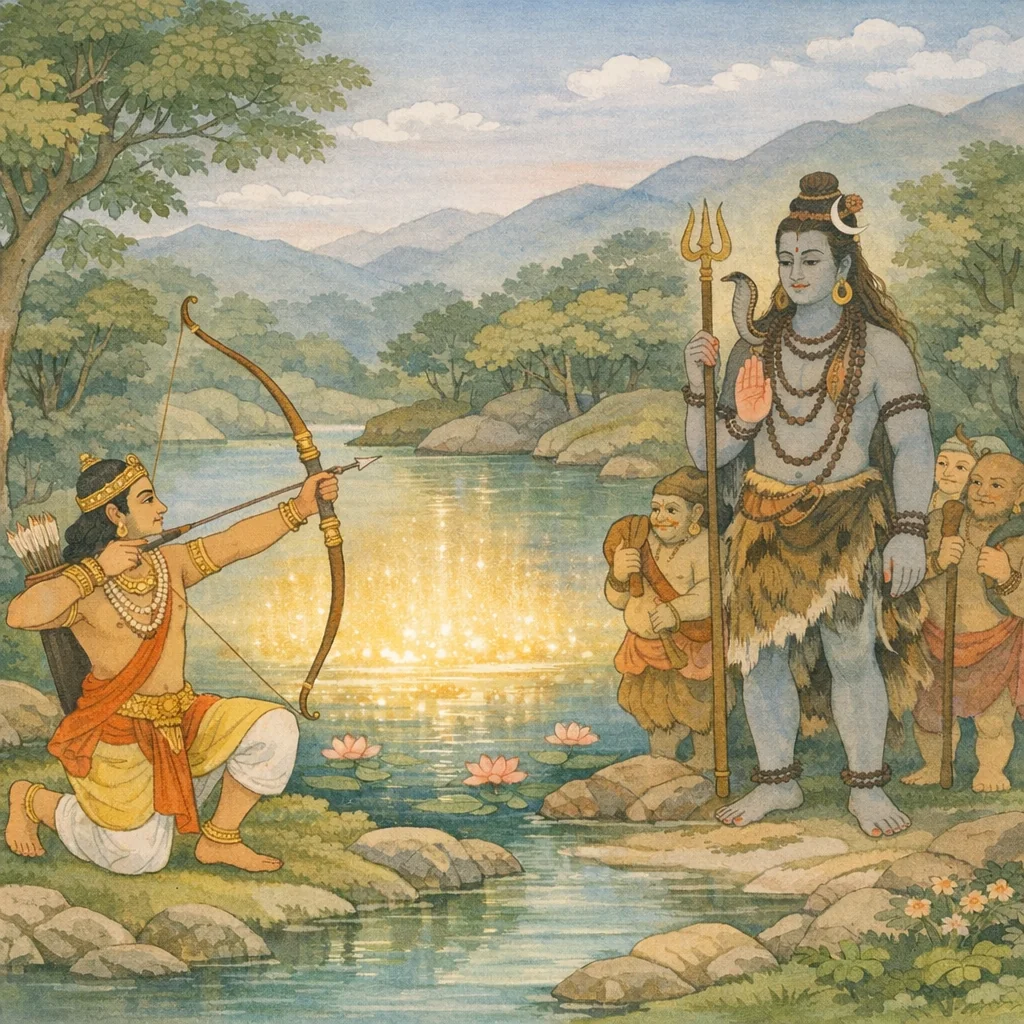
Chapter Arc: संजय राजन् को बतलाते हैं कि कुन्तीपुत्र अर्जुन प्रसन्नचित्त, हाथ जोड़कर, समस्त तेजों के भण्डार वृषभध्वज भगवान् शिव के हर्षोत्फुल्ल नेत्रों से दर्शन करते हैं—मानो युद्ध के बीच एक दिव्य द्वार खुल गया हो। → अर्जुन अपने द्वारा समर्पित रात्रिकालीन नैत्यिक उपहार को शिव के समीप रखा हुआ देखते हैं और मन-ही-मन श्रीकृष्ण तथा शिव की पूजा कर शिव से दिव्य अस्त्र की याचना करते हैं। शिव के संकेत से वे उस दिव्य अमृतमय सरोवर के निकट जाते हैं जहाँ पूर्वकाल का श्रेष्ठ धनुष-बाण निहित है; वहाँ पहुँचकर अर्जुन का संकल्प—अस्त्र-प्राप्ति और प्रतिज्ञा-पूर्ति—और तीव्र हो उठता है। → अर्जुन एकाग्रचित्त होकर उस श्रेष्ठ धनुष को हाथ में लेकर धनुर्धर की भाँति स्थित होते हैं और विधिपूर्वक बाण सहित धनुष खींचते हैं; उसी क्षण स्मरण-शक्ति से वे वनवासकालीन शिव-दर्शन और वर-प्राप्ति को पुनः जीते हैं, और शिव प्रसन्न होकर घोर पाशुपतास्त्र को वरदान-रूप में पुनः प्रदान करते हैं—प्रतिज्ञा की पारण-घड़ी पूर्ण होती है। → पाशुपतास्त्र पुनः प्राप्त कर अर्जुन रोमांचित हो उठते हैं; वे अपने कार्य को सिद्ध मानते हैं और भीतर-ही-भीतर यह निश्चय दृढ़ होता है कि धर्मयुद्ध में अब उनके पास वह परम भयङ्कर सामर्थ्य है जो देव-शत्रुओं को भी गिरा चुका है। → यह दिव्य अस्त्र किस निर्णायक क्षण में, किस सीमा तक, और किन शर्तों के साथ प्रयुक्त होगा—यही प्रश्न अगले प्रसंग की ओर कथा को धकेल देता है।
Shlokas
Verse 2
संजय कहते हैं--राजन्! तदनन्तर कुन्तीकुमार अर्जुनने प्रसन्नचित्त हो हाथ जोड़कर समस्त तेजोंके भण्डार भगवान् वृषभध्वजका हर्षोत्फुल्ल नेत्रोंसे दर्शन किया ।। त॑ चोपहारं सुकृतं नैशं नैत्यकमात्मना । ददर्श तयम्बका भ्याशे वासुदेवनिवेदितम्
Sañjaya said: “O King! Thereafter Kuntī’s son Arjuna, his mind serene, with hands joined in reverence, beheld with eyes bright with joy the blessed Lord Vṛṣabhadhvaja (Śiva), the treasury of all splendors. He also saw, near Tryambaka (Śiva), that well-prepared offering—an auspicious nightly rite—presented by Vāsudeva (Kṛṣṇa).”
Verse 3
उन्होंने अपने द्वारा समर्पित किये हुए रात्रिकालके उस नैत्यिक उपहारको, जिसे श्रीकृष्णको निवेदित किया था, भगवान् त्रिनेत्रधारी शिवके समीप रखा हुआ देखा ।। ततो5भिपूज्य मनसा कृष्णं शर्व च पाण्डव: । इच्छाम्यहं दिव्यमस्त्रमित्यभाषत शड्करम्
He saw that nightly offering, which he had himself presented and dedicated to Śrī Kṛṣṇa, set down near the Three-eyed Śiva. Then the Pāṇḍava, having inwardly paid reverence to both Kṛṣṇa and Śarva (Śiva), addressed Śaṅkara, saying, “I desire a divine weapon.”
Verse 4
तब पाण्डुपुत्र अर्जुनने मन-ही-मन भगवान् श्रीकृष्ण और शिवकी पूजा करके भगवान् शंकरसे कहा--'प्रभो! मैं आपसे दिव्य अस्त्र प्राप्त करना चाहता हूँ ।। ततः पार्थस्य विज्ञाय वरार्थे वचनं तदा । वासुदेवार्जुनौ देव: स्मपमानो5भ्यभाषत,उस समय अर्जुनका वर-प्राप्तिके लिये वह वचन सुनकर महादेवजी मुसकराने लगे और श्रीकृष्ण तथा अर्जुनसे बोले--
Then Arjuna, son of Pāṇḍu, inwardly worshipped Lord Śrī Kṛṣṇa and Lord Śiva, and addressed Lord Śaṅkara: “O Master, I wish to obtain divine weapons from you.” Hearing Pārtha’s request for a boon, the great God (Śiva) smiled and spoke to Vāsudeva and Arjuna.
Verse 5
स्वागतं वां नरश्रेष्टी विज्ञातं मनसेप्सितम् । येन कामेन सम्प्राप्ती भवद्धयां तं॑ ददाम्यहम्,“नरश्रेष्ठी तुम दोनोंका स्वागत है। तुम्हारा मनोरथ मुझे विदित है। तुम दोनों जिस कामनासे यहाँ आये हो, उसे मैं तुम्हें दे रहा हूँ
Sañjaya said: “Welcome to you both, O foremost among men. I understand the desire you hold in your hearts. Whatever wish has brought you here, I grant it to you.”
Verse 6
सरो<मृतमयं दिव्यम भ्याशे शरत्रुसूदनौ । तत्र मे तद् धर्नुर्दिव्यं शरश्न निहित: पुरा,शत्रुसूदन वीरो! यहाँ पास ही दिव्य अमृतमय सरोवर है, वहीं पूर्वकालमें मेरा वह दिव्य धनुष और बाण रखा गया था, जिसके द्वारा मैंने युद्धमें सम्पूर्ण देव-शत्रुओंकी मार गिराया था। कृष्ण! तुम दोनों उस सरोवरसे बाणसहित वह उत्तम धनुष ले आओ'
Sañjaya said: “O you two slayers of foes, close by there is a divine lake, filled with nectar. There, in former times, my celestial bow and the arrows were deposited. With that weapon I once struck down all the enemies of the gods in battle. O Kṛṣṇa—both of you, bring from that lake that excellent bow together with its arrows.”
Verse 7
येन देवारय: सर्वे मया युधि निपातिता: । तत आनीयतां कृष्णौ सशरं धनुरुत्तमम्,शत्रुसूदन वीरो! यहाँ पास ही दिव्य अमृतमय सरोवर है, वहीं पूर्वकालमें मेरा वह दिव्य धनुष और बाण रखा गया था, जिसके द्वारा मैंने युद्धमें सम्पूर्ण देव-शत्रुओंकी मार गिराया था। कृष्ण! तुम दोनों उस सरोवरसे बाणसहित वह उत्तम धनुष ले आओ'
Sanjaya said: “The supreme bow with its arrows—by which I once struck down all the enemies of the gods in battle—should be brought here. O Kṛṣṇa, O heroic slayer of foes! Close by is a divine, nectar-like lake; in earlier times my celestial bow and arrows were placed there. You two should fetch that excellent bow, together with the arrows, from that lake.”
Verse 8
तथेत्युक्त्वा तु तौ वीरौ सर्वपारिषदैः सह । प्रस्थितौ तत्सरो दिव्यं दिव्यैश्वर्यशतैर्युतम्
Sañjaya said: Having replied, “So be it,” those two heroes—together with all the assembled attendants—set out toward that wondrous, celestial lake, endowed with hundreds of divine splendors.
Verse 9
निर्दिष्ट यद् वृषाड्केण पुण्यं सर्वार्थसाधकम् | तौ जग्मतुरसम्भ्रान्ती नरनारायणावृषी
Sañjaya said: “Having been shown by Vṛṣāṅka (Śiva) that meritorious course which accomplishes every rightful aim, the two sages Nara and Nārāyaṇa set forth unperturbed, steady in mind.”
Verse 10
तब “बहुत अच्छा” कहकर वे दोनों वीर भगवान् शंकरके पार्षदगणोंके साथ सैकड़ों दिव्य ऐश्वर्योंसे सम्पन्न तथा सम्पूर्ण मनोरथोंकी सिद्धि करनेवाले उस पुण्यमय दिव्य सरोवरकी ओर प्रस्थित हुए, जिसकी ओर जानेके लिये महादेवजीने स्वयं ही संकेत किया था। वे दोनों नर-नारायण ऋषि बिना किसी घबराहटके वहाँ जा पहुँचे ।। ततस्तौ तत् सरो गत्वा सूर्यमण्डलसंनिभम् । नागमन्तर्जले घोरं ददृशाते<र्जुनाच्युती,उस सरोवरके तटपर पहुँचकर अर्जुन और श्रीकृष्ण दोनोंने जलके भीतर एक भयंकर नाग देखा, जो सूर्यमण्डलके समान प्रकाशित हो रहा था
Then the two heroes, saying, “Very well,” set out with the attendants of Lord Śaṅkara toward that holy, divine lake—endowed with hundreds of celestial splendors and able to fulfill every desire—whose way Mahādeva himself had indicated. The two Nara–Nārāyaṇa sages reached it without alarm. Thereafter, arriving at the lake, radiant like the orb of the sun, Arjuna and Acyuta (Śrī Kṛṣṇa) beheld within the waters a terrifying serpent, blazing with solar brilliance.
Verse 11
द्वितीयं चापरं नागं सहस्रशिरसं वरम् । वमन्तं विपुला ज्वाला ददृशातेडग्निवर्चसम्,वहीं उन्होंने अग्निके समान तेजस्वी और सहस्र फणोंसे युक्त दूसरा श्रेष्ठ नाग भी देखा, जो अपने मुखसे आगकी प्रचण्ड ज्वालाएँ उगल रहा था
Sañjaya said: They beheld yet another noble serpent, the second—an excellent nāga with a thousand heads—blazing like fire, as it spewed forth vast, fierce tongues of flame from its mouth.
Verse 12
ततः कृष्णश् पार्थश्च संस्पृश्याम्भ: कृताञ्जली । तौ नागावुपतस्थाते नमस्यन्तौ वृषध्वजम्,तब श्रीकृष्ण और अर्जुन जलसे आचमन करके हाथ जोड़ भगवान् शंकरको प्रणाम करते हुए उन दोनों नागोंके निकट खड़े हो गये
Sañjaya said: Then Kṛṣṇa and Pārtha, having touched water in ritual purification and with hands joined in reverence, stood near those two serpent-beings, bowing to Vṛṣadhvaja (Śiva).
Verse 13
गृणन्तौ वेदविद्वांसौ तद् ब्रह्म शतरुद्रियम् अप्रमेयं प्रणमतो गत्वा सर्वात्मना भवम्,वे दोनों ही वेदोंके विद्वान् थे। अतः उन्होंने शतरुद्री मन्त्रोंका पाठ करते हुए साक्षात् ब्रह्मस्वरूप अप्रमेय शिवकी सब प्रकारसे शरण लेकर उन्हें प्रणाम किया
Sañjaya said: Those two, being learned in the Vedas, recited the Śatarudrīya—hymns that praise the Supreme Brahman—and, approaching the immeasurable Lord Śiva (Bhava) with their whole being, bowed down to him in complete surrender.
Verse 14
ततस्तौ रुद्रमाहात्म्याद्धित्वा रूप॑ महोरगौ । भधनुर्बाणश्न शत्रुघ्नं तद् द्वन्डे समपद्यत,तदनन्तर भगवान् शंकरकी महिमासे वे दोनों महानाग अपने उस रूपको छोड़कर दो शत्रुनाशक धनुष-बाणके रूपमें परिणत हो गये
Sañjaya said: Thereafter, through the majesty of Rudra, those two great serpents abandoned their former shape and, in that very pair, became the enemy-destroying forms of bow and arrow—an omen of Śiva’s power turning fearsome beings into instruments of decisive victory in war.
Verse 15
तौ तज्जगृहतुः प्रीतौ धनुर्बाणं च सुप्रभम् । आजतद्नतुर्महात्मानौ ददतुश्न महात्मने,उस समय अत्यन्त प्रसन्न होकर महात्मा श्रीकृष्ण और अर्जुनने उस प्रकाशमान धनुष और बाणको हाथमें ले लिया। फिर वे उन्हें महादेवजीके पास ले आये और उन्हीं महात्माके हाथोंमें अर्पित कर दिया
Then the two, delighted, took up that radiant bow and arrow. Śrī Kṛṣṇa and Arjuna—both great-souled—received them in their hands, brought them before Mahādeva (Śiva), and offered them into the Lord’s own hands.
Verse 16
ततः पार्श्वाद् वृषाड्कस्य ब्रह्मचारी न्यवर्तत । पिड्ञाक्षस्तपस: क्षेत्र बलवान् नीललोहित:,तब भगवान् शंकरके पार्श्रभागसे एक ब्रह्मचारी प्रकट हुआ, जो पिंगल नेत्रोंसे युक्त, तपस्याका क्षेत्र, बलवान् तथा नील-लोहित वर्णका था
Sañjaya said: Then, from the side of the bull-bannered Lord (Śiva), there appeared a brahmacārin—one with tawny eyes, a very field of austerity itself, mighty in power, and of a dark-reddish hue. The scene signals divine intervention: ascetic discipline and spiritual force are shown as active powers that can enter the battlefield and shape the course of events.
Verse 17
स तद् गृहा धनुःश्रेष्ठ तस्थौ स्थानं समाहितः । विचकर्षाथ विधिवत् सशरं धनुरुत्तमम्
Sañjaya said: Having reached that spot, the foremost archer stood firm, fully composed. Then, in due and disciplined manner, he drew back his excellent bow, already fitted with an arrow.
Verse 18
वह एकाग्रचित्त हो उस श्रेष्ठ धनुषको हाथमें लेकर एक धनुर्धरको जैसे खड़ा होना चाहिये, वैसे खड़ा हुआ। फिर उसने बाणसहित उस उत्तम धनुषको विधिपूर्वक खींचा ।। तस्य मौर्वी च मुष्टिं च स्थान चालक्ष्य पाण्डव: । श्र॒त्वा मन्त्र भवप्रोक्त जग्राहाचिन्त्यविक्रम:,उस समय अचिन्त्य पराक्रमी पाण्डुपुत्र अर्जुनने उसका मुद्ठीसे धनुष पकड़ना, धनुषकी डोरीको खींचना और विशेष प्रकारसे उसका खड़ा होना--इन सब बातोंकी ओर लक्ष्य रखते हुए भगवान् शंकरके द्वारा उच्चारित मन्त्रको सुनकर मनसे ग्रहण कर लिया
Sañjaya said: With his mind gathered into single-pointed focus, he took up that excellent bow and stood in the proper stance of a master archer. Then, in due form, he drew that superb bow with an arrow set upon it. Observing the bowstring, the grip, and the exact posture, the Pāṇḍava Arjuna—of inconceivable prowess—heard the mantra spoken by Bhava (Śiva) and inwardly received it, fixing it in his mind. The scene underscores disciplined practice joined with reverent receptivity: power is not merely seized by force, but mastered through right method and sanctified instruction.
Verse 19
स सरस्येव तं बाणं मुमोचातिबल: प्रभु: । चकार च पुनर्वीरस्तस्मिन् सरसि तद् धनुः,तत्पश्चात् अत्यन्त बलशाली वीर भगवान् शिवने उस बाणको उसी सरोवरमें छोड़ दिया। फिर उस धनुषको भी वहीं डाल दिया
Sañjaya said: That mighty lord released the arrow into the lake itself; and then the hero also cast that bow into the same waters.
Verse 20
ततः प्रीतं भवं ज्ञात्वा स्मृतिमानर्जुनस्तदा । वरमारण्यके दत्तं दर्शन शड्करस्य च
Sañjaya said: Then Arjuna, regaining full presence of mind and knowing that Bhava was pleased, recalled the boon once granted in the forest—the blessed vision of Śaṅkara.
Verse 21
तस्य तन्मतमाज्ञाय प्रीत: प्रादाद् वरं भव:
Sañjaya said: Understanding his intention, Bhava—pleased at heart—granted him a boon.
Verse 22
ततः पाशुपतं दिव्यमवाप्य पुनरीश्वरात्
Sañjaya said: Then, having once again obtained from the Lord the divine Pāśupata weapon.
Verse 23
ववन्दतुश्च संहृष्टौ शिरोभ्यां तं महेश्वरम्,फिर तो अत्यन्त हर्षमें भरे हुए श्रीकृष्ण और अर्जुन दोनों महापुरुषोंने मस्तक नवाकर भगवान महेश्वरको प्रणाम किया और उनकी आज्ञा ले उसी क्षण वे दोनों वीर बड़ी प्रसन्नताके साथ अपने शिविरको लौट आये
Sañjaya said: Overjoyed, they bowed their heads to Maheśvara. Then Śrī Kṛṣṇa and Arjuna—both great souls—having offered reverence and received his permission, at once returned to their own camp, filled with gladness.
Verse 24
अनुज्ञातौ क्षणे तस्मिन् भवेनार्जुनकेशवौ । प्राप्तौी स््वशिबिरं वीरी मुदा परमया युतौ,फिर तो अत्यन्त हर्षमें भरे हुए श्रीकृष्ण और अर्जुन दोनों महापुरुषोंने मस्तक नवाकर भगवान महेश्वरको प्रणाम किया और उनकी आज्ञा ले उसी क्षण वे दोनों वीर बड़ी प्रसन्नताके साथ अपने शिविरको लौट आये
Sañjaya said: At that very moment, having received permission from Bhava (Śiva), the two heroes—Arjuna and Keśava—returned to their own camp, filled with supreme joy.
Verse 25
तथा भवेनानुमतौ महासुरनिघातिना । इन्द्राविष्णू यथा प्रीती जम्भस्य वधकाड्क्षिणौ,जैसे पूर्वकालमें जम्भासुरके वधकी इच्छा रखनेवाले इन्द्र और विष्णु महासुरविनाशक भगवान् शंकरकी अनुमति पाकर प्रसन्नतापूर्वक लौटे थे, उसी प्रकार श्रीकृष्ण और अर्जुन भी आनन्दित होकर अपने शिविरमें आये
Sañjaya said: Just as Indra and Viṣṇu—desiring the slaying of the demon Jambha—once returned with joy after receiving the consent of Śaṅkara (Śiva), the great destroyer of mighty demons, so too did Śrī Kṛṣṇa and Arjuna, delighted, come back to their own camp.
Verse 81
इति श्रीमहाभारते द्रोणपर्वणि प्रतिज्ञापर्वणि अर्जुनस्य पुन: पाशुपतास्त्रप्राप्तौ एकाशीतितमो<ध्याय:
Thus, in the Śrī Mahābhārata, within the Droṇa Parva—specifically in the section called the Pratijñā Parva—ends the eighty-first chapter, describing Arjuna’s renewed attainment of the Pāśupata weapon.
Verse 206
मनसा चिन्तयामास तन्मे सम्पद्यतामिति | तब स्मरणशक्तिसे सम्पन्न अर्जुनने भगवान् शंकरको अत्यन्त प्रसन्न जानकर वनवासके समय जो भगवान् शंकरका दर्शन और वरदान प्राप्त हुआ था, उसका मन-ही-मन चिन्तन किया और यह इच्छा की कि मेरा वह मनोरथ पूर्ण हो
Sañjaya said: Arjuna, endowed with keen power of recollection, reflected within himself, “May that come to pass for me.” Knowing Lord Śaṅkara to be exceedingly pleased, he mentally recalled the vision and boon he had once received from Śaṅkara during his time of exile, and he longed that the purpose behind that divine favor should now be fulfilled.
Verse 216
तच्च पाशुपतं घोरें प्रतिज्ञायाश्व॒ पारणम् । उनके इस अभिप्रायको जानकर भगवान् शंकरने प्रसन्न हो वरदानके रूपमें वह घोर पाशुपत अस्त्र, जो उनकी प्रतिज्ञाकी पूर्ति करानेवाला था, दे दिया
Sañjaya said: And that dreadful Pāśupata weapon—capable of bringing his solemn vow to fulfillment—was granted to him by Lord Śaṅkara, who, understanding his intention, became pleased and bestowed it as a boon.
Verse 223
संहृष्टरोमा दुर्धर्ष: कृतं कार्यममन्यत । भगवान् शंकरसे उस दिव्य पाशुपतास्त्रको पुनः प्राप्त करके दुर्धर्ष वीर अर्जुनके शरीरमें रोमांच हो आया और उन्हें यह विश्वास हो गया कि अब मेरा कार्य पूर्ण हो जायगा
Sañjaya said: Having regained from the Blessed Lord Śaṅkara that divine Pāśupata weapon once again, the unconquerable hero Arjuna felt his body thrill with rapture. He became convinced that his purpose was now fulfilled—his duty in the war could be carried through with assured power and divine sanction.
Frequently Asked Questions
The chapter juxtaposes individualized heroics with collective dismantling of an opponent’s capacity to fight, raising the tension between valor-as-duel and duty-as-effective outcome, especially when decisive acts occur after disabling mobility and command-symbols.
Operational resilience and layered tactics: regain composure after shock, reduce an adversary’s functional advantages (horses, bow, banner, concealment), and apply proportionate countermeasures to restore battlefield order.
No explicit phalaśruti appears in the provided passage; the chapter functions primarily as reportorial war-narrative emphasizing causality, tactical sequencing, and the moral pressure exerted by retaliation memory.