Adhyaya 22
अनीकव्यूहप्रतिव्यूहः (Counter-deployment of Divisions and the Opening Tumult)
Upa-parva: Vyuha-nirdeśa (Battle-Array Deployment) Episode
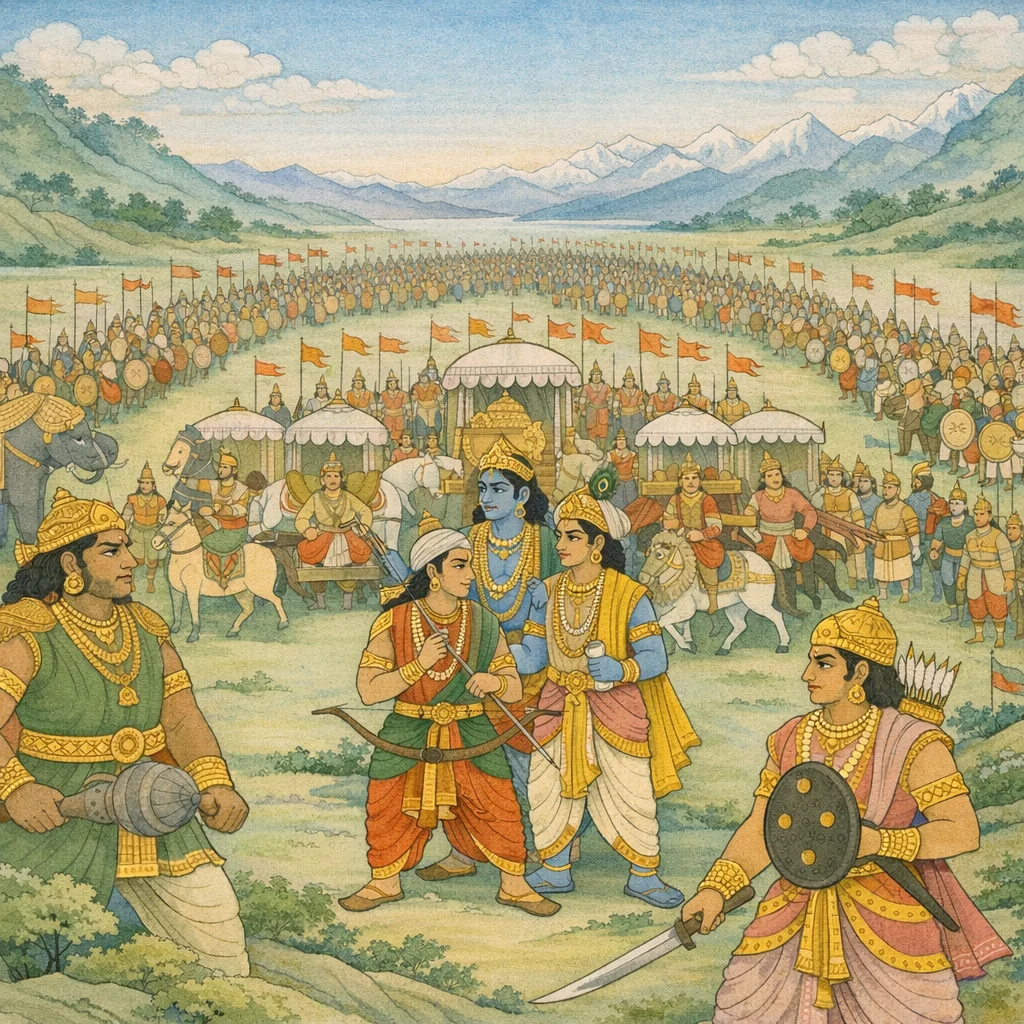
Saṃjaya describes Yudhiṣṭhira’s instruction to counter-array the Pandava forces against Bhīṣma’s deployment. Key protective assignments are specified: Arjuna guards Śikhaṇḍin’s division, Bhīma safeguards Dhṛṣṭadyumna’s position, and Yuyudhāna (Sātyaki) holds the southern wing with celebrated archery. The narrative then heightens royal and ritual imagery: Yudhiṣṭhira’s ornate chariot and white parasol are presented as markers of sovereignty, while priests and elders perform protective rites with mantras and medicinal substances; the king distributes gifts to Brahmins. Arjuna’s chariot is depicted in luminous, almost elemental terms, and Bhīma is characterized as a formidable guardian whose presence unsettles opposing fighters. Kṛṣṇa identifies Bhīṣma as the central protector of the Kaurava host and urges decisive engagement after breaking through screening divisions. Dhṛtarāṣṭra interrogates Saṃjaya about morale, initiative, and auspicious signs; Saṃjaya reports mutual exhilaration, the mingling of perfumes and offerings, and the immense clash-sound of instruments, conches, elephants, and shouting as the armies close.
Chapter Arc: संजय धृतराष्ट्र को बताता है कि पाण्डवों ने अपने-अपने निर्दिष्ट व्यूहों को साध लिया है—स्वर्ग-प्राप्ति की आकांक्षा नहीं, बल्कि ‘सुयुद्ध’ द्वारा धर्म-प्रतिष्ठा की ज्वाला उनके भीतर धधक रही है। → व्यूह के मध्य शिखण्डी की सेना को अर्जुन (सव्यसाची) का संरक्षण मिलता है; अग्रभाग में धृष्टद्युम्न, और भीमसेन की प्रचण्ड छाया से पाण्डव-सेना का मनोबल उठता है। युधिष्ठिर का राजोचित, यज्ञीय-सा दान-प्रवाह (वस्त्र, गौएँ, फल, पुष्प, निष्क) युद्ध-प्रस्थान को धर्मयात्रा का रूप देता है। → श्रीकृष्ण अर्जुन से स्पष्ट कहते हैं—इन ‘मेघों’ की तरह सूर्य-सम तेजस्वी पाण्डव-बल को ढकने वाली कौरव-सेना को काटो; इन अनीकों को नष्ट कर के ही विजय की आकांक्षा करो। साथ ही भीम का रौद्र-रूप उभरता है—वह अनायुध होकर भी भुजाओं से नर, अश्व, नाग तक को भस्म कर देने की क्षमता का प्रतीक बनता है। → पाण्डव-व्यवस्था सुदृढ़ हो जाती है: मध्य में अर्जुन-रक्षित शिखण्डी, अग्र में धृष्टद्युम्न, और रथ-रक्षा में भीम (नकुल-सहदेव सहित)। कृष्ण का आदेश अर्जुन के लक्ष्य को एकाग्र करता है—रणनीति अब केवल रक्षा नहीं, निर्णायक संहार की ओर मुड़ती है। → दोनों सेनाएँ व्यूहबद्ध होकर आमने-सामने हैं; कृष्ण का संकेत स्पष्ट है—अगला क्षण बाण-वर्षा और भीम की प्रलय-छाया के साथ युद्ध को फाड़ देगा।
Shlokas
Verse 1
अपने-आप बछ। अं कााज दाविशोद्ध्याय: युधिष्ठिरकी रणयात्रा, अर्जुन और भीमसेनकी प्रशंसा तथा श्रीकृष्णका अर्जुनसे कौरवसेनाको मारनेके लिये कहना संजय उवाच ततो युधिष्ठिरो राजा स्वां सेनां समनोदयत् । प्रतिव्यूहन्ननीकानि भीष्मस्य भरतर्षभ,संजय कहते हैं--भरतश्रेष्ठ तदनन्तर राजा युधिष्ठिरने भीष्मजीकी सेनाका सामना करनेके लिये अपनी सेनाकी व्यूहरचना करते हुए उसे युद्धके लिये प्रेरित किया
Sañjaya said: Then King Yudhiṣṭhira roused his own army and, O bull among the Bharatas, arranged it in counter-formations to meet Bhīṣma’s battle-array.
Verse 2
यथोद्दिष्टान्यनीकानि प्रत्यव्यूहन्त पाण्डवा: | स्वर्ग परममिच्छन्त: सुयुद्धेन कुरूद्वहा:,कुरुकुलके धुरन्धर वीर पाण्डवोंने उत्तम युद्धके द्वारा उत्कृष्ट स्वर्गलोककी इच्छा रखकर शास्त्रोक्त विधिसे शत्रुके मुकाबिलेमें अपनी सेनाका व्यूह निर्माण किया
O foremost heroes of the Kuru line, the Pāṇḍavas, as directed, drew up their divisions in counter-array against the foe, yearning for the highest heaven through a battle fought with excellence.
Verse 3
मध्ये शिखण्डिनो<नीकं रक्षितं सव्यसाचिना । धृष्टय्युम्नश्नरन्ञग्रे भीमसेनेन पालित:,व्यूहके मध्यभागमें सव्यसाची अर्जुनद्वारा सुरक्षित शिखण्डीकी सेना थी और अग्रभागमें भीमसेनद्वारा पालित धृष्टद्युम्न विचरण कर रहे थे
Sañjaya reported that in the very middle of the battle-array stood Śikhaṇḍinī’s division, kept under the protection of Arjuna, the ambidextrous archer; and at the front moved Dhṛṣṭadyumna, guarded by Bhīmasena.
Verse 4
अनीकं दक्षिणं राजन् युयुधानेन पालितम् । श्रीमता सात्वताग्र्येण शक्रेणेव धनुष्मता,राजन! उस व्यूहके दक्षिणभागकी रक्षा इन्द्रके समान धनुर्धर सात्वतशिरोमणि श्रीमान् सात्यकि कर रहे थे
Sañjaya said: O King, the right wing of that battle-array was being guarded by Yuyudhāna—Sātyaki, the illustrious foremost of the Sātvatas—bow in hand, like Indra himself.
Verse 5
महेन्द्रयानप्रतिमं रथं तु सोपस्करं हाटकरत्नचित्रम् । युधिष्ठिर: काउ्चनभाण्डयोक्त्रं समास्थितो नागपुरस्य मध्ये,राजा युधिष्छिर हाथियोंकी सेनाके बीचमें खड़े एक सुन्दर रथपर आरूढ़ हुए, जो देवराज इन्द्रके रथकी समानता कर रहा था। उस रथमें सब आवश्यक सामग्री रखी गयी थी। भाँति-भाँतिके सुवर्ण तथा रत्नोंसे विभूषित होनेके कारण उस रथकी विचित्र शोभा हो रही थी। उसमें सुवर्णमय भाण्ड तथा रस्सियाँ रखी हुई थीं
Sañjaya said: Yudhiṣṭhira mounted a splendid chariot, comparable to the car of Mahendra (Indra). It was fully equipped with all necessary implements and adorned with gold and gems, shining with varied ornamentation. Furnished with golden vessels and harness-ropes, he stood stationed amid the elephant-corps—an image of royal order and preparedness as the armies arranged themselves for the coming conflict.
Verse 6
समुच्छितं दन््तशलाकमस्य सुपाण्डुरं छत्रमतीव भाति । प्रदक्षिणं चैनमुपाचरन्त महर्षय: संस्तुतिभिममहेन्द्रम्,उस समय किसी सेवकने युधिष्ठिरके ऊपर हाथीके दाँतोंकी बनी हुई शलाकाओंसे युक्त शत छत्र लगा रखा था, जिसकी बड़ी शोभा हो रही थी। कुछ महर्षिगणोंने नाना प्रकारकी स्तुतियोंद्वारा महाराज युधिष्ठटिरकी प्रशंसा करते हुए उनकी दक्षिणावर्त परिक्रमा की
Sañjaya said: Above him a lofty, brilliantly white parasol—fitted with rods made of elephant tusk—shone with great splendor. Then great seers, praising that lord of men with many eulogies, reverently attended him and circumambulated him in the auspicious clockwise manner, marking him out as worthy of honor and righteous sovereignty even amid the looming war.
Verse 7
पुरोहिता: शत्रुवधं वदन्तो ब्रह्मर्षिसिद्धा: श्रुतववन्त एनम् । जप्यैश्न मन्त्रैश्न महौषधीभि: समन्ततः स्वस्त्ययनं ब्रुवन्त:,शास्त्रोंके विद्वान पुरोहित, ब्रह्मर्षि और सिद्धणण जप, मन्त्र तथा उत्तम ओषधियोंद्वारा सब ओरसे युधिष्ठिरके कल्याण और शत्रुओंके संहारका शुभ आशीर्वाद देने लगे
Sañjaya said: The learned priests—together with Brahmarṣis and accomplished Siddhas—pronounced blessings for the slaying of the enemy. With sacred recitations, potent mantras, and great healing herbs, they invoked auspicious protection on every side for him, seeking his welfare and victory.
Verse 8
ततः स वस्त्राणि तथैव गाश्न॒ फलानि पुष्पाणि तथैव निष्कान् | कुरूत्तमो ब्राह्मणसान्महात्मा कुर्वन् ययौ शक्र इवामरेश:,उस समय देवराज इन्द्रके समान तेजस्वी कुरुश्रेष्ठ महात्मा युधिष्ठिर बहुत-से वस्त्र, गाय, फल-फ़ूल और स्वर्णमय आभूषण ब्राह्मणोंको दान करते हुए आगे बढ़ रहे थे
Then that great-souled best of the Kurus proceeded onward, bestowing upon the Brahmins garments, cows, fruits, flowers, and golden ornaments—radiant like Śakra (Indra), lord of the immortals. The scene underscores a kingly ethic: even on the brink of war, he upholds dharma through generosity and reverence toward the learned.
Verse 9
सहस्सूर्य: शतकिड्किणीक:ः परार्द्धवजाम्बूनदहेमचित्र: । रथोड<र्जुनस्याग्निरिवार्चिमाली विशभ्राजते श्वेतहय: सुचक्र:,अर्जुनका रथ ज्वालमालाओंसे युक्त अग्निके समान शोभा पा रहा था। उसमें सूर्यकी आकृतिके सहसौरों चक्र विद्यमान थे। सैकड़ों क्षुद्र घंटिकाएँ लगी थीं। बहुमूल्य जाम्बूनद नामक सुवर्णसे भूषित होनेके कारण उस रथकी विचित्र शोभा हो रही थी। उसमें श्वेत रंगके घोड़े और सुन्दर पहिये लगे थे
Sañjaya said: Arjuna’s chariot blazed forth like a fire wreathed in flames. It shone with the splendor of a thousand suns, was hung with hundreds of small bells, and was richly adorned with precious vajra-like ornaments and variegated Jāmbūnada gold. Drawn by white horses and fitted with beautiful wheels, it stood out brilliantly—an omen of formidable martial power on the eve of righteous battle.
Verse 10
तमास्थित: केशवसंगृहीतं कपिध्वजो गाण्डिवबाणपाणि: । धनुर्धरो यस्य सम: पथिव्यां न विद्यते नो भविता कदाचित्,गाण्डीव धनुष और बाण हाथमें लिये हुए कपिध्वज अर्जुन उस रथपर आखरूढ़ थे। भगवान् श्रीकृष्णने उसकी बागडोर सँभाल रखी थी। अर्जुनके समान धनुर्धर इस भूतलपर न तो कोई है और न होगा ही
Sañjaya said: Upon that chariot, whose reins were held by Keśava (Kṛṣṇa), stood Arjuna—bearing the monkey-banner, with the Gāṇḍīva bow and arrows in hand. On this earth there is no archer equal to him, nor will there ever be.
Verse 11
उद्धर्तयिष्यंस्तव पुत्रसेना- मतीव रौद्रं स बिभर्ति रूपम् | अनायुधो य: सुभुजो भुजाभ्यां नराश्वनागान् युधि भस्म कुर्यात्,महाराज! जो सुन्दर बाहोंवाले भीमसेन बिना आयुधके केवल भुजाओंसे ही युद्धमें मनुष्यों, घोड़ों और हाथियोंको भस्म कर सकते हैं, उन्होंने ही आपके पुत्रोंकी सेनाका संहार कर डालनेके लिये अत्यन्त रौद्र रूप धारण कर रखा है
Sañjaya said: “Intent on uprooting your sons’ army, he has assumed a form exceedingly fierce. Though weaponless, that mighty-armed Bhīmasena—by the sheer power of his arms—can reduce men, horses, and elephants to ashes in battle, O King.”
Verse 12
स भीमसेन: सहितो यमाशभ्यां वृकोदरो वीररथस्य गोप्ता । तं तत्र सिंहर्षभमत्तखेलं लोके महेन्द्रप्रतिमानकल्पम्,वृकोदर भीमसेन, नकुल और सहदेवके साथ रहकर अपने वीर रथी धृष्टद्युम्नकी रक्षा कर रहे थे। जो सिंहों और साँड़ोंके समान उन्मत्त-से होकर युद्धका खेल खेलते हैं, जिनका दर्प गजराजके समान बढ़ा हुआ है तथा जो लोकमें देवराज इन्द्रके समान पराक्रमी हैं, उन्हीं दुर्धष वीर भीमसेनको सेनाके अग्रभागमें उपस्थित देख आपके सैनिक भयसे उद्विग्नचित्त हो कीचड़में फँसे हुए हाथियोंकी भाँति व्यथित हो उठे
Sañjaya said: Bhīmasena—Vṛkodara—accompanied by the twin sons of Yama (Nakula and Sahadeva), was guarding the heroic charioteer Dhṛṣṭadyumna. Seeing him there at the head of the army—playing the ‘sport’ of battle like a maddened lion or bull, his pride and force swelling like a lordly elephant, and in prowess comparable to Indra—your soldiers were shaken with fear and distress, like elephants stuck fast in mire.
Verse 13
समीक्ष्य सेनाग्रगतं दुरासदं संविव्यथु: पड़कगता यथा द्विपा: । वृकोदरं वारणराजदर्प योधास्त्वदीया भयविग्नसत्त्वा:,वृकोदर भीमसेन, नकुल और सहदेवके साथ रहकर अपने वीर रथी धृष्टद्युम्नकी रक्षा कर रहे थे। जो सिंहों और साँड़ोंके समान उन्मत्त-से होकर युद्धका खेल खेलते हैं, जिनका दर्प गजराजके समान बढ़ा हुआ है तथा जो लोकमें देवराज इन्द्रके समान पराक्रमी हैं, उन्हीं दुर्धष वीर भीमसेनको सेनाके अग्रभागमें उपस्थित देख आपके सैनिक भयसे उद्विग्नचित्त हो कीचड़में फँसे हुए हाथियोंकी भाँति व्यथित हो उठे
Sañjaya said: Seeing the hard-to-assail Bhīma (Vṛkodara) stationed at the very front of the army, your warriors—whose pride was like that of lordly elephants—were shaken with fear; their courage faltered, and they writhed like elephants stuck fast in mud.
Verse 14
अनीकमध्ये तिष्ठन्तं राजपुत्रं दुरासदम् | अब्रवीद् भरतश्रेष्ठं गुडाकेशं जनार्दन:,उस समय सेनाके मध्यभागमें खड़े हुए दुर्जय वीर निद्राविजयी भरतश्रेष्ठ राजकुमार अर्जुनसे भगवान् श्रीकृष्णने इस प्रकार कहा
Then Janārdana (Śrī Kṛṣṇa), seeing the prince Arjuna—hard to assail—standing in the very midst of the battle-array, addressed that best of the Bharatas, the conqueror of sleep, as follows.
Verse 15
वायुदेव उवाच य एष रोषात् प्रतपन् बलस्थो यो नः सेनां सिंह इवेक्षते च । स एष भीष्म: कुरुवंशकेतु- येनाह्वतास्त्रिशतं वाजिमेधा:,भगवान् वासुदेव बोले--धनंजय! ये जो अपनी सेनाके मध्यभागमें स्थित हो रोषसे तप रहे हैं और सिंहके समान हमारी सेनाकी ओर देखते हैं, ये ही कुरुकुलकेतु भीष्म हैं, जिन्होंने अबतक तीन सौ अश्वमेधयज्ञोंका अनुष्ठान किया है
Vāyudeva said: “He who stands amid the strength of the army, blazing with wrath, and who looks upon our host like a lion—he is Bhīṣma, the banner of the Kuru line, by whom three hundred Aśvamedha sacrifices have been duly performed.”
Verse 16
एतान्यनीकानि महानुभावं गूहन्ति मेघा इव रश्मिमन्तम् । एतानि हत्वा पुरुषप्रवीर काड्क्षस्व युद्ध भरतर्षभेण,जैसे बादल अंशुमाली सूर्यको ढक लेते हैं, उसी प्रकार ये सारी सेनाएँ इन महानुभाव भीष्मको आच्छादित किये हुए हैं। नरवीर अर्जुन! तुम पहले इन सेनाओंको मारकर भरतकुलभूषण भीष्मजीके साथ युद्धकी अभिलाषा करो
Vāyu said: “These battle-formations are concealing the great-souled Bhīṣma, just as clouds veil the radiant sun. O foremost of men, Arjuna—first strike down these surrounding forces; then seek the direct combat you desire with Bhīṣma, the bull of the Bharatas.”
Verse 22
इति श्रीमहा भारते भीष्मपर्वणि श्रीमद्धगवद्गीतापर्वणि श्रीकृष्णार्जुनसंवादे द्वाविंशोडध्याय:
Thus ends the Twenty-second Chapter in the Bhīṣma Parva of the Śrī Mahābhārata, within the section known as the Śrīmad Bhagavad Gītā, presented as the dialogue between Śrī Kṛṣṇa and Arjuna.
Verse 29
इस प्रकार श्रीमह्याभारत भीष्मपर्वके अन्तर्गत श्रीमद्भगवद्गीतापर्वमें युधिषिर- अर्जुनसंवादविषयक इक्कीसवाँ अध्याय पूरा हुआ
Thus, in the revered Mahābhārata, within the Bhīṣma Parva, in the section known as the Śrīmad Bhagavadgītā Parva, the twenty-first chapter—whose subject is the dialogue between Yudhiṣṭhira and Arjuna—comes to its completion.
Frequently Asked Questions
How to counter a declared enemy formation: the chapter focuses on matching divisions, assigning protectors to critical sectors, and identifying the opposing army’s primary stabilizing node—Bhīṣma—as the decisive point of engagement.
Effective leadership integrates three layers: clear command (counter-deployment), institutional legitimacy (royal insignia and public order), and morale stabilization (ritual assurance and confidence-building), showing that strategy operates through both organization and meaning.
No explicit phalaśruti is presented here; the chapter functions as operational narration and characterization, contributing to the epic’s broader didactic arc by illustrating how dharma, counsel, and structured action precede decisive engagement.